


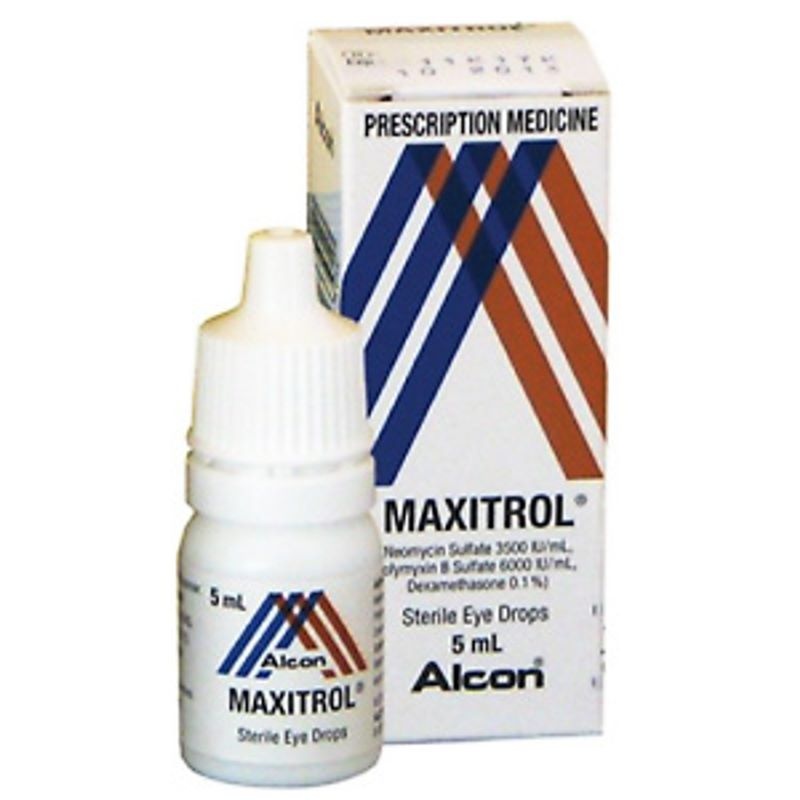
Maxitrol
Ask a doctor about a prescription for Maxitrol




How to use Maxitrol
Leaflet attached to the packaging: patient information
Warning! Keep the leaflet, information on the immediate packaging in a foreign language!
Maxitrol(Maxidrol)
(1 mg + 3500 IU + 6000 IU)/ml, eye drops
Dexamethasone + Neomycin sulfate + Polymyxin B sulfate
Maxitrol and Maxidrol are different trade names for the same drug.
You should carefully read the contents of the leaflet before using the drug, as it contains important information for the patient.
- You should keep this leaflet so that you can read it again if necessary.
- In case of any doubts, you should consult a doctor, pharmacist, or nurse.
- This drug has been prescribed for a specific person. It should not be given to others. The drug may harm another person, even if the symptoms of their illness are the same.
- If the patient experiences any adverse reactions, including any adverse reactions not listed in this leaflet, they should inform their doctor, pharmacist, or nurse. See section 4.
Table of contents of the leaflet
What is Maxitrol and what is it used for
Important information before using Maxitrol
How to use Maxitrol
Possible side effects
How to store Maxitrol
Contents of the packaging and other information
1. What is Maxitrol and what is it used for
Maxitrol is used to treat inflammatory eye diseases, which may be accompanied by
infection.Eye inflammation can be caused by infection or other factors
affecting the eye or eye injuries.
Maxitrol is a combination drug containing antibacterial and corticosteroid components.
Corticosteroids (in this case, dexamethasone) are used to prevent and reduce
eye inflammation. The antibacterial agents contained in the drops (in this case, neomycin
sulfate and polymyxin B sulfate) are active against most pathogenic bacteria
causing eye infections.
2. Important information before using Maxitrol
When not to use Maxitrol
- herpetic keratitis, chickenpox, shingles, or any other viral eye infection,
- fungal eye infection,
- untreated parasitic eye infections,
- tubercular eye infection,
- untreated purulent eye infection.
Warnings and precautions
For use in the eyes only
- In some patients, hypersensitivity to topically applied aminoglycoside antibiotics, such as neomycin, may occur. If symptoms of hypersensitivity occur, the drug should be discontinued and medical attention should be sought immediately (see section 4). Hypersensitivity reactions may occur in the form of local itching or skin redness, severe allergic reactions (anaphylaxis), or severe skin reactions. Such skin reactions may occur during the use of other topical or systemic antibiotics from the same family (aminoglycosides).
- In addition, topical use of neomycin may lead to redness, irritation, and discomfort of the skin.
- Patients who have experienced hypersensitivity reactions to topically applied neomycin may also be hypersensitive to other antibiotics.
- If the patient is using other antibiotics during treatment with Maxitrol, they should consult their doctor, as concurrent use of Maxitrol with other antibiotics may cause serious side effects.
- In patients using corticosteroid eye drops for a long time, the following may occur:
- increased intraocular pressure. Intraocular pressure should be regularly monitored during treatment with this drug. This is especially important in children, as corticosteroid-induced increased intraocular pressure may be greater and occur earlier in children than in adults. The risk of increased intraocular pressure and/or cataract is also higher in patients with predisposing factors (e.g., diabetes).
- development of Cushing's syndrome caused by the drug entering the bloodstream. If the patient experiences swelling and weight gain, especially in the trunk and face, they should consult their doctor, as these are usually the first symptoms of Cushing's syndrome. Adrenal insufficiency may occur as a result of stopping long-term or intensive use of Maxitrol. The patient should consult their doctor before deciding to stop treatment. This risk is particularly important in children and patients treated with ritonavir or cobicistat.
- If the patient experiences or worsens symptoms of eye infection, they should contact their doctor immediately. Patients using Maxitrol may have reduced immunity to eye infections, including bacterial and fungal infections resistant to antibiotic treatment.
- In patients using corticosteroids and non-steroidal anti-inflammatory drugs (NSAIDs) concurrently, problems with healing of eye surface damage may occur.
- If the patient has diseases that lead to thinning of the cornea or sclera, they should inform their doctor.
If the patient experiences blurred vision or other vision disturbances, they should contact their doctor.
If the patient has glaucoma, the treatment duration should be limited to two weeks, unless the doctor recommends otherwise.
The drug should be used for as long as the doctor has prescribed.If the symptoms of the disease worsen or do not improve, the patient should consult their doctor.
Children
The safety and efficacy of Maxitrol in children have not been documented, so its use is not recommended in this age group.
Maxitrol and other drugs
The patient should inform their doctor or pharmacist about all drugs they are currently using or have recently used, as well as any drugs they plan to use, including over-the-counter drugs. The patient should especially inform their doctor if they are taking:
- topical non-steroidal anti-inflammatory drugs. Concurrent topical use of a steroid and a non-steroidal anti-inflammatory drug may cause problems with healing of eye injuries;
- ritonavir or cobicistat, as they may increase the dexamethasone content in the blood.
If the patient is using other eye drops or ointments, they should wait at least 5 minutes between administrations of different drugs. Eye ointments should be used last.
Pregnancy, breastfeeding, and fertility
If the patient is pregnant or breastfeeding, thinks they may be pregnant, or plans to have a child, they should consult their doctor or pharmacist before using this drug.
The drug is not recommended during pregnancy or breastfeeding.
Driving and using machines
Maxitrol has no or negligible influence on the ability to drive and use machines.
For some time after using Maxitrol, vision may be blurred. The patient should not drive or use machines until this symptom subsides.
Maxitrol eye drops contain benzalkonium chloride
The drug contains 0.04 mg of benzalkonium chloride per milliliter (0.04 mg/ml).
Benzalkonium chloride may be absorbed by soft contact lenses and change their color. The patient should remove contact lenses before instilling the drops and wait at least 15 minutes before putting them back on.
Benzalkonium chloride may also cause eye irritation, especially in people with dry eye syndrome or corneal disorders (the transparent layer on the front of the eye). If the patient experiences abnormal sensations in the eye, stinging, or eye pain after using the drug, they should contact their doctor.
3. How to use Maxitrol
Maxitrol should always be used as directed by the doctor. In case of doubts, the patient should consult their doctor or pharmacist.
Maxitrol is intended for use in the eyes only; one bottle of the drug should be used by one patient only.
If the protective cap is loose after removing the cap, it should be removed before using the drug.
The patient should close their eyelid and gently press the nasal lacrimal duct (tear duct) with their finger. This can help reduce the absorption of the drug into the bloodstream after administration in the form of eye drops.
Recommended dose
In mild diseases, one to two drops are used in the conjunctival sac (sacs) four to six times a day.
In severe cases, one to two drops are used every hour. The drug is then gradually used in decreasing doses, and after the symptoms of inflammation have subsided, its use is discontinued. The doctor will determine the duration of treatment. The patient should not stop treatment prematurely.
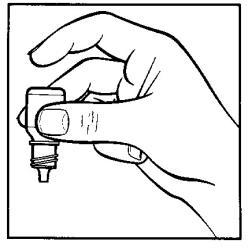
2
3
4
- 1. Prepare the Maxitrol bottle and a mirror.
- 2. Wash your hands.
- 3. Shake the bottle.
- 4. Remove the cap.
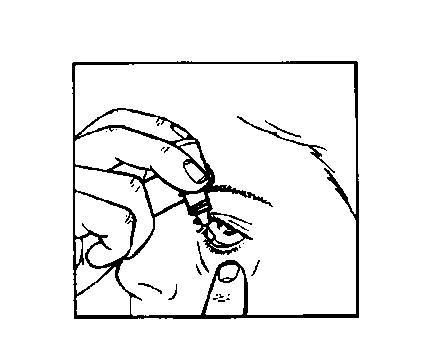
- 5. Hold the bottle in your hand and turn it upside down, holding it with your thumb and middle finger (figure 1).
- 6. Tilt your head back. Pull the lower eyelid down with a clean finger to create a "pocket" between the eyelid and the eye; the drop should fall into this pocket (figure 2).
- 7. Bring the bottle tip close to the eye. You can use a mirror to help you.
- 8. Do not touch the dropper tip to the eye, eyelid, or surrounding areas.Failure to follow this instruction may cause infection of the drops.
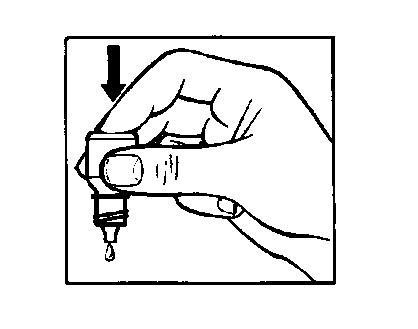
- 9. Gently squeeze the bottom of the bottle to release a single drop of Maxitrol (figure 3).
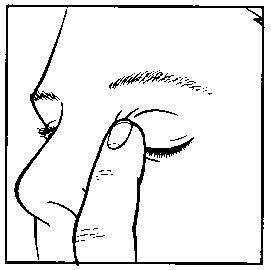
- 10. After instilling the drop, remove the finger that held the lower eyelid. Close your eye and press the corner of your eye near your nose with your finger (figure 4). This will help prevent the drug from entering the entire body.
- 11. If it is necessary to administer drops to both eyes, repeat the above steps for the second eye.
- 12. Immediately after use, replace the cap on the bottle.
- 13. Use one bottle of the drug at a time.
If the drop does not get into the eye, try again to administer the drop correctly.
Using more Maxitrol than recommended
In case of local overdose of Maxitrol, the eye (eyes) should be rinsed with lukewarm water. The patient should not use the drops until the next scheduled dose.
Missing a dose of Maxitrol
If a dose of Maxitrol is missed, the patient should take the next scheduled dose. However, if it is almost time for the next dose, the missed dose should be skipped, and the patient should return to their regular dosing schedule. The patient should nottake a double dose to make up for the missed dose.
In case of any further doubts about using this drug, the patient should consult their doctor or pharmacist.
4. Possible side effects
Like all medicines, Maxitrol can cause side effects, although not everybody gets them.
If the patient experiences allergic reactions, including rash, face, lip, tongue, and/or
throat swelling, which may cause difficulty breathing or swallowing, or other severe
side effects, they should stop using Maxitrol and contact their doctor or the Emergency Department of the nearest hospital immediately.
The following side effects have been observed during the use of Maxitrol:
Uncommon( may occur in less than 1 in 100 patients): keratitis, increased intraocular pressure, eye itching, eye discomfort, eye irritation.
Frequency not known( frequency cannot be estimated from the available data):
hypersensitivity, headache, corneal ulceration, blurred vision, light hypersensitivity, pupil dilation, eyelid ptosis, eye pain, eye swelling, foreign body sensation in the eye, eye hyperemia, increased lacrimation, severe skin reactions (Stevens-Johnson syndrome), blurred vision, increased hair growth on the body (especially in women), muscle weakness, and muscle mass loss, purple striae on the skin, increased blood pressure, irregular menstrual periods or amenorrhea, changes in protein and calcium levels in the body, growth inhibition in children and adolescents, and swelling and weight gain, especially in the trunk and face (Cushing's syndrome) (see section 2 "Warnings and precautions").
Reporting side effects
If the patient experiences any side effects, including any side effects not listed in the leaflet, they should inform their doctor, pharmacist, or nurse. Side effects can be reported directly to the Department of Adverse Reaction Monitoring of Medicinal Products, Medical Devices, and Biocidal Products,
Jerozolimskie Avenue 181C
02-222 Warsaw
Phone: +48 22 49 21 301
Fax: +48 22 49 21 309
Website: https://smz.ezdrowie.gov.pl
Reporting side effects can help gather more information on the safety of the drug.
If the patient experiences worsening of any symptoms or occurrence of other side effects not listed in this leaflet, they should inform their doctor.
5. How to store Maxitrol
To avoid infection of the drops, the bottle should be discarded 15 days after the first opening.
The date of opening the bottle should be written in the space provided below.
Date of first opening: …………………
The drug should be stored out of sight and reach of children.
Do not store above 25°C.
Do not store in the refrigerator.
Store the bottle upright.
Store the packaging tightly closed.
Do not use this drug after the expiration date stated on the packaging. The expiration date is the last day of the specified month.
The batch number on the packaging is marked as "Lot".
Medicines should not be disposed of via wastewater or household waste. The patient should ask their pharmacist how to dispose of unused medicines. This will help protect the environment.
6. Contents of the packaging and other information
What Maxitrol contains
The active substances of the drug are:
Dexamethasone
1 mg/ml
Neomycin sulfate
3500 IU/ml
Polymyxin B sulfate
6000 IU/ml
The excipients are: sodium chloride, polysorbate 20 (E 432), benzalkonium chloride, hypromellose
(E 464), purified water.
The drug contains minimal amounts of diluted hydrochloric acid and/or sodium hydroxide to maintain its pH.
What Maxitrol looks like and what the packaging contains
Maxitrol eye drops are a non-clear drop in white to light yellow color.
It is available in 3 ml PE bottles.
For more detailed information, the patient should contact the marketing authorization holder or parallel importer.
Marketing authorization holder in France, the country of export:
Manufacturer:
Siegfried El Masnou S.A.
Camil Fabra, 58
08320 El Masnou
Barcelona
Spain
Novartis Farmaceutica, S.A.
Gran via de les Corts Catalanes, 764
08013 Barcelona
Spain
Novartis Pharma GmbH
Roonstrasse 25
90429 Nuremberg
Germany
Novartis Manufacturing NV
Rijksweg 14
2870 Puurs-Sint-Amands
Belgium
Parallel importer:
Medezin Sp. z o.o.
Zbąszyńska Street 3
91-342 Łódź
| Novartis Pharma S.A.S. | |
| 8-10, rue Henri Sainte-Claire Deville | |
| 92500 Rueil-Malmaison | |
| France | |
Repackaged by:
Medezin Sp. z o.o.
Zbąszyńska Street 3
91-342 Łódź
Marketing authorization number in France, the country of export:306 525-3
34009 306 525 3 4
Parallel import authorization number: 280/23
Date of leaflet approval: 30.06.2025
[Information about the trademark]
- Country of registration
- Active substance
- Prescription requiredYes
- Marketing authorisation holder (MAH)Novartis Pharma S.A.S.
- This information is for reference only and does not constitute medical advice. Always consult a licensed doctor before taking any medication. Oladoctor is not responsible for medical decisions based on this content.
- Alternatives to MaxitrolDosage form: Drops, (3 mg + 1 mg)/mlActive substance: dexamethasone and antiinfectivesManufacturer: Rafarm S.A.Prescription requiredDosage form: Drops, (5 mg + 1 mg)/mlActive substance: dexamethasone and antiinfectivesManufacturer: Dr. Gerhard Mann Chem. - Pharm. Fabrik GmbHPrescription requiredDosage form: Ointment, (5 mg + 0.3 mg)/gActive substance: dexamethasone and antiinfectivesManufacturer: Dr. Gerhard Mann Chem. - Pharm. Fabrik GmbHPrescription required
Alternatives to Maxitrol in other countries
The best alternatives with the same active ingredient and therapeutic effect.
Alternative to Maxitrol in Ukraina
Alternative to Maxitrol in Hiszpania
Online doctors for Maxitrol
Discuss dosage, side effects, interactions, contraindications, and prescription renewal for Maxitrol – subject to medical assessment and local rules.

Get updates and exclusive offers
Be the first to know about new services, marketplace updates, and subscriber-only promos.

