



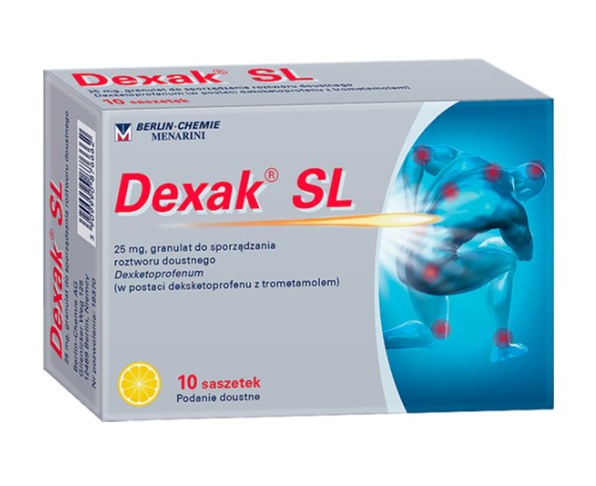
DEXAK 25 mg Solution

Prescription review online
A doctor will review your case and decide whether a prescription is medically appropriate.

Talk to a doctor about this medicine
Discuss your symptoms and possible next steps in a quick online consultation.



How to use Dexak
Contents of the leaflet
- Leaflet attached to the packaging: patient information
- Dexak, 25 mg, oral solution in a sachet
- What is Dexak and what is it used for
- Important information before taking Dexak
- How to take Dexak
- Possible side effects
- How to store Dexak
- Contents of the pack and other information
Leaflet attached to the packaging: patient information
Dexak, 25 mg, oral solution in a sachet
Dexketoprofen
Read the leaflet carefully before taking the medicine, as it contains important information for the patient.
This medicine should always be taken exactly as described in the patient leaflet or as advised by a doctor or pharmacist.
- Keep this leaflet, you may need to read it again.
- If you need advice or additional information, consult a pharmacist.
- If the patient experiences any side effects, including any possible side effects not listed in the leaflet, they should tell their doctor or pharmacist. See section
- 4.
- If after 3 to 4 days there is no improvement or the patient feels worse, they should contact their doctor.
Table of contents of the leaflet:
- 1. What is Dexak and what is it used for
- 2. Important information before taking Dexak
- 3. How to take Dexak
- 4. Possible side effects
- 5. How to store Dexak
- 6. Contents of the pack and other information

Not sure if this medicine is right for you?
Discuss your symptoms and treatment with a doctor online.
1. What is Dexak and what is it used for
This medicine is a pain reliever from the group of nonsteroidal anti-inflammatory drugs (NSAIDs).
Dexak is used for the short-term, symptomatic treatment of mild to moderate acute pain, e.g. acute muscle or joint pain, painful menstruation, toothache. This medicine is intended for use in adults.
2. Important information before taking Dexak
When not to take Dexak:
- If the patient is allergic to trometamol dexketoprofen or any of the other ingredients of this medicine (listed in section 6);
- If the patient is allergic to acetylsalicylic acid or other nonsteroidal anti-inflammatory drugs (NSAIDs);
- If the patient has asthma or has had asthma attacks in the past, acute allergic rhinitis (short-term inflammation of the nasal mucosa), nasal polyps (growths inside the nose caused by an allergy), urticaria (hives), angioedema (swelling of the face, eyes, lips, tongue, or respiratory distress) or wheezing after taking acetylsalicylic acid or other nonsteroidal anti-inflammatory drugs;
- If the patient has had hypersensitivity reactions to light: photoallergic or phototoxic reactions (a type of redness and/or blisters after exposure to sunlight) when taking ketoprofen (a nonsteroidal anti-inflammatory drug) or fibrates (drugs used to lower blood fat levels);
- If the patient has stomach or duodenal ulcer disease or gastrointestinal bleeding or if they have had gastrointestinal bleeding or ulcers or perforation in the past;
- If the patient has chronic gastrointestinal disorders (e.g. indigestion, heartburn);
- If the patient has had gastrointestinal bleeding or perforation due to previous use of NSAIDs used to treat pain;
- If the patient has intestinal diseases with chronic inflammation (Crohn's disease or ulcerative colitis);
- If the patient has severe heart failure, moderate or severe kidney or liver dysfunction;
- If the patient has a tendency to bleed excessively or coagulation disorders;
- If the patient is severely dehydrated (excessive fluid loss from the body) due to vomiting, diarrhea, or inadequate fluid intake;
- If the patient is in the third trimester of pregnancy or breastfeeding.
Warnings and precautions:
Before starting treatment with Dexak, the patient should discuss it with their doctor or pharmacist.
- If the patient has an allergy or has had allergy problems in the past;
- If the patient has kidney, liver, or heart problems (high blood pressure and/or heart failure) as well as fluid retention or if the patient has had any of these problems in the past;
- In patients taking diuretics or in patients with decreased hydration and reduced blood volume due to excessive fluid loss (e.g. frequent urination, diarrhea, or vomiting);
- If the patient has heart disease, has had a stroke, or is suspected to be at risk of these conditions (e.g. due to high blood pressure, diabetes, high cholesterol, or smoking). In these cases, the patient should consult their doctor or pharmacist before taking Dexak. Taking such medicines as Dexak may be associated with a small increased risk of heart attack or stroke. This risk increases with long-term use of high doses of the medicine. The patient should not take higher doses or use the medicine for longer than recommended;
- If the patient is elderly: there is an increased risk of side effects (see section 4). If side effects occur, the patient should contact their doctor immediately;
- In women with fertility problems or undergoing infertility tests (this medicine may affect female fertility and should not be taken by women planning to become pregnant or undergoing fertility treatment);
- If the patient has blood disorders or blood cell disorders;
- If the patient has systemic lupus erythematosus or mixed connective tissue disease (immune system disorders affecting connective tissue);
- If the patient has had chronic inflammatory bowel diseases (ulcerative colitis, Crohn's disease) in the past;
- If the patient has other stomach or intestinal diseases;
- If the patient has an infection - see below, section entitled "Infections";
- If the patient is taking other medicines that increase the risk of stomach ulcers or gastrointestinal bleeding, such as oral steroid medicines, certain antidepressants (SSRI, e.g. selective serotonin reuptake inhibitors), anticoagulants such as acetylsalicylic acid, or anticoagulant medicines such as warfarin. In these cases, the patient should consult their doctor before taking this medicine, who may decide to prescribe an additional medicine to protect the stomach (e.g. misoprostol or medicines that reduce stomach acid production).
- In patients with asthma combined with chronic rhinitis, chronic sinusitis, and/or nasal polyps, the risk of allergy to acetylsalicylic acid and/or NSAIDs is higher than in the rest of the population. Administration of this medicine may cause asthma attacks or bronchospasm, especially in patients allergic to acetylsalicylic acid and/or NSAIDs.
Infections
Dexketoprofen may mask the symptoms of an infection, such as fever and pain. Therefore, this medicine may delay the use of appropriate infection treatment, which may lead to an increased risk of complications. This has been observed in bacterial pneumonia and bacterial skin infections related to chickenpox. If the patient is taking this medicine during an infection and the infection symptoms persist or worsen, they should consult their doctor immediately.
Children and adolescents
Dexketoprofen has not been studied in children and adolescents. The safety and efficacy of this medicine have not been established, and therefore, it should not be taken by children and adolescents.
Dexak and other medicines
The patient should tell their doctor or pharmacist about all medicines they are taking, including those available without a prescription, and about any medicines they plan to take.
Some medicines should not be taken at the same time as Dexak, and in the case of other medicines, the dose may need to be changed due to concomitant use of Dexak.
The patient should always inform their doctor, dentist, or pharmacist if they are taking any of the following medicines with Dexak:
- Acetylsalicylic acid, corticosteroids, or other anti-inflammatory medicines
- Warfarin, heparin, or other anticoagulant medicines
- Lithium used to treat certain mood disorders
- Methotrexate (an anticancer or immunosuppressive medicine) used in high doses of 15 mg per week
- Hydantoin derivatives and phenytoin used to treat epilepsy
- Sulfamethoxazole used to treat bacterial infections
Concomitant use requiring caution:
- ACE inhibitors, diuretics, and angiotensin II antagonists used to treat high blood pressure and heart disease
- Pentoxifylline and oxypentifylline used to treat chronic venous ulcers
- Zidovudine used to treat viral infections
- Aminoglycoside antibiotics used to treat bacterial infections
- Sulfonylurea derivatives (e.g. chlorpropamide and glibenclamide) used to treat diabetes
- Methotrexate used in low doses, below 15 mg per week
Concomitant use requiring special consideration:
- Quinolone antibiotics (e.g. ciprofloxacin, levofloxacin) used to treat bacterial infections
- Cyclosporine and tacrolimus used to treat immune system diseases and in transplants
- Streptokinase and other thrombolytic or fibrinolytic medicines, i.e. medicines used to dissolve blood clots
- Probenecid used to treat gout
- Digoxin used to treat chronic heart failure
- Mifepristone used as an abortifacient
- Antidepressant medicines from the group of selective serotonin reuptake inhibitors (SSRIs)
- Antiplatelet medicines used to reduce blood clot formation
- Beta-adrenergic blockers used to treat high blood pressure and heart disease
- Tenofovir, deferazirox, pemetrexed
In case of any doubts about taking Dexak, the patient should consult their doctor or pharmacist.
Dexak with food, drink, and alcohol
It is recommended to take the medicine with a meal to reduce the possibility of gastrointestinal disorders (see also section 3 "Method of administration").
The patient should not drink alcohol while taking this medicine. The occurrence of certain side effects, especially those related to the gastrointestinal tract or central nervous system, is more likely when taking Dexak with alcohol.
Pregnancy, breastfeeding, and fertility
This medicine should not be taken during the third trimester of pregnancy or during breastfeeding.
If the patient is pregnant, thinks they may be pregnant, or plans to have a baby, they should consult their doctor or pharmacist before taking this medicine, as the use of Dexak may be inappropriate in this situation.
Pregnant women or women planning to become pregnant should avoid taking this medicine. The use of Dexak during any stage of pregnancy must only be done under the doctor's recommendation.
This medicine is not recommended for women planning to become pregnant or during infertility diagnosis.
Information on the potential impact on fertility can also be found in section 2 "Warnings and precautions".
Driving and using machines
This medicine may have a minor effect on the ability to drive vehicles and operate machinery, due to the possibility of dizziness, drowsiness, and vision disturbances as side effects.
In case of observing such symptoms, the patient should not drive vehicles or operate machinery in motion until the symptoms resolve. In case of doubts, the patient should consult their doctor.
Dexak contains methyl parahydroxybenzoate (E 218)
This medicine may cause allergic reactions (also delayed), as it contains methyl parahydroxybenzoate.
Dexak contains sucrose
If the doctor has informed the patient that they have an intolerance to some sugars, they should contact their doctor before taking the medicine.
Each dose contains 2.0 g of sucrose. This should also be taken into account in patients with diabetes.
Dexak contains sodium
This medicine contains less than 1 mmol (23 mg) of sodium per sachet, which means the medicine is considered "sodium-free".

Started taking the medicine and have questions?
Discuss your symptoms and treatment with a doctor online.
3. How to take Dexak
This medicine should always be taken exactly as described in the patient leaflet or as advised by a doctor or pharmacist.
In case of doubts, the patient should consult their doctor or pharmacist.
The patient should take the smallest effective dose for the shortest duration necessary to relieve symptoms.
If the symptoms of an infection (such as fever and pain) persist or worsen, the patient should consult their doctor immediately (see section 2).
Adults over 18 years old
The recommended daily dose is 1 sachet (25 mg of dexketoprofen) every 8 hours, but no more than 3 sachets per day (75 mg).
If after 3 to 4 days there is no improvement or the patient feels worse, they should contact their doctor. The doctor will inform the patient how many sachets to take per day and for how long.
The dose will depend on the type, severity, and duration of the pain in the patient.
In elderly patients or patients with kidney or liver disease, it is recommended to start treatment with a lower total daily dose corresponding to no more than 2 sachets (50 mg of dexketoprofen).
In case of good tolerance of dexketoprofen in elderly patients, this initial dose can then be increased to the recommended dose for the general population (75 mg).
Children and adolescents
This medicine should not be taken by children and adolescents (under 18 years old).
Method of administration
The oral solution can be taken directly from the sachet or after mixing the contents of the sachet with a glass of water. After opening the sachet, the entire contents should be consumed.
The contents of the sachets should be taken with a meal, which may reduce the possibility of gastrointestinal disorders (see also section 2 of this leaflet). In case of acute pain, when faster relief is needed, it is recommended to take the medicine on an empty stomach, at least 15 minutes before any meal, which will cause slightly faster absorption of the medicine.
Overdose of Dexak
In case of suspected overdose, the patient should immediately inform their doctor or pharmacist or go to the nearest hospital emergency department. The patient should remember to take the packaging of this medicine or the patient leaflet with them.
Missed dose of Dexak
The patient should not take a double dose to make up for a missed dose. The next dose should be taken according to the dosing schedule (see section 3 "How to take Dexak").
In case of any further doubts about taking this medicine, the patient should consult their doctor or pharmacist.
4. Possible side effects
Like all medicines, this medicine can cause side effects, although not everybody gets them.
Possible side effects are listed below and are grouped according to the frequency of their occurrence.
The maximum concentration of dexketoprofen in plasma after oral administration is higher than observed after tablet administration, so it cannot be excluded that there may be a potential increase in the risk of side effects (gastrointestinal tract).
Common side effects (may affect up to 1 in 10 people):
Nausea and/or vomiting, abdominal pain, mainly in the upper quadrants, diarrhea, indigestion (dyspepsia).
Uncommon side effects (may affect up to 1 in 100 people):
Vertigo of labyrinthine origin, dizziness, drowsiness, sleep disturbances, nervousness, headaches, palpitations, flushing, gastritis (gastric inflammation), constipation, dry mouth, bloating, rash, fatigue, pain, feeling of heat and chills, malaise.
Rare side effects (may affect up to 1 in 1,000 people):
Peptic ulcer, gastrointestinal bleeding, or perforation (which may manifest as bloody vomiting or black stools), fainting, high blood pressure, slowed breathing rate, fluid retention and peripheral edema (e.g. swollen ankles), laryngeal edema, loss of appetite (anorexia), abnormal sensation, pruritic rash, acne, increased sweating, back pain, increased urination, menstrual disorders, prostate disorders, abnormal liver function tests (blood tests), liver cell damage (hepatitis), acute kidney failure.
Very rare side effects (may affect up to 1 in 10,000 people):
Anaphylactic reactions (acute hypersensitivity reactions that can lead to anaphylactic shock), skin ulceration, mouth, eye, and genital area ulcers (Stevens-Johnson syndrome and Lyell's syndrome), facial edema or lip and throat edema (angioedema), shortness of breath due to bronchial constriction (bronchospasm), shortness of breath, rapid heart rate, low blood pressure, pancreatitis, blurred vision, tinnitus (ringing in the ears), skin hypersensitivity reactions, skin hypersensitivity to light, itching, kidney problems, decreased white blood cell count (neutropenia), decreased platelet count (thrombocytopenia).
The patient should immediately inform their doctor if they observe any side effects related to the stomach or intestines (e.g. stomach pain, heartburn, or bleeding) at the beginning of treatment, especially if they have had similar side effects in the past due to long-term use of anti-inflammatory medicines, particularly in elderly patients.
If a skin rash or any damage to the mucous membranes inside the mouth or on the genitals or any symptoms of allergy occur, the patient should stop treatment with this medicine immediately.
During the administration of nonsteroidal anti-inflammatory drugs, fluid retention and edema (especially of the ankles and feet) may occur, as well as increased blood pressure and heart failure.
Taking such medicines as Dexak may be associated with a small increased risk of heart attack or stroke.
In patients with systemic lupus erythematosus or mixed connective tissue disease (immune system disorders affecting connective tissue), the administration of anti-inflammatory medicines may rarely cause fever, headache, and neck stiffness.
The most commonly observed side effects were related to the stomach and intestines. Especially in elderly patients, stomach ulcers, perforation, or gastrointestinal bleeding may occur, in some cases with a fatal outcome.
After taking the medicine, the following side effects have been reported: nausea, vomiting, diarrhea, bloating, constipation, indigestion, abdominal pain, black stools, bloody vomiting, ulcerative stomatitis, exacerbation of colitis, and Crohn's disease.
Less frequently, gastritis has been observed.
As with other NSAIDs, aseptic meningitis may occur, mainly in patients with systemic lupus erythematosus or mixed connective tissue disease, and hematologic reactions (thrombocytopenic purpura, aplastic anemia, and hemolytic anemia, rarely agranulocytosis and bone marrow failure) may occur.
Reporting side effects
If side effects occur, the patient should tell their doctor or pharmacist, or nurse.
Side effects can be reported directly to the Department of Adverse Reactions of Medicinal Products of the Office for Registration of Medicinal Products, Medical Devices, and Biocidal Products
Al. Jerozolimskie 181C
02-222 Warsaw
Phone: +48 22 49 21 301
Fax: +48 22 49 21 309
Website: https://smz.ezdrowie.gov.pl
Side effects can also be reported to the marketing authorization holder.
By reporting side effects, more information can be collected on the safety of the medicine.
5. How to store Dexak
The medicine should be stored out of sight and reach of children.
Do not use this medicine after the expiry date stated on the carton and on the sachet after EXP. The expiry date refers to the last day of the month.
No special storage precautions are required.
Medicines should not be disposed of via wastewater or household waste. The patient should ask their pharmacist how to dispose of medicines they no longer use. This will help protect the environment.
6. Contents of the pack and other information
What Dexak contains
The active substance is dexketoprofen (in the form of dexketoprofen trometamol). Each sachet contains 25 mg of dexketoprofen in the form of dexketoprofen trometamol.
Other ingredients are: ammonium glycyrrhizinate, neohesperidin dihydrochalcone, methyl parahydroxybenzoate, sodium saccharin, sucrose, macrogol 400, lemon flavor, povidone K-90, disodium phosphate anhydrous, sodium dihydrogen phosphate dihydrate, purified water (see section 2, Dexak contains sucrose).
What Dexak looks like and contents of the pack
A lightly colored solution with a lemon flavor and a sweet lemon-citrus taste.
Packaging contains 2, 4, 10, or 20 sachets.
Not all pack sizes may be marketed.
Marketing authorization holder
Berlin-Chemie AG
Glienicker Weg 125
12489 Berlin,
Germany
Manufacturer
Laboratorios Menarini S.A.
Alfons XII, 587 Badalona
08918 Barcelona
Spain
This medicinal product is authorized in the Member States of the European Economic Area under the following names:
Austria, Belgium, Finland, France, Italy, Luxembourg, Portugal, Spain: Ketesse
Cyprus, Greece: Nosatel
Estonia, Latvia, Lithuania: Dolmen
Germany: Sympal
Hungary: Ketodex
Ireland, Malta, United Kingdom (Northern Ireland): Keral
Netherlands: Stadium
Poland: Dexak
Slovakia: Dexadol
Slovenia: Menadex
Date of last revision of the leaflet: 05/2021
- Country of registration
- Dosage formSolution, 25 mg
- ATC codeM01AE17
- Active substance
- Prescription requiredNo
- Manufacturer
- ImporterLaboratorios Menarini S.A.
- This information is for reference only and does not constitute medical advice. Always consult a doctor before taking any medication. Oladoctor is not responsible for medical decisions based on this content.
- Alternatives to DexakDosage form: Solution, 50 mg/2 mlActive substance: dexketoprofenManufacturer: AS KalceksPrescription requiredDosage form: Solution, 50 mg/2 mlActive substance: dexketoprofenPrescription requiredDosage form: Tablets, 25 mgActive substance: dexketoprofenPrescription not required
Online doctors for Dexak
Discuss questions about Dexak, including use, safety considerations and prescription review, subject to medical assessment and local regulations.









Get Dexak Prescription Online
Fill in a 2-min form
Tell us your symptoms, history, and what medicine you're requesting.
Pick a doctor or let us assign
Choose a specialist or we'll match you with the next available doctor.
Doctor reviews your case
Usually within 30 minutes. They may ask follow-up questions via chat.
Collect from any pharmacy
Electronic prescription sent to your email — valid across Spain.
Frequently Asked Questions
Dexak does not require a prescription in Poland. You can check with a doctor online whether this medicine may be appropriate for your situation.
The active ingredient in Dexak is dexketoprofen. This information helps identify medicines with the same composition but different brand names.
Dexak is manufactured by Laboratorios Menarini S.A.. Pharmacy brands and packaging may differ depending on the distributor.
Doctors such as Family doctors, Psychiatrists, Dermatologists, Cardiologists, Endocrinologists, Gastroenterologists, Pulmonologists, Nephrologists, Rheumatologists, Hematologists, Infectious disease physicians, Allergists, Geriatricians, Paediatricians, Oncologists may assess whether Dexak is appropriate, depending on your situation and local regulations. You can book an online consultation to discuss your symptoms and possible next steps.
Spain has a well-developed healthcare infrastructure across major cities such as Madrid, Barcelona, Valencia, and Seville. Pharmacies are widely available and operate under strict regulations, ensuring access to prescribed medications.
You can buy Dexak in Madrid, Barcelona, Seville, or Valencia at any local pharmacy with a valid prescription.
To obtain a prescription, you can use Oladoctor:
Other medicines with the same active substance (dexketoprofen) include Auxilen, Dekenor, Dekenor. These may have different brand names or formulations but contain the same therapeutic ingredient. Always consult a doctor before switching or starting a new medicine.
