


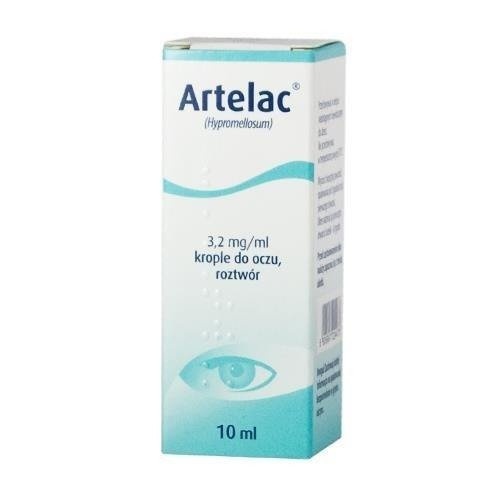



How to use Artelac
Package Leaflet: Information for the User
Warning! Keep the leaflet! Information on the immediate packaging in a foreign language.
Artelac
3.2 mg/ml, eye drops, solution
(Hypromellose)
Read the leaflet carefully before using the medicine, as it contains important information for the patient.
This medicine should always be used exactly as described in the patient information leaflet or as directed by a doctor or pharmacist.
- Keep this leaflet, you may need to read it again.
- If you need advice or additional information, consult a pharmacist.
- If the patient experiences any side effects, including any possible side effects not listed in this leaflet, they should inform their doctor or pharmacist. See section 4.
- If there is no improvement or the patient feels worse, they should contact their doctor.
Table of Contents of the Leaflet:
- 1. What is Artelac and what is it used for
- 2. Important information before using Artelac
- 3. How to use Artelac
- 4. Possible side effects
- 5. How to store Artelac
- 6. Contents of the pack and other information
1. What is Artelac and what is it used for
Artelac is an eye drop solution. The active substance is hypromellose.
Indications
Artelac is used for the symptomatic treatment of dry eye syndrome. Dry eye syndrome may occur when there is a deficiency in tear secretion or when the eyelids cannot be fully or partially closed.
The medicine may also be used to moisten hard contact lenses.
If there is no improvement or the patient feels worse, they should contact their doctor.
One in five patients treated by an ophthalmologist has symptoms of dry eye syndrome. There are many causes of this condition, such as reduced tear production in older age, working in an air-conditioned room, working on a computer, hormonal changes during menopause, etc. Environmental pollution and climate can also play a role in the development of dry eye syndrome.
Understanding the term "dry eye"
Daily, we blink our eyelids about 14,000 times. During each blink, a very thin layer of tears is spread over the surface of the eyeball, which maintains smoothness, cleanliness, and moisture, and protects against environmental pollutants. If the amount or composition of the tear fluid is disturbed, the phenomenon of drying of the cornea and conjunctiva occurs, which causes symptoms such as burning, feeling of dryness, feeling of sand in the eye, feeling of pressure, and hypersensitivity to light.
2. Important information before using Artelac
When not to use Artelac
Warnings and precautions
Before starting to use Artelac, the patient should discuss it with their doctor or pharmacist:
- Artelac is intended for use in the eyes only.
- If symptoms of eye irritation, eye pain, redness of the eyes, vision problems occur or worsen, the patient should stop using the medicine and consult an ophthalmologist.
- If the symptoms of dry eye syndrome persist or worsen, the patient should consult their doctor about using the medicine.
- The patient should remove contact lenses before administering the medicine and not put them back in for at least 15 minutes.
Artelac and other medicines
The patient should tell their doctor or pharmacist about all medicines they are currently taking or have recently taken, as well as any medicines they plan to take.
Interactions with other medicines are not known at present.
If Artelac is used with other locally administered eye medicines, a 15-minute interval should be maintained between the administration of the medicines. Artelac should always be administered last, after a 15-minute interval from the administration of another medicine, to ensure sufficient time for the moisturizing effect of Artelac.
Pregnancy and breastfeeding
If the patient is pregnant or breastfeeding, thinks they may be pregnant, or plans to have a child, they should consult their doctor or pharmacist before using this medicine.
Artelac should not be used during pregnancy and breastfeeding, unless the doctor decides otherwise.
Driving and using machines
Artelac may cause temporary blurred vision after administration. The patient should not drive or operate machinery until their vision is clear.
Artelac contains cetrimide as a preservative. It can cause eye irritation (burning, redness, feeling of a foreign body) and damage to the corneal epithelium, especially with long-term use.
Therefore, for long-term or continuous treatment of dry eye syndrome, preservative-free medicines are recommended.
Artelac contains sodium dihydrogen phosphate dihydrate and sodium hydrogen phosphate dodecahydrate
(1 ml of solution contains 1.84 mg of phosphates).
In patients with severe damage to the transparent, anterior part of the eye (cornea), phosphates may, in very rare cases, cause corneal clouding due to calcium deposition during treatment.
3. How to use Artelac
This medicine should always be used exactly as described in the patient information leaflet or as directed by a doctor or pharmacist. If the patient is unsure, they should consult their doctor or pharmacist.
Recommended dose
Treatment of dry eye syndrome requires individual dosing.
Depending on the severity and intensity of the symptoms, usually one drop is instilled into the conjunctival sac 3 to 5 times a day, or more often if needed.
The patient should consult their ophthalmologist if they need long-term or continuous treatment with Artelac.
The medicine can also be used to moisten hard contact lenses.
Administration instructions:
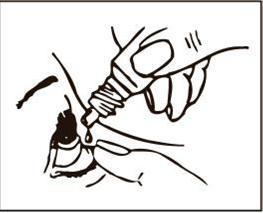
Warning!
To avoid contamination of the eye drops, the patient should not touch the dropper tip with their fingers or touch it to the surface of the eye or any other surface.
Using contaminated drops can lead to serious eye damage, including vision loss.
- 1. Wash hands thoroughly.
- 2. Remove the protective cap.
- 3. Hold the bottle vertically over the eye, with the thumb and index finger.
- 4. Tilt the head back.
- 5. With the index finger of the other hand, gently pull down the lower eyelid to create a "pocket" between the eyeball and the eyelid, where the medicine will be instilled.
- 6. Bring the tip of the bottle close to the eye, without touching the dropper to the eye, eyelid, or surrounding areas.
- 7. Gently squeeze the bottle to release a single drop of medicine.
- 8. Looking up, instill 1 drop of medicine into the created "pocket". If the drop does not get into the eye, repeat the action.
- 9. Try to keep the eye open and move it to distribute the drop evenly.
- 10. If drops are to be administered to both eyes, repeat the above steps for the second eye.
- 11. Close the bottle immediately after use.
Having someone else help or using a mirror can make it easier to administer the medicine.
If the patient feels that the effect of Artelac is too strong or too weak, they should consult their doctor or pharmacist.
Using a higher dose of Artelac than recommended
If a higher dose of Artelac is used than recommended, it may cause blurred vision, which will clear up quickly.
Missing a dose of Artelac
If a dose is missed, the next dose should be taken at the usual time, according to the recommended dosing schedule. The patient should not take a double dose to make up for the missed dose.
If the patient has any further questions about using this medicine, they should consult their doctor or pharmacist.
4. Possible side effects
Like all medicines, Artelac can cause side effects, although not everybody gets them.
The frequency of possible side effects is defined as follows:
Very common -
occurring in more than 1 in 10 patients.
Common -
occurring in 1 to 10 in 100 patients.
Uncommon -
occurring in 1 to 10 in 1,000 patients.
Rare -
occurring in 1 to 10 in 10,000 patients.
Very rare -
occurring in less than 1 in 10,000 patients.
Frequency not known - cannot be estimated from the available data.
The following side effects may occur:
Frequency not known:
- Conjunctival hyperemia;
- Eye irritation;
- Eye pain;
- Itching of the eye;
- Burning sensation in the eye;
- Redness of the eye;
- Feeling of a foreign body in the eye;
- Excessive tearing;
- Stickiness of the eyelids;
- Visual disturbances;
- Hypersensitivity;
- Itching;
- Rash;
- Corneal clouding due to calcium deposition (see section 2 for more information).
Reporting side effects
If the patient experiences any side effects, including any possible side effects not listed in this leaflet, they should inform their doctor or pharmacist. Side effects can be reported directly to the Department of Medicinal Product Monitoring, Office for Registration of Medicinal Products, Medical Devices, and Biocidal Products, Al. Jerozolimskie 181 C, 02-222 Warsaw, tel.: +48 22 49 21 301, fax: + 48 22 49 21 309, website: https://smz.ezdrowie.gov.pl.
By reporting side effects, more information can be gathered on the safety of the medicine.
5. How to store Artelac
Keep out of the sight and reach of children.
Do not store above 30°C.
Shelf life after first opening the bottle - 6 weeks.
Discard any unused contents of the pack after 6 weeks from first opening the bottle.
Do not use after the expiry date stated on the packaging. The expiry date refers to the last day of the given month.
Medicines should not be disposed of via wastewater or household waste. The patient should ask their pharmacist how to dispose of medicines they no longer need. This will help protect the environment.
6. Contents of the pack and other information
What Artelac contains
- The active substance is hypromellose. 1 ml of solution contains 3.2 mg of hypromellose.
- The other ingredients are: cetrimide, disodium edetate, sodium dihydrogen phosphate dihydrate, sodium hydrogen phosphate dodecahydrate, sorbitol, water for injections.
What Artelac looks like and contents of the pack
Artelac is an eye drop solution.
Pack sizes:
A 10 ml bottle of eye drops.
For more detailed information, the patient should contact the marketing authorization holder or the parallel importer.
Marketing authorization holder in Germany, the country of export:
Dr. Gerhard Mann, Chem.-pharm. Fabrik GmbH
Brunsbütteler Damm 165-173
13581 Berlin
Germany
Manufacturer:
Dr. Gerhard Mann, Chem.-pharm. Fabrik GmbH
Brunsbütteler Damm 165-173
13581 Berlin
Germany
Parallel importer:
InPharm Sp. z o.o.
ul. Strumykowa 28/11
03-138 Warsaw
Repackaged by:
InPharm Sp. z o.o. Services sp. k.
ul. Chełmżyńska 249
04-458 Warsaw
Marketing authorization number in Germany, the country of export:50145.00.00
Parallel import authorization number:247/13
Date of leaflet approval: 14.02.2023
[Information about the trademark]
- Country of registration
- Active substance
- Prescription requiredNo
- Marketing authorisation holder (MAH)Dr. Gerhard Mann Chem.-Pharm. Fabrik GmbH
- This information is for reference only and does not constitute medical advice. Always consult a licensed doctor before taking any medication. Oladoctor is not responsible for medical decisions based on this content.
- Alternatives to ArtelacDosage form: Drops, 3.2 mg/mlActive substance: hypromelloseManufacturer: Dr Gerhard Mann Chem.-pharm. Fabrik GmbHPrescription not requiredDosage form: Drops, 3.2 mg/mlActive substance: hypromellosePrescription not requiredDosage form: Drops, 50 mcg/ml + 5 mg/mlActive substance: timolol, combinationsManufacturer: Pharmaselect International Beteiligungs GmbHPrescription not required
Online doctors for Artelac
Discuss dosage, side effects, interactions, contraindications, and prescription renewal for Artelac – subject to medical assessment and local rules.

Get updates and exclusive offers
Be the first to know about new services, marketplace updates, and subscriber-only promos.

