

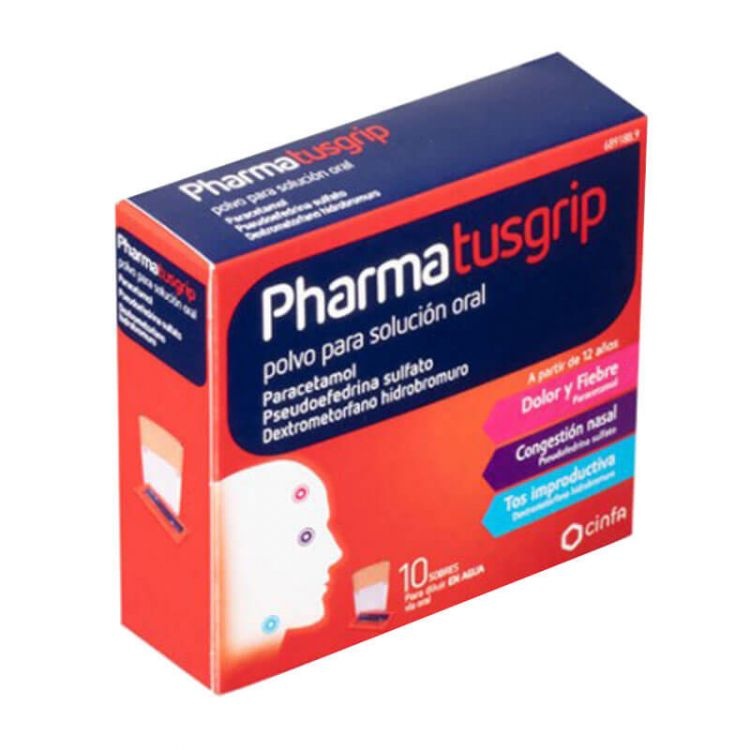
PHARMAGRIP JUNIOR COUGH & NASAL CONGESTION ORAL SOLUTION GRANULES




How to use PHARMAGRIP JUNIOR COUGH & NASAL CONGESTION ORAL SOLUTION GRANULES
Translated with AI
This page provides general information and does not replace a doctor’s consultation. Always consult a doctor before taking any medication. Seek urgent medical care if symptoms are severe.
Show originalContents of the leaflet
- Introduction
- What Pharmagrip Junior Cough and Nasal Secretion is and what it is used for
- What you need to know before taking Pharmagrip Junior Cough and Nasal Secretion
- How to take Pharmagrip Junior Cough and Nasal Secretion
- Possible Side Effects
- Storage of Pharmagrip Junior Cough and Nasal Secretion
- Package Contents and Additional Information
Introduction
Leaflet: Information for the User
Pharmagrip Junior Cough and Nasal Secretion Granules for Oral Solution
Paracetamol / Chlorphenamine Maleate / Dextromethorphan Hydrobromide
Read the entire leaflet carefully before starting to take this medication, as it contains important information for you.
Follow the administration instructions for the medication contained in this leaflet or as indicated by your doctor or pharmacist exactly.
- Keep this leaflet, as you may need to read it again.
- If you need advice or more information, consult your pharmacist.
- If you experience side effects, consult your doctor or pharmacist, even if they are side effects not listed in this leaflet. See section 4.
- You should consult your doctor if your condition worsens or does not improve after 3 days.
Contents of the Leaflet
- What Pharmagrip Junior Cough and Nasal Secretion is and what it is used for.
- What you need to know before taking Pharmagrip Junior Cough and Nasal Secretion.
- How to take Pharmagrip Junior Cough and Nasal Secretion.
- Possible side effects.
- Storage of Pharmagrip Junior Cough and Nasal Secretion.
- Package contents and additional information.
1. What Pharmagrip Junior Cough and Nasal Secretion is and what it is used for
This medication is an association of paracetamol that reduces fever and relieves pain, dextromethorphan that is a cough suppressant, and chlorphenamine that helps reduce nasal secretion.
This medication is indicated for the symptomatic relief of colds and flu that present with mild or moderate pain such as headache, fever, non-productive cough (irritative cough, nervous cough), and nasal secretion for children over 6 years and adolescents.
You should consult your doctor if your condition worsens or does not improve after 3 days of treatment.

2. What you need to know before taking Pharmagrip Junior Cough and Nasal Secretion
This medication can cause dependence. Therefore, treatment should be short-term.
Do not takePharmagrip Junior Cough and Nasal Secretion
- If you are allergic to paracetamol, chlorphenamine, dextromethorphan, or any of the other components of this medication (listed in section 6).
- If you have severe liver or kidney disease.
- If you are being treated or have been treated in the last 2 weeks with a medication called a monoamine oxidase inhibitor (MAOI) used to treat depression, medications that inhibit serotonin reuptake (SSRIs) used to treat depression, bupropion which is a medication used to quit smoking, linezolid which is an antibacterial medication, procarbazine which is a medication used to treat cancer, or selegiline which is used to treat Parkinson's disease (see "Other medications and Pharmagrip Junior Cough and Nasal Secretion").
- If you have respiratory failure, asthmatic cough, and cough accompanied by expectoration.
- Children under 6 years of age cannot take this medication.
Warnings and Precautions
Consult your doctor or pharmacist before starting to take this medication.
- Do not take more than the recommended dose in section 3 "How to take Pharmagrip Junior Cough and Nasal Secretion". Taking more than the recommended dose (overdose) can result in liver damage. In case of overdose, seek medical help immediately. Quick medical attention is critical for adults, as well as for children, even if you do not perceive any signs or symptoms.
- Chronic alcoholics should ask their doctor if they can take paracetamol, other pain relievers, or fever-reducing medications. Additionally, they should be cautious not to take more than 6 sachets per day (2 grams of paracetamol).
- While taking this medication, you cannot take other medications that contain paracetamol because a paracetamol overdose could occur, which could damage the liver.
- If you are taking other medications such as antidepressants or antipsychotics, this medication may interact with these medications, and you may experience changes in your mental state (e.g., agitation, hallucinations, coma) and other effects such as body temperature above 38°C, increased heart rate, high blood pressure, and exaggerated reflexes, muscle stiffness, lack of coordination, and/or gastrointestinal symptoms (e.g., nausea, vomiting, and diarrhea).
- Patients with kidney, heart, or lung disease and patients with anemia.
- Patients with liver disease (with or without liver failure) or viral hepatitis, as this increases the risk of hepatotoxicity.
- Patients with asthma who are sensitive to acetylsalicylic acid.
- Patients who are sensitive (allergic) to an antihistamine, as they may be sensitive to others (such as chlorphenamine).
- Patients with high blood pressure (high blood pressure), glaucoma (high eye pressure), hyperthyroidism, obstruction of the vesical neck, difficulty urinating, symptomatic prostatic hyperplasia, urinary retention.
- Elderly patients who may be more sensitive to the side effects of this medication.
- Patients with atopic dermatitis.
- Patients with persistent respiratory disease such as emphysema, chronic bronchitis, bronchial asthma.
- Patients who are slow metabolizers of CYP2D6 or who use CYP2D6 inhibitors.
- If you have severe diseases, such as severe renal failure or sepsis (when bacteria and their toxins circulate in the blood, causing damage to organs), or if you have malnutrition, chronic alcoholism, or are also taking flucloxacillin (an antibiotic). A serious disease called metabolic acidosis (an anomaly in blood and fluids) has been reported in patients in these situations when paracetamol is used at regular doses for a prolonged period or when paracetamol is taken with flucloxacillin. The symptoms of metabolic acidosis may include: severe breathing difficulties with deep and rapid breathing, drowsiness, feeling of discomfort (nausea) and vomiting.
- In case of glucose-6-phosphate dehydrogenase (G6PD) deficiency (can cause hemolytic anemia)
This medication can cause drowsiness. Avoid consuming alcoholic beverages and certain medications while taking this medication, as they can potentiate this effect. Consult the sections "Other medications and Pharmagrip Junior Cough and Nasal Secretion" and "Taking Pharmagrip Junior Cough and Nasal Secretion with food, beverages, and alcohol".
Sedated, debilitated, or bedridden patients should not take this medication.
Rarely, severe skin reactions with redness, blisters, or eruptions can occur. If you notice any of these symptoms, stop treatment and consult your doctor.
Other medications and Pharmagrip Junior Cough and Nasal Secretion
Inform your doctor or pharmacist if you are taking, have recently taken, or may need to take any other medication.
In particular, if you are using any of the following medications, it may be necessary to modify the dose of some of them or interrupt treatment:
- Medications to treat epilepsy (lamotrigine, phenytoin, or other hydantoins, phenobarbital, methylphenobarbital, and primidone).
- Medications to treat tuberculosis (isoniazid and rifampicin).
- Medications to prevent blood clots (oral anticoagulants) such as acenocoumarol and warfarin.
- Medications used to increase urine elimination (loop diuretics such as furosemide, or other diuretics), and other diuretics that cause potassium loss (such as diuretics to treat hypertension or others).
- Medications used to prevent nausea and vomiting (metoclopramide and domperidone).
- Medications used to treat gout (probenecid).
- Medications used to treat high blood pressure (hypertension), such as propranolol, and heart rhythm disorders (cardiac arrhythmias), such as amiodarone or quinidine.
- Medications to lower cholesterol levels in the blood (cholestyramine).
- Medications used to treat depression (moclobemide, tranylcypromine, fluoxetine, paroxetine, and bupropion), Parkinson's disease (selegiline), or other diseases, such as cancer (procarbazine), infections (linezolid and furazolidone). This medication should be administered at least 14 days after finishing the treatment.
- Other medications to treat depression, called tricyclic and tetracyclic antidepressants (such as maprotiline).
- Medications for schizophrenia (such as haloperidol).
- Medications that produce depression of the central nervous system (such as those used for insomnia or anxiety, for Parkinson's disease, and for allergies).
- Ototoxic medications (which have the adverse effect of damaging the ear).
- Photosensitizing medications (which have the adverse effect of producing allergy to light).
- Medications used for pain and inflammation relief (celecoxib, parecoxib, and valdecoxib).
- Medications used to increase mucus secretion.
- Metoprolol, used to treat cardiovascular system diseases (hypertension, acute myocardial infarction).
- Isovuconazole, used to treat invasive aspergillosis and invasive mucormycosis.
Also, inform your doctor or pharmacist if you are taking:
- Flucloxacillin (antibiotic), due to a serious risk of alteration of blood and fluids (called metabolic acidosis with high anion imbalance) that should be treated urgently (see section 2).
Interference with analytical tests:
If you are going to undergo any diagnostic test (including blood tests, urine tests, skin tests using allergens, etc.), inform your doctor that you are taking this medication, as it may alter the results.
Taking Pharmagrip Junior Cough and Nasal Secretion with food, beverages, and alcohol
While taking this medication, you cannot consume alcoholic beverages, as it can potentiate the appearance of adverse effects of this medication.
Additionally, the use of medications containing paracetamol by patients who habitually consume alcohol (3 or more alcoholic beverages - beer, wine, liquor... - per day) can cause liver damage.
Do not take the medication with grapefruit or bitter orange juice, as it can potentiate the effects of one of its components (dextromethorphan).
Pregnancy and Breastfeeding
If you are pregnant or breastfeeding, think you may be pregnant, or plan to become pregnant, consult your doctor or pharmacist before using this medication.
Taking medications during pregnancy can be hazardous to the embryo or fetus and should be monitored by your doctor.
This medication should not be taken during pregnancy unless your doctor considers it strictly necessary.
The 3 active principles of this medication are excreted in breast milk; therefore, breastfeeding women should not take this medication.
Driving and Using Machines
This medication can cause drowsiness and mild dizziness, altering mental and/or physical ability. If you notice these effects, avoid driving vehicles or using machines.
Pharmagrip Junior Cough and Nasal Secretion contains sodium.This medication contains less than 23 mg of sodium (1 mmol) per sachet; it is essentially "sodium-free".
Pharmagrip Junior Cough and Nasal Secretion contains sucrose.If your doctor has indicated that you have an intolerance to certain sugars, consult with them before taking this medication. Patients with diabetes mellitus should note that this medication contains 4.1 g of sucrose per sachet.
Pharmagrip Junior Cough and Nasal Secretion contains orange yellow S (E-110).This medication can cause allergic reactions because it contains orange yellow S (E-110). It can cause asthma, especially in patients allergic to acetylsalicylic acid.
3. How to take Pharmagrip Junior Cough and Nasal Secretion
Follow the administration instructions for the medication contained in this leaflet or as indicated by your doctor or pharmacist exactly. In case of doubt, ask your doctor or pharmacist.
The recommended dose is:
Children from 6 to 12 years: (weight between 21.5 kg and 43 kg) 1 sachet every 6 or 8 hours (3 or 4 times a day) as needed.
Severe side effects can occur in children in case of overdose, including neurological disorders. Caregivers should not exceed the recommended dose.
Over 12 years (weight over 44 kg) 2 sachets every 6 or 8 hours (3 or 4 times a day) as needed.
Preferably take 1 dose before bedtime. Do not exceed 4 doses per day.
This medication is contraindicated in children under 6 years of age.
Always use the lowest effective dose.
Start treatment when the first symptoms appear and stop as they disappear.
This medication should not be used for more than 3 consecutive days without consulting a doctor (see section 1 "What Pharmagrip Junior Cough and Nasal Secretion is and what it is used for").
How to take:
The granules contained in the sachets of this medication are for oral administration.
Pour the contents of a sachet into a half glass of water and stir until dissolved.
If you take more Pharmagrip Junior Cough and Nasal Secretion than you should
Go immediately to a medical center, even if you do not have symptoms, as they often do not manifest until 3 days after ingestion of the overdose, even in cases of severe poisoning.
The most severe effect of an overdose of this medication is liver damage caused by paracetamol. You may feel dizzy, vomit, confused, excited, restless, nervous, irritable, visual disturbances, loss of appetite, yellowing of the skin and eyes (jaundice), abdominal pain, and difficulty breathing. In children, states of stupor or alterations in gait.
Overdose can also cause: coagulation disorders (blood clots and bleeding).
If you take more medication than indicated, you may experience the following symptoms: nausea and vomiting, involuntary muscle contractions, agitation, confusion, drowsiness, disorders of consciousness, rapid and involuntary eye movements, cardiac disorders (accelerated heart rate), coordination disorders, psychosis with visual hallucinations, and hyperexcitability.
Other symptoms in case of massive overdose may be: coma, severe respiratory problems, and convulsions.
Contact your doctor or hospital immediately if you experience any of the mentioned symptoms.
There have been cases of abuse with medications containing dextromethorphan, which can cause severe side effects, such as agitation, confusion, conversion disorders, hallucinations, ataxia (uncoordinated movements), coma, decreased consciousness, dysarthria (speech difficulty), apathy, dystonia, nystagmus (involuntary and uncontrolled eye movement), convulsions, serotonin syndrome, tremors, depression, and central nervous system excitement, miosis, and mydriasis (contraction and dilation of the eye pupil), respiratory depression, urinary retention, tachycardia, hypertension, and ischemic colitis.
Symptoms of overdose by chlorphenamine can be central nervous system depression, hyperthermia, anticholinergic syndrome (mydriasis, flushing, fever, dry mouth, urinary retention, decreased intestinal sounds), tachycardia, hypotension, hypertension, nausea, vomiting, agitation, confusion, hallucinations, psychosis, convulsions, or arrhythmias. Patients with prolonged agitation, coma, or convulsions may rarely develop rhabdomyolysis and renal failure.
Treatment of overdose is more effective if started within 4 hours after ingestion of the medication. Patients being treated with barbiturates or chronic alcoholics may be more susceptible to the toxicity of a paracetamol overdose.
In case of overdose or accidental ingestion, consult your doctor or pharmacist immediately or call the Toxicology Information Service, phone 91 562 04 20, indicating the medication and the amount ingested.

4. Possible Side Effects
Like all medications, this medication can cause side effects, although not everyone will experience them.
The following side effects were reported in at least 1 in 100 subjects during clinical trials with chlorphenamine: drowsiness, dry mouth, dizziness, restlessness, pharyngitis, and dyspepsia.
During the period of use of the association of paracetamol, dextromethorphan, and chlorphenamine, the following side effects have occurred, whose frequency cannot be established with precision: anaphylactic reaction, hypersensitivity, insomnia, excitement, nervousness, and restlessness (psychomotor hyperactivity), more common in children and the elderly.
Similarly: gastrointestinal disorders, such as abdominal pain, diarrhea, nausea, vomiting, and indigestion (dyspepsia), angioedema (swelling of certain areas of the skin), pruritus, urticaria, pruritic rash, skin eruption, skin lesions after taking the medication (fixed drug eruption), as well as increased transaminases.
The following side effects were reported with paracetamol with an unknown frequency (cannot be estimated from the available data): A serious disease that can make the blood more acidic (called metabolic acidosis) in patients with severe disease using paracetamol (see section 2).
Very rare cases of severe skin reactions have been reported.
Simultaneous consumption of alcohol during treatment can accentuate the appearance of side effects. Do not consume alcoholic beverages during the same.
Reporting Side Effects
If you experience any type of side effect, consult your doctor or pharmacist, even if it is a possible side effect not listed in this leaflet. You can also report them directly through the Spanish Pharmacovigilance System for Human Use Medications: https://www.notificaram.es. By reporting side effects, you can contribute to providing more information on the safety of this medication.
5. Storage of Pharmagrip Junior Cough and Nasal Secretion
Keep this medicine out of the sight and reach of children.
Do not store above 30°C.
Do not use this medicine after the expiry date stated on the packaging after CAD. The expiry date is the last day of the month indicated.
Medicines should not be disposed of via wastewater or household waste. Deposit the packaging and any unused medicines at the SIGRE collection point in your pharmacy. If in doubt, ask your pharmacist how to dispose of the packaging and any unused medicines. This will help protect the environment.
6. Package Contents and Additional Information
Composition ofPharmagrip Junior Cough and Nasal Secretion
- The active ingredients are: 300 mg of paracetamol, 15 mg of dextromethorphan hydrobromide, and 2 mg of chlorphenamine maleate.
- The other ingredients are: sucrose, anhydrous citric acid, sodium cyclamate, orange yellow S (E-110), quinoline yellow (E-104), orange flavor (contains flavoring preparation(s), flavoring substance(s), corn maltodextrin, arabic gum (E-414), ascorbic acid (E-300), butylated hydroxyanisole (BHA) (E-320)), sodium saccharin (E-954), polysorbate 80, and titanium dioxide (E-171).
Appearance of the Product and Package Contents
Oral solution granule of a slightly orange-white color.
After reconstitution in water, it appears as a transparent orange oral solution.
This medicine is presented in sachets containing 5 g of oral solution granule. It is a complex formed by paper/aluminum/polyethylene.
Each package contains 10 sachets.
Marketing Authorization Holder and Manufacturer
Laboratorios Cinfa, S.A.
Carretera Olaz-Chipi, 10. Polígono Industrial Areta
31620 Huarte (Navarra) - Spain
Date of the Last Revision of this Leaflet:March 2025
Detailed information on this medicine is available on the website of the Spanish Agency for Medicines and Health Products (AEMPS) http://www.aemps.gob.es/
-

- Country of registration
- Dosage formORAL SOLUTION/SUSPENSION, 300 mg/2 mg/15 mg
- Prescription requiredNo
- Manufacturer
- CompositionSACAROSA (4113,44 mg mg), CICLAMATO DE SODIO (150 mg mg), AMARILLO ANARANJADO S (E 110, CI=15985) (0,27 mg mg), SACARINA SODICA (15 mg mg), POLISORBATO 80 (3 mg mg)
- This information is for reference only and does not constitute medical advice. Always consult a doctor before taking any medication. Oladoctor is not responsible for medical decisions based on this content.
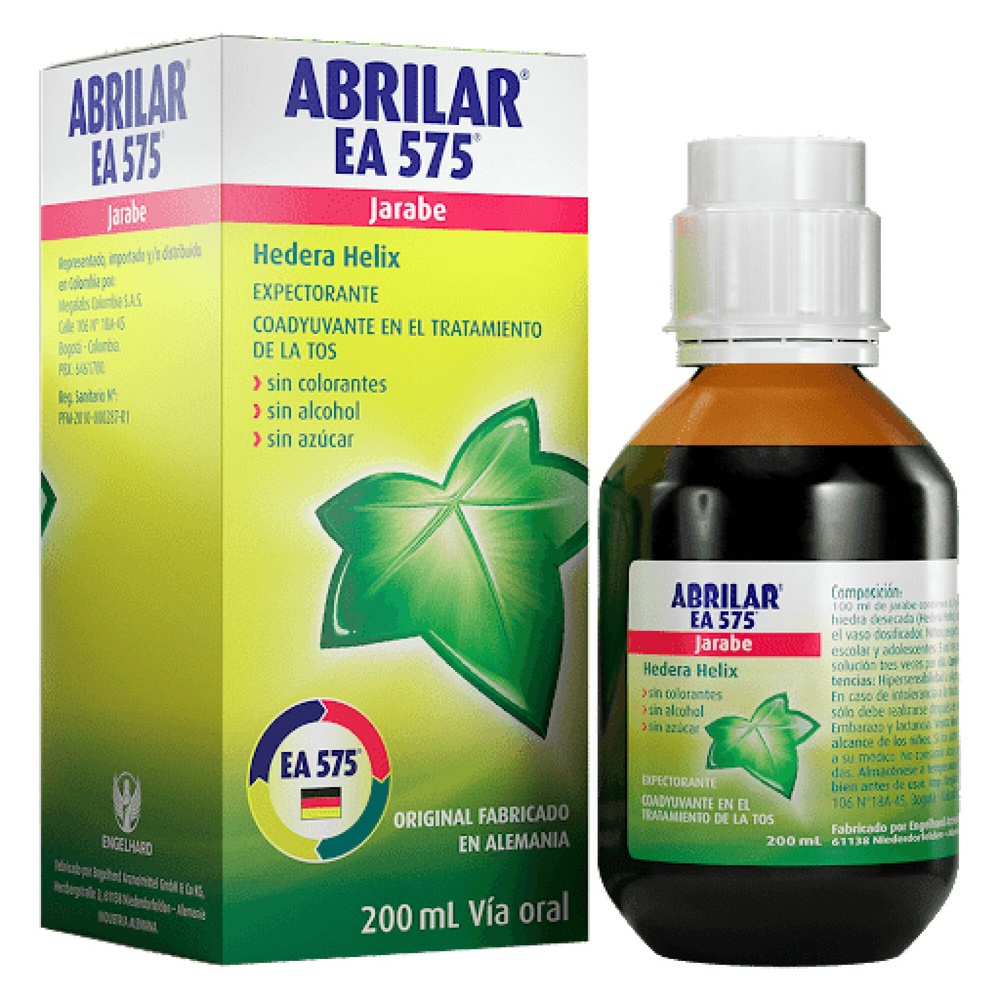
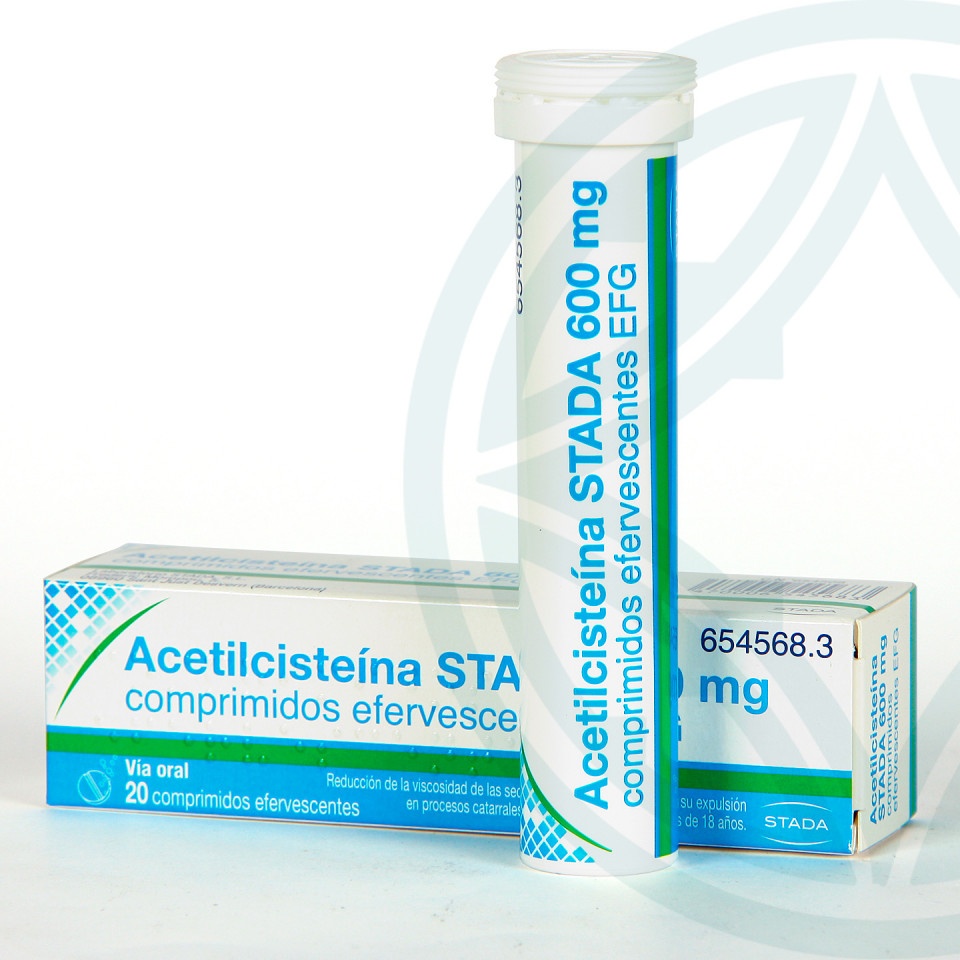
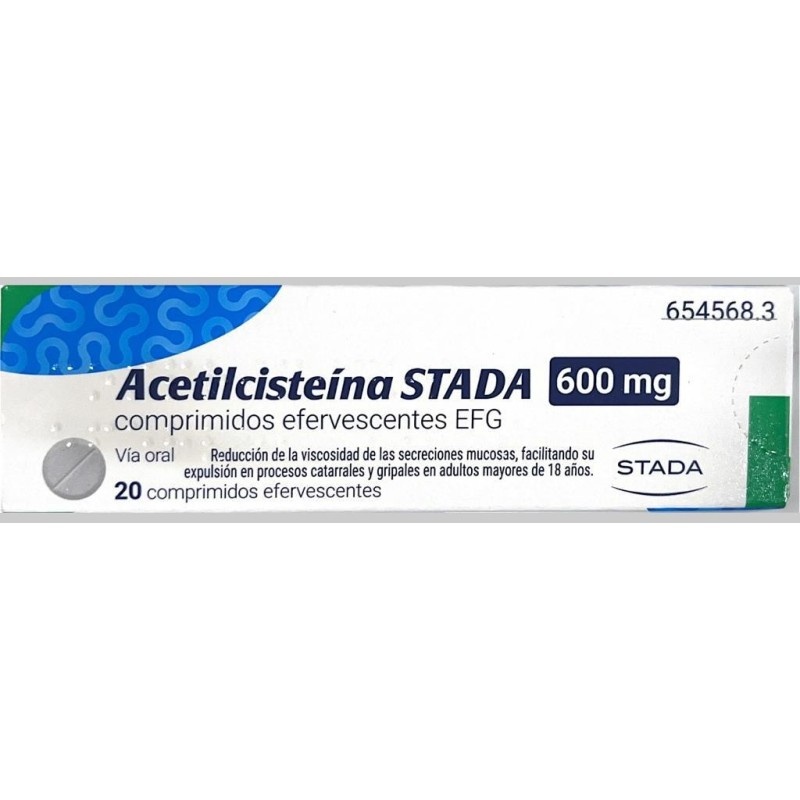
- Alternatives to PHARMAGRIP JUNIOR COUGH & NASAL CONGESTION ORAL SOLUTION GRANULESDosage form: ORAL SOLUTION/SUSPENSION, 7 mg/mlActive substance: Hederae helicis foliumManufacturer: Engelhard Arzneimittel Gmbh & Co. KgPrescription not requiredDosage form: EFFERVESCENT TABLET, 600 mgActive substance: acetylcysteineManufacturer: Kern Pharma S.L.Prescription not requiredDosage form: EFFERVESCENT TABLET, 600 mgActive substance: acetylcysteineManufacturer: Laboratorios Alter S.A.Prescription required
Online doctors for PHARMAGRIP JUNIOR COUGH & NASAL CONGESTION ORAL SOLUTION GRANULES
Discuss questions about PHARMAGRIP JUNIOR COUGH & NASAL CONGESTION ORAL SOLUTION GRANULES, including use, safety considerations and prescription review, subject to medical assessment and local regulations.

 Book a video appointment
 Book a video appointment

 Book a video appointment


Get PHARMAGRIP JUNIOR COUGH & NASAL CONGESTION ORAL SOLUTION GRANULES Prescription Online
Fill in a 2-min form
Tell us your symptoms, history, and what medicine you're requesting.
Pick a doctor or let us assign
Choose a specialist or we'll match you with the next available doctor.
Doctor reviews your case
Usually within 30 minutes. They may ask follow-up questions via chat.
Collect from any pharmacy
Electronic prescription sent to your email — valid across Spain.
Frequently Asked Questions
Is a prescription required for PHARMAGRIP JUNIOR COUGH & NASAL CONGESTION ORAL SOLUTION GRANULES?
PHARMAGRIP JUNIOR COUGH & NASAL CONGESTION ORAL SOLUTION GRANULES does not require a prescription in Spain. You can check with a doctor online whether this medicine may be appropriate for your situation.
Who manufactures PHARMAGRIP JUNIOR COUGH & NASAL CONGESTION ORAL SOLUTION GRANULES?
PHARMAGRIP JUNIOR COUGH & NASAL CONGESTION ORAL SOLUTION GRANULES is manufactured by Laboratorios Cinfa S.A.. Pharmacy brands and packaging may differ depending on the distributor.
Which doctors can assess the use of PHARMAGRIP JUNIOR COUGH & NASAL CONGESTION ORAL SOLUTION GRANULES online?
Doctors such as Family doctors, Psychiatrists, Dermatologists, Cardiologists, Endocrinologists, Gastroenterologists, Pulmonologists, Nephrologists, Rheumatologists, Hematologists, Infectious disease physicians, Allergists, Geriatricians, Paediatricians, Oncologists may assess whether PHARMAGRIP JUNIOR COUGH & NASAL CONGESTION ORAL SOLUTION GRANULES is appropriate, depending on your situation and local regulations. You can book an online consultation to discuss your symptoms and possible next steps.
How to buy PHARMAGRIP JUNIOR COUGH & NASAL CONGESTION ORAL SOLUTION GRANULES in Spain?
Spain has a well-developed healthcare infrastructure across major cities such as Madrid, Barcelona, Valencia, and Seville. Pharmacies are widely available and operate under strict regulations, ensuring access to prescribed medications.
You can buy PHARMAGRIP JUNIOR COUGH & NASAL CONGESTION ORAL SOLUTION GRANULES in Madrid, Barcelona, Seville, or Valencia at any local pharmacy with a valid prescription.
To obtain a prescription, you can use Oladoctor:
What are the alternatives to PHARMAGRIP JUNIOR COUGH & NASAL CONGESTION ORAL SOLUTION GRANULES?
Other medicines with the same active substance () include ABRILAR SYRUP, ACETYLCYSTEINE ABEX 600 mg EFFERVSCENT TABLETS, ACETYLCYSTEINE ALTER 600 mg EFFERVSCENT TABLETS. These may have different brand names or formulations but contain the same therapeutic ingredient. Always consult a doctor before switching or starting a new medicine.
