


PERINDOPRIL/INDAPAMIDE SANDOZ 2 mg/0.625 mg TABLETS
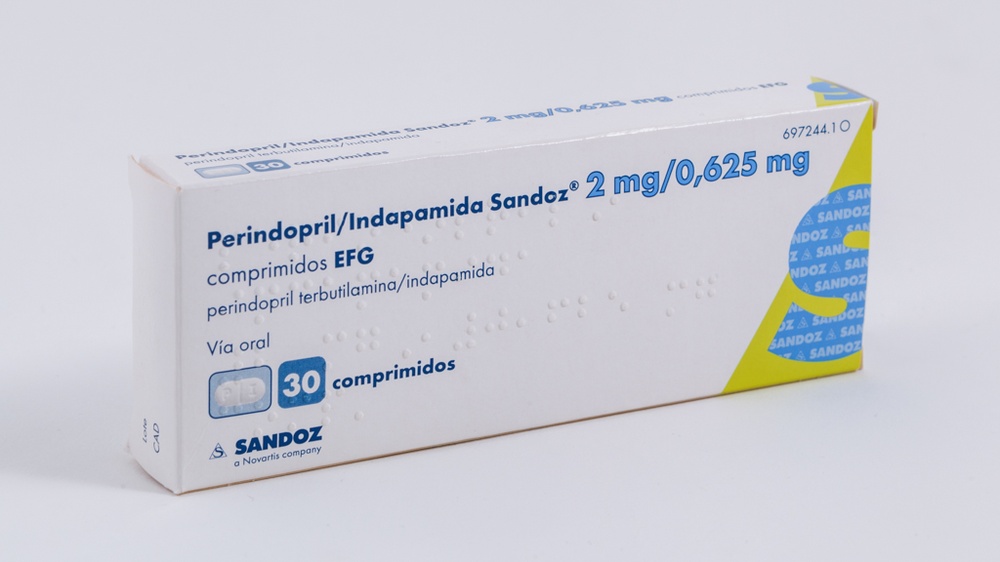



How to use PERINDOPRIL/INDAPAMIDE SANDOZ 2 mg/0.625 mg TABLETS
Translated with AI
This page provides general information and does not replace a doctor’s consultation. Always consult a doctor before taking any medication. Seek urgent medical care if symptoms are severe.
Show originalContents of the leaflet
Introduction
Package Leaflet: Information for the Patient
Perindopril/Indapamide Sandoz 2 mg/0.625 mg Tablets EFG
perindopril erbumine/indapamide.
Read the entire package leaflet carefully before starting to take the medicine, as it contains important information for you.
- Keep this package leaflet, as you may need to read it again.
- If you have any further questions, ask your doctor or pharmacist.
- This medicine has been prescribed for you only. Do not pass it on to others. It may harm them, even if their symptoms are the same as yours.
- If you experience any side effects, talk to your doctor or pharmacist. This includes any possible side effects not listed in this package leaflet. See section 4.
Contents of the Package Leaflet
- What is Perindopril/Indapamide Sandoz and what is it used for
- What you need to know before taking Perindopril/Indapamide Sandoz
- How to take Perindopril/Indapamide Sandoz
- Possible side effects
- Storage of Perindopril/Indapamide Sandoz
- Package Contents and Further Information
1. What is Perindopril/Indapamide Sandoz and what is it used for
Perindopril/Indapamide is a combination of two active substances, perindopril and indapamide. This medicine is used to treat high blood pressure (hypertension).
- Perindopril belongs to a group of medicines called ACE inhibitors. These work by widening the blood vessels, making it easier for your heart to pump blood through them.
- Indapamide is a diuretic. Diuretics increase the amount of urine produced by the kidneys. However, indapamide is different from other diuretics, as it only produces a slight increase in the amount of urine formed.
Each of the active substances lowers blood pressure and they work together to control your blood pressure.

2. What you need to know before taking Perindopril/Indapamide Sandoz
Do not take Perindopril/Indapamide Sandoz
- if you are allergicto perindopril or any other ACE inhibitor, to indapamide or other sulfonamides or to any of the other ingredients of this medicine (listed in section 6 and at the end of section 2),
- if you have experienced symptoms such as wheezing, swelling of the face or tongue, intense itching or severe skin rasheswith previous treatment with ACE inhibitors or if you or a member of your family have had these symptoms in any other circumstances (a disorder known as angioedema),
- if you have severe liver diseaseor suffer from a condition called hepatic encephalopathy(degenerative brain disease),
- if you have severe kidney diseasewhere blood flow to your kidneys is reduced (renal artery stenosis),
- if you are receiving dialysis, or any other type of blood filtration. Depending on the machine used, perindopril/indapamide may not be suitable for you,
- if you have diabetes or kidney failureand are being treated with a blood pressure-lowering medicine that contains aliskiren,
- if you have low or high potassium levels in your blood,
- if you suspect you may have untreated heart failure(severe fluid retention, difficulty breathing),
- if you are pregnant for more than 3 months(also, it is best to avoid perindopril/indapamide at the beginning of pregnancy - see section pregnancy),
- if you are breast-feeding(see section breast-feeding),
- if you have taken or are currently taking sacubitril/valsartan, a medicine used to treat a type of long-term (chronic) heart failure in adults, as the risk of angioedema (rapid swelling under the skin in an area such as the throat) is high.
Warnings and Precautions
Consult your doctor beforestarting to take Perindopril/Indapamide Sandoz:
- if you have narrowing of the main blood vesselthat comes out of the heart (aortic stenosis),
- if you have narrowing of the left valve of the heart(mitral valve stenosis),
- if you have heart muscle disease(hypertrophic cardiomyopathy)
- if you have narrowing of the artery that supplies blood to the kidney(renal artery stenosis),
- if you have heart failure or any other heart problem,
- if you have kidney problems, or if you are receiving dialysis,
- if you have abnormally high levels of a hormone called aldosteronein the blood (primary aldosteronism),
- you have liver problems,
- you suffer from a collagen disease(skin disease) such as systemic lupus erythematosus or scleroderma,
- you have atherosclerosis(hardening of the arteries),
- you suffer from hyperparathyroidism(overactivity of the parathyroid gland),
- you suffer from gout,
- you have diabetes,
- you are on a low-salt dietor are using salt substitutes that contain potassium,
- you are taking lithiumor potassium-sparing diuretics(such as eplerenone, spironolactone, triamterene) or potassium supplements, as concurrent use with perindopril/indapamide should be avoided (see “Other medicines and Perindopril/Indapamide Sandoz”),
- if you have a severe allergic reactionwith inflammation of the face, lips, mouth, tongue or throat that can cause difficulty swallowing or breathing (angioedema). This can occur at any time during treatment. If you develop these symptoms, discontinue treatment and contact your doctor immediately,
- if you are taking any of the following medicines used to treat high blood pressure:
- a receptor antagonist of angiotensin II (ARA) (also known as "sartans" - e.g. valsartan, telmisartan, irbesartan) - particularly if you have diabetes-related kidney problems,
- aliskiren.
Your doctor may monitor your kidney function, blood pressure, and blood electrolyte levels (e.g. potassium) at regular intervals.
See also the information under the heading “Do not take Perindopril/Indapamide Sandoz”,
- if you are a haemodialysis patientwith high-flux membranes.,
- if you are taking any of the following medicines, the risk of angioedema (rapid swelling under the skin in an area such as the throat) may be increased:
- racecadotril, a medicine used to treat diarrhoea,
- medicines used to prevent organ transplant rejection (e.g. temsirolimus, sirolimus, everolimus and other medicines belonging to the class of medicines called mTOR inhibitors),
- vildagliptin, a medicine used to treat diabetes,
- if you are over 70 years old,
- if you are of black origin, as you may be at higher risk of angioedema and this medicine may be less effective at lowering your blood pressure than in patients who are not of black origin,
- if you think you are (or might become) pregnant. Perindopril/indapamide is not recommended in early pregnancy, and must not be taken if you are more than 3 months pregnant, as it may cause serious harm to your baby if used after the third month of pregnancy.
You should also inform your doctor or pharmacist if you are taking or have recently taken any other medicines.
Also tell your doctor or pharmacist if you are taking:
- if you are going to undergo anaesthesiaand/or surgery,
- if you have recently suffered from diarrhoeaor vomiting, or are dehydrated,
- if you have noticed an increased sensitivity of your skin to sunlight,
- if you have a persistent dry cough,
- if you have abdominal pain with or without nausea or vomiting; these could be symptoms of a serious allergic reaction called intestinal angioedema,
- if you are going to undergo dialysisor LDL apheresis(removal of cholesterol from the blood by a machine),
- if you are going to undergo desensitization treatmentto reduce the effects of an allergy to bees or wasps,
- if you are going to undergo a medical test that requires the injection of an iodinated contrast agent(a substance that makes organs such as the kidney or stomach visible on X-rays),
- if you experience a decrease in your vision or pain in one of your eyeswhile taking perindopril/indapamide. These may be symptoms of fluid accumulation in the vascular layer of the eye (choroidal effusion) or increased pressure in your eye (glaucoma) and may occur within hours to a week after taking perindopril/indapamide. This can lead to permanent vision loss if not treated. If you have previously been allergic to penicillins or sulfonamides, you may be at higher risk of developing this.
You must discontinue treatment with perindopril/indapamide and seek medical attention.
Children and Adolescents
Do not give this medicine to children and adolescents.
Other Medicines and Perindopril/Indapamide Sandoz
Tell your doctor or pharmacist if you are taking, have recently taken or might take any other medicines.
Avoidtaking this medicine with:
- lithium(used to treat depression),
- potassium supplements(including salt substitutes),
- potassium-sparing diuretics(such as eplerenone, spironolactone, triamterene),
- and other medicines that may increase the amount of potassium in your blood (e.g. trimethoprimand co-trimoxazolealso known as trimethoprim/sulfamethoxazole for bacterial infections; ciclosporin, an immunosuppressant used to prevent rejection in organ transplants and heparin; a medicine used to thin the blood to prevent clot formation),
- estramustine (used in the treatment of cancer).
In particular, before takingthis medicine if you are taking any of the following:
- other medicines for the treatment of high blood pressure,
If you are taking an angiotensin II receptor antagonist (ARA) or aliskiren (your doctor may need to change your dose and/or take other precautions, see also the information under the headings “Do not take Perindopril/Indapamide Sandoz” and “Warnings and Precautions”), or diuretics (medicines that increase the amount of urine produced by the kidneys),
- other medicines for treating heart rhythm problems(e.g. procainamide, digoxin, hydroquinidine, disopyramide, quinidine, amiodarone, sotalol, difemanil),
- potassium-sparing medicines used in the treatment of heart failure:eplerenone and spironolactone at doses between 12.5 mg to 50 mg per day,
- sacubitril/valsartan(used to treat long-term heart failure). See sections “Do not take Perindopril/Indapamide Sandoz” and “Warnings and Precautions”,
- antihistaminesfor hay fever or allergies such as e.g. terfenadine, astemizole, mizolastine,
- bepridil(for angina pectoris),
- benzamides(for psychotic disorders e.g. sultopride),
- butyrophenones(for psychiatric disorders e.g. haloperidol),
- anaesthetic medicines,
- ionized contrast agents,
- cisapride(used to treat gastric and digestive problems),
- erythromycinfor injection (an antibiotic),
- moxifloxacinor esparfloxacino(antibiotics),
- methadone(anti-addictive medicine),
- allopurinol(for gout),
- corticosteroidsused to treat various disorders including severe asthma and rheumatoid arthritis,
- immunosuppressantsused to treat autoimmune disorders or after a transplant to prevent rejection (e.g. ciclosporin, tacrolimus),
- medicines for the treatment of cancer,
- halofantrine(for malaria),
- pentamidine(for pneumonia),
- vincamine(for symptomatic cognitive disorders in elderly patients),
- baclofen(for muscle stiffness that occurs in diseases such as multiple sclerosis),
- medicinesfor diabetessuch as insulin, metformin, glimepiride, vildagliptin and other gliptins,
- calciumincluding calcium supplements,
- stimulant laxatives(e.g. senna),
- non-steroidal anti-inflammatory medicines (NSAIDs) for pain relief(e.g. ibuprofen) or high doses of salicylates (e.g. acetylsalicylic acid),
- amphotericin Binjectable (for serious fungal diseases),
- medicines for treating mental disorders such as depression, anxiety, schizophrenia (e.g. tricyclic antidepressants, neuroleptics),
- tetracosactide(for the treatment of Crohn's disease),
- gold(sodium aurothiomalate) injectable (medicine for rheumatic disorders),
- vasodilatorsincluding nitrates (medicines that make blood vessels wider),
- medicines used for the treatment of low blood pressure, shock or asthma(e.g. ephedrine, noradrenaline or adrenaline)
- medicines, which are often used to treat diarrhoea(racecadotril) or prevent organ transplant rejection (sirolimus, everolimus, temsirolimus and other medicines belonging to the class of medicines called mTOR inhibitors). See section “Warnings and Precautions”.
Consult your doctor if you are not sure what these medicines are.
Taking Perindopril/Indapamide Sandoz with Food and Drink and Alcohol
Be particularly careful if you are on a low-salt diet. Consult your doctor before taking this medicine.
Pregnancy and Breast-feeding
If you are pregnant or breast-feeding, think you may be pregnant or are planning to have a baby, ask your doctor or pharmacist for advice before taking this medicine.
Pregnancy
Consult your doctor if you are (or think you might be) pregnant. Your doctor will normally advise you to stop taking perindopril/indapamide before you become pregnant or as soon as possible if you are already pregnant. Perindopril/indapamide is not recommended in early pregnancy and must not be taken after the third month of pregnancy, as it may cause serious harm to your baby if used after the third month of pregnancy.
Breast-feeding
Do not take perindopril/indapamide if you are breast-feeding.
Consult your doctor immediately if you are breast-feeding or about to start breast-feeding.
Driving and Using Machines
This medicine does not affect alertness, but due to the lowering of blood pressure, you may feel dizziness or weakness, especially at the beginning of treatment or when increasing the dose. If this happens, your ability to drive or operate machinery may be affected.
Perindopril/Indapamide Sandoz contains Lactose
If your doctor has told you that you have an intolerance to some sugars, consult them before taking this medicine.
3. How to Take Perindopril/Indapamide Sandoz
Follow the instructions for administration of this medicine exactly as told by your doctor. If you are unsure, consult your doctor or pharmacist again.
Take the tablets with a glass of water, preferably in the morning and before meals.
Adults
The recommended dose is one tablet once a day. Your doctor may decide to increase the dose to 2 tablets per day.
Elderly
Your doctor will decide what the best dose is for you. Occasionally, your doctor may start treatment with one perindopril/indapamide tablet once a day.
Patients with Kidney Problems
Your doctor may decide to adjust the dosage regimen if you have kidney problems.
Use in Children and Adolescents
This medicine must not be given to children and adolescents (see “Warnings and Precautions”).
If you Take More Perindopril/Indapamide Sandoz than you Should
If you ingest too many tablets, contact your doctor or go to the casualty department of your nearest hospital immediately. The most common symptom in case of overdose is low blood pressure. If low blood pressure occurs (symptoms such as dizziness or fainting), it may help to lie down with your legs raised.
If you have taken more Perindopril/Indapamide Sandoz than you should, consult your doctor or pharmacist immediately, or call the Toxicology Information Service, telephone: 91 562 04 20, stating the medicine and the amount used.
If you Forget to Take Perindopril/Indapamide Sandoz
It is important to take this medicine every day as continuous treatment is more effective. However, if you forget to take a dose, take the next dose at the usual time. Do not take a double dose to make up for a forgotten dose.
If you Stop Taking Perindopril/Indapamide Sandoz
Consult your doctor before stopping treatment with this medicine. Even if you feel well, it may be necessary to continue taking this medicine.
If you have any further questions on the use of this medicine, ask your doctor or pharmacist.

4. Possible Adverse Effects
Like all medicines, this medicine can cause adverse effects, although not all people suffer from them.
If you experience any of the following symptoms, STOP treatment with this medicine and contact your doctor immediately.These are symptoms of a severe allergic reactionand should be treated immediatelyand usually in a hospital:
- swelling of the face, eyes, lips, mouth, tongue, or throat, which can cause difficulty swallowing or breathing (angioedema) (see section 2 "Warnings and Precautions") (uncommon, may affect up to 1 in 100 people),
- chest tightness, wheezing, and shortness of breath (bronchospasm) (uncommon, may affect up to 1 in 100 people),
- severe dizziness or fainting, due to low blood pressure (frequent, may affect up to 1 in 10 people),
- severe skin reactions including erythema multiforme (skin rash that often appears with red spots with itching on the face, arms, or legs) or intense skin rash, urticaria, redness of the skin all over the body, severe itching, blistering, peeling, and swelling of the skin, inflammation of the mucous membranes (Stevens-Johnson Syndrome) or other allergic reactions (very rare, may affect up to 1 in 10,000 people).
Also, contact your doctor immediatelyif you experience any of the following adverse effects:
Rare, may affect up to 1 in 1,000 people:
- liver disorder with severe or absent urine production that can also occur with fever, nausea, fatigue, side pain, swelling of the legs, ankles, feet, face, and hands, or blood in the urine (acute renal failure),
- dark urine, discomfort (nausea) or vomiting, muscle cramps, confusion, and convulsions. These can be symptoms of a disorder called SIHAD (inadequate secretion of antidiuretic hormone).
Very Rare, may affect up to 1 in 10,000 people:
- abnormally fast or irregular heartbeats,
- chest pain,
- heart attack,
- weakness in arms or legs, or speech problems that can be a sign of a possible stroke,
- inflamed pancreas that can cause abdominal and back pain accompanied by discomfort,
- yellowing of the skin and eyes (jaundice) that could be a sign of hepatitis.
Frequency Not Known(frequency cannot be estimated from available data):
- potentially life-threatening irregular heartbeat,
- brain disease caused by liver disease (hepatic encephalopathy),
- sudden loss of vision (myopia),
- decreased vision or eye pain due to high pressure (possible sign of fluid accumulation in the vascular layer of the eye (choroidal effusion) or acute angle-closure glaucoma).
Other Adverse Effects
Frequent:may affect up to 1 in 10 people
- constipation,
- nausea,
- vomiting,
- stomach discomfort after eating (dyspepsia),
- abdominal pain,
- diarrhea,
- taste disorders,
- dry cough,
- breathing difficulties,
- vision disorders,
- noises or ringing in the ears,
- muscle cramps,
- feeling of weakness (asthenia),
- headache,
- feeling of dizziness,
- tingling, itching, or numbness without apparent cause (paresthesia),
- feeling of dizziness (vertigo),
- skin reactions (rash, hives, itching)
- changes in laboratory values in blood tests: low potassium levels.
Uncommon:may affect up to 1 in 100 people
- red spots on the skin (purpura),
- itchy skin rash (urticaria),
- groups of blisters,
- mood changes and/or sleep disorders,
- depression
- kidney disorders (renal insufficiency),
- impotence (inability to obtain or maintain an erection),
- sweating,
- high levels of eosinophils (a type of white blood cell),
- changes in laboratory parameters: high potassium levels in blood reversible upon discontinuation, low sodium levels in blood that can lead to dehydration and low blood pressure,
- drowsiness,
- fainting,
- awareness of heartbeats (palpitations),
- rapid heartbeats (tachycardia),
- very low blood sugar levels (hypoglycemia) in diabetic patients,
- inflammation of blood vessels (vasculitis),
- dry mouth,
- increased skin sensitivity to the sun (photosensitivity reactions),
- joint pain (arthralgia),
- muscle pain (myalgia),
- chest pain,
- discomfort,
- peripheral edema,
- fever,
- increased blood urea,
- increased blood creatinine,
- falls.
Rare:may affect up to 1 in 1,000 people
- fatigue,
- worsening of psoriasis,
- changes in laboratory parameters, increased liver enzyme levels, elevated bilirubin levels, low chloride levels in blood, low magnesium levels in blood,
- decreased or absent urine production,
- flushing.
Very Rare:may affect up to 1 in 10,000 people
- reduction in platelet count,
- reduction in white blood cell count, making infections more likely,
- reduction in red blood cell count that can cause paleness of the skin and produce weakness or shortness of breath (aplastic anemia or hemolytic anemia),
- low hemoglobin,
- eosinophilic pneumonia (a rare type of pneumonia),
- confusion,
- high calcium levels in blood,
- abnormal liver function.
Not Known:frequency cannot be estimated from available data
- abnormal ECG tracing,
- changes in laboratory parameters studied in blood tests: high uric acid levels and high blood sugar levels,
- blurred vision,
- discoloration, numbness, and pain in the fingers of the hands and feet (Raynaud's phenomenon),
- if you have systemic lupus erythematosus (a type of collagen disease), this may worsen.
Blood, kidney, liver, or pancreas disorders and changes in laboratory parameters (blood tests) may occur. Your doctor may need to perform blood tests to monitor your condition.
Reporting of Adverse Effects
If you experience any adverse effect, consult your doctor, pharmacist, or nurse, even if it is a possible adverse effect not listed in this leaflet. You can also report them directly through the Spanish Pharmacovigilance System for Human Use Medicines: https://www.notificaram.es. By reporting adverse effects, you can contribute to providing more information on the safety of this medicine.
5. Storage of Perindopril/Indapamida Sandoz
Keep this medicine out of sight and reach of children.
Do not use this medicine after the expiration date stated on the packaging after CAD/EXP. The expiration date is the last day of the month indicated.
Alu/Alu Blister
Do not store above 30°C.
Keep in the original packaging to protect from light and moisture.
Medicines should not be disposed of via wastewater or household waste. Deposit the packaging and medicines you no longer need at the pharmacy's SIGRE point. If in doubt, ask your pharmacist how to dispose of the packaging and medicines you no longer need. This will help protect the environment.
6. Package Contents and Additional Information
Composition of Perindopril/Indapamida Sandoz
- The active ingredients are perindopril erbumina and indapamida. Each tablet contains 2 mg of perindopril erbumina, equivalent to 1.669 mg of perindopril, and 0.625 mg of indapamida.
- The other ingredients are: hydroxypropylbetadex, lactose monohydrate, povidone K25, microcrystalline cellulose silicified, colloidal anhydrous silica, colloidal hydrated silica, and magnesium stearate.
Appearance of the Product and Package Contents
White, oblong, biconvex, scored, and engraved with "PI" on one side (score between the P and the I).
The score line should not be used to break the tablet.
The tablets are presented in Alu/Alu blister packs packaged in a cardboard box.
Package sizes:
7, 10, 14, 20, 28, 30, 50, 50x1, 60, 90, 100 tablets.
Not all package sizes may be marketed.
Marketing Authorization Holder and Manufacturer
Marketing Authorization Holder
Sandoz Farmacéutica, S.A.
Centro Empresarial Parque Norte
Edificio Roble
C/ Serrano Galvache, 56
28033 Madrid
Spain
Manufacturer
Lek Pharmaceuticals d.d.
Verovškova 57
SLO-1526 Ljubljana
Slovenia
or
LEK, S.A.
Ul Domaniewska 50 C
Warszawa, PL 02-672
Poland
or
Salutas Pharma GmbH
Otto-von-Guericke-Allee 1
39179 Barleben
Germany
or
Lek S.A.
Ul. Podlipie 16
95 010 Strykow
Poland
or
Lek Pharmaceuticals, d.d.
Trimlini 2D
9220 Lendava
Slovenia
This medicine is authorized in the Member States of the European Economic Area under the following names:
Belgium Perindopril/Indapamide Sandoz 2 mg/0.625 mg tablets
France PERINDOPRIL/ INDAPAMIDE Sandoz 2 mg/0.625 mg, tablet
Poland Panoprist
Portugal Perindopril + Indapamida Sandoz
Slovenia Voxim Combo 2 mg/0.625 mg tablets
Slovakia PERINDASAN 2 mg/0.625 mg tablets
Date of the last revision of this leaflet: December 2021
Detailed and updated information on this medicine is available on the website of the Spanish Agency for Medicines and Health Products (AEMPS) http://www.aemps.gob.es
- Country of registration
- Dosage formTABLET, 2 mg/0.625 mg
- ATC codeC09BA04
- Average pharmacy price8.82 EUR
- Active substance
- Prescription requiredYes
- Manufacturer
- This information is for reference only and does not constitute medical advice. Always consult a doctor before taking any medication. Oladoctor is not responsible for medical decisions based on this content.
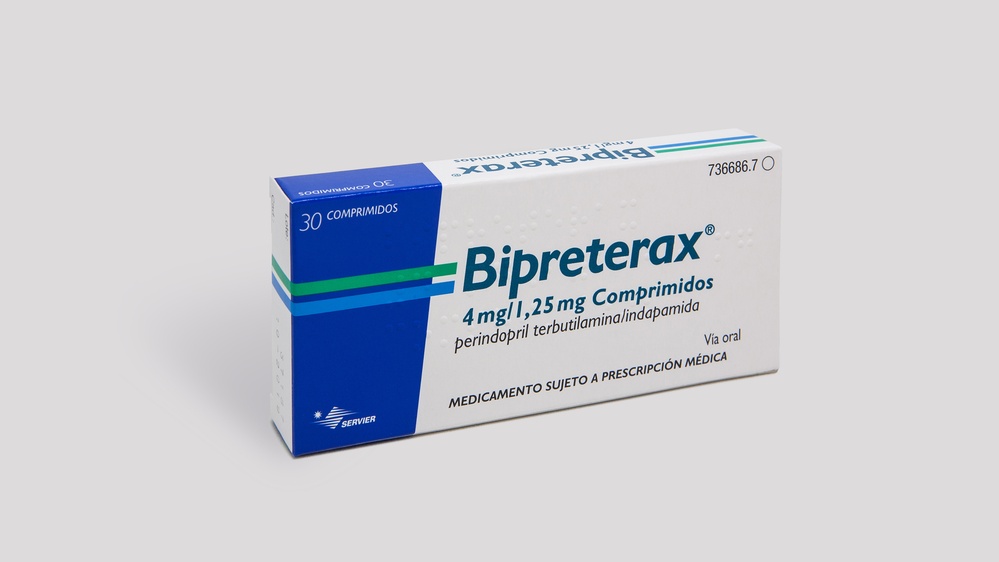
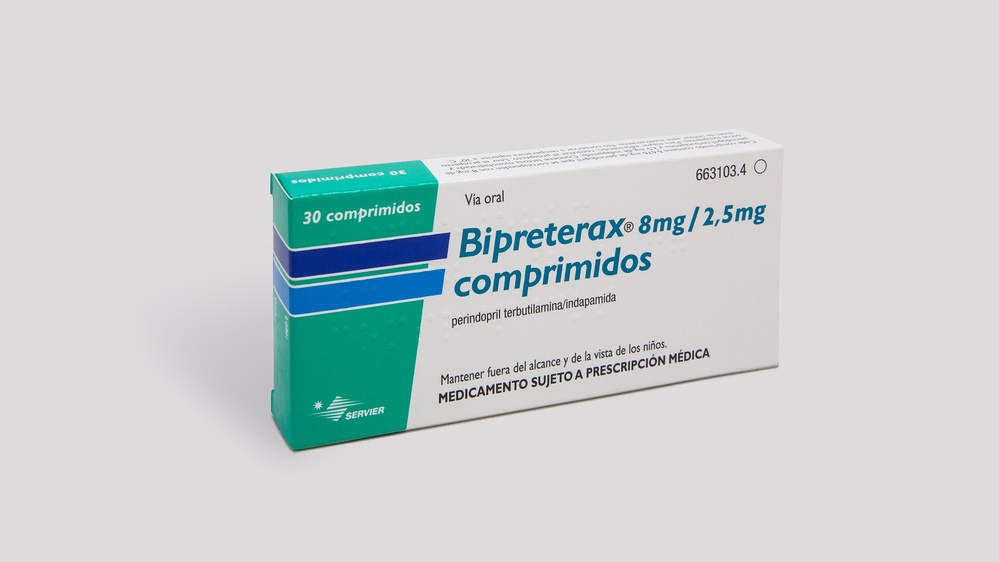
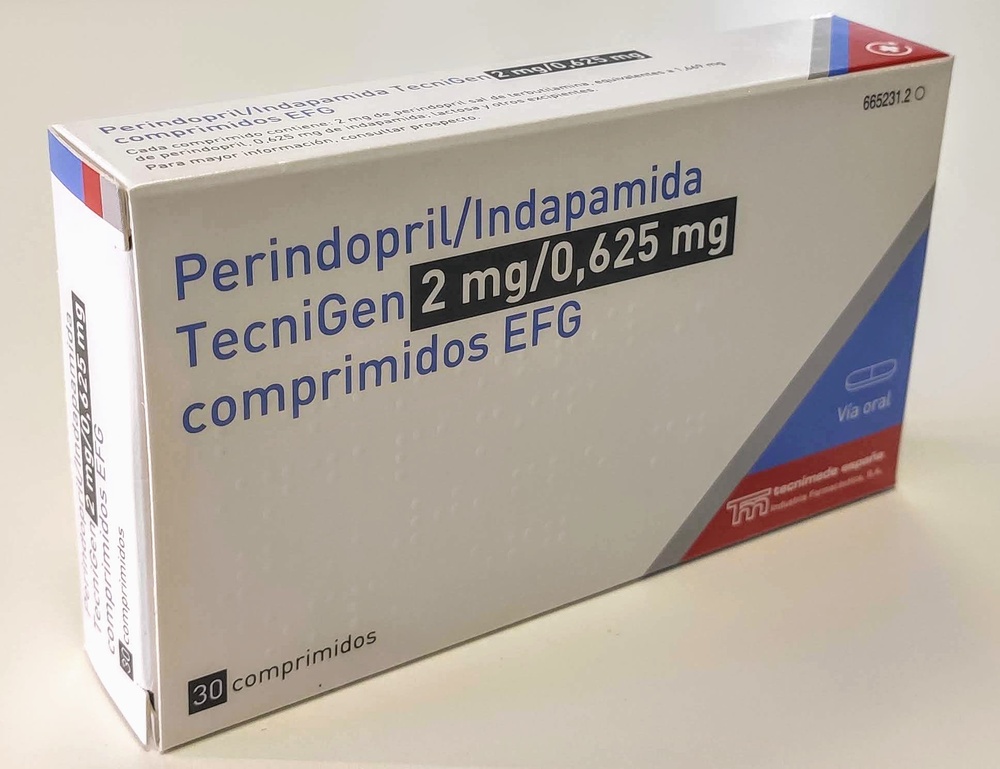
- Alternatives to PERINDOPRIL/INDAPAMIDE SANDOZ 2 mg/0.625 mg TABLETSDosage form: TABLET, 4 mg/1.25 mgActive substance: perindopril and diureticsManufacturer: Les Laboratoires ServierPrescription requiredDosage form: TABLET, 8 mg/2.5 mgActive substance: perindopril and diureticsManufacturer: Les Laboratoires ServierPrescription requiredDosage form: TABLET, 2 mg/0.625 mgActive substance: perindopril and diureticsManufacturer: Laboratorios Combix S.L.U.Prescription required
Online doctors for PERINDOPRIL/INDAPAMIDE SANDOZ 2 mg/0.625 mg TABLETS
Discuss questions about PERINDOPRIL/INDAPAMIDE SANDOZ 2 mg/0.625 mg TABLETS, including use, safety considerations and prescription review, subject to medical assessment and local regulations.






Frequently Asked Questions
