



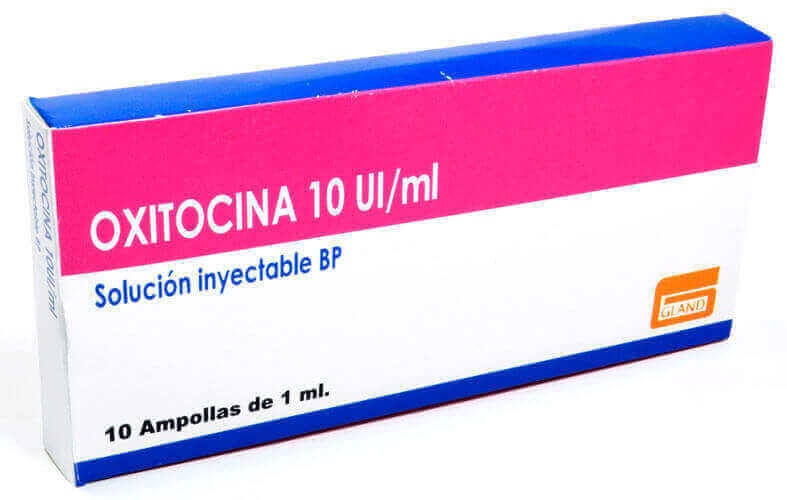
OXITOCINA 10 IU/ML Injectable Solution

Prescription review online
A doctor will review your case and decide whether a prescription is medically appropriate.

Talk to a doctor about this medicine
Discuss your symptoms and possible next steps in a quick online consultation.



How to use OXITOCIN KABI 10 IU/ML INJECTABLE SOLUTION AND PERFUSION SOLUTION
Contents of the leaflet
- Introduction
- What Oxytocin Kabi is and what it is used for
- What you need to know before you use Oxytocin Kabi
- How to use Oxytocin Kabi
- Possible side effects
- Storage of Oxytocin Kabi
- Packaging Contents and Additional Information
Introduction
Package Leaflet: Information for the User
Oxytocin Kabi 10 IU/ml Solution for Injection and Infusion
oxytocin
Read all of this leaflet carefully before you start using this medicine because it contains important information for you.
- Keep this leaflet, you may need to read it again.
- If you have any further questions, ask your doctor or nurse.
- This medicine has been prescribed for you only. Do not pass it on to others. It may harm them, even if their signs of illness are the same as yours.
- If you get any side effects, talk to your doctor or nurse. This includes any possible side effects not listed in this leaflet. See section 4.
Contents of the pack
- What Oxytocin Kabi is and what it is used for
- What you need to know before you use Oxytocin Kabi
- How to use Oxytocin Kabi
- Possible side effects
- Storage of Oxytocin Kabi
- Contents of the pack and other information
1. What Oxytocin Kabi is and what it is used for
Each ampoule of Oxytocin Kabi contains 16.7 micrograms of oxytocin (equivalent to 10 IU). Oxytocin is a hormone that acts by contracting the smooth muscle of the uterus.
Oxytocin Kabi is used:
- to initiate or aid contractions during childbirth
- during a caesarean section
- to prevent and control bleeding after childbirth
- to aid in the treatment of a spontaneous abortion.

Not sure if this medicine is right for you?
Discuss your symptoms and treatment with a doctor online.
2. What you need to know before you use Oxytocin Kabi
Do not useOxytocin Kabi
- if you are allergic to oxytocin or any of the other ingredients of this medicine (listed in section 6).
- if your doctor considers it inappropriate for you to initiate or increase uterine contractions, for example:
- in cases of obstructions that may prevent childbirth
- in cases where uterine contractions are unusually strong
- in cases where your baby may have a lack of oxygen.
- in cases where vaginal delivery or childbirth is not advisable, for example:
- if the head of your baby is too large to pass through your pelvis
- if your baby is malpositioned in the birth canal
- if the placenta is near or over the cervix of your uterus
- if your baby lacks oxygen due to blood vessels crossing the cervix of your uterus
- if the placenta separates from the uterus before the baby is born
- if there is one or more turns of the umbilical cord between the baby and the cervix of the uterus, before or after the waters break
- if your abdomen is excessively extended and is more likely to tear, for example, if you are carrying more than one baby or have too much water (amniotic fluid) in your abdomen
- if you have had five or more previous pregnancies or if your abdomen has a scar from a previous caesarean section or other surgery.
- If you have been given medicines called prostaglandins (used to induce labour or to treat stomach ulcers). Oxytocin Kabi should not be used during 6 hours after vaginal prostaglandins, as the effects of both medicines may increase.
Oxytocin Kabi should not be used for prolonged periods if:
- your contractions do not increase with treatment
- you have a severe condition known as pre-eclampsia (high blood pressure, protein in the urine, and swelling)
- you have severe cardiovascular disorders.
If you are in any of these situations or have doubts, consult your doctor before using Oxytocin Kabi.
Warnings and precautions
Oxytocin Kabi should only be administered by healthcare professionals in a hospital setting.
Consult your doctor or nurse before starting to use Oxytocin Kabi if:
- you have had a previous caesarean section
- you are prone to suffering from chest pain due to pre-existing heart and/or circulation problems
- you have an irregular heartbeat (known as long QT syndrome) or related symptoms, or are taking medicines known to cause this syndrome (see section Using Oxytocin Kabi with other medicines)
- you have high blood pressure or heart problems
- you are over 35 years old
- you have kidney problems, as Oxytocin Kabi may cause fluid retention
- you have had complications during your pregnancy (such as diabetes, high blood pressure, thyroid hormone deficiency)
- you are over 40 weeks pregnant.
When Oxytocin Kabi is administered to initiate or aid contractions during childbirth, the infusion rate should be adjusted to maintain a contraction pattern similar to that of a normal childbirth and adjusted to the individual response. Too high doses may cause continuous and very strong contractions and possibly uterine rupture, with serious complications for you and your baby.
Oxytocin Kabi should not be administered as a rapid injection into a vein as this may cause a decrease in blood pressure, a sudden and brief feeling of heat (often throughout the body), and an increase in heart rate.
Oxytocin Kabi may rarely cause disseminated intravascular coagulation, which can cause symptoms such as abnormal blood clotting, bleeding, and anaemia.
High doses of Oxytocin Kabi may cause amniotic fluid to pass from your uterus into your blood. This is known as amniotic fluid embolism.
Administration of high doses over a long period, while drinking or receiving large volumes of fluid, may cause your stomach to feel very full, difficulty breathing, and low levels of salt in the blood.
It should not be administered simultaneously with a nasal spray containing oxytocin.
If you are in any of the above circumstances or are unsure, talk to your doctor or nurse before using Oxytocin Kabi.
Latex allergy
The active ingredient of Oxytocin Kabi may cause a severe allergic reaction (anaphylactic reaction) in patients allergic to latex. Inform your doctor if you are allergic to latex.
Children and adolescents
Oxytocin Kabi is not intended for use in children or adolescents.
Using Oxytocin Kabi with other medicines
Tell your doctor that you are using, have recently used, or might use any other medicines.
The following medicines may interact with Oxytocin Kabi:
- prostaglandins (used to induce labour or to treat stomach ulcers) and similar medicines, as the effects of both medicines may increase
- anaesthetics (used to induce sleep during surgery), for example, cyclopropane or halothane, as their use with Oxytocin Kabi may cause heart rhythm problems
- medicines known to cause a heart rhythm disorder called ‘long QT syndrome’
- epidural anaesthetics (used to relieve pain during childbirth). Oxytocin Kabi may increase the effect of blood vessel constriction and cause an increase in blood pressure.
Using Oxytocin Kabi with food and drink
You may be advised to keep the amount of fluids you drink to a minimum.
Pregnancy, breastfeeding, and fertility
Oxytocin Kabi may initiate childbirth - it should only be used during pregnancy under medical supervision.
Oxytocin Kabi may be found in small amounts in breast milk, but it is not expected to have harmful effects, as it is rapidly inactivated by your baby’s digestive system.
Oxytocin Kabi will not affect your newborn baby during breastfeeding.
Driving and using machines
Oxytocin Kabi may induce childbirth, so caution is required when driving or operating machinery.
3. How to use Oxytocin Kabi
Your doctor will decide when and how to treat you with Oxytocin Kabi. If you think the effect of Oxytocin Kabi is too strong or too weak, tell your doctor. While you are receiving Oxytocin Kabi, both you and your baby will be closely monitored.
Oxytocin Kabi is usually diluted before use and administered as an intravenous infusion (drip) in one of your veins. To prepare the intravenous infusion, your doctor may use half a dose of Oxytocin Kabi 10 IU/ml solution for injection and infusion.
In certain circumstances, 1 ml of Oxytocin Kabi 5-10 IU may be injected undiluted into the muscle.
The usual dose is different in the following circumstances:
To initiate or aid contractions during childbirth
Oxytocin Kabi will be administered as a drip infusion into a vein or, preferably, by means of a variable-speed infusion pump. In the case of drip infusion, it is recommended to add 5 IU of Oxytocin Kabi to 500 ml of a physiological electrolyte solution (such as sodium chloride 0.9%). For patients in whom sodium chloride infusion should be avoided, a 5% dextrose solution may be used as a diluent.
The infusion rate will start at 2-8 drops per minute (1-4 milliunits per minute). This can be gradually increased up to a maximum rate of 40 drops per minute (20 milliunits per minute). The infusion can often be reduced once contractions reach an adequate level (more than 3-4 contractions every 10 minutes).
If your contractions do not reach an adequate level after 0.5 ml of Oxytocin Kabi 10 IU/ml, the attempt to initiate labour should be stopped and repeated the next day.
Caesarean section
The dose is 0.5 ml of Oxytocin Kabi 10 IU/ml administered as a drip infusion (5 IU diluted in physiological sodium chloride solution) or, preferably, by means of a variable-speed infusion pump for 5 minutes into a vein after the birth of your baby.
Prevention of postpartum haemorrhage
The usual dose is 5 IU by intravenous infusion (5 IU diluted in a physiological saline solution) or 5 to 10 IU by intramuscular injection after the expulsion of the placenta.
Treatment of postpartum haemorrhage
The usual dose is 5 IU of Oxytocin Kabi by intravenous infusion (5 IU diluted in a physiological saline solution) or 5 to 10 IU by intramuscular injection. In some cases, this may be followed by a drip infusion of a solution containing 5-20 IU of oxytocin in 500 ml of a physiological saline solution.
Spontaneous abortion
Given the lower expression of receptors, the use of oxytocin is recommended from the 14th week of pregnancy. The dose is 5 IU or 0.5 ml of Oxytocin Kabi 10 IU/ml administered as a drip infusion (5 IU diluted in physiological sodium chloride solution) or, preferably, by means of a variable-speed infusion pump for 5 minutes into a vein, if necessary followed by an intravenous infusion at a rate of 20 to 40 milliunits/minute.
Patients with hepatic or renal impairment
There is no information on the use in patients with renal or hepatic impairment.
Elderly patients
There are no indications for the use of Oxytocin Kabi in elderly patients.
If you use more Oxytocin Kabi than you should
Since this medicine will be administered to you in hospital, it is very unlikely that you will receive an overdose. If someone accidentally receives this medicine, inform the hospital and the emergency service or a doctor immediately. Show your doctor the medicine or the empty packaging.
An overdose of Oxytocin Kabi could cause:
- harm to your baby;
- very strong uterine contractions;
- damage to the uterus that could include rupture;
- fluid retention, blood vessel spasms, high blood pressure.
If you forget to use Oxytocin Kabi
Since this medicine is administered by a doctor, it is unlikely that a dose will be missed. If you have any concerns, talk to your doctor.
If you have any doubts about the use of this medicine, consult your doctor or nurse.
If you stop using Oxytocin Kabi
The infusion of Oxytocin Kabi may be gradually withdrawn once labour progresses.
There is no information on the effects of stopping treatment.

Started taking the medicine and have questions?
Discuss your symptoms and treatment with a doctor online.
4. Possible side effects
Like all medicines, this medicine can cause side effects, although not everybody gets them.
Stop using Oxytocin Kabi and contact a doctor or go to the nearest emergency department immediatelyif you experience any of the following symptoms:
- a severe allergic reaction (anaphylactic/anaphylactoid) with difficulty breathing, dizziness, and fainting, feeling of fainting, nausea, cool and moist skin, or a fast or weak pulse. Rare - may affect up to 1 in 1,000 people
- swelling of the face, lips, tongue, throat, and/or limbs (possible signs of angioedema). Rare - may affect up to 1 in 1,000 people
Other side effects that may occur:
Common(may affect more than 1 in 100 patients):
- headache
- fast heart rate
- slow heart rate
- nausea
- vomiting
Uncommon(may affect more than 1 in 1,000 patients):
- irregular heartbeat
Rare(may affect more than 1 in 10,000 patients):
- skin rash, hives
Frequency not known
- bleeding (haemorrhage)
- chest pain (angina)
- irregular heartbeat
- excessive or continuous contractions
- uterine rupture
- fluid retention (water intoxication). Symptoms may include headache, loss of appetite, discomfort, stomach pain, lethargy, drowsiness, unconsciousness, low levels of certain substances in the blood (e.g. sodium or potassium), seizures
- low levels of salt in the blood
- sudden fluid overload in the lungs
- A rapid intravenous injection of oxytocin may cause a sudden short-term drop in blood pressure, a brief and sudden feeling of heat throughout the body
- abnormal clotting, bleeding, and anaemia
- uterine muscle spasms.
Effects on the baby:
Excessive contractions may cause low levels of salt in the blood, lack of oxygen, asphyxia, and death.
Reporting of side effects
If you experience any side effects, talk to your doctor or pharmacist. This includes any possible side effects not listed in this leaflet. You can also report side effects directly via the Spanish Medicines Monitoring System for Human Use: https://www.notificaram.es. By reporting side effects, you can help provide more information on the safety of this medicine.
5. Storage of Oxytocin Kabi
Keep in a refrigerator (between 2°C and 8°C). Do not freeze.
Keep out of the sight and reach of children.
Do not use this medicine after the expiry date which is stated on the packaging and on the ampoule label after EXP. The expiry date is the last day of the month stated.
After first opening: the medicine should be used immediately.
After dilution for infusion: from a microbiological point of view, unless the method of opening/reconstitution/dilution precludes the risk of microbial contamination, the product should be used immediately. If not used immediately, in-use storage times and conditions are the responsibility of the user and would normally not be longer than 24 hours at 2 to 8 °C.
Do not use any packaging that is damaged or shows signs of tampering.
Do not use this medicine if you notice that the contents of the ampoule are cloudy or contain particles or lumps.
Medicines should not be disposed of via wastewater or household waste. Ask your pharmacist how to dispose of medicines no longer required. This will help protect the environment.
6. Packaging Contents and Additional Information
Composition ofOxytocin Kabi
- The active ingredient is oxytocin.
1 ml of solution contains 16.7 micrograms of oxytocin (10 IU)
- The other components are sodium acetate trihydrate, glacial acetic acid, sodium chloride, sodium hydroxide, and water for injectable preparations.
Product Appearance and Packaging Contents
Transparent, colorless liquid, without visible particles.
The pH of the solution is 3.5-4.5.
Ampoules of 1 ml of type I glass (borosilicate) with break ring or O.P.C. opening system. Packaging sizes of 5, 10, or 100 ampoules.
Only some packaging sizes may be marketed.
Marketing Authorization Holder and Manufacturer
Marketing Authorization Holder
Fresenius Kabi España, S.A.U.
Marina 16-18, 08005 – Barcelona
Spain
Manufacturer
AS Grindeks
Krustpils iela 53,
Riga, LV-1057, Latvia
This medicinal product is authorized in the Member States of the European Economic Area under the following names:
Sweden Oxytocin Grindeks 16.7 micrograms/ml solution for injection/infusion
Austria Oxytocin Grindeks 16.7 micrograms/ml solution for injection/infusion
Belgium Oxytocin Grindeks 10 IU/ml solution for injection/infusion
Czech Republic Ofost 10 IU/ml solution for injection/infusion
France Oxytocine Grindeks 10 IU/1 mL, solution for injection/infusion
Germany OFOST 10 IU/ml solution for injection/infusion
Hungary Oxytocin Grindeks 10 IU/ml solution for injection/infusion
Ireland Ofost 10 IU/ml concentrate for solution for infusion or solution for intramuscular injection
Italy Ossitocina Pharmexon 10 IU/ml solution for injection/infusion
Latvia Ofost 10 IU/ml solution for injection/infusion
Lithuania Ofost 10 IU/ml solution for injection/infusion
Poland Oxytocin Grindeks 16.7 micrograms/ml solution for injection/infusion
Portugal Oxitocina Kabi 10 UI/ml solution for injection or infusion
Romania Ofost 16.7 micrograms/ml solution for injection/infusion
Slovakia Ofost 10 IU/ml solution for injection/infusion
Slovenia Ofost 10 IU/ml solution for injection/infusion
Spain Oxitocina Kabi 10 UI/ml solution for injection and infusion EFG
This leaflet was last revised in October 2021.
Detailed and updated information on this medicinal product is available on the website of the Spanish Agency for Medicines and Health Products (AEMPS) http://www.aemps.gob.es
- Country of registration
- Dosage formINJECTABLE, 16.7 µg/ml
- ATC codeH01BB02
- Availability in pharmaciesSupply issue reported
- Active substance
- Prescription requiredYes
- Manufacturer
- CompositionCLORURO DE SODIO (7.55 mg mg), HIDROXIDO DE SODIO (E 524) (c.s.p. Ph - mg)
- This information is for reference only and does not constitute medical advice. Always consult a doctor before taking any medication. Oladoctor is not responsible for medical decisions based on this content.
- Alternatives to OXITOCIN KABI 10 IU/ML INJECTABLE SOLUTION AND PERFUSION SOLUTIONDosage form: INJECTABLE, 10 IU oxytocinActive substance: oxytocinManufacturer: Alfasigma S.P.A.Prescription requiredDosage form: INJECTABLE, 100 microgramsActive substance: carbetocinManufacturer: Gp Pharm S.A.Prescription requiredDosage form: INJECTABLE, 100 micrograms/milliliterActive substance: carbetocinManufacturer: Ferring S.A.Prescription required
Online doctors for OXITOCIN KABI 10 IU/ML INJECTABLE SOLUTION AND PERFUSION SOLUTION
Discuss questions about OXITOCIN KABI 10 IU/ML INJECTABLE SOLUTION AND PERFUSION SOLUTION, including use, safety considerations and prescription review, subject to medical assessment and local regulations.






Get OXITOCIN KABI 10 IU/ML INJECTABLE SOLUTION AND PERFUSION SOLUTION Prescription Online
Fill in a 2-min form
Tell us your symptoms, history, and what medicine you're requesting.
Pick a doctor or let us assign
Choose a specialist or we'll match you with the next available doctor.
Doctor reviews your case
Usually within 30 minutes. They may ask follow-up questions via chat.
Collect from any pharmacy
Electronic prescription sent to your email — valid across Spain.
Frequently Asked Questions
OXITOCIN KABI 10 IU/ML INJECTABLE SOLUTION AND PERFUSION SOLUTION requires a prescription in Spain. You can check with a doctor online whether this medicine may be appropriate for your situation.
The active ingredient in OXITOCIN KABI 10 IU/ML INJECTABLE SOLUTION AND PERFUSION SOLUTION is oxytocin. This information helps identify medicines with the same composition but different brand names.
OXITOCIN KABI 10 IU/ML INJECTABLE SOLUTION AND PERFUSION SOLUTION is manufactured by Fresenius Kabi España, S.A.U.. Pharmacy brands and packaging may differ depending on the distributor.
Doctors such as Family doctors, Psychiatrists, Dermatologists, Cardiologists, Endocrinologists, Gastroenterologists, Pulmonologists, Nephrologists, Rheumatologists, Hematologists, Infectious disease physicians, Allergists, Geriatricians, Paediatricians, Oncologists may assess whether OXITOCIN KABI 10 IU/ML INJECTABLE SOLUTION AND PERFUSION SOLUTION is appropriate, depending on your situation and local regulations. You can book an online consultation to discuss your symptoms and possible next steps.
Spain has a well-developed healthcare infrastructure across major cities such as Madrid, Barcelona, Valencia, and Seville. Pharmacies are widely available and operate under strict regulations, ensuring access to prescribed medications.
You can buy OXITOCIN KABI 10 IU/ML INJECTABLE SOLUTION AND PERFUSION SOLUTION in Madrid, Barcelona, Seville, or Valencia at any local pharmacy with a valid prescription.
To obtain a prescription, you can use Oladoctor:
Other medicines with the same active substance (oxytocin) include SYNTOCINON 10 IU/mL Injectable Solution and Perfusion Solution, CARBETOCINA GP-PHARM 100 micrograms Injectable Solution in Pre-filled Syringe, DURATOBAL 100 micrograms/ml INJECTABLE SOLUTION. These may have different brand names or formulations but contain the same therapeutic ingredient. Always consult a doctor before switching or starting a new medicine.
