



OXIGENO 99.5% V/V Compressed Medical Gas

Prescription review online
A doctor will review your case and decide whether a prescription is medically appropriate.

Talk to a doctor about this medicine
Discuss your symptoms and possible next steps in a quick online consultation.



How to use MEDICAL OXYGEN GAS AIR LIQUIDE 99.5% V/V 300 BAR COMPRESSED MEDICAL GAS
Contents of the leaflet
- Introduction
- What Medicinal Oxygen Gas Air Liquide 99.5% v/v 300 bar is and what it is used for
- What you need to know before you use Medicinal Oxygen Gas Air Liquide 99.5% v/v 300 bar
- How to use Medicinal Oxygen Gas Air Liquide 99.5% v/v 300 bar
- Possible side effects
- Storage of Medicinal Oxygen Gas Air Liquide 99.5% v/v 300 bar
- Container Content and Additional Information
Introduction
Package Leaflet: Information for the User
Medicinal Oxygen Gas Air Liquide 99.5% v/v 300 bar Compressed Medical Gas
Read all of this leaflet carefully before you start using this medicine because it contains important information for you.
- Keep this leaflet, you may need to read it again. If you have any further questions, ask your doctor or pharmacist.
- This medicine has been prescribed for you only. Do not pass it on to others. It may harm them, even if their signs of illness are the same as yours.
- If you get any side effects, talk to your doctor or pharmacist. This includes any possible side effects not listed in this leaflet. See section 4.
Contents of the pack
- What Medicinal Oxygen Gas Air Liquide 99.5% v/v 300 bar is and what it is used for
- What you need to know before you use Medicinal Oxygen Gas Air Liquide 99.5% v/v 300 bar
- How to use Medicinal Oxygen Gas Air Liquide 99.5% v/v 300 bar
- Possible side effects
- Storage of Medicinal Oxygen Gas Air Liquide 99.5% v/v 300 bar
- Contents of the pack and further information
1. What Medicinal Oxygen Gas Air Liquide 99.5% v/v 300 bar is and what it is used for
Medicinal Oxygen Gas Air Liquide 99.5% v/v 300 bar is an inhalation gas packaged in a gas cylinder at 300 bar pressure at 15°C.
Oxygen is an essential element for the body. Oxygen therapy is indicated in the following cases:
- Correction of oxygen deficiency of various origins that require the administration of oxygen at normal or high pressure.
- Feeding of respirators in anesthesia - resuscitation.
- Administration of inhalation medications via a nebulizer.
- Treatment of acute phases of Cluster Headaches (Cluster Headache or Headaches in clusters)

Not sure if this medicine is right for you?
Discuss your symptoms and treatment with a doctor online.
2. What you need to know before you use Medicinal Oxygen Gas Air Liquide 99.5% v/v 300 bar
Do not useMedicinal Oxygen Gas Air Liquide 99.5% v/v 300 bar:
Oxygen at a pressure higher than atmospheric pressure (Hyperbaric Oxygen Therapy) should not be used in cases of untreated or undrained pneumothorax. A pneumothorax is due to the accumulation of air in the thoracic cavity between the two pulmonary membranes. If you have ever had a pneumothorax, inform your doctor.
Warnings and precautions
Consult your doctor, pharmacist, or nurse before starting to use Medicinal Oxygen Gas Air Liquide 99.5% v/v 300 bar.
Before starting oxygen therapy, you should know the following:
- Oxygen can have harmful effects at high concentrations. This can cause lung damage (alveolar collapse, lung inflammation), which will make it difficult to supply oxygen to the blood.
- If you have severe chronic obstructive pulmonary disease (COPD) that causes insufficient blood oxygenation, oxygen will be supplied at a low flow rate. The doctor will adapt the appropriate flow rate of oxygen therapy.
- Adverse events such as eye damage in newborns, both full-term and premature, may occur. If your baby requires oxygen, the doctor will determine the appropriate concentration of oxygen to be administered.
Hyperbaric Oxygen Therapy requires precautions in cases of:
- Chronic Obstructive Pulmonary Disease(COPD)
- Pulmonary Emphysema: a disorder of the lungs due to the loss of elasticity of lung tissue accompanied by a lack (severe) of air
- Upper Respiratory Tract Infections
- Asthmathat is not well controlled
- Recent Middle Ear Surgery
- Recent Thoracic Surgery
- Uncontrolled High Fever
- History of Epilepsy or Seizures
- Fear of Enclosed Spaces(claustrophobia)
- If you have ever had a pneumothorax(accumulation of air or gas in the thoracic cavity between the two pulmonary membranes)
- Heart Problems
Recommendations related to the increased risk of fire in the presence of oxygen:
- Oxygen is an oxidizing product and favors combustion. You should not smoke or have open flames (e.g., pilot lights, stoves, gas burners, sparks, candles...) in the rooms where this medicine is used, as this increases the risk of fire.
- Do not smoke or use electronic cigarettes during oxygen therapy.
- Do not use toasters, hair dryers, or similar electrical equipment during oxygen therapy.
- Do not apply greasy substances (e.g., oils, creams, ointments) to surfaces in contact with oxygen. Only water-based products should be used on hands and face or inside the nose while using oxygen.
- The pressure regulator should be opened slowly and with care to avoid the risk of fire.
Thermal burns can occur due to accidental fires in the presence of oxygen.
Recommendations for caregivers:
- Handle the cylinder with care. Make sure there is no risk of the cylinder falling and that it is not exposed to shocks.
- Damage to the equipment can cause obstruction in the outlet and/or incorrect information displayed on the manometer regarding the remaining oxygen content and the supplied flow, leading to insufficient or lack of oxygen administration.
Children
In premature and newborn babies, oxygen therapy can cause eye damage (retinopathy of prematurity). The doctor will determine the appropriate concentration of oxygen to be administered to ensure optimal treatment for your baby.
Other medicines and Medicinal Oxygen Gas Air Liquide 99.5% v/v 300 bar
Tell your doctor or pharmacist if you are using, have recently used, or might use any other medicines.
If you are using or have used bleomycin (to treat cancer), amiodarone (to treat heart disease), or nitrofurantoin (to treat an infection), inform your doctor before using oxygen, as there is a possibility of toxic effects on the lungs.
Prior lung damage caused by the pesticide Paraquat can worsen with oxygen administration. In case of Paraquat poisoning, oxygen supply should be avoided as much as possible.
Pregnancy and breastfeeding
This medicine can be used during pregnancy, but only if necessary.
This medicine can be used during breastfeeding.
In all situations, you should inform your doctor if you are pregnant or think you might be.
If you are pregnant or breastfeeding, think you might be pregnant, or are planning to have a baby, ask your doctor or pharmacist for advice before using this medicine.
Driving and using machines
You can drive and use machines while using this medicine as long as your doctor considers you able to do so.
3. How to use Medicinal Oxygen Gas Air Liquide 99.5% v/v 300 bar
Follow exactly the administration instructions of this medicine given by your doctor. In case of doubt, consult your doctor again.
Your doctor will determine the correct dose of this medicine and will administer it through a system suitable for your needs, ensuring the supply of the correct amount of oxygen.
If you think the action of this medicine is too strong or too weak, tell your doctor.
If you use moreMedicinal Oxygen Gas Air Liquide 99.5% v/v 300 bar than you should
If you have used more Medicinal Oxygen Gas than you should, consult your doctor, pharmacist, or call the Toxicology Information Service, phone 91 562 04 20.
The oxygen concentration inhaled should be decreased, and treatment of the symptoms is recommended.
In situations of vulnerability, excessive administration of this medicine can affect respiratory function and, in exceptional cases, cause adverse neurological effects that can lead to loss of consciousness in extreme situations.
Prolonged use of this medicine in excess can cause pain associated with breathing, dry cough, and even breathing difficulties. If these symptoms of overdose appear, consult your doctor or go to the nearest hospital.
If you have any further questions on the use of this medicine, ask your doctor or pharmacist.

Started taking the medicine and have questions?
Discuss your symptoms and treatment with a doctor online.
4. Possible side effects
Like all medicines, this medicine can cause side effects, although not everybody gets them.
Side effects usually appear at high concentrations and after prolonged treatment:
Very common (may affect more than 1 in 10 people):
In newborns exposed to high concentrations of oxygen: eye damage, which can result in vision problems.
With hyperbaric treatment: ear pain, myopia, barotrauma (damage caused to body tissues or organs by a change in pressure).
Common (may affect up to 1 in 10 people):
With hyperbaric treatment: seizures.
Uncommon (may affect up to 1 in 100 people):
Lung collapse
With hyperbaric treatment: rupture of the eardrum.
Rare (may affect up to 1 in 1,000 people):
With hyperbaric treatment: shortness of breath, abnormally low blood sugar levels in diabetic patients.
Frequency not known (cannot be estimated from the available data):
Breathing-related pain and dry cough, dryness in the mucous membranes, local irritation, and inflammation of the mucosa.
With hyperbaric treatment: breathing difficulties, involuntary muscle contraction, dizziness, hearing impairment, acute serous otitis, nausea, abnormal behavior, decreased peripheral vision, visual changes, clouding of the lens (cataract).
Reporting of side effects
If you experience any side effects, talk to your doctor, pharmacist, or nurse, even if it is possible side effects not listed in this leaflet. You can also report them directly through the Spanish Pharmacovigilance System for Human Use Medicines: www.notificaRAM.es. By reporting side effects, you can help provide more information on the safety of this medicine.
5. Storage of Medicinal Oxygen Gas Air Liquide 99.5% v/v 300 bar
Keep this medicine out of the sight and reach of children.
Do not use this medicine after the expiry date which is stated on the label. The expiry date is the last day of the month stated.
All rules related to the handling of pressure vessels must be followed.
Regarding storage and transportation, the following should be taken into account:
Storage of gas cylinders:
- Gas cylinders should be stored in a well-ventilated or ventilated room, protected from the weather, clean, without flammable materials, reserved for the storage of medical gases, and can be locked.
- Empty gas cylinders and full gas cylinders should be stored separately.
- Gas cylinders should be protected from the risk of shocks or falls, as well as from heat sources or ignition, temperatures equal to or higher than 50°C, and also from combustible materials and weather conditions.
Storage of gas cylinders in the user service and at home:
- The gas cylinder should be installed in a location that allows it to be protected from the risks of shocks and falls (such as a support with fixing chains), heat sources or ignition, temperatures equal to or higher than 50°C, combustible materials, and weather conditions.
- Excessive storage of containers should be avoided.
Transportation of gas cylinders:
- Gas cylinders should be transported with the help of suitable material (such as a trolley equipped with chains, barriers, or rings) to protect them from the risk of shocks or falls. Similarly, special attention should be paid to fixing the reducer to avoid accidental rupture risks.
- During transportation in vehicles, gas cylinders should be firmly grouped. Permanent ventilation of the vehicle is mandatory, and smoking should be strictly prohibited.
6. Container Content and Additional Information
Composition of Medical Oxygen Gas Air Liquide 99.5% v/v 300 bar
The active ingredient is Oxygen, with a concentration greater than 99.5% v/v and compressed to a pressure of 300 bar (15°C).
It does not contain any excipients.
Appearance of the Product and Container Content
Medical Oxygen Gas Air Liquide 99.5% v/v 300 bar is an inhalation gas packaged in gas cylinders at 300 bar pressure at 15°C.
Container Type | Water Capacity (L) (+/-5%) | Quantity of Gaseous Product Released at 1 atm and 15°C (m3) (+/-5%) | Weight of Stored Product (Kg) (+/-5%) |
B2 | 1.9-2.1 | 0.6 | 0.8 |
Container Type | Container Material | Valve Type |
B2 | Composite (internal metal coating in aluminum) | VIPR* |
B2 | Composite (internal metal coating in steel) | VIPR* |
- VIPR: Valve with Integrated Pressure Regulator
Instructions for using the valve:
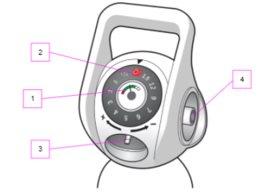
Before use
- Read the pressure indicator (1) and check the remaining oxygen quantity
- Make sure there is gas flow by turning the flow selector (2)
- Then stop the flow by turning the flow selector (2) again to "0"
Patient administration.
- Connect the tube to the flow outlet (3)
- Turn the flow selector (2) clockwise to the desired flow selection
- Make sure the patient receives oxygen
- After each use, stop the flow by turning the flow selector (2) again to "0"
Connecting a device to the pressure outlet (4) (e.g., a ventilator)
Reminder: Do not use the flow outlet (3) and the pressure outlet (4) simultaneously
- First, connect the flexible tube to the device
- Then, connect the flexible tube to the pressure outlet (4)
- Oxygen is now available
- After use, it is recommended to disconnect the flexible tube from the pressure outlet (4) to avoid unwanted consumption.
Autonomy **
Depending on the pressure reading on the manometer and the selected flow rate
2-liter cylinder
Pressure in bar | Flows in L/min | ||||
3 | 6 | 9 | 12 | 15 | |
300 | 3h20min | 1h40min | 66min | 50min | 40min |
250 | 2h46min | 83min | 55min | 41min | 33min |
200 | 2h13min | 66min | 44min | 33min | 26min |
150 | 1h40min | 50min | 33min | 25min | 20min |
50 | 33min | 16min | 11min | 8min | 6min |
**Indicative value
Marketing Authorization Holder and Manufacturer
Marketing Authorization Holder
AIR LIQUIDE HealthINTERNATIONAL – 75, Quai D`Orsay
75007 Paris (FRANCE)
Manufacturers
Air Liquide Medical
Tolhuisstraat 46
2627 Schelle
Belgium
Date of the Last Revision of this Prospectus: May 2024
Detailed and updated information on this medication is available on the website of the Spanish Agency for Medicines and Health Products (AEMPS) (http://www.aemps.gob.es/)
------------------------------------------------------------------------------------------------------------------
This information is intended exclusively for healthcare professionals:
Instructions for Use and Handling
Do not smoke.
Do not bring near a flame.
Do not grease.
In particular:
- Never introduce this gas into a device that may contain combustible materials, especially if they are greasy in nature.
- Never clean with combustible products, especially if they are greasy in nature, either the devices that contain this gas or the valves, gaskets, seals, and closing devices.
- Never apply any greasy substance (vaseline, ointments, etc.) to the face of patients.
- Do not use aerosols (hair spray, deodorant, etc.) or solvents (alcohol, perfume, etc.) on the material or near it.
Never expose the cylinder to a temperature above 50°C
Never force any part of the cylinder, in case of problems, contact the manufacturer immediately
Never place the cylinder in the sun behind a glass
Secure the cylinders with seat belts to avoid falls and impacts
Return with residual pressure
Close the valve after use
Open the valve slowly
Always keep the protective cap
May cause or aggravate a fire
Combustible
Contains gas under pressure: risk of explosion in case of heating
Keep valves and accessories free of grease and oil
Store away from combustible materials
In case of fire, stop the leak, if it is not dangerous to do so
Store in a well-ventilated area
The Medical Oxygen Gas Air Liquide cylinders 99.5% v/v 300 bar are exclusively reserved for therapeutic use.
To avoid any incidents, it is necessary to strictly follow the following rules:
- Verify the good condition of the material before use.
- Never force a gas cylinder into a support that is too narrow for it.
- Handle the material with clean and grease-free hands.
- At the time of delivery by the manufacturer, verify that the gas cylinder is equipped with an intact tamper-evident system (seal).
- Never lift the gas cylinder by holding the valve.
- Use connections or flexible connection elements specifically designed for oxygen.
- Use a manoreducer with a flowmeter that can withstand a pressure of at least 1.5 times the maximum service pressure (300 bar) of the gas cylinder (unless there is a built-in reducer in the valve).
- Use flexible connection elements in wall outlets equipped with oxygen-specific nozzles.
- Open the valve progressively.
- Never force the valve to open, nor open it completely.
- Purge the gas cylinder outlet connection before incorporating the manoreducer to eliminate any dust that may be present. Keep the connections between the gas cylinder and the manoreducer clean.
- Never subject the manoreducer to successive pressurizations.
- Never position yourself in front of the valve outlet, but always on the opposite side of the manoreducer, behind the gas cylinder and backwards. Never expose patients to the gas flow.
- Do not use intermediate connections to allow the connection of two devices that do not fit together.
- Do not attempt to repair a faulty valve.
- Never tighten the manoreducer-flowmeter with pliers, under the risk of causing damage to the gasket.
- Verify beforehand the compatibility of materials in contact with oxygen, using in particular oxygen-specific connection gaskets for the manoreducer.
- Close the gas cylinder valve after use, allow the manoreducer pressure to decrease by leaving the flowmeter open, close the flowmeter, and then loosen (except for integrated manoreducers) the manoreducer adjustment screw.
- In case of a leak, close the valve of the circuit that has a leak, and check that the emergency device is activated.
- Never completely empty a gas cylinder.
- Keep empty gas cylinders with the valve closed (to avoid corrosion processes in the presence of humidity inside).
- Never transfer gas under pressure from one gas cylinder to another.
- Ventilate, if possible, the place of use, if it is a reduced location (vehicle, home).
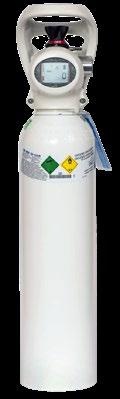
- Country of registration
- Dosage formPULMONARY INHALATION, 99.5% V/V
- ATC codeV03AN01
- Availability in pharmaciesSupply issue reported
- Active substance
- Prescription requiredYes
- Manufacturer
- This information is for reference only and does not constitute medical advice. Always consult a doctor before taking any medication. Oladoctor is not responsible for medical decisions based on this content.
- Alternatives to MEDICAL OXYGEN GAS AIR LIQUIDE 99.5% V/V 300 BAR COMPRESSED MEDICAL GASDosage form: PULMONARY INHALATION, 21-22.5% v/vActive substance: oxygenManufacturer: Nippon Gases Espana SluPrescription requiredDosage form: PULMONARY INHALATION, Oxygen 21.0% v/v to 22.5% v/vActive substance: oxygenManufacturer: Oxigen Salud S.A.Prescription requiredDosage form: PULMONARY INHALATION, 100% oxygenActive substance: oxygenManufacturer: Linde Gas Espana S.A.U.Prescription required
Online doctors for MEDICAL OXYGEN GAS AIR LIQUIDE 99.5% V/V 300 BAR COMPRESSED MEDICAL GAS
Discuss questions about MEDICAL OXYGEN GAS AIR LIQUIDE 99.5% V/V 300 BAR COMPRESSED MEDICAL GAS, including use, safety considerations and prescription review, subject to medical assessment and local regulations.









Get MEDICAL OXYGEN GAS AIR LIQUIDE 99.5% V/V 300 BAR COMPRESSED MEDICAL GAS Prescription Online
Fill in a 2-min form
Tell us your symptoms, history, and what medicine you're requesting.
Pick a doctor or let us assign
Choose a specialist or we'll match you with the next available doctor.
Doctor reviews your case
Usually within 30 minutes. They may ask follow-up questions via chat.
Collect from any pharmacy
Electronic prescription sent to your email — valid across Spain.
Frequently Asked Questions
MEDICAL OXYGEN GAS AIR LIQUIDE 99.5% V/V 300 BAR COMPRESSED MEDICAL GAS requires a prescription in Spain. You can check with a doctor online whether this medicine may be appropriate for your situation.
The active ingredient in MEDICAL OXYGEN GAS AIR LIQUIDE 99.5% V/V 300 BAR COMPRESSED MEDICAL GAS is oxygen. This information helps identify medicines with the same composition but different brand names.
MEDICAL OXYGEN GAS AIR LIQUIDE 99.5% V/V 300 BAR COMPRESSED MEDICAL GAS is manufactured by Air Liquide Sante International. Pharmacy brands and packaging may differ depending on the distributor.
Doctors such as Family doctors, Psychiatrists, Dermatologists, Cardiologists, Endocrinologists, Gastroenterologists, Pulmonologists, Nephrologists, Rheumatologists, Hematologists, Infectious disease physicians, Allergists, Geriatricians, Paediatricians, Oncologists may assess whether MEDICAL OXYGEN GAS AIR LIQUIDE 99.5% V/V 300 BAR COMPRESSED MEDICAL GAS is appropriate, depending on your situation and local regulations. You can book an online consultation to discuss your symptoms and possible next steps.
Spain has a well-developed healthcare infrastructure across major cities such as Madrid, Barcelona, Valencia, and Seville. Pharmacies are widely available and operate under strict regulations, ensuring access to prescribed medications.
You can buy MEDICAL OXYGEN GAS AIR LIQUIDE 99.5% V/V 300 BAR COMPRESSED MEDICAL GAS in Madrid, Barcelona, Seville, or Valencia at any local pharmacy with a valid prescription.
To obtain a prescription, you can use Oladoctor:
Other medicines with the same active substance (oxygen) include SYNTHETIC MEDICAL AIR NIPPON GASES 200 BAR, COMPRESSED MEDICAL GAS, SYNTHETIC MEDICINAL AIR OXYGEN HEALTH 22% V/V COMPRESSED MEDICINAL GAS, CONOXIA 99.5% (v/v) MEDICINAL CRYOGENIC GAS IN FIXED TANK. These may have different brand names or formulations but contain the same therapeutic ingredient. Always consult a doctor before switching or starting a new medicine.
