






How to use OMNIPAQUE 350 mg Iodine /ml INJECTABLE SOLUTION
Translated with AI
This page provides general information and does not replace a doctor’s consultation. Always consult a doctor before taking any medication. Seek urgent medical care if symptoms are severe.
Show originalContents of the leaflet
Introduction
PACKAGE LEAFLET: INFORMATION FOR THE USER
OMNIPAQUE240 mg Iodine/ml injectable solution
OMNIPAQUE 300 mg Iodine/ml injectable solution
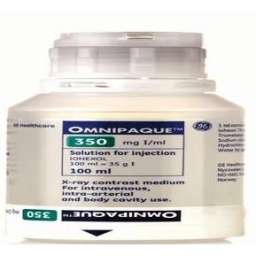
OMNIPAQUE350 mg Iodine/ml injectable solution
Iohexol
Read all of this leaflet carefully before you start using this medicine because it contains important information for you.
|
Contents of the pack:
- What OMNIPAQUE is and what it is used for
- What you need to know before you use OMNIPAQUE
- How to use OMNIPAQUE
- Possible side effects
- Storage of OMNIPAQUE
- Contents of the pack and other information
1. What OMNIPAQUE is and what it is used for
This medicine is for diagnostic use only. It is used to help identify a disease in children and adults.
OMNIPAQUE is a "contrast medium". It is given before an X-ray examination to make the image taken by the doctor clearer.
- Once injected, it can help the doctor detect, locate, and differentiate the normal or abnormal appearance and shape of some organs in your body.
- It can be used for X-ray examinations of the urinary system, spine, or blood vessels, including the heart vessels.
- Some people may be given this medicine before or during a head or body scan using "computed tomography" (also called CT). This type of scan uses X-rays.
- It may also be used for some mammography examinations.
- It can also be used to examine the salivary glands, gastrointestinal tract, or to visualize body cavities, such as joints, uterus, fallopian tubes, bile and pancreatic ducts, and to determine how your kidneys are functioning (glomerular filtration rate).
Your doctor will explain which part of your body will be examined.

2. What you need to know before you use OMNIPAQUE
Do not use OMNIPAQUE
- If you have severe thyroid problems.
- If you are allergic (hypersensitive) to iohexol or any of the other components of OMNIPAQUE (listed in section 6).
Warnings and precautions
Talk to your doctor before you are given OMNIPAQUE
- If you have had any allergic reaction to a medicine similar to OMNIPAQUE, called a "contrast medium".
- If you have any thyroid problems.
- If you have had any allergy.
- If you have asthma.
- If you have diabetes.
- If you have any brain disease (including migraine) or tumors.
- If you have had a severe heart disease (affecting the heart or blood vessels) including high blood pressure, blood clots, stroke, and irregular heartbeats (arrhythmias) If you have pulmonary hypertension (high blood pressure in the arteries that go to the lungs).
- If you have paraproteinemia (presence in the blood of an excessive amount of an abnormal protein)
- If you have kidney or liver and kidney problems.
- If you have a disease called "myasthenia gravis" (a disease characterized by severe muscle weakness).
- If you have "pheochromocytoma" (a rare tumor of the adrenal gland that can cause high blood pressure).
- If you have "homocystinuria" (a condition with increased excretion of the amino acid cysteine in the urine).
- If you have any blood or bone marrow disorder.
- If you have an immune system disease.
- If you have been dependent on drugs or alcohol.
- If you have epilepsy.
- If you have a thyroid function test in the next few weeks.
- If you have a urine or blood sample taken on the same day.
During or shortly after the imaging diagnostic procedure, you may experience a short-term brain disorder called encephalopathy. Tell your doctor immediately if you notice any of the signs and symptoms related to this condition described in section 4.
Thyroid disorders may be observed after the administration of Omnipaque in both children and adults. Babies may also be exposed through their mother during pregnancy. Your doctor may need to perform thyroid function tests before and/or after the administration of Omnipaque.
Contrast mammography exposes you to higher levels of ionizing radiation than traditional mammography, although they are still within the limits defined by international guidelines on mammography. The radiation dose depends on the thickness of the breast and the type of mammography device used.
If you are not sure if you have suffered from any of the above, talk to your doctor before using OMNIPAQUE.
Make sure to drink plenty of fluids before and after receiving Omnipaque. This applies especially to patients with multiple myeloma (a disease of the white blood cells), diabetes, kidney problems, patients in poor general condition, children, and the elderly.
Medicines that can damage the kidneys should not be taken at the same time as Omnipaque. Thyroid function should be reviewed in newborns during the first week of life if the mother has received Omnipaque during pregnancy.
Omnipaque may be eliminated from a baby's body more slowly than an adult's.
Young children (under 1 year of age) and especially newborns are susceptible to changes in certain laboratory tests (imbalance of salts and minerals) and in blood circulation (blood flow in the vessels or from the heart).
Using OMNIPAQUE with other medicines
Tell your doctor:
- if you are diabetic and are taking a medicine that contains metformin, as a precaution, its administration should be interrupted 48 hours before the examination and restarted when your doctor indicates, or
- if you have recently taken other medicines, even those purchased without a prescription, or if you are taking beta-blockers (medicines used to treat high blood pressure), vasoactive substances, ACE inhibitors, or angiotensin antagonists (medicines used to treat high blood pressure) or have been treated recently with interleukin-2 or interferon (medicines used mainly to treat cancer), antidepressants (medicines used to treat mental disorders such as depression).
This is because some medicines may affect the way Omnipaque works.
Beta-blockers may increase the risk of experiencing breathing difficulties and may interfere with the treatment of severe allergic reactions, which is a risk of Omnipaque.
Pregnancy and breastfeeding
If you are pregnant or breastfeeding, think you may be pregnant, or are planning to have a baby, ask your doctor or pharmacist for advice before using this medicine.
The product should not be used during pregnancy unless the benefit outweighs the risk to both the mother and the baby. If the mother has received Omnipaque during pregnancy, it is recommended to monitor the thyroid function of infants (see Warnings and precautions). Whenever possible, exposure to radiation should be avoided during pregnancy.
Breastfeeding can continue normally when OMNIPAQUE is administered to the mother.
Driving and using machines
Do not drive or use tools or machines after the administration of OMNIPAQUE for the first 24 hours following a spinal examination.
This is because you may feel dizzy or have other symptoms of a reaction.

Other special precautions
Contrast media can also interfere with the results of blood or urine tests taken on the same day or after the X-ray examination. Tell your doctor that you have received OMNIPAQUE if you have any blood or urine samples taken during these days.
OMNIPAQUE contains sodium
This medicine contains less than 1 mmol (23 mg) of sodium per dose, so it is considered essentially "sodium-free".
3. How to use OMNIPAQUE
OMNIPAQUE will always be administered by qualified and properly trained personnel.
- OMNIPAQUE will always be used in a hospital or clinic.
- You will be told everything you need to know for safe use.
Your doctor will decide the dose that is best for you.
After the administration of Omnipaque
You will be asked:
- to drink plenty of fluids before and after (to help eliminate the medicine from your body), and
- to stay near the place where you had the examination or X-ray for about 30 minutes.
If you experience any side effects during this time, tell your doctor immediately (see section 4 "Possible side effects").
The above recommendation applies to all patientswho have received OMNIPAQUE. If you have not understood something, ask your doctor.
Omnipaque can be administered in many different ways; a description of the ways it is usually administered can be found below:
Injection into an artery or vein
Omnipaque is injected into a vein in the arm or leg or administered through a thin plastic tube (catheter), usually in an artery in the arm or groin.
Injection into the spine
Omnipaque is injected into the space surrounding the spinal cord to visualize the spinal canal. If you have been administered Omnipaque in the spine, you will be asked to follow the recommendations indicated below:
- rest for one hour with your head and body upright, or for six hours if you stay in bed, and
- walk carefully and try not to bend during six hours, and
- do not be completely alone during the first 24 hours after receiving Omnipaque, if you are an outpatient and have had seizures.
The above recommendation only applies if you have been injected with Omnipaque in the spine. If you have not understood something, ask your doctor.
Use in body cavities or joints
For the examination of intra-articular, intracholangiopancreatic, intraperitoneal, oral, and intrauterine cavities. How and where Omnipaque will be administered will vary.
Oral use
For the examination of the esophagus, stomach, or intestine, Omnipaque is usually administered orally. For these examinations, Omnipaque can be diluted with water.
Use in children
Adequate hydration should be ensured, especially in babies and young children, before and after the administration of contrast media.
If you use more OMNIPAQUE than you should
If you use more OMNIPAQUE than you should, tell your doctor.
4. Possible Adverse Effects
Like all medicines, OMNIPAQUE can cause adverse effects, although not all people suffer from them.
Allergic ReactionsIf you experience an allergic reaction when OMNIPAQUE is being administered to you in a hospital or clinic, inform your doctor immediately. The symptoms may be:
- difficulty breathing or chest tightness or pain, wheezing
- skin rash, hives, itching spots, blisters on skin and mouth, red or itchy eyes, cough, runny nose, sneezing or other allergy symptoms
- swelling of the face
- feeling of dizziness or fainting (caused by low blood pressure)
The adverse effects described above may occur several hours or days after the administration of OMNIPAQUE. If any of these side effects occur after leaving the hospital or clinic, go directly to the emergency department of your nearest hospital.
After the administration of OMNIPAQUE, a short-term decrease in urine formation due to decreased renal function is common. This can cause kidney damage. Other side effects you may experience are the following, which will depend on how or why OMNIPAQUE was administered to you. Consult your doctor if you are not sure how OMNIPAQUE was administered to you.
General(applies to all uses of OMNIPAQUE)Frequent(may affect up to 1 in 10 patients)
- feeling of heat
Uncommon(may affect up to 1 in 100 patients)
- nausea
- increased sweating / abnormal, feeling of cold, dizziness / fainting
- headache
Rare(may affect up to 1 in 1000 patients)
- allergic reactions (hypersensitivity) (which can be fatal)
- slow heart rate
- vomiting, fever, abdominal pain
Very Rare(may affect up to 1 in 10,000 patients)
- temporary change in sense of taste
- high or low blood pressure, chills
- diarrhea
- allergic reaction, including severe reactions that can cause shock and collapse, see the "Allergic Reactions" section described above for the rest of the symptoms
- Fainting (syncope)
Frequency Not Known(cannot be estimated from the available data)
- swelling and sensitivity (pain) of the salivary glands
After Injection into an Artery or VeinFrequent(may affect up to 1 in 10 patients)
- short-term changes in respiratory rate, respiratory problems
Uncommon(may affect up to 1 in 100 patients)
- pain and discomfort
- acute kidney injury
Rare(may affect up to 1 in 1000 patients)
- Diarrhea
- Irregular heartbeats, including slow or fast heart rate
- Cough, breathing interruption, fever, general malaise
- dizziness, feeling of weakness, muscle weakness
- sensitivity to bright light
- abnormal feeling of fatigue
- skin rash and itching, redness of the skin
- reduced vision (including double vision and blurred vision)
Very Rare(may affect up to 1 in 10,000 patients)
- seizures (attacks), altered consciousness, stroke, alteration of the senses (such as touch), tremor, stupor ("drowsy state")
- flushing
- difficulty breathing
- myocardial infarction
- chest pain
Frequency Not Known(cannot be estimated from the available data)
- severe skin reactions, including severe skin rash, blisters, and peeling of the skin
- feeling of confusion, disorientation, agitation, restlessness or anxiety
- overactive thyroid gland (excess thyroid hormone in the blood that causes a variety of symptoms, such as rapid heartbeats, sweating, anxiety), transient hypothyroidism (a thyroid function abnormality that later returns to normal)
- difficulty moving for a while
- speech disorders, including aphasia (inability to speak), dysarthria (difficulty pronouncing words)
- temporary blindness (lasting hours or days), short-term hearing loss
- heart problems, including heart failure, cardiac artery spasms, and cyanosis (blue to purple skin due to lack of oxygen)
- chest tightness or breathing problems, including lung inflammation, respiratory tract spasms
- worsening of pancreatitis (inflammation of the pancreas, an organ behind the stomach) causing stomach pain that worsens with food
- vein pain and inflammation, blood clots (thrombosis)
- joint pain, reaction at the injection site, back pain
- asthma attack
- iodism (excessive amounts of iodine in the body) that causes inflammation and sensitivity (pain) of the salivary glands
- psoriasis outbreak
- memory loss (amnesia)
- short-term brain disorders (contrast encephalopathy) that can cause headache, vision problems, vision loss, seizures, confusion, disorientation, drowsiness, loss of consciousness, coma, loss of coordination, loss of movement on one side of the body, speech problems, memory loss, and brain inflammation
- thrombocytopenia (a condition in which the platelet count is low and makes the blood not clot as well as it normally does)
- Increased creatinine level in blood
After Injection into the Spinal ColumnVery Common(may affect more than 1 in 10 patients)
- headache (can be severe and lasting)
Common(may affect up to 1 in 10 patients)
- nausea, vomiting
Uncommon(may affect up to 1 in 100 patients)
- inflammation of the membranes surrounding the brain and spinal cord
Rare(may affect up to 1 in 1000 patients)
- seizures (attacks), dizziness
- pain in arms or legs, neck pain, back pain
Frequency Not Known(cannot be estimated from the available data)
- agitation
- anxiety
- feeling of disorientation
- sensitivity to bright light, stiffness in the neck
- difficulty moving for a while, feeling of confusion
- alteration of the senses (such as touch), temporary blindness (lasting hours or days), short-term hearing loss
- seizures (lasting more than five minutes)
- tingling sensation, muscle contractions (spasms), reaction at the injection site
- short-term brain disorders (contrast encephalopathy) that can cause headache, vision problems, vision loss, seizures, confusion, disorientation, drowsiness, loss of consciousness, coma, loss of coordination, loss of movement on one side of the body, speech problems, memory loss, and brain inflammation
- speech disorders, including aphasia (inability to speak), dysarthria (difficulty pronouncing words)
After Administration into Body Cavities(such as the uterus and fallopian tubes, gallbladder, and pancreas or hernia)Very Common(may affect more than 1 in 10 patients)
- pain in the entire stomach area
Common(may affect up to 1 in 10 patients)
- inflammation of the pancreas (pancreatitis)
- abnormal amount of a substance produced by the pancreas detected by laboratory investigation
Frequency Not Known(cannot be estimated from the available data)
- pain
After Injection into JointsVery Common(may affect more than 1 in 10 patients)
- pain at the injection site
Frequency Not Known(cannot be estimated from the available data)
- joint inflammation
After Oral AdministrationVery Common(may affect more than 1 in 10 patients)
- diarrhea
Common(may affect up to 1 in 10 patients)
- nausea, vomiting
Uncommon(may affect up to 1 in 100 patients)
- pain in the entire stomach area
Use in Children
Transient hypothyroidism has been described in premature infants, neonates, and other children after the administration of iodinated contrast media. Premature infants are particularly sensitive to the effect of iodine.
Transient alteration in thyroid function (transient hypothyroidism) has been described in a premature infant with breastfeeding. The mother was repeatedly exposed to OMNIPAQUE.
Adequate hydration should be ensured, especially in infants and young children, before and after the administration of contrast media.
Reporting of Adverse Effects
If you experience any type of adverse effect, consult your doctor, even if it is a possible adverse effect that is not listed in this prospectus. You can also report them directly through the Spanish Pharmacovigilance System for Human Use Medicines: https://www.notificaram.es. By reporting adverse effects, you can contribute to providing more information on the safety of this medicine.
5. Storage of OMNIPAQUE
Keep this medicine out of the sight and reach of children.
Store at a temperature equal to or below 30°C. Store in the outer packaging to protect it from light.
Do not use this medicine after the expiration date stated on the packaging.
6. Package Contents and Additional Information
Composition of OMNIPAQUE
The active ingredient is iohexol
The other components are:
Trometamol, calcium and sodium edetate, hydrochloric acid (pH adjustment), and water for injectable preparations.
Appearance of the Product and Package Contents
Omnipaque is an injectable solution that is presented ready for use in the form of a sterile, clear, colorless or slightly yellowish aqueous solution.
It is available in three concentrations:
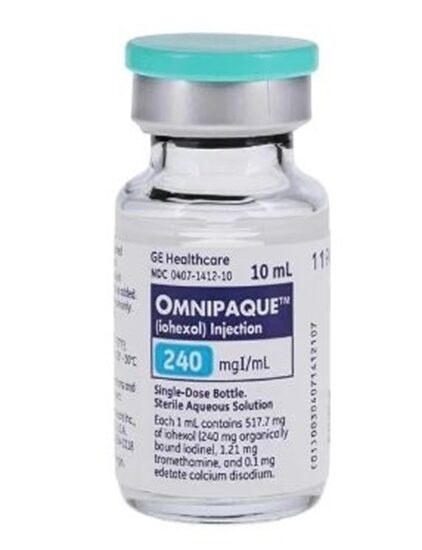
OMNIPAQUE 240 mg Iodine/ml contains 518 mg of Iohexol per ml (equivalent to 240 mg of iodine per ml)
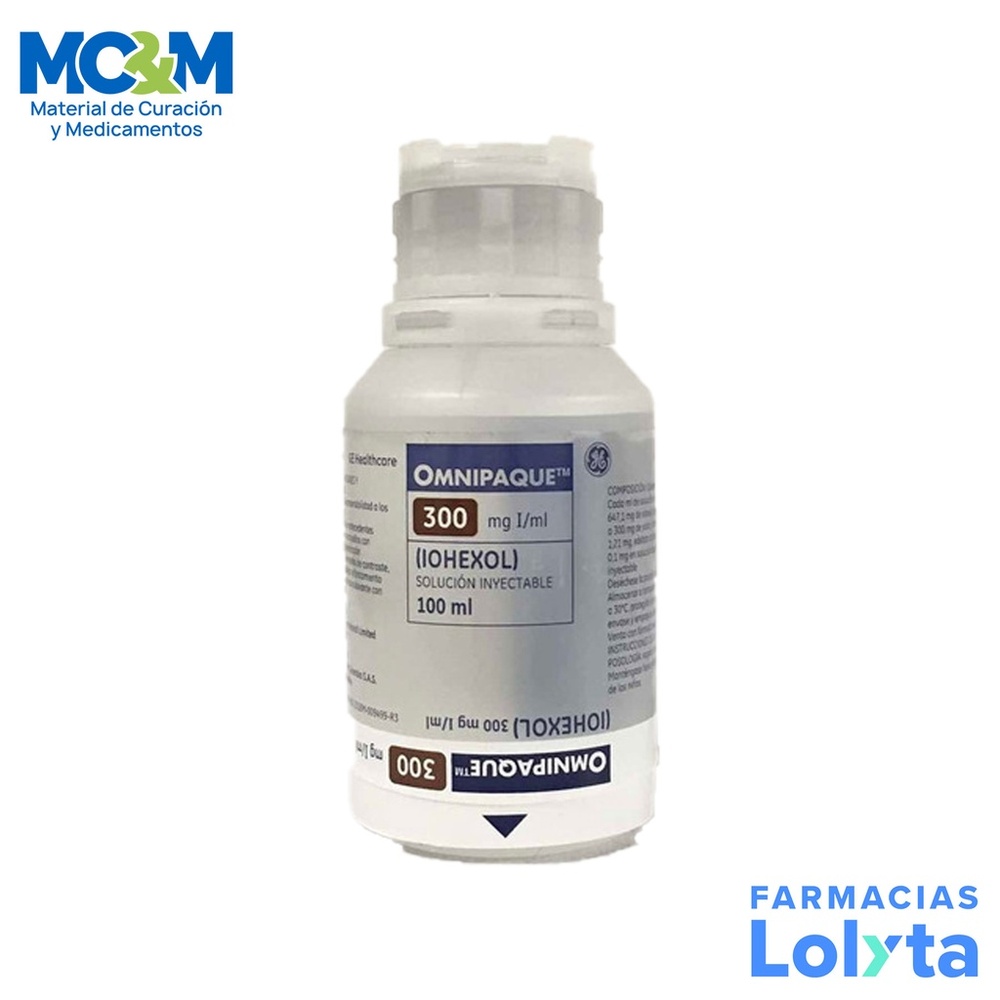
OMNIPAQUE 300 mg Iodine/ml contains 647 mg of Iohexol per ml (equivalent to 300 mg of iodine per ml)
OMNIPAQUE 350 mg Iodine/ml contains 755 mg of Iohexol per ml (equivalent to 350 mg of iodine per ml)
Presentation:
OMNIPAQUE 240 mg Iodine/ml:
1 and 10 vials of 50 and 200 ml
1 and 6 vials of 500 ml
OMNIPAQUE 300 mg Iodine/ml:
1 and 10 vials of 50, 100, and 200 ml
1 and 6 vials of 500 ml
OMNIPAQUE 350 mg Iodine/ml:
1 and 10 vials of 50, 100, and 200 ml
1 and 6 vials of 500 ml
Not all pack sizes may be marketed.
Marketing Authorization Holder and Manufacturer
Holder:
GE Healthcare Bio-Sciences, S.A.U.
Calle Gobelas, 35-37, La Florida
28023 Madrid
Manufacturers:
GE Healthcare Ireland Limited
IDA Business Park
Carrigtohill
Co. Cork, Ireland
GE Healthcare AS,
Nycoveien 1
NO-0485 Oslo, Norway
Date of Last Revision of this Prospectus: February 2024
Detailed and updated information on this medicine is available on the website of the Spanish Agency for Medicines and Health Products (AEMPS) http://www.aemps.es
-

- Country of registration
- Dosage formINJECTABLE, 350 mg/ml
- ATC codeV08AB02
- Availability in pharmacies
Supply issue reported
Data from the Spanish Agency of Medicines (AEMPS) indicates a supply issue affecting this medicine.<br><br>Availability may be limited in some pharmacies.<br><br>For updates or alternatives, consult your pharmacist. - Active substance
- Prescription requiredYes
- Manufacturer
- This information is for reference only and does not constitute medical advice. Always consult a doctor before taking any medication. Oladoctor is not responsible for medical decisions based on this content.
- Alternatives to OMNIPAQUE 350 mg Iodine /ml INJECTABLE SOLUTIONDosage form: INJECTABLE, 240 mg/mlActive substance: iohexolManufacturer: Ge Healthcare Bio-Sciences, S.A.U.Prescription requiredDosage form: INJECTABLE, 300 mg/mlActive substance: iohexolManufacturer: Ge Healthcare Bio-Sciences, S.A.U.Prescription requiredDosage form: INJECTABLE, 30.62 g/100 mlActive substance: iomeprolManufacturer: Bracco Imaging S.P.A.Prescription required

Online doctors for OMNIPAQUE 350 mg Iodine /ml INJECTABLE SOLUTION
Discuss questions about OMNIPAQUE 350 mg Iodine /ml INJECTABLE SOLUTION, including use, safety considerations and prescription review, subject to medical assessment and local regulations.

Get OMNIPAQUE 350 mg Iodine /ml INJECTABLE SOLUTION Prescription Online
Fill in a 2-min form
Tell us your symptoms, history, and what medicine you're requesting.
Pick a doctor or let us assign
Choose a specialist or we'll match you with the next available doctor.
Doctor reviews your case
Usually within 30 minutes. They may ask follow-up questions via chat.
Collect from any pharmacy
Electronic prescription sent to your email — valid across Spain.
Frequently Asked Questions
OMNIPAQUE 350 mg Iodine /ml INJECTABLE SOLUTION requires a prescription in Spain. You can check with a doctor online whether this medicine may be appropriate for your situation.
The active ingredient in OMNIPAQUE 350 mg Iodine /ml INJECTABLE SOLUTION is iohexol. This information helps identify medicines with the same composition but different brand names.
OMNIPAQUE 350 mg Iodine /ml INJECTABLE SOLUTION is manufactured by Ge Healthcare Bio-Sciences, S.A.U.. Pharmacy brands and packaging may differ depending on the distributor.
Doctors such as Family doctors, Psychiatrists, Dermatologists, Cardiologists, Endocrinologists, Gastroenterologists, Pulmonologists, Nephrologists, Rheumatologists, Hematologists, Infectious disease physicians, Allergists, Geriatricians, Paediatricians, Oncologists may assess whether OMNIPAQUE 350 mg Iodine /ml INJECTABLE SOLUTION is appropriate, depending on your situation and local regulations. You can book an online consultation to discuss your symptoms and possible next steps.
Spain has a well-developed healthcare infrastructure across major cities such as Madrid, Barcelona, Valencia, and Seville. Pharmacies are widely available and operate under strict regulations, ensuring access to prescribed medications.
You can buy OMNIPAQUE 350 mg Iodine /ml INJECTABLE SOLUTION in Madrid, Barcelona, Seville, or Valencia at any local pharmacy with a valid prescription.
To obtain a prescription, you can use Oladoctor:
Other medicines with the same active substance (iohexol) include OMNIPAQUE 240 mg Iodine /ml INJECTABLE SOLUTION, OMNIPAQUE 300 mg Iodine /ml INJECTABLE SOLUTION, IOMERON 150 MG IODO/ML INJECTABLE SOLUTION. These may have different brand names or formulations but contain the same therapeutic ingredient. Always consult a doctor before switching or starting a new medicine.
