


NORMOSTOP 50 mg TABLETS
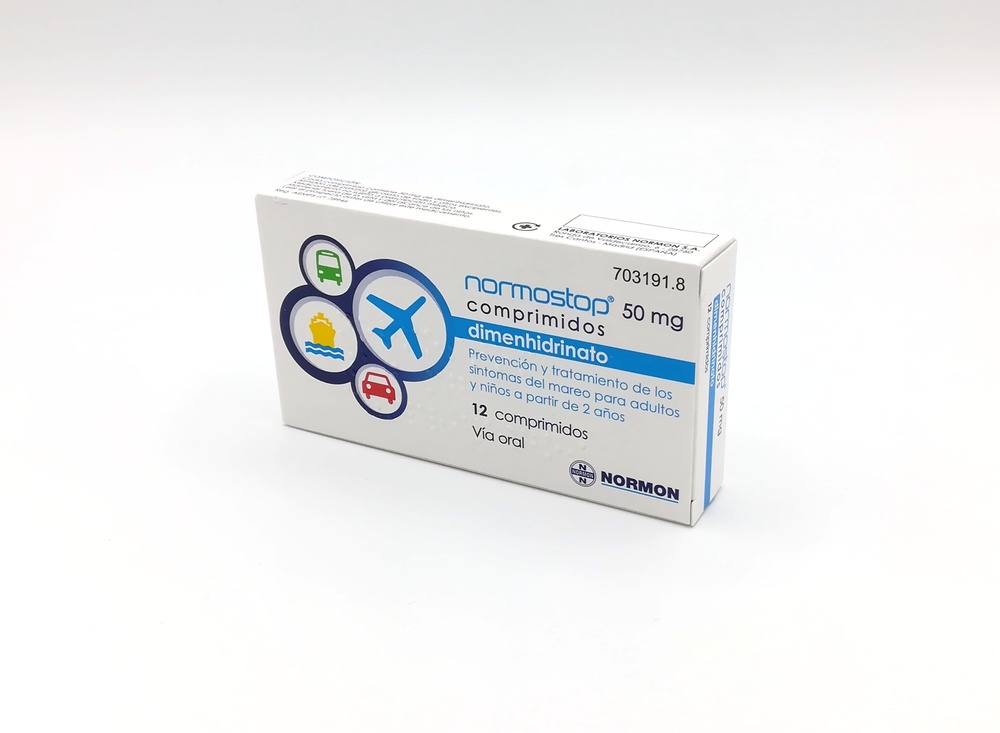



How to use NORMOSTOP 50 mg TABLETS
Translated with AI
This page provides general information and does not replace a doctor’s consultation. Always consult a doctor before taking any medication. Seek urgent medical care if symptoms are severe.
Show originalContents of the leaflet
Introduction
Patient Information Leaflet
Normostop 50 mg tablets
dimenhidrinato
Read this leaflet carefully before starting to take this medicine, as it contains important information for you.
Follow the administration instructions for the medicine contained in this leaflet or as indicated by your doctor, pharmacist, or nurse.
- Keep this leaflet, as you may need to read it again.
- If you need advice or more information, consult your pharmacist.
- If you experience side effects, consult your doctor or pharmacist, even if they are not listed in this leaflet. See section 4.
- You should consult a doctor if your symptoms worsen or do not improve after 7 days.
Contents of the leaflet:
- What Normostop is and what it is used for
- What you need to know before taking Normostop
- How to take Normostop
- Possible side effects
- Storage of Normostop
- Package contents and additional information
1. What Normostop is and what it is used for
Dimenhidrinato is an active ingredient that acts against motion sickness caused by means of transportation.
Normostop is a medicine indicated for the prevention and treatment of symptoms of motion sickness caused by land, sea, or air travel, such as nausea, vomiting, and/or vertigo in adults and children over 2 years old.
You should consult a doctor if your symptoms worsen or do not improve after 7 days.

2. What you need to know before taking Normostop
Do not take Normostop
- If you are allergic to dimenhidrinato or difenhidramina or any of the other components of this medicine (listed in section 6).
- If you have porphyria (a rare, usually inherited disorder in which large amounts of porphyrin are eliminated in urine and feces).
Warnings and precautions
Consult your doctor or pharmacist before starting to take Normostop:
- If you are allergic to any allergy medication, you may also be allergic to dimenhidrinato.
- If you have asthma or severe respiratory diseases (chronic obstructive pulmonary disease, emphysema, chronic bronchitis), as it may cause thickening of secretions and alter expectoration.
- If you have a disease that causes abnormal increased activity of the thyroid gland (hyperthyroidism), increased intraocular pressure (glaucoma), enlarged prostate (prostatic hypertrophy), or any disease that causes obstruction of the urinary or gastrointestinal tract.
- If you have seizures with convulsive movements, with or without loss of consciousness (epilepsy).
- If you are over 65 years old, dry mouth, urinary retention, nausea, sedation, confusion, and low blood pressure (hypotension) may occur.
- If you are taking any medication that can cause ear toxicity, as symptoms of these toxic effects, such as ringing in the ears, dizziness, or vertigo, may be masked.
- If you have any liver or kidney disease, stomach or duodenal ulcer, or stomach inflammation (gastritis).
- If you have or have had heart diseases or disorders (cardiac arrhythmia, myocardial ischemia, ...).
- If you suspect you may have symptoms of appendicitis, such as nausea, vomiting, or abdominal cramps, it is recommended to consult a doctor to rule out the presence or absence of appendicitis, as dimenhidrinato may hinder the diagnosis of this disease.
- It is recommended to avoid exposure to very high temperatures and follow adequate hygiene and dietary measures, such as proper ventilation and hydration.
- Avoid exposure to the sun (even on cloudy days) and UV lamps while taking this medication.
Children
Children under 2 years old should not take this medicine.
Taking Normostop with other medicines
Tell your doctor or pharmacist if you are taking, have recently taken, or may need to take any other medicine.
In particular, if you are taking any of the following medicines, it may be necessary to modify the dose of Normostop or not take it:
- Anesthetics, opioid analgesics, and other substances with a depressant effect on the central nervous system, such as alcohol, barbiturates, benzodiazepines.
- Aminoglycoside antibiotics.
- Antidepressants, such as monoamine oxidase inhibitors (MAOIs).
- Antiparkinsonian agents.
- Neuroleptics (used to calm agitation and neuromuscular hyperactivity).
- Ototoxic medications (that can affect the ear) (see Warnings and Precautions section).
- Medicines that can cause photosensitivity (skin reactions due to sensitivity to sunlight).
Interference with diagnostic tests
If you are going to undergo any allergy test, including skin tests, it is recommended to suspend treatment 72 hours before starting the test, so as not to alter the results.
Taking Normostop with food, drinks, and alcohol
It is not recommended to consume alcohol while taking this medicine.
It is recommended to take this medicine with food or milk.
Pregnancy and breastfeeding
If you are pregnant or breastfeeding, think you may be pregnant, or plan to become pregnant, consult your doctor or pharmacist before using this medicine.
Breastfeeding
Women who are breastfeeding should not take this medicine without first consulting their doctor or pharmacist, as this medicine passes into breast milk and may also cause inhibition of lactation.
Driving and using machines
While being treated with this medicine, do not drive or operate hazardous machinery, as this medicine can cause drowsiness or decreased reaction capacity at the recommended doses.
Normostop contains sodium
This medicine contains less than 1 mmol of sodium (23 mg) per tablet; it is essentially "sodium-free".
3. How to take Normostop
Follow the administration instructions for the medicine contained in this leaflet or as indicated by your doctor or pharmacist. In case of doubt, ask your doctor or pharmacist.
The recommended dose is:
Children from 2 to 6 years old:
Half a tablet per dose. If necessary, repeat the dose every 8 hours.
Do not administer more than 1 and a half tablets per day (corresponding to 75 mg of dimenhidrinato) divided into several doses.
Children from 7 to 12 years old:
Half or 1 tablet per dose. If necessary, repeat the dose every 6-8 hours.
Do not administer more than 3 tablets per day (corresponding to 150 mg of dimenhidrinato)
Adults and adolescents over 12 years old:
1 or 2 tablets per dose. If necessary, repeat the dose every 4-6 hours.
Do not administer more than 8 tablets per day (corresponding to 400 mg of dimenhidrinato)
Patient with liver disease:
They should consult their doctor before taking this medicine, as it may be necessary to adjust the dose.
Oral route.
The first dose should be taken at least half an hour before starting the trip (preferably 1 or 2 hours before), leaving at least 4 hours between one dose and the next. It is recommended to take the tablets with food, water, or milk to minimize gastric irritation.
If your symptoms worsen or persist for more than 7 days, you should consult your doctor.
If you take more Normostop than you should
If you have taken more Normostop than you should, consult your doctor or pharmacist immediately.
Symptoms of overdose include mainly: dilated pupils, red face, excitement, hallucinations, confusion, stomach and intestine irritation with nausea, vomiting, and diarrhea, movement disorders, convulsions, deep loss of consciousness (coma), sudden decrease in heart and respiratory functions (cardiorespiratory collapse), and death. Symptoms may take more than 2 hours to appear after the overdose.
In case of overdose or accidental ingestion, go immediately to a medical center or call the Toxicological Information Service (phone: 915620420), indicating the medicine and the amount taken.

4. Possible side effects
Like all medicines, this medicine can cause side effects, although not everyone gets them.
Side effects are usually mild and temporary, especially at the beginning of treatment.
During the use of dimenhidrinato, the following adverse reactions have been observed, whose frequency could not be established with precision:
- Nausea, vomiting, constipation, diarrhea, stomach pain.
- Lack of appetite and dry mouth.
- Sleepiness and sedation (drowsiness).
- Headache, vertigo, and dizziness.
- Increased viscosity of mucus in the bronchi, making breathing difficult.
- Urinary retention and impotence.
- Glaucoma (increased intraocular pressure).
- Dilated pupils, blurred vision, or double vision.
- Allergic reactions on the skin and sensitivity to sunlight, after intense exposure, which can cause hives, itching, and redness of the skin.
- Decrease in the blood of the number of red blood cells, white blood cells, leukocytes, and platelets.
- Porphyria (a rare, usually inherited disorder in which large amounts of porphyrin are eliminated in feces and urine).
- Hypotension (decreased blood pressure).
- Tachycardia, palpitations, and/or cardiac arrhythmias.
- Hyperexcitability may occur, especially in children, with symptoms such as insomnia, nervousness, confusion, tremors, irritability, euphoria, delirium, palpitations, and even convulsions.
Reporting of side effects
If you experience any side effects, consult your doctor or pharmacist, even if they are not listed in this leaflet. You can also report them directly through the Spanish Pharmacovigilance System for Human Use Website: www.notificaram.es.
By reporting side effects, you can contribute to providing more information on the safety of this medicine.
5. Storage of Normostop
Keep this medicine out of the sight and reach of children.
Do not use this medicine after the expiration date shown on the box after CAD. The expiration date is the last day of the month indicated.
Medicines should not be disposed of via wastewater or household waste. Deposit the packaging and medicines you no longer need at the SIGRE collection point in your pharmacy. If in doubt, ask your pharmacist how to dispose of the packaging and medicines you no longer need. This will help protect the environment.
6. Package contents and additional information
Composition of Normostop
- The active ingredient is dimenhidrinato, each tablet contains 50 mg of dimenhidrinato.
- The other components (excipients) are: microcrystalline cellulose, calcium hydrogen phosphate dihydrate, sodium starch glycolate (type A), hydroxypropylcellulose, quinoline yellow, sodium saccharin, anhydrous colloidal silica, magnesium stearate.
Appearance of the product and package contents
Normostop are yellow, round, flat tablets with a break line on one side. The tablet can be divided into equal doses.
They are presented in packages containing 4 or 12 tablets.
Marketing authorization holder and manufacturer
LABORATORIOS NORMON, S.A.
Ronda de Valdecarrizo, 6 – 28760 Tres Cantos – Madrid (Spain)
Date of the last revision of this leaflet: July 2014
Detailed information about this medicine is available on the website of the Spanish Agency for Medicines and Health Products (AEMPS) http://www.aemps.gob.es/
- Country of registration
- Dosage formTABLET, 50 mg
- ATC codeR06AA02
- Active substance
- Prescription requiredNo
- Manufacturer
- This information is for reference only and does not constitute medical advice. Always consult a doctor before taking any medication. Oladoctor is not responsible for medical decisions based on this content.
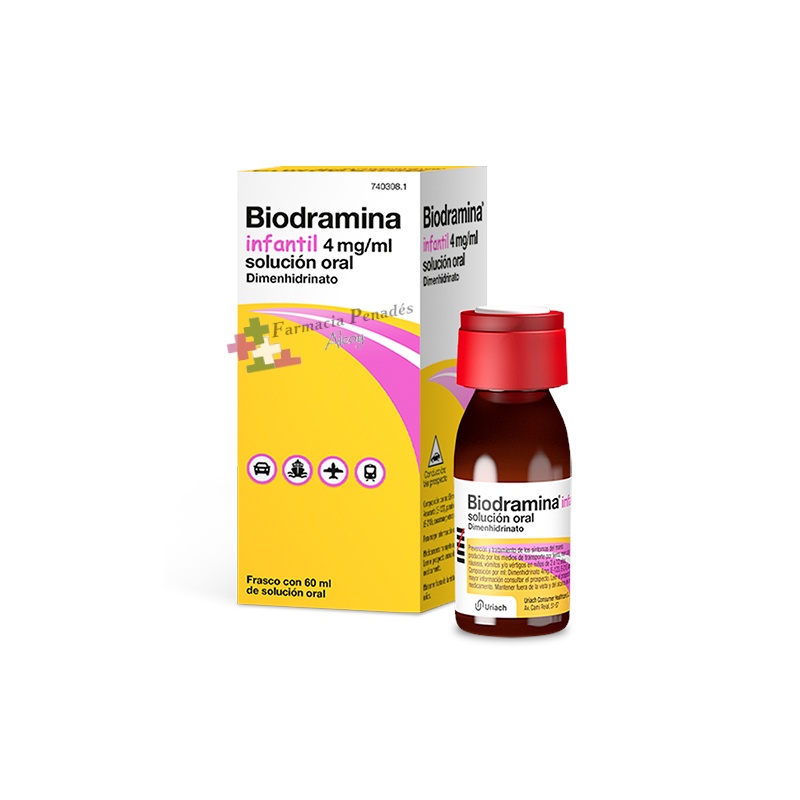
- Alternatives to NORMOSTOP 50 mg TABLETSDosage form: CHEWING GUM, 20 mg dimenhydrinateActive substance: diphenhydramineManufacturer: Uriach Consumer Healthcare S.L.Prescription not requiredDosage form: TABLET, 50 mgActive substance: diphenhydramineManufacturer: Uriach Consumer Healthcare S.L.Prescription not requiredDosage form: ORAL SOLUTION/SUSPENSION, 4 mg dimenhydrinate/mlActive substance: diphenhydramineManufacturer: Uriach Consumer Healthcare S.L.Prescription not required


Online doctors for NORMOSTOP 50 mg TABLETS
Discuss questions about NORMOSTOP 50 mg TABLETS, including use, safety considerations and prescription review, subject to medical assessment and local regulations.






Frequently Asked Questions
