



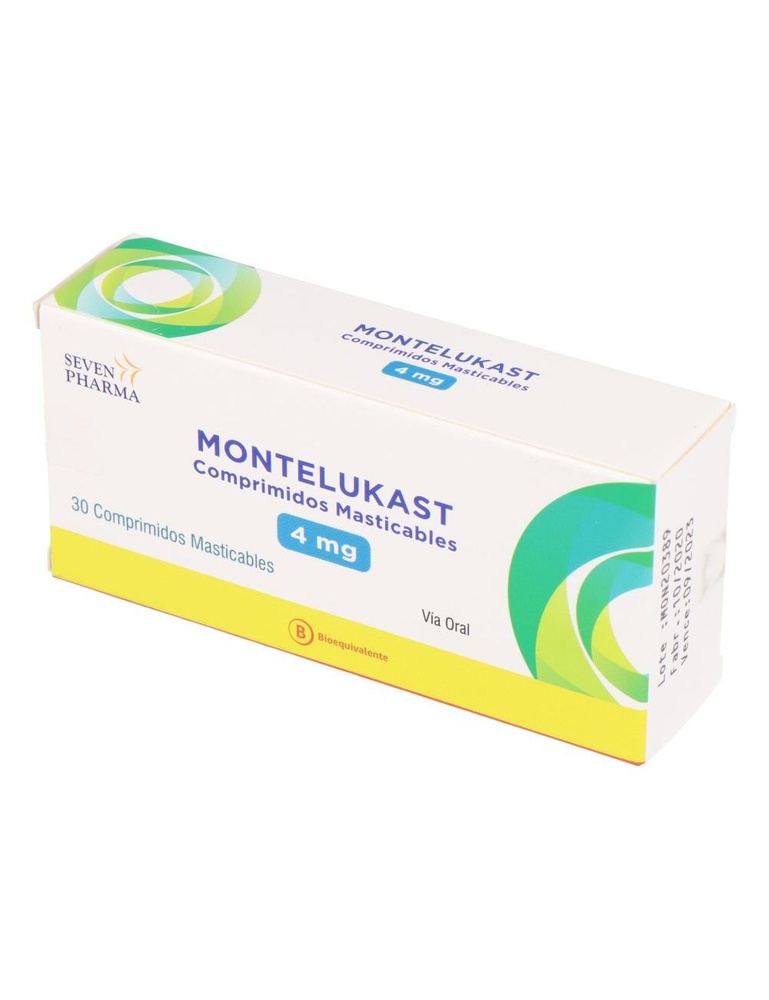
MONTELUKAST 4 mg Chewable Tablets

Prescription review online
A doctor will review your case and decide whether a prescription is medically appropriate.

Talk to a doctor about this medicine
Discuss your symptoms and possible next steps in a quick online consultation.



How to use MONTELUKAST ASTHMAPHARMA 4 mg CHEWABLE TABLETS
Contents of the leaflet
- Introduction
- What is MONTELUKAST ASTHMAPHARMA and what is it used for
- Before taking MONTELUKAST ASTHMAPHARMA
- How to take MONTELUKAST ASTHMAPHARMA
- Possible side effects
- Storage of MONTELUKAST ASTHMAPHARMA
- FURTHER INFORMATION
Introduction
PACKAGE LEAFLET: INFORMATION FOR THE USER
Montelukast ASTHMAPHARMA 4 mg chewable tablets EFG
Montelukast sodium
Read all of this leaflet carefully before your child starts taking this medicine.
- Keep this leaflet, you may need to read it again.
- If you have any further questions, ask your doctor or pharmacist.
- This medicine has been prescribed for your child. Do not pass it on to others. It may harm them, even if their symptoms are the same as your child's.
- If you think any of the side effects mentioned in this leaflet are serious or if you notice any side effects not mentioned in this leaflet, please tell your doctor or pharmacist.
Contents of the pack:
- What is Montelukast ASTHMAPHARMA and what is it used for
- Before taking Montelukast ASTHMAPHARMA
- How to take Montelukast ASTHMAPHARMA
- Possible side effects
- Storage of Montelukast ASTHMAPHARMA
- Further information
1. What is MONTELUKAST ASTHMAPHARMA and what is it used for
Montelukast is a leukotriene receptor antagonist that blocks substances called leukotrienes. Leukotrienes cause narrowing and swelling of the airways in the lungs. By blocking leukotrienes, Montelukast improves asthma symptoms and helps control asthma.
Your doctor has prescribed Montelukast to treat your child's asthma and prevent asthma symptoms during the day and night.
- Montelukast is used to treat patients between 2 and 5 years of age who are not adequately controlled with their medication and need additional treatment.
- Montelukast is also used as an alternative treatment to inhaled corticosteroids in patients between 2 and 5 years of age who have not recently taken oral corticosteroids for the treatment of their asthma and have demonstrated that they are unable to use inhaled corticosteroids.
- Montelukast also helps prevent narrowing of the airways caused by exercise in patients 2 years of age and older.
- Depending on the symptoms and severity of your child's asthma, your doctor will determine how to use Montelukast.
What is asthma?
Asthma is a chronic disease.
Asthma includes:
- Difficulty breathing due to narrowing of the airways. This narrowing of the airways worsens and improves in response to various diseases.
- Airways that are sensitive to many things, such as cigarette smoke, pollen, cold air, or exercise.
- Swelling (inflammation) of the inner layer of the airways.
The symptoms of asthma include: Cough, wheezing, and chest congestion.

Not sure if this medicine is right for you?
Discuss your symptoms and treatment with a doctor online.
2. Before taking MONTELUKAST ASTHMAPHARMA
Tell your doctor about any allergy or medical problem your child has now or has had.
Do not give MONTELUKAST ASTHMAPHARMA to your child if
- They are allergic (hypersensitive) to montelukast or any of the other components of Montelukast (see section 6).
Be careful with MONTELUKAST ASTHMAPHARMA
- If your child's asthma or breathing worsens, tell your doctor immediately.
- Oral Montelukast is not indicated for the treatment of acute asthma attacks. If an attack occurs, follow the instructions your doctor has given your child. Always have your child's rescue inhaler medication for asthma attacks.
- It is important that your child uses all the asthma medications prescribed by their doctor.
Montelukast should not be used instead of other asthma medications prescribed by your doctor for your child.
- If your child is being treated with asthma medications, be aware that if they develop a combination of symptoms such as flu-like illness, tingling or numbness of arms or legs, worsening of lung symptoms, and/or skin rash, they should consult their doctor.
- Your child should not take acetylsalicylic acid (aspirin) or anti-inflammatory medications (also known as non-steroidal anti-inflammatory medications or NSAIDs) if they worsen their asthma.
- Several neuropsychiatric events (such as changes in behavior and mood, depression, and suicidal tendencies) have been reported in patients of all ages (see section 4). If these symptoms develop while taking Montelukast, contact your doctor.
Use of other medications
Some medications may affect the functioning of Montelukast ASTHMAPHARMA, or Montelukast ASTHMAPHARMA may affect the functioning of other medications your child is using.
Tell your doctor or pharmacist if your child is using or has recently used other medications, even those obtained without a prescription.
Before taking Montelukast, tell your doctor if your child is taking the following medications:
- Phenobarbital (used to treat epilepsy)
- Phenytoin (used to treat epilepsy)
- Rifampicin (used to treat tuberculosis and some other infections)
Taking MONTELUKAST ASTHMAPHARMA with food and drinks
Montelukast ASTHMAPHARMA 4 mg chewable tablets should not be taken with food; they should be taken at least 1 hour before or 2 hours after food.
Pregnancy and breastfeeding
This subsection is not applicable to Montelukast 4 mg chewable tablets, as their use is indicated in children between 2 and 5 years of age. However, the following information is important for the active ingredient, montelukast.
Use during pregnancy
Women who are pregnant or plan to become pregnant should consult their doctor before taking Montelukast. Their doctor will evaluate whether they can take Montelukast during this period.
Use during breastfeeding
It is unknown whether Montelukast appears in breast milk. If you are breastfeeding or plan to breastfeed, consult your doctor before taking Montelukast.
Driving and using machines
This subsection is not applicable to Montelukast 4 mg chewable tablets, as their use is indicated in children between 2 and 5 years of age. However, the following information is important for the active ingredient, montelukast.
Montelukast is not expected to affect the ability to drive a car or operate machinery. However, individual responses to the medication may vary. Certain side effects (such as dizziness and drowsiness) that have been reported very rarely with Montelukast may affect the patient's ability to drive or operate machinery.
Important information about some of the components of MONTELUKAST ASTHMAPHARMA
This medication may be harmful to people with phenylketonuria because it contains aspartame, which is a source of phenylalanine.
If your child has phenylketonuria (a rare, inherited disorder of metabolism), they should be aware that each 4 mg chewable tablet contains phenylalanine (equivalent to 0.135 mg of phenylalanine in each 4 mg chewable tablet).
3. How to take MONTELUKAST ASTHMAPHARMA
- This medication should be administered to children under the supervision of an adult.
- Your child should only take one Montelukast tablet once a day, as prescribed by their doctor.
- It should be taken even when your child does not have symptoms or when they have an acute asthma attack.
- Make sure your child always takes Montelukast as directed by their doctor. Consult your child's doctor or pharmacist if you have any doubts.
- It should be taken orally
For children from 2 to 5 years of age:
One 4 mg chewable tablet should be taken daily in the evening. Montelukast should not be taken with food; it should be taken at least 1 hour before or 2 hours after food.
If your child is taking Montelukast ASTHMAPHARMA, ensure they do not take any other medication that contains the same active ingredient, montelukast.
For children from 2 to 5 years of age, Montelukast ASTHMAPHARMA 4 mg chewable tablets are available.
For children from 6 to 14 years of age, Montelukast ASTHMAPHARMA 5 mg chewable tablets are available. The 4 mg chewable tablet of Montelukast ASTHMAPHARMA is not recommended for children under 2 years of age.
If your child takes more MONTELUKAST ASTHMAPHARMA than they should
In most cases of overdose, no side effects were reported. The symptoms that occurred most frequently reported in overdose in adults and children were abdominal pain, drowsiness, thirst, headache, vomiting, and hyperactivity.
In case of overdose or accidental ingestion, consult your doctor or pharmacist immediately or call the Toxicology Information Service, phone: 91 562 04 20, indicating the medication and the amount ingested.
If you forget to give MONTELUKAST ASTHMAPHARMA to your child
Try to give Montelukast as prescribed. However, if your child forgets a dose, just resume the usual routine of one tablet once a day.
Do not give a double dose to make up for forgotten doses.
If your child stops taking MONTELUKAST ASTHMAPHARMA
Montelukast can only treat your child's asthma if they continue taking it.
It is essential that your child continues taking Montelukast for the time their doctor prescribes it.
It will help control your child's asthma.
If you have any other questions about the use of this product, ask your child's doctor or pharmacist.

Started taking the medicine and have questions?
Discuss your symptoms and treatment with a doctor online.
4. Possible side effects
Like all medications, Montelukast can cause side effects, although not everyone gets them.
In clinical trials with Montelukast 4 mg chewable tablets, the side effects related to the administration of the medication and most frequently reported (occurring in at least 1 in 100 patients and less than 1 in 10 patients treated) were:
- Abdominal pain
- Thirst
Additionally, the following side effects were reported in clinical trials with Montelukast 10 mg film-coated tablets and 5 mg chewable tablets:
- Headache
These side effects were generally mild and occurred with a higher frequency in patients treated with Montelukast than with placebo (a pill that does not contain medication).
Additionally, since the medication has been marketed, the following side effects have been reported:
- Upper respiratory tract infection
- Increased risk of bleeding
- Allergic reactions including skin rash, swelling of the face, lips, tongue, and/or throat that can cause difficulty breathing or swallowing
- Behavioral and mood changes [sleep disturbances, including nightmares, hallucinations, irritability, feeling anxious, restlessness, excitement including aggressive or hostile behavior, tremors, depression, sleep problems, sleepwalking, suicidal thoughts and actions (in very rare cases)]
- Dizziness, drowsiness, tingling/numbness, seizures
- Palpitations
- Nosebleeds
- Diarrhea, dry mouth, indigestion, nausea, vomiting
- Hepatitis (inflammation of the liver)
- Bruises, itching, hives, red painful bumps under the skin that most frequently appear on the shins (erythema nodosum)
- Joint or muscle pain, muscle cramps
- Fatigue, discomfort, swelling, fever
In asthmatic patients treated with montelukast, very rare cases of a combination of symptoms such as flu-like illness, tingling or numbness of arms and legs, worsening of lung symptoms, and/or skin rash (Churg-Strauss syndrome) have been reported. You should immediately inform your doctor if your child has one or more of these symptoms. Very rare cases (may affect up to 1 in 10,000 people) of stuttering have also been reported.
Ask your doctor or pharmacist for more information about side effects. If you think any of the side effects your child suffers from is serious or if you notice side effects not mentioned in this leaflet, inform your child's doctor or pharmacist.
5. Storage of MONTELUKAST ASTHMAPHARMA
- Keep out of the reach and sight of children.
- Do not use this medication after the expiry date stated on the blister. The first two numbers indicate the month; the last four numbers indicate the year. The expiry date is the last day of the month indicated.
- Store in the original packaging.
- Medications should not be disposed of via wastewater or household waste. Ask your pharmacist how to dispose of the packaging and any unused medication. This will help protect the environment.
6. FURTHER INFORMATION
Composition of MONTELUKAST ASTHMAPHARMA
- The active ingredient is montelukast. Each tablet contains montelukast sodium equivalent to 4 mg of montelukast.
- The other components are:
Mannitol, microcrystalline cellulose, sodium croscarmellose, L-hydroxypropyl cellulose, red iron oxide (E172), cherry flavor, aspartame (E 951), magnesium stearate.
Appearance of the product and packaging contents
Montelukast ASTHMAPHARMA 4 mg chewable tablets are pink, oval, biconvex, packaged in PA/ALL/PVC-Aluminum blisters in packs of: 7, 10, 14, 20, 28, 30, 50, 56, 98, 100, 140, and 200 tablets
Not all pack sizes may be marketed.
Marketing authorization holder and manufacturer
Marketing authorization holder
FARMALIDER S.A.
c/ Aragoneses 15-
28108 Alcobendas (Madrid)
Spain
Manufacturers
PHARMATEN, S.A.
6 Dervenakion Street
Pallini 15351 – Athens
Greece
or
PHARMATEN INTERNATIONAL, S.A.
Sapes Industrial Park Block 5
69300 Rodopi
Greece
or
FARMALIDER S.A.
c/ Aragoneses 15-
28108 Alcobendas (Madrid)
Spain
This leaflet was approved in March 2025
- Country of registration
- Dosage formCHEWABLE TABLET, 4 mg
- ATC codeR03DC03
- Average pharmacy price16.84 EUR
- Active substance
- Prescription requiredYes
- Manufacturer
- CompositionMANITOL (E-421) (180,00 mg mg), CROSCARMELOSA SODICA (6,00 mg mg), ETANOL ANHIDRO (62,98 mg mg), ASPARTAMO (E-951) (0,24 mg mg)
- This information is for reference only and does not constitute medical advice. Always consult a doctor before taking any medication. Oladoctor is not responsible for medical decisions based on this content.
- Alternatives to MONTELUKAST ASTHMAPHARMA 4 mg CHEWABLE TABLETSDosage form: TABLET, 10 mgActive substance: montelukastManufacturer: Krka D.D. Novo MestoPrescription requiredDosage form: CHEWABLE TABLET, 4 mgActive substance: montelukastManufacturer: Krka D.D. Novo MestoPrescription requiredDosage form: CHEWABLE TABLET, 5 mgActive substance: montelukastManufacturer: Krka D.D. Novo MestoPrescription required
Online doctors for MONTELUKAST ASTHMAPHARMA 4 mg CHEWABLE TABLETS
Discuss questions about MONTELUKAST ASTHMAPHARMA 4 mg CHEWABLE TABLETS, including use, safety considerations and prescription review, subject to medical assessment and local regulations.









Get MONTELUKAST ASTHMAPHARMA 4 mg CHEWABLE TABLETS Prescription Online
Fill in a 2-min form
Tell us your symptoms, history, and what medicine you're requesting.
Pick a doctor or let us assign
Choose a specialist or we'll match you with the next available doctor.
Doctor reviews your case
Usually within 30 minutes. They may ask follow-up questions via chat.
Collect from any pharmacy
Electronic prescription sent to your email — valid across Spain.
Frequently Asked Questions
MONTELUKAST ASTHMAPHARMA 4 mg CHEWABLE TABLETS requires a prescription in Spain. You can check with a doctor online whether this medicine may be appropriate for your situation.
The active ingredient in MONTELUKAST ASTHMAPHARMA 4 mg CHEWABLE TABLETS is montelukast. This information helps identify medicines with the same composition but different brand names.
The average pharmacy price for MONTELUKAST ASTHMAPHARMA 4 mg CHEWABLE TABLETS is around 16.84 EUR. Prices may vary depending on the manufacturer and dosage form.
MONTELUKAST ASTHMAPHARMA 4 mg CHEWABLE TABLETS is manufactured by Farmalider S.A.. Pharmacy brands and packaging may differ depending on the distributor.
Doctors such as Family doctors, Psychiatrists, Dermatologists, Cardiologists, Endocrinologists, Gastroenterologists, Pulmonologists, Nephrologists, Rheumatologists, Hematologists, Infectious disease physicians, Allergists, Geriatricians, Paediatricians, Oncologists may assess whether MONTELUKAST ASTHMAPHARMA 4 mg CHEWABLE TABLETS is appropriate, depending on your situation and local regulations. You can book an online consultation to discuss your symptoms and possible next steps.
Spain has a well-developed healthcare infrastructure across major cities such as Madrid, Barcelona, Valencia, and Seville. Pharmacies are widely available and operate under strict regulations, ensuring access to prescribed medications.
You can buy MONTELUKAST ASTHMAPHARMA 4 mg CHEWABLE TABLETS in Madrid, Barcelona, Seville, or Valencia at any local pharmacy with a valid prescription.
To obtain a prescription, you can use Oladoctor:
Other medicines with the same active substance (montelukast) include MONKASTA 10 mg FILM-COATED TABLETS, MONKASTA 4 mg CHEWABLE TABLETS, MONKASTA 5 mg CHEWABLE TABLETS. These may have different brand names or formulations but contain the same therapeutic ingredient. Always consult a doctor before switching or starting a new medicine.
