



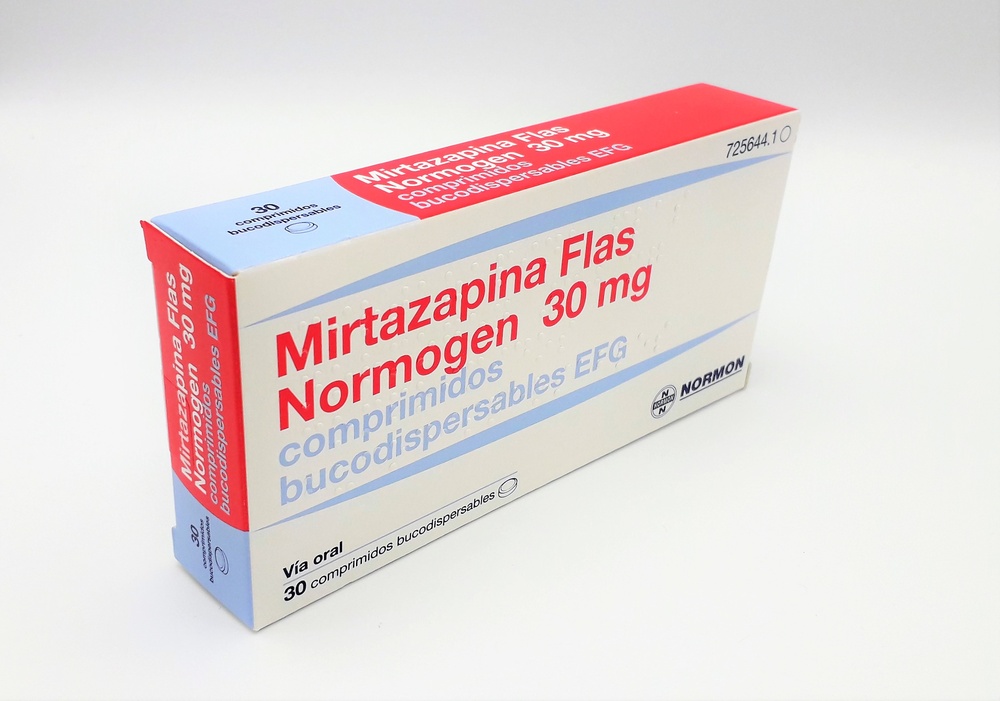
MIRTAZAPINA 30 mg Orally Disintegrating Tablets

Prescription review online
A doctor will review your case and decide whether a prescription is medically appropriate.

Talk to a doctor about this medicine
Discuss your symptoms and possible next steps in a quick online consultation.



How to use MIRTAZAPINE FLAS NORMOGEN 30 mg ORALLY DISINTEGRATING TABLETS
Contents of the leaflet
- Introduction
- What is Mirtazapine Flas Normogen and what is it used for
- What you need to know before taking Mirtazapine Flas Normogen
- Pregnancy and Breastfeeding
- If you are pregnant or breastfeeding, think you may be pregnant, or plan to become pregnant, consult your doctor or pharmacist before using this medication.
- How to Take Mirtazapine Flas Normogen
- Follow the administration instructions of this medication exactly as indicated by your doctor or pharmacist. In case of doubt, consult your doctor or pharmacist again.
- Possible Adverse Effects
- Storage of Mirtazapine Flas Normogen
- Keep this medicine out of sight and reach of children
- Package Contents and Additional Information
Introduction
Package Leaflet: Information for the Patient
Mirtazapine Flas Normogen 30 mg Oral Disintegrating Tablets EFG
Mirtazapine
Read the entire package leaflet carefully before starting to take this medication, as it contains important information for you.
- Keep this package leaflet, as you may need to read it again.
- If you have any questions, consult your doctor or pharmacist.
- This medication has been prescribed to you only, and you should not give it to others, even if they have the same symptoms as you, as it may harm them.
- If you experience side effects, consult your doctor or pharmacist, even if they are not listed in this package leaflet. See section 4.
Contents of the Package Leaflet
- What is Mirtazapine Flas Normogen and what is it used for
- What you need to know before taking Mirtazapine Flas Normogen
- How to take Mirtazapine Flas Normogen
- Possible side effects
- Storage of Mirtazapine Flas Normogen
- Package Contents and Additional Information
1. What is Mirtazapine Flas Normogen and what is it used for
Mirtazapine Flas Normogen belongs to the group of medications called antidepressants.
Mirtazapine Flas Normogen is used to treat depression in adults.
It may take one to two weeks before Mirtazapine Flas Normogen starts to take effect. After 2 to 4 weeks, you may start to feel better. You should consult your doctor if you get worse or if you do not improve after 2 to 4 weeks.
For more information, see section 3 "When can you expect to feel better".

Not sure if this medicine is right for you?
Discuss your symptoms and treatment with a doctor online.
2. What you need to know before taking Mirtazapine Flas Normogen
Do not take or consult your doctor before starting to take Mirtazapine Flas Normogen
- If you are allergicto mirtazapine or any of the other components of this medication (listed in section 6). In this case, consult your doctor as soon as possible before taking Mirtazapine Flas Normogen.
- If you are taking or have recently taken (in the last two weeks) medications called monoamine oxidase inhibitors (MAOIs).
- If you have ever suffered from a severe skin rash or skin peeling, blisters, or ulcers in the mouth after taking mirtazapine or other medications.
Warnings and Precautions
Consult your doctor or pharmacist before starting to take Mirtazapine Flas Normogen.
Children and Adolescents
Mirtazapine should not normally be used in the treatment of children and adolescents under 18 years of age, as its efficacy has not been demonstrated. At the same time, you should know that in patients under 18 years of age, there is a greater risk of adverse effects such as suicidal attempts, suicidal ideation, and hostility (mainly aggression, confrontational behavior, and irritation) when taking this class of medications. Nevertheless, your doctor may prescribe mirtazapine to a patient under 18 years of age when they decide it is most convenient for the patient. If your doctor has prescribed mirtazapine to a patient under 18 years of age and you wish to discuss this decision, please return to your doctor. You should inform your doctor if any of the symptoms listed above appear or worsen in patients under 18 years of age who are taking mirtazapine. Additionally, the long-term safety effects related to growth, maturity, and development of knowledge and behavior of mirtazapine in this age group are not yet known. It has also been observed that a significant weight gain is more frequent in this age group when treated with mirtazapine, compared to adults.
Suicidal Thoughts and Worsening of Depression
If you are depressed, you may sometimes have thoughts of harming yourself or committing suicide. This could worsen when you start taking antidepressants for the first time, as these medications usually take two weeks or sometimes more to take effect.
You may be more likely to think this way:
- If you have previously had suicidal thoughts or thoughts of harming yourself.
- If you are a young adult. Clinical trial information has shown an increased risk of suicidal behavior in adults under 25 years of age with psychiatric disorders who are being treated with an antidepressant.
- If you have thoughts of harming yourself or committing suicide at any time, consult your doctor or go to a hospital immediately.
It may be helpful to tell a relative or close friendthat you are depressed and ask them to read this package leaflet. You can ask them to tell you if they think your depression is getting worse or if they are concerned about changes in your behavior.
Also, be especially careful with Mirtazapine Flas Normogen:
- If you have or have ever had any of the following disorders;
→ Inform your doctor about these situations before taking Mirtazapine Flas Normogen, if you have not already:
- seizures (epilepsy). If seizures appear or your seizures become more frequent, stop taking Mirtazapine Flas Normogen and contact your doctor immediately;
- liver diseases, including jaundice. If jaundice appears, stop taking Mirtazapine Flas Normogen and contact your doctor immediately;
- kidney diseases;
- heart disease or low blood pressure;
- schizophrenia. If psychotic symptoms, such as paranoid thoughts, become more frequent or severe, contact your doctor immediately;
- bipolar depression (alternating periods of excitement/hyperactivity and periods of depression). If you start to feel excited or overexcited, stop taking Mirtazapine Flas Normogen and contact your doctor immediately;
- diabetes (you may need to adjust your insulin dose or other antidiabetic medications);
- eye diseases, such as increased pressure in the eye (glaucoma);
- urination difficulties, which may be due to an enlarged prostate.
- certain types of heart diseases that can change the rhythm of your heart, a recent heart attack, heart failure, or taking certain medications that can affect heart rhythm.
- If signs of infection appear, such as high unexplained fever, sore throat, and ulcers in the mouth;
- Stop taking Mirtazapine Flas Normogen and contact your doctor immediately to have a blood test.
- In rare cases, these symptoms can be signs of alterations in blood cell production in the bone marrow. Although rare, these symptoms usually appear 4-6 weeks after treatment.
- If you are an elderly person. You may be more sensitive to the adverse effects of antidepressant medications.
- Severe skin reactions, such as Stevens-Johnson syndrome (SSJ), toxic epidermal necrolysis (TEN), and drug reaction with eosinophilia and systemic symptoms (DRESS), have been reported with the use of mirtazapine. Discontinue use and seek medical attention immediately if you notice any of the symptoms described in section 4 related to these severe skin reactions.
- If you have ever suffered from severe skin reactions, do not restart treatment with mirtazapine.
Other Medications and Mirtazapine Flas Normogen
Tell your doctor or pharmacist if you are taking, have recently taken, or may need to take any other medication.
Do not take Mirtazapine Flas Normogenwith:
- monoamine oxidase inhibitors (MAOIs). Also, do not take Mirtazapine Flas Normogen during the two weeks after stopping MAOIs. If you stop taking Mirtazapine Flas Normogen, do not take MAOIs during the following two weeks.
Examples of MAOIs are moclobemide, tranilcipromine (both are antidepressants), and selegiline (for Parkinson's disease).
Be careful ifyou take Mirtazapine Flas Normogen with:
- antidepressants such as selective serotonin reuptake inhibitors (SSRIs), venlafaxine, and L-tryptophan or triptans(used for migraines), tramadol(for pain), linezolid(an antibiotic), lithium(used to treat some psychiatric disorders), methylene blue(used to treat high levels of methemoglobin in the blood), and St. John's Wort preparations – Hypericum perforatum(a medicinal plant for depression). In rare cases, Mirtazapine Flas Normogen alone or with these medications can cause a condition called serotonin syndrome. Some symptoms of this syndrome are: unexplained fever, sweating, palpitations, diarrhea, muscle contractions (involuntary), shivering, exaggerated reflexes, agitation, mood changes, and loss of consciousness. If you experience a combination of these symptoms, consult your doctor immediately.
- the antidepressant nefazodone. It can increase the amount of Mirtazapine Flas Normogen in the blood. Inform your doctor if you are taking this medication. It may be necessary to decrease the dose of Mirtazapine Flas Normogen or increase it again when stopping nefazodone.
- medications for anxiety or insomniasuch as benzodiazepines.
- medications for schizophreniasuch as olanzapine.
- medications for allergiessuch as cetirizine.
- medications for severe painsuch as morphine.
When combined with these medications, Mirtazapine Flas Normogen can increase the drowsiness caused by these medications.
- infection medications: medications for bacterial infections (such as erythromycin), medications for fungal infections (such as ketoconazole), and medications for HIV/AIDS (HIV protease inhibitors) and medications for stomach ulcers(such as cimetidine).
If taken with Mirtazapine Flas Normogen, these medications can increase the amount of Mirtazapine Flas Normogen in the blood. Inform your doctor if you are taking these medications. It may be necessary to decrease the dose of Mirtazapine Flas Normogen or increase it again when stopping these medications.
- medications for epilepsysuch as carbamazepine and phenytoin;
- medications for tuberculosissuch as rifampicin.
If taken with Mirtazapine Flas Normogen, these medications can decrease the amount of Mirtazapine Flas Normogen in the blood. Inform your doctor if you are taking these medications. It may be necessary to increase the dose of Mirtazapine Flas Normogen or decrease it again when stopping these medications.
- medications to prevent blood clottingsuch as warfarin.
Mirtazapine Flas Normogen can increase the effects of warfarin on the blood. Inform your doctor if you are taking this medication. In case of taking them together, it is recommended that your doctor perform blood tests.
- medications that can affect heart rhythm, such as certain antibiotics and some antipsychotics.
Taking Mirtazapine Flas Normogen with Food and Alcohol
You may feel drowsy if you drink alcohol while being treated with Mirtazapine Flas Normogen. It is recommended not to drink any alcohol. You can take Mirtazapine Flas Normogen with or without food.
Pregnancy and Breastfeeding

Started taking the medicine and have questions?
Discuss your symptoms and treatment with a doctor online.
If you are pregnant or breastfeeding, think you may be pregnant, or plan to become pregnant, consult your doctor or pharmacist before using this medication.
Limited experience with the administration of mirtazapine to pregnant women does not indicate an increased risk. However, caution should be exercised if used during pregnancy. If you use Mirtazapine Flas Normogen until or shortly before delivery, your child will be examined for possible adverse effects.
When taken during pregnancy, similar medications (SSRIs) may increase the risk of a serious disease called persistent pulmonary hypertension in newborns (PPHN), which makes the baby breathe faster and become blue. These symptoms usually start within the first 24 hours after birth. If this happens to your child, you should consult your midwife and/or doctor immediately.
Consult your doctor if you can breastfeed while taking Mirtazapine Flas Normogen.
Driving and Using Machines
During treatment with Mirtazapine Flas Normogen, you may feel drowsy or dizzy. Do not drive or operate tools or machines until you know how the treatment with Mirtazapine Flas Normogen affects you.
Mirtazapine Flas Normogen contains glucose and aspartame
This medication contains glucose. If your doctor has told you that you have an intolerance to certain sugars, consult with them before taking this medication.
This medication contains 4 mg of aspartame in each tablet.
Aspartame contains a source of phenylalanine that can be harmful in case of phenylketonuria (PKU), a rare genetic disease in which phenylalanine accumulates because the body is unable to eliminate it properly.
3. How to Take Mirtazapine Flas Normogen
Follow the administration instructions of this medication exactly as indicated by your doctor or pharmacist. In case of doubt, consult your doctor or pharmacist again.
How much to take
The recommended initial dose is 15 mg or 30 mg per day. Your doctor may recommend increasing the dose after a few days to the amount that is best for you (between 15 mg and 45 mg per day). The dose is usually the same for all ages. However, if you are an elderly person or have kidney or liver disease, your doctor may change the dose.
When to take it
→ Take Mirtazapine Flas Normogen at the same time every day.
It is best to take the dose of Mirtazapine Flas Normogen once before bedtime. However, your doctor may recommend that you divide your dose of Mirtazapine Flas Normogen in the morning and before bedtime. The highest dose should be taken before bedtime.
Take the oral disintegrating tablet as follows
- The tablets are taken orally. To avoid crushing the oral disintegrating tablet, carefully press the tablet through the blister pack.
- Take the oral disintegrating tablet with dry hands and place it on your tongue.
The oral disintegrating tablet will dissolve quickly and can be swallowed without water.
When can you expect to feel better
Normally, Mirtazapine Flas Normogen will start to take effect after 1 or 2 weeks, and after 2 to 4 weeks, you may start to feel better.
It is essential that during the first few weeks of treatment, you talk to your doctor about the effects of Mirtazapine Flas Normogen:
→ Between 2 and 4 weeks after starting to take Mirtazapine Flas Normogen, talk to your doctor about how this medication has affected you.
If you still do not feel better, your doctor may prescribe a higher dose. In that case, talk to your doctor again after another 2-4 weeks.
Normally, you will need to take Mirtazapine Flas Normogen until the symptoms of depression have disappeared for 4-6 months.
If you take more Mirtazapine Flas Normogen than you should
→ In case of overdose or accidental ingestion, consult your doctor or pharmacist immediately or call the Toxicology Information Service, phone: 91 562 04 20, indicating the medication and the amount ingested.
The most likely symptoms of a Mirtazapine Flas Normogen overdose (without other medications or alcohol) are drowsiness, disorientation, and palpitations. The symptoms of a possible overdose may include changes in the rhythm of your heart (fast, irregular heartbeat) and/or fainting, which could be symptoms of a potentially life-threatening condition known as Torsade de pointes.
If you forget to take Mirtazapine Flas Normogen
If you need to take your dose once a day:
- Do not take a double dose to make up for forgotten doses. Take the next dose at the usual time.
If you need to take your dose twice a day:
- If you forgot the morning dose, simply take it with the evening dose.
- If you forgot the evening dose, do not take it the next morning; skip it and continue with your normal doses in the morning and evening.
- If you forgot both doses, do not try to make them up. Skip both doses and the next day continue with your normal dose in the morning and evening.
If you stop taking Mirtazapine Flas Normogen
Stop taking Mirtazapine Flas Normogen only if you consult your doctor.
If you stop too soon, depression may reappear. When you feel better, talk to your doctor. Your doctor will decide when you can stop treatment.
Do not stop taking Mirtazapine Flas Normogen abruptly, even if depression has disappeared. If you stop taking Mirtazapine Flas Normogen abruptly, you may feel sick, dizzy, agitated, or anxious, and have headaches. These symptoms can be avoided by gradually stopping treatment. Your doctor will indicate how to gradually decrease the dose.
If you have any other questions about the use of this medication, ask your doctor or pharmacist.
4. Possible Adverse Effects
Like all medicines, this medicine can cause adverse effects, although not all people suffer from them.
If you experience any of the following serious adverse effects, stop taking mirtazapine and inform your doctor immediately.
Uncommon(may affect up to 1 in 100 patients):
- feeling of exaggerated euphoria (mania).
Rare(may affect up to 1 in 1,000 patients):
- yellowing of the eyes or skin; may suggest liver function alterations (jaundice).
Frequency Not Known(cannot be estimated from available data):
- signs of infection such as unexplained and sudden high fever, sore throat, and mouth ulcers (agranulocytosis). In rare cases, mirtazapine may cause alterations in blood cell production (bone marrow depression). Some people become less resistant to infections because mirtazapine may cause a temporary decrease in white blood cells (granulocytopenia). In rare cases, mirtazapine may also cause a decrease in red and white blood cells and platelets (aplastic anemia), a decrease in platelets (thrombocytopenia), or an increase in white blood cells in the blood (eosinophilia),
- epileptic seizure (convulsions),
- combination of symptoms such as unexplained fever, sweating, palpitations, diarrhea, muscle contractions (involuntary), chills, exaggerated reflexes, agitation, mood changes, loss of consciousness, and increased saliva production. In very rare cases, these symptoms may be signs of a disorder called "serotonin syndrome",
- thoughts of self-harm or suicide,
- severe skin reactions (Stevens-Johnson Syndrome, toxic epidermal necrolysis).
- red patches on the torso, such as circumscribed or circular macules, often with blisters in the center, skin peeling, ulcers in the mouth, throat, nose, genitals, and eyes. These severe skin eruptions may be preceded by fever and flu-like symptoms (Stevens-Johnson Syndrome, toxic epidermal necrolysis).
- Generalized erythema, elevated body temperature, and enlarged lymph nodes (DRESS or drug hypersensitivity syndrome).
Other Possible Adverse Effects with Mirtazapine Are:
Very Common(may affect more than 1 in 10 patients):
- increased appetite and weight gain,
- somnolence,
- headache,
- dry mouth.
Common(may affect up to 1 in 10 patients):
- lethargy,
- dizziness,
- tremor,
- nausea,
- diarrhea,
- vomiting,
- constipation,
- urticaria or skin eruptions (exanthema),
- joint pain (arthralgia) or muscle pain (myalgia),
- back pain,
- dizziness or fainting when standing up quickly (orthostatic hypotension),
- swelling (usually in ankles or feet) due to fluid retention (edema),
- fatigue,
- vivid dreams,
- confusion,
- anxiety,
- difficulty sleeping.
- Memory problems, which in most cases were resolved when treatment was discontinued.
Uncommon(may affect up to 1 in 100 patients):
- strange sensation in the skin, such as burning, pinching, tingling, or numbness (paresthesia),
- involuntary leg movements during sleep,
- fainting (syncope),
- numbness in the mouth (oral hypoesthesia),
- low tension,
- nightmares,
- agitation,
- hallucinations,
- inability to remain still.
Rare(may affect up to 1 in 1,000 patients):
- twitching or muscle contractions (myoclonus),
- aggression,
- abdominal pain, nausea; this may indicate pancreas inflammation (pancreatitis).
Frequency Not Known(cannot be estimated from available data):
- abnormal sensations in the mouth (oral paresthesia),
- swelling in the mouth (oral edema),
- generalized swelling (generalized edema),
- localized swelling,
- hyponatremia,
- inadequate secretion of antidiuretic hormone,
- severe skin reactions (bullous dermatitis, erythema multiforme),
- sleepwalking (somnambulism),
- speech problems,
- increased creatine kinase levels in the blood,
- difficulty urinating (urinary retention),
- muscle pain, stiffness, and/or weakness, darkening or discoloration of urine (rhabdomyolysis).
Other Adverse Effects in Children and Adolescents
In patients under 18 years of age, the following adverse effects were frequently observed in clinical trials: significant weight gain, urticaria, and increased triglycerides in the blood.
Reporting Adverse Effects
If you experience any adverse effects, consult your doctor or pharmacist, even if they are possible adverse effects not listed in this prospectus. You can also report them directly through the Spanish Pharmacovigilance System for Human Use Medicines: https://www.notificaram.es. By reporting adverse effects, you can contribute to providing more information on the safety of this medicine.
5. Storage of Mirtazapine Flas Normogen
Keep this medicine out of sight and reach of children
Do not use this medicine after the expiration date shown on the box and blister after CAD. The expiration date is the last day of the month indicated.
This medicine does not require special storage conditions.
Medicines should not be disposed of through wastewater or household waste. Deposit the packaging and unused medicines in the SIGRE point of the pharmacy. In case of doubt, ask your pharmacist how to dispose of the packaging and medicines you no longer need. This will help protect the environment.
6. Package Contents and Additional Information
Composition ofMirtazapine Flas Normogen
- The active ingredient is mirtazapine.
- Each buccal dispersible tablet contains 30 mg of mirtazapine (as mirtazapine hemihydrate).
- The other components are: mannitol, cornstarch, microcrystalline cellulose, crospovidone, aspartame, orange flavor (contains glucose in maltodextrin from corn) and vegetable magnesium stearate.
Appearance of the Product and Package Contents
White, round, flat, beveled buccal dispersible tablet marked with "30" on one side.
Package size: 30 tablets in precut unit-dose blisters.
Marketing Authorization Holder and Manufacturer
LABORATORIOS NORMON, S.A.
Ronda de Valdecarrizo, 6 – 28760 Tres Cantos – Madrid (SPAIN)
Date of the Last Revision of this Prospectus: September 2020
Detailed and updated information on this medicine is available on the website of the Spanish Agency for Medicines and Health Products (AEMPS) http://www.aemps.gob.es/
You can access detailed and updated information about this medicine by scanning the QR code included in the prospectus and packaging with your mobile phone (smartphone). You can also access this information at the following internet address: https://cima.aemps.es/cima/dochtml/p/84116/P_84116.html
- Country of registration
- Dosage formORALLY DISINTEGRATING TABLET/LIOTAB, 30 mg
- ATC codeN06AX11
- Average pharmacy price17.05 EUR
- Active substance
- Prescription requiredYes
- Manufacturer
- CompositionMANITOL / ALMIDON DE MAIZ (99,6 mg mg), ASPARTAMO (E-951) (4 mg mg)
- This information is for reference only and does not constitute medical advice. Always consult a doctor before taking any medication. Oladoctor is not responsible for medical decisions based on this content.
- Alternatives to MIRTAZAPINE FLAS NORMOGEN 30 mg ORALLY DISINTEGRATING TABLETSDosage form: TABLET, 15 mgActive substance: mirtazapineManufacturer: Laboratorios Alter S.A.Prescription requiredDosage form: TABLET, 30 mgActive substance: mirtazapineManufacturer: Laboratorios Alter S.A.Prescription requiredDosage form: TABLET, 15 mgActive substance: mirtazapineManufacturer: Almus Farmaceutica S.A.U.Prescription required
Online doctors for MIRTAZAPINE FLAS NORMOGEN 30 mg ORALLY DISINTEGRATING TABLETS
Discuss questions about MIRTAZAPINE FLAS NORMOGEN 30 mg ORALLY DISINTEGRATING TABLETS, including use, safety considerations and prescription review, subject to medical assessment and local regulations.







Get MIRTAZAPINE FLAS NORMOGEN 30 mg ORALLY DISINTEGRATING TABLETS Prescription Online
Fill in a 2-min form
Tell us your symptoms, history, and what medicine you're requesting.
Pick a doctor or let us assign
Choose a specialist or we'll match you with the next available doctor.
Doctor reviews your case
Usually within 30 minutes. They may ask follow-up questions via chat.
Collect from any pharmacy
Electronic prescription sent to your email — valid across Spain.
Frequently Asked Questions
MIRTAZAPINE FLAS NORMOGEN 30 mg ORALLY DISINTEGRATING TABLETS requires a prescription in Spain. You can check with a doctor online whether this medicine may be appropriate for your situation.
The active ingredient in MIRTAZAPINE FLAS NORMOGEN 30 mg ORALLY DISINTEGRATING TABLETS is mirtazapine. This information helps identify medicines with the same composition but different brand names.
The average pharmacy price for MIRTAZAPINE FLAS NORMOGEN 30 mg ORALLY DISINTEGRATING TABLETS is around 17.05 EUR. Prices may vary depending on the manufacturer and dosage form.
MIRTAZAPINE FLAS NORMOGEN 30 mg ORALLY DISINTEGRATING TABLETS is manufactured by Laboratorios Normon S.A.. Pharmacy brands and packaging may differ depending on the distributor.
Doctors such as Family doctors, Psychiatrists, Dermatologists, Cardiologists, Endocrinologists, Gastroenterologists, Pulmonologists, Nephrologists, Rheumatologists, Hematologists, Infectious disease physicians, Allergists, Geriatricians, Paediatricians, Oncologists may assess whether MIRTAZAPINE FLAS NORMOGEN 30 mg ORALLY DISINTEGRATING TABLETS is appropriate, depending on your situation and local regulations. You can book an online consultation to discuss your symptoms and possible next steps.
Spain has a well-developed healthcare infrastructure across major cities such as Madrid, Barcelona, Valencia, and Seville. Pharmacies are widely available and operate under strict regulations, ensuring access to prescribed medications.
You can buy MIRTAZAPINE FLAS NORMOGEN 30 mg ORALLY DISINTEGRATING TABLETS in Madrid, Barcelona, Seville, or Valencia at any local pharmacy with a valid prescription.
To obtain a prescription, you can use Oladoctor:
Other medicines with the same active substance (mirtazapine) include AFLOYAN 15 mg FILM-COATED TABLETS, AFLOYAN 30 mg FILM-COATED TABLETS, MIRTAZAPINE ALMUS 15 mg FILM-COATED TABLETS. These may have different brand names or formulations but contain the same therapeutic ingredient. Always consult a doctor before switching or starting a new medicine.
