



METAMIZOL 575 mg Hard Capsules

Prescription review online
A doctor will review your case and decide whether a prescription is medically appropriate.

Talk to a doctor about this medicine
Discuss your symptoms and possible next steps in a quick online consultation.



How to use METAMIZOL STADA 575 mg HARD CAPSULES
Contents of the leaflet
- Introduction
- What is Metamizol Stada and what is it used for
- What you need to know before taking Metamizol Stada
- How to Take Metamizol Stada
- Possible Adverse Effects
- Storage of Metamizol Stada
- Package Contents and Additional Information
Introduction
Package Leaflet: Information for the User
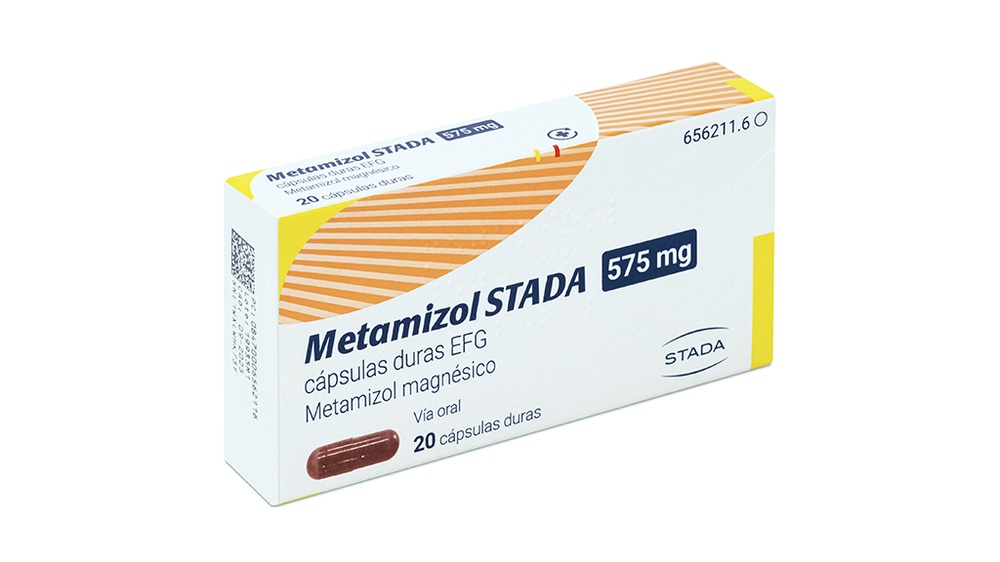
Metamizol Stada 575 mg Hard Capsules EFG
Metamizol Magnesium
Metamizol Stada can cause a lower than normal white blood cell count (agranulocytosis), which can lead to serious and potentially life-threatening infections (see section 4). You should stop taking this medicine and contact your doctor immediately if you experience any of the following symptoms: fever, chills, sore throat, painful sores in your nose, mouth, and throat, or in the genital or anal area. If you have ever had agranulocytosis with metamizol or similar medicines, you should never take this medicine again (see section 2). |
Read the entire package leaflet carefully before starting to take this medicine, as it contains important information for you.
- Keep this package leaflet, as you may need to read it again.
- If you have any questions, consult your doctor or pharmacist.
- This medicine has been prescribed to you only, and you should not give it to others, even if they have the same symptoms as you, as it may harm them.
- If you experience side effects, consult your doctor or pharmacist, even if they are not listed in this package leaflet. See section 4.
Contents of the Package Leaflet
- What is Metamizol Stada and what is it used for
- What you need to know before taking Metamizol Stada
- How to take Metamizol Stada
- Possible side effects
- Storage of Metamizol Stada
- Package Contents and Additional Information
1. What is Metamizol Stada and what is it used for
Metamizol Stada belongs to the group of medicines called "Other Analgesics and Antipyretics".
This medicine is used to treat moderate or severe acute postoperative or post-traumatic pain, colic pain, or pain of tumor origin. It is also used in cases of high fever that does not respond to other measures or medications for fever.

Not sure if this medicine is right for you?
Discuss your symptoms and treatment with a doctor online.
2. What you need to know before taking Metamizol Stada
Do not take Metamizol Stada:
- If you have previously had a significant decrease in a type of white blood cell called granulocytes, which was caused by metamizol or other similar medicines called pyrazolones or pyrazolidines.
- If you have bone marrow problems or have a disorder that affects the production or function of your blood cells.
- If you have had allergic reactions or hematological reactions (decrease in white blood cells, red blood cells, or platelets in the blood) with medicines containing metamizol or other similar compounds, or allergic reactions to any of the other components of this medicine (listed in section 6).
- If you have had symptoms of asthma, rhinitis, or urticaria (red patches or hives on the skin that can cause itching) during treatment with other analgesics such as acetylsalicylic acid, paracetamol, or non-steroidal anti-inflammatory drugs, as you may also be sensitive to metamizol (the active substance of Metamizol Stada).
- If you have acute intermittent porphyria (a disorder of the metabolism of blood pigments that are part of hemoglobin).
- If you have a genetic deficiency of glucose-6-phosphate dehydrogenase.
- If you have had alterations in bone marrow function (blood cell formation); for example, during or after receiving anticancer chemotherapy (antineoplastic) or if you have had diseases related to blood cell formation.
- If you are in the last three months of pregnancy.
- If you have had severe skin reactions (such as Stevens-Johnson syndrome or toxic epidermal necrolysis) with the previous use of metamizol or another medicine that contained metamizol.
Warnings and Precautions
Consult your doctor or pharmacist before starting to take metamizol.
Low White Blood Cell Count (Agranulocytosis).
Metamizol Stada can cause agranulocytosis, a very low level of a type of white blood cell called granulocytes, which are important for fighting infections (see section 4). You should stop taking metamizol and contact your doctor immediately if you experience any of the following symptoms, as they may indicate possible agranulocytosis: chills, fever, sore throat, and painful sores in the mucous membranes (wet surfaces of the body), especially in the mouth, nose, and throat, or in the genital or anal area. Your doctor will perform laboratory tests to check your blood cell count.
If you take metamizol for fever, some symptoms of agranulocytosis may go unnoticed. Similarly, symptoms may be masked if you are taking antibiotics.
Agranulocytosis can occur at any time during the use of Metamizol Stada and even shortly after stopping metamizol.
You can develop agranulocytosis even if you have used metamizol without problems in the past.
Be particularly careful:
- If you experience general discomfort, infection, persistent fever, sore throat, inflammation in the mouth, nose, or throat, lesions in the mouth or genital mucosa, bruising, bleeding, or paleness, you should stop treatment and consult your doctor immediately. These disorders may be due to a decrease in the number of white blood cells in the blood (agranulocytosis), platelets (thrombocytopenia), or a failure in the production of all blood cells (aplastic anemia).
- If you experience dizziness, difficulty breathing, rhinitis, facial swelling, decreased blood pressure, sudden onset of red patches on the skin, stop treatment and consult your doctor. These symptoms may be due to a severe allergic reaction called anaphylactic shock. This reaction is more likely if you have asthma or allergic disorders (atopy).
- If you have bronchial asthma (especially in the presence of nasal mucosa inflammation and nasal polyps), chronic urticaria, or if you are intolerant to dyes and/or preservatives or alcohol, as the risk of severe allergic reactions is higher.
- If you have low blood pressure, hypovolemia (decrease in circulating blood volume or any other body fluid), dehydration, or unstable circulation, as the risk of a sudden drop in blood pressure is higher.
- If a skin rash appears that progresses to blistering or mucosal lesions, you should interrupt treatment and consult your doctor, as this may be due to severe skin disorders (Stevens-Johnson syndrome or toxic epidermal necrolysis). In these cases, you should not receive medicines containing metamizol again.
- If you have impaired kidney or liver function, as you may have difficulty eliminating the medicine.
- If you are an elderly patient, be especially alert to the appearance of any of the disorders described above, as they may occur more frequently.
Liver Problems
Inflammation of the liver has been reported in patients taking metamizol, with symptoms developing within a few days to months after starting treatment.
Stop using metamizol and contact your doctor if you experience symptoms of liver problems, such as discomfort (nausea or vomiting), fever, fatigue, loss of appetite, dark urine, light-colored stools, yellowing of the skin or the white part of the eyes, itching, rash, or upper abdominal pain. Your doctor will check your liver function.
Do not take metamizol if you have previously taken a medicine containing metamizol and had liver problems.
Severe Skin Reactions
Severe skin reactions, such as Stevens-Johnson syndrome, toxic epidermal necrolysis, and drug reaction with eosinophilia and systemic symptoms (DRESS), have been reported in association with metamizol treatment. Stop taking metamizol and seek medical attention immediately if you observe any of the symptoms related to these severe skin reactions described in section 4.
If you have ever had severe skin reactions, you should not restart treatment with Metamizol Stada at any time (see section 4).
Taking Metamizol Stada with Food, Drinks, and Alcohol
Together with alcohol, the effects of both can be enhanced.
Pregnancy, Breastfeeding, and Fertility
Pregnancy
The available data on the use of metamizol during the first three months of pregnancy are limited, but they do not indicate harmful effects on the embryo. In selected cases, when there are no other treatment options, single doses of metamizol during the first and second trimester may be acceptable after consulting your doctor or pharmacist and carefully evaluating the benefits and risks of using metamizol. However, in general, the use of metamizol is not recommended during the first and second trimester.
During the last three months of pregnancy, you should not take metamizol due to the increased risk of complications for the mother and the baby (bleeding, premature closure of a vital blood vessel for the fetus, called the ductus arteriosus, which closes naturally after birth).
Breastfeeding
Metamizol degradation products are excreted in breast milk in significant amounts, and it cannot be excluded that there is a risk for the breastfed infant. Therefore, repeated use of metamizol during breastfeeding should be avoided. If a single dose of metamizol is administered, it is recommended that mothers express and discard breast milk for 48 hours after administration.
Driving and Using Machines
Although no adverse effects on concentration and reaction are expected, at the highest recommended doses, it should be taken into account that these abilities may be affected, and you should avoid using machines, driving vehicles, or other hazardous activities.
Taking Metamizol Stada with Other Medicines

Tell your doctor or pharmacist if you are using or have recently used or may need to use any other medicine.
- If administered together with cyclosporine (a medicine that prevents transplant rejection), it may reduce cyclosporine blood levels, and these should be measured regularly.
- If administered together with chlorpromazine (a medicine for the treatment of psychoses), it may cause a decrease in body temperature.
- If administered together with methotrexate or other medicines for the treatment of tumors (antineoplastics), it may enhance the toxic effects on the blood of antineoplastics, especially in elderly patients.
- If administered together with acetylsalicylic acid, it may reduce the effect of acetylsalicylic acid on decreasing platelet aggregation (antiplatelet) and should be used with caution in patients taking it to protect the heart (cardioprotector).
- If administered together with bupropion, a medicine used for the treatment of depression and/or to help quit smoking, it may reduce bupropion blood levels, and it should be used with caution.
- Metamizol may modify the effect of antihypertensives (medicines that reduce blood pressure) and diuretics (medicines that increase fluid elimination).
- efavirenz, a medicine used for the treatment of HIV/AIDS
- methadone, a medicine used to treat opioid dependence
- valproate, a medicine used to treat epilepsy or bipolar disorder
- tacrolimus, a medicine used to prevent organ rejection in transplant patients
- sertraline, a medicine used to treat depression
3. How to Take Metamizol Stada
Follow your doctor's instructions for taking this medicine exactly. If you are unsure, consult your doctor or pharmacist again.
This medicine is for short-term use. Your doctor will indicate the duration of your treatment.
The dose is determined based on the intensity of the pain or fever and the individual's sensitivity to metamizol treatment. The lowest necessary dose should always be selected to control pain and fever. Your doctor will indicate how to take metamizol.
Adults and Adolescents 15 Years of Age or Older
Adults and adolescents 15 years of age or older (who weigh more than 53 kg) can take 1 capsule (575 mg of metamizol) as a single dose, which can be administered up to 6 times a day, at 4- to 6-hour intervals. The maximum daily dose is 3450 mg (corresponding to 6 capsules).
The effect of the medicine usually appears between 30 and 60 minutes after oral administration. Metamizol Stada should not be used in children under 15 years of age. Other presentations and doses of this medicine are available for younger children; consult your doctor or pharmacist.
Elderly Patients and Patients with Poor General Health/Renal Insufficiency
The dose should be reduced in elderly patients, debilitated patients, and those with decreased renal function, as the elimination of metamizol degradation products may be delayed.
Patients with Renal or Hepatic Insufficiency
Since the elimination rate decreases in cases of renal or hepatic insufficiency, the administration of high repeated doses should be avoided. Only in short-term treatments is a dose reduction not necessary. There is no experience with long-term treatments.
The capsules should be swallowed whole, without chewing, with a little liquid.
If You Take More Metamizol Stada Than You Should
Nausea, vomiting, abdominal pain, impaired kidney function, and, in rarer cases, dizziness, drowsiness, coma, convulsions, decreased blood pressure, or even shock and increased heart rate (tachycardia) may occur.
After administration of very high doses of metamizol, a red coloration of the urine may occur, which disappears when treatment is stopped.
In case of overdose or accidental ingestion, consult your doctor or pharmacist immediately, or call the Toxicology Information Service, phone: 91 562 04 20, indicating the medicine and the amount taken. It is recommended to take the medicine package and package leaflet to the healthcare professional.
Information for the Doctor:No specific antidote is known. After oral overdose, gastric lavage and forced vomiting may be performed. Forced diuresis or dialysis may be considered, as metamizol is dialyzable.
In case of severe allergic reactions, other usual emergency measures should be applied, such as placing the patient on their side, keeping the airways clear of obstruction, or administering oxygen. Pharmacological emergency measures include the administration of adrenaline, fluid therapy, and glucocorticoids.
Careful monitoring of vital functions and general necessary measures should be taken.
If You Forget to Take Metamizol Stada
Do not take a double dose to make up for forgotten doses.
If you have any other questions about the use of this medicine, ask your doctor or pharmacist.

Started taking the medicine and have questions?
Discuss your symptoms and treatment with a doctor online.
4. Possible Adverse Effects
Like all medicines, this medicine can cause adverse effects, although not all people suffer from them.
Stop using metamizol and contact a doctor immediately if you experience any of the following symptoms:
Feeling of illness (nausea or vomiting), fever, feeling of tiredness, loss of appetite, dark urine, light-colored stools, yellowish discoloration of the skin or the white part of the eyes, itching, rash, or pain in the upper abdomen. These symptoms may be signs of liver damage. See also section 2 Warnings and Precautions.
Mild allergic reactions (e.g., skin and mucous membrane reactions such as itching, burning, redness, swelling) as well as difficulty breathing and gastrointestinal disorders can progress to more severe forms, e.g., generalized urticaria, swelling of feet, hands, lips, throat, and respiratory tract (angioedema), severe bronchospasm (narrowing of the bronchial walls), heart rhythm disturbances, and decreased blood pressure (sometimes preceded by an increase in blood pressure).
Other adverse effects that may occur with the following frequencies are:
Frequent (may affect up to 1 in 10 people):
- hypotension (decrease in blood pressure)
Uncommon (may affect up to 1 in 100 people):
- skin rashes and reactions
Rare (may affect up to 1 in 1,000 people):
- allergic reactions that usually occur during or immediately after administration but also hours later
- skin rashes and hives
- decrease in the number of white blood cells in the blood (leukopenia)
- asthma
Very Rare (may affect up to 1 in 10,000 people):
- skin reactions with blisters or bubbles (toxic epidermal necrolysis, Stevens-Johnson syndrome)
- kidney problems with decreased or suppressed urine output
- increase in the amount of protein excreted in the urine
- kidney inflammation (interstitial nephritis)
- severe decrease in white blood cells (agranulocytosis) that can cause death due to severe infections
- decrease in the number of platelets in the blood (thrombocytopenia), which can cause inflammatory lesions in the mucous membranes, sore throat, and fever
- shock (drastic drop in blood pressure)
Frequency not known (cannot be estimated from available data):
- sepsis (severe infection that involves an inflammatory reaction of the entire body and can cause death)
- aplastic anemia (failure to produce bone marrow and blood cells)
- pancytopenia (low number of red, white, and platelet cells simultaneously)
- anaphylactic shock (severe allergic reaction that can cause death)
- Kounis syndrome (a type of cardiac disorder)
- gastrointestinal bleeding
- chromaturia (abnormal urine color)
- liver inflammation, yellowish discoloration of the skin and the white part of the eyes, increased blood levels of liver enzymes
Severe skin reactions
Stop taking metamizol and seek medical attention immediately if you observe any of the following serious adverse effects:
- Red patches that are not raised, or circular or target-shaped patches on the chest, often with central blisters, skin peeling, ulcers in the mouth, throat, nose, genitals, and eyes. These severe skin rashes can be preceded by fever and flu-like symptoms (Stevens-Johnson syndrome, toxic epidermal necrolysis)
- Generalized erythema, elevated body temperature, and enlarged lymph nodes (DRESS or drug hypersensitivity syndrome)
Reporting adverse effects:
If you experience any type of adverse effect, consult your doctor or pharmacist, even if it is a possible adverse effect that is not listed in this leaflet. You can also report them directly through the Spanish Pharmacovigilance System for Human Use Medicines: https://www.notificaram.es. By reporting adverse effects, you can contribute to providing more information on the safety of this medicine.
5. Storage of Metamizol Stada
Keep this medicine out of the sight and reach of children. It does not require special storage conditions.
Do not use this medicine after the expiration date that appears on the packaging after CAD. The expiration date is the last day of the month indicated.
Medicines should not be thrown away through wastewater or household waste. Deposit the packaging and medicines you no longer need in the SIGRE Point of the pharmacy. Ask your pharmacist how to dispose of the packaging and medicines you no longer need. This way, you will help protect the environment.
6. Package Contents and Additional Information
Composition of Metamizol Stada
- The active ingredient is magnesium metamizole. Each capsule contains 575 mg of magnesium metamizole.
- The other components are magnesium stearate, indigo carmine (E 132), erythrosine (E 127), titanium dioxide (E 171), and gelatin.
Appearance of the Product and Package Contents
Metamizol Stada capsules are hard gelatin capsules, with a pink body and cap, and the powder they contain is white.
Metamizol Stada is available in packs containing blisters with 10, 20, or 500 (clinical packaging) hard capsules.
Only some package sizes may be marketed.
Marketing Authorization Holder and Manufacturer
Marketing Authorization Holder
Laboratory STADA, S.L.
Frederic Mompou, 5
08960 Sant Just Desvern (Barcelona)
Spain
Manufacturer
Laboratorios Medicamentos Internacionales, S.A.
C/Solana 26, Torrejón de Ardoz
28850 Madrid
Spain
Date of the Last Revision of this Leaflet:November 2024
Detailed and updated information on this medicine is available on the website of the Spanish Agency for Medicines and Health Products (AEMPS) http://www.aemps.gob.es/.
- Country of registration
- Dosage formCAPSULE, 575 mg
- ATC codeN02BB02
- Average pharmacy price2.26 EUR
- Active substance
- Prescription requiredYes
- Manufacturer
- This information is for reference only and does not constitute medical advice. Always consult a doctor before taking any medication. Oladoctor is not responsible for medical decisions based on this content.
- Alternatives to METAMIZOL STADA 575 mg HARD CAPSULESDosage form: ORAL SOLUTION/SUSPENSION DROPS, 500 mg metamizole sodium/mlActive substance: metamizole sodiumManufacturer: Laboratorios Ern S.A.Prescription requiredDosage form: CAPSULE, 575 mgActive substance: metamizole sodiumManufacturer: Ababor Pharmaceuticals S.L.Prescription requiredDosage form: CAPSULE, 575 mgActive substance: metamizole sodiumManufacturer: Industria Quimica Y Farmaceutica Vir S.A.Prescription required
Online doctors for METAMIZOL STADA 575 mg HARD CAPSULES
Discuss questions about METAMIZOL STADA 575 mg HARD CAPSULES, including use, safety considerations and prescription review, subject to medical assessment and local regulations.









Get METAMIZOL STADA 575 mg HARD CAPSULES Prescription Online
Fill in a 2-min form
Tell us your symptoms, history, and what medicine you're requesting.
Pick a doctor or let us assign
Choose a specialist or we'll match you with the next available doctor.
Doctor reviews your case
Usually within 30 minutes. They may ask follow-up questions via chat.
Collect from any pharmacy
Electronic prescription sent to your email — valid across Spain.
Frequently Asked Questions
METAMIZOL STADA 575 mg HARD CAPSULES requires a prescription in Spain. You can check with a doctor online whether this medicine may be appropriate for your situation.
The active ingredient in METAMIZOL STADA 575 mg HARD CAPSULES is metamizole sodium. This information helps identify medicines with the same composition but different brand names.
The average pharmacy price for METAMIZOL STADA 575 mg HARD CAPSULES is around 2.26 EUR. Prices may vary depending on the manufacturer and dosage form.
METAMIZOL STADA 575 mg HARD CAPSULES is manufactured by Laboratorio Stada S.L.. Pharmacy brands and packaging may differ depending on the distributor.
Doctors such as Family doctors, Psychiatrists, Dermatologists, Cardiologists, Endocrinologists, Gastroenterologists, Pulmonologists, Nephrologists, Rheumatologists, Hematologists, Infectious disease physicians, Allergists, Geriatricians, Paediatricians, Oncologists may assess whether METAMIZOL STADA 575 mg HARD CAPSULES is appropriate, depending on your situation and local regulations. You can book an online consultation to discuss your symptoms and possible next steps.
Spain has a well-developed healthcare infrastructure across major cities such as Madrid, Barcelona, Valencia, and Seville. Pharmacies are widely available and operate under strict regulations, ensuring access to prescribed medications.
You can buy METAMIZOL STADA 575 mg HARD CAPSULES in Madrid, Barcelona, Seville, or Valencia at any local pharmacy with a valid prescription.
To obtain a prescription, you can use Oladoctor:
Other medicines with the same active substance (metamizole sodium) include METALGIAL 500 MG/ML ORAL DROPS IN SOLUTION, METAMIZOLE ABABOR 575 mg HARD CAPSULES, METAMIZOL AIKO FARMACEUTICA 575 mg HARD CAPSULES. These may have different brand names or formulations but contain the same therapeutic ingredient. Always consult a doctor before switching or starting a new medicine.
