


MELOXICAM CINFA 15 mg TABLETS
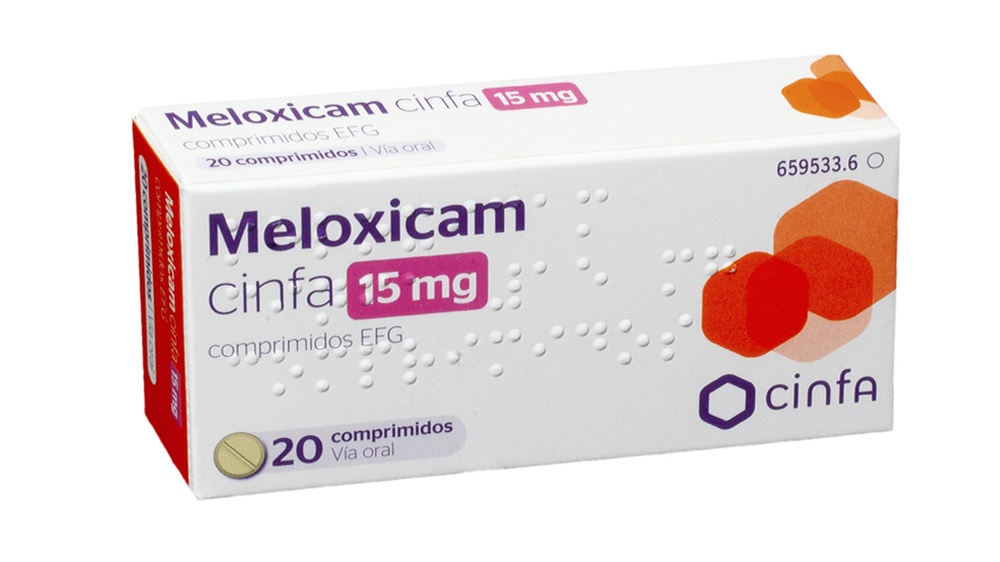



How to use MELOXICAM CINFA 15 mg TABLETS
Translated with AI
This page provides general information and does not replace a doctor’s consultation. Always consult a doctor before taking any medication. Seek urgent medical care if symptoms are severe.
Show originalContents of the leaflet
Introduction
Package Leaflet: Information for the User
meloxicam cinfa 15 mg tabletsEFG
Read all of this leaflet carefully before you start taking this medicine because it contains important information for you.
- Keep this leaflet, you may need to read it again.
- If you have any further questions, ask your doctor or pharmacist.
- This medicine has been prescribed for you only. Do not pass it on to others. It may harm them, even if their signs of illness are the same as yours.
- If you get any side effects, talk to your doctor or pharmacist. This includes any possible side effects not listed in this leaflet. See section 4.
Contents of the pack
- What is meloxicam cinfa and what is it used for
- What you need to know before you take meloxicam cinfa
- How to take meloxicam cinfa
- Possible side effects
- Storage of meloxicam cinfa
- Contents of the pack and other information
1. What is meloxicam cinfa and what is it used for
meloxicam cinfa contains the active substance meloxicam. Meloxicam belongs to a group of medicines called non-steroidal anti-inflammatory drugs (NSAIDs) used to reduce inflammation and pain in joints and muscles.
Meloxicam is indicated in adults and children over 16 years of age.
Meloxicam is used for:
- short-term treatment of osteoarthritis (arthrosis) crises
- long-term treatment of
- rheumatoid arthritis
- ankylosing spondylitis

2. What you need to know before you take meloxicam cinfa
Do not take meloxicam cinfa
- if you are allergic to meloxicam or any of the other ingredients of this medicine (listed in section 6)
- during the last three months of pregnancy
- children and adolescents under 16 years of age
- if you have had any of the following disorders after taking acetylsalicylic acid (aspirin) or other NSAIDs:
- wheezing (bronchospasm), chest tightness, shortness of breath (asthma)
- nasal polyps
- skin rash/urticaria
- sudden inflammation of the skin or mucous membranes, such as inflammation around the eyes, face, lips, mouth, or throat, which may cause difficulty breathing (angioedema)
- if you have had:
- stomach or intestinal bleeding
- perforations in the stomach or intestine
- stomach or intestinal ulcers
- if you have had stomach or duodenal ulcers or bleeding (ulcers or bleeding that have occurred at least twice)
- severe liver function impairment
- severe non-dialysed kidney failure
- recent cerebral bleeding (cerebrovascular haemorrhage)
- any type of bleeding disorder
- severe heart failure
- intolerance to some sugars, as this medicine contains lactose (see also “meloxicam cinfa contains lactose”)
If you are not sure about any of the above situations, please contact your doctor.
Warnings and precautions
Consult your doctor or pharmacist before starting to take meloxicam cinfa:
If you have ever experienced a fixed drug eruption (rounded or oval patches with redness and swelling of the skin that usually recur in the same place, blistering, urticaria, and itching) after taking meloxicam or other oxicams (e.g. piroxicam).
Warnings
Medicines like meloxicam may be associated with a slight increase in the risk of heart attack (“myocardial infarction”) or stroke (“cerebral infarction”). Any risk is greater at high doses and with prolonged treatment. Do not take more than the recommended dose. Do not take meloxicam for longer than you have been prescribed (see section 3 “How to take meloxicam cinfa”).
If you have heart problems, have had a stroke, or think you may be at risk of these diseases, you should discuss treatment with your doctor or pharmacist.
For example, if you:
- have high blood pressure (hypertension)
- have high blood sugar levels (diabetes mellitus)
- have high cholesterol levels (hypercholesterolaemia)
- are a smoker
Stop taking meloxicam immediately if you notice bleeding (which causes black stools) or ulcers in your digestive system (causing abdominal pain).
Severe skin reactions that can be life-threatening (Stevens-Johnson syndrome, toxic epidermal necrolysis) have been described with the use of meloxicam, initially appearing as red spots or patches, often with a central blister.
Other additional signs that may appear are sores in the mouth, throat, nose, genitals, and conjunctivitis (swollen and red eyes).
These life-threatening skin reactions are often accompanied by flu-like symptoms. The rash may progress to form widespread blisters or peeling of the skin.
The period of highest risk for the onset of severe skin reactions is during the first weeks of treatment. If you have developed Stevens-Johnson syndrome or toxic epidermal necrolysis with the use of meloxicam, you should not use meloxicam again at any time.
If you develop a rash or these skin symptoms, stop taking meloxicam, go to a doctor immediately, and inform them that you are taking this medicine.
Meloxicam is not suitable if you need to relieve acute pain immediately.
Meloxicam may mask the symptoms of an infection (e.g. fever). If you think you may have an infection, you should see a doctor.
Precautions for use
As treatment will need to be adjusted, it is important to ask your doctor for advice before taking meloxicam cinfa in case of:
- having suffered from inflammation of the throat (esophagitis), stomach inflammation (gastritis), or a history of any other digestive system disease, e.g. Crohn's disease, ulcerative colitis
- high blood pressure (hypertension)
- advanced age
- heart, liver, or kidney disease
- high blood sugar levels (diabetes mellitus)
- reduced blood volume (hypovolemia) that may occur if you have suffered significant blood loss or severe burns, surgery, or low fluid intake
- intolerance to some sugars diagnosed by your doctor, as this medicine contains lactose
- previously diagnosed high potassium levels in the blood
Your doctor will need to monitor your progress during treatment.
Other medicines and meloxicam cinfa
As meloxicam may affect or be affected by other medicines, tell your doctor or pharmacist if you are taking, have recently taken, or might take any other medicines.
In particular, please inform your doctor or pharmacist if you are taking/have taken or have used any of the following medicines:
- other NSAIDs
- potassium salts (used to prevent or treat low potassium levels in the blood)
- tacrolimus (used after organ transplantation)
- trimethoprim (used in the treatment of urinary tract infections)
- medicines that prevent blood clotting
- medicines that dissolve blood clots (thrombolytics)
- medicines for heart and kidney diseases
- corticosteroids (e.g. used in inflammation or allergic reactions)
- cyclosporin (used after organ transplantation or for severe skin diseases, rheumatoid arthritis, or nephrotic syndrome)
- deferasirox (used to treat chronic iron overload caused by frequent blood transfusions)
- any diuretic medicine (“water tablets”). Your doctor may monitor your kidney function if you are taking diuretics
- medicines for high blood pressure (e.g. beta-blockers)
- lithium (used to treat behavioural disorders)
- selective serotonin reuptake inhibitors (SSRIs) (used to treat depression)
- methotrexate (used to treat tumours or uncontrolled severe skin diseases and active rheumatoid arthritis)
- pemetrexed (used in the treatment of cancer)
- colestyramine (used to reduce cholesterol levels)
- oral antidiabetics (sulfonylureas, nateglinide) (used to treat diabetes. Your doctor should carefully monitor your blood sugar levels for hypoglycaemia)
Pregnancy, breastfeeding and fertility
If you are pregnant or breastfeeding, think you may be pregnant, or are planning to have a baby, ask your doctor or pharmacist for advice before taking this medicine.
Pregnancy
During the first and second trimester of pregnancy, your doctor will only prescribe this medicine if it is clearly necessary due to the potential risk of abortion or malformation. In this case, the dose should be kept as low as possible and the duration of treatment as short as possible.
During the last three months of pregnancy, this medicine is contraindicated: NEVER take this medicine because it can have serious or even fatal consequences for your fetus/child, especially in the heart, lungs, and/or kidneys, even with a single administration.
If you have taken this medicine while pregnant, you should talk to your doctor/midwife immediately so that adequate monitoring can be considered.
Breastfeeding
This medicine is not recommended during breastfeeding.
Fertility
This medicine may make it more difficult for you to become pregnant. You should inform your doctor if you are planning to become pregnant or if you have problems becoming pregnant.
Driving and using machines
This medicine may cause changes in vision, including blurred vision, dizziness, drowsiness, vertigo, or other central nervous system disorders. If you notice these effects, do not drive or use machines.
meloxicam cinfa contains lactose
This medicine contains lactose. If your doctor has told you that you have an intolerance to some sugars, consult them before taking this medicine.
meloxicam cinfa contains sodium
This medicine contains less than 1 mmol of sodium (23 mg) per tablet; this is essentially “sodium-free”.
3. How to take meloxicam cinfa
Follow exactly the administration instructions of this medicine given by your doctor or pharmacist. In case of doubt, consult your doctor or pharmacist again.
The recommended dose is:
Osteoarthritis crisis:
7.5 mg of meloxicam (half a tablet) once a day. This can be increased to 15 mg of meloxicam (one tablet) once a day.
Rheumatoid arthritis:
15 mg of meloxicam (one tablet) once a day. This can be reduced to 7.5 mg of meloxicam (half a tablet) once a day.
Ankylosing spondylitis:
15 mg of meloxicam (one tablet) once a day. This can be reduced to 7.5 mg of meloxicam (half a tablet) once a day.
Do not exceed the maximum recommended dose of 15 mg per day.
If any of the situations described under the heading “Warnings and precautions” apply to you, your doctor may limit your dose to 7.5 mg (half a tablet) once a day.
Elderly patients
If you are an elderly patient, the recommended dose for long-term treatment of rheumatoid arthritis and ankylosing spondylitis is 7.5 mg (half a tablet) once a day.
Patient at increased risk of adverse reactions
If you are a patient at increased risk of adverse reactions, your doctor will start treatment at a dose of 7.5 mg (half a tablet) per day.
Patient with kidney problems
If you are a patient on dialysis with severe kidney problems, your dose should not exceed 7.5 mg (half a tablet) per day. In patients with mild to moderate kidney problems, no dose reduction is necessary.
Patient with liver problems
In patients with mild to moderate liver problems, no dose reduction is necessary.
Use in children and adolescents
This medicine should not be administered to children and adolescents under 16 years of age.
Consult your doctor or pharmacist if you think the action of meloxicam is too strong or too weak or if you do not notice any improvement after several days.
Method of administration
Oral use
The tablets should be swallowed with water or another drink during a meal.
The tablet can be divided into equal doses.
If you take more meloxicam cinfa than you should
If you have taken too many tablets or suspect an overdose, contact your doctor or go to the nearest hospital immediately.
The symptoms associated with acute overdoses of NSAIDs are usually limited to:
- lack of energy (lethargy)
- drowsiness
- nausea and vomiting
- stomach pain (epigastric pain)
These symptoms usually improve when meloxicam is stopped. Gastrointestinal bleeding may occur.
Severe poisoning can cause serious adverse reactions (see section 4):
- high blood pressure (hypertension)
- acute kidney failure (renal failure)
- liver dysfunction (liver failure)
- reduced or stopped breathing (respiratory depression)
- loss of consciousness (coma)
- seizures (convulsions)
- circulatory collapse (cardiovascular collapse)
- heart arrest (cardiac arrest)
- immediate allergic reactions (hypersensitivity), including:
- fainting
- shortness of breath
- skin reactions
In case of overdose or accidental ingestion, consult your doctor or pharmacist immediately or call the Toxicology Information Service, telephone 91 562 04 20, indicating the medicine and the amount ingested.
If you forget to take meloxicam cinfa
Do not take a double dose to make up for forgotten doses. Simply take the next dose at the usual time.
If you have any other questions about the use of this medicine, ask your doctor or pharmacist.

4. Possible Adverse Effects
Like all medicines, this medicine can cause adverse effects, although not all people suffer from them.
Stop taking meloxicam and consult your doctor or the nearest hospital immediately if you notice:
Any allergic reaction (hypersensitivity) that may appear in the form of:
- skin reactions, such as itching (pruritus), blistering of the skin or peeling, which can be life-threatening skin rashes (Stevens-Johnson syndrome and toxic epidermal necrolysis), soft tissue damage (mucosal lesions) or erythema multiforme (see section 2).
- Erythema multiforme is a severe allergic skin reaction that causes spots, red patches or purple areas with blisters. It can also affect the mouth, eyes, and other moist areas of the body.
- skin or mucous membrane inflammation, such as inflammation around the eyes, face, and lips, mouth or throat, possibly making breathing difficult, swollen ankles/legs (edema of the lower limbs)
- difficulty breathing or asthma attacks
- liver inflammation (hepatitis). This can cause symptoms such as:
- yellowing of the skin and eyes (jaundice)
- abdominal pain
- loss of appetite.
Any adverse effect on the digestive system, especially:
- bleeding (causing black stools)
- ulcers of the digestive system (causing abdominal pain).
Gastrointestinal bleeding (gastrointestinal hemorrhage), ulcer formation, or a hole in the digestive system (perforation) can sometimes be severe and potentially life-threatening, especially in elderly people.
If you have previously suffered from any digestive system symptoms due to prolonged use of NSAIDs, seek medical advice immediately, especially if you are an elderly person. Your doctor may monitor your progress while you are being treated.
If you experience vision disturbances, do not drive or use machines.
General Adverse Effects of Non-Steroidal Anti-Inflammatory Medicines (NSAIDs)
The use of some non-steroidal anti-inflammatory medicines (NSAIDs) may be associated with a slight increase in the risk of arterial vessel occlusion (thrombotic arterial events), e.g., heart attack (myocardial infarction) or stroke (apoplexy), particularly at high doses and in long-term treatment.
Cases of fluid retention (edema), high blood pressure (hypertension), and heart failure (heart failure) associated with NSAID treatment have been reported.
The most commonly observed adverse reactions affect the digestive system (gastrointestinal events):
- stomach and upper small intestine ulcers (peptic/gastroduodenal ulcers)
- a hole in the intestine wall (perforation) or gastrointestinal bleeding (sometimes fatal, especially in elderly people).
After taking NSAIDs, the following adverse reactions have been reported:
- nausea and vomiting
- diarrhea
- flatulence
- constipation
- indigestion (dyspepsia)
- abdominal pain
- black stools due to gastrointestinal bleeding (melena)
- vomiting blood (hematemesis)
- inflammation with ulcer formation in the mouth (ulcerative stomatitis)
- worsening of digestive system inflammation (e.g., exacerbation of colitis or Crohn's disease).
Less frequently, stomach inflammation (gastritis) has been observed.
Adverse Effects of Meloxicam, the Active Substance of this Medicine
Very Common: may affect more than 1 in 10 patients
- gastrointestinal adverse reactions such as indigestion (dyspepsia), nausea, and vomiting, abdominal pain, constipation, flatulence, diarrhea
Common: may affect up to 1 in 10 patients
- headache
Uncommon: may affect up to 1 in 100 patients
- dizziness (feeling of dizziness)
- feeling of dizziness or rotation (vertigo)
- drowsiness (somnolence)
- anemia (decrease in the amount of hemoglobin in red blood cells)
- increased blood pressure (hypertension)
- hot flashes (temporary redness of the face and neck)
- water and sodium retention
- increased potassium levels (hyperkalemia). This can cause symptoms such as:
- changes in heartbeats (arrhythmias)
- palpitations (when you notice your heartbeats more than usual)
- muscle weakness
- belching
- stomach inflammation (gastritis)
- gastrointestinal bleeding
- mouth inflammation (stomatitis)
- allergic reactions (hypersensitivity)
- itching (pruritus)
- skin reaction
- inflammation caused by fluid retention (edema), including swollen ankles/legs (edema of the lower limbs)
- sudden inflammation of the skin or mucous membranes, such as inflammation around the eyes, face, lips, mouth, or throat, possibly making breathing difficult (angioedema)
- transient changes in liver function test values (e.g., increased levels of liver enzymes such as transaminases or an increase in bilirubin). Your doctor may detect them by performing a blood test
- changes in kidney function laboratory tests (e.g., increased creatinine or urea).
Rare: may affect up to 1 in 1,000 patients
- mood changes
- nightmares
- abnormal blood count, including:
- abnormal differential blood count
- decrease in the number of white blood cells (leucopenia)
- decrease in the number of platelets (thrombocytopenia)
These adverse effects can increase the risk of infection and cause symptoms such as bruising or nosebleeds.
- ringing in the ears (tinnitus)
- noticing heartbeats (palpitations)
- stomach or upper small intestine ulcers (peptic/gastroduodenal ulcers)
- throat inflammation (esophagitis)
- onset of asthma attacks (observed in people allergic to acetylsalicylic acid (aspirin) or other NSAIDs)
- severe blistering of the skin or peeling (Stevens-Johnson syndrome and toxic epidermal necrolysis)
- hives
- vision changes, including:
- blurred vision
- conjunctivitis (inflammation of the eye or eyelid)
- inflammation of the large intestine (colitis).
Very Rare: may affect up to 1 in 10,000 patients
- vesicular skin reactions (blistering) and multiforme erythema.
- Multiforme erythema is a severe allergic skin reaction that causes spots, red patches, or purple areas with blisters. It can also affect the mouth, eyes, and other moist areas of the body.
- liver inflammation (hepatitis). This can cause symptoms such as:
- yellowing of the skin and eyes (jaundice)
- abdominal pain
- loss of appetite
- acute kidney failure (renal failure), particularly in patients with risk factors such as heart disease, diabetes, or kidney disease
- a hole in the intestine wall (perforation).
Frequency Not Known: cannot be estimated from the available data
- confusion
- disorientation
- shortness of breath and skin reactions (anaphylactic/anaphylactoid reactions) due to sun exposure (photosensitivity reactions)
- heart failure (heart failure) associated with NSAID treatment has been described
- complete loss of certain types of white blood cells (agranulocytosis), especially in patients taking meloxicam with other medications that can potentially inhibit, depress, or destroy a component of the bone marrow (myelotoxic medications). This can cause:
- sudden fever
- sore throat
- infections
- pancreas inflammation (pancreatitis)
- infertility in women, delayed ovulation
- a characteristic skin allergic reaction known as fixed drug eruption, which usually reappears in the same location in case of re-exposure to the medication and may appear as rounded or oval plaques with redness and swelling of the skin, blistering (hives), and itching.
Adverse Effects Caused by Other Non-Steroidal Anti-Inflammatory Medicines (NSAIDs) that Have Not Been Seen with Meloxicam
Changes in kidney structure that cause acute kidney failure:
- very rare cases of kidney inflammation (interstitial nephritis)
- death of some kidney cells (acute tubular necrosis or papillary necrosis)
- protein in the urine (nephrotic syndrome with proteinuria).
Reporting of Adverse Effects
If you experience any type of adverse effect, consult your doctor or pharmacist, even if it is a possible adverse effect that is not listed in this leaflet. You can also report them directly through the Spanish Medicines and Healthcare Products Agency's online reporting system: https://www.notificaram.es. By reporting adverse effects, you can contribute to providing more information on the safety of this medicine.
5. Storage of Meloxicam Cinfa
Keep this medicine out of the sight and reach of children.
This medicine does not require special storage conditions.
Do not use this medicine after the expiration date stated on the packaging after CAD. The expiration date is the last day of the month indicated.
Medicines should not be disposed of via wastewater or household waste. Place the packaging and any unused medicines in the pharmacy's SIGRE collection point. If in doubt, ask your pharmacist how to dispose of the packaging and any unused medicines. This will help protect the environment.
6. Package Contents and Additional Information
Composition of Meloxicam Cinfa
- The active ingredient is meloxicam. Each tablet contains 15 mg of meloxicam.
- The other ingredients are: sodium citrate, microcrystalline cellulose (E-460), lactose monohydrate, povidone, anhydrous colloidal silica, magnesium stearate, sodium carboxymethylcellulose (type A) (from potato).
Appearance of the Product and Package Contents
Yellow, cylindrical, biconvex, scored tablets marked with the code "M1" on one face.
Supplied in PVC-PVDC/Aluminum blisters. Each package contains 20 or 500 (clinical package) tablets.
Not all pack sizes may be marketed.
Marketing Authorization Holder and Manufacturer
Laboratorios Cinfa, S.A.
Carretera Olaz-Chipi, 10. Polígono Industrial Areta
31620 Huarte (Navarra) - Spain
Date of the Last Revision of this Leaflet:June 2023
Detailed and updated information on this medicine is available on the website of the Spanish Agency for Medicines and Healthcare Products (AEMPS) http://www.aemps.gob.es/
You can access detailed and updated information on this medicine by scanning the QR code included in the leaflet and packaging with your smartphone. You can also access this information at the following internet address: https://cima.aemps.es/cima/dochtml/p/69094/P_69094.html
QR code to: https://cima.aemps.es/cima/dochtml/p/69094/P_69094.html
- Country of registration
- Dosage formTABLET, 15 mg
- ATC codeM01AC06
- Average pharmacy price2.54 EUR
- Active substance
- Prescription requiredYes
- Manufacturer
- This information is for reference only and does not constitute medical advice. Always consult a doctor before taking any medication. Oladoctor is not responsible for medical decisions based on this content.
- Alternatives to MELOXICAM CINFA 15 mg TABLETSDosage form: TABLET, 7.5 mgActive substance: meloxicamManufacturer: Laboratorios Cinfa S.A.Prescription requiredDosage form: TABLET, 15 mgActive substance: meloxicamManufacturer: Mylan Pharmaceuticals S.L.Prescription requiredDosage form: TABLET, 15 mgActive substance: meloxicamManufacturer: Laboratorios Normon S.A.Prescription required


Online doctors for MELOXICAM CINFA 15 mg TABLETS
Discuss questions about MELOXICAM CINFA 15 mg TABLETS, including use, safety considerations and prescription review, subject to medical assessment and local regulations.











Frequently Asked Questions
