






How to use MAVIRET 50 mg/20 mg GRANULES, COATED, IN SACHET
Translated with AI
This page provides general information and does not replace a doctor’s consultation. Always consult a doctor before taking any medication. Seek urgent medical care if symptoms are severe.
Show originalContents of the leaflet
Introduction
Package Leaflet: Information for the User
Maviret 50mg/20mg coated granules in a sachet
glecaprevir/pibrentasvir
Read the entire package leaflet carefully before your child starts taking this medicine, as it contains important information for your child.
- Keep this package leaflet, as you may need to read it again.
- If you have any questions, ask your child's doctor or pharmacist.
- This medicine has been prescribed to your child only. Do not give it to others, even if they have the same symptoms as your child, as it may harm them.
- If your child experiences any side effects, consult your child's doctor or pharmacist. This includes any possible side effects not listed in this package leaflet. See section 4.
Contents of the Package Leaflet
- What is Maviret and what is it used for
- What you need to know before your child starts taking Maviret
- How to take Maviret
- Possible side effects
- Storage of Maviret
- Package Contents and Additional Information
- Instructions for Use
1. What is Maviret and what is it used for
Maviret is an antiviral medicine used to treat children aged 3 years and older with long-term (chronic) hepatitis C. It is an infectious disease that affects the liver, caused by the hepatitis C virus. Maviret contains the active substances glecaprevir and pibrentasvir.
Maviret works by preventing the hepatitis C virus from multiplying and infecting new cells. This eliminates the infection from the body.

2. What you need to know before your child starts taking Maviret
Do not give Maviret if:
- if your child is allergic to glecaprevir, pibrentasvir, or any of the other ingredients of this medicine (listed in section 6).
- if your child has severe liver problems other than hepatitis C.
- if your child is taking the following medicines:
- atazanavir (for HIV infection)
- atorvastatin or simvastatin (to lower blood cholesterol)
- carbamazepine, phenobarbital, phenytoin, primidone (usually used for epilepsy)
- dabigatran etexilate (to prevent blood clots)
- medicines containing ethinylestradiol (such as contraceptive medicines, including vaginal rings, transdermal patches, and tablets)
- rifampicin (for infections)
- St. John's Wort (Hypericum perforatum), (a herbal medicine used for mild depression).
Do not give Maviret to your child if they are in any of the above situations. If in doubt, consult your child's doctor or pharmacist before administering Maviret.
Warnings and Precautions
Consult your child's doctor if they are in any of the following situations, as the doctor may want to monitor your child more closely:
- has liver problems other than hepatitis C
- has or has had a hepatitis B virus infection
- has diabetes. After starting Maviret, your child may need close monitoring of their blood glucose levels and/or adjustment of their antidiabetic treatment. After starting treatment with medicines like Maviret, some diabetic patients have experienced low blood sugar levels (hypoglycemia).
Blood Tests
Your child's doctor will perform blood tests before, during, and after treatment with Maviret. This will allow the doctor to determine:
- if your child should take Maviret and for how long
- if the treatment has worked and your child no longer has the hepatitis C virus.
Children under 3 years
This medicine must not be given to children under 3 years or weighing less than 12 kg. The use of Maviret in children under 3 years or weighing less than 12 kg has not been studied.
Other medicines and Maviret
Tell your child's doctor or pharmacist if your child is taking, has recently taken, or might take any other medicines.
Tell your child's doctor or pharmacistbefore administering Maviret if your child is taking any of the medicines in the following table. The doctor may need to change the dose of these medicines.
Medicines that must be reported to your child's doctor before administering Maviret | |
Medicine | Purpose of the medicine |
ciclosporin, tacrolimus | to reduce the activity of the immune system |
darunavir, efavirenz, lopinavir, ritonavir | for HIV infection |
digoxin | for heart problems |
fluvastatin, lovastatin, pitavastatin, pravastatin, rosuvastatin | to lower blood cholesterol |
warfarin and similar medicines* | to prevent blood clots |
*Your child's doctor may increase the frequency of blood tests to check the proper functioning of your child's blood clotting process.
If your child is in any of the above situations (or is unsure), consult your child's doctor or pharmacist before administering Maviret.
Maviret contains lactose
If your doctor has told you that your child has an intolerance to certain sugars, consult with them before administering this medicine.
Maviret contains propylene glycol
This medicine contains 4 mg of propylene glycol in each sachet.
Maviret contains sodium
This medicine contains less than 1 mmol of sodium (23 mg) per sachet; this is "sodium-free".
3. How to take Maviret
Always follow exactly the administration instructions of this medicine given by your child's doctor or pharmacist. If in doubt, consult your child's doctor or pharmacist. Maviret coated granules are indicated for children from 3 to less than 12 years of age and weighing from 12 kg to less than 45 kg. Maviret tablets are indicated for adults, children 12 years and older, or children weighing 45 kg or more.
Your child's doctor will tell them how long they need to take Maviret.
Amount to be taken
The recommended dose for children from 3 to less than 12 years of age is based on their body weight, as shown in the following table.
Child's weight (kg) | Number of sachets once a day |
From 12 to less than 20 kg | 3 sachets |
From 20 to less than 30 kg | 4 sachets |
From 30 to less than 45 kg | 5 sachets |
In the case of children weighing 45 kg or more, consult your child's doctor about the possibility of administering Maviret in tablets.
How to take Maviret
- Administer Maviret once a day, just before or after taking a snack or main meal.
- Mix all the granules from the sachet with a small amount of the recommended food and swallow. The granules must not be crushed or chewed (see the instructions for use to consult the list of recommended foods).
- Do not administer Maviret granules through a feeding tube.
If your child vomits after taking Maviret, the amount of this medicine present in the blood may be affected. In this case, the effectiveness of Maviret may be reduced.
- If they vomit when less than 3hourshave passed after taking Maviret, administer another dose.
- If they vomit when more than 3hourshave passed after taking Maviret, it is not necessary to administer another dose until the next scheduled dose.
If your child takes more Maviret than they should
If they accidentally take a higher dose than recommended, consult your child's doctor or go immediately to the nearest hospital. Bring the package of this medicine with you to show the doctor what your child has taken.
If your child misses a dose of Maviret
It is important not to miss doses of this medicine.
If your child does not take a dose, calculate how long it has been since they should have taken Maviret:
- If you remember less than 18hoursafter the time your child usually takes the dose of Maviret, administer it as soon as possible. Then, administer the next dose at the usual time.
- If you remember 18hours or moreafter the time your child usually takes the dose of Maviret, wait and administer the next dose at the usual time. Do not administer a double dose (two doses very close together).
If you have any other questions about the use of this medicine, ask your child's doctor or pharmacist.

4. Possible side effects
Like all medicines, this medicine can cause side effects, although not everybody gets them.
Tell your child's doctor or pharmacist if you notice any of the following side effects:
Very common:may affect more than 1 in 10 people
- feeling very tired (fatigue)
- headache
Common:may affect up to 1 in 10 people
- feeling sick (nausea)
- diarrhea
- feeling weak or lacking energy (asthenia)
- increase in a laboratory test of liver function (bilirubin)
Uncommon:may affect up to 1 in 100 people
- swelling of the face, lips, tongue, throat, abdomen, arms, or legs
Frequency not known:cannot be estimated from the available data
- itching
Reporting of side effects
If your child experiences any side effects, consult your child's doctor or pharmacist. This includes any possible side effects not listed in this package leaflet. You can also report them directly through the national reporting system included in Appendix V. By reporting side effects, you can help provide more information on the safety of this medicine.
5. Storage of Maviret
Keep this medicine out of the sight and reach of children.
Do not use this medicine after the expiry date which is stated on the carton and sachet after "EXP". The expiry date is the last day of the month stated.
This medicine does not require any special storage conditions.
Medicines should not be disposed of via wastewater or household waste. Ask your pharmacist how to dispose of medicines no longer required. This will help protect the environment.
6. Package Contents and Additional Information
Maviret Composition
- The active ingredients are glecaprevir and pibrentasvir. Each sachet contains 50 mg of glecaprevir and 20 mg of pibrentasvir.
- The other excipients are:
- Copovidone, tocophersolan, propylene glycol monocaprylate, colloidal silicon dioxide, sodium croscarmellose (only in glecaprevir granules), sodium stearyl fumarate, hypromellose (E464), lactose monohydrate, titanium dioxide, macrogol, red iron oxide (E172), yellow iron oxide (E172)
Maviret contains lactose, propylene glycol, and sodium. See section 2.
Appearance of Maviret and Package Contents
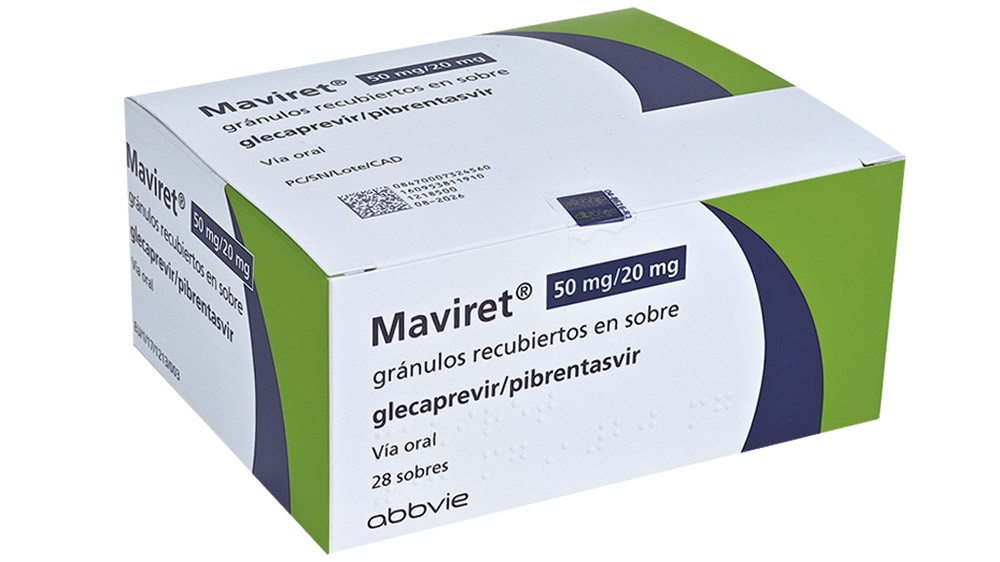
Maviret coated granules are supplied in sachets with a polyester/aluminum/polyethylene film, which come in boxes. Each box contains 28 sachets. Each sachet contains pink and yellow granules.
Marketing Authorization Holder
AbbVie Deutschland GmbH & Co. KG
Knollstrasse
67061 Ludwigshafen
Germany
Manufacturer
AbbVie S.r.l.
S.R. 148 Pontina km 52 SNC
04011 Campoverde di Aprilia (LT)
Italy
You can request more information about this medicine by contacting the local representative of the marketing authorization holder:
Belgium/Belgique/Belgien AbbVie SA Tel: +32 10 477811 | Lithuania AbbVie UAB Tel.: +370 5 205 3023 |
Bulgaria AbbVie Bulgaria EOOD Tel.: +359 2 90 30 430 | Luxembourg/Luxemburg AbbVie SA Belgium/Belgien Tel: +32 10 477811 |
Czech Republic AbbVie s.r.o. Tel.: +420 233 098 111 | Hungary AbbVie Kft. Tel.: +36 1 455 8600 |
Denmark AbbVie A/S Tlf: +45 72 30-20-28 | Malta V.J.Salomone Pharma Limited Tel.: +356 22983201 |
Germany AbbVie Deutschland GmbH & Co. KG Tel.: 00800 222843 33 (free of charge) Tel.: +49 (0) 611 / 1720-0 | Netherlands AbbVie B.V. Tel.: +31 (0)88 322 2843 |
Estonia AbbVie OÜ Tel.: +372 623 1011 | Norway AbbVie AS Tlf: +47 67 81 80 00 |
Greece AbbVie ΦΑΡΜΑΚΕΥΤΙΚΗ Α.Ε. Tel: +30 214 4165 555 | Austria AbbVie GmbH Tel.: +43 1 20589-0 |
Spain AbbVie Spain, S.L.U. Tel.: +34 91 384 09 10 | Poland AbbVie Polska Sp. z o.o. Tel.: +48 22 372 78 00 |
France AbbVie Tél: +33 (0)1 45 60 13 00 | Portugal AbbVie, Lda. Tel.: +351 (0)21 1908400 |
Croatia AbbVie d.o.o. Tel.: +385 (0)1 5625 501 | Romania AbbVie S.R.L. Tel.: +40 21 529 30 35 |
Ireland AbbVie Limited Tel.: +353 (0)1 4287900 | Slovenia AbbVie Biofarmacevtska družba d.o.o. Tel.: +386 (1)32 08 060 |
Iceland Vistor hf. Sími: +354 535 7000 | Slovakia AbbVie s.r.o. Tel.: +421 2 5050 0777 |
Italy AbbVie S.r.l. Tel.: +39 06 928921 | Finland AbbVie Oy Puh/Tel: +358 (0)10 2411 200 |
Cyprus Lifepharma (Z.A.M.) Ltd Tel: +357 22 34 74 40 | Sweden AbbVie AB Tel.: +46 (0)8 684 44 600 |
Latvia AbbVie SIA Tel.: +371 67605000 | United Kingdom (Northern Ireland) AbbVie Deutschland GmbH & Co. KG Tel.: +44 (0)1628 561090 |
Date of Last Revision of this Leaflet 05/2022
Other Sources of Information
Detailed information on this medicine is available on the European Medicines Agency website: http://www.ema.europa.eu.
To request a copy of this leaflet in large print, contact the local representative of the marketing authorization holder.
- Instructions for Use
Read the entire section 7 before using the granules in Maviret sachets.
Step 1. Take the number of sachets recommended by your child's doctor | ||||||||||
In the case of children who weigh 45 kg or more, consult your child's doctor about the possibility of administering Maviret in tablets. Do not administer more than 5 sachets. | ||||||||||
Step 2. Choose a suitable food to mix with Maviret granules | ||||||||||
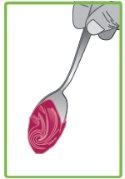
| If the food is suitable, it should be able to be picked up with the spoon without falling off. It should be soft, have a low water content, and can be swallowed without needing to chew. Examples of recommended foods:
Note: In addition to the food used to mix with the granules, Maviret should be taken at the same time or immediately after a main meal or snack. The food used to mix with the granules does not replace the main meal or snack that should be taken with Maviret. | |||||||||
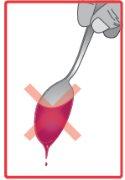
| Do notuse foods that drip from the spoon, as the medicine may dissolve quickly, have a bitter taste, and be less effective. Do notuse foods that your child is allergic to. Examples of foods that should notbe used: ? Liquids or watery foods ? Apple sauce ? Foods or liquids that have been heated or frozen ? Bread or other foods that require chewing ? Non-Greek yogurt ? Baby food ? Foods that drip from the spoon To request more information about suitable foods, consult your child's doctor or pharmacist. | |||||||||
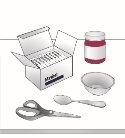
| Step 3. Prepare the necessary materials On a clean surface, place the following:
| |||||||||
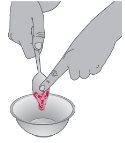
| Step 4. Measure the amount of food
| |||||||||
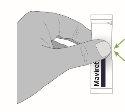
| Step 5. Prepare the sachet
| |||||||||
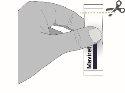
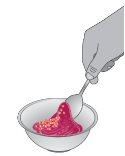
| Step 6. Cut the top of the sachet
Be careful: The granules are very small and can fall out easily. | |||||||||
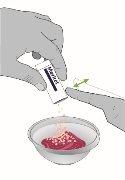
| Step 7. Empty the sachet
| |||||||||
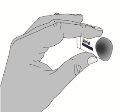
| Step 8. Check the sachet Look inside each sachet to make sure there are no granules left inside. Do notleave granules inside the sachet, as the effectiveness of the medicine may be reduced if the full dose is not taken. | |||||||||
| Step 9. Mix
If not administered within 5 minutes, the mixture may have a bitter taste. If not administered within 15 minutes, the medicine may be less effective. Discard it and start again. | |||||||||
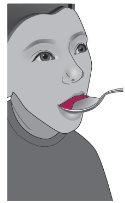
| Step 10. Administer the medicine
? If your child misses a dose, consult section 3 "How to take Maviret" for more information. | |||||||||
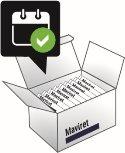
| Step 11. Confirm the dose for the next day Check that there are enough sachets for the next dose of Maviret for your child. To refill the sachets or renew the prescription, contact your child's doctor or pharmacist. |
-

- Country of registration
- Dosage formORAL SOLUTION/SUSPENSION, 50 mg/20 mg
- ATC codeJ05AP57
- Active substance
- Prescription requiredYes
- Manufacturer
- This information is for reference only and does not constitute medical advice. Always consult a doctor before taking any medication. Oladoctor is not responsible for medical decisions based on this content.
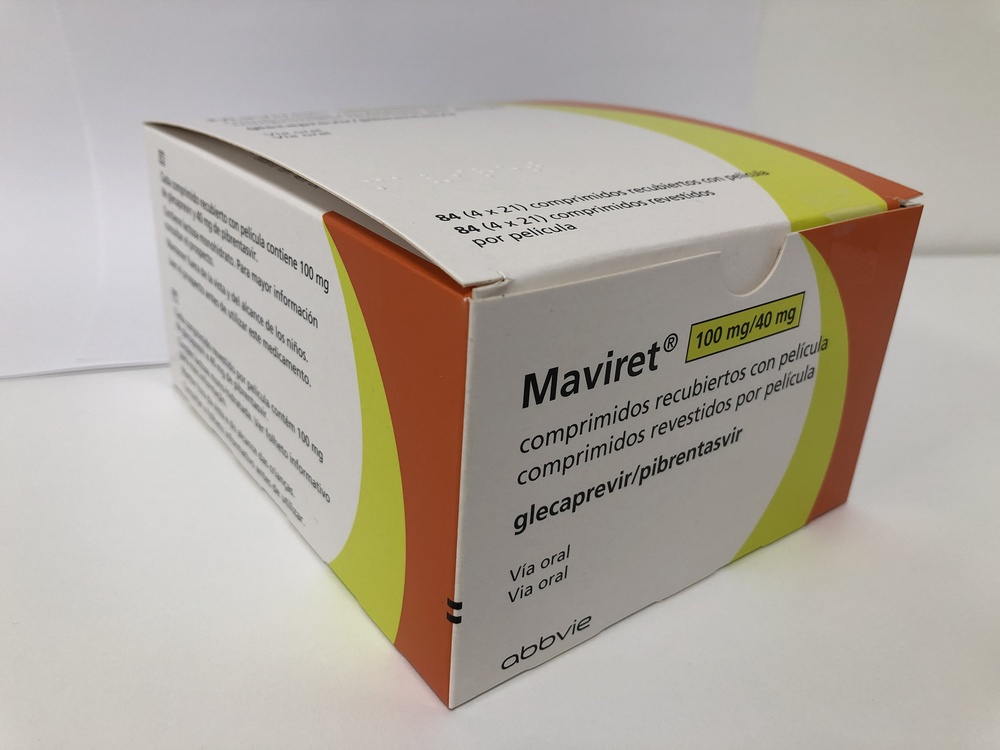
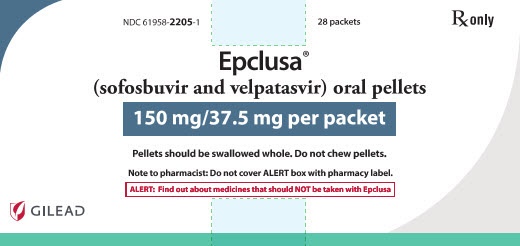
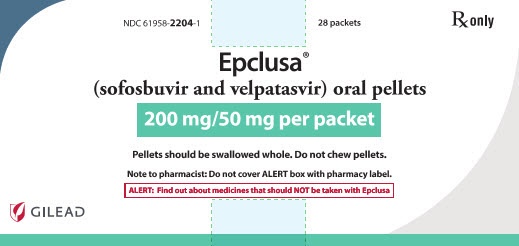
- Alternatives to MAVIRET 50 mg/20 mg GRANULES, COATED, IN SACHETDosage form: TABLET, 100/40 mgActive substance: glecaprevir and pibrentasvirManufacturer: Abbvie Deutschland Gmbh & Co. KgPrescription requiredDosage form: ORAL SOLUTION/SUSPENSION, 150 MG/ 37.5 MGActive substance: sofosbuvir and velpatasvirManufacturer: Gilead Sciences Ireland Unlimited CompanyPrescription requiredDosage form: ORAL SOLUTION/SUSPENSION, 200 MG/50 MGActive substance: sofosbuvir and velpatasvirManufacturer: Gilead Sciences Ireland Unlimited CompanyPrescription required
Online doctors for MAVIRET 50 mg/20 mg GRANULES, COATED, IN SACHET
Discuss questions about MAVIRET 50 mg/20 mg GRANULES, COATED, IN SACHET, including use, safety considerations and prescription review, subject to medical assessment and local regulations.









Get MAVIRET 50 mg/20 mg GRANULES, COATED, IN SACHET Prescription Online
Fill in a 2-min form
Tell us your symptoms, history, and what medicine you're requesting.
Pick a doctor or let us assign
Choose a specialist or we'll match you with the next available doctor.
Doctor reviews your case
Usually within 30 minutes. They may ask follow-up questions via chat.
Collect from any pharmacy
Electronic prescription sent to your email — valid across Spain.
Frequently Asked Questions
MAVIRET 50 mg/20 mg GRANULES, COATED, IN SACHET requires a prescription in Spain. You can check with a doctor online whether this medicine may be appropriate for your situation.
The active ingredient in MAVIRET 50 mg/20 mg GRANULES, COATED, IN SACHET is glecaprevir and pibrentasvir. This information helps identify medicines with the same composition but different brand names.
MAVIRET 50 mg/20 mg GRANULES, COATED, IN SACHET is manufactured by Abbvie Deutschland Gmbh & Co. Kg. Pharmacy brands and packaging may differ depending on the distributor.
Doctors such as Family doctors, Psychiatrists, Dermatologists, Cardiologists, Endocrinologists, Gastroenterologists, Pulmonologists, Nephrologists, Rheumatologists, Hematologists, Infectious disease physicians, Allergists, Geriatricians, Paediatricians, Oncologists may assess whether MAVIRET 50 mg/20 mg GRANULES, COATED, IN SACHET is appropriate, depending on your situation and local regulations. You can book an online consultation to discuss your symptoms and possible next steps.
Spain has a well-developed healthcare infrastructure across major cities such as Madrid, Barcelona, Valencia, and Seville. Pharmacies are widely available and operate under strict regulations, ensuring access to prescribed medications.
You can buy MAVIRET 50 mg/20 mg GRANULES, COATED, IN SACHET in Madrid, Barcelona, Seville, or Valencia at any local pharmacy with a valid prescription.
To obtain a prescription, you can use Oladoctor:
Other medicines with the same active substance (glecaprevir and pibrentasvir) include MAVIRET 100 mg/40 mg FILM-COATED TABLETS, EPCLUSA 150 mg/37.5 mg COATED GRANULES IN SACHET, EPCLUSA 200 mg/50 mg COATED GRANULES IN SACHET. These may have different brand names or formulations but contain the same therapeutic ingredient. Always consult a doctor before switching or starting a new medicine.
