



MANERIX 150 mg Film-Coated Tablets

Prescription review online
A doctor will review your case and decide whether a prescription is medically appropriate.

Talk to a doctor about this medicine
Discuss your symptoms and possible next steps in a quick online consultation.



How to use MANERIX 150 FILM-COATED TABLETS
Contents of the leaflet
- Introduction
- What is Manerix and what is it used for
- What you need to know before you take Manerix
- How to take Manerix
- Possible side effects
- Storage of Manerix
- Contents of the pack and further information
Introduction
Package Leaflet: Information for the User
Manerix 150 mg Film-Coated Tablets
moclobemide
Read all of this leaflet carefully before you start taking this medicine because it contains important information for you.
- Keep this leaflet, you may need to read it again.
- If you have any further questions, ask your doctor or pharmacist.
- This medicine has been prescribed for you only. Do not pass it on to others. It may harm them, even if their signs of illness are the same as yours.
- If you get any side effects, talk to your doctor or pharmacist. This includes any possible side effects not listed in this leaflet. See section 4.
Contents of the Package Leaflet
- What is Manerix and what is it used for
- What you need to know before you take Manerix
- How to take Manerix
- Possible side effects
- Storage of Manerix
- Contents of the pack and further information
1. What is Manerix and what is it used for
Manerix contains the active substance moclobemide, which belongs to a group of medicines called antidepressants.
Moclobemide increases the levels of substances responsible for transmitting nerve impulses in the brain. The increase in these levels to normal values helps to improve your depression.
Manerix is indicated for major depression.
If you are suffering from depression, you may have a depressed mood and/or loss of interest or pleasure in your usual activities, you may also experience one or more of the following symptoms: significant weight gain or loss without dieting, sleep disturbances, restlessness, apathy, loss of energy, feelings of worthlessness, excessive or inappropriate guilt, or loss of concentration.

Not sure if this medicine is right for you?
Discuss your symptoms and treatment with a doctor online.
2. What you need to know before you take Manerix
Do not take Manerix
- If you are allergic to the active substance or any of the other ingredients of this medicine (listed in section 6).
- If you are taking medicines that contain selegiline (a medicine used in Parkinson's disease), bupropion (a medicine used in smoking cessation), triptans (medicines used in migraines), pethidine and tramadol (medicines used to relieve pain), dextromethorphan (a medicine to relieve cough), linezolid (an antibiotic).
- If you are suffering from acute confusion.
This medicine must not be used in children.
Consult your doctor if you are not sure what is indicated.
Warnings and precautions
Consult your doctor or pharmacist before starting to take Manerix
- If you have depression with excitement or agitation, although your doctor may consider it appropriate to prescribe a sedative or tranquilizer for no more than 2-3 weeks.
- If you have schizophrenia or schizophrenic disorders, as it may worsen these symptoms.
- Tell your doctor if the answer to any of the following questions is yes:
Do you have liver problems?
Do you have hyperthyroidism or pheochromocytoma (a disease of the adrenal glands)?
Do you have any other disease?
Do you have allergies?
- If you are taking a product that contains St. John's Wort, as it may increase side effects.
- If you are taking other antidepressant medicines that increase serotonin levels (see "Other medicines and Manerix").
- If you are taking buprenorphine and have been prescribed this medicine, consult your doctor, as it may cause serotonin syndrome, a potentially fatal disease (see "Other medicines and Manerix").
- If you have suicidal thoughts or self-harm. Depression is associated with an increased risk of suicidal thoughts, self-harm, and suicide. This risk may persist until improvement of the disease occurs. Since it may take weeks from the start of treatment with Manerix to achieve such improvement, your doctor will closely monitor you during this time.
Contact your doctor or go immediately to the hospital if you have any thoughts of self-harm or suicide.
- If you feel hyperactive, increased talkativeness, delusions of grandeur, or feel impulsive, go immediately to the doctor.
It may be helpful to comment to a close relative or friend that you are depressed. You can ask them to tell you if they notice that your depression is getting worse or if they are concerned about changes in your behavior.
Elderly:
No dose adjustment is necessary in the case of elderly patients.
Children and adolescents:
Do not use in children, as there is not enough clinical experience in this group of patients.
Other medicines and Manerix
Tell your doctor or pharmacist if you are using, have recently used, or might use any other medicine.
This medicine may affect the action of other medicines (interaction). For this reason, tell your doctor about the medicines you are using and do not use any medicine without telling your doctor first.
- It may potentiate the effect of opioids (including morphine, dextropropoxyphene, fentanyl, or codeine), so it may be necessary to adjust the dose of these medicines.
- Do not take this medicine with selegiline (a medicine used in Parkinson's disease), bupropion (a medicine used in smoking cessation), triptans (medicines used in migraines), pethidine and tramadol (medicines used to relieve pain), dextromethorphan (a compound that may be part of some anti-cold or anti-cough medicines), linezolid (an antibiotic).
- Cimetidine increases the effect of Manerix. Therefore, the usual dose of Manerix will be approximately half if you are taking the aforementioned medicine.
- The effect of sympathomimetic agents (medicines for the treatment of asthma) may be increased and prolonged by concomitant administration with Manerix.
- Manerix increases blood levels of medicines that use CYP2C19 for their metabolism, such as omeprazole (a medicine used in the treatment of gastric ulcers), fluoxetine, fluvoxamine (medicines used in depression).
- If you are taking Manerix with medicines that increase serotonin (such as other antidepressants or buprenorphine, in particular combinations of several medicines) or St. John's Wort, you should monitor that no signs appear such as: involuntary rhythmic muscle contractions, including the muscles that control eye movement, agitation, hallucinations, coma, excessive sweating, tremors, exaggerated reflexes, increased muscle tension, body temperature above 38°C. Contact your doctor if you experience these symptoms.
- If you are taking sibutramine (a medicine to treat obesity), it may increase the effect produced by Manerix.
Using Manerix with food, drinks, and alcohol
Your doctor will advise you to avoid taking excessive amounts of certain foods (such as aged cheese). Follow your doctor's instructions carefully.
Pregnancy, breastfeeding, and fertility
If you are pregnant or breastfeeding, think you may be pregnant, or plan to become pregnant, consult your doctor or pharmacist before using this medicine.
Women who are breastfeeding should consult their doctor before taking this medicine, as moclobemide passes into breast milk in small amounts. Your doctor will decide whether you can take Manerix while breastfeeding your baby.
Driving and using machines
Manerix usually does not modify reaction capacity. However, during treatment with Manerix, you may feel drowsy or dizzy. Do not drive or operate tools or machines until you know how the treatment with Manerix affects you.
Manerix contains lactose
This medicine contains lactose. If your doctor has told you that you have an intolerance to some sugars, consult with them before taking this medicine.
3. How to take Manerix
Remember to take your medicine.
Follow exactly the administration instructions of this medicine indicated by your doctor. In case of doubt, consult your doctor or pharmacist again.
It is recommended to take Manerix after meals and swallow the tablets, without chewing, with water or another non-alcoholic drink.
The recommended dose at the start of treatment is 2 tablets (300 mg) of moclobemide per day, divided into two separate doses.
The tablets have a score line, so it is very easy to divide them into two halves.
In most cases, the first signs of efficacy are seen during the first two weeks of treatment. From then on, your doctor may increase or decrease the dose if necessary. The total daily dose of Manerix 150 mg is 2 to 4 tablets (300 to 600 mg). Each individual dose will be 1 to 2 tablets.
Patients with liver disorders
If you have a liver problem, your doctor may give you a lower dose and monitor the response to treatment.
Never change the dose on your own. If you think the effect of the medicine is too weak or too strong, talk to your doctor. It is very important that you keep your doctor informed about how you feel.
Your doctor is the best person to decide when you should stop taking Manerix. The duration of treatment varies greatly from person to person, and it is the doctor who decides when to end the treatment. So far, no symptoms of dependence or withdrawal have been described.
Later, you may take Manerix again if your doctor prescribes it to you again.
If you take more Manerix than you should
The symptoms of overdose include progressive agitation, aggression, behavioral changes, and gastrointestinal irritation.
In case of overdose or accidental ingestion, consult your doctor or pharmacist immediately, or go to the nearest hospital or call the Toxicology Information Service, phone (91) 562 04 20, indicating the medicine and the amount ingested.
If you forget to take Manerix
Do not take a double dose to make up for forgotten doses.
If you stop taking Manerix
If you have any other questions about the use of this medicine, ask your doctor or pharmacist.

Started taking the medicine and have questions?
Discuss your symptoms and treatment with a doctor online.
4. Possible side effects
Like all medicines, this medicine can cause side effects, although not everybody gets them.
Depending on the frequency, the side effects are:
Very common (occur in more than 1 in 10 people):
Sleep disorders, dizziness, headache, dry mouth, nausea.
Common (occur in more than 1 in 100 people and less than 1 in 10 people)
Agitation, anxiety, restlessness, tingling (paresthesia), decreased blood pressure, vomiting, diarrhea, constipation, skin rash, irritability.
Uncommon (occur in more than 1 in 1,000 people and less than 1 in 100 people)
Suicidal thoughts, confusional states, taste disorders (dysgeusia), visual disturbances, flushing, edema, pruritus, urticaria, generalized feeling of fatigue (asthenia).
Rare (occur in more than 1 in 10,000 people and less than 1 in 1,000 people)
Decreased appetite, decreased sodium in the blood, suicidal behavior, hallucinations, serotonin syndrome (in combination with other antidepressants), increased liver enzymes.
Reporting of side effects
If you experience any side effects, talk to your doctor or pharmacist, even if it is possible side effects that are not listed in this leaflet. You can also report them directly through the Spanish Medicines Monitoring System for Human Use: https://www.notificaRAM.es. By reporting side effects, you can help provide more information on the safety of this medicine.
5. Storage of Manerix
Keep this medicine out of the sight and reach of children.
Store in the original package.
No special storage conditions are required.
Do not use this medicine after the expiry date which is stated on the carton after CAD or EXP. The expiry date is the last day of the month shown.
Medicines should not be disposed of via wastewater or household waste. Place the cartons and any remaining medicines in the SIGRE collection point at the pharmacy. Ask your pharmacist how to dispose of the cartons and any remaining medicines. This will help protect the environment.
6. Contents of the pack and further information
Composition of Manerix 150 mg
- The active substance of Manerix 150 mg is moclobemide. Each tablet contains 150 mg of moclobemide.
- The other ingredients of the tablets are: lactose monohydrate, corn starch, povidone, sodium carboxymethyl starch (potato), magnesium stearate, ethylcellulose, macrogol 6000, hypromellose, talc, and the colorants titanium dioxide (E 171) and yellow iron oxide (E 172).
Appearance of the product and contents of the pack
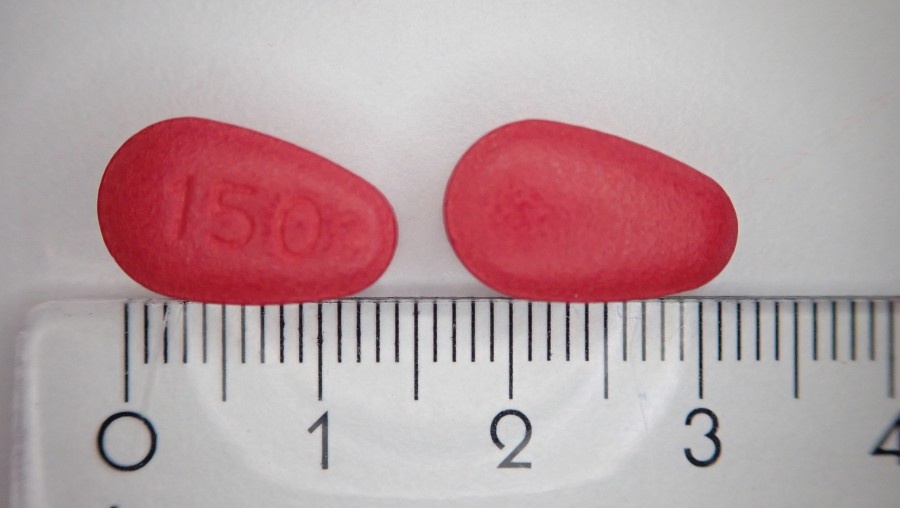
Manerix 150 mg is available in boxes containing 30 or 100 film-coated tablets.
Marketing authorization holder and manufacturer
Marketing authorization holder:
Viatris Healthcare Limited
Damastown Industrial Park
Mulhuddart, Dublin 15
Dublin
Ireland
Manufacturer:
CENEXI SAS
Rue Marcel and Jacques Gaucher, 52
Fontenay Sous Bois
France
or
MEDA Pharma GmbH & Co. KG
Benzstrasse 1
61352 Bad Homburg
Germany
or
Mylan Hungary Kft.
H-2900 Komárom
Mylan utca 1
Hungary
You can request more information about this medicine by contacting the local representative of the marketing authorization holder:
Viatris Pharmaceuticals, S.L.
C/ General Aranaz, 86
28027 - Madrid
Spain
Date of the last revision of this leaflet:January 2023
Detailed information about this medicine is available on the website of the Spanish Agency for Medicines and Health Products (AEMPS) (https://www.aemps.gob.es/)
- Country of registration
- Dosage formTABLET, 150 mg
- ATC codeN06AG02
- Average pharmacy price5.18 EUR
- Active substance
- Prescription requiredYes
- Manufacturer
- CompositionLACTOSA (148 mg mg), CARBOXIMETILALMIDON SODICO (15 mg mg)
- This information is for reference only and does not constitute medical advice. Always consult a doctor before taking any medication. Oladoctor is not responsible for medical decisions based on this content.
- Alternatives to MANERIX 150 FILM-COATED TABLETSDosage form: TABLET, 300 mgActive substance: moclobemideManufacturer: Viatris Healthcare LimitedPrescription requiredDosage form: TABLET, 15 mgActive substance: mirtazapineManufacturer: Laboratorios Alter S.A.Prescription requiredDosage form: TABLET, 30 mgActive substance: mirtazapineManufacturer: Laboratorios Alter S.A.Prescription required
Online doctors for MANERIX 150 FILM-COATED TABLETS
Discuss questions about MANERIX 150 FILM-COATED TABLETS, including use, safety considerations and prescription review, subject to medical assessment and local regulations.








Get MANERIX 150 FILM-COATED TABLETS Prescription Online
Fill in a 2-min form
Tell us your symptoms, history, and what medicine you're requesting.
Pick a doctor or let us assign
Choose a specialist or we'll match you with the next available doctor.
Doctor reviews your case
Usually within 30 minutes. They may ask follow-up questions via chat.
Collect from any pharmacy
Electronic prescription sent to your email — valid across Spain.
Frequently Asked Questions
MANERIX 150 FILM-COATED TABLETS requires a prescription in Spain. You can check with a doctor online whether this medicine may be appropriate for your situation.
The active ingredient in MANERIX 150 FILM-COATED TABLETS is moclobemide. This information helps identify medicines with the same composition but different brand names.
The average pharmacy price for MANERIX 150 FILM-COATED TABLETS is around 5.18 EUR. Prices may vary depending on the manufacturer and dosage form.
MANERIX 150 FILM-COATED TABLETS is manufactured by Viatris Healthcare Limited. Pharmacy brands and packaging may differ depending on the distributor.
Doctors such as Family doctors, Psychiatrists, Dermatologists, Cardiologists, Endocrinologists, Gastroenterologists, Pulmonologists, Nephrologists, Rheumatologists, Hematologists, Infectious disease physicians, Allergists, Geriatricians, Paediatricians, Oncologists may assess whether MANERIX 150 FILM-COATED TABLETS is appropriate, depending on your situation and local regulations. You can book an online consultation to discuss your symptoms and possible next steps.
Spain has a well-developed healthcare infrastructure across major cities such as Madrid, Barcelona, Valencia, and Seville. Pharmacies are widely available and operate under strict regulations, ensuring access to prescribed medications.
You can buy MANERIX 150 FILM-COATED TABLETS in Madrid, Barcelona, Seville, or Valencia at any local pharmacy with a valid prescription.
To obtain a prescription, you can use Oladoctor:
Other medicines with the same active substance (moclobemide) include MANERIX 300 FILM-COATED TABLETS, AFLOYAN 15 mg FILM-COATED TABLETS, AFLOYAN 30 mg FILM-COATED TABLETS. These may have different brand names or formulations but contain the same therapeutic ingredient. Always consult a doctor before switching or starting a new medicine.
