


Lorazepam Towa Pharmaceutical 1 mg comprimidos

Prescription request online
A doctor will review your case and decide whether a prescription is medically appropriate.

Talk to a doctor about this medicine
Discuss your symptoms and possible next steps in a quick online consultation.



How to use LORAZEPAM PENSA 1 mg TABLETS
Contents of the leaflet
- Introduction
- What is Lorazepam Pensa and what is it used for
- What you need to know before taking Lorazepam Pensa
- Warnings and Precautions
- Other Medications and Lorazepam Pensa
- Pregnancy and Breastfeeding
- Driving and Using Machines
- How to Take Lorazepam Pensa
- Possible Side Effects
- Storage of Lorazepam Pensa
- Container Content and Additional Information
Introduction
Package Leaflet: Information for the Patient
Lorazepam Pensa 1 mg Tablets EFG
Read the entire package leaflet carefully before starting to take this medication, as it contains important information for you.
- Keep this package leaflet, as you may need to read it again.
- If you have any questions, consult your doctor or pharmacist.
- This medication has been prescribed to you only, and you should not give it to others, even if they have the same symptoms as you, as it may harm them.
- If you experience side effects, consult your doctor or pharmacist, even if they are not listed in this package leaflet. See section 4.
Contents of the Package Leaflet
- What is Lorazepam Pensa and what is it used for
- What you need to know before taking Lorazepam Pensa
- How to take Lorazepam Pensa
- Possible side effects
- Storage of Lorazepam Pensa
- Contents of the pack and further information
1. What is Lorazepam Pensa and what is it used for
Lorazepam is a tranquilizer-anxiolytic (prevents nervousness and anxiety) that acts without influencing the normal activities of the individual. It complements antidepressant therapy and can be combined with antidepressant medications and other psychotropic drugs.
Lorazepam is used in the following cases:
- Short-term treatment of all anxiety states and tension, associated or not with functional or organic disorders, including anxiety associated with depression and that linked to surgical and/or diagnostic procedures, and in pre-anesthesia.
- Sleep disorders.

Not sure if this medicine is right for you?
Discuss your symptoms and treatment with a doctor online.
2. What you need to know before taking Lorazepam Pensa
Do not take Lorazepam Pensa:
- If you are allergic to lorazepam or any of the other components of this medication (listed in section 6).
- If you are allergic to benzodiazepines (the group of medications to which lorazepam belongs).
- If you have been diagnosed with Myasthenia Gravis (an autoimmune neuromuscular disease characterized by very weak or tired muscles).
- If you have severe respiratory failure (difficult breathing or severe chest discomfort).
- If you have sleep apnea (pauses in breathing for short periods while sleeping).
- If you have a severe liver disease.
Warnings and Precautions
Consult your doctor or pharmacist before starting to take Lorazepam Pensa.
- If you have altered liver function.
- If your doctor has prescribed prolonged treatment, it is advisable to have periodic blood tests and liver function tests.
- If you become pregnant during treatment, you should inform your doctor.
- It is not recommended for use in children under 6 years of age.
Children
Benzodiazepines are not recommended for children under 6 years of age unless strictly necessary. The duration of treatment should be as short as possible.
Tolerance
After continuous use for several weeks, a certain degree of loss of efficacy with respect to hypnotic effects may be detected.
Dependence
Continuous use of benzodiazepines for several weeks may lead to some loss of efficacy with respect to hypnotic effects. It may also lead to dependence. This usually occurs mainly after uninterrupted use of the medication for a long time. To prevent this risk as much as possible, the following instructions should be taken into account:
- The use of benzodiazepines will only be done under medical prescription(never because they have worked for other patients) and never recommend them to other people.
- Do not increase the prescribed dosesin any way, nor prolong the treatment for longer than recommended.
- Regularly consult your doctor so that they can decide whether to continue treatment.
- The interruption of treatment should be done gradually, according to the instructions indicated by your doctor.
- The duration of treatment should be as shortas possible.
- The use of lorazepam together with opioid-type medications can cause deep sedation, respiratory depression, coma, and death.
Amnesia
Benzodiazepines can induce amnesia. This occurs more frequently after several hours after administration of the medication, so to reduce the associated risk, patients should ensure they sleep uninterruptedly for 7-8 hours after taking the tablet.
Psychiatric and Paradoxical Reactions
In treatment with benzodiazepines, pre-existing depressions or worsening of the depressive state may reappear. Additionally, suicidal tendencies in depressive patients may be masked, which should be monitored in these patients.
Elderly and Debilitated Patients
Elderly and debilitated patients should receive a lower dose since they are more susceptible to the effects of the drug.
Use in Patients with Respiratory Failure
Lower doses are recommended in patients with chronic respiratory failure due to the associated risk of respiratory depression, such as in patients with chronic obstructive pulmonary disease (COPD) or sleep apnea syndrome.

Started taking the medicine and have questions?
Discuss your symptoms and treatment with a doctor online.
Other Medications and Lorazepam Pensa
Inform your doctor or pharmacist if you are taking, have recently taken, or may need to take any other medication.
It should be noted that all benzodiazepines produce depressant effects on the central nervous system (CNS), if administered together with barbiturates or alcohol. When lorazepam is taken with other medications that act on the CNS, the combination can make you feel more drowsy than expected. These medications include:
- Drugs used to treat mental disorders (antipsychotics, neuroleptics, hypnotics, anxiolytics/sedatives, antidepressants).
- Drugs used to relieve strong pain and potent analgesics, medications for substitution therapy (treatment of opioid addiction), and some medications for cough (narcotic analgesics and opioids). The use of lorazepam together with opioid-type medications increases the risk of drowsiness, difficulty breathing (respiratory depression), coma, and can be potentially fatal. Due to this, concomitant use should only be considered when other treatment options are not possible.
- However, if your doctor prescribes lorazepam together with opioids, the dose and duration of concomitant treatment should be limited by your doctor.
- Inform your doctor about all opioid medications you are taking and closely follow your doctor's dose recommendation. It may be helpful to inform friends or family members so they are aware of the signs and symptoms indicated above. Contact your doctor if you experience any of these symptoms.
- Drugs used to treat seizures/epileptic attacks (antiepileptic medications).
- Anesthetic drugs.
- Barbiturate drugs (sedatives).
- Drugs used to treat allergies (antihistamines).
Similarly, the concomitant administration of lorazepam with other medications may alter the effect of lorazepam, prolonging or decreasing its activity. These medications include:
- Clozapine (treatment of schizophrenia).
- Valproate (treatment of epilepsy and bipolar disorders).
- Probenecid (treatment of gout).
- Theophylline or aminophylline (anti-asthmatics, bronchodilators).
Taking Lorazepam Pensa with Food, Drinks, and Alcohol
Lorazepam can be taken with or without food.
Alcohol increases the sedative effect of this medication, so it is recommended to avoid consuming alcoholic beverages.
Pregnancy and Breastfeeding
If you are pregnant or breastfeeding, think you may be pregnant, or plan to become pregnant, consult your doctor or pharmacist before using this medication.
Pregnancy:
Discuss with your doctor if you are or plan to become pregnant.
The use of benzodiazepines appears to be related to a possible increased risk of congenital malformations in the first trimester of pregnancy. It has been detected that benzodiazepines and their derivatives pass through the placenta.
If the product is administered during late pregnancy or at high doses during labor, it is foreseeable that effects on the newborn may appear, such as hypoactivity, hypothermia (decrease in body temperature), hypotonia (decrease in muscle tone), apnea (period of lack of breathing), moderate respiratory depression, feeding problems, and metabolic response imbalance to stress from cold.
Children born to mothers who take benzodiazepines chronically during several weeks of pregnancy or during the last period of pregnancy may develop physical dependence and trigger withdrawal syndrome in the postnatal period.
Breastfeeding:
This medication should not be used during breastfeeding, as benzodiazepines are excreted in breast milk. Cases of sedation and inability to breastfeed have been detected in newborns whose mothers were under treatment with benzodiazepines. These newborns should be monitored to detect any of the mentioned pharmacological effects (sedation and irritability).
Driving and Using Machines
Lorazepam may alter your ability to drive or operate machinery, as it can cause drowsiness, decrease your attention, or decrease your reaction capacity. The appearance of these effects is more likely at the start of treatment or when the dose is increased. Do not drive or use machines if you experience any of these effects.
Lorazepam Pensa contains Lactose and Sodium
This medication contains lactose. If your doctor has indicated that you have an intolerance to certain sugars, consult with them before taking this medication.
This medication contains less than 23 mg of sodium (1 mmol) per tablet; this is, essentially “sodium-free”.
3. How to Take Lorazepam Pensa
Follow the administration instructions of this medication indicated by your doctor or pharmacist exactly. In case of doubt, consult your doctor or pharmacist again.
Your doctor will indicate the duration of your treatment. Do not suspend treatment before, as it may not have the desired effect.
The recommended dose in adults is half a tablet or 1 tablet (0.5 or 1 mg of lorazepam) 2 to 3 times a day, which means a maximum of 3 mg of lorazepam, administered orally, with or without food. This dose may be increased or decreased according to the needs or age of the patient, and at the discretion of the doctor.
If you take more Lorazepam Pensa than you should
Although intoxication with benzodiazepines is very rare, if you have taken more lorazepam than you should, consult your doctor or pharmacist immediately, or call the Toxicology Information Service. Phone: 91 562 04 20.
The most frequent symptoms of intoxication are excessive drowsiness, confusion, or coma.
Treatment of overdose includes induction of vomiting or gastric lavage, general maintenance measures, adequate respiration, monitoring of vital signs, and adequate patient control. Flumazenil may be used as an antidote. In patients who take benzodiazepines chronically, special care should be taken when administering flumazenil, as this combination of drugs may increase the risk of seizures.
If you forget to take Lorazepam Pensa
Do not take a double dose to make up for forgotten doses.
If you interrupt treatment with Lorazepam Pensa
When stopping administration, the symptoms that led you to take the medication may reappear, as well as restlessness, muscle pain, anxiety, tension, unease, confusion, and irritability, insomnia, lack of concentration, headache, sweating, depression, rebound phenomena, derealization (unreal or unfamiliar perception of the immediate environment), dizziness, depersonalization (disconnection from reality), involuntary movements, nausea, vomiting, diarrhea, loss of appetite, tremors, abdominal cramps, palpitations, tachycardia, panic attacks, vertigo, hyperreflexia (excessive stimulation), short-term memory loss, and hyperthermia (increase in body temperature), so your doctor will indicate precisely how to gradually decrease the dose.
If you have any other questions about the use of this medication, ask your doctor or pharmacist.
4. Possible Side Effects
Like all medications, this medication can cause side effects, although not all people experience them.
The following side effects are described according to their frequency of occurrence in treated patients:
Very common: at least 1 in 10 patients.
Common: at least 1 in 100 patients.
Uncommon: at least 1 in 1,000 patients.
Rare: at least 1 in 10,000 patients.
Very rare: less than 1 in 10,000 patients.
Frequency not known: cannot be estimated from available data.
General Disorders and Administration Site Conditions
Very common: Feeling of suffocation.
Common: Asthenia (fatigue, tiredness).
Frequency not known: Hypothermia (decrease in body temperature)
Vascular Disorders
Frequency not known: Hypotension (decrease in blood pressure).
Gastrointestinal Disorders
Uncommon: Nausea
Frequency not known: Constipation.
Hepatobiliary Disorders
Frequency not known: Jaundice (yellowing of the whites of the eyes and skin).
Blood and Lymphatic System Disorders
Frequency not known: Thrombocytopenia (decrease in platelets), agranulocytosis (decrease in neutrophils, a type of white blood cell), and pancytopenia (significant decrease in all blood cells).
Immune System Disorders
Frequency not known: Hypersensitivity and anaphylactic/anaphylactoid reactions (allergic).
Endocrine Disorders
Frequency not known: Inappropriate antidiuretic hormone secretion syndrome.
Metabolism and Nutrition Disorders
Frequency not known: Hyponatremia (lack of sodium).
Psychiatric Disorders
Common: Confusion, depression, unveiling of depression.
Uncommon: Change in libido (sexual desire), decreased orgasms.
Frequency not known: Disinhibition, euphoria, suicidal ideas and attempts, paradoxical reactions such as anxiety, agitation, excitement, hostility, aggression, fury, sleep disturbances/insomnia, sexual desire, and hallucinations.
Nervous System Disorders
Very common: Sedation, drowsiness.
Common: Ataxia (motor coordination and speech problems), dizziness.
Frequency not known: Extrapyramidal symptoms: tremors, dysarthria (difficulty articulating words), headache, seizures, amnesia, coma, attention/concentration disorders, balance disorders.
Eye Disorders
Frequency not known: Visual problems (double vision and blurred vision).
Ear and Labyrinth Disorders
Frequency not known: Vertigo.
Reproductive System and Breast Disorders
Uncommon: Impotence.
Respiratory, Thoracic, and Mediastinal Disorders
Frequency not known: Respiratory failure, apnea, worsening of sleep apnea. Worsening of chronic obstructive pulmonary disease (COPD).
Skin and Subcutaneous Tissue Disorders
Frequency not known: Angioedema (swelling under the skin of the tongue, glottis, or larynx that can produce a blockage of the airways that can be fatal), allergic reactions on the skin, alopecia (hair loss).
Musculoskeletal and Connective Tissue Disorders
Common: Muscle weakness.
Investigations
Frequency not known: Increased bilirubin, increased transaminases, and increased alkaline phosphatase (liver enzyme).
As indicated above, withdrawal of the product may cause the reappearance of certain symptoms due to the development of dependence.
If you consider that any of the side effects you are experiencing is serious or if you notice any side effect not mentioned in this package leaflet, inform your doctor or pharmacist.
Reporting of Side Effects
If you experience any type of side effect, consult your doctor or pharmacist, even if it is a possible side effect that does not appear in this package leaflet. You can also report them directly through the Spanish Pharmacovigilance System for Human Use Medications: https://www.notificaram.es. By reporting side effects, you can contribute to providing more information on the safety of this medication.
5. Storage of Lorazepam Pensa
Do not store above 25°C.
Keep this medication out of sight and reach of children.
Do not use this medication after the expiration date that appears on the packaging after “CAD”. The expiration date is the last day of the month indicated.
Medications should not be disposed of through wastewater or household waste. Deposit the packaging and medications you no longer need at the SIGRE Point in the pharmacy. If in doubt, ask your pharmacist how to dispose of the packaging and medications you no longer need. This way, you will help protect the environment.
6. Container Content and Additional Information
Composition of Lorazepam pensa
- The active ingredient is lorazepam. Each tablet contains 1 mg of lorazepam.
- The other components (excipients) are: lactose monohydrate, microcrystalline cellulose (E-460), sodium croscarmellose, sodium lauryl sulfate, and magnesium stearate.
Appearance of the Product and Container Content
Lorazepam pensa is presented in the form of white, cylindrical, biconvex, scored tablets, marked with the code “L1”. They can be divided into equal halves.
Each container contains 25 or 50 tablets in PVC-PVDC/aluminum blisters.
Marketing Authorization Holder
Towa Pharmaceutical, S.A.
C/ de Sant Martí, 75-97
08107 Martorelles (Barcelona)
Spain
Manufacturer:
Laboratorios Cinfa, S.A.
C/ Olaz-Chipi, 10 - Polígono Industrial Areta.
31620 Huarte - Pamplona (Navarra)
Spain
Date of the Last Revision of this Prospectus:December 2020
Detailed information about this medication is available on the website of the Spanish Agency for Medicines and Health Products (AEMPS) http://www.aemps.gob.es/
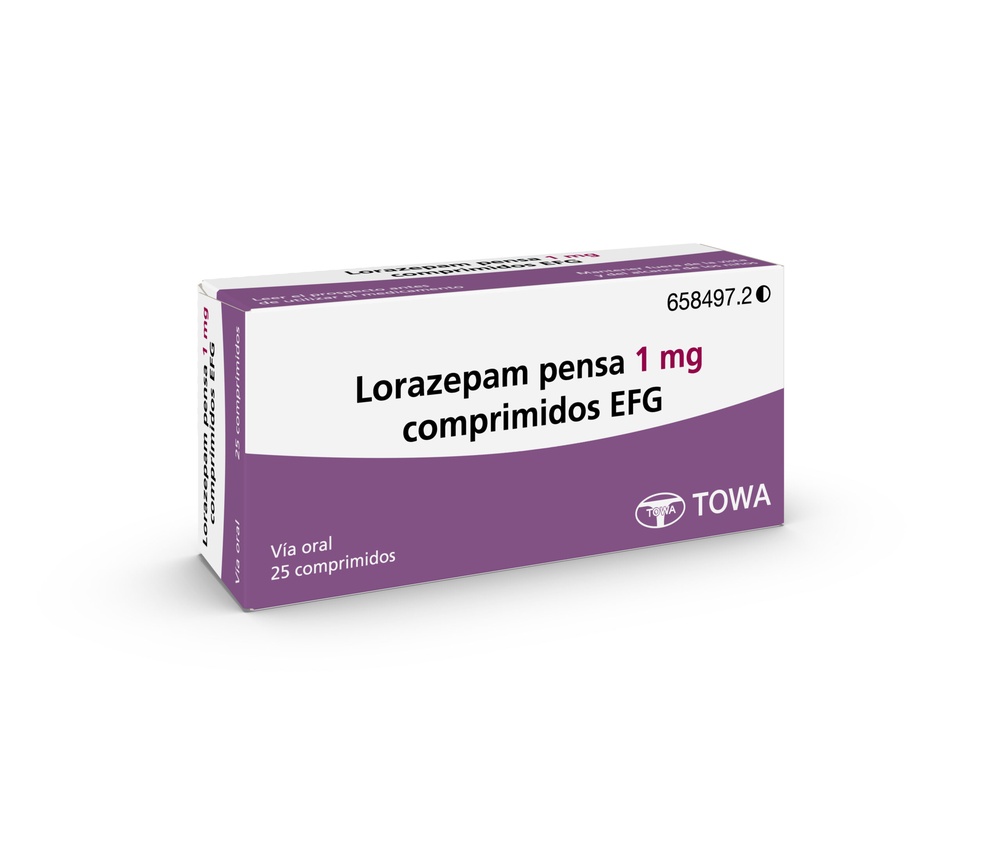
- Country of registration
- Dosage formTABLET, 1 mg lorazepam per tablet
- ATC codeN05BA06
- Average pharmacy price1.37 EUR
- Active substance
- Prescription requiredYes
- Manufacturer
- CompositionCROSCARMELOSA SODICA (4,0 mg mg), LAURILSULFATO DE SODIO (2,0 mg mg), LACTOSA HIDRATADA (28,0 mg mg)
- This information is for reference only and does not constitute medical advice. Always consult a doctor before taking any medication. Oladoctor is not responsible for medical decisions based on this content.
- Alternatives to LORAZEPAM PENSA 1 mg TABLETSDosage form: TABLET, 0.5 mgActive substance: lorazepamManufacturer: Aurovitas Spain, S.A.U.Prescription requiredDosage form: TABLET, 1 mgActive substance: lorazepamManufacturer: Aurovitas Spain, S.A.U.Prescription requiredDosage form: TABLET, 1 mg lorazepamActive substance: lorazepamManufacturer: Laboratorios Cinfa S.A.Prescription required
Online doctors for LORAZEPAM PENSA 1 mg TABLETS
Discuss questions about LORAZEPAM PENSA 1 mg TABLETS, including use, safety considerations and whether a prescription is appropriate, subject to medical assessment and local regulations.







Frequently Asked Questions
LORAZEPAM PENSA 1 mg TABLETS requires a prescription in Spain. You can check with a doctor online whether this medicine may be appropriate for your situation.
The active ingredient in LORAZEPAM PENSA 1 mg TABLETS is lorazepam. This information helps identify medicines with the same composition but different brand names.
The average pharmacy price for LORAZEPAM PENSA 1 mg TABLETS is around 1.37 EUR. Prices may vary depending on the manufacturer and dosage form.
LORAZEPAM PENSA 1 mg TABLETS is manufactured by Towa Pharmaceutical S.A.. Pharmacy brands and packaging may differ depending on the distributor.
Doctors such as Family doctors, Psychiatrists, Dermatologists, Cardiologists, Endocrinologists, Gastroenterologists, Pulmonologists, Nephrologists, Rheumatologists, Hematologists, Infectious disease physicians, Allergists, Geriatricians, Paediatricians, Oncologists may assess whether LORAZEPAM PENSA 1 mg TABLETS is appropriate, depending on your situation and local regulations. You can book an online consultation to discuss your symptoms and possible next steps.
The prescription is issued by a doctor after assessing your health. In Spain, LORAZEPAM PENSA 1 mg TABLETS is then dispensed in pharmacies with that prescription. An online consultation does not guarantee that a prescription will be issued: the decision always rests with the doctor.
To request an assessment, you can use Oladoctor:
Other medicines with the same active substance (lorazepam) include LORAZEPAM AUROVITAS 0.5 mg TABLETS, LORAZEPAM AUROVITAS 1 mg TABLETS, LORAZEPAM CINFA 1 mg TABLETS. These may have different brand names or formulations but contain the same therapeutic ingredient. Always consult a doctor before switching or starting a new medicine.
