



LOPRESOR 100 mg Film-Coated Tablets

Prescription review online
A doctor will review your case and decide whether a prescription is medically appropriate.

Talk to a doctor about this medicine
Discuss your symptoms and possible next steps in a quick online consultation.



How to use LOPRESOR 100 mg FILM-COATED TABLETS
Contents of the leaflet
- Introduction
- What is Lopresor and what is it used for
- What you need to know before you take Lopresor
- How to take Lopresor
- Possible side effects
- Storing Lopresor
- Package Contents and Additional Information
Introduction
PATIENT INFORMATION LEAFLET
Lopresor 100 mg film-coated tablets
Metoprolol tartrate
Read all of this leaflet carefully before you start taking this medicine because it contains important information for you.
- Keep this leaflet, you may need to read it again.
- If you have any further questions, ask your doctor or pharmacist.
- This medicine has been prescribed for you only. Do not pass it on to others. It may harm them, even if their signs of illness are the same as yours.
- If you get any side effects, talk to your doctor or pharmacist. This includes any possible side effects not listed in this leaflet. See section 4.
Contents of the pack:
- What is Lopresor and what is it used for
- What you need to know before you take Lopresor
- How to take Lopresor
- Possible side effects
- Storing Lopresor
- Pack contents and further information
1. What is Lopresor and what is it used for
Lopresor is used to:
- lower high blood pressure
- treat angina (chest pain)
- treat irregular heartbeats
- treat an overactive thyroid gland
- prevent migraine (a type of headache)
How Lopresor works:
Lopresor belongs to a group of medicines called beta-blockers. They lower blood pressure by relaxing blood vessels.

Not sure if this medicine is right for you?
Discuss your symptoms and treatment with a doctor online.
2. What you need to know before you take Lopresor
Do not take Lopresor:
- if you are allergic to metoprolol tartrate or any of the other ingredients of this medicine (listed in section 6)
- if you have difficulty breathing when lying down or have swollen feet or legs due to heart disease
- if you have irregular heartbeats
- if you have a very slow heart rate
- if you have sudden severe chest pain as a sign of a heart attack
- if you have poor circulation in your limbs (e.g. pale or cold hands or feet, or muscle pain in your legs when walking)
- if you have unusually low blood pressure
- if you have asthma or have ever had breathing difficulties with wheezing or coughing
- if you have an untreated pheochromocytoma (a tumor of the adrenal gland)
- if you suffer from low blood pressure, dizziness, fast heart rate, rapid and shallow breathing, signs of cold and sweaty skin due to a heart condition called cardiogenic shock.
Warnings and precautions:
Consult your doctor or pharmacist before taking Lopresor:
- if you have heart disease
- if you have high blood sugar levels (diabetes)
- if you have liver disease
- if you are at risk of severe allergic reactions
- if you have chest pain when resting
- if you have poor circulation in your limbs (e.g. pale or cold hands or feet, or muscle pain in your legs when walking)
- if you have a pheochromocytoma (a tumor of the adrenal gland)
- if you have been told you have an overactive thyroid gland
- if you are going to have surgery that requires anesthesia
- if you have a severe condition called oculomucocutaneous syndrome, whose symptoms include severe conjunctivitis, skin rash, and ear infection
If you experience any of the above symptoms, tell your doctor as soon as possible.
- If you notice spontaneous bleeding or bruising during treatment with Lopresor
- If you notice that your heart rate becomes slow during treatment with Lopresor
- If you notice that your skin and eyes turn yellow, if you have nausea, loss of appetite, dark urine during treatment with Lopresor
- If you notice that your heart rate becomes irregular during treatment with Lopresor
- If you experience hallucinations during treatment with Lopresor
Checks during your treatment with Lopresor:
- If you have heart problems, your doctor will perform blood tests and monitor your heart function.
- If you have high blood sugar levels (diabetes), your doctor will regularly check your blood sugar levels.
- If you have an overactive thyroid gland, your doctor will regularly monitor your heart and thyroid function.
- If you are taking or have recently taken other medicines, your doctor may perform blood tests and monitor your heart function.
Other medicines and Lopresor
Tell your doctor or pharmacist if you are taking, have recently taken, or might take any other medicines. Other medicines may interact with Lopresor, such as:
- other medicines to treat high blood pressure (e.g. prazosin, clonidine, verapamil, monoamine oxidase inhibitors (MAOIs), diltiazem, and hydralazine)
- medicines to treat chest pain (angina) (e.g. nitroglycerin)
- medicines to treat irregular heartbeats (e.g. amiodarone, propafenone, quinidine, disopyramide, tocainide, procainamide, ajmaline, amiodarone, flecainide, digitalis glycosides such as digoxin, lidocaine)
- inhalation anesthetics used during surgical interventions
- adrenaline or similar substances found in some nasal drops or eye drops or in some medicines for cough or cold
- insulin or medicines to treat high blood sugar levels (diabetes)
- medicines to relieve pain or inflammation (non-steroidal anti-inflammatory drugs such as COX-2 inhibitors)
- some antibiotics (e.g. rifampicin)
- some antiretrovirals (e.g. ritonavir)
- some medicines to treat malaria (e.g. hydroxychloroquine or quinidine)
- some antifungals (e.g. terbinafine)
- some antipsychotic medicines (e.g. thioridazine, chlorpromazine, fluphenazine, haloperidol)
- some antidepressant medicines (e.g. fluoxetine, paroxetine, fluvoxamine, sertraline, clomipramine, desipramine, or bupropion)
- some antihistamines used for hay fever (e.g. diphenhydramine)
- ergot alkaloids, medicines used in the prevention and treatment of migraines
- dipyridamole, a medicine used to reduce the risk of blood clots
Use in patients with liver problems
Lopresor should be used with caution in patients with liver problems.
Use in elderly patients
Patients over 65 years old may take Lopresor. If you are over 65 years old, you will receive the same dose as other adults, but you should be closely monitored by your doctor.
Use in children
Lopresor is not recommended for use in children.
Use in athletes
Athletes are informed that this medicine contains a component that may produce a positive result in doping tests.
Taking Lopresor with food, drinks, and alcohol
Lopresor tablets should be swallowed whole with a glass of water.
If your doctor recommends taking Lopresor with or without food, you should continue taking it in the same way throughout your treatment.
Avoid drinking alcohol as it may further lower your blood pressure and/or increase the risk of dizziness and weakness.
Pregnancy, breastfeeding, and fertility
If you are pregnant or breastfeeding, think you may be pregnant, or plan to become pregnant, consult your doctor or pharmacist before using this medicine.
Lopresor should not be used during pregnancy unless clearly necessary. Your doctor will discuss the potential risks of taking Lopresor during pregnancy.
If you are breastfeeding, tell your doctor. Lopresor should be used with caution during breastfeeding.
Driving and using machines
Lopresor may cause dizziness, tiredness, and blurred vision. If this happens, do not drive or use machines or perform any activity that requires concentration while taking this medicine.
Lopresor contains polyoxyethylene hydrogenated castor oil (macrogolglycerol hydroxystearate)
This medicine may cause stomach upset and diarrhea because it contains polyoxyethylene hydrogenated castor oil.
Lopresor contains sodium
This medicine contains less than 23 mg of sodium (1 mmol) per tablet; it is essentially "sodium-free".
3. How to take Lopresor
Follow the instructions for taking this medicine exactly as your doctor has told you. If you are unsure, ask your doctor or pharmacist.
Adults:
Your doctor will tell you how long to take Lopresor for.
When Lopresor is used to treat high blood pressure and angina, the usual recommended dose is 100 to 200 mg per day, taken once daily (one tablet in the morning) or divided into two doses (one tablet in the morning and one in the evening). Your doctor may increase this dose up to 400 mg (four tablets) or prescribe another medicine if necessary.
When Lopresor is used to treat an overactive thyroid gland, the usual recommended dose is 150 to 200 mg daily, divided into three or four doses (half a tablet, three or four times a day).
When Lopresor is used to treat irregular heartbeats, the usual recommended dose is 100 to 150 mg per day, divided into two or three doses (half a tablet in the morning and the other half in the evening, and if necessary, half a tablet at midday). Your doctor may increase this dose up to 300 mg (three tablets) if necessary.
When Lopresor is used to prevent migraines, the usual recommended dose is 100 mg per day, taken once daily (one tablet in the morning); if necessary, your doctor may increase the daily dose to 200 mg in two divided doses (one tablet in the morning and one in the evening).
The tablets should be taken orally. The tablets should be swallowed whole with a glass of water.
Taking the tablets at the same time every day will help you remember when to take them.
Use in children and adolescents:
This medicine should not be given to children under 18 years old.
Use in elderly patients:
No dose adjustment is required. However, they may require special care at the start of treatment.
Patients with liver problems:
Special care is needed when starting treatment in these patients, and the dose should be gradually increased based on the response to treatment.
If you have any doubts about taking this medicine, ask your doctor or pharmacist.
If you take more Lopresor than you should
If you take too much Lopresor, contact your doctor immediately. You may need medical attention.
Some effects of Lopresor overdose are: slow or irregular heart rate, very low blood pressure, difficulty breathing, especially when lying down, swelling of feet or legs, loss of consciousness, nausea, vomiting, blue discoloration of the lips, tongue, skin, convulsions, sudden severe chest pain, and death.
In cases of overdose or accidental ingestion, contact the Toxicology Information Service. Telephone 91 562 04 20.
If you forget to take Lopresor
If you accidentally miss a dose, simply take your normal dose as soon as you remember. However, if it is almost time for your next dose, skip the missed dose and continue with your next dose. Do not take a double dose to make up for the missed dose.
If you stop taking Lopresor
Do not change the dose or stop taking Lopresor without your doctor's consent. If you stop taking Lopresor suddenly, your condition may worsen. If it is necessary to stop treatment, your doctor will tell you how to do it.
If you have any further questions about taking this medicine, ask your doctor or pharmacist.

Started taking the medicine and have questions?
Discuss your symptoms and treatment with a doctor online.
4. Possible side effects
Like all medicines, Lopresor can cause side effects, although not everybody gets them.
Some of the following side effects may be serious and require medical attention:
- Common side effects (affecting between 1 and 10 in every 100 patients)
- slow heart rate
- Rare side effects (affecting between 1 and 10 in every 10,000 patients)
- difficulty breathing, especially when lying down, swelling of feet or legs due to heart problems
- numbness or cold fingers as signs of Raynaud's syndrome
- irregular heartbeats
- Very rare side effects (affecting less than 1 in every 10,000 patients)
- spontaneous bleeding or bruising as a sign of low platelet count in the blood (thrombocytopenia)
- hallucinations
Consult your doctor immediately if you notice any of the following symptoms: yellowing of the skin or eyes, nausea, loss of appetite, dark urine as a sign of liver disorder, liver pain, and abnormal curvature of the penis.
Some of the following side effects are common:
- Common side effects (affecting between 1 and 10 in every 100 patients)
- dizziness
- headache
- dizziness, fainting when standing up as a sign of orthostatic hypotension (sometimes with loss of consciousness)
- difficulty breathing
- nausea
- vomiting
- abdominal pain
- fatigue
If you notice any of the above symptoms, contact your doctor.
Some of the following side effects are rare:
- Rare side effects (affecting between 1 and 10 in every 10,000 patients)
- muscle cramps
- skin rash (in the form of an itchy rash, signs of psoriasis on the skin in thickened and reddened plaques)
- diarrhea
- constipation
- difficulty breathing, wheezing or coughing
- swelling
- palpitations
- decreased alertness, drowsiness, or insomnia (sleep problems)
- signs of paresthesia in limbs such as numbness, tingling in the limbs
- depression
- nightmares
If you notice any of the above symptoms, consult your doctor.
Some of the following side effects are very rare:
- Very rare side effects (affecting less than 1 in every 10,000 patients)
- change in personality
- vision changes (e.g. blurred vision)
- dry or irritated eyes
- ringing in the ears (e.g. tinnitus)
- hearing disorders (e.g. reduced hearing or hearing loss) at doses exceeding the recommended doses
- chest pain
- gangrene in patients with pre-existing peripheral circulatory disorders
- stuffy or runny nose as signs of rhinitis
- dry mouth
- increased sensitivity of the skin to the sun
- abnormal sweating
- hair loss
- worsening of psoriasis signs such as thickening and reddening of plaques
- pain and stiffness as signs of arthritis
- change in sexual desire
- changes in the ability to achieve or maintain an erection
- weight gain
- abnormal liver function test results
- lower back pain, kidney problems, increased blood pressure, blood clots as possible signs of fibrotic tissue growth in a part of the body (called retroperitoneal fibrosis) contained between the kidneys, aorta, renal tract, and other structures
- conduction disorders.
- changes in blood cell count.
If you notice any of the above symptoms, consult your doctor.
Other side effects reported:
- confusion
- abnormal blood triglyceride levels
- abnormal blood cholesterol levels
Reporting side effects
If you experience any side effects, talk to your doctor or pharmacist, even if they are not listed in this leaflet. You can also report them directly through the Spanish Pharmacovigilance System for Human Use Medicines: www.notificaRAM.es. By reporting side effects, you can help provide more information on the safety of this medicine.
5. Storing Lopresor
Do not store above 30°C.
Keep the medicine in its original packaging to protect it from moisture.
Keep this medicine out of the sight and reach of children.
Do not use this medicine after the expiry date stated on the packaging. The expiry date is the last day of the month stated.
Do not use this medicine if you notice visible signs of deterioration.
Medicines should not be disposed of via wastewater or household waste. Return any unused medicine to a pharmacy for proper disposal. Ask your pharmacist how to dispose of medicines no longer needed. This will help protect the environment.
6. Package Contents and Additional Information
Lopresor Composition
- The active ingredient is metoprolol tartrate. Each film-coated tablet contains 100 mg of metoprolol tartrate.
- The other components are:
Core: anhydrous colloidal silica, microcrystalline cellulose, magnesium stearate, sodium carboxymethylcellulose (type A) (from potato)
Coating: hypromellose, polyoxyethylene castor oil (macrogolglycerol hydroxystearate), talc, titanium dioxide (E 171).
Product Appearance and Package Contents
Lopresor is presented in the form of film-coated tablets.
Each package contains 40 tablets.
Marketing Authorization Holder and Manufacturer
Marketing Authorization Holder
Casen Recordati, S.L.
Autovía de Logroño, km. 13,300
50180 Utebo (Zaragoza)
Spain
Manufacturer
Recordati Industria Chimica e Farmaceutica S.p.A.
Via Matteo Civitali 1, 28148 Milan, Italy.
This leaflet was approved in July 2024
Detailed information on this medicinal product is available on the website of the Spanish Agency for Medicines and Health Products (AEMPS) (http://www.aemps.gob.es/)
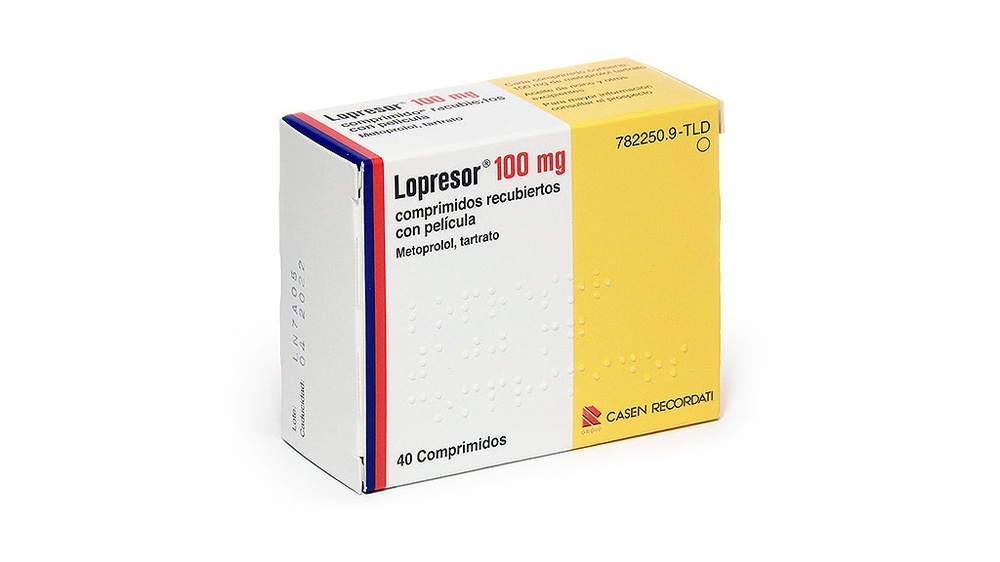
- Country of registration
- Dosage formTABLET, 100 mg
- ATC codeC07AB02
- Average pharmacy price2.51 EUR
- Active substance
- Prescription requiredYes
- Manufacturer
- CompositionCARBOXIMETILALMIDON SODICO (40 mg mg)
- This information is for reference only and does not constitute medical advice. Always consult a doctor before taking any medication. Oladoctor is not responsible for medical decisions based on this content.
- Alternatives to LOPRESOR 100 mg FILM-COATED TABLETSDosage form: INJECTABLE, 1 mg metoprolol tartrate/ mlActive substance: metoprololManufacturer: Recordati Industria Chimica E Farmaceutica S.P.A.Prescription requiredDosage form: TABLET, 100 mgActive substance: metoprololManufacturer: Aurovitas Spain, S.A.U.Prescription requiredDosage form: TABLET, 100 mgActive substance: atenololManufacturer: Laboratorios Alter S.A.Prescription required
Online doctors for LOPRESOR 100 mg FILM-COATED TABLETS
Discuss questions about LOPRESOR 100 mg FILM-COATED TABLETS, including use, safety considerations and prescription review, subject to medical assessment and local regulations.
Get LOPRESOR 100 mg FILM-COATED TABLETS Prescription Online
Fill in a 2-min form
Tell us your symptoms, history, and what medicine you're requesting.
Pick a doctor or let us assign
Choose a specialist or we'll match you with the next available doctor.
Doctor reviews your case
Usually within 30 minutes. They may ask follow-up questions via chat.
Collect from any pharmacy
Electronic prescription sent to your email — valid across Spain.
Frequently Asked Questions
LOPRESOR 100 mg FILM-COATED TABLETS requires a prescription in Spain. You can check with a doctor online whether this medicine may be appropriate for your situation.
The active ingredient in LOPRESOR 100 mg FILM-COATED TABLETS is metoprolol. This information helps identify medicines with the same composition but different brand names.
The average pharmacy price for LOPRESOR 100 mg FILM-COATED TABLETS is around 2.51 EUR. Prices may vary depending on the manufacturer and dosage form.
LOPRESOR 100 mg FILM-COATED TABLETS is manufactured by Casen Recordati S.L.. Pharmacy brands and packaging may differ depending on the distributor.
Doctors such as Family doctors, Psychiatrists, Dermatologists, Cardiologists, Endocrinologists, Gastroenterologists, Pulmonologists, Nephrologists, Rheumatologists, Hematologists, Infectious disease physicians, Allergists, Geriatricians, Paediatricians, Oncologists may assess whether LOPRESOR 100 mg FILM-COATED TABLETS is appropriate, depending on your situation and local regulations. You can book an online consultation to discuss your symptoms and possible next steps.
Spain has a well-developed healthcare infrastructure across major cities such as Madrid, Barcelona, Valencia, and Seville. Pharmacies are widely available and operate under strict regulations, ensuring access to prescribed medications.
You can buy LOPRESOR 100 mg FILM-COATED TABLETS in Madrid, Barcelona, Seville, or Valencia at any local pharmacy with a valid prescription.
To obtain a prescription, you can use Oladoctor:
Other medicines with the same active substance (metoprolol) include BELOKEN 1 mg/ml INJECTABLE SOLUTION, METOPROLOL AUROVITAS 100 mg FILM-COATED TABLETS, ATENOLOL ALTER 100 mg TABLETS. These may have different brand names or formulations but contain the same therapeutic ingredient. Always consult a doctor before switching or starting a new medicine.
