


LEVOCETIRIZINE TARBIS 5 mg FILM-COATED TABLETS



How to use LEVOCETIRIZINE TARBIS 5 mg FILM-COATED TABLETS
Translated with AI
This page provides general information and does not replace a doctor’s consultation. Always consult a doctor before taking any medication. Seek urgent medical care if symptoms are severe.
Show originalContents of the leaflet
Introduction
PACKAGE LEAFLET: INFORMATION FOR THE USER
Levocetirizine Tarbis 5mg film-coated tablets EFG
Levocetirizine dihydrochloride
Read the entire leaflet carefully before starting to take the medicine.
- Keep this leaflet, as you may need to read it again.
- If you have any further questions, ask your doctor or pharmacist.
- This medicine has been prescribed for you personally and you should not pass it on to others, even if they have the same symptoms, as it may harm them.
- If you consider any of the side effects to be serious or if you notice any side effects not mentioned in this leaflet, please inform your doctor or pharmacist.
In this leaflet:
- What is Levocetirizine Tarbis and what is it used for
- Before taking Levocetirizine Tarbis
- How to take Levocetirizine Tarbis
- Possible side effects
5 Conservation of Levocetirizine Tarbis
- Additional information
1. What is LEVOCETIRIZINE TARBIS and what is it used for
The active substance of Levocetirizine Tarbis is levocetirizine dihydrochloride. Levocetirizine Tarbis is an antiallergic medicine.
For the treatment of disease signs (symptoms) associated with:
- Allergic rhinitis (including persistent allergic rhinitis);
- Chronic urticaria (chronic idiopathic urticaria).

2. Before taking LEVOCETIRIZINE TARBIS
Do not take Levocetirizine Tarbis
- if you are allergic (hypersensitive) to levocetirizine dihydrochloride or to an antihistamine or to any of the other components of Levocetirizine Tarbis (see "What contains Levocetirizine Tarbis?").
- if you have severe kidney impairment (severe renal insufficiency with a creatinine clearance of less than 10 ml/min).
Be careful with Levocetirizine Tarbis
- The use of Levocetirizine Tarbis is not recommended in children under 6 years of age, as the film-coated tablets do not allow for dose adjustment.
Use of other medicines
Tell your doctor or pharmacist if you are using or have recently used other medicines, including those obtained without a prescription.
Taking Levocetirizine Tarbis with food and drinks
Caution is recommended if you take Levocetirizine Tarbis and alcohol at the same time.
In sensitive patients, the simultaneous intake of cetirizine or levocetirizine and alcohol or other centrally acting agents may have effects on the central nervous system, although the cetirizine racemate has shown that it does not potentiate the effect of alcohol.
Pregnancy and lactation
Consult your doctor or pharmacist before taking a medicine.
Tell your doctor if you are pregnant, trying to become pregnant, or are breastfeeding.
Driving and using machines
Some patients treated with Levocetirizine Tarbis may experience drowsiness, fatigue, and exhaustion. If you are going to drive, perform potentially hazardous activities, or use machinery, you are advised to wait and observe your response to the medication. However, in special tests performed in healthy individuals, no alterations in attention, reaction capacity, and driving ability were detected after taking levocetirizine at the recommended dose.
Important information about some of the components of Levocetirizine Tarbis
This medicine contains lactose. If your doctor has told you that you have an intolerance to certain sugars, consult with them before taking this medicine.
3. How to take LEVOCETIRIZINE TARBIS
Follow your doctor's instructions for taking Levocetirizine Tarbis exactly. Consult your doctor or pharmacist if you have any doubts.
The normal dose for adults and children from 6 years of age is one tablet per day.
Patients with renal insufficiency should receive a lower dose according to the severity of their kidney disease.
Patients with only hepatic insufficiency should take the normal prescribed dose.
Patients with hepatic and renal insufficiency should take a lower dose depending on the severity of their kidney disease, and in children, the dose will depend on body weight; the dose to be taken will be determined by your doctor.
The use of Levocetirizine Tarbis is not recommended in children under 6 years of age.
How and when should you take Levocetirizine Tarbis?
The tablets should be swallowed whole with water and can be taken both on an empty stomach and with food.
If you take more Levocetirizine Tarbis than you should
A significant overdose may cause drowsiness in adults. In children, it may initially cause agitation and restlessness followed by drowsiness.
In case of overdose or accidental ingestion, consult your doctor or pharmacist immediately or call the Toxicology Information Service. Telephone 915 620 420.
If you forget to take Levocetirizine Tarbis
If you have forgotten to take Levocetirizine Tarbis, or if you take a lower dose than prescribed by your doctor, do not take a double dose to make up for it, simply wait until the next scheduled intake and take the normal dose prescribed by your doctor.
If you stop taking Levocetirizine Tarbis
Stopping treatment with Levocetirizine Tarbis before it is due should not have harmful effects, in the sense that the symptoms of the disease should gradually reappear with a severity not greater than before starting treatment with Levocetirizine Tarbis.
If you have any other questions about the use of this product, ask your doctor or pharmacist.

4. Possible side effects
Like all medicines, Levocetirizine Tarbis can have side effects, although not everyone gets them.
Frequent side effects (between 1% and 10%) have been described, mostly mild to moderate, such as dry mouth, headache, fatigue, and drowsiness. Uncommon side effects (between 0.1% and 1%) such as exhaustion and abdominal pain have been observed. Other side effects have also been described, such as palpitations, convulsions, visual disturbances, edema, pruritus (itching), skin rash, urticaria (swelling, redness, and itching of the skin), shortness of breath, weight gain, muscle pain, aggressive or agitated behavior, hepatitis, abnormal liver function, and nausea.
An adverse effect with an unknown frequency (cannot be estimated from the available data) is oculogyric crisis (uncontrolled circular movements of the eyes).
At the first signs of a hypersensitivity reaction, stop taking Levocetirizine Tarbis and see your doctor immediately. The symptoms of a hypersensitivity reaction may include: swelling of the mouth, tongue, face, and/or neck, difficulty breathing or swallowing along with hives (angioedema), sudden drop in blood pressure that can lead to collapse or shock, which can be fatal.
If you notice side effects not mentioned in this leaflet or if you suffer from any of the side effects described in a severe form, inform your doctor or pharmacist.
If you experience any type of side effect, consult your doctor or pharmacist, even if it is a possible side effect that does not appear in this leaflet. You can also report them directly through the Spanish Medicines Monitoring System: www.notificaRAM.es By reporting side effects, you can help provide more information on the safety of this medicine.
5. Conservation of LEVOCETIRIZINE TARBIS
Keep out of the reach and sight of children.
Do not use Levocetirizine Tarbis after the expiration date stated on the packaging after CAD. The expiration date is the last day of the month indicated.
This medicine does not require special storage conditions.
Medicines should not be disposed of through wastewater or household waste. Deposit the packaging and medicines you no longer need at the SIGRE point in the pharmacy. In case of doubt, ask your pharmacist how to dispose of the packaging and medicines you no longer need. This way, you will help protect the environment.
6. Additional information
What contains Levocetirizine Tarbis?
- The active substance is 5 mg of levocetirizine dihydrochloride.
Each film-coated tablet contains 5 mg of levocetirizine dihydrochloride.
- The other components are: tablet core: microcrystalline cellulose, anhydrous colloidal silica, lactose monohydrate, hydroxypropyl cellulose, and magnesium stearate. Coating: hypromellose, titanium dioxide, lactose monohydrate, macrogol 3350, and triacetin.
Appearance of the product and packaging content
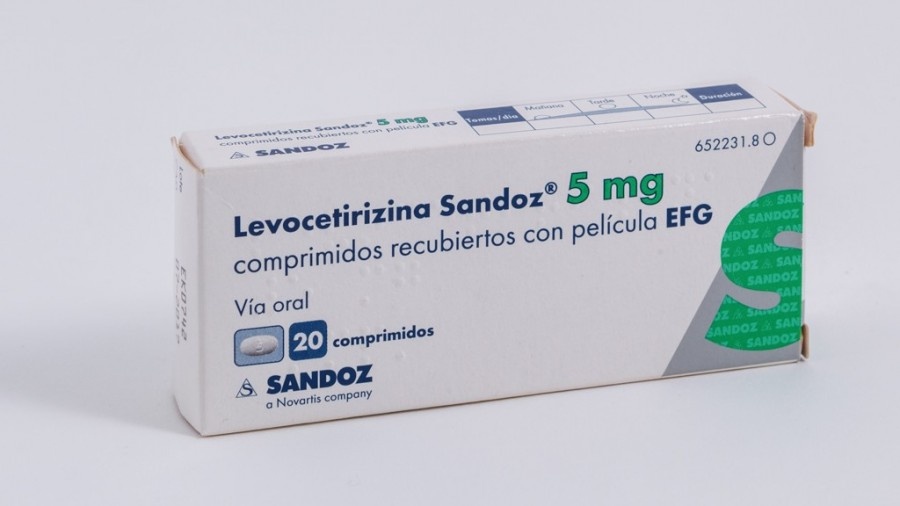
The film-coated tablets are white to off-white, round, slightly biconvex, with the mark "E" on one face and "281" on the other face.
They are packaged in blisters of 20, 21, and 100 tablets. Not all pack sizes may be marketed.
Marketing authorization holder and manufacturer
Marketing authorization holder
Tarbis Farma, S.L.
Gran Vía Carlos III, 94
08028 Barcelona (Spain)
Manufacturer:
EGIS Pharmaceuticals PLC
Bökényföldi út 118-120
1165 Budapest (Hungary)
This leaflet was approved in May 2018.
Detailed and updated information on this medicine is available on the website of the Spanish Agency for Medicines and Health Products (AEMPS) http://www.aemps.gob.es/
- Country of registration
- Dosage formTABLET, 5 mg
- ATC codeR06AE09
- Average pharmacy price5.9 EUR
- Active substance
- Prescription requiredYes
- Manufacturer
- This information is for reference only and does not constitute medical advice. Always consult a doctor before taking any medication. Oladoctor is not responsible for medical decisions based on this content.
- Alternatives to LEVOCETIRIZINE TARBIS 5 mg FILM-COATED TABLETSDosage form: TABLET, 5 mgActive substance: levocetirizineManufacturer: Arafarma Group S.A.Prescription requiredDosage form: TABLET, 5 mgActive substance: levocetirizineManufacturer: Aurovitas Spain, S.A.U.Prescription requiredDosage form: TABLET, 5 mgActive substance: levocetirizineManufacturer: Bluefish Pharmaceuticals Ab (Publ)Prescription required
Online doctors for LEVOCETIRIZINE TARBIS 5 mg FILM-COATED TABLETS
Discuss questions about LEVOCETIRIZINE TARBIS 5 mg FILM-COATED TABLETS, including use, safety considerations and prescription review, subject to medical assessment and local regulations.









.jpg)

Frequently Asked Questions
