



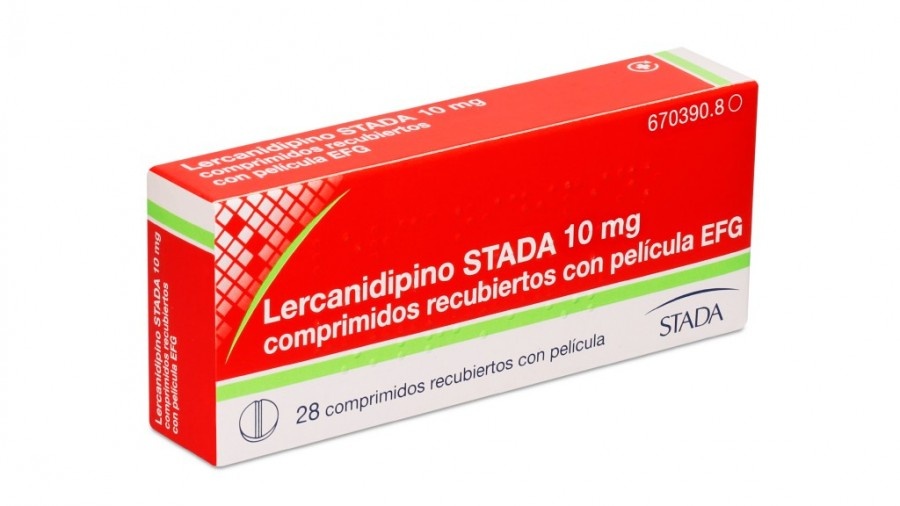
LERCANIDIPINO 10 mg Film-Coated Tablets

Prescription review online
A doctor will review your case and decide whether a prescription is medically appropriate.

Talk to a doctor about this medicine
Discuss your symptoms and possible next steps in a quick online consultation.



How to use LERCANIDIPINE TARBIS 10 mg FILM-COATED TABLETS
Contents of the leaflet
- Introduction
- What is Lercanidipine Tarbis and what is it used for
- What you need to know before you take Lercanidipine Tarbis
- How to take Lercanidipine Tarbis
- Possible side effects
- Storing Lercanidipine Tarbis
- Contents of the pack and other information
Introduction
Package Leaflet: Information for the User
Lercanidipine Tarbis 10 mg Film-Coated Tablets EFG
Lercanidipine Tarbis 20 mg Film-Coated Tablets EFG
lercanidipine hydrochloride
Read all of this leaflet carefully before you start taking this medicine because it contains important information for you.
- Keep this leaflet, you may need to read it again.
- If you have any further questions, ask your doctor or pharmacist.
- This medicine has been prescribed for you only. Do not pass it on to others. It may harm them, even if their signs of illness are the same as yours.
- If you get any side effects, talk to your doctor or pharmacist. This includes any possible side effects not listed in this leaflet. See section 4.
Contents of the pack
- What is Lercanidipine Tarbis and what is it used for
- What you need to know before you take Lercanidipine Tarbis
- How to take Lercanidipine Tarbis
- Possible side effects
- Storing Lercanidipine Tarbis
- Contents of the pack and other information
1. What is Lercanidipine Tarbis and what is it used for
Lercanidipine Tarbis, lercanidipine hydrochloride, belongs to a group of medicines called calcium channel blockers (of the dihydropyridine type) that lower blood pressure.
Lercanidipine is used to treat high blood pressure, also known as arterial hypertension, in adults over 18 years old (it is not recommended for children under 18 years old).

Not sure if this medicine is right for you?
Discuss your symptoms and treatment with a doctor online.
2. What you need to know before you take Lercanidipine Tarbis
Do not take Lercanidipine Tarbis
- If you are allergic to lercanidipine hydrochloride or any of the other ingredients of this medicine (listed in section 6).
- If you have heart diseases such as:
- obstruction of blood flow from the heart,
- uncontrolled heart failure,
- unstable angina (chest pain at rest or progressively increasing)
- within the first month after suffering a heart attack.
- If you have severe liver problems.
- If you have severe kidney problems or are undergoing dialysis.
- If you are taking certain medicines that inhibit liver metabolism, such as:
- antifungals (such as ketoconazole or itraconazole)
- macrolide antibiotics (such as erythromycin, troleandomycin or clarithromycin)
- antivirals (such as ritonavir).
- If you are taking other medicines containing cyclosporin (used after a transplant to prevent organ rejection).
- With grapefruit or grapefruit juice.
Warnings and precautions
Consult your doctor or pharmacist before starting to take Lercanidipine Tarbis:
- If you have a heart problem.
- If you have liver or kidney problems.
You should inform your doctor if you think you are pregnant (or might become pregnant) or are breast-feeding (see section on pregnancy, breast-feeding and fertility).
Children and adolescents
The safety and efficacy of Lercanidipine have not been demonstrated in children under 18 years old.
Other medicines and Lercanidipine Tarbis
Tell your doctor or pharmacist if you are taking, have recently taken or might take any other medicines. This is because when Lercanidipine is combined with other medicines, the effect of Lercanidipine or the other medicine may change or the frequency of certain side effects may increase (see section 2 “Do not take Lercanidipine Tarbis”).
In particular, inform your doctor or pharmacist if you are taking any of the following medicines:
- phenytoin, phenobarbital or carbamazepine (medicines for treating epilepsy)
- rifampicin (medicine for treating tuberculosis)
- astemizole or terfenadine (medicines for allergies)
- amiodarone, quinidine or sotalol (medicines for treating heart rhythm disorders)
- midazolam (medicine to help you sleep).
- digoxin (medicine for treating heart problems)
- beta-blockers such as metoprolol (a medicine for treating high blood pressure, heart failure and abnormal heart rhythm)
- cimetidine (more than 800 mg, a medicine for ulcers, indigestion or heartburn)
- simvastatin (a medicine for lowering blood cholesterol levels)
- other medicines for treating high blood pressure
Taking Lercanidipine Tarbis with food, drinks and alcohol
- Fatty meals greatly increase the concentration of the medicine in the blood (see section 3).
- Alcohol may increase the effect of Lercanidipine. Do not consume alcohol during treatment with Lercanidipine.
- Lercanidipine should not be taken with grapefruit or grapefruit juice as it may increase the hypotensive effect. See section 2 “Do not take Lercanidipine Tarbis”.
Pregnancy, breast-feeding and fertility
It is not recommended to take Lercanidipine if you are pregnant and it should not be taken during breast-feeding. There are no data on the use of Lercanidipine in pregnant or breast-feeding women. If you are pregnant or breast-feeding, if you are not using an effective contraceptive method, think you may be pregnant or plan to become pregnant, consult your doctor or pharmacist before taking this medicine.
Driving and using machines
If you experience dizziness, weakness or numbness when taking this medicine, do not drive vehicles or use machines.
Lercanidipine Tarbis contains lactose
If your doctor has told you that you have an intolerance to some sugars, consult with them before taking this medicine.
Lercanidipine Tarbis contains sodium
This medicine contains less than 1 mmol of sodium (23 mg) per tablet; this is, essentially “sodium-free”.
3. How to take Lercanidipine Tarbis
Follow exactly the administration instructions of this medicine indicated by your doctor. In case of doubt, consult your doctor or pharmacist again.
Adults:The usual recommended dose is one 10 mg tablet daily at the same time each day, preferably in the morning and at least 15 minutes before breakfast. Your doctor may increase your dose to one 20 mg Lercanidipine tablet daily, if necessary (see section 2 “Taking Lercanidipine Tarbis with food, drinks and alcohol”).
The tablets should be swallowed whole with a little water.
Use in children:This medicine should not be given to children under 18 years old.
Elderly population:No dose adjustment is required. However, they may require special care at the start of treatment.
Patients with kidney or liver problems:Special care is needed when starting treatment in these patients and an increase in dose to 20 mg daily should be done with caution.
If you take more Lercanidipine Tarbis than you should
Do not take more than the prescribed dose. In case of overdose or accidental ingestion, consult your doctor or pharmacist or call the Toxicology Information Service, telephone 91 562 04 20, indicating the medicine and the amount taken.
Taking a dose higher than the correct dose may cause an excessive drop in blood pressure and irregular and faster heartbeats.
If you forget to take Lercanidipine Tarbis
If you forgot to take your tablet, do not take the missed dose. Then, continue the next day as your doctor had indicated.
Do not take a double dose to make up for missed doses.
If you stop taking Lercanidipine Tarbis
If you stop taking Lercanidipine, your blood pressure will increase again. Consult your doctor before stopping treatment.
If you have any other questions about the use of this medicine, ask your doctor or pharmacist.

Started taking the medicine and have questions?
Discuss your symptoms and treatment with a doctor online.
4. Possible side effects
Like all medicines, this medicine can cause side effects, although not everybody gets them. The following side effects may occur when taking this medicine:
Some of these side effects can be serious.
If you experience any of these side effects, consult your doctor.
Rare (may affect up to 1 in 1,000 patients):
- angina (chest pain due to lack of blood in the heart)
- allergic reactions (with symptoms such as itching, rash and hives)
- fainting.
Patients with pre-existing angina may experience an increase in frequency, duration or severity of these attacks with medicines of the group to which Lercanidipine belongs. Isolated cases of heart attacks have been observed.
Other possible side effects
Common(may affect up to 1 in 10 patients):
- headache
- increased heart rate
- palpitations (strong or rapid heartbeats)
- sudden reddening of the face
- neck or upper chest
- swelling of the ankles.
Uncommon(may affect up to 1 in 100 patients):
- dizziness
- drop in blood pressure
- heartburn
- discomfort
- stomach pain
- skin rash
- itching
- muscle pain
- increased urine production
- weakness or fatigue
Rare(may affect up to 1 in 1,000 patients):
- drowsiness
- vomiting
- diarrhea
- hives
- increased frequency of urination
- chest pain.
Frequency not known(cannot be estimated from the available data):
- gum swelling
- changes in liver function (detected in blood tests)
- cloudy liquid (when performing hemodialysis through a tube into the abdomen)
- swelling of the face, lips, tongue or throat that may cause difficulty breathing or swallowing.
Reporting of side effects
If you experience any side effects, talk to your doctor, nurse or pharmacist. This includes any possible side effects not listed in this leaflet. You can also report side effects directly via the Spanish Medicines Surveillance System for Human Use: https://www.notificaram.es. By reporting side effects, you can help provide more information on the safety of this medicine.
5. Storing Lercanidipine Tarbis
Keep this medicine out of the sight and reach of children.
Do not use this medicine after the expiry date, which is stated on the blister and carton after EXP. The expiry date is the last day of the month stated.
This medicine does not require any special storage conditions.
Medicines should not be disposed of via wastewater or household waste. Place the empty pack or any unused medicine in the pharmacy’s SIGRE collection point. If you have any doubts, ask your pharmacist how to dispose of the pack or any unused medicine. This will help protect the environment.
6. Contents of the pack and other information
Composition of Lercanidipine Tarbis
The active substance is lercanidipine hydrochloride.
Each film-coated tablet contains 10 mg of lercanidipine hydrochloride (equivalent to 10.139 mg of lercanidipine hydrochloride hemihydrate).
Each film-coated tablet contains 20 mg of lercanidipine hydrochloride (equivalent to 20.278 mg of lercanidipine hydrochloride hemihydrate).
The other ingredients are:
Core of the tablet: Lactose monohydrate, microcrystalline cellulose (type A), sodium carboxymethyl starch (type A) (potato), povidone, magnesium stearate.
Coating: Partially hydrolyzed polyvinyl alcohol (E1203), titanium dioxide (E171), macrogol (E1521), talc (E553b), yellow iron oxide (E172) (only for 10 mg), red iron oxide (E172).
Appearance and packaging:
Lercanidipine Tarbis 10 mg film-coated tablets EFG
Yellow film-coated tablets, round, biconvex, with a diameter of approximately 6.6 mm and engraved with “3” and “4” on either side of the score line on one side of the tablet and “HL” on the other side.
The score line is only for breaking and facilitating swallowing, but not for dividing into equal doses.
Lercanidipine Tarbis 20 mg film-coated tablets EFG
Pink to peach-colored film-coated tablets, round, biconvex, with a diameter of approximately 8.5 mm and engraved with “3” and “5” on either side of the score line on one side of the tablet and “HL” on the other side.
The score line is only for breaking and facilitating swallowing, but not for dividing into equal doses.
Lercanidipine Tarbis is available in blisters of 28, 30, 50 and 100 tablets.
Not all pack sizes may be marketed.
Marketing authorisation holder
Tarbis Farma S.L.
Gran Vía Carlos III, 94
08028 Barcelona
Spain
Manufacturer
Amarox Pharma B.V.
Rouboslaan 32
Voorschoten, 2252TR
Netherlands
This medicine is authorised in the Member States of the European Economic Area under the following names:
Germany: Lercanidipin Amarox 10 mg/20 mg film-coated tablets
Spain: Lercanidipine Tarbis 10 mg/20 mg film-coated tablets EFG
Netherlands: Lercanidipine HCl Amarox 10 mg/20 mg film-coated tablets
Date of last revision of this leaflet:February2023
Detailed and updated information on this medicine is available on the website of the Spanish Agency for Medicines and Health Products (AEMPS) http://www.aemps.gob.es/
- Country of registration
- Dosage formTABLET, 10 mg
- ATC codeC08CA13
- Average pharmacy price6.24 EUR
- Active substance
- Prescription requiredYes
- Manufacturer
- CompositionLACTOSA MONOHIDRATO (29,864 mg mg)
- This information is for reference only and does not constitute medical advice. Always consult a doctor before taking any medication. Oladoctor is not responsible for medical decisions based on this content.
- Alternatives to LERCANIDIPINE TARBIS 10 mg FILM-COATED TABLETSDosage form: TABLET, 10 mg of Lercanidipine HydrochlorideActive substance: lercanidipineManufacturer: Casen Recordati S.L.Prescription requiredDosage form: TABLET, 18.8 mg of lerkanidipineActive substance: lercanidipineManufacturer: Casen Recordati S.L.Prescription requiredDosage form: TABLET, 10 mgActive substance: lercanidipineManufacturer: Aurovitas Spain, S.A.U.Prescription required
Online doctors for LERCANIDIPINE TARBIS 10 mg FILM-COATED TABLETS
Discuss questions about LERCANIDIPINE TARBIS 10 mg FILM-COATED TABLETS, including use, safety considerations and prescription review, subject to medical assessment and local regulations.
Get LERCANIDIPINE TARBIS 10 mg FILM-COATED TABLETS Prescription Online
Fill in a 2-min form
Tell us your symptoms, history, and what medicine you're requesting.
Pick a doctor or let us assign
Choose a specialist or we'll match you with the next available doctor.
Doctor reviews your case
Usually within 30 minutes. They may ask follow-up questions via chat.
Collect from any pharmacy
Electronic prescription sent to your email — valid across Spain.
Frequently Asked Questions
LERCANIDIPINE TARBIS 10 mg FILM-COATED TABLETS requires a prescription in Spain. You can check with a doctor online whether this medicine may be appropriate for your situation.
The active ingredient in LERCANIDIPINE TARBIS 10 mg FILM-COATED TABLETS is lercanidipine. This information helps identify medicines with the same composition but different brand names.
The average pharmacy price for LERCANIDIPINE TARBIS 10 mg FILM-COATED TABLETS is around 6.24 EUR. Prices may vary depending on the manufacturer and dosage form.
LERCANIDIPINE TARBIS 10 mg FILM-COATED TABLETS is manufactured by Tarbis Farma S.L.. Pharmacy brands and packaging may differ depending on the distributor.
Doctors such as Family doctors, Psychiatrists, Dermatologists, Cardiologists, Endocrinologists, Gastroenterologists, Pulmonologists, Nephrologists, Rheumatologists, Hematologists, Infectious disease physicians, Allergists, Geriatricians, Paediatricians, Oncologists may assess whether LERCANIDIPINE TARBIS 10 mg FILM-COATED TABLETS is appropriate, depending on your situation and local regulations. You can book an online consultation to discuss your symptoms and possible next steps.
Spain has a well-developed healthcare infrastructure across major cities such as Madrid, Barcelona, Valencia, and Seville. Pharmacies are widely available and operate under strict regulations, ensuring access to prescribed medications.
You can buy LERCANIDIPINE TARBIS 10 mg FILM-COATED TABLETS in Madrid, Barcelona, Seville, or Valencia at any local pharmacy with a valid prescription.
To obtain a prescription, you can use Oladoctor:
Other medicines with the same active substance (lercanidipine) include LERCADIP 10 mg FILM-COATED TABLETS, LERCADIP 20 mg FILM-COATED TABLETS, LERCANIDIPINE AUROVITAS SPAIN 10 mg FILM-COATED TABLETS. These may have different brand names or formulations but contain the same therapeutic ingredient. Always consult a doctor before switching or starting a new medicine.
