



LAMIVUDINA 100 mg Film-Coated Tablets

Prescription review online
A doctor will review your case and decide whether a prescription is medically appropriate.

Talk to a doctor about this medicine
Discuss your symptoms and possible next steps in a quick online consultation.



How to use LAMIVUDINE NORMON 100 mg FILM-COATED TABLETS
Contents of the leaflet
- Introduction
- What is Lamivudine Normon and what is it used for
- What you need to know before taking Lamivudine Normon
- How to take Lamivudine Normon
- Possible side effects
- Storage of Lamivudine Normon
- Package Contents and Additional Information
Introduction
Package Leaflet: Information for the User
Lamivudine Normon 100 mg Film-Coated Tablets EFG
Lamivudine
Read the entire package leaflet carefully before starting to take this medication, as it contains important information for you.
- Keep this package leaflet, as you may need to read it again.
- If you have any questions, consult your doctor or pharmacist.
- If you experience side effects, consult your doctor or pharmacist, even if they are not listed in this package leaflet.
Contents of the Package Leaflet:
- What is Lamivudine Normon and what is it used for
- What you need to know before taking Lamivudine Normon
- How to take Lamivudine Normon
- Possible side effects
- Storage of Lamivudine Normon
- Package Contents and Additional Information
1. What is Lamivudine Normon and what is it used for
Lamivudine Normon belongs to a group of medications called antivirals. It is used to treat the infection caused by the hepatitis B virus. The hepatitis B virus infects the liver and causes liver damage. Lamivudine Normon can be used in patients whose liver is damaged but still functions (compensated liver disease) and in patients whose liver is damaged and does not function normally (decompensated liver disease).
Lamivudine Normon is used to treat patients aged 18 years and older with chronic (long-term) hepatitis B.
Treatment with Lamivudine Normon may reduce the amount of hepatitis B virus in your body. This can lead to a reduction in liver damage and an improvement in liver function.

Not sure if this medicine is right for you?
Discuss your symptoms and treatment with a doctor online.
2. What you need to know before taking Lamivudine Normon
- Do not take Lamivudine Normon
- If you are allergic (hypersensitive) to lamivudine or any of the other ingredients of Lamivudine Normon.
If you are unsure, consult your doctor.
- Warnings and Precautions
Consult your doctor or pharmacist before starting treatment with Lamivudine Normon.
Lamivudine Normon reduces the amount of hepatitis B virus in your body and keeps liver disease under control, which reduces future health problems related to your liver. For the treatment to be effective, you must take Lamivudine Normon every day. Patients respond to treatment differently, so it is not known how long you will need to take this medication.
Your doctor will closely monitor your response to treatment by performing regular blood tests. The results of these tests will help your doctor decide when to stop your treatment with Lamivudine Normon.
Before starting treatment with Lamivudine Normon, you must inform your doctor of any additional medical problems you have. If you have kidney problems, you may need to have your dose of this medication reduced, as your kidneys are mainly responsible for eliminating the medication from your body.
Do not stop taking Lamivudine Normon unless your doctor tells you to, as there is a small risk that your hepatitis may worsen. When you stop taking Lamivudine Normon, your doctor will monitor you for at least the next four months to check for any problems. This will involve taking blood samples to check for any abnormalities in liver enzymes indicative of liver damage.
The active ingredient of this product is lamivudine. If you are already taking this medication for HIV infection, your doctor will continue to treat you with the highest dose, usually 150 mg twice a day, as the lower dose of 100 mg is not sufficient to treat HIV infection.
Since your medication helps control your hepatitis B and it is not yet known if it can cure it, there is a risk that you may transmit this virus to others through sexual contact or through blood, so you must take appropriate precautions to avoid this. There is an effective vaccine available to protect those at risk of infection with the hepatitis B virus.
The class of medications to which lamivudine belongs (NRTIs) can cause a condition called lactic acidosis (production of lactic acid in the body), along with liver enlargement. Lactic acidosis, if it occurs, usually develops after a few months of treatment. Deep and rapid breathing, drowsiness, and non-specific symptoms such as nausea, vomiting, and stomach pain may indicate the development of lactic acidosis. This rare but serious adverse reaction occurs more frequently in women, especially if they are overweight. If you have liver disease, you may also have a higher risk of developing this condition. While you are being treated with Lamivudine Normon, your doctor will closely monitor any signs that may indicate you are developing lactic acidosis.
- Taking Lamivudine Normon with other medications
Some medications may affect the action of Lamivudine Normon. Inform your doctor or pharmacist that you are taking, have recently taken, or may need to take any other medication.
Lamivudine Normon should not be taken with:
- zalcitabine (used to treat HIV infection)
- emtricitabine (used to treat HIV or hepatitis B infection)
- Taking Lamivudine Normon with food and drinks
Lamivudine Normon can be taken with food or on an empty stomach.
- Pregnancy and Breastfeeding
Use during pregnancy
If you are pregnant or breastfeeding, think you may be pregnant, or plan to become pregnant, consult your doctor or pharmacist before using this medication. Your doctor will tell you whether you should continue taking Lamivudine Normon while pregnant. Do not stop treatment with Lamivudine Normon without your doctor's advice.
Use during breastfeeding
The components of Lamivudine Normon may pass into breast milk. If you are breastfeeding, you must talk to your doctorbefore taking Lamivudine Normon.
- Driving and using machines
No studies have been conducted on the effect of Lamivudine Normon on the ability to drive and use machines.
- Lamivudine Normon contains sodium
This medication contains less than 23 mg of sodium (1 mmol) per tablet; it is essentially "sodium-free".
3. How to take Lamivudine Normon
Follow the instructions for administration of this medication indicated by your doctor or pharmacist. If you are unsure, consult your doctor or pharmacist again.
The recommended dose of Lamivudine Normon is one tablet (100 mg of lamivudine) once a day. The tablet should be swallowed whole with water. It can be taken with food or on an empty stomach.
Your doctor will tell you how long you need to take your medication.
Your doctor may need to reduce your dose of Lamivudine Normon if you have kidney problems. You may need to take an oral solution instead of tablets so that the dose of your medication can be reduced exactly.
- If you take more Lamivudine Normon than you should
It is unlikely that accidentally taking too much of your medication can cause serious problems. However, you should inform your doctor or pharmacist, or go to the emergency department of the nearest hospital for advice.
If you have taken more Lamivudine Normon than you should, consult your doctor, pharmacist, or call the Toxicology Information Service, phone 91 562 04 20, indicating the medication and the amount taken.
- If you forget to take Lamivudine Normon
If you forget to take your medication, take it as soon as you remember and continue taking it as before. Do not take a double dose to make up for forgotten doses.
- If you stop taking Lamivudine Normon
Do not stop taking Lamivudine Normon without consulting your doctor.
If you have any further questions about the use of this product, ask your doctor or pharmacist.

Started taking the medicine and have questions?
Discuss your symptoms and treatment with a doctor online.
4. Possible side effects
Like all medications, Lamivudine Normon can cause side effects, although not everyone gets them. The side effects reported in clinical trials with Lamivudine Normon were fatigue, respiratory tract infections, throat discomfort, headache, stomach discomfort and pain, nausea, vomiting, and diarrhea, increased liver enzymes, and increased muscle enzymes (see below).
Some people may be allergic to medications. If you experience any of the following symptoms soon after taking Lamivudine Normon, STOPtaking the medication and inform your doctor immediately:
- Sudden wheezing and chest pain or tightness.
- Swelling of the eyelids, face, or lips.
- Rash or "hives" anywhere on the body.
The following side effects are believed to be caused by lamivudine:
Very common side effects
May affect more than 1 in 10people
- Increased liver enzymes called transaminases
Common side effects
May affect up to 1 in 10people
- Increased muscle enzyme called creatine phosphokinase
- Muscle cramps and pain
Other side effects
Other side effects have been reported in a very small number of people, but their exact frequency is unknown:
- Reduced platelet count, cells important for blood clotting. If you have a low platelet count, you may notice that you bruise more easily.
- Muscle rupture.
- If resistance develops during treatment with lamivudine or when stopping treatment, there may be a marked worsening of liver disease, which can be fatal in some patients.
If you think any of the side effects you are experiencing is serious or if you notice any side effects not listed in this package leaflet, inform your doctor or pharmacist.
5. Storage of Lamivudine Normon
Keep out of sight and reach of children.
Do not use Lamivudine Normon after the expiration date stated on the package after EXP.
The expiration date is the last day of the month indicated.
Do not store above 25°C.
Medications should not be disposed of via wastewater or household waste. Place the packaging and any unused medication in the pharmacy's SIGRE collection point. If you are unsure, ask your pharmacist how to dispose of the packaging and any unused medication. This will help protect the environment.
6. Package Contents and Additional Information
Composition of Lamivudine Normon
- The active ingredient is lamivudine. Each film-coated tablet contains 100 mg of lamivudine.
- The other ingredients are: microcrystalline cellulose, sodium carboxymethyl starch (type A) (derived from potato starch), magnesium stearate, hypromellose, titanium dioxide (E-171), macrogol 6000, red iron oxide (E-172), and yellow iron oxide (E-172).
Appearance of the product and package contents
Lamivudine Normon film-coated tablets are presented in blisters containing 28 tablets.
The tablets are orange, elongated, and biconvex.
Marketing Authorization Holder and Manufacturer
LABORATORIOS NORMON, S.A.
Ronda de Valdecarrizo, 6 – 28760 Tres Cantos – Madrid (Spain)
This package leaflet was approved in October 2020
Detailed and updated information on this medication is available on the website of the Spanish Agency for Medicines and Health Products (AEMPS) http://www.aemps.gob.es
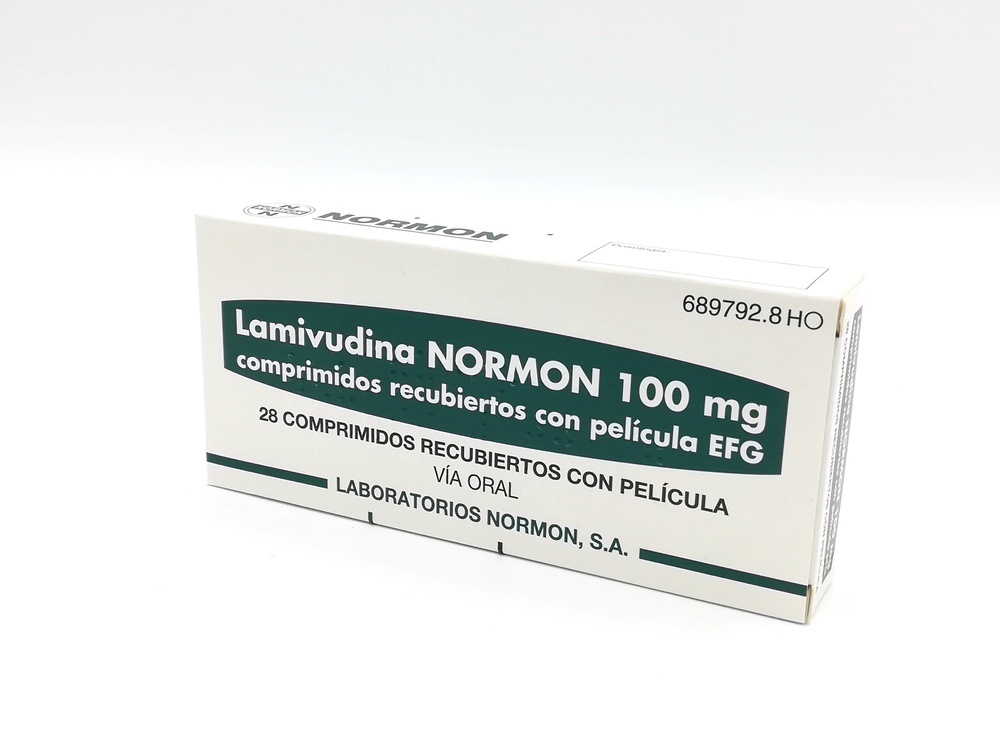
- Country of registration
- Dosage formTABLET, 100 mg
- ATC codeJ05AF05
- Active substance
- Prescription requiredYes
- Manufacturer
- CompositionCARBOXIMETILALMIDON SODICO (3,33 mg mg)
- This information is for reference only and does not constitute medical advice. Always consult a doctor before taking any medication. Oladoctor is not responsible for medical decisions based on this content.
- Alternatives to LAMIVUDINE NORMON 100 mg FILM-COATED TABLETSDosage form: ORAL SOLUTION/SUSPENSION, 10 mgActive substance: lamivudineManufacturer: Viiv Healthcare B.V.Prescription requiredDosage form: TABLET, 150 mgActive substance: lamivudineManufacturer: Viiv Healthcare B.V.Prescription requiredDosage form: TABLET, 150 mgActive substance: lamivudineManufacturer: Viiv Healthcare B.V.Prescription required
Online doctors for LAMIVUDINE NORMON 100 mg FILM-COATED TABLETS
Discuss questions about LAMIVUDINE NORMON 100 mg FILM-COATED TABLETS, including use, safety considerations and prescription review, subject to medical assessment and local regulations.









Get LAMIVUDINE NORMON 100 mg FILM-COATED TABLETS Prescription Online
Fill in a 2-min form
Tell us your symptoms, history, and what medicine you're requesting.
Pick a doctor or let us assign
Choose a specialist or we'll match you with the next available doctor.
Doctor reviews your case
Usually within 30 minutes. They may ask follow-up questions via chat.
Collect from any pharmacy
Electronic prescription sent to your email — valid across Spain.
Frequently Asked Questions
LAMIVUDINE NORMON 100 mg FILM-COATED TABLETS requires a prescription in Spain. You can check with a doctor online whether this medicine may be appropriate for your situation.
The active ingredient in LAMIVUDINE NORMON 100 mg FILM-COATED TABLETS is lamivudine. This information helps identify medicines with the same composition but different brand names.
LAMIVUDINE NORMON 100 mg FILM-COATED TABLETS is manufactured by Laboratorios Normon S.A.. Pharmacy brands and packaging may differ depending on the distributor.
Doctors such as Family doctors, Psychiatrists, Dermatologists, Cardiologists, Endocrinologists, Gastroenterologists, Pulmonologists, Nephrologists, Rheumatologists, Hematologists, Infectious disease physicians, Allergists, Geriatricians, Paediatricians, Oncologists may assess whether LAMIVUDINE NORMON 100 mg FILM-COATED TABLETS is appropriate, depending on your situation and local regulations. You can book an online consultation to discuss your symptoms and possible next steps.
Spain has a well-developed healthcare infrastructure across major cities such as Madrid, Barcelona, Valencia, and Seville. Pharmacies are widely available and operate under strict regulations, ensuring access to prescribed medications.
You can buy LAMIVUDINE NORMON 100 mg FILM-COATED TABLETS in Madrid, Barcelona, Seville, or Valencia at any local pharmacy with a valid prescription.
To obtain a prescription, you can use Oladoctor:
Other medicines with the same active substance (lamivudine) include EPIVIR 10 mg/mL ORAL SOLUTION, EPIVIR 150 MG FILM-COATED TABLETS, EPIVIR 150 MG FILM-COATED TABLETS. These may have different brand names or formulations but contain the same therapeutic ingredient. Always consult a doctor before switching or starting a new medicine.
