


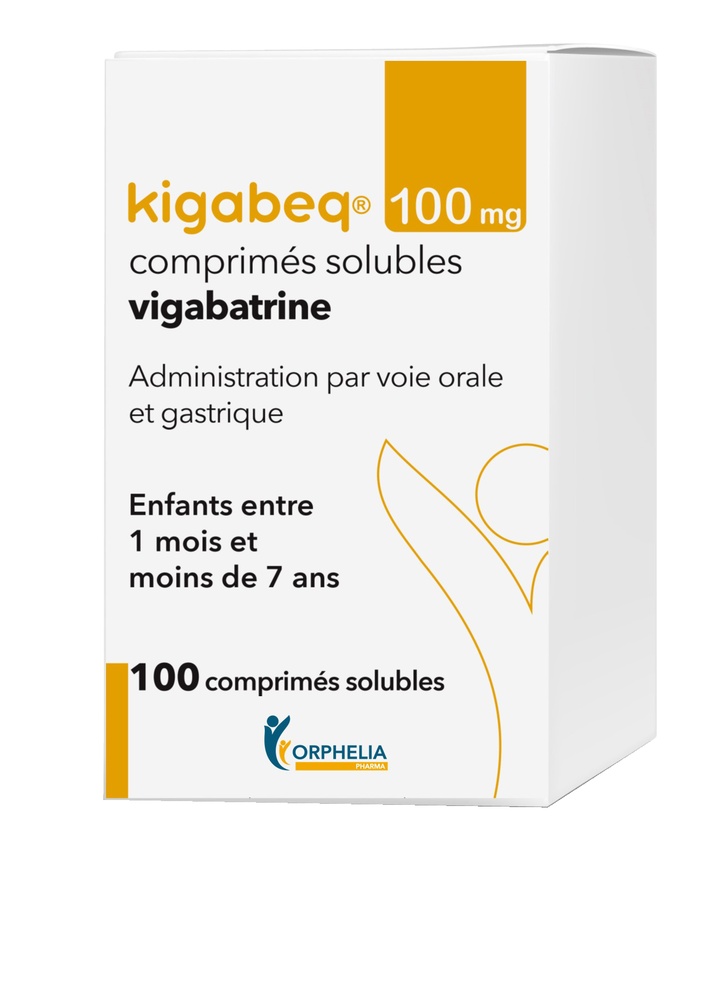
Kigabeq 100 mg soluble comprimidos

Prescription request online
A doctor will review your case and decide whether a prescription is medically appropriate.

Talk to a doctor about this medicine
Discuss your symptoms and possible next steps in a quick online consultation.



How to use KIGABEQ 100 mg SOLUBLE TABLETS
Contents of the leaflet
- Introduction
- What is Kigabeq and what is it used for
- What you need to know before your child starts taking Kigabeq
- How to administer Kigabeq
- Possible side effects
- Storage of Kigabeq
- Package Contents and Additional Information
Introduction
Package Leaflet: Information for the User
Kigabeq 100 mg soluble tablets
For children from 1 month to less than 7 years
Kigabeq 500 mg soluble tablets
For children from 1 month to less than 7 years
vigabatrin
Read all of this leaflet carefully before you start giving this medicine to your child because it contains important information.
- Keep this leaflet, you may need to read it again.
- If you have any further questions, ask your child's doctor or pharmacist.
- This medicine has been prescribed for your child, do not give it to other people even if they have the same symptoms as your child, as it may harm them.
- If your child experiences side effects, consult your child's doctor or pharmacist, even if they are not listed in this leaflet. See section 4.
Contents of the package leaflet
- What is Kigabeq and what is it used for
- What you need to know before your child starts taking Kigabeq
- How to administer Kigabeq
- Possible side effects
- Storage of Kigabeq
- Contents of the pack and further information
1. What is Kigabeq and what is it used for
Kigabeq contains vigabatrin and is used to treat infants and children from 1 month to less than 7 years. It is used to treat infantile spasms (West syndrome) or, together with other epilepsy medications, to treat partial epilepsy that is not well controlled with current treatment.

Not sure if this medicine is right for you?
Discuss your symptoms and treatment with a doctor online.
2. What you need to know before your child starts taking Kigabeq
Do not give Kigabeq:
- if your child is allergic to vigabatrin or any of the other ingredients of this medicine (listed in section 6).
Warnings and precautions
Consult your child's doctor before starting to use Kigabeq if your child:
- has or has had depression or any other psychiatric illness in the past;
- has had kidney problems, as they may experience symptoms such as sedation or confusion;
- has had eye problems.
During treatment with vigabatrin, visual field loss (loss of vision from the edges of your child's field of vision) may occur. You should discuss this possibility with your child's doctor before starting treatment, and the doctor will tell you how to detect this side effect. This visual field loss can be severe and permanent, so it is essential to detect it early to prevent its progression. The worsening of visual field loss may continue after stopping treatment. It is crucial that you inform your child's doctor immediately if there is any change in your child's vision. Your child's doctor will examine your child's visual field before starting vigabatrin and will re-examine it at regular intervals during treatment. |
If your child experiences symptoms such as drowsiness, decreased level of consciousness, and movement (stupor) or confusion, inform your child's doctor, who may reduce the dose of Kigabeq or stop treatment.
A small number of people treated with epilepsy medications like vigabatrin have had thoughts of self-harm or suicide. Be aware of the appearance of symptoms indicating these thoughts: sleep disturbance, decreased appetite or weight, isolation, or loss of interest in favorite activities.
If your child has ever had these symptoms, contact your child's doctor immediately.
Movement disorders may appear in small infants treated for infantile spasms (West syndrome). If you observe unusual movements in your child, inform your child's doctor, who may change the treatment.
Inform your child's doctor if your child is going to have or has had clinical tests, as this medicine may cause abnormal results.
If your child's illness does not improve within a month after starting treatment with vigabatrin, you should consult your child's doctor.
Children
Do not give this medicine to children under 1 month or over 7 years.
Other medicines and Kigabeq
Inform your child's doctor if your child is taking, has recently taken, or may take any other medicine.
Kigabeq should not be used in combination with other medicines that may have eye-related side effects.
Pregnancy and breastfeeding
This medicine is not indicated in women of childbearing age or during breastfeeding.
Driving and using machines
Your child should not ride a bike, climb, or participate in hazardous activities if they experience symptoms such as drowsiness or dizziness with Kigabeq. Visual disturbances that may affect the ability to ride a bike, climb, or participate in hazardous activities have occurred in some patients treated with this medicine.
3. How to administer Kigabeq
Follow the administration instructions of this medicine indicated by your child's doctor exactly. In case of doubt, consult your child's doctor or pharmacist again.
Dose
Never change the dose yourself. Your child's doctor will calculate the individual dose for your child based on their body weight.
Kigabeq is available in 100 mg or 500 mg tablets, which can be administered in combination to achieve the appropriate dose for your child. Always check the label and tablet size to ensure you are administering the correct dose.
In infantile spasms (West syndrome), the recommended initial dose is 50 mg per kilogram of body weight per day. In partial epilepsy (focal onset seizures), the recommended initial dose is 40 mg per kilogram per day. Your child's doctor will adjust the dose during treatment as necessary. If your child has kidney problems, the doctor may prescribe a lower dose.
The following table indicates the number of Kigabeq tablets to administer to your child according to the dose prescribed by your child's doctor.
Dose (mg per day) | Number of tablets (concentration) Morning | Number of tablets (concentration) Evening |
150 | Half a tablet (100 mg) | One tablet (100 mg) |
200 | One tablet (100 mg) | One tablet (100 mg) |
250 | One tablet (100 mg) | One and a half tablets (100 mg) |
300 | One and a half tablets (100 mg) | One and a half tablets (100 mg) |
350 | One and a half tablets (100 mg) | Two tablets (100 mg) |
400 | Two tablets (100 mg) | Two tablets (100 mg) |
450 | Two tablets (100 mg) | Two and a half tablets (100 mg) |
500 | Half a tablet (500 mg) or two and a half tablets (100 mg) | Half a tablet (500 mg) or two and a half tablets (100 mg) |
550 | Two and a half tablets (100 mg) | Three tablets (100 mg) |
600 | Three tablets (100 mg) | Three tablets (100 mg) |
650 | Three tablets (100 mg) | Three and a half tablets (100 mg) |
700 | Three and a half tablets (100 mg) | Three and a half tablets (100 mg) |
750 | Half a tablet (500 mg) | One tablet (500 mg) |
800 | Four tablets (100 mg) | Four tablets (100 mg) |
850 | Four tablets (100 mg) | Four and a half tablets (100 mg) |
900 | Four and a half tablets (100 mg) | Four and a half tablets (100 mg) |
950 | Four and a half tablets (100 mg) | One tablet (500 mg) |
1,000 | One tablet (500 mg) | One tablet (500 mg) |
1,100 | One tablet (500 mg) | One tablet (500 mg) and one tablet (100 mg) |
1,200 | One tablet (500 mg) and one tablet (100 mg) | One tablet (500 mg) and one tablet (100 mg) |
1,300 | One tablet (500 mg) and one tablet (100 mg) | One tablet (500 mg) and one tablet (100 mg) |
1,400 | One tablet (500 mg) and one tablet (100 mg) | One tablet (500 mg) and one tablet (100 mg) |
1,500 | One and a half tablets (500 mg) | One and a half tablets (500 mg) |
How to administer this medicine
Ask your child's doctor to show you how to administer this medicine. In case of doubt, consult your child's doctor or pharmacist again.
Kigabeq is administered orally and can be taken before or after meals. The tablet can be divided into two equal halves.
Use only water to prepare the solution.
- Pour one or two teaspoons (approximately 5-10 ml) of water into a glass of water or cup.
- Add the correct dose of Kigabeq tablets (whole or half tablets) to the water.
- Wait for the tablet to dissolve completely. This takes less than a minute, but you can speed it up by gently shaking the mixture.
- The mixture will be whitish and cloudy. This is normal, and the cloudiness is due to some inactive ingredients that do not dissolve completely.
- Give the mixture to your child immediately from the glass of water or cup.
- If your child cannot drink from the glass of water or cup, you can use an oral syringe to slowly administer the mixture into your child's mouth, being careful not to choke: sit directly in front of and below your child so that they have their head tilted forward and administer the mixture against their cheek.
- Rinse the glass of water or cup with one or two teaspoons (approximately 5-10 ml) of water and administer the resulting solution to your child to ensure they receive all the medicine.
- If your child cannot swallow, the mixture can be administered through a gastric tube using a suitable syringe. The tube should be rinsed with 10 ml of water.
If your child takes too much Kigabeq
If your child accidentally takes too many Kigabeq tablets, inform your child's doctor or go to the hospital or nearest poison control center immediately. Possible signs of overdose are drowsiness or decreased level of consciousness.
If you forget to administer Kigabeq to your child
If you forget to administer a dose to your child, give it to them as soon as you remember. If it is almost time for the next dose, simply give one dose. Do not give a double dose to make up for missed doses.
If you stop treating your child with Kigabeq
Do not stop treating your child with this medicine without consulting your child's doctor first. If the doctor decides to stop treatment, they will advise you to gradually reduce the dose. Do not stop treatment abruptly, as this may cause your child's seizures to return.
If you have any other questions about the use of this medicine, ask your child's doctor or pharmacist.

Started taking the medicine and have questions?
Discuss your symptoms and treatment with a doctor online.
4. Possible side effects
Like all medicines, this medicine can cause side effects, although not everybody gets them.
Some patients may have more seizures (attacks) during treatment with Kigabeq. If this happens, contact your child's doctor immediately.
Serious side effects
Consult a doctor immediately if your child experiences the following side effects:
Very common side effects (may affect more than 1 in 10 people)
- Visual field defects: around 33 out of 100 patients treated with vigabatrin may experience visual field defects (narrowing of the visual field). This visual field defect can range from mild to severe. It is usually detected after months or years of treatment with vigabatrin. The changes in the visual field can be permanent, so it is essential to detect them early to prevent their progression. If your child experiences visual disturbances, contact their doctor immediately.
Other side effects are:
Very common side effects (may affect more than 1 in 10 people)
- excitement or restlessness
- fatigue and pronounced drowsiness
- joint pain
Common side effects (may affect up to 1 in 10 people)
- headache
- weight gain
- shakiness (tremor)
- swelling (edema)
- dizziness
- numbness or tingling
- decreased concentration and memory
- psychological problems including agitation, aggression, nervousness, irritability, depression, thought disorder, and suspicion without reason (paranoia) and insomnia. These side effects usually disappear when the dose of vigabatrin is reduced or the medicine is gradually stopped. However, do not reduce the dose without consulting your child's doctor first. Contact your child's doctor if your child experiences these psychological effects.
- nausea (general discomfort), vomiting, and abdominal pain
- blurred vision, double vision, and uncontrolled eye movement, which can cause dizziness
- speech disorder
- decreased red blood cell count (anemia)
- hair loss (alopecia)
Uncommon side effects (may affect up to 1 in 100 people)
- lack of coordination or clumsy movements
- more severe psychological problems such as feeling euphoric or overexcited, leading to unusual behavior, and feeling unreal
- skin rash
Rare side effects (may affect up to 1 in 1,000 people)
- severe allergic reaction, which causes swelling of the face or throat. If your child has these symptoms, they must inform their doctor immediately.
- hives
- severe sedation (drowsiness), stupor, and confusion (encephalopathy). These side effects usually disappear when the dose is reduced or the medicine is gradually stopped. However, do not reduce the dose without consulting your child's doctor first. Contact your child's doctor if your child experiences these effects.
- suicidal thoughts
- other eye problems such as retinal disorders, which cause, for example, poor night vision and difficulty adapting to bright or dim light, sudden and unexplained loss of vision, sensitivity to light
Very rare side effects (may affect up to 1 in 10,000 people)
- other eye problems such as eye pain (optic neuritis) and vision loss, including color vision (optic atrophy)
- hallucinations (feeling, seeing, or hearing things that are not there)
- liver problems
Frequency not known (cannot be estimated from the available data)
- movement disorders and abnormalities in brain magnetic resonance images in small infants treated for infantile spasms
- swelling in the protective layer of nerve cells in part of the brain as seen in magnetic resonance images, especially in infants
- severe vision loss
Reporting side effects
If your child experiences side effects, consult your child's doctor or pharmacist, even if they are not listed in this leaflet. You can also report them directly through the national reporting system included in Appendix V. By reporting side effects, you can help provide more information on the safety of this medicine.
5. Storage of Kigabeq
Keep this medicine out of the sight and reach of children.
Do not use this medicine after the expiry date stated on the carton and bottle. The expiry date is the last day of the month stated.
This medicine must be used within 100 days of first opening.
This medicine does not require any special storage conditions.
After preparation, the solution should be administered immediately.
Medicines should not be disposed of via wastewater or household waste. Ask your pharmacist how to dispose of medicines no longer required. This will help protect the environment.
6. Package Contents and Additional Information
Kigabeq Composition
- The active ingredient is vigabatrin.
- One soluble tablet of Kigabeq 100 mg contains 100 mg of vigabatrin.
- One soluble tablet of Kigabeq 500 mg contains 500 mg of vigabatrin.
- The other components are: crospovidone type B, mannitol, and sodium stearyl fumarate.
Product Appearance and Package Contents
Kigabeq are soluble tablets, white, oval, and scored.
Size of 100 mg tablets: 9.4 mm x 5.3 mm
Size of 500 mg tablets: 16.0 mm x 9.0 mm
The aqueous solution is whitish and turbid.
Package sizes:
Kigabeq 100 mg is available in packages of 100 soluble tablets.
Kigabeq 500 mg is available in packages of 50 soluble tablets.
Marketing Authorization Holder
ORPHELIA Pharma SAS
85 boulevard Saint-Michel
75005 PARIS
France
Manufacturer
FARMEA
10 rue Bouché-Thomas ZAC d'Orgemont
49000 Angers
France
Centre Spécialités Pharmaceutiques
76-78 avenue du Midi
63800 Cournon d’Auvergne
France
Biocodex
1 avenue Blaise Pascal
60000 Beauvais
France
You can request more information about this medication by contacting the local representative of the marketing authorization holder:
België/Belgique/Belgien Biocodex 7 avenue Gallieni F-94250 Gentilly Tel: + 33 (0)1 41 24 30 00 e-mail: [email protected] | Lietuva ORPHELIA Pharma SAS Tel: + 33 1 42 77 08 18 |
Biocodex 7 avenue Gallieni F-94250 Gentilly Tel: + 33 (0)1 41 24 30 00 e-mail: [email protected] | Luxembourg/Luxemburg ORPHELIA Pharma SAS Tél/Tel: + 33 1 42 77 08 18 |
Ceská republika ORPHELIA Pharma SAS Tel: + 33 1 42 77 08 18 | Magyarország Biocodex 7 avenue Gallieni F-94250 Gentilly Tel: + 33 (0)1 41 24 30 00 e-mail: [email protected] |
Danmark Biocodex Oy Metsänneidonkuja 8 FI-02130 Espoo Tel: +358 9 329 59100 e-mail: [email protected] | Malta ORPHELIA Pharma SAS Tel: + 33 1 42 77 08 18 |
Deutschland Desitin Arzneimittel GmbH Weg beim Jäger 214 D-22335 Hamburg Tel.: +49 (0) 40 591 01 0 E-Mail: [email protected] | Nederland Biocodex 7 avenue Gallieni F-94250 Gentilly Tel: + 33 (0)1 41 24 30 00 e-mail: [email protected] |
Eesti ORPHELIA Pharma SAS Tel: + 33 1 42 77 08 18 | Norge Biocodex AS C/O regus Lysaker Lysaker Torg 5, 3 etg NO-1366 Lysaker Tel: +47 66 90 55 66 e-mail: [email protected] |
Ελλáδα Biocodex 7 avenue Gallieni F-94250 Gentilly Tel: + 33 (0)1 41 24 30 00 e-mail: [email protected] | Österreich ORPHELIA Pharma SAS Tel: + 33 1 42 77 08 18 |
España Biocodex 7 avenue Gallieni F-94250 Gentilly Tel: + 33 (0)1 41 24 30 00 e-mail: [email protected] | Polska Biocodex 7 avenue Gallieni F-94250 Gentilly Tel: + 33 (0)1 41 24 30 00 e-mail: [email protected] |
France Biocodex 7 avenue Gallieni F-94250 Gentilly Tel: + 33 (0)1 41 24 30 00 e-mail: [email protected] | Portugal Biocodex 7 avenue Gallieni F-94250 Gentilly Tel: + 33 (0)1 41 24 30 00 e-mail: [email protected] |
Hrvatska ORPHELIA Pharma SAS Tel: + 33 1 42 77 08 18 | Ireland ORPHELIA Pharma SAS Tel: + 33 1 42 77 08 18 |
România ORPHELIA Pharma SAS Tel: + 33 1 42 77 08 18 | Slovenija ORPHELIA Pharma SAS Tel: + 33 1 42 77 08 18 |
Ísland ORPHELIA Pharma SAS Sími: + 33 1 42 77 08 18 | Slovenská republika ORPHELIA Pharma SAS Tel: + 33 1 42 77 08 18 |
Italia Biocodex 7 avenue Gallieni F-94250 Gentilly Tel: + 33 (0)1 41 24 30 00 e-mail: [email protected] | Suomi/Finland Biocodex Oy Metsänneidonkuja 8 FI-02130 Espoo Tel: +358 9 329 59100 e-mail: [email protected] |
Κúπρος ORPHELIA Pharma SAS Τηλ: + 33 1 42 77 08 18 | Sverige Biocodex AB Knarrnäsgatan 7 SE-164 40 Kista Tel: +46 8 615 2760 e-mail: [email protected] |
Latvija ORPHELIA Pharma SAS Tel: + 33 1 42 77 08 18 | United Kingdom (Northern Ireland) VERITON PHARMA LTD Tel: + 44 (0) 1932 690 325 Fax: +44 (0) 1932 341 091 Web: www.veritonpharma.com |
Date of the Last Revision of this Prospectus: {month YYYY}
Other Sources of Information
Detailed information about this medication is available on the website of the European Medicines Agency: http://www.ema.europa.eu.
- Country of registration
- Dosage formTABLET, 100 mg
- ATC codeN03AG04
- Active substance
- Prescription requiredYes
- Manufacturer
- CompositionMANITOL (E-421) (12,55 mg mg), FUMARATO DE ESTEARILO Y SODIO (1,90 mg mg)
- This information is for reference only and does not constitute medical advice. Always consult a doctor before taking any medication. Oladoctor is not responsible for medical decisions based on this content.
- Alternatives to KIGABEQ 100 mg SOLUBLE TABLETSDosage form: TABLET, 500 mgActive substance: vigabatrinManufacturer: Orphelia PharmaPrescription requiredDosage form: TABLET, 500 mgActive substance: vigabatrinManufacturer: Sanofi Aventis S.A.Prescription requiredDosage form: ORAL SOLUTION/SUSPENSION, 500 mgActive substance: vigabatrinManufacturer: Sanofi Aventis S.A.Prescription required
Online doctors for KIGABEQ 100 mg SOLUBLE TABLETS
Discuss questions about KIGABEQ 100 mg SOLUBLE TABLETS, including use, safety considerations and whether a prescription is appropriate, subject to medical assessment and local regulations.




Frequently Asked Questions
KIGABEQ 100 mg SOLUBLE TABLETS requires a prescription in Spain. You can check with a doctor online whether this medicine may be appropriate for your situation.
The active ingredient in KIGABEQ 100 mg SOLUBLE TABLETS is vigabatrin. This information helps identify medicines with the same composition but different brand names.
KIGABEQ 100 mg SOLUBLE TABLETS is manufactured by Orphelia Pharma. Pharmacy brands and packaging may differ depending on the distributor.
Doctors such as Family doctors, Psychiatrists, Dermatologists, Cardiologists, Endocrinologists, Gastroenterologists, Pulmonologists, Nephrologists, Rheumatologists, Hematologists, Infectious disease physicians, Allergists, Geriatricians, Paediatricians, Oncologists may assess whether KIGABEQ 100 mg SOLUBLE TABLETS is appropriate, depending on your situation and local regulations. You can book an online consultation to discuss your symptoms and possible next steps.
The prescription is issued by a doctor after assessing your health. In Spain, KIGABEQ 100 mg SOLUBLE TABLETS is then dispensed in pharmacies with that prescription. An online consultation does not guarantee that a prescription will be issued: the decision always rests with the doctor.
To request an assessment, you can use Oladoctor:
Other medicines with the same active substance (vigabatrin) include KIGABEQ 500 mg SOLUBLE TABLETS, SABRILEX 500 mg FILM-COATED TABLETS, SABRILEX 500 mg ORAL SOLUTION GRANULES. These may have different brand names or formulations but contain the same therapeutic ingredient. Always consult a doctor before switching or starting a new medicine.
