






How to use JULUCA 50 mg/25 mg FILM-COATED TABLETS
Translated with AI
This page provides general information and does not replace a doctor’s consultation. Always consult a doctor before taking any medication. Seek urgent medical care if symptoms are severe.
Show originalContents of the leaflet
Introduction
Patient Information: Summary of Product Characteristics
Juluca 50 mg/25 mg film-coated tablets
dolutegravir/rilpivirine
Read all of this leaflet carefully before you start taking this medicine because it contains important information for you.
- Keep this leaflet, you may need to read it again.
- If you have any further questions, ask your doctor or pharmacist.
- This medicine has been prescribed for you only. Do not pass it on to others. It may harm them, even if their signs of illness are the same as yours.
- If you get any side effects, talk to your doctor or pharmacist. This includes any possible side effects not listed in this leaflet. See section 4.
Contents of the pack and other information
- What is Juluca and what is it used for
- What you need to know before you take Juluca
- How to take Juluca
- Possible side effects
- Storage of Juluca
- Contents of the pack and other information
1. What is Juluca and what is it used for
Juluca is a medicine that contains two active substances used to treat human immunodeficiency virus (HIV-1) infection: dolutegravir and rilpivirine. Dolutegravir belongs to a group of antiretroviral medicines called integrase inhibitors (INI) and rilpivirine belongs to a group of antiretroviral medicines called non-nucleoside reverse transcriptase inhibitors (NNRTI).
Juluca is used to treat HIV-1 infection in adults aged 18 years and over who are taking other antiretrovirals and whose HIV-1 infection is under control for at least 6 months. Juluca may replace your current antiretroviral medicines.
Juluca keeps the amount of HIV-1 virus in your body at a low level. This helps to keep the number of CD4 cells in your blood at a normal level. CD4 cells are a type of white blood cell that is important for helping your body to fight infections.

2. What you need to know before you take Juluca
Do not take Juluca:
- if you are allergic to dolutegravir or rilpivirine or any of the other ingredients of this medicine (listed in section 6).
Do not take Juluca if you are taking any of the following medicinesas they may affect how Juluca works:
- fampridine (also known as dalfampridine; used to treat multiple sclerosis)
- carbamazepine, oxcarbazepine, phenobarbital, phenytoin (medicines used to treat epilepsy and to prevent seizures)
- rifampicin, rifapentine (medicines used to treat some bacterial infections, such as tuberculosis)
- omeprazole, esomeprazole, lansoprazole, pantoprazole, rabeprazole (medicines used to prevent and treat stomach ulcers, heartburn or reflux)
- dexamethasone (a corticosteroid used in many conditions such as inflammation and allergic reactions) when taken by mouth or injected, except as a single dose treatment
- products that contain St John’s Wort (Hypericum perforatum) (a plant used for depression).
If you are taking any of these, consult your doctor about alternatives.
Warnings and precautions
Consult your doctor or pharmacist before you start taking this medicine.
Allergic reactions
Juluca contains dolutegravir. Dolutegravir may cause a severe allergic reaction known as hypersensitivity reaction. You need to know the important signs and symptoms to look out for while you are taking Juluca.
- Read the informationon “Allergic reactions” in section 4 of this leaflet.
Liver problems including hepatitis B and/or C
Tell your doctor if you have or have had liver problems, including hepatitis B and/or C. Your doctor will assess the severity of your liver disease before deciding if you can take this medicine.
Be aware of important symptoms
Some people who take medicines for HIV infection develop other conditions, which can be serious. These include:
- symptoms of infections and inflammation
- joint pain, stiffness and bone problems.
You need to know which important signs and symptoms to look out for while you are taking Juluca.
- Read the information on “Other possible side effects” in section 4 of this leaflet.
Children and adolescents
This medicine must not be used in children or adolescents under 18 years of age, as it has not been studied in these patients.
Other medicines and Juluca
Tell your doctor if you are taking, have recently taken or might take any other medicines.
Julucamust not be takenwith some other medicines (see “Do not take Juluca” in section 2):
Some medicines may affect how Juluca works, or increase the chance of you having side effects. Juluca may also affect how some other medicines work.
Tell your doctorif you are taking any of the following medicines:
- metformin, for diabetes
- medicines that can cause irregular heartbeats that can be life-threatening (Torsades de Pointes). Since there are several medicines that can cause this, you should ask your doctor or pharmacist if you are not sure
- medicines called antacids, for indigestion and heartburn. Do not take an antacidduring the 6 hours before taking Juluca, or at least 4 hours after taking it (see also section 3 “How to take Juluca”)
- calcium supplements, iron supplements and multivitamin preparationsshould be taken at the same time as Juluca with a meal. If you cannot take them at the same time as Juluca, do not take a calcium supplement, iron supplement or multivitamin preparationduring the 6 hours before taking Juluca or until at least 4 hours after taking it (see also section 3 “How to take Juluca”)
- medicines called H2 receptor antagonists(e.g. cimetidine, famotidine, nizatidine, ranitidine) for stomach or intestinal ulcers or used to relieve heartburn due to reflux. Do not take these medicinesduring the 12 hours before taking Juluca or at least 4 hours after taking it (see also section 3 “How to take Juluca”)
- any medicine for HIV infection
- rifabutin for tuberculosis (TB) and other bacterial infections. If you take rifabutin, your doctor may need to give you an additional dose of rilpivirine to treat your HIV infection (see section 3 “How to take Juluca”)
- artemether/lumefantrine to prevent malaria
- clarithromycin and erythromycin, for bacterial infections
- methadone, for opioid dependence
- dabigatran etexilate, used to treat or prevent blood clots.
- Tell your doctor or pharmacistif you are taking any of these medicines. Your doctor may decide that you need extra check-ups.
Pregnancy
If you are pregnant, think you may be pregnant or are planning to have a baby:
Juluca is not recommended.Consult your doctorfor advice.
Tell your doctor immediately if you become pregnant or are planning to become pregnant. Your doctor will review your treatment. Do not stop taking Juluca without talking to your doctor first, as this may harm you and your baby.
Breast-feeding
It is not recommendedthat HIV-infected women breast-feed their babies because HIV infection can be passed to the baby through breast milk.
A small amount of the component, dolutegravir, in Juluca may pass into breast milk. It is not known if the other component, rilpivirine, can pass into breast milk.
If you are breast-feeding or thinking of breast-feeding consult your doctor as soon as possible.
Driving and using machines
Juluca may make you feel dizzy, tired or sleepy and have other effects that may affect your ability to pay attention.
- Do not drive or use machines unless you are sure that you are not affected.
Juluca contains lactose
If you have been told by your doctor that you have an intolerance to some sugars, contact your doctor before taking this medicine.
3. How to take Juluca
Always take this medicine exactly as your doctor has told you. Check with your doctor or pharmacist if you are not sure.
- The recommended dose of Juluca is one tabletonce a day.Juluca must be taken with a meal. It is important to take it with food to achieve the correct levels of medicine in your body. A nutritional drink alone with a high protein content does not replace a meal.
- Do not chew, crush or split the tablet to ensure that you take the full dose.
Rifabutin
Rifabutin, a medicine used to treat some bacterial infections, may decrease the amount of Juluca in your body and may make it less effective.
If you take rifabutin, your doctor may need to give you an additional dose of rilpivirine. Take the rilpivirine tablet at the same time as you take Juluca.
- Consult your doctor for advice on taking rifabutin with Juluca.
Antacids
Antacids, used to treat indigestion and heartburn, may interfere with the absorption of Juluca in your body and make it less effective.
Do not take an antacid during the 6 hours before taking Juluca, or at least 4 hours after taking it.
- Consult your doctor for advice on taking antacids with Juluca.
Calcium supplements, iron supplements or multivitamin preparations
Calcium supplements, iron supplements or multivitamin preparations may interfere with the absorption of Juluca in your body and make it less effective.
Calcium supplements, iron supplements or multivitamin preparations should be taken at the same time as Juluca with a meal. Juluca must be taken with a meal.
If you cannot take these supplements at the same time as Juluca, do not take calcium supplements, iron supplements or multivitamin preparations during the 6 hours before taking Juluca or until at least 4 hours after taking it.
- Consult your doctor for advice on taking calcium supplements, iron supplements or multivitamin preparations with Juluca.
H2 receptor antagonists (e.g. cimetidine, famotidine, nizatidine, ranitidine)
H2 receptor antagonists may interfere with the absorption of Juluca in your body and make it less effective. Do not take these medicines during the 12 hours before taking Juluca or at least 4 hours after taking it.
- Consult your doctor for advice on taking these medicines with Juluca.
If you take more Juluca than you should
If you take more Juluca than you should, contact your doctor or pharmacist immediately. If possible, show them the Juluca pack.
If you forget to take Juluca
If you realise that you have missed a dose before 12 hours have passed since you would normally have taken Juluca, take it as soon as possible. The Juluca tablet should be taken with a meal, and then take the next at the usual time. If more than 12 hours have passed since you would normally have taken Juluca, skip the missed dose and take the next at the usual time.
- Do not take a double doseto make up for a forgotten dose.
If you vomit within 4 hours after taking Juluca, take another tablet with a meal. If you vomit more than 4 hours after taking Juluca, you do not need to take another tablet until your next dose.
Do not stop taking Juluca
Take this medicine for as long as your doctor tells you. Do not stop taking it unless your doctor tells you to.
If you have any further questions on the use of this medicine, ask your doctor or pharmacist.

4. Possible Adverse Effects
Like all medicines, this medicine can cause adverse effects, although not all people suffer from them. Therefore, it is very important that you inform your doctor about any change that occurs in your health.
Allergic Reactions
Juluca contains dolutegravir. Dolutegravir can cause a severe allergic reaction known as hypersensitivity reaction. This is a rare reaction (it can affect up to 1 in 100 people) that takes dolutegravir. If you have any of the following symptoms:
- skin rash
- high temperature (fever)
- lack of energy (fatigue)
- swelling, sometimes of the face or mouth (angioedema), causing difficulty breathing
- muscle or joint pain.
- Go to a doctor immediately.Your doctor may consider it necessary to perform tests to check your liver, kidneys, or blood and may indicate that you stop taking Juluca.
Very Common Adverse Effects
These can affect more than 1 in 10people:
- headache
- dizziness
- diarrhea
- nausea
- difficulty sleeping (insomnia).
Very common adverse effects that may appear in your blood tests are:
- increase in liver enzyme levels (transaminases)
- increase in cholesterol
- increase in pancreatic amylase (a digestive enzyme).
Common Adverse Effects
These can affect up to 1 in 10people:
- decreased appetite
- rash
- itching (pruritus)
- nausea (vomiting)
- stomach pain or discomfort (abdominal pain)
- weight gain
- gas (flatulence)
- drowsiness
- sleep disorders
- abnormal dreams
- lack of energy (fatigue)
- depression (feeling of deep sadness and lack of self-esteem)
- depressed mood
- anxiety
- dry mouth.
Common adverse effects that may appear in your blood tests are:
- increase in muscle enzyme levels (creatine phosphokinase)
- decrease in platelet count (involved in blood clotting)
- decreased white blood cell count
- decrease in hemoglobin
- increase in triglycerides (a type of fat)
- increase in lipase (an enzyme involved in fat digestion)
- increase in bilirubin (liver function test) in your blood.
Uncommon Adverse Effects
These can affect up to 1 in 100 people:
- allergic reaction (hypersensitivity) (see "allergic reactions" above in this section)
- liver inflammation (hepatitis)
- suicidal thoughts and behaviors (especially in patients who have previously had depression or mental health problems)
- anxiety crisis
- joint pain
- muscle pain.
Rare Adverse Effects
These can affect up to 1 in 1,000 people:
- liver failure (signs may include yellowing of the skin and whites of the eyes or abnormally dark urine)
- suicide (especially in patients who have previously had depression or mental health problems).
- Tell your doctor immediatelyif you experience any mental health problems (see also other mental health problems mentioned above)
Adverse Effects of Unknown Frequency
The frequency cannot be estimated from the available data:
- signs or symptoms of inflammation or infection, such as fever, chills, sweats (immune reactivation syndrome).
Other Possible Adverse Effects
People taking combined treatment for HIV may have other adverse effects.
Symptoms of Infection and Inflammation
People with advanced HIV infection (AIDS) have a weakened immune system and are more likely to develop serious infections (opportunistic infections). Symptoms of infection can develop, caused by old and hidden infections, which worsen when the body fights them. Symptoms usually include fever, as well as some of the following:
- headache
- stomach pain
- difficulty breathing.
In rare cases, as the immune system becomes stronger, it can also attack healthy tissues (autoimmune disorders). The symptoms of autoimmune disorders can appear many months after starting to take medications to treat your HIV infection. Symptoms can include:
- palpitations (rapid or irregular heartbeats) or tremors
- hyperactivity (excessive restlessness and movement)
- weakness that starts in the hands and feet and moves up to the trunk of the body.
If you have any symptoms of infectionor if you notice any of the above symptoms:
- Consult your doctor immediately. Do not take other medications for the infection without consulting your doctor first.
Pain in the Joints, Stiffness, and Bone Problems
Some people on combined HIV treatment develop osteonecrosis. In this condition, parts of the bone tissue die due to reduced blood supply to the bones. People may be more prone to this condition:
Signs of osteonecrosis include:
- stiffness in the joints
- discomfort and pain in the joints (especially in the hip, knee, or shoulder)
- difficulty moving.
If you notice any of these symptoms:
- Tell your doctor.
Effects on Weight, Lipids, and Blood Glucose
During HIV treatment, there may be an increase in weight and lipid and glucose levels in the blood. This is partly related to the recovery of health and lifestyle, and sometimes to the HIV medications themselves. Your doctor will assess these changes.
Reporting Adverse Effects
If you experience any type of adverse effect, consult your doctor or pharmacist, even if it is a possible adverse effect that is not listed in this leaflet. You can also report them directly through the national reporting system included in Appendix V. By reporting adverse effects, you can contribute to providing more information on the safety of this medicine.
5. Storage of Juluca
Keep this medicine out of the sight and reach of children.
Do not use this medicine after the expiration date that appears on the packaging and bottle after CAD. The expiration date is the last day of the month indicated.
Store in the original packaging to protect it from moisture. Keep the bottle tightly closed. Do not remove the desiccant.
This medicine does not require any special storage temperature.
Medicines should not be disposed of through wastewater or household waste. Ask your pharmacist how to dispose of the packaging and any unused medicine. This will help protect the environment.
6. Package Contents and Additional Information
Juluca Composition
- The active ingredients are dolutegravir and rilpivirine. Each tablet contains dolutegravir sodium equivalent to 50 mg of dolutegravir and rilpivirine hydrochloride equivalent to 25 mg of rilpivirine.
- The other ingredients are mannitol (E421), magnesium stearate, microcrystalline cellulose, povidone (K29/32), sodium carboxymethylcellulose, fumaric acid, sodium stearyl fumarate, lactose monohydrate, croscarmellose sodium, povidone (K30), polysorbate 20, silicified microcrystalline cellulose, partially hydrolyzed polyvinyl alcohol, titanium dioxide (E171), macrogol, talc, yellow iron oxide (E172), red iron oxide (E172). See "Do not take Juluca" and "Juluca contains lactose" in section 2.
- This medicine contains less than 1 mmol of sodium (23 mg) per tablet; it is essentially "sodium-free".
Product Appearance and Package Contents
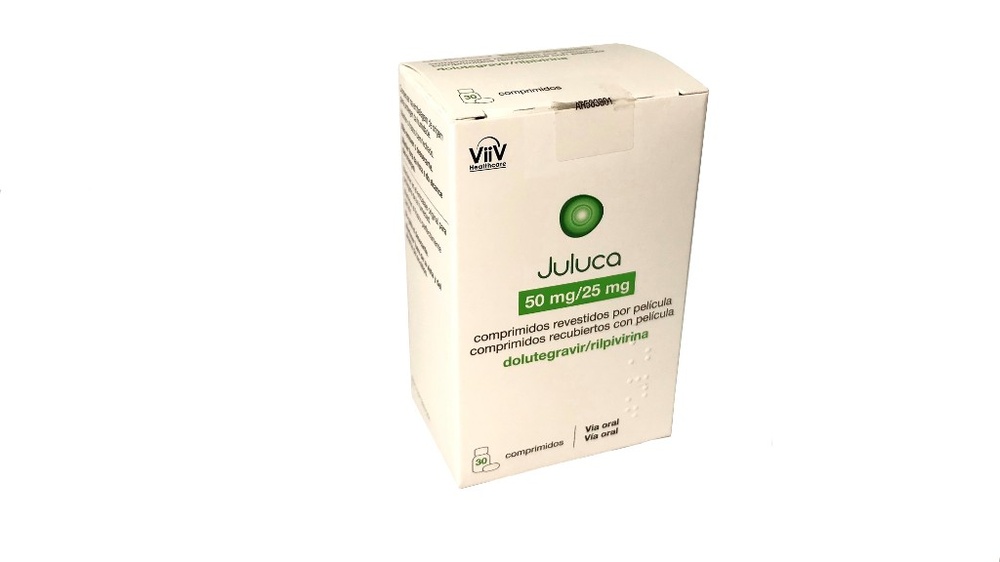
Juluca film-coated tablets are pink, oval, biconvex, and engraved with "SV J3T" on one side.
The film-coated tablets are presented in child-resistant closure bottles.
Each bottle contains 30 film-coated tablets and a desiccant to reduce moisture. Once the bottle is opened, keep the desiccant in it, do not remove it.
Multiple packs with 90 film-coated tablets (3 bottles of 30 film-coated tablets) are also available.
Not all pack sizes may be marketed.
Marketing Authorization Holder
ViiV Healthcare BV
Van Asch van Wijckstraat 55H
3811 LP Amersfoort
Netherlands
Manufacturer
Glaxo Wellcome, S.A.
Avda. Extremadura, 3
09400 Aranda de Duero
Burgos
Spain
You can request more information about this medicine by contacting the local representative of the marketing authorization holder:
Belgium ViiV Healthcare srl/bv Tel: + 32 (0) 10 85 65 00 | Lithuania ViiV Healthcare BV Tel: +370 80000334 |
| Luxembourg ViiV Healthcare srl/bv Belgium Tel: + 32 (0) 10 85 65 00 |
Czech Republic GlaxoSmithKline, s.r.o. Tel: + 420 222 001 111 | Hungary ViiV Healthcare BV Tel.: +36 80088309 |
Denmark GlaxoSmithKline Pharma A/S Tlf.: + 45 36 35 91 00 | Malta ViiV Healthcare BV Tel: +356 80065004 |
Germany ViiV Healthcare GmbH Tel.: + 49 (0)89 203 0038-10 | Netherlands ViiV Healthcare BV Tel: + 31 (0) 33 2081199 |
Estonia ViiV Healthcare BV Tel: +372 8002640 | Norway GlaxoSmithKline AS Tlf: + 47 22 70 20 00 |
Greece GlaxoSmithKline Μονοπρ?σωπη A.E.B.E. Τηλ: + 30 210 68 82 100 | Austria GlaxoSmithKline Pharma GmbH Tel: + 43 (0)1 97075 0 |
Spain Laboratorios ViiV Healthcare, S.L. Tel: + 34 900 923 501 | Poland GSK Services Sp. z o.o. Tel.: + 48 (0)22 576 9000 |
France ViiV Healthcare SAS Tél.: + 33 (0)1 39 17 69 69 | Portugal VIIVHIV HEALTHCARE, UNIPESSOAL, LDA Tel: + 351 21 094 08 01 |
Croatia ViiV Healthcare BV Tel: +385 800787089 | Romania ViiV Healthcare BV Tel: +40 800672524 |
Ireland GlaxoSmithKline (Ireland) Limited Tel: + 353 (0)1 4955000 | Slovenia ViiV Healthcare BV Tel: +386 80688869 |
Iceland Vistor hf. Sími: +354 535 7000 | Slovak Republic ViiV Healthcare BV Tel: +421 800500589 |
Italy ViiV Healthcare S.r.l Tel: + 39 (0)45 7741600 | Finland GlaxoSmithKline Oy Puh/Tel: + 358 (0)10 30 30 30 |
Cyprus ViiV Healthcare BV Τηλ: +357 80070017 | Sweden GlaxoSmithKline AB Tel: + 46 (0)8 638 93 00 |
Latvia ViiV Healthcare BV Tel: +371 80205045 | United Kingdom(Northern Ireland) ViiV Healthcare BV Tel: + 44 (0)800 221441 |
Date of the Last Revision of this Leaflet:
Other Sources of Information
Detailed information about this medicine is available on the European Medicines Agency website: https://www.ema.europa.eu.
-

- Country of registration
- Dosage formTABLET, 50 - REVIEW mg
- ATC codeJ05AR21
- Active substance
- Prescription requiredYes
- Manufacturer
- This information is for reference only and does not constitute medical advice. Always consult a doctor before taking any medication. Oladoctor is not responsible for medical decisions based on this content.
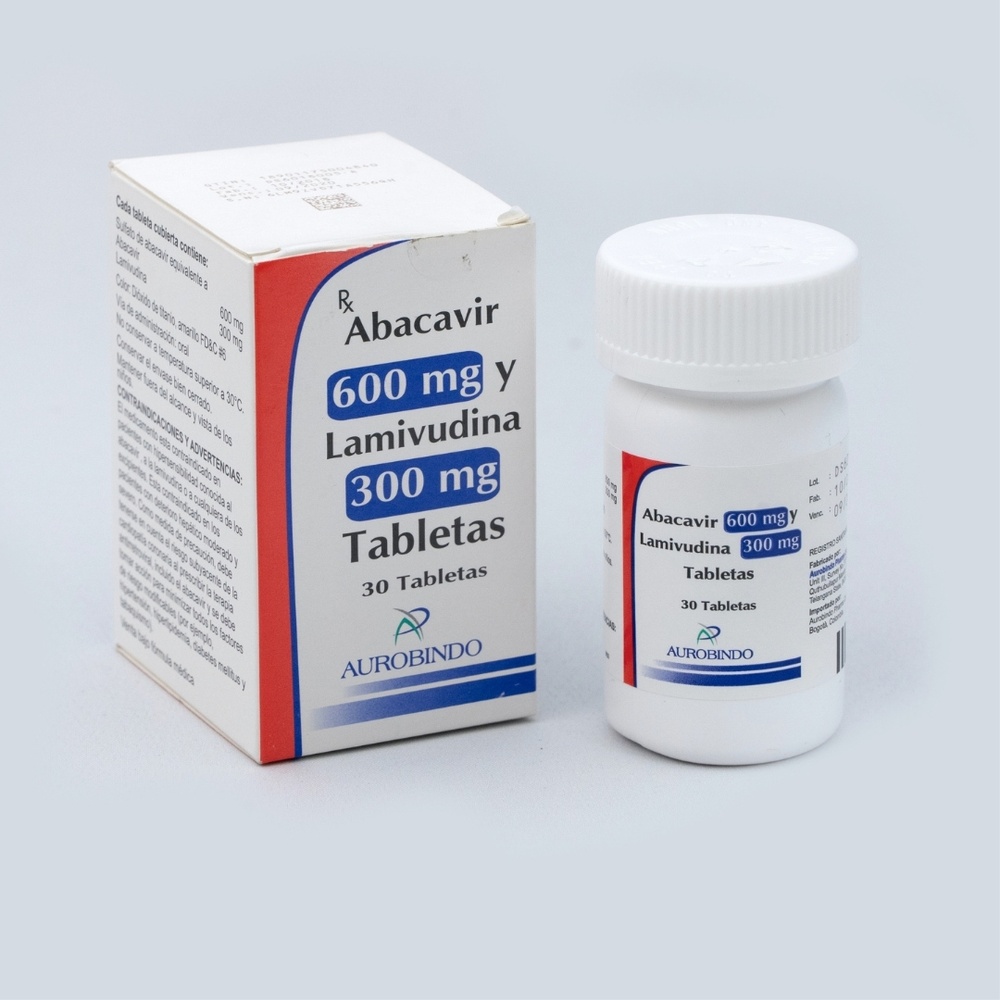
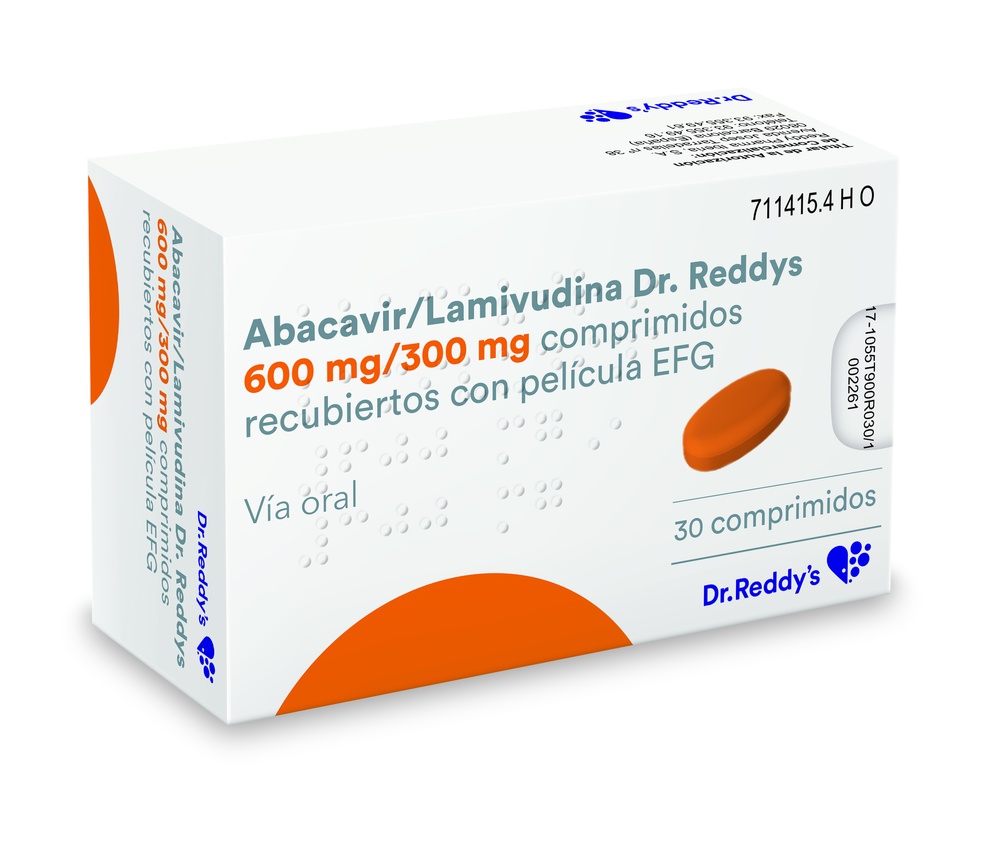
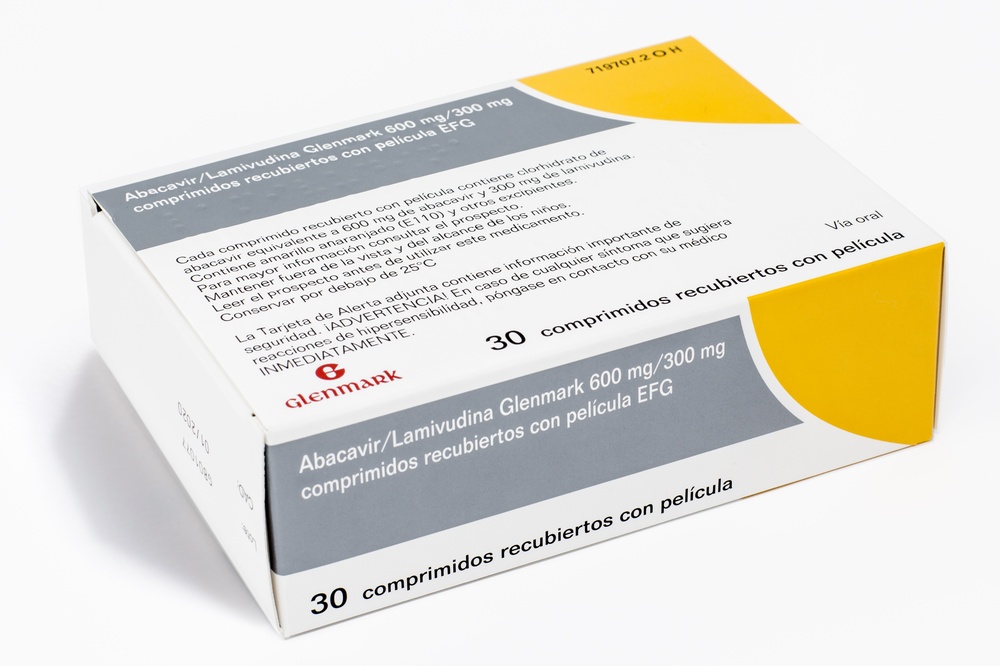
- Alternatives to JULUCA 50 mg/25 mg FILM-COATED TABLETSDosage form: TABLET, 600 mg / 300 mgActive substance: lamivudine and abacavirManufacturer: Aurovitas Spain, S.A.U.Prescription requiredDosage form: TABLET, 600 mg/300 mgActive substance: lamivudine and abacavirManufacturer: Reddy Pharma Iberia S.A.Prescription requiredDosage form: TABLET, 600 mg/300 mgActive substance: lamivudine and abacavirManufacturer: Glenmark Arzneimittel GmbhPrescription required
Online doctors for JULUCA 50 mg/25 mg FILM-COATED TABLETS
Discuss questions about JULUCA 50 mg/25 mg FILM-COATED TABLETS, including use, safety considerations and prescription review, subject to medical assessment and local regulations.









Get JULUCA 50 mg/25 mg FILM-COATED TABLETS Prescription Online
Fill in a 2-min form
Tell us your symptoms, history, and what medicine you're requesting.
Pick a doctor or let us assign
Choose a specialist or we'll match you with the next available doctor.
Doctor reviews your case
Usually within 30 minutes. They may ask follow-up questions via chat.
Collect from any pharmacy
Electronic prescription sent to your email — valid across Spain.
Frequently Asked Questions
JULUCA 50 mg/25 mg FILM-COATED TABLETS requires a prescription in Spain. You can check with a doctor online whether this medicine may be appropriate for your situation.
The active ingredient in JULUCA 50 mg/25 mg FILM-COATED TABLETS is dolutegravir and rilpivirine. This information helps identify medicines with the same composition but different brand names.
JULUCA 50 mg/25 mg FILM-COATED TABLETS is manufactured by Viiv Healthcare B.V.. Pharmacy brands and packaging may differ depending on the distributor.
Doctors such as Family doctors, Psychiatrists, Dermatologists, Cardiologists, Endocrinologists, Gastroenterologists, Pulmonologists, Nephrologists, Rheumatologists, Hematologists, Infectious disease physicians, Allergists, Geriatricians, Paediatricians, Oncologists may assess whether JULUCA 50 mg/25 mg FILM-COATED TABLETS is appropriate, depending on your situation and local regulations. You can book an online consultation to discuss your symptoms and possible next steps.
Spain has a well-developed healthcare infrastructure across major cities such as Madrid, Barcelona, Valencia, and Seville. Pharmacies are widely available and operate under strict regulations, ensuring access to prescribed medications.
You can buy JULUCA 50 mg/25 mg FILM-COATED TABLETS in Madrid, Barcelona, Seville, or Valencia at any local pharmacy with a valid prescription.
To obtain a prescription, you can use Oladoctor:
Other medicines with the same active substance (dolutegravir and rilpivirine) include ABACAVIR/LAMIVUDINE AUROVITAS 600 mg/300 mg FILM-COATED TABLETS, ABACAVIR/LAMIVUDINE Dr. Reddy's 600 mg/300 mg FILM-COATED TABLETS, ABACAVIR/LAMIVUDINE GLENMARK 600 mg/300 mg FILM-COATED TABLETS. These may have different brand names or formulations but contain the same therapeutic ingredient. Always consult a doctor before switching or starting a new medicine.
