


Irinotecan Hikma 20 mg/ml injectable perfusión

Prescription review online
A doctor will review your case and decide whether a prescription is medically appropriate.

Talk to a doctor about this medicine
Discuss your symptoms and possible next steps in a quick online consultation.



How to use IRINOTECAN HIKMA 20 mg/ml CONCENTRATE FOR INFUSION SOLUTION
Contents of the leaflet
- Introduction
- What is Irinotecan Hikma and what is it used for
- What you need to know before you use Irinotecan Hikma
- How to use Irinotecan Hikma
- Possible Adverse Effects
- Storage of Irinotecan Hikma
- Package Contents and Additional Information
Introduction
Package Leaflet: Information for the User
Irinotecan Hikma 20 mg/ml concentrate for solution for infusion EFG
Irinotecan, hydrochloride trihydrate
Read all of this leaflet carefully before you start using this medicine because it contains important information for you.
- Keep this leaflet, you may need to read it again.
- If you have any further questions, ask your doctor or pharmacist.
- If you experience any side effects, talk to your doctor or pharmacist. This includes any possible side effects not listed in this leaflet. See section 4.
Contents of the pack:
- What is Irinotecan Hikma and what is it used for
- What you need to know before you use Irinotecan Hikma
- How to use Irinotecan Hikma
- Possible side effects
- Storage of Irinotecan Hikma
- Contents of the pack and other information
1. What is Irinotecan Hikma and what is it used for
Irinotecan Hikma is a cancer medicine that contains the active substance irinotecan hydrochloride trihydrate.
Irinotecan hydrochloride trihydrate interferes with the growth and spread of cancer cells in the body.
Irinotecan is indicated in combination with other medicines for the treatment of patients with advanced or metastatic colon or rectal cancer.
Irinotecan may be used alone in patients with metastatic colon or rectal cancer whose disease has recurred or worsened after initial therapy with fluorouracil.
.

Not sure if this medicine is right for you?
Discuss your symptoms and treatment with a doctor online.
2. What you need to know before you use Irinotecan Hikma
Do not use Irinotecan Hikma:
- If you are allergic to irinotecan hydrochloride trihydrate or any of the other ingredients of this medicine (listed in section 6).
- If you have chronic inflammatory bowel disease and/or intestinal obstruction.
- If you are breastfeeding (see section 2).
- If your bilirubin level is more than 3 times the upper limit of the normal range. If you have severe bone marrow failure. If your general health is poor (WHO performance status above 2).
- If you are taking or have recently taken a herbal medicine called St. John's Wort (a herbal extract that contains Hypericum perforatum).
- If you are to receive or have recently received live attenuated vaccines (vaccines against yellow fever, chickenpox, herpes zoster, measles, mumps, rubella, tuberculosis, rotavirus, flu) and for 6 months after chemotherapy is discontinued.
If you receive irinotecan in combination with other medicines, make sure to also read the package leaflet of the other medicines regarding additional contraindications.
Warnings and precautions
Consult your doctor or pharmacist before starting treatment with Irinotecan Hikma:
- If you have Gilbert's syndrome, a hereditary disease that can cause high bilirubin levels and jaundice (yellowing of the skin and eyes).
Be careful with irinotecan. The use of irinotecan should be limited to specialized units in the administration of cytotoxic chemotherapy and should only be administered under the supervision of a qualified physician in the use of anticancer chemotherapy.
Diarrhea
Irinotecan can cause diarrhea, which in some cases can be severe. This can start a few hours or a couple of days after the infusion of the medicine. If left untreated, it can lead to dehydration and severe chemical imbalances, which can be fatal. Your doctor will prescribe a medicine to help prevent or control this side effect. Make sure to obtain the medicine immediately to have it at home when you need it.
- Take the medicine as your doctor has told you with the first sign of loose or frequent stools.
- Drink plenty of water and/or electrolyte-rich beverages (sparkling water, soda, or soup).
- Call your doctor or nurse if you still have diarrhea, especially if it lasts more than 24 hours, or if you are dizzy, faint, or pass out.
Neutropenia (decrease in some white blood cells)
This medicine can decrease the count of white blood cells, mainly in the weeks following administration of the medicine. This can increase the risk of infection. Make sure to inform your doctor or nurse immediately if you have any signs of infection, such as fever (38°C or higher), chills, pain when urinating, new cough, or sputum. Avoid being near people who are sick or have infections. Inform your doctor immediately if you show signs of infection.
Blood tests
It is likely that your doctor will have blood tests done before and during treatment to monitor the effects of the medicine on your blood count or blood biochemistry. Depending on the results of the tests, you may need medicines to help treat the effects. Your doctor may also need to reduce or delay your next dose of this medicine, or even discontinue it altogether. Keep all your doctor's appointments and laboratory tests.
This medicine can reduce the count of platelets in the weeks following administration, which can increase the risk of bleeding. Talk to your doctor before taking any medicine or supplement that can affect your body's ability to stop bleeding, such as acetylsalicylic acid or medicines that contain acetylsalicylic acid, warfarin, or vitamin E. Inform your doctor immediately if you have unusual bruising or bleeding such as nosebleeds, bleeding gums when brushing your teeth, or black and tarry stools.
Nausea and vomiting
You may have nausea and vomiting on the day you receive this medicine or in the first few days after. Your doctor may give you medicines before your treatment to help prevent nausea and vomiting. Your doctor will likely prescribe anti-nausea medicines that you can take at home. Have these medicines on hand for when you need them. Call your doctor if you cannot take fluids by mouth due to nausea and vomiting.
Acute cholinergic syndrome
This medicine can affect the part of your nervous system that controls body secretions, leading to a condition called cholinergic syndrome. Symptoms can include runny nose, increased saliva, excessive tearing, sweating, flushing, abdominal cramps, and diarrhea. Inform your doctor or nurse immediately if you notice any of these symptoms, as there are medicines that can help control them.
Lung disorders
In rare cases, people taking this medicine have severe lung problems. Inform your doctor immediately if you develop a cough or if it worsens, difficulty breathing, and fever. Your doctor may need to discontinue your treatment to treat this problem.
This medicine can increase the risk of serious blood clots in the veins of the legs or lungs, which can move to other parts of the body, such as the lungs or brain. Inform your doctor immediately if you notice chest pain, difficulty breathing, or swelling, pain, redness, or warmth in an arm or leg.
Chronic intestinal inflammation and/or intestinal obstruction
Contact your doctor if you have abdominal pain and constipation, especially if you also have bloating and loss of appetite.
Radiation therapy
If you have recently received pelvic or abdominal radiation therapy, you may be at higher risk of developing bone marrow suppression. Talk to your doctor before starting treatment with irinotecan.
Kidney function
There have been reports of kidney dysfunction.
Heart disorders
Inform your doctor if you have or have had heart disease or if you have previously received cancer medicines. Your doctor will closely monitor you and discuss how to reduce risk factors (such as smoking, high blood pressure, and high fat content).
Vascular disorders
Irinotecan is rarely associated with vascular disorders (blood clots in the legs and lungs) and can occur rarely in patients with multiple risk factors.
Others
This medicine can cause mouth sores or lip sores, often in the first few weeks after starting treatment. This can cause mouth pain, bleeding, or even problems eating. Your doctor or nurse may suggest ways to reduce this, such as changing the way you eat or how you brush your teeth. If necessary, your doctor may prescribe pain medicines.
For information on contraception and breastfeeding, see the information provided later in the section Contraception, pregnancy, breastfeeding, and fertility.
Inform your doctor or dentist that you are being treated with this medicine if you plan to undergo surgery or any procedure.
If you are using this medicine in combination with other cancer medicines for your disease, make sure to also read the package leaflet of the other medicines.
If your doctor has told you that you have an intolerance to some sugars, contact your doctor before using this medicine.
Other medicines and irinotecan:
Irinotecan Hikma may interact with several medicines and supplements, which can increase or decrease the level of the medicine in your blood. Inform your doctor or pharmacist if you are using, have recently used, or could use any of the following:
- Medicines used to treat epilepsy (carbamazepine, phenobarbital, phenytoin, and fosphenytoin)
- Medicines used to treat fungal infections (ketoconazole, itraconazole, voriconazole, and posaconazole)
- Medicines used to treat bacterial infections (clarithromycin, erythromycin, and telithromycin).
- Medicines used to treat tuberculosis (rifampicin and rifabutin).
- St. John's Wort (a dietary supplement based on plants).
- Live attenuated vaccines.
- Medicines used to treat HIV (indinavir, ritonavir, amprenavir, fosamprenavir, nelfinavir, atazanavir, and others).
- Medicines used to suppress your immune system to prevent rejection in transplants (cyclosporine and tacrolimus).
- Medicines used to treat cancer (regorafenib, crizotinib, idelalisib, and apalutamide).
- Vitamin K antagonists (common anticoagulants, such as warfarin).
- Medicines used to relax muscles during general anesthesia and surgery (suxamethonium).
- 5-Fluorouracil/folinic acid.
- Bevacizumab (a vascular endothelial growth factor inhibitor).
Cetuximab (an epidermal growth factor receptor inhibitor).
Tell your doctor, pharmacist, or nurse before Irinotecan Hikma is administered to you if you are already receiving or have recently received chemotherapy (and radiation therapy).
While you are being treated with irinotecan, do not start or stop taking any medicine without consulting your doctor first.
This medicine can cause severe diarrhea. Try to avoid the use of laxatives and stool softeners while using this medicine.
There may be more medicines that interact with irinotecan. Consult your doctor, pharmacist, or nurse about your other medicines, plant-based products, and supplements, and whether alcohol can cause problems with this medicine.
Contraception, pregnancy, breastfeeding, and fertility
If you are pregnant or breastfeeding, think you may be pregnant, or are planning to have a baby, ask your doctor or pharmacist for advice before using this medicine.
Contraception
If you are a woman of childbearing age, you must use an effective contraceptive method during and up to 6 months after finishing treatment.
If you are a man, you must use an effective contraceptive method during and up to 3 months after finishing treatment. It is important to consult with your doctor what types of contraceptives can be used with this medicine.
Pregnancy
This medicine may cause harm to the fetus if used at the time of conception or during pregnancy. Before starting treatment, your doctor will make sure you are not pregnant.
If you are pregnant, think you may be pregnant, or are planning to have a baby, ask your doctor or pharmacist for advice before using this medicine.
Breastfeeding
Irinotecan and its metabolite were measured in breast milk. Breastfeeding should be discontinued during treatment with this medicine.
If you are breastfeeding, ask your doctor or pharmacist for advice before using this medicine.
Fertility
No studies have been conducted; however, this medicine may affect fertility. Before using this medicine, talk to your doctor about the possible risk with this medicine and the options that can preserve your ability to have children.
Driving and using machines
During the first 24 hours after administration of irinotecan, you may feel dizzy or have changes in vision. If these symptoms occur, do not drive or use tools or machines.
This medicine contains sorbitol
This medicine contains a sugar (sorbitol). Sorbitol is a source of fructose. If you (or your child) have hereditary fructose intolerance (HFI), a rare genetic disease, you must not receive this medicine. Patients with HFI cannot break down fructose, which can cause serious side effects.
You must inform your doctor before receiving this medicine if you (or your child) have HFI or if your child cannot take sugary foods or drinks because they feel sick, vomit, or experience unpleasant effects such as bloating, stomach cramps, or diarrhea.
This medicine contains sodium
This medicine contains less than 1 mmol (23 mg) of sodium per dose, so it is essentially "sodium-free".
3. How to use Irinotecan Hikma
Follow exactly the administration instructions of this medicine given by your doctor. In case of doubt, consult your doctor again.
Irinotecan will be administered to you by healthcare professionals.
Your doctor may recommend a DNA test before the first dose of irinotecan.
Some people are genetically more prone to having some side effects of the medicine.
The amount of irinotecan you receive will depend on many factors, including your height and weight, your overall health, or other health problems, and the type of cancer or disease you have.
Your doctor will determine your dose and treatment schedule. Irinotecan is injected into a vein by intravenous (IV) infusion. You will receive this injection in a clinic or hospital. Irinotecan must be administered slowly and the intravenous infusion may take up to 90 minutes to complete.
You may be given other medicines to prevent nausea, vomiting, diarrhea, and other side effects while you receive irinotecan. You may need to continue taking these medicines for at least one day after your irinotecan injection.
Tell your caregivers if you feel burning, pain, or swelling around the IV needle when irinotecan is injected. If the medicine leaks out of the vein, it can cause tissue damage. If you feel pain or notice redness or swelling at the injection site while receiving irinotecan, inform the healthcare professional immediately.
Several treatment schedules are currently recommended for irinotecan. It is usually administered once every 3 weeks (irinotecan given alone) or once every 2 weeks (irinotecan given in combination with 5FU/FA chemotherapy). The dose will depend on several factors, including the treatment schedule, your body size, age, and overall health, your blood counts, liver function, whether you have received radiation to the abdomen or pelvis, and whether you have any side effects, such as diarrhea.
Only your doctor can assess the duration of treatment.
If you use more Irinotecan Hikma than you should
Seek emergency medical attention. The symptoms of overdose may include some of the serious side effects listed in this leaflet.
In case of overdose or accidental ingestion, consult your doctor or pharmacist immediately or call the Toxicology Information Service, phone 91 562 04 20, indicating the medicine and the amount administered.
If you miss a dose of Irinotecan Hikma
Consult your doctor for instructions if you miss a scheduled appointment for your irinotecan injection.
If you have any further questions on the use of this medicine, ask your doctor, pharmacist, or nurse.

Started taking the medicine and have questions?
Discuss your symptoms and treatment with a doctor online.
4. Possible Adverse Effects
Like all medicines, this medicine may cause adverse effects, although not all people suffer from them.
Some adverse effects could be serious. Contact your doctor immediately if you experience any of the following serious adverse effects (see section 2).
Seek emergency medical attention if you have any of these symptoms of an allergic reaction: hives; difficulty breathing; swelling of the face, lips, tongue, or throat.
- Diarrhea (see section 2).
- Early diarrhea: starts within 24 hours after receiving this medicine, and is accompanied by symptoms such as: runny nose, increased salivation, tearing of the eyes, sweating, flushing, abdominal cramps (this may occur while the medicine is being administered. In this case, notify the healthcare professional immediately. Medicines can be administered to stop and/or reduce this early adverse effect).
- Late diarrhea: starts more than 24 hours after receiving this medicine. Due to dehydration and electrolyte imbalance problems with diarrhea, it is essential to be in contact with healthcare professionals for control and to obtain recommendations on medications and dietary modifications.
Inform your doctor or nurse if you experience any of the following symptoms:
Symptoms | Frequency* of occurrence in monotherapy | Frequency† of occurrence in combination therapy |
Abnormally low number of white blood cells, which may increase the risk of infection | Very frequent | Very frequent |
Low number of red blood cells, which causes fatigue and difficulty breathing | Very frequent | Very frequent |
Decreased appetite | Very frequent | Very frequent |
Cholinergic syndrome (see Warnings and Precautions) | Very frequent | Very frequent |
Vomiting | Very frequent | Very frequent |
Nausea | Very frequent | Very frequent |
Abdominal pain | Very frequent | Frequent |
Reversible hair loss | Very frequent | Very frequent |
Inflammation of the mucous membranes | Very frequent | Very frequent |
Fever | Very frequent | Frequent |
Feeling of weakness and lack of energy | Very frequent | Very frequent |
Low number of platelets (blood cells that help clot) that can produce bruising or bleeding | Frequent | Very frequent |
Abnormal values in liver function tests | Frequent | Very frequent |
Infection | Frequent | Frequent |
Low number of white blood cells with fever | Frequent | Frequent |
Constipation | Frequent | Frequent |
Abnormal values in kidney function tests | Frequent | Not reported |
- Very frequent: may affect more than 1 in 10 people.
† Frequent: may affect up to 1 in 10 people.
Unknown frequency (cannot be estimated from available data)
- Severe, persistent, and bloody diarrhea (which may be associated with stomach pain or fever), caused by a bacterium called Clostridium difficile.
- Blood infection.
- Dehydration (due to diarrhea and vomiting).
- Dizziness, rapid heartbeat, and paleness (a condition called hypovolemia).
- Allergic reactions.
- Transient speech disorders during or shortly after treatment.
- Numbness.
- High blood pressure (during or after infusion).
- Heart problems*.
- Lung disease that causes wheezing and difficulty breathing (see section 2).
- Hiccup.
- Intestinal obstruction.
- Colon enlargement.
- Intestinal bleeding.
- Inflammation of the large intestine.
- Abnormal laboratory test results.
- Intestinal perforation.
- Fatty liver.
- Skin reactions.
- Reactions at the injection site.
- Low potassium levels in the blood.
- Low salt levels in the blood, mainly related to diarrhea and vomiting.
- Muscle cramps.
- Kidney problems*.
- Low blood pressure*.
- Fungal infections.
- Viral infections.
- Rare cases of these events have been observed in patients who experienced episodes of dehydration associated with diarrhea and/or vomiting, or blood infections.
Reporting of Adverse Effects
If you experience any type of adverse effect, consult your doctor, pharmacist, or nurse, even if it is a possible adverse effect that is not listed in this prospectus. You can also report them directly through the Spanish Pharmacovigilance System for Human Use Medicines: www.notificaRAM.es. By reporting adverse effects, you can contribute to providing more information on the safety of this medicine.
5. Storage of Irinotecan Hikma
Keep this medicine out of sight and reach of children.
Do not store at a temperature above 25°C.
Do not refrigerate or freeze.
Keep in the original packaging to protect it from light.
After opening:
The chemical and physical stability of the concentrate has been demonstrated for 28 days at room temperature, exposed or protected from light, and for 28 days at 2-8 °C, when protected from light.
From a microbiological point of view, unless the opening method excludes the risk of microbial contamination, the product must be used immediately. If it is not used immediately, the storage times and conditions during use are the responsibility of the user.
After dilution:
After dilution with 5% glucose, the chemical and physical stability has been demonstrated for 24 hours if stored between 2 °C and 8 °C and for 12 hours if stored below 25 ± 2 °C, protected from light.
After dilution with 0.9% sodium chloride, the chemical and physical stability has been demonstrated for 24 hours if stored between 2 °C and 8 °C and for 12 hours if stored below 25 ± 2 °C, protected from light.
For intravenous use after dilution.
From a microbiological point of view, the medicine must be used immediately after the first opening. If not, the storage time and conditions of the medicine before administration will be the responsibility of the user.
Do not use this medicine after the expiration date stated on the packaging and label after CAD. The expiration date is the last day of the month indicated.
Medicines should not be disposed of through wastewater or household waste. Ask your pharmacist how to dispose of packaging and medicines that are no longer needed. This will help protect the environment.
6. Package Contents and Additional Information
Composition of Irinotecan Hikma
The active ingredient is irinotecan hydrochloride, trihydrate.
One milliliter of concentrate contains 20 mg of irinotecan hydrochloride trihydrate (equivalent to 17.33 mg of irinotecan).
Each 2 ml vial contains 40 mg of irinotecan hydrochloride trihydrate.
Each 5 ml vial contains 100 mg of irinotecan hydrochloride trihydrate.
Each 15 ml vial contains 300 mg of irinotecan hydrochloride trihydrate.
Each 25 ml vial contains 500 mg of irinotecan hydrochloride trihydrate.
The other components are sorbitol (E420), sodium hydroxide and/or hydrochloric acid (to adjust the pH to 3.5) and water for injectable preparations.
Appearance of the Product and Package Contents
Topaz glass vials with FluoroTec or equivalent rubber stopper and flip-off aluminum cap.
Irinotecan Hikma is a clear yellow solution.
pH: 3.0 – 4.0
Osmolality: 265-320 mosmol/kg
Package sizes:
Package with 1 vial of 2 ml.
Package with 1 vial of 5 ml.
Package with 1 vial of 15 ml.
Package with 1 vial of 25 ml.
Not all package sizes may be marketed.
Marketing Authorization Holder and Manufacturer
Holder
Hikma Farmacêutica (Portugal), S.A.
Estrada do Rio da Mó, nº 8, 8A – 8B
Fervença
2705 – 906 Terrugem SNT
Portugal
Tel: +351 21 980 84 10
e-mail: [email protected]
Manufacturer
Thymoorgan Pharmazie GmbH
Schiffgraben 23
D-38690 Goslar
Germany
Tel. +49 (0) 5324 7701-0
You can request more information about this medicine by contacting the local representative of the marketing authorization holder:
Hikma España, S.L.U.
Calle Anabel Segura nº11, Edificio A, planta 1ª, oficina 2
28108 - Alcobendas, Madrid
Spain
This medicine is authorized in the Member States of the European Economic Area under the following names:
Germany: Irinotecan Hikma 20 mg/ml Konzentrat zur Herstellung einer Infusionslösung
Austria: Irinotecan Hikma 20 mg/ml Konzentrat zur Herstellung einer Infusionslösung
Belgium: Irinotecan Hikma 20 mg/ml
Spain: Irinotecán Hikma 20 mg/ml Concentrado para Solución para perfusión EFG
France: Irinotecan Hikma 20 mg/ml, solution à diluer pour perfusion
Italy: Irinto 20mg/ml Concentrato per Soluzione per Infusione
Netherlands: Irinotecan HCl trihydraat Hikma 20 mg/ml concentraat voor oplossing voor infusie
Portugal: Irinotecano Hikma
United Kingdom (Northern Ireland): Irinotecan 20mg/ml Concentrate for solution for infusion
Date of the last revision of this prospectus:October 2024
Detailed and updated information on this medicine is available on the website of the Spanish Agency for Medicines and Health Products (AEMPS) http://www.aemps.gob.es/
-------------------------------------------------------------------------------------------------------------
This information is intended only for healthcare professionals:
Irinotecan Hikma 20mg/ml concentrate for solution for infusion
Irinotecan hydrochloride, trihydrate
Handling
Like other antineoplastic/cytotoxic agents, irinotecan should be prepared and handled with caution. The use of safety glasses, mask, and gloves is mandatory.
In case of skin contact, rinse the affected area with plenty of water and soap. In case of contact with mucous membranes, wash the affected area thoroughly with water.
Instructions for dilution:
Like other injectable medicines, the irinotecan solution should be prepared under aseptic conditions.
If any precipitate is observed, either in the vial or after reconstitution, the product should be discarded according to standard procedures for the disposal of cytotoxic agents.
Using a graduated syringe, withdraw the required amount of Irinotecan Hikma concentrate for solution from the vial in an aseptic manner and inject it into a 250 ml infusion bag or bottle. The infusion should be mixed carefully by manual rotation.
Protection instructions for preparing the dilution:
Preparation should be carried out in a safety cabinet using gloves and protective clothing (preferably under a vertical air system). The work area should be protected with a covering of disposable absorbent paper and plastic. Protective safety glasses, cap, gown, gloves, and disposable masks should be used.
Open containers, such as vials, infusion bottles, and used cannulas, syringes, catheters, tubes, and cytostatic residues, should be considered as hazardous waste and disposed of according to local regulations for the management of HAZARDOUS WASTE.
In case of spills, use personal protective equipment. Broken glass should be collected and placed in containers for PATHOLOGICAL WASTE. Contaminated surfaces should be rinsed with plenty of water. After rinsing the surfaces, they should be carefully cleaned with a cloth that should be disposed of as HAZARDOUS WASTE.
In case the irinotecan comes into contact with the skin, place the area under running water for some time and then wash it with water and soap. If there is contact with the mucous membranes, wash the affected area thoroughly with water. If you experience any discomfort, consult a doctor.
If irinotecan comes into contact with the eyes, rinse them thoroughly with plenty of water. Contact an ophthalmologist immediately.
Disposal: All materials used for dilution and administration should be disposed of according to the procedures established in the hospital for cytotoxic agents.
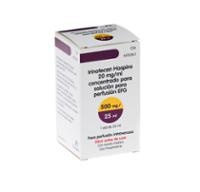
- Country of registration
- Dosage formINJECTABLE PERFUSION, 20 mg/ml
- ATC codeL01CE02
- Active substance
- Prescription requiredYes
- Manufacturer
- CompositionSORBITOL (90 mg mg), HIDROXIDO DE SODIO (E 524) (c.s.p. 2 ml mg)
- This information is for reference only and does not constitute medical advice. Always consult a doctor before taking any medication. Oladoctor is not responsible for medical decisions based on this content.
- Alternatives to IRINOTECAN HIKMA 20 mg/ml CONCENTRATE FOR INFUSION SOLUTIONDosage form: INJECTABLE PERFUSION, 20 mg/mlActive substance: irinotecanManufacturer: Accord Healthcare S.L.U.Prescription requiredDosage form: INJECTABLE PERFUSION, 20 mg irinotecan/ mlActive substance: irinotecanManufacturer: Eugia Pharma (Malta) LimitedPrescription requiredDosage form: INJECTABLE PERFUSION, 20 mg/mlActive substance: irinotecanManufacturer: Glenmark Arzneimittel GmbhPrescription required
Online doctors for IRINOTECAN HIKMA 20 mg/ml CONCENTRATE FOR INFUSION SOLUTION
Discuss questions about IRINOTECAN HIKMA 20 mg/ml CONCENTRATE FOR INFUSION SOLUTION, including use, safety considerations and prescription review, subject to medical assessment and local regulations.
Frequently Asked Questions
IRINOTECAN HIKMA 20 mg/ml CONCENTRATE FOR INFUSION SOLUTION requires a prescription in Spain. You can check with a doctor online whether this medicine may be appropriate for your situation.
The active ingredient in IRINOTECAN HIKMA 20 mg/ml CONCENTRATE FOR INFUSION SOLUTION is irinotecan. This information helps identify medicines with the same composition but different brand names.
IRINOTECAN HIKMA 20 mg/ml CONCENTRATE FOR INFUSION SOLUTION is manufactured by Hikma Farmaceutica (Portugal) S.A.. Pharmacy brands and packaging may differ depending on the distributor.
Doctors such as Family doctors, Psychiatrists, Dermatologists, Cardiologists, Endocrinologists, Gastroenterologists, Pulmonologists, Nephrologists, Rheumatologists, Hematologists, Infectious disease physicians, Allergists, Geriatricians, Paediatricians, Oncologists may assess whether IRINOTECAN HIKMA 20 mg/ml CONCENTRATE FOR INFUSION SOLUTION is appropriate, depending on your situation and local regulations. You can book an online consultation to discuss your symptoms and possible next steps.
The prescription is issued by a doctor after assessing your health. In Spain, IRINOTECAN HIKMA 20 mg/ml CONCENTRATE FOR INFUSION SOLUTION is then dispensed in pharmacies with that prescription. An online consultation does not guarantee that a prescription will be issued: the decision always rests with the doctor.
To request a review, you can use Oladoctor:
Other medicines with the same active substance (irinotecan) include IRINOTECAN ACCORD 20 mg/ml CONCENTRATE FOR INFUSION SOLUTION, IRINOTECAN AUROVITAS 20 mg/ml CONCENTRATE FOR INFUSION SOLUTION, IRINOTECAN GLENMARK 20 mg/ml CONCENTRATE FOR INFUSION SOLUTION. These may have different brand names or formulations but contain the same therapeutic ingredient. Always consult a doctor before switching or starting a new medicine.
