



IRESSA 250 mg Film-Coated Tablets

Prescription review online
A doctor will review your case and decide whether a prescription is medically appropriate.

Talk to a doctor about this medicine
Discuss your symptoms and possible next steps in a quick online consultation.



How to use IRESSA 250 mg FILM-COATED TABLETS
Contents of the leaflet
- Introduction
- What is IRESSA and what is it used for
- What you need to know before you take IRESSA
- How to take IRESSA
- Possible side effects
- Storage of IRESSA
- Contents of the pack and other information
Introduction
Package Leaflet: Information for the Patient
IRESSA 250mg film-coated tablets
gefitinib
Read all of this leaflet carefully before you start taking this medicine because it contains important information for you.
- Keep this leaflet, you may need to read it again.
- If you have any further questions, ask your doctor, pharmacist, or nurse.
- This medicine has been prescribed for you only. Do not pass it on to others. It may harm them, even if their signs of illness are the same as yours.
- If you get any side effects, talk to your doctor, pharmacist, or nurse. This includes any possible side effects not listed in this leaflet. See section 4.
Contents of the pack and other information:
- What is IRESSA and what is it used for
- What you need to know before you take IRESSA
- How to take IRESSA
- Possible side effects
- Storage of IRESSA
- Contents of the pack and other information
1. What is IRESSA and what is it used for
IRESSA contains the active substance gefitinib, which blocks a protein called "epidermal growth factor receptor" (EGFR). This protein is involved in the growth and spread of tumor cells.
IRESSA is used to treat adults with non-small cell lung cancer. This cancer is a disease in which malignant (cancerous) cells form in the tissues of the lung.

Not sure if this medicine is right for you?
Discuss your symptoms and treatment with a doctor online.
2. What you need to know before you take IRESSA
Do not take IRESSA
- if you are allergic to gefitinib or any of the other ingredients of this medicine (listed in section 6).
- if you are breast-feeding.
Warnings and precautions
Talk to your doctor or pharmacist before taking IRESSA
- if you have or have had any other lung problems. Some lung problems may get worse during treatment with IRESSA.
- if you have ever had liver problems.
Children and adolescents
IRESSA is not intended for use in children and adolescents under 18 years.
Other medicines and IRESSA
Tell your doctor or pharmacist if you are taking, have recently taken, or might take any other medicines.
In particular, tell your doctor or pharmacist if you are taking any of the following medicines:
- Phenytoin or carbamazepine (for epilepsy).
- Rifampicin (for tuberculosis).
- Itraconazole (for fungal infections).
- Barbiturates (a type of medicine used for sleep problems).
- Herbal medicines containing St. John's Wort (Hypericum perforatum, used for depression and anxiety).
- Proton pump inhibitors, H2 antagonists, and antacids (for ulcers, indigestion, heartburn, and to reduce stomach acid).
These medicines may affect how IRESSA works.
- Warfarin (an oral anticoagulant to prevent blood clots). If you are taking a medicine that contains this active substance, your doctor may need to perform blood tests more often.
If you are in any of these situations, or if you have any doubts, talk to your doctor or pharmacist before taking IRESSA.
Pregnancy, breast-feeding, and fertility
Talk to your doctor before taking this medicine if you are pregnant, might be pregnant, or are breast-feeding.
You are advised to avoid becoming pregnant while taking IRESSA, as this medicine may harm your baby.
Do not take IRESSA if you are breast-feeding. This is because of the potential risk to your baby.
Driving and using machines
You may feel weak while taking IRESSA. If this happens, do not drive or use tools or machines.
IRESSA contains lactose
If your doctor has told you that you have an intolerance to some sugars, talk to them before taking this medicine.
IRESSA contains sodium
This medicine contains less than 1 mmol (23 mg) of sodium per dose, which is essentially "sodium-free".
3. How to take IRESSA
Take this medicine exactly as your doctor has told you. If you are not sure, talk to your doctor or pharmacist.
- The recommended dose is one 250 mg tablet per day.
- Take the tablet at about the same time each day.
- You can take the tablet with or without food.
- Do not take antacids (to reduce the acid in your stomach) 2 hours before or 1 hour after taking IRESSA.
If you have problems swallowing the tablet, you can dissolve it in half a glass of water (still water, not sparkling). Do not use any other liquid. Do not crush the tablet. Stir the water until the tablet has dissolved. This may take up to 20 minutes. Drink the liquid immediately. To make sure you take all the medicine, rinse the glass with half a glass of water and drink it.
If you take more IRESSA than you should
If you have taken more tablets than you should, talk to your doctor or pharmacist immediately.
If you forget to take IRESSA
What you should do if you forget a dose depends on how much time is left until your next dose.
- If there are 12 hours or more until your next dose: take the missed dose as soon as you remember. Then take the next dose as usual.
- If there are less than 12 hours until your next dose: do not take the missed dose. Take the next dose at the usual time.
Do not take a double dose (two tablets at the same time) to make up for a forgotten dose.
If you have any other questions about taking this medicine, ask your doctor or pharmacist.

Started taking the medicine and have questions?
Discuss your symptoms and treatment with a doctor online.
4. Possible side effects
Like all medicines, IRESSA can cause side effects, although not everybody gets them.
Tell your doctor immediately if you notice any of the following side effects - you may need urgent medical treatment:
- Allergic reaction (common), particularly if the symptoms include swollen face, lips, tongue, or throat, difficulty swallowing, hives, and difficulty breathing.
- Severe difficulty breathing, or sudden worsening of breathing difficulties, possibly with cough or fever. This may mean you have a condition called "interstitial lung disease". This can affect up to 1 in 100 patients taking IRESSA and can be life-threatening.
- Severe skin reactions (rare) affecting large areas of your body. The symptoms may include redness, pain, ulcers, blisters, and skin peeling. It can also affect your lips, nose, eyes, and genitals.
- Dehydration (common) caused by persistent or severe diarrhea, vomiting, nausea, or loss of appetite.
- Eye problems (uncommon), such as pain, redness, watery eyes, sensitivity to light, changes in vision, or eyelid retraction. This may mean you have an ulcer on the surface of your eye (cornea).
Tell your doctor as soon as possible if you notice any of the following side effects:
Very common: may affect more than 1 in 10 people
- Diarrhea
- Vomiting
- Nausea
- Skin reactions such as acne-like rash, which may be itchy with dryness and/or cracking of the skin
- Loss of appetite
- Weakness
- Mouth redness or pain
- Increased liver enzyme alanine aminotransferase in blood tests; if this increase is too high, your doctor may recommend that you stop taking IRESSA.
Common: may affect up to 1 in 10 people
- Dry mouth
- Dry, red, or itchy eyes
- Redness and pain of the eyelids
- Nail problems
- Hair loss
- Fever
- Bleeding (such as nosebleeds or blood in your urine)
- Protein in your urine (detected in a urine test)
- Increased bilirubin and another liver enzyme called aspartate aminotransferase in blood tests; if this increase is too high, your doctor may recommend that you stop taking IRESSA.
- Increased creatinine levels in blood tests (related to kidney function)
- Cystitis (pain when urinating and needing to urinate frequently and urgently)
Uncommon: may affect up to 1 in 100 people
- Pancreatitis (inflammation of the pancreas). The symptoms include severe pain in the upper part of the stomach area and severe nausea and vomiting.
- Hepatitis (inflammation of the liver). The symptoms may include a general feeling of being unwell, with or without possible yellowing of the skin and eyes (jaundice). This side effect is uncommon; however, some patients have died from it.
- Gastrointestinal perforation.
- Skin reaction on the palms of your hands and soles of your feet that includes tingling, numbness, pain, swelling, or redness (known as palmar-plantar erythrodysesthesia syndrome or hand-and-foot syndrome).
Rare: may affect up to 1 in 1,000 people
- Vasculitis (inflammation of blood vessels in the skin). This may look like bruising or areas of skin rash that do not fade when pressed.
- Hemorrhagic cystitis (pain when urinating and needing to urinate frequently and urgently, with blood in your urine).
Reporting of side effects
If you get any side effects, talk to your doctor, pharmacist, or nurse. This includes any possible side effects not listed in this leaflet. You can also report side effects directly via the national reporting system listed in Appendix V. By reporting side effects, you can help provide more information on the safety of this medicine.
5. Storage of IRESSA
Keep this medicine out of the sight and reach of children.
Do not use this medicine after the expiry date which is stated on the carton, blister, and tubular container after EXP. The expiry date refers to the last day of the month stated.
Store in the original package to protect from moisture.
Medicines should not be disposed of via wastewater or household waste. Ask your pharmacist how to dispose of medicines no longer required. These measures will help protect the environment.
6. Contents of the pack and other information
What IRESSA contains
- The active substance is gefitinib. Each tablet contains 250 mg of gefitinib.
- The other ingredients are lactose monohydrate, microcrystalline cellulose (E460), croscarmellose sodium, povidone (K29-32) (E1201), sodium lauryl sulfate, magnesium stearate, hypromellose (E464), macrogol 300, titanium dioxide (E171), yellow iron oxide (E172), and red iron oxide (E172).
Appearance and packaging
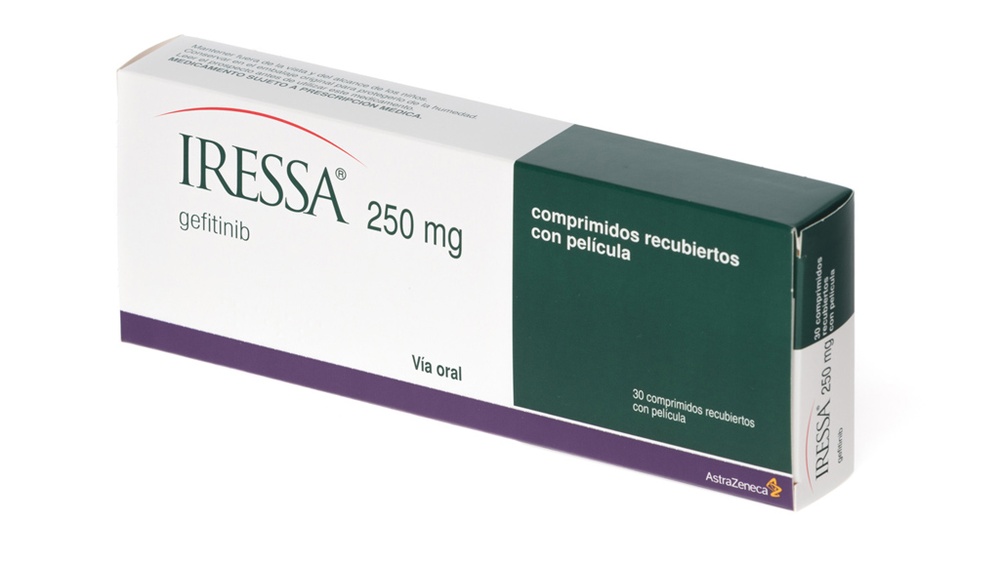
IRESSA is a brown, round tablet marked with "IRESSA 250" on one side and plain on the other.
IRESSA is available in blister packs containing 30 tablets. The blister may be precut or not precut.
Marketing authorisation holder
AstraZeneca AB
SE-151 85, Södertälje
Sweden
Manufacturer
AstraZeneca AB
Gärtunavägen
SE-152 57 Södertälje
Sweden
AstraZeneca UK Limited
Macclesfield
Cheshire SK10 2NA
United Kingdom
You can get more information about this medicine by contacting the local representative of the marketing authorisation holder:
Belgium AstraZeneca S.A./N.V. Tel: +32 2 370 48 11 | Lithuania UAB AstraZeneca Lietuva Tel: +370 5 2660550 |
Bulgaria AstraZeneca Bulgaria EOOD Tel: +359 (2) 44 55 000 | Luxembourg AstraZeneca S.A./N.V. Tél/Tel: +32 2 370 48 11 |
Czech Republic AstraZeneca Czech Republic s.r.o. Tel: +420 222 807 111 | Hungary AstraZeneca Kft. Tel.: +36 1 883 6500 |
Denmark AstraZeneca A/S Tlf: +45 43 66 64 62 | Malta Associated Drug Co. Ltd Tel: +356 2277 8000 |
Germany AstraZeneca GmbH Tel: +49 40 809034100 | Netherlands AstraZeneca BV Tel: +31 85 808 9900 |
Estonia AstraZeneca Tel: +372 6549 600 | Norway AstraZeneca AS Tlf: +47 21 00 64 00 |
Greece AstraZeneca A.E. Τηλ: +30 2 106871500 | Austria AstraZeneca Österreich GmbH Tel: +43 1 711 31 0 |
Spain AstraZeneca Farmacéutica Spain, S.A. Tel: +34 91 301 91 00 | Poland AstraZeneca Pharma Poland Sp. z o.o. Tel.: +48 22 245 73 00 |
France AstraZeneca Tél: +33 1 41 29 40 00 | Portugal AstraZeneca Produtos Farmacêuticos, Lda. Tel: +351 21 434 61 00 |
Croatia AstraZeneca d.o.o. Tel: +385 1 4628 000 | Romania AstraZeneca Pharma SRL Tel: +40 21 317 60 41 |
Ireland AstraZeneca Pharmaceuticals (Ireland) DAC Tel: +353 1609 7100 | Slovenia AstraZeneca UK Limited Tel: +386 1 51 35 600 |
Iceland Vistor Sími: +354 535 7000 | Slovakia AstraZeneca AB, o.z. Tel: +421 2 5737 7777 |
Italy AstraZeneca S.p.A. Tel: +39 02 00704500 | Finland AstraZeneca Oy Puh/Tel: +358 10 23 010 |
Cyprus Αλκήτωρ Φαρμακευτική Λτδ Τηλ: +357 22490305 | Sweden AstraZeneca AB Tel: +46 8 553 26 000 |
Latvia SIA AstraZeneca Latvija Tel: +371 67377100 |
Date of last revision of this leaflet:
Other sources of information
Detailed information on this medicine is available on the European Medicines Agency web site: http://www.ema.europa.eu.
- Country of registration
- Dosage formTABLET, 350 mg
- ATC codeL01EB01
- Active substance
- Prescription requiredYes
- Manufacturer
- CompositionLAURILSULFATO DE SODIO (0 - mg), CROSCARMELOSA SODICA (0 - mg), LACTOSA HIDRATADA (0 - mg)
- This information is for reference only and does not constitute medical advice. Always consult a doctor before taking any medication. Oladoctor is not responsible for medical decisions based on this content.
- Alternatives to IRESSA 250 mg FILM-COATED TABLETSDosage form: TABLET, 250 mgActive substance: gefitinibManufacturer: Genthon B.V.Prescription requiredDosage form: TABLET, 250 mgActive substance: gefitinibManufacturer: Sandoz Farmaceutica S.A.Prescription required
Online doctors for IRESSA 250 mg FILM-COATED TABLETS
Discuss questions about IRESSA 250 mg FILM-COATED TABLETS, including use, safety considerations and prescription review, subject to medical assessment and local regulations.
Get IRESSA 250 mg FILM-COATED TABLETS Prescription Online
Fill in a 2-min form
Tell us your symptoms, history, and what medicine you're requesting.
Pick a doctor or let us assign
Choose a specialist or we'll match you with the next available doctor.
Doctor reviews your case
Usually within 30 minutes. They may ask follow-up questions via chat.
Collect from any pharmacy
Electronic prescription sent to your email — valid across Spain.
Frequently Asked Questions
IRESSA 250 mg FILM-COATED TABLETS requires a prescription in Spain. You can check with a doctor online whether this medicine may be appropriate for your situation.
The active ingredient in IRESSA 250 mg FILM-COATED TABLETS is gefitinib. This information helps identify medicines with the same composition but different brand names.
IRESSA 250 mg FILM-COATED TABLETS is manufactured by Astrazeneca Ab. Pharmacy brands and packaging may differ depending on the distributor.
Doctors such as Family doctors, Psychiatrists, Dermatologists, Cardiologists, Endocrinologists, Gastroenterologists, Pulmonologists, Nephrologists, Rheumatologists, Hematologists, Infectious disease physicians, Allergists, Geriatricians, Paediatricians, Oncologists may assess whether IRESSA 250 mg FILM-COATED TABLETS is appropriate, depending on your situation and local regulations. You can book an online consultation to discuss your symptoms and possible next steps.
Spain has a well-developed healthcare infrastructure across major cities such as Madrid, Barcelona, Valencia, and Seville. Pharmacies are widely available and operate under strict regulations, ensuring access to prescribed medications.
You can buy IRESSA 250 mg FILM-COATED TABLETS in Madrid, Barcelona, Seville, or Valencia at any local pharmacy with a valid prescription.
To obtain a prescription, you can use Oladoctor:
Other medicines with the same active substance (gefitinib) include GEFITINIB GENTHON 250 mg FILM-COATED TABLETS, GEFITINIB SANDOZ 250 mg FILM-COATED TABLETS, GEFITINIB TEVA 250 mg FILM-COATED TABLETS. These may have different brand names or formulations but contain the same therapeutic ingredient. Always consult a doctor before switching or starting a new medicine.
