



INDAPAMIDA 1.5 mg Modified-release tablet

Prescription review online
A doctor will review your case and decide whether a prescription is medically appropriate.

Talk to a doctor about this medicine
Discuss your symptoms and possible next steps in a quick online consultation.



How to use INDAPAMIDE RETARD CINFA 1.5 mg PROLONGED-RELEASE TABLETS
Contents of the leaflet
- Introduction
- What is indapamide retard cinfa and what is it used for
- What you need to know before you take indapamide retard cinfa
- How to take indapamide retard cinfa
- Possible side effects
- Storage of indapamide retard cinfa
- Contents of the pack and other information
Introduction
Package Leaflet: Information for the User
indapamide retard cinfa 1.5 mgprolonged-release tablets EFG
Read all of this leaflet carefully before you start taking this medicine because it contains important information for you.
- Keep this leaflet, you may need to read it again.
- If you have any further questions, ask your doctor or pharmacist.
- This medicine has been prescribed for you only. Do not pass it on to others. It may harm them, even if their signs of illness are the same as yours.
- If you get any side effects, talk to your doctor or pharmacist. This includes any possible side effects not listed in this leaflet. See section 4.
Contents of the pack
- What is indapamide retard cinfa and what is it used for
- What you need to know before you take indapamide retard cinfa
- How to take indapamide retard cinfa
- Possible side effects
- Storage of indapamide retard cinfa
- Contents of the pack and other information
1. What is indapamide retard cinfa and what is it used for
Indapamide retard cinfa is presented in the form of prolonged-release tablets containing indapamide as the active substance. This medicine is used to lower high blood pressure in adults.
Indapamide is a diuretic. Most diuretics increase the amount of urine produced by the kidneys.
However, indapamide is different from other diuretics, as it only produces a slight increase in the amount of urine formed.
In addition, indapamide dilates blood vessels so that blood flows more easily.

Not sure if this medicine is right for you?
Discuss your symptoms and treatment with a doctor online.
2. What you need to know before you take indapamide retard cinfa
Do not take indapamide retard cinfa:
- if you are allergicto indapamide or to any other sulfonamide or to any of the other ingredients of this medicine (listed in section 6),
- if you have severe kidney disease,
- if you have severe liver disease or suffer from a disorder called hepatic encephalopathy(degenerative brain disease),
- if you have low potassium levels in the blood(hypokalemia).
Warnings and precautions
Consult your doctor or pharmacist before starting to take indapamide retard cinfa:
- if you have liver problems,
- if you have diabetes,
- if you have gout,
- if you have any heart rhythm problems or kidney problems,
- if you experience a decrease in vision or eye pain, they could be symptoms of fluid accumulation in the vascular layer of the eye (choroidal effusion) or increased pressure in the eye and can occur within a few hours to a week after taking indapamide retard cinfa. This can lead to permanent vision loss if left untreated. If you have previously had an allergy to penicillin or sulfonamide, you may be at greater risk of developing it,
- if you have muscle disorders that include pain, sensitivity, weakness, or muscle cramps
- if you need to undergo any tests to check if your parathyroid gland is working properly.
You should inform your doctor if you have had photosensitivity reactions.
Your doctor may prescribe blood tests to check if you have low sodium or potassium levels, or high calcium levels.
If you think any of the above situations may apply to you or have any doubts about how to take this medicine, consult your doctor or pharmacist.
Athletes should be aware that this medicine contains an active substance that may give positive results in doping tests.
Using indapamide retard cinfa with other medicines
Tell your doctor or pharmacist if you are using, have recently used, or might use any other medicines.
Do not take indapamide retard cinfa with lithium (used to treat depression) due to the risk of increased lithium levels in the blood.
Make sure to inform your doctor if you are using any of the following medicines, as special care may be required:
- medicines for heart rhythm problems (e.g., quinidine, hydroquinidine, disopyramide, amiodarone, sotalol, ibutilide, dofetilide, digitalis, bretylium)
- medicines used to treat mental disorders such as depression, anxiety, schizophrenia, etc. (e.g., tricyclic antidepressants, antipsychotics, neuroleptics (such as amisulpride, sulpiride, sultopride, tiapride, haloperidol, droperidol))
- bepridil (used to treat angina pectoris, a disorder that causes chest pain)
- cisapride
- difemanil (used to treat gastrointestinal problems)
- antibiotics used to treat bacterial infections (e.g., sparfloxacin, moxifloxacin, intravenous erythromycin)
- vincamine intravenously (used to treat symptomatic cognitive disorders in elderly patients, including memory loss)
- halofantrine (antiparasitic used to treat some types of malaria)
- pentamidine (used to treat certain types of pneumonia)
- antihistamines used to treat allergic reactions, such as pollen allergy (e.g., mizolastine, astemizole, terfenadine)
- non-steroidal anti-inflammatory drugs for pain relief (e.g., ibuprofen) or high doses of acetylsalicylic acid
- angiotensin-converting enzyme inhibitors (ACE inhibitors) used to treat high blood pressure and heart failure
- intravenous amphotericin B (antifungal medicines)
- oral corticosteroids used in various treatments, including severe asthma and rheumatoid arthritis
- stimulant laxatives
- baclofen (for the treatment of muscle stiffness that occurs in diseases such as multiple sclerosis)
- allopurinol (for the treatment of gout)
- potassium-sparing diuretics (e.g., amiloride, spironolactone, triamterene)
- metformin (for the treatment of diabetes)
- iodinated contrast agent (used for X-ray tests)
- calcium tablets or other calcium supplements
- cyclosporin, tacrolimus, or other immunosuppressive medicines used after a transplant, for the treatment of autoimmune diseases, or severe dermatological or rheumatological diseases
- tetracosactide (for the treatment of Crohn's disease)
- methadone (used to treat addiction)
Pregnancy and breastfeeding
If you are pregnant or breastfeeding, think you may be pregnant, or are planning to have a baby, ask your doctor or pharmacist for advice before taking this medicine.
This medicine is not recommended during pregnancy. When pregnancy is planned or confirmed, an alternative treatment should be initiated as soon as possible. Inform your doctor if you are pregnant or wish to become pregnant.
The active substance is excreted in breast milk. If you are taking this medicine, breastfeeding is not recommended.
Driving and using machines
It is unlikely that indapamide retard cinfa will affect your ability to drive or use machines. However, as with other medicines used to treat high blood pressure, indapamide retard cinfa may cause dizziness or drowsiness in some people, especially at the start of treatment, when changing dose, or when consuming alcohol. If you experience dizziness or drowsiness, consult your doctor before performing these activities.
Indapamide retard cinfa contains lactose.
If your doctor has told you that you have an intolerance to some sugars, consult them before taking this medicine.

Started taking the medicine and have questions?
Discuss your symptoms and treatment with a doctor online.
3. How to take indapamide retard cinfa
Always take this medicine exactly as your doctor or pharmacist has told you. If you are not sure, check with your doctor or pharmacist.
The recommended dose is one tablet per day, preferably in the morning.
The tablets can be taken with or without food. The tablets should be swallowed whole with water. Do not break or chew them. Treatment for high blood pressure is usually for life.
If you take more indapamide retard cinfa than you should
In case of overdose or accidental ingestion, consult your doctor or pharmacist immediately or call the Toxicology Information Service, telephone: 91 562 04 20, indicating the medicine and the amount taken.
A very high dose of indapamide retard cinfa could cause nausea, vomiting, low blood pressure, cramps, dizziness, drowsiness, confusion, and changes in the amount of urine produced by the kidneys.
If you forget to take indapamide retard cinfa
If you forget to take a dose of your medicine, take the next dose at the usual time.
Do not take a double dose to make up for forgotten doses.

If you stop taking indapamide retard cinfa
Since treatment for high blood pressure is usually for life, you should talk to your doctor before stopping this medicine.
If you have any further questions on the use of this product, ask your doctor or pharmacist.
4. Possible side effects
Like all medicines, this medicine can cause side effects, although not everybody gets them.
Stop taking this medicine and contact your doctor immediately if you experience any of the following serious side effects:
- Angioedema and/or urticaria. Angioedema is characterized by swelling of the skin on the limbs or face, swelling of the lips or tongue, swelling of the mucous membranes of the throat or respiratory tract, causing difficulty breathing or swallowing. If this happens, contact your doctor immediately. (Very rare) (may affect up to 1 in 10,000 people)
- Severe skin reactions including intense skin rash, redness of the skin all over the body, intense itching, blisters, peeling, and swelling of the skin, inflammation of the mucous membranes (Stevens-Johnson syndrome) or other allergic reactions, (Very rare) (may affect up to 1 in 10,000 people)
- Life-threatening irregular heartbeat (Frequency not known)
- Pancreatitis (inflammation of the pancreas) that can cause severe abdominal and back pain accompanied by severe discomfort (Very rare) (may affect up to 1 in 10,000 people)
- Brain disease caused by liver disease (Hepatic encephalopathy) (Frequency not known)
- Hepatitis (inflammation of the liver) (Frequency not known)
- Muscle weakness, cramps, sensitivity, or pain, and, in particular, if you feel unwell or have a high fever, may be caused by abnormal muscle breakdown (Not known).
In decreasing order of frequency, other side effects may be:
Common(may affect up to 1 in 10 people):
- Skin rash with redness
- Allergic reactions, mainly dermatological in individuals with a predisposition to allergic and asthmatic reactions
- Low potassium levels in the blood
Uncommon(may affect up to 1 in 100 people):
- Vomiting
- Red spots on the skin (Purpura)
- Low sodium levels in the blood that can cause dehydration and low blood pressure.
- Impotence (inability to have or maintain an erection).
Rare(may affect up to 1 in 1,000 people):
- Feeling tired, headache, tingling (paresthesia), dizziness
- Gastrointestinal disorders (such as nausea, constipation), dry mouth
- Low chloride levels in the blood.
- Low magnesium levels in the blood.
Very rare(may affect up to 1 in 10,000 people):
- Changes in blood cells, such as thrombocytopenia (decrease in platelet count, which favors the appearance of hematomas and nosebleeds), leukopenia (decrease in white blood cells, which can produce fever without apparent cause, sore throat, or other flu-like symptoms - if this happens, contact your doctor) and anemia (decrease in red blood cells)
- High calcium levels in the blood
- Irregular heartbeats (causing palpitations, feeling heartbeats), low blood pressure
- Kidney disease (which can cause symptoms of fatigue, increased need to urinate, itching, discomfort, swollen limbs)
- Abnormal liver function.
Frequency not known(cannot be estimated from the available data):
- Fainting.
- If you suffer from systemic lupus erythematosus (a disorder of the immune system that causes inflammation and damage to the joints, tendons, and organs with symptoms such as skin rashes, fatigue, loss of appetite, weight gain, and joint pain) it may worsen.
- Photosensitivity reactions (change in the appearance of the skin) after sun exposure or artificial UVA radiation have also been reported.
- Short-sightedness (myopia).
- Blurred vision.
- Visual impairment
- Decreased vision or eye pain due to increased pressure [possible signs of fluid accumulation in the vascular layer of the eye (choroidal effusion) or acute angle-closure glaucoma]
- You may observe changes in your blood tests, so your doctor may prescribe blood tests to monitor your condition. The following changes may be observed in your laboratory tests:
- increased uric acid, a substance that can cause or worsen gout (joint pain, especially in the feet)
- increased glucose levels in the blood in diabetic patients
- increased liver enzyme levels.
- Abnormal electrocardiogram.
Reporting of side effects
If you experience any side effects, talk to your doctor or pharmacist. This includes any possible side effects not listed in this leaflet. You can also report side effects directly to the Spanish Medicines Agency's website: https://www.notificaram.es. By reporting side effects, you can help provide more information on the safety of this medicine.
5. Storage of indapamide retard cinfa
Keep this medicine out of the sight and reach of children.
Do not use this medicine after the expiry date which is stated on the carton and blister. The expiry date is the last day of the month stated.
Store in the original package.
Medicines should not be disposed of via wastewater or household waste. Return the containers and any unused medicines to the pharmacy. If you are unsure, ask your pharmacist how to dispose of containers and unused medicines. This will help protect the environment.
6. Contents of the pack and other information
Composition of indapamide retard cinfa
The active substance is: indapamide
Each prolonged-release tablet contains 1.5 mg of indapamide.
The other ingredients are:
Lactose monohydrate, pregelatinized corn starch, hypromellose, anhydrous colloidal silica, magnesium stearate (Ph. Eur.) (vegetable), macrogol 6000, titanium dioxide.
Appearance and packaging of the product
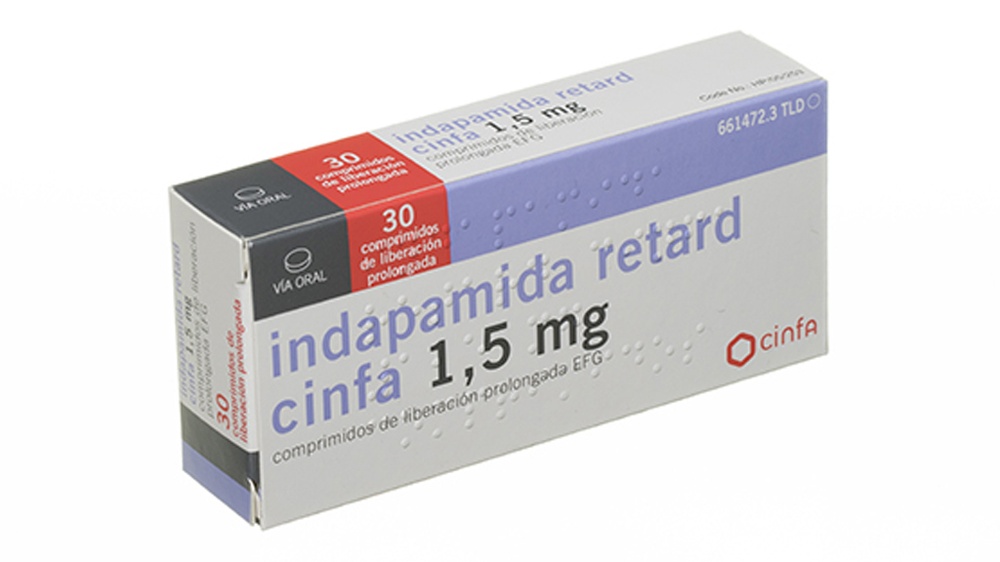
White and round prolonged-release tablets.
10, 14, 15, 20, 30, 50, 60, 90, 100 prolonged-release tablets in blister packs (PVC/aluminum).
Not all pack sizes may be marketed.
Marketing authorization holder and manufacturer
Laboratorios Cinfa, S.A.
Carretera Olaz-Chipi 10. Polígono Industrial Areta
31620 Huarte (Navarra) – Spain
Manufacturer
Laboratorios Cinfa, S.A.
Carretera Olaz-Chipi 10. Polígono Industrial Areta
31620 Huarte (Navarra) – Spain
or
Heumann Pharma GmbH & Co. Generica KG
Südwestpark 50. Gebersdof
90449 Nürnberg
Germany
or
Torrent Pharma (Malta) Limited
HHF 028 Hal Far Industrial Estate, Birzebbuga, BBG, 3000, Malta
or
Labesfal – Laboratórios Almiro, S.A.
Lagedo, Santiago de Besteiros
3465-157 Santiago de Besteiros
Portugal
This medicine is authorized in the Member States of the European Economic Area under the following names:
Spain: indapamide retard cinfa 1.5 mg prolonged-release tablets EFG
Germany: Indapamid Heumann 1.5 mg Retardtabletten
Date of last revision of this leaflet:December 2023
 Detailed information on this medicine is available on the website of the Spanish Agency for Medicines and Health Products (AEMPS) http://www.aemps.gob.es/
You can access detailed and updated information about this medicine by scanning the QR code included in the leaflet and packaging with your smartphone. You can also access this information at the following internet address: https://cima.aemps.es/cima/dochtml/p/70059/P_70059.html
QR code to: https://cima.aemps.es/cima/dochtml/p/70059/P_70059.html
- Country of registration
- Dosage formMODIFIED-RELEASE TABLET, 1.5 mg
- ATC codeC03BA11
- Average pharmacy price2.5 EUR
- Active substance
- Prescription requiredYes
- Manufacturer
- CompositionLACTOSA MONOHIDRATO (144.22 mg mg)
- This information is for reference only and does not constitute medical advice. Always consult a doctor before taking any medication. Oladoctor is not responsible for medical decisions based on this content.
- Alternatives to INDAPAMIDE RETARD CINFA 1.5 mg PROLONGED-RELEASE TABLETSDosage form: TABLET, 2.5 mgActive substance: indapamideManufacturer: Laboratorios Normon S.A.Prescription requiredDosage form: MODIFIED-RELEASE TABLET, 1.5 mgActive substance: indapamideManufacturer: Kern Pharma S.L.Prescription requiredDosage form: MODIFIED-RELEASE TABLET, 1.5 mgActive substance: indapamideManufacturer: Mabo Farma S.A.Prescription required
Online doctors for INDAPAMIDE RETARD CINFA 1.5 mg PROLONGED-RELEASE TABLETS
Discuss questions about INDAPAMIDE RETARD CINFA 1.5 mg PROLONGED-RELEASE TABLETS, including use, safety considerations and prescription review, subject to medical assessment and local regulations.
Get INDAPAMIDE RETARD CINFA 1.5 mg PROLONGED-RELEASE TABLETS Prescription Online
Fill in a 2-min form
Tell us your symptoms, history, and what medicine you're requesting.
Pick a doctor or let us assign
Choose a specialist or we'll match you with the next available doctor.
Doctor reviews your case
Usually within 30 minutes. They may ask follow-up questions via chat.
Collect from any pharmacy
Electronic prescription sent to your email — valid across Spain.
Frequently Asked Questions
INDAPAMIDE RETARD CINFA 1.5 mg PROLONGED-RELEASE TABLETS requires a prescription in Spain. You can check with a doctor online whether this medicine may be appropriate for your situation.
The active ingredient in INDAPAMIDE RETARD CINFA 1.5 mg PROLONGED-RELEASE TABLETS is indapamide. This information helps identify medicines with the same composition but different brand names.
The average pharmacy price for INDAPAMIDE RETARD CINFA 1.5 mg PROLONGED-RELEASE TABLETS is around 2.5 EUR. Prices may vary depending on the manufacturer and dosage form.
INDAPAMIDE RETARD CINFA 1.5 mg PROLONGED-RELEASE TABLETS is manufactured by Laboratorios Cinfa S.A.. Pharmacy brands and packaging may differ depending on the distributor.
Doctors such as Family doctors, Psychiatrists, Dermatologists, Cardiologists, Endocrinologists, Gastroenterologists, Pulmonologists, Nephrologists, Rheumatologists, Hematologists, Infectious disease physicians, Allergists, Geriatricians, Paediatricians, Oncologists may assess whether INDAPAMIDE RETARD CINFA 1.5 mg PROLONGED-RELEASE TABLETS is appropriate, depending on your situation and local regulations. You can book an online consultation to discuss your symptoms and possible next steps.
Spain has a well-developed healthcare infrastructure across major cities such as Madrid, Barcelona, Valencia, and Seville. Pharmacies are widely available and operate under strict regulations, ensuring access to prescribed medications.
You can buy INDAPAMIDE RETARD CINFA 1.5 mg PROLONGED-RELEASE TABLETS in Madrid, Barcelona, Seville, or Valencia at any local pharmacy with a valid prescription.
To obtain a prescription, you can use Oladoctor:
Other medicines with the same active substance (indapamide) include INDAPAMIDE NORMON 2.5 mg FILM-COATED TABLETS, INDAPAMIDE RETARD KERN PHARMA 1.5 mg PROLONGED RELEASE TABLETS, INDAPAMIDE RETARD MABO 1.5 mg PROLONGED-RELEASE TABLETS. These may have different brand names or formulations but contain the same therapeutic ingredient. Always consult a doctor before switching or starting a new medicine.
