






How to use ILVICO COATED TABLETS
Translated with AI
This page provides general information and does not replace a doctor’s consultation. Always consult a doctor before taking any medication. Seek urgent medical care if symptoms are severe.
Show originalContents of the leaflet
Introduction
Package Leaflet: Information for the User
Ilvico Coated Tablets
paracetamol / caffeine / brompheniramine maleate
Read the entire package leaflet carefully before starting to take this medication, as it contains important information for you.
Follow the administration instructions for the medication contained in this package leaflet or as indicated by your doctor or pharmacist exactly.
- Keep this package leaflet, as you may need to read it again.
- If you need advice or more information, consult your pharmacist.
- If you experience side effects, consult your doctor or pharmacist, even if they are side effects not listed in this package leaflet. See section 4.
- You should consult a doctor if your symptoms worsen or do not improve after 5 days.
Contents of the Package Leaflet:
- What Ilvico is and what it is used for.
- What you need to know before taking Ilvico.
- How to take Ilvico.
- Possible side effects.
- Storage of Ilvico.
- Package contents and additional information.
1. What Ilvico is and what it is used for
Ilvico belongs to the group of combination medications for colds.
It is indicated for symptomatic relief in flu-like and catarrhal processes that occur with fever, mild or moderate pain, and nasal secretion.
You should consult a doctor if your symptoms worsen or do not improve after 5 days.

2. What you need to know before taking Ilvico
Do not take Ilvico
- If you are allergic (hypersensitive) to paracetamol, caffeine, brompheniramine maleate, or any of the other components of this medication (listed in section 6).
- If you suffer from mental disorders that occur with nervous excitement, epilepsy, anxiety states, and insomnia (sleep problems).
- If you are or have been in treatment, in the last 14 days, with monoamine oxidase inhibitor (MAOI) medications used to treat depression or Parkinson's disease.
- If you have asthma and have suffered severe side effects in the bronchi and lungs when taking allergy medications.
- If you have any brain injury.
- If you have glaucoma.
- If you have severe liver disease.
- If you have difficulty urinating and/or prostate enlargement.
- Children under 12 years of age cannot take this medication.
Warnings and Precautions
Consult your doctor or pharmacist before starting to take Ilvico.
- Do not take more medication than recommended in section 3. How to take Ilvico.
- Avoid simultaneous use of this medication with other medications that contain paracetamol, as high doses can lead to liver damage. Do not use more than one medication that contains paracetamol without consulting your doctor, as it may cause an overdose.
- Limit your consumption of products that contain caffeine while taking this medication.
- Consult your doctor before taking this medication:
- Avoid drinking alcohol while taking this medication.
During treatment with Ilvico, inform your doctor immediately if
If you have severe diseases, such as severe renal insufficiency or sepsis (when bacteria and their toxins circulate in the blood, causing organ damage), or if you have malnutrition, chronic alcoholism, or are also taking flucloxacillin (an antibiotic). A serious disease called metabolic acidosis (a blood and fluid anomaly) has been reported in patients in these situations when using paracetamol at regular doses for a prolonged period or when taking paracetamol with flucloxacillin. The symptoms of metabolic acidosis may include: severe breathing difficulties with deep and rapid breathing, drowsiness, feeling unwell (nausea) and vomiting.
Taking Ilvico with other medications
Inform your doctor or pharmacist if you are using, have recently used, or may need to use any other medication. As many other medications can affect liver function and increase the risk of liver toxicity.
In particular, if you are using any of the following medications, it may be necessary to modify the dose of some of them or even interrupt treatment:
- Antidepressants, anticonvulsants.
- Other antihistamines.
- Anxiety medications.
- Sleep aids.
- Antibiotics (chloramphenicol) and anti-infective quinolones (such as oxolinic acid, ciprofloxacin), linezolid, erythromycin, and terbinafine.
- Oral contraceptives and estrogen treatments.
- Antidepressants, such as monoamine oxidase inhibitors (MAOIs) or lithium, and other medications for depression and mood: buspirone, phenelzine, fluoxetine, venlafaxine, trazodone, amitriptyline, or nortriptyline.
- Clozapine, used to treat psychosis and bipolar disorders.
- Barbituric medications (used as hypnotics, sedatives, and anticonvulsants).
- Asthma medications (adrenergic bronchodilators and theophylline).
- Medications used to increase urine elimination: loop diuretics such as furosemide.
- Cimetidine, used to treat stomach ulcers.
- Disulfiram, a medication used to treat chronic alcoholism.
- Hydrocylamide, used for some muscle contractions and pains.
- Iron supplements for the treatment of anemia (should be taken 2 hours apart).
- Mexiletine used for heart rhythm disorders.
- Ephedrine, a medication used as a cardiac stimulant.
- Thyroxine, a medication used to treat thyroid diseases.
- Medications to prevent blood clots: oral anticoagulants (acenocoumarol, warfarin).
- Medications used to treat epilepsy: antiepileptics (lamotrigine, phenytoin, or other hydantoins, phenobarbital, methylphenobarbital, primidone, carbamazepine).
- Medications used to treat migraines: ergot alkaloids, triptans, valproic acid.
- Medications used to treat tuberculosis: isoniazid, rifampicin.
- Medications used to lower blood cholesterol levels: colestyramine. (The effect of paracetamol may decrease).
- Medications used to treat gout: probenecid and sulfinpyrazone.
- Medications used to relieve stomach, intestine, and bladder spasms or contractions (anticholinergics).
- Medications used to prevent nausea and vomiting: metoclopramide and domperidone.
- Medications used to treat the human immunodeficiency virus (HIV): zidovudine.
- Medications used to treat high blood pressure and heart rhythm disorders (cardiac arrhythmias), such as propranolol.
- Substances used for heart imaging tests, such as adenosine and dipyridamole. You should avoid taking this medication during the 24 hours prior to the test.
- Amphetamines, as well as analgesics such as cyclobenzaprine, fentanyl, meperidine, or tramadol.
- Activated charcoal, and other products that slow down stomach emptying.
- St. John's Wort (Hypericum perforatum).
- Grapefruit juice.
- Other medications and paracetamol: Inform your doctor or pharmacist if you are taking: flucloxacillin (antibiotic), due to a serious risk of blood and fluid anomaly (called metabolic acidosis) that requires urgent treatment (see section 2)
- .
Interference with analytical tests
If you are going to have any analytical tests (including blood, urine, etc.), inform your doctor that you are taking this medication, as it may alter the results.
Taking Ilvico with food and beverages
Coffee, tea, chocolate, or cola drinks are sources of caffeine. Therefore, it is recommended to moderate the consumption of these products while taking Ilvico. Taking up to 400 mg of caffeine per day in healthy adults is considered safe, so it is important that you consider the total caffeine content in other foods or products while taking this medication.
Taking Ilvico by patients who regularly consume alcohol (three or more alcoholic beverages - beer, wine, liquor... - per day) may cause liver damage.
Concomitant consumption of Ilvico with alcoholic beverages may increase its side effects.
Taking this medication with food does not affect its efficacy.
Use in children
Do not administer to children under 12 years of age.
Use in adults over 65 years
Talk to your doctor before taking brompheniramine, as it is more likely to cause confusion, and you may need to take a lower daily dose. Elderly people are more likely to experience side effects. Consult your doctor before taking this medication.
Pregnancy and breastfeeding
If you are pregnant or breastfeeding, think you may be pregnant, or plan to become pregnant, consult your doctor or pharmacist before using this medication.
Pregnant or breastfeeding women cannot take this medication. Its use will only be considered in case of medical recommendation and under strict supervision, if the benefits outweigh the risks.
Driving and using machines
This medication may cause drowsiness, dizziness, or blurred vision, especially if you drink alcoholic beverages while taking this medication. If the medication causes these effects, do not drive or operate hazardous tools or machines while taking it.
Ilvico contains sodium carboxymethylcellulose (type A)
This medication contains less than 1 mmol of sodium (23 mg) per tablet, which is essentially 'sodium-free'.

3. How to take Ilvico
Follow the administration instructions for the medication contained in this package leaflet or as indicated by your doctor or pharmacist exactly. In case of doubt, consult your doctor or pharmacist again.
The recommended dose is:
Adults
2 tablets (650 mg of paracetamol) every 8 hours. Do not take more than 6 tablets in 24 hours. Do not take more than 3 g of paracetamol every 24 hours (see "Warnings and Precautions" in section 2).
Adolescents from 12 years of age
1 tablet every 6 or 8 hours. Do not take more than 4 tablets in 24 hours.
Children under 12 years of age
Cannot take this medication.
This medication is taken orally.
Tablets should be taken with a little water.
Suspend treatment once symptoms have disappeared.
If symptoms worsen or persist for more than 5 days of treatment, you should consult a doctor.
If you take more Ilvico than you should
If you have taken an overdose, go to a medical center immediately, even if you do not notice symptoms, as they often do not appear until 3 days after taking the overdose, even in cases of severe poisoning. Taking too much paracetamol can cause severe liver damage.
The symptoms of overdose may be: excitement, discomfort, diarrhea, abdominal pain, convulsions, dizziness, nausea, vomiting, loss of appetite, yellowing of the skin and eyes (jaundice), drowsiness, disorientation, and sweating.
Treatment of overdose is most effective if started within 4 hours of taking the medication.
Patients taking barbiturics or chronic alcoholics may be more susceptible to paracetamol overdose toxicity.
In case of overdose or accidental ingestion, go to a medical center immediately or call the Toxicology Information Service (phone 91 562 04 20), indicating the medication and the amount ingested.
4. Possible side effects
Like all medications, this medication can cause side effects, although not everyone experiences them.
Side effects are uncommon with paracetamol.
Stop taking the product and contact your doctor immediately if you notice:
- allergic reactions, e.g., skin rashes, itching, urticaria (hives), swelling of lips, tongue, or throat, or difficulty breathing, anaphylaxis.
- an increase in the number of nosebleeds or notice that you bruise or bleed more easily.
Very rare cases of severe skin reactions have been reported. If a skin reaction occurs, discontinue use and seek medical help immediately.
You should discontinue treatment immediately if you experience dizziness or palpitations (abnormally strong heartbeats).
The following side effects have been observed for which the exact frequency cannot be established: pupil dilation, dry eyes, constipation, alterations in intellectual ability, abdominal pain, fatigue, loss of coordination, confusion, vomiting, or digestion problems. Some children may become hyperactive after taking this medication.
Frequent disorders (observed in 1 to 10 people out of 100):
- Drowsiness, headache, blurred vision, increased respiratory secretions, dry mouth, stomach pain. Some patients, particularly those with prostate enlargement, may have difficulty urinating (urinary retention).
Rare disorders (observed in 1 to 10 people out of 10,000):
- Heart rhythm disorders.
- Decreased blood pressure (hypotension).
- Fainting sensation.
Discomfort.
Convulsions and tremors.
- Liver disorders.
Very rare disorders (observed in less than 1 in 10,000 people):
- Decrease in the number of some blood cells, which can increase the likelihood of infections or include a type of anemia.
- Decrease in blood sugar levels.
- Yellowing of the skin.
- Cloudy urine, painful urination.
- Allergy.
Very rare cases of severe skin reactions have been reported. If a skin reaction occurs, discontinue use and seek medical help immediately.
Other side effects related to caffeine have been observed, for which the exact frequency cannot be established. The most commonly observed effects were: insomnia, restlessness, nervousness, irritability, excitement, and disorientation. Nausea, vomiting, and stomach irritation have also been observed.
You should discontinue treatment immediately if you feel dizzy or experience palpitations (abnormally strong heartbeats).
Frequency not known (cannot be estimated from available data): A serious disease called metabolic acidosis (a blood and fluid anomaly) in patients with severe disease using paracetamol (see section 2).
Reporting side effects:
If you experience any side effects, consult your doctor or pharmacist, even if they are possible side effects not listed in this package leaflet. You can also report them directly through the Spanish Medication Surveillance System for Human Use: http://www.notificaram.es. By reporting side effects, you can contribute to providing more information on the safety of this medication.
5. Storage of Ilvico
Do not store above 30 °C.
Keep this medication out of sight and reach of children.
Do not use this medication after the expiration date shown on the packaging after CAD. The expiration date is the last day of the month indicated.
Medications should not be disposed of through wastewater or household waste. Deposit the packaging and medications you no longer need at the SIGRE collection point in your pharmacy. If in doubt, ask your pharmacist how to dispose of the packaging and medications you no longer need. This will help protect the environment.
6. Package contents and additional information
Composition of Ilvico
The active ingredients are paracetamol 325 mg, caffeine 30 mg, and brompheniramine maleate 3 mg.
The other components are microcrystalline cellulose, sodium carboxymethylcellulose (type A) (derived from potato starch), crospovidone, hypromellose, cellulose powder, magnesium stearate, glycerol (E-422), colloidal anhydrous silica, titanium dioxide (E171), macrogol, talc.
Appearance of the product and package contents
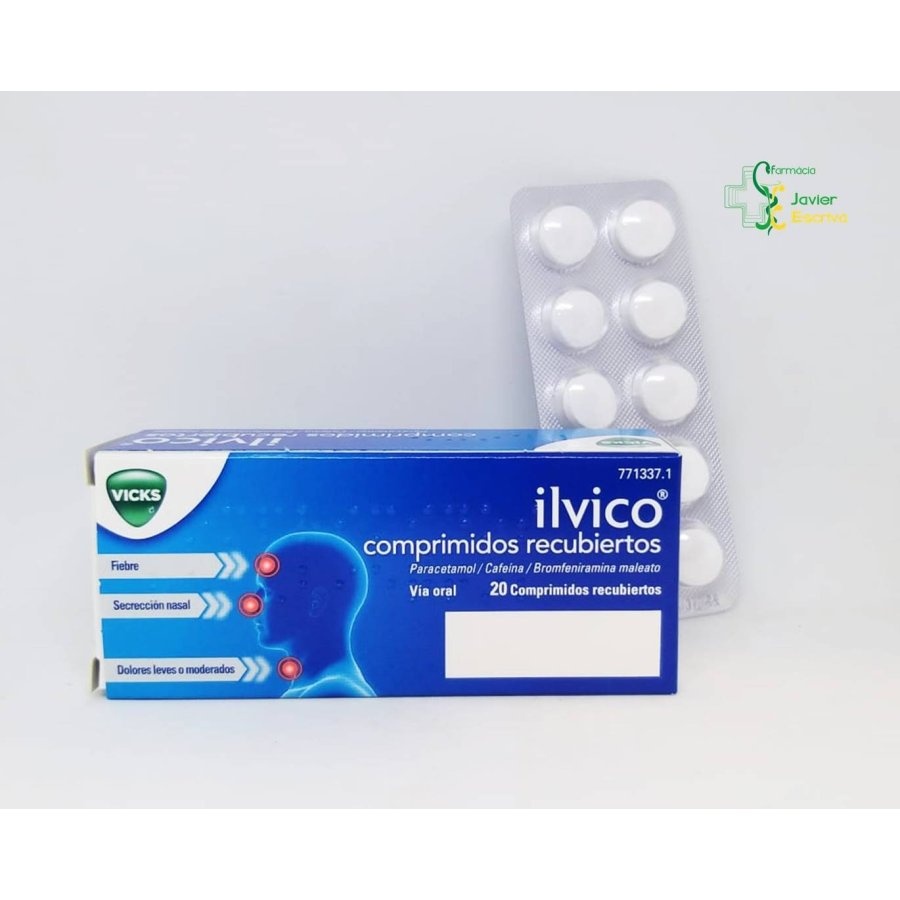
Ilvico are white, coated tablets, presented in blisters, packaged in boxes of 20 tablets.
Marketing authorization holder
Laboratorios Vicks, S.L.
Avda. Bruselas, 24
28108 Alcobendas (Madrid) Spain
Manufacturer
P&G Health Austria GmbH & Co. OG
Hösslgasse 20
9800 Spittal an der Drau
Austria
Local representative
Procter & Gamble España, S.L.U.
Avda. Bruselas, 24
28108 Alcobendas (Madrid) Spain
Date of the last revision of this package leaflet:January 2025
Detailed information about this medication is available on the website of the Spanish Agency for Medicines and Health Products (AEMPS) (http://www.aemps.gob.es/).
-

- Country of registration
- Dosage formTABLET, 325 mg/30 mg/3 mg
- Prescription requiredNo
- Manufacturer
- This information is for reference only and does not constitute medical advice. Always consult a doctor before taking any medication. Oladoctor is not responsible for medical decisions based on this content.
- Alternatives to ILVICO COATED TABLETSDosage form: ORAL SOLUTION/SUSPENSION, 7 mg/mlActive substance: Hederae helicis foliumManufacturer: Engelhard Arzneimittel Gmbh & Co. KgPrescription not requiredDosage form: EFFERVESCENT TABLET, 600 mgActive substance: acetylcysteineManufacturer: Kern Pharma S.L.Prescription not requiredDosage form: EFFERVESCENT TABLET, 600 mgActive substance: acetylcysteineManufacturer: Laboratorios Alter S.A.Prescription required
Online doctors for ILVICO COATED TABLETS
Discuss questions about ILVICO COATED TABLETS, including use, safety considerations and prescription review, subject to medical assessment and local regulations.









Get ILVICO COATED TABLETS Prescription Online
Fill in a 2-min form
Tell us your symptoms, history, and what medicine you're requesting.
Pick a doctor or let us assign
Choose a specialist or we'll match you with the next available doctor.
Doctor reviews your case
Usually within 30 minutes. They may ask follow-up questions via chat.
Collect from any pharmacy
Electronic prescription sent to your email — valid across Spain.
Frequently Asked Questions
ILVICO COATED TABLETS does not require a prescription in Spain. You can check with a doctor online whether this medicine may be appropriate for your situation.
ILVICO COATED TABLETS is manufactured by Laboratorios Vicks S.L.. Pharmacy brands and packaging may differ depending on the distributor.
Doctors such as Family doctors, Psychiatrists, Dermatologists, Cardiologists, Endocrinologists, Gastroenterologists, Pulmonologists, Nephrologists, Rheumatologists, Hematologists, Infectious disease physicians, Allergists, Geriatricians, Paediatricians, Oncologists may assess whether ILVICO COATED TABLETS is appropriate, depending on your situation and local regulations. You can book an online consultation to discuss your symptoms and possible next steps.
Spain has a well-developed healthcare infrastructure across major cities such as Madrid, Barcelona, Valencia, and Seville. Pharmacies are widely available and operate under strict regulations, ensuring access to prescribed medications.
You can buy ILVICO COATED TABLETS in Madrid, Barcelona, Seville, or Valencia at any local pharmacy with a valid prescription.
To obtain a prescription, you can use Oladoctor:
Other medicines with the same active substance () include ABRILAR SYRUP, ACETYLCYSTEINE ABEX 600 mg EFFERVSCENT TABLETS, ACETYLCYSTEINE ALTER 600 mg EFFERVSCENT TABLETS. These may have different brand names or formulations but contain the same therapeutic ingredient. Always consult a doctor before switching or starting a new medicine.
