



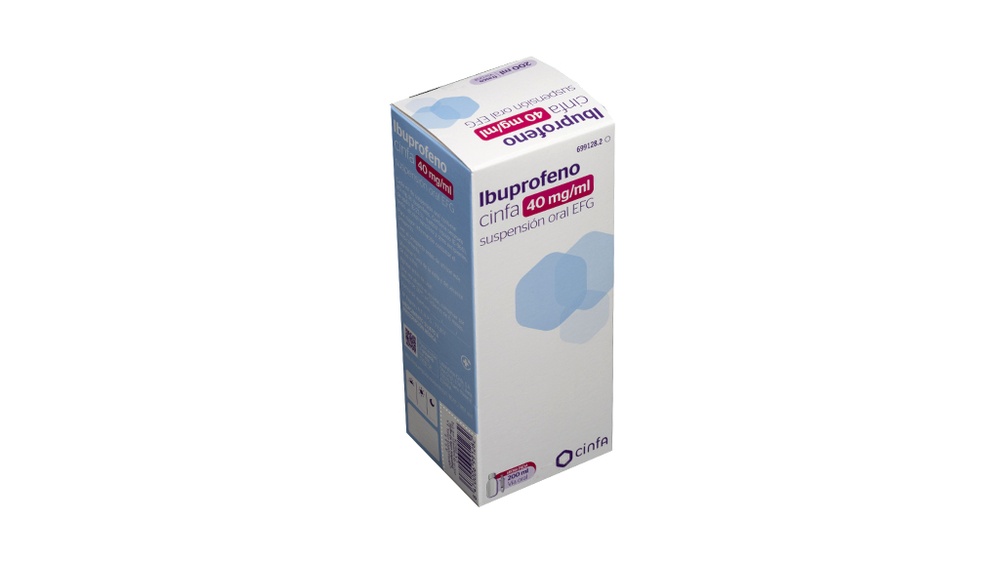
IBUPROFENO 40 mg /Ml Oral Suspension

Prescription review online
A doctor will review your case and decide whether a prescription is medically appropriate.

Talk to a doctor about this medicine
Discuss your symptoms and possible next steps in a quick online consultation.



How to use IBUPROFEN CINFA 40 mg/ml ORAL SUSPENSION
Contents of the leaflet
- Introduction
- What is ibuprofeno cinfa and what is it used for
- What you need to know before you take ibuprofeno cinfa
- How to take ibuprofen cinfa
- Possible side effects
- Conservation of ibuprofen cinfa
- Package contents and additional information
Introduction
Package Leaflet: Information for the User
ibuprofeno cinfa 40 mg/ml oral suspension EFG
Read all of this leaflet carefully before you start taking this medicine because it contains important information for you.
- Keep this leaflet, you may need to read it again.
- If you have any further questions, ask your doctor or pharmacist.
- This medicine has been prescribed for you only. Do not pass it on to others. It may harm them, even if their signs of illness are the same as yours.
- If you get any side effects, talk to your doctor or pharmacist. This includes any possible side effects not listed in this leaflet. See section 4.
Contents of the pack
- What is ibuprofeno cinfa and what is it used for
- What you need to know before you take ibuprofeno cinfa
- How to take ibuprofeno cinfa
- Possible side effects
- Storage of ibuprofeno cinfa
- Contents of the pack and other information
1. What is ibuprofeno cinfa and what is it used for
Ibuprofen belongs to a group of medicines called non-steroidal anti-inflammatory drugs (NSAIDs). These medicines work by changing the body's response to pain and high temperature. Ibuprofeno cinfa is used for the short-term symptomatic treatment of:
- fever,
- mild or moderate pain.

Not sure if this medicine is right for you?
Discuss your symptoms and treatment with a doctor online.
2. What you need to know before you take ibuprofeno cinfa
Do not takeibuprofeno cinfa
- if you are allergic to ibuprofen, to other similar painkillers (NSAIDs), or to any of the other ingredients of this medicine (listed in section 6).
- if you have had breathing problems, asthma, runny nose, swelling of the face and/or hands or hives after taking acetylsalicylic acid or other similar painkillers (NSAIDs).
- if you have had gastrointestinal bleeding or perforation related to previous NSAID use.
- if you have had recurrent stomach (peptic) ulcers or bleeding (two or more episodes of ulcers or bleeding confirmed).
- if you have severe liver or kidney disease.
- if you have severe heart failure.
- if you have had a stroke or other bleeding disorders.
- if you have blood clotting disorders, as ibuprofen may increase the risk of bleeding.
- if you have unexplained changes in blood cell counts.
- if you have severe dehydration (caused by vomiting, diarrhea, or insufficient fluid intake).
Do not take this medicine if you are in the last trimester of pregnancy.
Warnings and precautions
Consult your doctor or pharmacist before starting to take ibuprofeno cinfa
- if you have a hereditary blood disorder (e.g. acute intermittent porphyria).
- if you have blood clotting disorders.
- if you have certain skin diseases (systemic lupus erythematosus [SLE] or mixed connective tissue disease).
- if you have or have had intestinal disease (ulcerative colitis or Crohn's disease), as these conditions may worsen (see section 4 'Possible side effects').
- if you have had high blood pressure or heart failure.
- if you have reduced kidney function.
- if you have liver disorders. When taking ibuprofen for a long time, liver, kidney, and blood tests should be performed regularly.
- caution is advised if you are taking other medicines that may increase the risk of ulcers or bleeding, such as oral corticosteroids (e.g. prednisolone), anticoagulants (e.g. warfarin), or antiplatelet agents (e.g. acetylsalicylic acid).
- if you are taking another NSAID (including COX-2 inhibitors like celecoxib or etoricoxib), as they should not be taken together (see section "Use with other medicines").
- undesirable effects can be minimized by using the minimum effective dose for the shortest possible time.
- in general, the habitual use of (various classes of) painkillers can cause serious and prolonged kidney problems. This risk may increase with physical exertion associated with loss of salts and dehydration. Therefore, it should be avoided.
- prolonged use of any type of painkiller for headaches can worsen them. If this situation is experienced or suspected, medical advice should be sought and treatment should be discontinued. The diagnosis of medication-overuse headache should be suspected in patients who have frequent or daily headaches despite (or due to) the regular use of painkillers.
- if you have or have had asthma or an allergic disease, as you may have difficulty breathing.
- if you have allergic rhinitis, nasal polyps, or chronic obstructive respiratory disease, as there is a higher risk of allergic reactions. The allergic reaction may present as an asthma attack, angioedema, or hives.
- serious skin reactions (such as Stevens-Johnson syndrome) have been very rarely described in connection with the use of NSAIDs. The use of ibuprofen should be discontinued immediately upon noticing the first signs of skin rash, mucosal lesions, or any other sign of allergic reactions.
- if you have chickenpox, it is advised not to use ibuprofen.
- if you have recently undergone major surgery, as close medical monitoring is required.
- if you are dehydrated, as there is a higher risk of kidney problems in dehydrated children.
- NSAIDs can mask the symptoms of infections and fever.
- if you have an infection; see the "Infections" section below.
- With ibuprofen, signs of allergic reaction to this medicine, such as respiratory problems, swelling of the face and neck (angioedema), and chest pain, have been reported. Stop using Ibuprofeno cinfa immediately and contact your doctor or emergency medical services if you notice any of these signs.
Special caution is recommended with ibuprofeno cinfa.
Skin reactions
Serious skin reactions, such as exfoliative dermatitis, erythema multiforme, Stevens-Johnson syndrome, toxic epidermal necrolysis, drug reaction with eosinophilia and systemic symptoms (DRESS), and acute generalized exanthematous pustulosis (AGEP), have been reported in association with ibuprofen treatment. Discontinue treatment with Ibuprofeno cinfa and seek medical attention immediately if you notice any symptoms related to these serious skin reactions described in section 4.
Stop taking ibuprofen and consult your doctor immediately if you experience any skin rash, mucosal lesions, blisters, or other signs of allergy, as these may be the first signs of a serious skin reaction. See section 4.
Infections
Ibuprofen may mask the signs of an infection, such as fever and pain. Consequently, ibuprofen may delay appropriate treatment of the infection, which may increase the risk of complications. This has been observed in bacterial pneumonia and bacterial skin infections related to chickenpox. If you take this medicine while having an infection and the symptoms of the infection persist or worsen, consult a doctor without delay.
There have been reports of gastrointestinal bleeding, ulcers, or perforation, which can be fatal, with all NSAIDs at any time during treatment, with or without previous symptoms or a history of serious gastrointestinal events. In the event of gastrointestinal bleeding or ulcers, treatment should be discontinued immediately. The risk of gastrointestinal bleeding, ulcers, or perforation is higher when increasing the dose of NSAIDs in patients with a history of ulcers, especially if the ulcers are complicated by bleeding or perforation (see section 2 'Do not take ibuprofeno cinfa') and in elderly patients. In these patients, treatment should be started at the lowest available dose. Combination therapy with protective medicines (e.g. misoprostol or proton pump inhibitors) should be considered in these patients and also in those who require concomitant use of low-dose acetylsalicylic acid or other medicines that may increase the risk of gastrointestinal problems.
Pain-relieving and anti-inflammatory medicines like ibuprofen may be associated with a small increased risk of having a heart attack or stroke, especially when used at high doses. Do not exceed the recommended dose or duration of treatment.
You should discuss your treatment with your doctor or pharmacist before taking ibuprofeno cinfa if:
- you have heart problems, including heart failure, angina (chest pain), or if you have had a heart attack, bypass surgery, peripheral artery disease (circulation problems in your legs or feet due to narrowed or blocked arteries), or any type of stroke (including a "mini-stroke" or transient ischaemic attack "TIA").
- you have high blood pressure, diabetes, high cholesterol, have a family history of heart disease or stroke, or if you are a smoker.
Consult your doctor before using ibuprofeno cinfa if your child has any of the above conditions.
Elderly patients
Elderly patients are at a higher risk of adverse events when taking NSAIDs, especially of a gastrointestinal and intestinal nature. See section 4 'Possible side effects' for more information.
Patient with a history of gastrointestinal toxicity, especially elderly patients, should report any unusual abdominal symptoms (especially gastrointestinal bleeding), especially in the early stages of treatment.
Taking ibuprofeno cinfa with other medicines
Tell your doctor or pharmacist if you are taking, have recently taken, or might take any other medicines.
Ibuprofen may affect or be affected by other medicines. For example:
- anticoagulant medicines (e.g. to treat blood clotting problems/prevent blood clotting, e.g. acetylsalicylic acid, warfarin, ticlopidine)
- medicines that lower high blood pressure (e.g. ACE inhibitors like captopril, beta-blockers like atenolol, and angiotensin-II receptor antagonists like losartan)
Other medicines may also affect or be affected by treatment with ibuprofen. Therefore, you should always consult your doctor or pharmacist before using ibuprofen with other medicines.
Please inform your doctor or pharmacist if you are taking, or have recently taken, other medicines, including those obtained without a prescription. In particular, inform them if you are taking:
Other NSAIDs, including COX-2 inhibitors | As they may increase the risk of side effects |
Digoxin (for heart failure) | As the effect of digoxin may be enhanced |
Corticosteroids (medicines containing cortisone or similar substances) | As they may increase the risk of gastrointestinal ulcers or bleeding |
Antiplatelet agents | As they may increase the risk of bleeding |
Low-dose acetylsalicylic acid | As the anticoagulant effect may be affected |
Blood-thinning medicines (such as warfarin) | As ibuprofen may enhance the effects of these medicines |
Phenytoin (for epilepsy) | As the effect of phenytoin may be enhanced |
Selective serotonin reuptake inhibitors (medicines used for depression) | As they may increase the risk of gastrointestinal bleeding |
Lithium (medicine for manic-depressive illness and depression) | As the effect of lithium may be enhanced |
Probenecid and Sulfinpyrazone (medicines for gout) | As they may delay the excretion of ibuprofen |
Medicines for high blood pressure and diuretics | As ibuprofen may reduce the effects of these medicines and may increase the risk to the kidneys |
Potassium-sparing diuretics, e.g. amiloride, potassium canrenoate, spironolactone, triamterene | As they may result in hyperkalemia |
Methotrexate (medicine for cancer or rheumatism) | As the effect of methotrexate may be enhanced |
Tacrolimus and cyclosporin (immunosuppressive medicines) | As kidney damage may occur |
Zidovudine (medicine for HIV/AIDS treatment) | As the use of ibuprofen may increase the risk of intra-articular bleeding or bleeding that causes inflammation in HIV-positive hemophiliacs |
Sulfonylureas (medicines for diabetes) | As blood sugar levels may be affected |
Quinolone antibiotics | As the risk of seizures (fits) may be increased |
Voriconazole and fluconazole (CYP2C9 inhibitors used for fungal infections) | As the effect of ibuprofen may be increased. A reduction in the dose of ibuprofen should be considered, especially when high doses of ibuprofen are administered with voriconazole or fluconazole. |
Baclofen | Baclofen toxicity may develop after starting treatment with ibuprofen. |
Ritonavir | Ritonavir may increase the plasma concentrations of NSAIDs |
Aminoglycosides | NSAIDs may reduce the excretion of aminoglycosides |
Taking ibuprofeno cinfa with alcohol
Do not consume alcohol during the use of ibuprofeno cinfa. The risk of experiencing some side effects, such as those affecting the gastrointestinal tract or the central nervous system, may be increased when taking alcohol during treatment with ibuprofeno cinfa.
Pregnancy, breastfeeding, and fertility
If you are pregnant or breastfeeding, think you may be pregnant, or are planning to have a baby, ask your doctor or pharmacist for advice before taking this medicine.
Pregnancy
Do not use this medicine if you are in the last trimester of pregnancy, as it may harm your baby or cause problems during delivery. It may cause kidney and heart problems in your baby. It may affect your tendency and that of your baby to bleed and may prolong or delay delivery more than expected. You should not take ibuprofen during the first 6 months of pregnancy unless clearly necessary and as directed by your doctor. If you need treatment during this period or while trying to become pregnant, you should take the minimum dose for the shortest possible time. From the 20th week of pregnancy, ibuprofen may cause kidney problems in your baby if taken for more than a few days, which may lead to low levels of the fluid surrounding the baby (oligohydramnios) or narrowing of a blood vessel (ductus arteriosus) in the baby's heart. If you need treatment for more than a few days, your doctor may recommend additional monitoring.
Breastfeeding
Only small amounts of ibuprofen and its breakdown products pass into breast milk. Ibuprofen can be taken during breastfeeding if used at the recommended dose for the shortest possible time.
Fertility
Ibuprofen belongs to a group of medicines (NSAIDs) that may affect female fertility. This effect is reversible when the medicine is stopped.
Driving and using machines
When used for a short period, this medicine has a negligible influence on the ability to drive and use machines.
ibuprofeno cinfa contains sodium benzoate (E-211).This medicine contains 1 mg of sodium benzoate in each ml.
ibuprofeno cinfa contains maltitol (E-965).This medicine contains liquid maltitol. If your doctor has told you that you have an intolerance to some sugars, consult them before taking this medicine.
ibuprofeno cinfa contains sodium.This medicine contains 5.79 mg of sodium (a major component of cooking/table salt) in each ml. This is equivalent to 0.28% of the maximum recommended daily intake of sodium for an adult.
ibuprofeno cinfa contains benzyl alcohol.This medicine contains 0.00016 mg of benzyl alcohol in each ml. Benzyl alcohol may cause allergic reactions.
Benzyl alcohol has been linked to serious adverse effects, including respiratory problems ("gasping syndrome") in children.
Do not administer this medicine to your newborn (up to 4 weeks of age) unless your doctor has recommended it.
This medicine should not be used for more than one week in children under 3 years of age unless advised by your doctor or pharmacist.
Consult your doctor or pharmacist if you are pregnant or breastfeeding. This is because large amounts of benzyl alcohol can accumulate in your body and cause adverse effects (metabolic acidosis).
Consult your doctor or pharmacist if you have liver or kidney disease. This is because large amounts of benzyl alcohol can accumulate in your body and cause adverse effects (metabolic acidosis).
3. How to take ibuprofen cinfa
Follow the administration instructions for this medication exactly as indicated by your doctor or pharmacist. In case of doubt, consult your doctor or pharmacist again.
The lowest effective dose should be used for the shortest time necessary to relieve symptoms. If you have an infection, consult a doctor without delay if symptoms (such as fever and pain) persist or worsen (see section 2).
Recommended dose in case of pain and fever:
Child's weight (age) | What quantity? | How many times in 24 hours?* |
From 5 kg (3-5 months) | 1.25 ml (equivalent to 50 mg of ibuprofen) | 3 times |
7 - 9 kg (6-11 months) | 1.25 ml (equivalent to 50 mg of ibuprofen) | 3 to 4 times |
10 - 15 kg (1-3 years) | 2.5 ml (equivalent to 100 mg of ibuprofen) | 3 times |
16 - 19 kg (4-5 years) | 3.75 ml (equivalent to 150 mg of ibuprofen) | 3 times |
20 - 29 kg (6-9 years) | 5 ml (equivalent to 200 mg of ibuprofen) | 3 times |
30 - 40 kg (10-12 years) | 7.5 ml (equivalent to 300 mg of ibuprofen) (use the syringe twice: 5 ml + 2.5 ml) | 3 times |
*Doses should be administered approximately every 6 to 8 hours.
It is not recommended to use in children under 3 months or weighing less than 5 kg.
In patients with stomach sensitivity, it is recommended to take ibuprofen during meals.
WARNING:Do not administer a dose higher than indicated.
Method of administration with the syringe
For oral use.
- Shake the bottle well.
- Remove the cap from the bottle by pressing it down and twisting it in the opposite direction to the clock hands.
- Insert the syringe firmly into the port (hole) located in the neck of the bottle.
- To fill the syringe, invert the bottle. While holding the syringe, gently pull the plunger down until the suspension reaches the appropriate mark on the syringe.
- Return the bottle to its normal position and remove the syringe from the port by gently twisting it.
- Place the end of the syringe in the child's mouth. Press the plunger slowly to release the suspension gently. Replace the cap after use. Wash the syringe with warm water and let it dry. Keep it out of the reach and sight of children.
Treatment duration
This medication should only be used for a short period. If in children from 6 months of age, this medication is required for more than 3 days or if symptoms worsen, you should consult a doctor.
If the symptoms of the infant (3-5 months) who weighs from 5 kg persist, you should consult a doctor before 24 hours of use.
Consult your doctor if symptoms worsen.
If you take more ibuprofen cinfa than you should
If you have taken more ibuprofen cinfa than you should, or if a child has accidentally ingested the medication, consult a doctor immediately or go to the nearest hospital to find out about the risk and ask for advice on the measures to be taken.
In case of overdose or accidental ingestion, consult your doctor or pharmacist immediately or call the Toxicological Information Service, phone: 91 562 04 20, indicating the medication and the amount ingested. It is recommended to take the package and the prospectus of the medication to the healthcare professional.
Symptoms of overdose may include nausea, stomach pain, vomiting (which may contain bloody sputum), gastrointestinal bleeding (see section 4), diarrhea, headache, ringing in the ears, confusion, and involuntary eye movement. Agitation, disorientation, or coma may also occur. At high doses, symptoms of drowsiness, chest pain, palpitations, loss of consciousness, convulsions (mainly in children), weakness, and dizziness, blood in the urine, low potassium levels in the blood, chills, and breathing problems have been reported.
Additionally, the prothrombin time/INR may be prolonged, probably due to interference with the actions of circulating coagulation factors.
Acute kidney failure and liver damage may occur.
Exacerbation of asthma is possible in asthmatics. Additionally, there may be low blood pressure and reduced breathing.
If you forgot to take ibuprofen cinfa
Do not take a double dose to make up for forgotten doses. If you forget to take or administer a dose, do so as soon as you remember and then take the next dose according to the previously indicated administration interval.
If you have any other questions about the use of this medication, ask your doctor or pharmacist.

Started taking the medicine and have questions?
Discuss your symptoms and treatment with a doctor online.
4. Possible side effects
Like all medications, this medication can cause side effects, although not everyone will experience them. Side effects can be minimized by taking the lowest dose for the shortest time necessary to relieve symptoms. You or your child may experience one of the known side effects of NSAIDs. In such a case, or if you have any concerns about this, stop administering this medication and consult your doctor as soon as possible. Elderly patients who use this medication are at a higher risk of developing problems associated with side effects.
STOP TAKING this medication and seek immediate medical attention if you or your child develops:
- Signs of intestinal bleedingsuch as: severe abdominal pain, black stools, vomiting blood or dark particles that resemble coffee grounds.
- Signs of a rare but serious allergic reactionsuch as worsening of asthma, wheezing or unexplained shortness of breath, swelling of the face, tongue, or throat, difficulty breathing, rapid heartbeat, decreased blood pressure that causes shock. These disorders can occur even when using this medication for the first time. If you observe any of these symptoms, consult a doctor immediately.
- Severe skin reactionssuch as a rash that covers the entire body, exfoliation, blisters, or skin peeling.
- Red spots that are not raised, in a target or circular shape on the trunk, often with blisters in the center, skin peeling, mouth, throat, nose, genital, and eye ulcers. These severe skin rashes can be preceded by fever and flu-like symptoms [exfoliative dermatitis, erythema multiforme, Stevens-Johnson syndrome, toxic epidermal necrolysis/Lyell syndrome].
- Widespread rash, high body temperature, and swollen lymph nodes (DRESS syndrome).
- Widespread, red, and scaly rash, with bumps under the skin and blisters, accompanied by fever. The symptoms usually appear at the start of treatment (acute generalized exanthematous pustulosis).
If you or your child has any of the following side effects, they worsen, or you notice any side effect not mentioned, inform your doctor.
Frequent (may affect up to 1 in 10 people)
- Stomach and intestinal problems such as heartburn, stomach pain, and nausea, indigestion, diarrhea, vomiting, flatulence (gas), and constipation, and mild blood loss in the stomach and/or intestine that can cause anemia in exceptional cases.
Uncommon (may affect up to 1 in 100 people)
- Gastrointestinal ulcers, perforation, or bleeding, inflammation of the mucous membrane of the mouth with ulceration, worsening of existing intestinal disease (colitis or Crohn's disease), gastritis.
- Central nervous system disorders, such as headache, dizziness, insomnia, agitation, irritability, or fatigue.
- Visual disturbances.
- Various skin rashes.
- Hypersensitivity reactions with hives and itching.
Rare (may affect up to 1 in 1,000 people)
- Tinnitus (ringing in the ears).
- Increased concentrations of urea in the blood, pain in the sides and/or abdomen, blood in the urine, and fever may be signs of kidney damage (papillary necrosis).
- Increased concentrations of uric acid in the blood.
- Decreased hemoglobin levels.
Very rare (may affect up to 1 in 10,000 people)
- Esofagitis, pancreatitis, and formation of intestinal stenosis of the diaphragm type.
- Heart failure, heart attack, and swelling of the face and hands (edema).
- Decreased urine output and inflammation (especially in patients with hypertension or reduced kidney function), swelling (edema), and cloudy urine (nephrotic syndrome), inflammatory kidney disease (interstitial nephritis) that can lead to acute kidney failure. If you experience any of the above symptoms or have a feeling of sadness, stop taking ibuprofen and consult your doctor immediately, as it may be the first signs of kidney damage or failure.
- Psychotic reactions, depression.
- High blood pressure, vasculitis.
- Palpitations.
- Liver dysfunction, liver damage (the first signs may be skin discoloration), especially during long-term treatment, liver failure, acute liver inflammation (hepatitis).
- Blood cell production problems - the first symptoms are: fever, sore throat, superficial mouth ulcers, flu-like symptoms, excessive fatigue, nosebleeds, and skin and bleeding of unknown origin. In these cases, treatment should be suspended immediately and a doctor consulted. Do not self-medicate with pain relievers or antipyretic medications.
- Severe skin infections and soft tissue complications during chickenpox infection.
- Worsening of inflammation-related infections (e.g., necrotizing fasciitis) associated with the use of some pain relievers (NSAIDs) has been described. If signs of infection or worsening appear, you should go to the doctor immediately. It should be evaluated whether antibiotic therapy is necessary.
- Symptoms of aseptic meningitis such as stiff neck, headache, nausea, vomiting, fever, or altered consciousness during ibuprofen treatment have been observed. It is more likely to affect patients with autoimmune disorders (e.g., SLE, mixed connective tissue disease). If this happens, contact your doctor immediately.
- Severe skin reactions such as skin rashes with redness and blisters (e.g., Stevens-Johnson syndrome, erythema multiforme, toxic epidermal necrolysis/Lyell syndrome), hair loss (alopecia).
Frequency not known (cannot be estimated from available data)
- Respiratory tract reactivity including asthma, bronchospasm, or shortness of breath.
- A severe skin reaction known as DRESS syndrome may occur. The symptoms of DRESS syndrome include: skin rash, swollen lymph nodes, and elevated eosinophils (a type of white blood cell).
- Widespread, red, scaly rash, with bumps under the skin and blisters, mainly located in skin folds, trunk, and upper limbs, accompanied by fever at the start of treatment (acute generalized exanthematous pustulosis). Stop taking Ibuprofeno Cinfa if you present these symptoms and seek medical attention immediately. See also section 2.
- The skin becomes sensitive to light.
- Chest pain, which can be a sign of a potentially serious allergic reaction called Kounis syndrome.
Medications of this type may be associated with a slight increase in the risk of myocardial infarction or stroke.
Reporting of side effects
If you experience any type of side effect, consult your doctor or pharmacist, even if it is a possible side effect not listed in this prospectus. You can also report them directly through the Spanish Pharmacovigilance System for Human Use Medicines: https://www.notificaram.es. By reporting side effects, you can contribute to providing more information on the safety of this medication.
5. Conservation of ibuprofen cinfa
Keep this medication out of sight and reach of children.
This medication does not require special storage conditions.
Once the package is opened, store below 30°C for a maximum of 6 months .
Do not use this medication after the expiration date that appears on the package after CAD. The expiration date is the last day of the month indicated.
Medications should not be thrown down the drain or into the trash. Deposit the packages and medications you no longer need at the SIGRE Point in the pharmacy. In case of doubt, ask your pharmacist how to dispose of the packages and medications you no longer need. This way, you will help protect the environment.
6. Package contents and additional information
Composition of ibuprofen cinfa
- The active ingredient is ibuprofen. Each ml of oral suspension contains 40 mg of ibuprofen.
- The other components are: sodium benzoate (E-211), anhydrous citric acid, sodium citrate, sodium saccharin, sodium chloride, hypromellose, xanthan gum, liquid maltitol (E-965), thaumatin (E-957), strawberry flavor (natural flavoring preparations, corn maltodextrin, triethyl citrate (E-1505), propylene glycol (E-1520), and benzyl alcohol), glycerol (E-422), and purified water.
Appearance of the product and package contents
Ibuprofeno Cinfa is a viscous, white or almost white oral suspension with a strawberry flavor. It is packaged in a topaz-colored PET bottle with a child-resistant closure, made of polyethylene. It contains a 5 ml graduated syringe with a polypropylene cylinder and a polyethylene piston.
It is available in 30, 100, 150, and 200 ml packages.
Only some package sizes may be marketed.
Marketing authorization holder and manufacturer
Marketing authorization holder
Laboratorios Cinfa, S.A.
Carretera Olaz-Chipi, 10. Polígono Industrial Areta
31620 Huarte (Navarra) – Spain
Manufacturer
Laboratorios Farmasierra Manufacturing, S.L.
Ctra. Irún, Km 26,200
San Sebastián de los Reyes (Madrid)
Spain
FARMALIDER, S.A.
c/ Aragoneses 2
28108- Alcobendas Madrid
Spain
ZINEREO PHARMA, S.L.U
A Relva, S.N
O Porriño 36410 Pontevedra (Spain)
Laboratorios Cinfa, S.A.
Carretera Olaz-Chipi, 10. Polígono Industrial Areta
31620 Huarte (Navarra) – Spain
DELPHARM BLADEL BV
Industrieweg 1
5531 AD Bladel
Netherlands
EDEFARM, S.L.
Polígono Industrial Enchilagar del Rullo, 117
Villamarchante, Valencia, 46191, Spain
LABORATORIOS BASI INDUSTRIA FARMACEUTICA S.A.
Parque Industrial Manuel Lourenco Ferreira Lote 8 15 E 16,
Mortagua, 3450-232, Portugal
Date of the last revision of this prospectus: November 2024
Detailed and updated information on this medication is available on the website of the Spanish Agency for Medicines and Health Products (AEMPS)http://www.aemps.gob.es/
You can access detailed and updated information about this medication by scanning the QR code included in the prospectus and packaging with your mobile phone (smartphone). You can also access this information at the following internet address: https://cima.aemps.es/cima/dochtml/p/77857/P_77857.html
QR code to: https://cima.aemps.es/cima/dochtml/p/77857/P_77857.html
- Country of registration
- Dosage formORAL SOLUTION/SUSPENSION, 40 mg/ml
- ATC codeM01AE01
- Average pharmacy price5 EUR
- Active substance
- Prescription requiredYes
- Manufacturer
- CompositionGLICEROL (E 422) (100 mg mg), MALTITOL LIQUIDO E965 (500 mg mg), BENZOATO DE SODIO (E 211) (1 mg mg), CITRATO DE SODIO (E-331) (7 P/P mg), CLORURO DE SODIO (10 mg mg), SACARINA SODICA (0,5 mg mg)
- This information is for reference only and does not constitute medical advice. Always consult a doctor before taking any medication. Oladoctor is not responsible for medical decisions based on this content.
- Alternatives to IBUPROFEN CINFA 40 mg/ml ORAL SUSPENSIONDosage form: ORAL SOLUTION/SUSPENSION, 600 mg ibuprofenActive substance: ibuprofenManufacturer: Laboratorio De Aplicaciones Farmacodinamicas S.A.Prescription requiredDosage form: ORAL SOLUTION/SUSPENSION, 200 mgActive substance: ibuprofenManufacturer: Laboratorio De Aplicaciones Farmacodinamicas S.A.Prescription requiredDosage form: ORAL SOLUTION/SUSPENSION, 20 mg/mlActive substance: ibuprofenManufacturer: Laboratorio De Aplicaciones Farmacodinamicas S.A.Prescription required
Online doctors for IBUPROFEN CINFA 40 mg/ml ORAL SUSPENSION
Discuss questions about IBUPROFEN CINFA 40 mg/ml ORAL SUSPENSION, including use, safety considerations and prescription review, subject to medical assessment and local regulations.









Get IBUPROFEN CINFA 40 mg/ml ORAL SUSPENSION Prescription Online
Fill in a 2-min form
Tell us your symptoms, history, and what medicine you're requesting.
Pick a doctor or let us assign
Choose a specialist or we'll match you with the next available doctor.
Doctor reviews your case
Usually within 30 minutes. They may ask follow-up questions via chat.
Collect from any pharmacy
Electronic prescription sent to your email — valid across Spain.
Frequently Asked Questions
IBUPROFEN CINFA 40 mg/ml ORAL SUSPENSION requires a prescription in Spain. You can check with a doctor online whether this medicine may be appropriate for your situation.
The active ingredient in IBUPROFEN CINFA 40 mg/ml ORAL SUSPENSION is ibuprofen. This information helps identify medicines with the same composition but different brand names.
The average pharmacy price for IBUPROFEN CINFA 40 mg/ml ORAL SUSPENSION is around 5 EUR. Prices may vary depending on the manufacturer and dosage form.
IBUPROFEN CINFA 40 mg/ml ORAL SUSPENSION is manufactured by Laboratorios Cinfa S.A.. Pharmacy brands and packaging may differ depending on the distributor.
Doctors such as Family doctors, Psychiatrists, Dermatologists, Cardiologists, Endocrinologists, Gastroenterologists, Pulmonologists, Nephrologists, Rheumatologists, Hematologists, Infectious disease physicians, Allergists, Geriatricians, Paediatricians, Oncologists may assess whether IBUPROFEN CINFA 40 mg/ml ORAL SUSPENSION is appropriate, depending on your situation and local regulations. You can book an online consultation to discuss your symptoms and possible next steps.
Spain has a well-developed healthcare infrastructure across major cities such as Madrid, Barcelona, Valencia, and Seville. Pharmacies are widely available and operate under strict regulations, ensuring access to prescribed medications.
You can buy IBUPROFEN CINFA 40 mg/ml ORAL SUSPENSION in Madrid, Barcelona, Seville, or Valencia at any local pharmacy with a valid prescription.
To obtain a prescription, you can use Oladoctor:
Other medicines with the same active substance (ibuprofen) include ALGIDRIN 600 POWDER FOR ORAL SUSPENSION, ALGIDRIN INFANTIL 200 mg POWDER FOR ORAL SUSPENSION, ALGIDRIN PEDIATRIC 20 mg/mL ORAL SUSPENSION. These may have different brand names or formulations but contain the same therapeutic ingredient. Always consult a doctor before switching or starting a new medicine.
