


HIBISCRUB 40 mg/ml CUTANEOUS SOLUTION
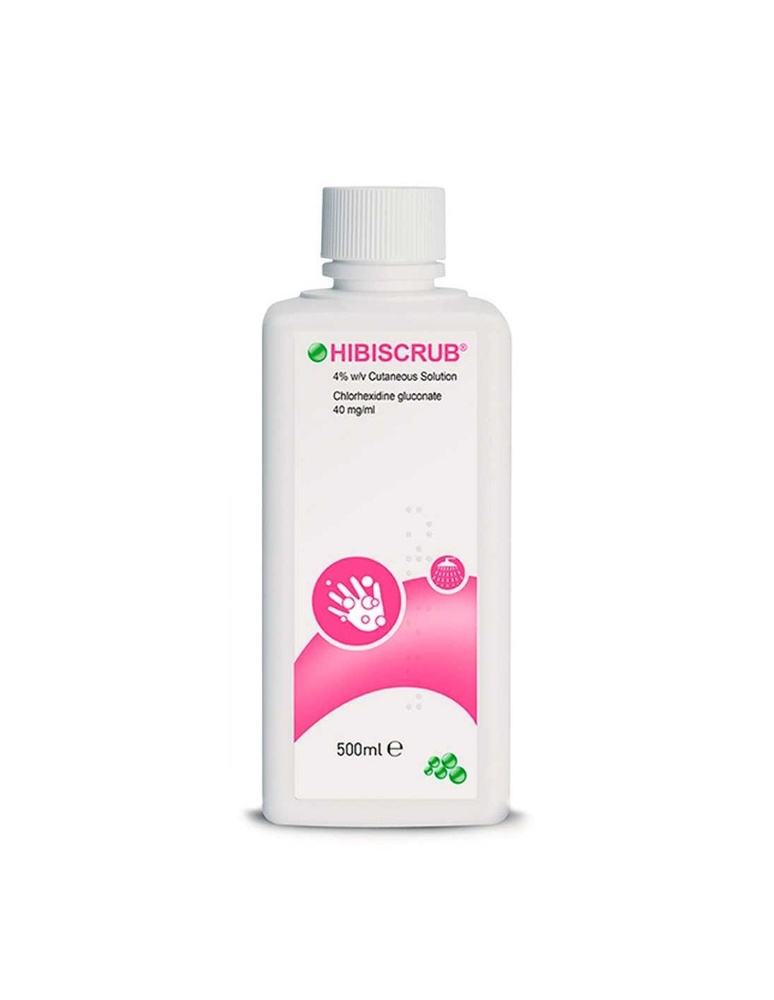



How to use HIBISCRUB 40 mg/ml CUTANEOUS SOLUTION
Translated with AI
This page provides general information and does not replace a doctor’s consultation. Always consult a doctor before taking any medication. Seek urgent medical care if symptoms are severe.
Show originalContents of the leaflet
Introduction
Package Leaflet: Information for the User
Hibiscrub 40 mg/ml Cutaneous Solution
Chlorhexidine digluconate
Read the entire package leaflet carefully before starting to use this medication, as it contains important information for you.
- Follow the administration instructions for the medication contained in this package leaflet or as indicated by your doctor, pharmacist, or nurse.
- Keep this package leaflet, as you may need to read it again.
- If you need advice or more information, consult your pharmacist.
- If you experience side effects, consult your doctor, pharmacist, or nurse, even if they are side effects not listed in this package leaflet. See section 4.
Contents of the Package Leaflet
- What Hibiscrub is and what it is used for
- What you need to know before starting to use Hibiscrub
- How to use Hibiscrub
- Possible side effects
- Storage of Hibiscrub
- Package Contents and Additional Information
1. What Hibiscrub is and what it is used for
Hibiscrub belongs to a group of medications called antiseptics and disinfectants.
It is indicated for adults and children as an antiseptic for hand washing in surgery and for healthcare personnel, and as an antiseptic for pre- and post-operative skin.

2. What you need to know before starting to use Hibiscrub
Do not use Hibiscrub
- if you are allergic to chlorhexidine digluconate or any of the other components of this medication (listed in section 6).
- Hibiscrub contains soybean oil. Do not use this medication in case of peanut or soy allergy.
Warnings and Precautions
Consult your doctor, pharmacist, or nurse before starting to use Hibiscrub.
- External use on the skin. Do not ingest.
- In case of accidental contact with the ears, rinse immediately with plenty of water.
- Hibiscrub should not come into contact with the eyes due to the risk of visual impairment. If it comes into contact with the eyes, rinse immediately and abundantly with water. In case of irritation, redness, or pain in the eyes, or visual disturbances, consult a doctor immediately. Serious cases of persistent corneal injury have been reported when similar products have accidentally come into contact with the eyes during surgical procedures in patients under general anesthesia (deep sleep induced without pain).
- Do not use in case of deep and extensive wounds.
- In case of repeated applications, applications on very extensive areas, or when using dressings that cover the affected area, the product may penetrate the skin and produce unwanted effects.
- Clothes that have come into contact with Hibiscrub should not be washed with bleach or other hypochlorites, as this may cause a brownish discoloration of the tissues, but with domestic detergents based on sodium perborate.
- Use with caution in neonates, especially in premature babies. Hibiscrub can cause chemical burns on the skin.
- Hibiscrub is flammable. Do not use it with ignition sources until it is dry.
Children and Elderly Patients
There are no special dosage recommendations for children and elderly patients. The normal adult dose is suitable unless otherwise recommended by the doctor.
Other Medications and Hibiscrub
Inform your doctor or pharmacist if you are using, have recently used, or may need to use any other medication.
Avoid using several disinfectants at the same time or successively, except with other cationic compounds.
Do not use in combination or after the application of anionic soaps, acids, heavy metal salts, and iodine.
Pregnancy, Breastfeeding, and Fertility
If you are pregnant or breastfeeding, think you may be pregnant, or plan to become pregnant, consult your doctor or pharmacist before using this medication.
There is no evidence of adverse effects on the fetus from the use of this medication for hand washing during pregnancy and breastfeeding.
Driving and Using Machines
No effects on driving ability or use of machines have been described after using this medication.
Hibiscrubcontains isopropyl alcohol and citrus perfume
This medication contains 40 mg of isopropyl alcohol per ml. It may cause dryness, irritation, redness, or a burning sensation on the skin. Allergic contact dermatitis or contact allergies are very rare.
This medication contains fragrances with 3-Methyl-4-(2,6,6-trimethyl-2-cyclohexen-1-yl)-3-buten-2-one, Amyl cinnamaldehyde, Amyl cinnamaldehyde alcohol, Anisic alcohol, Benzyl alcohol, Benzyl benzoate, Benzyl cinnamate, Benzyl salicylate, Cinnamaldehyde, Cinnamyl alcohol, Citral, Citronellol, Coumarin, d-Limonene, Eugenol, Farnesol, Geraniol, Hexyl cinnamaldehyde, Hydroxycitronellal, Hydroxy-methylpentyl-cyclohexenecarboxaldehyde, Isoeugenol, Lilial, Linalool, Methyl heptin carbonate, Oak moss extract, and Treemoss extract. These may cause allergic reactions.
The fragrance also contains Bergamot oil which contains bergapten, Soybean oil, Ethanol, Methyl benzoate, Benzoic acid, Peru balsam, Formaldehyde, and Sodium lauryl sulfate.
Bergamot oil which contains bergapten may increase sensitivity to UV light (natural or artificial daylight).
Etanol may cause a burning sensation on damaged skin.
Benzoic acid, Benzyl benzoate, and Methyl benzoate may cause local irritation. Benzoic acid, Benzyl benzoate, and Methyl benzoate may increase the risk of jaundice (yellowing of the skin and eyes) in newborns (up to 4 weeks old).
Peru balsam may cause skin reactions.
Formaldehyde may cause local skin reactions (such as contact dermatitis).
Sodium lauryl sulfate may cause local skin reactions (such as itching or burning sensation) or increase skin reactions caused by other medications when applied to the same area.
3. How to use Hibiscrub
Follow the administration instructions for the medication contained in this package leaflet or as indicated by your doctor or pharmacist. In case of doubt, ask your doctor or pharmacist.
Cutaneous use.
Surgical hand antisepsis:
Wet hands and forearms, apply 5 ml of Hibiscrub, and wash for 1 minute, cleaning nails with a brush, rinse, and apply another 5 ml for 2 minutes; rinse and dry.
Antisepsis of healthcare personnel's hands:
Wet hands and forearms, apply 5 ml of Hibiscrub, and wash for 1 minute; rinse and dry.
Pre-operative skin antisepsis:
Wash the entire body (bath or shower) at least twice, usually the day before and the day of the operation, as follows: the day before the operation, wash with 25 ml of Hibiscrub from the face downwards, paying attention to the areas around the nose, armpits, navel, groin, and perineum. Then rinse and repeat the wash with another 25 ml, including the hair. Finally, rinse and dry. This procedure will be repeated the next day. For bedridden patients, apply the usual washing technique in bed. Perform conventional antisepsis of the surgical site with the patient in the operating room.
Post-operative skin antisepsis:
From the third day after the surgical procedure, wash the entire body, excluding the surgical site, following the pre-operative skin antisepsis procedure.
If you use more Hibiscrub than you should
In case of overdose or accidental ingestion, consult your doctor or pharmacist immediately or call the Toxicology Information Service, phone: 91 562 04 20, indicating the medication and the amount ingested.

4. Possible Side Effects
Like all medications, this medication can cause side effects, although not everyone will experience them.
Serious Side Effects:
Frequency not known (cannot be estimated from available data):
- Severe allergic reactions (anaphylactic reaction) that can cause difficulty breathing, weakness, collapse, and death, and may be preceded by swelling (particularly lip, tongue, and facial swelling) or rash.
- Chemical burns in neonates.
At the first signs of these reactions, inform your doctor, pharmacist, or nurse and immediately stop using Hibiscrub.
Other possible side effects are:
- Frequency not known (cannot be estimated from available data): skin allergic disorders, skin inflammation (dermatitis), itching (pruritus), skin redness (erythema), eczema, rash, urticaria (hives), skin irritation, and blisters.
- Corneal injury (injury to the surface of the eye) and permanent eye injury, including permanent visual impairment (after accidental eye exposure during surgical procedures in the head, face, and neck) in patients under general anesthesia (deep sleep induced without pain).
Reporting Side Effects
If you experience any side effects, consult your doctor or pharmacist, even if they are side effects not listed in this package leaflet. You can also report them directly through the Spanish Medication Surveillance System for Human Use: https://www.notificaram.es. By reporting side effects, you can help provide more information on the safety of this medication.
5. Storage of Hibiscrub
Keep this medication out of the sight and reach of children.
Do not use this medication after the expiration date shown on the bottle after 'EXP'. The expiration date is the last day of the month indicated.
Do not store above 25°C.
Medications should not be disposed of through wastewater or household waste. Deposit the packaging and any unused medication in the pharmacy's SIGRE collection point. If in doubt, ask your pharmacist how to dispose of the packaging and any unused medication. This will help protect the environment.
6. Package Contents and Additional Information
Hibiscrub Composition
- The active ingredient is chlorhexidine digluconate. Each ml contains 40 mg of chlorhexidine digluconate.
- The other ingredients (excipients) are: PEG-7-glyceryl cocoate, glycerol (E422), D-gluconolactone, isopropyl alcohol, lauryldimethylamine oxide, citrus perfume, polyoxyethylene-polyoxypropylene copolymer (poloxamer 237), Ponceau 4R (E124), sodium hydroxide (E524), and purified water.
Appearance of the Product and Package Contents
Hibiscrub is presented in 500 ml HDPE bottles.
Marketing Authorization Holder
Mölnlycke Health Care AB
Entreprenörsstråket 21
SE-431 53 Mölndal
Sweden
Manufacturer
Société de Production Pharmaceutique et d'Hygiène (SPPH)
7 Impasse des Boussenots
21800 Quetigny
France
Local Representative
Mölnlycke Healthcare, S.L.
Date of the Last Revision of this Package Leaflet: June 2024
Detailed and updated information on this medication is available on the website of the Spanish Agency for Medicines and Health Products (AEMPS) http://www.aemps.gob.es/
- Country of registration
- Dosage formTOPICAL SOLUTION, 0.04 g chlorhexidine digluconate/ ml
- ATC codeD08AC02
- Active substance
- Prescription requiredNo
- Manufacturer
- This information is for reference only and does not constitute medical advice. Always consult a doctor before taking any medication. Oladoctor is not responsible for medical decisions based on this content.
- Alternatives to HIBISCRUB 40 mg/ml CUTANEOUS SOLUTIONDosage form: TOPICAL SOLUTION, 20 mg/mlActive substance: chlorhexidineManufacturer: Vesismin S.L.U.Prescription not requiredDosage form: EMULSION, 20 mg/mlActive substance: chlorhexidineManufacturer: Vesismin S.L.U.Prescription not requiredDosage form: TOPICAL SOLUTION, 20 MG/MLActive substance: chlorhexidineManufacturer: Lainco S.A.Prescription not required


Online doctors for HIBISCRUB 40 mg/ml CUTANEOUS SOLUTION
Discuss questions about HIBISCRUB 40 mg/ml CUTANEOUS SOLUTION, including use, safety considerations and prescription review, subject to medical assessment and local regulations.





Frequently Asked Questions
