



HALOPERIDOL 10 mg Tablets

Prescription review online
A doctor will review your case and decide whether a prescription is medically appropriate.

Talk to a doctor about this medicine
Discuss your symptoms and possible next steps in a quick online consultation.



How to use HALOPERIDOL PRODES 10 mg TABLETS
Contents of the leaflet
- Introduction
- What is Haloperidol Prodes and what is it used for
- What you need to know before you take Haloperidol Prodes
- How to take Haloperidol Prodes
- Possible Adverse Effects
- Storage of Haloperidol Prodes
- Package contents and additional information
Introduction
Package Leaflet: Information for the User
Haloperidol Prodes 10 mg tablets
Read all of this leaflet carefully before you start taking this medicine because it contains important information for you.
- Keep this leaflet, you may need to read it again. If you have any further questions, ask your doctor or pharmacist.
- This medicine has been prescribed for you only. Do not pass it on to others. It may harm them, even if their signs of illness are the same as yours.
- If you get any side effects, talk to your doctor or pharmacist. This includes any possible side effects not listed in this leaflet. See section 4.
Contents of the pack
- What is Haloperidol Prodes and what is it used for
- What you need to know before you take Haloperidol Prodes
- How to take Haloperidol Prodes
- Possible side effects
- Storage of Haloperidol Prodes
- Contents of the pack and other information
1. What is Haloperidol Prodes and what is it used for
The name of this medicine is Haloperidol Prodes.
Haloperidol Prodes contains the active substance haloperidol, which belongs to a group of medicines called ‘antipsychotics’.
Haloperidol Prodes is used in adult, adolescent, and child patients to treat diseases that affect the way of thinking, feeling, or behaving. These include mental health problems (such as schizophrenia and bipolar disorder) and behavioral problems.
These diseases can make the patient:
- Feel confused (confusional syndrome).
- See, hear, feel, or smell things that are not real (hallucinations).
- Believe things that are not true (delusions).
- Become extremely suspicious (paranoia).
- Feel very excited, agitated, emotional, impulsive, or hyperactive.
- Become very aggressive, hostile, or violent.
In adolescents and children, Haloperidol Prodes is used for the treatment of schizophrenia in patients from 13 to 17 years of age, and for treating behavioral problems in patients from 6 to 17 years of age.
Haloperidol Prodes is also used:
- In adolescents and children from 10 to 17 years of age, and in adults to treat movements or sounds that the patient cannot control (tics), such as in severe Tourette's syndrome.
- In adults, to help control movements in Huntington's disease.
Haloperidol Prodes is sometimes used when other medicines or treatments have not worked or have caused unacceptable side effects.

Not sure if this medicine is right for you?
Discuss your symptoms and treatment with a doctor online.
2. What you need to know before you take Haloperidol Prodes
Do not take Haloperidol Prodes
- If you are allergic to haloperidol or any of the other ingredients of this medicine (listed in section 6).
- If your ability to perceive has decreased or you feel that you or your reactions have become particularly slow.
- If you have Parkinson's disease.
- If you suffer from a type of dementia called ‘dementia with Lewy bodies’.
- If you have progressive supranuclear palsy (PSP).
- If you have a heart disorder called ‘prolonged QT interval’ or any other heart rhythm problem that shows up as an abnormal tracing on an electrocardiogram (ECG).
- If you have heart failure or have recently had a heart attack.
- If you have low levels of potassium in your blood that have not been treated.
- If you are taking any of the medicines listed in the section ‘Other medicines and Haloperidol Prodes - Do not take Haloperidol Prodes if you are taking certain medicines for the following disorders’.
Do not take this medicine if any of the above applies to you. If you are not sure, consult your doctor or pharmacist before taking Haloperidol Prodes.
Warnings and precautions
Serious side effects
Haloperidol Prodes can cause heart problems, problems controlling body or limb movements, and a serious side effect called ‘neuroleptic malignant syndrome’. It can also cause severe allergic reactions and blood clots. You should be aware of the possible side effects while taking Haloperidol Prodes, as you may need urgent medical treatment. See the section ‘Look out for serious side effects’ in section 4.
Elderly patients and patients with dementia
A small increase in the number of deaths and strokes has been reported in elderly patients with dementia who were taking antipsychotic medicines. Consult your doctor or pharmacist before taking Haloperidol Prodes if you are an elderly person, especially if you suffer from dementia.
Consult your doctor or pharmacist if:
- You have a slow heart rate, suffer from heart disease, or if a close relative has died suddenly from heart problems.
- You have low blood pressure or feel dizzy when standing up from a sitting or lying position.
- You have low levels of potassium or magnesium (or other electrolytes) in your blood. Your doctor will decide how to treat this problem.
- You have ever had a brain hemorrhage or your doctor has told you that you are more likely to have a stroke than other people.
- You have epilepsy or have ever had seizures (convulsions).
- You have kidney, liver, or thyroid problems.
- You have high levels of the hormone prolactin in your blood or suffer from a cancer that may be caused by high levels of prolactin (such as breast cancer).
- You have a history of blood clots or a family history of blood clots.
- You suffer from depression or have bipolar disorder and have started to feel depressed.
You may need to be kept under closer supervision and it may be necessary to adjust the amount of Haloperidol Prodes you take.
If you are not sure if any of the above applies to you, consult your doctor or pharmacist before taking Haloperidol Prodes.
Medical checks
Your doctor may ask you to have an electrocardiogram (ECG) before or during treatment with Haloperidol Prodes. The ECG measures the electrical activity of the heart.
Blood tests
Your doctor may want to check the levels of potassium or magnesium (or other electrolytes) in your blood before or during treatment with Haloperidol Prodes.
Children under 6 years
Haloperidol Prodes should not be used in children under 6 years of age, as this medicine has not been studied adequately in this age group.
Other medicines and Haloperidol Prodes
Tell your doctor or pharmacist if you are taking, have recently taken, or might take any other medicines.
Do not take Haloperidol Prodes if you are taking certain medicines for the following disorders:
- Heart rhythm problems (such as amiodarone, dofetilide, disopyramide, dronedarone, ibutilide, quinidine, and sotalol).
- Depression (such as citalopram and escitalopram).
- Psychosis (such as fluphenazine, levomepromazine, perphenazine, pimozide, prochlorperazine, promazine, sertindol, thioridazine, trifluoperazine, triflupromazine, and ziprasidone).
- Bacterial infections (such as azithromycin, clarithromycin, erythromycin, levofloxacin, moxifloxacin, and telithromycin).
- Fungal infections (such as pentamidine).
- Malaria (such as halofantrine).
- Nausea and vomiting (such as dolasetron).
- Cancer (such as toremifene and vandetanib).
Also, consult your doctor if you are taking bepridil (for chest pain or to lower blood pressure) or methadone (to relieve pain or to treat drug addiction).
These medicines may cause heart problems more often, so consult your doctor if you are taking any of them and do not take Haloperidol Prodes (see ‘Do not take Haloperidol Prodes if’).
You may need special monitoring if you are taking lithium and Haloperidol Prodes at the same time.
Consult your doctor immediately and stop taking both medicines if you experience:
- Unexplained fever or uncontrolled movements.
- Confusion, disorientation, headache, balance problems, and drowsiness.
These are signs of a serious disorder.
Certain medicines may affect how Haloperidol Prodes works or may cause heart problems more often
Consult your doctor if you are taking:
- Alprazolam or buspirone (for anxiety).
- Duloxetine, fluoxetine, fluvoxamine, nefazodone, paroxetine, sertraline, St. John's Wort (Hypericum perforatum), or venlafaxine (for depression).
- Bupropion (for depression or to help you stop smoking).
- Carbamazepine, phenobarbital, or phenytoin (for epilepsy).
- Rifampicin (for bacterial infections).
- Itraconazole, posaconazole, or voriconazole (for fungal infections).
- Ketoconazole tablets (to treat Cushing's syndrome).
- Indinavir, ritonavir, or saquinavir (against the human immunodeficiency virus or HIV).
- Chlorpromazine or promethazine (for nausea and vomiting).
- Verapamil (for blood pressure or heart problems).
Also, consult your doctor if you are taking any other medicine to lower blood pressure, such as water tablets (diuretics).
Your doctor may need to change the dose of Haloperidol Prodes if you are taking any of these medicines.
Haloperidol Prodes may affect how the following types of medicines work
Consult your doctor if you are taking medicines for:
- To calm you down or help you sleep (tranquilizers).
- Pain (strong painkillers).
- Depression (tricyclic antidepressants).
- Lowering blood pressure (such as guanethidine and methyldopa).
- Severe allergic reactions (epinephrine).
- Attention deficit hyperactivity disorder (ADHD) or narcolepsy (known as ‘stimulants’).
- Parkinson's disease (such as levodopa).
- To prevent blood clotting (phenindione).
If you are taking any of these medicines, consult your doctor before taking Haloperidol Prodes.
Taking Haloperidol Prodes with alcohol
Haloperidol Prodes should not be taken with alcohol, as you may feel drowsy and your alertness may be reduced. Therefore, you should be careful with alcoholic drinks. Consult your doctor about drinking alcohol while taking Haloperidol Prodes and tell them how much alcohol you drink.
Pregnancy, breastfeeding, and fertility
Pregnancy:if you are pregnant, think you may be pregnant, or plan to become pregnant, consult your doctor before using this medicine. Your doctor may advise you not to take Haloperidol Prodes while you are pregnant.
Newborn babies of mothers who have taken Haloperidol Prodes in the last three months of pregnancy (the last trimester) may have:
- Tremors, stiffness, or weakness in the muscles.
- Drowsiness or agitation.
- Breathing problems or difficulty feeding.
The exact frequency of these problems is not known. If you take Haloperidol Prodes while you are pregnant and your newborn baby has any of these side effects, contact your doctor.
Breastfeeding:consult your doctor if you are breastfeeding or plan to breastfeed, as small amounts of the medicine may pass into breast milk and therefore to the baby. Your doctor will discuss the risks and benefits of breastfeeding while taking Haloperidol Prodes.
Fertility:Haloperidol Prodes may increase the levels of a hormone called ‘prolactin’, which may affect fertility in both men and women. Consult your doctor if you have any questions about this.
Driving and using machines
Haloperidol Prodes may affect your ability to drive or use machines. Some side effects, such as drowsiness, may affect your reaction, especially at the start of treatment or if you are taking high doses. Avoid driving or using tools or machines without consulting your doctor first.
•
Haloperidol Prodes contains tartrazine
This medicine may cause allergic reactions because it contains tartrazine. It can cause asthma, especially in patients allergic to acetylsalicylic acid.
3. How to take Haloperidol Prodes
Follow exactly the instructions for taking this medicine given by your doctor or pharmacist. If you are not sure, consult your doctor or pharmacist again.
How much to take
Your doctor will tell you how many tablets to take and for how long. Your doctor will also tell you if you should take Haloperidol Prodes once or several times a day. It may take some time before you notice the desired effect of the medicine. Usually, your doctor will prescribe a low dose at the start and then adjust it according to your response. It is very important to take the correct amount.
The dose of Haloperidol Prodes will depend on:
- Your age.
- The disease being treated.
- If you have kidney or liver problems.
- What other medicines you are taking.
Adults
- The dose will usually be between 0.5 mg and 10 mg per day.
- Your doctor may adjust the dose until they find the one that is best for you.
- The maximum dose that adults should take depends on the disease being treated and varies between 5 mg and 20 mg per day.
Use in elderly patients
- Treatment will usually start with 0.5 mg per day or half of the lowest adult dose.
- Then your doctor will adjust the number of tablets you need to take until they find the dose that is best for you.
- The maximum dose in elderly patients is 5 mg per day, unless your doctor decides that you need a higher dose.
Children and adolescents from 6 to 17 years of age
- The dose will usually be between 0.5 mg and 3 mg per day.
- Adolescents up to 17 years of age who are being treated for schizophrenia or behavioral problems may take a higher dose, up to 5 mg.
Taking Haloperidol Prodes
- Haloperidol Prodes is a medicine for oral use.
- Swallow the tablets with a little water.
If you take more Haloperidol Prodes than you should
If you take more Haloperidol Prodes than you should or if someone else has taken some of your Haloperidol Prodes, talk to your doctor or go to the nearest hospital emergency department immediately.
In case of overdose or accidental ingestion, consult your doctor, pharmacist, or call the Toxicology Information Service, phone: 91 562 04 20, indicating the medicine and the amount taken.
If you forget to take Haloperidol Prodes
- If you forget to take a dose, take the next dose as usual. Then continue taking the medicine as your doctor has told you.
- Do not take a double dose to make up for the forgotten dose.
If you stop taking Haloperidol Prodes
Unless your doctor tells you to, you should reduce the intake of Haloperidol Prodes gradually. Stopping treatment suddenly can cause effects such as:
- Nausea and vomiting.
- Difficulty sleeping.
Always follow your doctor's instructions exactly.
If you have any other questions about the use of this medicine, ask your doctor or pharmacist.

Started taking the medicine and have questions?
Discuss your symptoms and treatment with a doctor online.
4. Possible Adverse Effects
Like all medicines, this medicine can cause adverse effects, although not all people suffer from them.
Pay attention to serious adverse effects
Consult your doctor immediately if you suffer or suspect that you may suffer from any of the following effects. You may need urgent medical attention.
Heart problems:
- Abnormal heart rhythm; this prevents the heart from functioning normally and can cause loss of consciousness.
- Abnormally fast heartbeat.
- Additional heartbeats.
Heart problems are rare in patients taking Haloperidol Prodes (may affect up to 1 in 100 people). Sudden deaths have occurred in patients treated with this medicine, but the exact frequency of these deaths is unknown. Cardiac arrests (the heart stops beating) have also occurred in patients taking antipsychotic medications.
A serious problem called "neuroleptic malignant syndrome".It causes high fever, intense muscle stiffness, confusion, and loss of consciousness. It is a rare adverse effect in patients taking Haloperidol Prodes (may affect up to 1 in 1000 people).
Problems controlling body or limb movements (extrapyramidal disorder), such as:
- Movements of the mouth, tongue, jaw, and sometimes limbs (tardive dyskinesia).
- Feeling of restlessness or difficulty staying still, increased body movements.
- Slow or reduced body movements, jerks or twists.
- Tremors or muscle stiffness, shuffling gait.
- Inability to move.
- Lack of normal facial expression, which sometimes appears as a mask.
These are very frequent adverse effects in patients using Haloperidol Prodes (may affect more than 1 in 10 people). If you experience any of these problems, you may be given an additional medication.
Severe allergic reactionssuch as:
- Swelling of the face, lips, mouth, tongue, or throat.
- Difficulty swallowing or breathing.
- Itchy rash (urticaria).
Allergic reactions are rare in patients taking Haloperidol Prodes (may affect up to 1 in 100 people).
Blood clots in the veins, usually in the legs(deep vein thrombosis or DVT). These have been reported in patients taking antipsychotic medications. The signs of a DVT in the legs are swelling, pain, and redness of the legs, but the clot can move and reach the lungs, causing chest pain and difficulty breathing. Having blood clots can be very serious, so consult your doctor immediately if you notice these problems.
Consult your doctor immediately if you suffer from any of the serious adverse effects mentioned above.
Other adverse effects
Consult your doctor if you suffer or suspect that you may suffer from any of the following adverse effects.
Very frequent(may affect more than 1 in 10 people):
- Agitation.
- Difficulty sleeping.
- Headache.
Frequent(may affect up to 1 in 10 people):
- Serious mental health problems, such as believing things that are not true (delusions) or seeing, feeling, hearing, or smelling things that are not real (hallucinations).
- Depression.
- Abnormal muscle tension.
- Feeling dizzy when sitting or standing up.
- Drowsiness.
- Upward eye movements or rapid, uncontrolled eye movements.
- Visual problems such as blurred vision.
- Low blood pressure.
- Nausea, vomiting.
- Constipation.
- Dry mouth or increased saliva.
- Rash.
- Inability to urinate or empty the bladder completely.
- Difficulty achieving or maintaining an erection (impotence).
- Weight gain or loss.
- Changes in blood parameters that measure liver function.
Uncommon(may affect up to 1 in 100 people):
- Effects on blood cells, such as low numbers of all types of blood cells, including significant decreases in white blood cells and reduction in platelet count (cells that help form clots)
- Feeling of confusion.
- Loss or decrease in sexual desire.
- Seizures (convulsions).
- Muscle and joint stiffness.
- Spasms, jerks, or uncontrolled muscle contractions, including spasms in the neck that can cause the head to turn in one direction.
- Difficulty walking.
- Breathing difficulties.
- Liver inflammation or liver problems that cause the skin or eyes to turn yellow (jaundice).
- Increased sensitivity of the skin to sunlight.
- Itching.
- Excessive sweating.
- Changes in menstrual cycle, such as not having a period or having long, heavy, and painful periods.
- Unexpected milk secretion from the breasts.
- Pain or discomfort in the breasts.
- Increased body temperature.
- Swelling caused by fluid accumulation in the body.
Rare(may affect up to 1 in 1000 people):
- High levels of the hormone "prolactin" in the blood.
- Narrowing of the airways that causes breathing difficulties.
- Difficulty or inability to open the mouth.
- Problems with sexual relationships.
The following adverse effects have also been reported, although their exact frequency is unknown:
- High levels of "antidiuretic hormone" in the blood (syndrome of inappropriate antidiuretic hormone secretion).
- Low blood sugar levels.
- Swelling of the larynx or brief spasm of the vocal cords that can cause difficulty speaking or breathing.
- Sudden liver failure.
- Decreased bile secretion through the bile ducts.
- Scaling or peeling of the skin.
- Inflammation of the small blood vessels that leads to a skin rash with small red or purple bumps.
- Breakdown of muscle tissue (rhabdomyolysis).
- Prolonged and painful erection of the penis.
- Increased breast size in men.
- Decreased body temperature.
Reporting adverse effects
If you experience any adverse effects, consult your doctor or pharmacist, even if they are possible adverse effects that do not appear in this leaflet. You can also report them directly through the Spanish Pharmacovigilance System for Human Use Medicines: https://www.notificaram.es. By reporting adverse effects, you can contribute to providing more information on the safety of this medicine.
5. Storage of Haloperidol Prodes
Keep this medicine out of the sight and reach of children.
Do not use this medicine after the expiration date that appears on the blister or carton. The expiration date is the last day of the month indicated.
This medicine does not require special storage conditions.
Medicines should not be disposed of via wastewater or household waste. Deposit the containers and medicines you no longer need at the pharmacy's SIGRE point. If in doubt, ask your pharmacist how to dispose of the containers and medicines you no longer need. This will help protect the environment.
6. Package contents and additional information
Composition of Haloperidol Prodes
The active ingredient is haloperidol. Each tablet contains 10 mg of haloperidol.
The other ingredients are: cornstarch, tartrazine (E-102), indigo carmine (E-132), anise essence, magnesium stearate (E-470b), and calcium hydrogen phosphate.
Appearance of the product and package contents
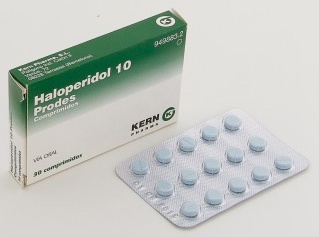
Haloperidol Prodes are flat tablets with a central score line on the upper surface, administered orally.
Haloperidol Prodes 10 mg are presented in blister packs containing 30 tablets.
Other presentations
Haloperidol Prodes 2 mg/ml oral drops in solution: 15 ml and 30 ml bottles.
Marketing authorization holder and manufacturer
Kern Pharma, S.L.
Venus, 72 - Pol. Ind. Colón II
08228 Terrassa - Barcelona
Spain
Date of the last revision of this leaflet: September 2017.
Detailed and updated information on this medicine is available on the website of the Spanish Agency for Medicines and Health Products (AEMPS) http://www.aemps.gob.es/
- Country of registration
- Dosage formTABLET, 10 mg
- ATC codeN05AD01
- Average pharmacy price3.12 EUR
- Active substance
- Prescription requiredYes
- Manufacturer
- CompositionTARTRAZINA (E-102; CI=19140) (0,05 mg mg)
- This information is for reference only and does not constitute medical advice. Always consult a doctor before taking any medication. Oladoctor is not responsible for medical decisions based on this content.
- Alternatives to HALOPERIDOL PRODES 10 mg TABLETSDosage form: TABLET, 10 mgActive substance: haloperidolManufacturer: Esteve Pharmaceuticals S.A.Prescription requiredDosage form: ORAL SOLUTION/SUSPENSION, 2 mg/mlActive substance: haloperidolManufacturer: Esteve Pharmaceuticals S.A.Prescription requiredDosage form: INJECTABLE, 5 mg/mlActive substance: haloperidolManufacturer: Esteve Pharmaceuticals S.A.Prescription required
Online doctors for HALOPERIDOL PRODES 10 mg TABLETS
Discuss questions about HALOPERIDOL PRODES 10 mg TABLETS, including use, safety considerations and prescription review, subject to medical assessment and local regulations.







Get HALOPERIDOL PRODES 10 mg TABLETS Prescription Online
Fill in a 2-min form
Tell us your symptoms, history, and what medicine you're requesting.
Pick a doctor or let us assign
Choose a specialist or we'll match you with the next available doctor.
Doctor reviews your case
Usually within 30 minutes. They may ask follow-up questions via chat.
Collect from any pharmacy
Electronic prescription sent to your email — valid across Spain.
Frequently Asked Questions
HALOPERIDOL PRODES 10 mg TABLETS requires a prescription in Spain. You can check with a doctor online whether this medicine may be appropriate for your situation.
The active ingredient in HALOPERIDOL PRODES 10 mg TABLETS is haloperidol. This information helps identify medicines with the same composition but different brand names.
The average pharmacy price for HALOPERIDOL PRODES 10 mg TABLETS is around 3.12 EUR. Prices may vary depending on the manufacturer and dosage form.
HALOPERIDOL PRODES 10 mg TABLETS is manufactured by Kern Pharma S.L.. Pharmacy brands and packaging may differ depending on the distributor.
Doctors such as Family doctors, Psychiatrists, Dermatologists, Cardiologists, Endocrinologists, Gastroenterologists, Pulmonologists, Nephrologists, Rheumatologists, Hematologists, Infectious disease physicians, Allergists, Geriatricians, Paediatricians, Oncologists may assess whether HALOPERIDOL PRODES 10 mg TABLETS is appropriate, depending on your situation and local regulations. You can book an online consultation to discuss your symptoms and possible next steps.
Spain has a well-developed healthcare infrastructure across major cities such as Madrid, Barcelona, Valencia, and Seville. Pharmacies are widely available and operate under strict regulations, ensuring access to prescribed medications.
You can buy HALOPERIDOL PRODES 10 mg TABLETS in Madrid, Barcelona, Seville, or Valencia at any local pharmacy with a valid prescription.
To obtain a prescription, you can use Oladoctor:
Other medicines with the same active substance (haloperidol) include HALOPERIDOL ESTEVE 10 mg TABLETS, HALOPERIDOL ESTEVE 2 mg/ml ORAL SOLUTION, HALOPERIDOL ESTEVE 5 mg/ml INJECTABLE SOLUTION. These may have different brand names or formulations but contain the same therapeutic ingredient. Always consult a doctor before switching or starting a new medicine.
