



GREFIXYL 10 mg /Ml + 2 Mg/Ml Eye Drops

Prescription review online
A doctor will review your case and decide whether a prescription is medically appropriate.

Talk to a doctor about this medicine
Discuss your symptoms and possible next steps in a quick online consultation.



How to use GREFIXYL 10 MG/ML + 2 MG/ML EYE DROPS, SUSPENSION
Contents of the leaflet
- Introduction
- What is Grefixyl and what is it used for
- What you need to know before you start using Grefixyl
- How to use Grefixyl
- Possible Side Effects
- Storing Grefixyl
- Container contents and additional information
Introduction
Package Leaflet: Information for the Patient
Grefixyl 10 mg/ml + 2 mg/ml Eye Drops Suspension
Brinzolamide/Brimonidine Tartrate
Read the package leaflet carefully before you start using this medicine because it contains important information for you.
- Keep this package leaflet, you may need to read it again.
- If you have any further questions, ask your doctor or pharmacist.
- This medicine has been prescribed for you only. Do not pass it on to others. It may harm them, even if their signs of illness are the same as yours.
- If you experience any side effects, talk to your doctor or pharmacist. This includes any possible side effects not listed in this package leaflet. See section 4.
Contents of the Package Leaflet
- What is Grefixyl and what is it used for
- What you need to know before you start using Grefixyl
- How to use Grefixyl
- Possible side effects
- Storing Grefixyl
- Package Contents and Further Information
1. What is Grefixyl and what is it used for
Grefixyl contains two active substances, brinzolamide and brimonidine tartrate. Brinzolamide belongs to a group of medicines called carbonic anhydrase inhibitors and brimonidine tartrate belongs to a group of medicines called alpha-2 adrenergic receptor agonists. Both active substances work together to reduce the pressure inside the eye.
Brinzolamide/Brimonidine Tartrate is used to reduce the pressure in the eyes in adult patients (18 years of age and older) who have eye diseases known as glaucoma or ocular hypertension and in those who cannot be effectively controlled with a single medication.

Not sure if this medicine is right for you?
Discuss your symptoms and treatment with a doctor online.
2. What you need to know before you start using Grefixyl
Do not use Grefixyl
- if you are allergic to brinzolamide or brimonidine tartrate or any of the other ingredients of this medicine (listed in section 6).
- if you are allergic to sulfonamides (including, for example, medicines used to treat diabetes and infections, and also diuretics (water pills)).
- if you are taking monoamine oxidase inhibitors (MAOIs) (including, for example, medicines to treat depression or Parkinson's disease) or certain antidepressants. You should inform your doctor if you are taking any medicine for depression.
- if you have severe kidney problems.
- if you have too much acid in the blood (a disease called hyperchloremic acidosis).
- in newborns and children under 2 years of age.
Warnings and Precautions
Consult your doctor, ophthalmologist (eye specialist) or pharmacist before starting to use this medicine if you currently have or have had in the past:
- liver problems.
- a type of high pressure in the eyes called narrow-angle glaucoma.
- dry eyes or corneal problems.
- heart disease (symptoms may include pressure or pain in the chest, shortness of breath or choking), heart failure, low or high blood pressure.
- depression.
- circulatory disorders (such as Raynaud's disease, Raynaud's syndrome, or cerebral insufficiency).
- if you have ever developed a severe skin rash or skin peeling or blisters and/or sores in the mouth after using Grefixyl or other related medicines.
Be careful with Grefixyl:
Severe skin reactions, including Stevens-Johnson syndrome and toxic epidermal necrolysis, have been reported in association with brinzolamide treatment. Stop using Grefixyl and seek immediate medical attention if you notice any symptoms related to these severe skin reactions described in section 4.
If you wear soft contact lenses, do not use this eye drop with the contact lenses in place. See below under the section "If you wear contact lenses - Grefixyl contains benzalkonium chloride".
Children and Adolescents
Grefixyl is not indicated for use in children and adolescents under 18 years of age because it has not been studied in this age group. It is especially important that this medicine is not used in children under 2 years of age (see previous section "Do not use Grefixyl") because it is unlikely to be safe.
Other Medicines and Grefixyl
Tell your doctor, ophthalmologist (eye specialist) or pharmacist if you are using, have recently used, or might use any other medicines.
Grefixyl may affect or be affected by other medicines you are using, including other eye drops for the treatment of glaucoma.
Consult your doctor if you are using or plan to use any of the following medicines:
- medicines to lower blood pressure.
- heart medicines, including digoxin (used to treat heart conditions).
- other glaucoma medicines that are also used to treat high altitude sickness, known as acetazolamide, methazolamide, and dorzolamide.
- medicines that may affect metabolism, such as chlorpromazine, methylphenidate, and reserpine.
- antiviral, antiretroviral (used to treat Human Immunodeficiency Virus (HIV)) or antibiotic medicines.
- antifungal (medicines against fungal infections) or antilevuric (medicines against yeast infections) medicines.
- monoamine oxidase inhibitors (MAOIs) or antidepressants, including amitriptyline, nortriptyline, clomipramine, mianserin, venlafaxine, and duloxetine.
- anesthetics.
- sedatives, opioids, or barbiturates.
You should also inform your doctor if the dose of any of your current medicines changes.
Using Grefixyl with Alcohol
If you regularly drink alcohol, consult your doctor, ophthalmologist (eye specialist), or pharmacist before using this medicine. Grefixyl may be affected by alcohol.
Pregnancy and Breastfeeding
If you are pregnant, think you may be pregnant, or plan to become pregnant, consult your doctor, ophthalmologist (eye specialist), or pharmacist before using this medicine. It is recommended that women who may become pregnant use effective contraceptive methods during treatment with Grefixyl. The use of Grefixyl is not recommended during pregnancy. Do not use Grefixyl unless clearly indicated by your doctor.
If you are breastfeeding, Grefixyl may pass into breast milk. The use of Grefixyl is not recommended during breastfeeding.
Driving and Using Machines
Immediately after applying Grefixyl, you may notice that your vision becomes blurry or abnormal. Grefixyl may also cause dizziness, drowsiness, or fatigue in some patients.
Do not drive or use machines until the symptoms have disappeared.
If you wear contact lenses - Grefixyl contains benzalkonium chloride
This medicine contains 0.15 mg of benzalkonium chloride per 5 ml, which is equivalent to 0.03 mg/ml.
Benzalkonium chloride can be absorbed by soft contact lenses and may alter the color of the contact lenses. Remove the contact lenses before using this medicine and wait 15 minutes before putting them back. Benzalkonium chloride may cause eye irritation, especially if you have dry eyes or other corneal diseases (the transparent layer of the front of the eye). Consult your doctor if you feel any strange sensation, itching, or pain in the eye after using this medicine.
3. How to use Grefixyl
Follow the instructions for administration of this medicine exactly as indicated by your doctor, ophthalmologist (eye specialist), or pharmacist. If you are unsure, consult your doctor, ophthalmologist (eye specialist), or pharmacist again.
Use Grefixyl only in your eyes. Do not swallow or inject.
The recommended doseis one drop in the affected eye(s) twice a day. Use it at the same time every day.
How to use
- Wash your hands before starting.
|
|
1 | 2 |
- Shake well before use.
- Remove the cap from the bottle. After removing the cap, the security seal ring must be removed before using this medicine.
- Do not touch the dropper with your fingers when opening or closing the bottle, as the drops may become contaminated.
- Hold the bottle, upside down, between your thumb and index finger. Tilt your head back.
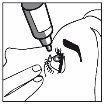
- Gently pull down the lower eyelid of the eye to form a pouch, where the drop should fall (figure 1).
- Bring the tip of the bottle close to the eye. You can use a mirror to help you.
- Do not touch the eye, eyelid, or surrounding areas with the dropper, as the drops may become contaminated.
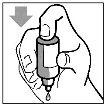
- Gently press the base of the bottle to release one drop of Grefixyl.
Do not squeeze the bottle: it is designed so that gentle pressure on the base is enough (figure 2).
After using this eye drop, close your eyes and press the edge of the eye, next to the nose, for at least 2 minutes. This helps prevent the medicine from passing into the rest of the body.
If you apply drops to both eyes, repeat the above steps for the other eye. It is not necessary to close and shake the bottle between administrations of both eyes. Tighten the cap well after using the product.
If you are using other eye drops as well as Grefixyl, wait at least 5 minutes between the application of Grefixyl and the other drops.
If a drop falls outside the eye, try again.
If you use more Grefixyl than you should
You can rinse it off with lukewarm water. Do not apply more drops until it is time for the next dose.
Adults who accidentally ingested medicines containing brimonidine experienced a decrease in heart rate, a decrease in blood pressure that may be followed by an increase in blood pressure, heart failure, difficulty breathing, and effects on the nervous system. If this happens, contact your doctor immediately.
Severe side effects were reported in children who had accidentally ingested medicines containing brimonidine. The signs included drowsiness, weakness, low body temperature, paleness, and difficulty breathing. If this happens, contact your doctor immediately.
If you have accidentally ingested Grefixyl, contact your doctor immediately.
If you forget to use Grefixyl
Continue with the next scheduled dose. Do not apply a double dose to make up for forgotten doses. Do not apply more than one drop twice a day in the affected eye(s).
If you stop using Grefixyl
Do not stop using Grefixyl without consulting your doctor first, as the pressure in your eye may not be controlled, which could lead to vision loss.
If you have any further questions about the use of this medicine, ask your doctor, ophthalmologist (eye specialist), or pharmacist.

Started taking the medicine and have questions?
Discuss your symptoms and treatment with a doctor online.
4. Possible Side Effects
Like all medicines, this medicine can cause side effects, although not everybody gets them.
If you experience any of the following side effects, stop using this medicine and seek immediate medical attention, as they may be signs of a reaction to the medicine. The frequency of an allergic reaction to this medicine is not known (cannot be estimated from the available data).
- Severe skin reactions, including rash or redness or itching in the eyes or body.
- Breathing problems.
- Chest pain, irregular heartbeat.
Contact your doctor immediately if you feel dizzy or extremely tired.
The following side effects have been observed with Grefixyl and with other medicines that contain brinzolamide or brimonidine separately.
Stop using Grefixyl and seek immediate medical attention if you notice any of the following symptoms:
- red, target-like, or circular patches on the trunk, often with central blisters, skin peeling, ulcers in the mouth, throat, nose, genitals, and eyes. These severe skin rashes may be preceded by fever and flu-like symptoms (Stevens-Johnson syndrome, toxic epidermal necrolysis).
Common(may affect up to 1 in 10 people)
- Eye effects: allergic conjunctivitis (allergy in the eye), inflammation of the eye surface, eye pain, eye discomfort, blurred or abnormal vision, eye redness.
- Other side effects: drowsiness, dizziness, bad taste, dry mouth.
Uncommon(may affect up to 1 in 100 people)
- Eye effects: damage to the eye surface with cell loss, eyelid inflammation, deposits on the eye surface, sensitivity to light, eye swelling (affecting the cornea or eyelid), dry eye, eye discharge, watery eyes, eyelid redness, abnormal or decreased sensation in the eyes, tired eyes, reduced vision, double vision, product particles in the eyes.
- Other side effects: low blood pressure, chest pain, irregular heartbeat, slow or fast heart rate, palpitations, difficulty sleeping (insomnia), nightmares, depression, general weakness, headache, dizziness, nervousness, irritability, feeling unwell, memory loss, shortness of breath, asthma, nosebleeds, cold symptoms, nasal or throat dryness, sore throat, throat irritation, cough, nasal discharge (runny nose), stuffy nose, sneezing, sinusitis, chest congestion, ringing in the ears, indigestion, intestinal gas or abdominal pain, nausea, diarrhea, vomiting, abnormal sensation in the mouth, increased allergy symptoms on the skin, rash, abnormal sensation on the skin, hair loss, generalized itching, increased blood chloride levels, or decreased red blood cell count in blood tests, pain, back pain, muscle pain or spasms, kidney pain that appears as lower back pain, decreased sexual desire, sexual problems in men.
Rare(may affect up to 1 in 10,000 people)
- Eye effects: decreased pupil size.
- Other side effects: fainting, increased blood pressure.
Frequency Not Known(cannot be estimated from the available data)
- Eye effects: decreased eyelash growth.
- Other side effects: tremors, decreased sensation, loss of taste, abnormal liver function test values observed in blood tests, facial swelling, joint pain, frequent urination, chest pain, swelling of the limbs, red, target-like, or circular patches on the trunk, often with central blisters, skin peeling, ulcers in the mouth, throat, nose, genitals, and eyes that may be preceded by fever and flu-like symptoms. These severe skin rashes can be potentially life-threatening (Stevens-Johnson syndrome, toxic epidermal necrolysis).
Reporting Side Effects
If you experience any side effects, talk to your doctor or pharmacist. This includes any possible side effects not listed in this package leaflet. You can also report side effects directly through the Spanish Pharmacovigilance System for Human Use Medicines: https://www.notificaram.es. By reporting side effects, you can help provide more information on the safety of this medicine.
5. Storing Grefixyl
Keep this medicine out of the sight and reach of children.
Do not use this medicine after the expiry date stated on the bottle and carton after "EXP". The expiry date is the last day of the month stated.
This medicine does not require any special storage conditions.
To avoid infections, discard the bottle 4 weeks after the first opening. Write the opening date on the space provided on the carton.
Medicines should not be disposed of via wastewater or household waste. Place the packaging and any unused medicines in the SIGRE collection point at your pharmacy. Ask your pharmacist how to dispose of the packaging and any unused medicines. This will help protect the environment.
6. Container contents and additional information
Grefixyl composition
- The active ingredients are brinzolamide and brimonidine tartrate.One ml of suspension contains 10 mg of brinzolamide and 2 mg of brimonidine tartrate, equivalent to 1.3 mg of brimonidine.
- The other components are benzalkonium chloride (50% solution) (see section 2 "If you wear contact lenses - Grefixyl contains benzalkonium chloride"), propylene glycol (E1520), carbomer 974P, boric acid (E284), sodium chloride, tiloxapol, sodium hydroxide and/or hydrochloric acid (to adjust pH) and water for injectable preparations.
Very small amounts of sodium hydroxide and/or hydrochloric acid are added to maintain normal acidity levels (pH levels).
Product appearance and container contents
White LDPE bottle of 10 ml with an LDPE dropper tip and a white HDPE/LDPE cap with a tamper-evident seal, containing 5 ml of a homogeneous white to off-white suspension.
The following pack sizes are available: boxes containing 1 x 5 ml and 3 x 5 ml.
Only some pack sizes may be marketed.
Marketing authorization holder and manufacturer
Marketing authorization holder
Laboratory STADA, S.L. Frederic Mompou, 5
08960 Sant Just Desvern (Barcelona)
Spain
Manufacturer
Balkanpharma-Razgrad AD
68 Aprilsko vastanie Blvd.
7200 Razgrad
Bulgaria
or
Pharmathen S.A.
Dervenakion 6
15351 Pallini, Athens
Greece
or
STADA Arzneimittel AG
Stadastrasse 2 – 18
61118 Bad Vilbel
Germany
This medicinal product is authorized in the Member States of the European Economic Area under the following names:
DE: Grefixyl 10 mg/ml + 2 mg/ml Augentropfensuspension
ES: Grefixyl 10 mg/ml + 2 mg/ml eye drops suspension
Date of last revision of this leaflet: October 2023
Detailed information on this medicinal product is available on the website of the Spanish Agency for Medicines and Health Products (AEMPS)
http://www.aemps.gob.es/
- Country of registration
- Dosage formEYEDROP, 10 mg/ml + 2 mg/ml
- ATC codeS01EC54
- Active substance
- Prescription requiredYes
- Manufacturer
- CompositionCLORURO DE BENZALCONIO SOLUCION AL 50% (0,0585 mg/ml mg), PROPILENGLICOL (8 mg/ml mg), ACIDO BORICO (3 mg/ml mg), CLORURO DE SODIO (2,3 mg/ml mg), HIDROXIDO DE SODIO (E 524) (6,5 pH mg)
- This information is for reference only and does not constitute medical advice. Always consult a doctor before taking any medication. Oladoctor is not responsible for medical decisions based on this content.
- Alternatives to GREFIXYL 10 MG/ML + 2 MG/ML EYE DROPS, SUSPENSIONDosage form: EYE DROP, 10 mg/ml + 2 mg/mlActive substance: brinzolamide, combinationsManufacturer: Zentiva K.S.Prescription requiredDosage form: EYE DROP, 10 mg/ml + 2 mg/mlActive substance: brinzolamide, combinationsManufacturer: Novartis Europharm LimitedPrescription requiredDosage form: EYE DROP, 20 mg/mlActive substance: dorzolamideManufacturer: Tiedra Farmaceutica S.L.Prescription required
Online doctors for GREFIXYL 10 MG/ML + 2 MG/ML EYE DROPS, SUSPENSION
Discuss questions about GREFIXYL 10 MG/ML + 2 MG/ML EYE DROPS, SUSPENSION, including use, safety considerations and prescription review, subject to medical assessment and local regulations.









Get GREFIXYL 10 MG/ML + 2 MG/ML EYE DROPS, SUSPENSION Prescription Online
Fill in a 2-min form
Tell us your symptoms, history, and what medicine you're requesting.
Pick a doctor or let us assign
Choose a specialist or we'll match you with the next available doctor.
Doctor reviews your case
Usually within 30 minutes. They may ask follow-up questions via chat.
Collect from any pharmacy
Electronic prescription sent to your email — valid across Spain.
Frequently Asked Questions
GREFIXYL 10 MG/ML + 2 MG/ML EYE DROPS, SUSPENSION requires a prescription in Spain. You can check with a doctor online whether this medicine may be appropriate for your situation.
The active ingredient in GREFIXYL 10 MG/ML + 2 MG/ML EYE DROPS, SUSPENSION is brinzolamide, combinations. This information helps identify medicines with the same composition but different brand names.
GREFIXYL 10 MG/ML + 2 MG/ML EYE DROPS, SUSPENSION is manufactured by Laboratorio Stada S.L.. Pharmacy brands and packaging may differ depending on the distributor.
Doctors such as Family doctors, Psychiatrists, Dermatologists, Cardiologists, Endocrinologists, Gastroenterologists, Pulmonologists, Nephrologists, Rheumatologists, Hematologists, Infectious disease physicians, Allergists, Geriatricians, Paediatricians, Oncologists may assess whether GREFIXYL 10 MG/ML + 2 MG/ML EYE DROPS, SUSPENSION is appropriate, depending on your situation and local regulations. You can book an online consultation to discuss your symptoms and possible next steps.
Spain has a well-developed healthcare infrastructure across major cities such as Madrid, Barcelona, Valencia, and Seville. Pharmacies are widely available and operate under strict regulations, ensuring access to prescribed medications.
You can buy GREFIXYL 10 MG/ML + 2 MG/ML EYE DROPS, SUSPENSION in Madrid, Barcelona, Seville, or Valencia at any local pharmacy with a valid prescription.
To obtain a prescription, you can use Oladoctor:
Other medicines with the same active substance (brinzolamide, combinations) include BRINZOLAMIDE/BRIMONIDINE ZENTIVA 10 mg/mL + 2 mg/mL EYE DROPS, SUSPENSION, SIMBRINZA 10mg/ml + 2mg/ml ophthalmic suspension, ARZOLAN 20 mg/ml EYE DROPS SOLUTION. These may have different brand names or formulations but contain the same therapeutic ingredient. Always consult a doctor before switching or starting a new medicine.
