



FULVESTRANT 250 mg Ready-To-Use Injection Solution In Pre-Filled Syringe

Prescription review online
A doctor will review your case and decide whether a prescription is medically appropriate.

Talk to a doctor about this medicine
Discuss your symptoms and possible next steps in a quick online consultation.



How to use FULVESTRANT HIKMA 250 mg READY-TO-USE INJECTION SOLUTION IN PRE-FILLED SYRINGE
Contents of the leaflet
- Introduction
- What is Fulvestrant Hikma and what is it used for
- What you need to know before you use Fulvestrant Hikma
- How to use Fulvestrant Hikma
- Possible side effects
- Storage of Fulvestrant Hikma
- Contents of the pack and other information
Introduction
Package Leaflet: Information for the Patient
Fulvestrant Hikma 250 mg solution for injection in pre-filled syringe EFG
Read all of this leaflet carefully before you start using this medicine because it contains important information for you.
- Keep this leaflet, you may need to read it again.
- If you have any further questions, ask your doctor, pharmacist, or nurse.
- This medicine has been prescribed for you only. Do not pass it on to others. It may harm them, even if their signs of illness are the same as yours.
- If you experience any side effects, talk to your doctor, pharmacist, or nurse. This includes any possible side effects not listed in this leaflet. See section 4.
Contents of the pack
- What is Fulvestrant Hikma and what is it used for
- What you need to know before you use Fulvestrant Hikma
- How to use Fulvestrant Hikma
- Possible side effects
- Storage of Fulvestrant Hikma
- Contents of the pack and other information
1. What is Fulvestrant Hikma and what is it used for
This medicine contains the active substance fulvestrant, which belongs to the group of estrogen blockers. Estrogens, a type of female sex hormone, may be involved in the development of breast cancer in some cases.
Fulvestrant is used:
- as monotherapy, for the treatment of postmenopausal women with a type of breast cancer called hormone receptor-positive breast cancer, which is locally advanced or has spread to other parts of the body (metastatic), or
- in combination with palbociclib to treat women with a type of breast cancer called hormone receptor-positive and human epidermal growth factor receptor 2 (HER2) negative breast cancer, which is locally advanced or has spread to other parts of the body (metastatic). Women who have not reached menopause will also be treated with a medicine called luteinizing hormone-releasing hormone (LHRH) agonist.
When Fulvestrant is administered in combination with palbociclib, it is important that you also read the package leaflet of palbociclib. If you have any questions about palbociclib, ask your doctor.

Not sure if this medicine is right for you?
Discuss your symptoms and treatment with a doctor online.
2. What you need to know before you use Fulvestrant Hikma
Do not useFulvestrant Hikma:
- if you are allergic to fulvestrant or any of the other ingredients of this medicine (listed in section 6),
- if you are pregnant or breastfeeding,
- if you have severe liver problems.
Warnings and precautions
Talk to your doctor, pharmacist, or nurse before you start using Fulvestrant Hikma if any of the following apply to you:
- kidney or liver problems,
- low platelet count (which helps blood to clot) or bleeding disorders,
- previous blood clot problems,
- osteoporosis (loss of bone density),
- alcoholism.
Children and adolescents
Fulvestrant is not indicated in children and adolescents under 18 years of age.
Other medicines and Fulvestrant Hikma
Tell your doctor or pharmacist if you are taking, have recently taken, or might take any other medicines.
In particular, you should tell your doctor if you are using anticoagulants (medicines to prevent blood clots).
Pregnancy and breastfeeding
You should not use this medicine if you are pregnant. If you can become pregnant, you should use an effective contraceptive method while you are being treated with this medicine and for 2 years after the last dose.
You should not breastfeed while you are being treated with Fulvestrant Hikma.
Driving and using machines
This medicine is not expected to affect your ability to drive or use machines. However, if you feel tired after treatment, do not drive or use machines.
Use in athletes
This medicine contains fulvestrant, which may produce a positive result in doping tests.
Fulvestrant Hikma contains ethanol
This medicine contains 10% w/v ethanol (alcohol), i.e., up to 500 mg in each syringe, which is equivalent to 10 ml of beer or 4 ml of wine.
This medicine is harmful to people with alcoholism. To be taken into account in high-risk groups, such as patients with liver disease or epilepsy.
Fulvestrant Hikma contains alcohol (ethanol)
This medicine contains 500 mg of alcohol (ethanol) in each syringe, which is equivalent to 100 mg/ml (10% w/v). The amount in one injection of this medicine is equivalent to less than 13 ml of beer or 5 ml of wine.
The amount of alcohol in this medicine is unlikely to have an effect in adults and adolescents. The alcohol in this medicine may alter the effects of other medicines. Talk to your doctor or pharmacist if you are taking other medicines.
If you are addicted to alcohol, talk to your doctor or pharmacist before taking this medicine.
Fulvestrant Hikma contains benzyl alcohol
This medicine contains 500 mg of benzyl alcohol in each pre-filled syringe, equivalent to 100 mg/ml. Benzyl alcohol may cause allergic reactions.
Talk to your doctor or pharmacist if you have liver or kidney disease. This is because large amounts of benzyl alcohol may accumulate in the body and cause side effects (metabolic acidosis).
Fulvestrant Hikma contains benzyl benzoate
This medicine contains 750 mg of benzyl benzoate per injection, equivalent to 150 mg/ml.
3. How to use Fulvestrant Hikma
Follow exactly the administration instructions of this medicine as indicated by your doctor or pharmacist. In case of doubt, consult your doctor or pharmacist again.
The recommended dose is 500 mg of fulvestrant (two 250 mg/5ml injections) administered once a month with an additional dose of 500 mg administered 2 weeks after the initial dose.
Your doctor or nurse will administer Fulvestrant Hikma by slow intramuscular injection into each of your buttocks.
If you have any other questions about the use of this medicine, ask your doctor, pharmacist, or nurse.
In case of overdose or accidental ingestion, consult your doctor or pharmacist immediately or call the Toxicology Information Service, phone: 91 562 04 20, indicating the medicine and the amount ingested.

Started taking the medicine and have questions?
Discuss your symptoms and treatment with a doctor online.
4. Possible side effects
Like all medicines, this medicine can cause side effects, although not everybody gets them.
You may need urgent medical treatment if you experience any of the following side effects:
- allergic reactions (hypersensitivity), including swelling of the face, lips, tongue, and/or throat, which may be symptoms of anaphylactic reactions,
- thromboembolism (increased risk of blood clots),
- liver inflammation (hepatitis),
- liver failure.
Tell your doctor, pharmacist, or nurse immediately if you notice any of the following side effects:
Very common side effects(may affect more than 1 in 10 patients)
- injection site reactions, such as pain and/or inflammation,
- abnormal liver enzyme levels (in blood tests),
- nausea (feeling sick),
- weakness, tiredness,
- joint and musculoskeletal pain,
- hot flushes,
- skin rash,
- allergic reactions (hypersensitivity), including swelling of the face, lips, tongue, and/or throat.
All other side effects:
Common side effects(may affect up to 1 in 10 patients)
- headache,
- vomiting, diarrhea, or loss of appetite,
- urinary tract infections,
- back pain,
- increased bilirubin (a bile pigment produced by the liver),
- thromboembolism (increased risk of blood clots),
- low platelet count (thrombocytopenia),
- vaginal bleeding,
- lower back pain radiating to one leg (sciatica),
- sudden weakness, numbness, tingling, or loss of movement in your leg, especially on one side of the body, sudden problems with walking or balance (peripheral neuropathy).
Uncommon side effects(may affect up to 1 in 100 patients)
- thick, white, vaginal discharge and candidiasis (infection),
- hematoma and bleeding at the injection site,
- increased gamma-GT, a liver enzyme that is identified in a blood test,
- liver inflammation (hepatitis),
- liver failure,
- numbness, tingling, and pain,
- anaphylactic reactions.
- Includes side effects for which the exact role of fulvestrant cannot be evaluated due to the underlying disease.
Reporting of side effects
If you experience any side effects, talk to your doctor, pharmacist, or nurse. This includes any possible side effects not listed in this leaflet. You can also report side effects directly through the Spanish Medicines and Healthcare Products Agency (AEMPS) website (http://www.aemps.gob.es/). By reporting side effects, you can help provide more information on the safety of this medicine.
5. Storage of Fulvestrant Hikma
Keep this medicine out of the sight and reach of children.
Do not use this medicine after the expiry date which is stated on the carton or syringe label after EXP. The expiry date refers to the last day of the month shown.
Store and transport refrigerated (between 2°C and 8°C).
Temperature variations outside 2°C - 8°C should be limited. This includes avoiding storage at temperatures above 30°C and not exceeding a period of 28 days in which the average storage temperature of the product is below 25°C (but above 2°C - 8°C). After temperature variations, the product should be returned immediately to the recommended storage conditions (store and transport in a refrigerator between 2°C and 8°C). Temperature variations have a cumulative effect on the quality of the product and the 28-day period should not be exceeded during the validity period of Fulvestrant Hikma. Exposure to temperatures below 2°C will not damage the product as long as it is not stored below -20°C.
Keep the pre-filled syringe in the original packaging to protect it from light.
Your healthcare professional will be responsible for the proper storage, use, and disposal of Fulvestrant Hikma.
This medicine may pose a risk to the aquatic environment. Medicines should not be disposed of via wastewater or household waste. Return any unused medicine to your pharmacist. Ask your pharmacist how to dispose of medicines no longer required. This will help protect the environment.
6. Contents of the pack and other information
Composition of Fulvestrant Hikma
- The active substance is fulvestrant. Each pre-filled syringe (5 ml) contains 250 mg of fulvestrant.
- The other ingredients are ethanol (96%), benzyl alcohol, benzyl benzoate, and refined castor oil.
Appearance and pack contents
Fulvestrant Hikma is a viscous, clear, colorless to yellow solution in a pre-filled syringe containing 5 ml of injectable solution. Two syringes should be administered to receive the recommended monthly dose of 500 mg.
The packs of Fulvestrant Hikma contain 1 or 2 pre-filled syringes. Safety needles (BD SafetyGlide) are also provided for connection to the syringe body.
In addition to individual packs, Fulvestrant Hikma is also available in packs of 4 (2x2) and 6 (3x2) pre-filled syringes.
Not all pack sizes may be marketed.
Marketing authorization holder and manufacturer
Marketing authorization holder:
Hikma Farmacêutica (Portugal), S.A.
Estrada do Rio da Mó n.º 8, 8A e 8B, Fervença
2705-906 Terrugem SNT
Portugal
Email: [email protected]
Manufacturer
Netpharmalab Consulting Services
Carretera de Fuencarral, 22
28108 – Alcobendas, Madrid
Spain
You can ask for more information about this medicine by contacting the local representative of the marketing authorization holder:
Hikma España, S.L.U.
Calle Anabel Segura nº11, Edificio A, planta 1ª, oficina 2
28108 - Alcobendas, Madrid
Spain
This medicine is authorized in the Member States of the European Economic Area under the following names:
Germany: Fulvestrant Ribosepharm 250 mg/5 ml solution for injection in a pre-filled syringe
Austria: Fulvestrant Ribosepharm 250 mg/5 ml solution for injection in a pre-filled syringe
Spain: Fulvestrant Hikma 250 mg solution for injection in pre-filled syringe EFG
France: FULVESTRANT HIKMA 250 mg, solution for injection in a pre-filled syringe
Italy: Fulvestrant Hikma
Portugal: Fulvestrant Hikma
Date of last revision of this leaflet: January 2023
Detailed information on this medicine is available on the website of the Spanish Agency for Medicines and Healthcare Products (AEMPS) (http://www.aemps.gob.es/)
------------------------------------------------------------------------------------------------------------------
This information is intended only for healthcare professionals:
Fulvestrant Hikma 500 mg (2 x 250 mg/5 ml solution for injection) should be administered using two pre-filled syringes. See section 3.
BD SafetyGlide is a registered trademark of Becton Dickinson and Company and its CE-marked: CE 0050.
Administration instructions
Warning – Do not autoclave the safety needle (BD SafetyGlide hypodermic safety needle) before use. Hands should remain behind the needle at all times during use and disposal.
For each of the two syringes:
|
|
|
|
|
|
|
|
? After injection, immediately touch the lever arm with your finger to activate the safety mechanism (see Figure 5). NOTE: Activate it away from your body and others. Listen for the click and visually confirm that the needle tip is fully protected. |
|
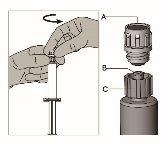 Figure 1
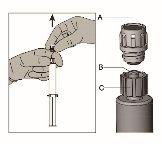 Figure 2
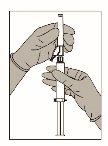 Figure 3
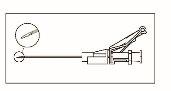 Figure 4
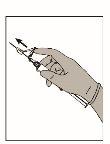 Figure 5
Disposal
The pre-filled syringes are for single use.
This medicine may pose a risk to the aquatic environment. Any unused medicine or waste material should be disposed of in accordance with local requirements.
- Country of registration
- Dosage formINJECTABLE, 250 mg
- ATC codeL02BA03
- Active substance
- Prescription requiredYes
- Manufacturer
- CompositionETANOL AL 96% (500 mg mg), ALCOHOL BENCILICO (500 mg mg), BENZIL BENZOATO (750 mg mg)
- This information is for reference only and does not constitute medical advice. Always consult a doctor before taking any medication. Oladoctor is not responsible for medical decisions based on this content.
- Alternatives to FULVESTRANT HIKMA 250 mg READY-TO-USE INJECTION SOLUTION IN PRE-FILLED SYRINGEDosage form: INJECTABLE, 250 mg/5 mlActive substance: fulvestrantManufacturer: Bexal Farmaceutica S.A.Prescription requiredDosage form: INJECTABLE, 250 mgActive substance: fulvestrantManufacturer: Ever Valinject GmbhPrescription requiredDosage form: INJECTABLE, 250 mgActive substance: fulvestrantManufacturer: Astrazeneca AbPrescription required
Online doctors for FULVESTRANT HIKMA 250 mg READY-TO-USE INJECTION SOLUTION IN PRE-FILLED SYRINGE
Discuss questions about FULVESTRANT HIKMA 250 mg READY-TO-USE INJECTION SOLUTION IN PRE-FILLED SYRINGE, including use, safety considerations and prescription review, subject to medical assessment and local regulations.


Get FULVESTRANT HIKMA 250 mg READY-TO-USE INJECTION SOLUTION IN PRE-FILLED SYRINGE Prescription Online
Fill in a 2-min form
Tell us your symptoms, history, and what medicine you're requesting.
Pick a doctor or let us assign
Choose a specialist or we'll match you with the next available doctor.
Doctor reviews your case
Usually within 30 minutes. They may ask follow-up questions via chat.
Collect from any pharmacy
Electronic prescription sent to your email — valid across Spain.
Frequently Asked Questions
FULVESTRANT HIKMA 250 mg READY-TO-USE INJECTION SOLUTION IN PRE-FILLED SYRINGE requires a prescription in Spain. You can check with a doctor online whether this medicine may be appropriate for your situation.
The active ingredient in FULVESTRANT HIKMA 250 mg READY-TO-USE INJECTION SOLUTION IN PRE-FILLED SYRINGE is fulvestrant. This information helps identify medicines with the same composition but different brand names.
FULVESTRANT HIKMA 250 mg READY-TO-USE INJECTION SOLUTION IN PRE-FILLED SYRINGE is manufactured by Hikma Farmaceutica (Portugal) S.A.. Pharmacy brands and packaging may differ depending on the distributor.
Doctors such as Family doctors, Psychiatrists, Dermatologists, Cardiologists, Endocrinologists, Gastroenterologists, Pulmonologists, Nephrologists, Rheumatologists, Hematologists, Infectious disease physicians, Allergists, Geriatricians, Paediatricians, Oncologists may assess whether FULVESTRANT HIKMA 250 mg READY-TO-USE INJECTION SOLUTION IN PRE-FILLED SYRINGE is appropriate, depending on your situation and local regulations. You can book an online consultation to discuss your symptoms and possible next steps.
Spain has a well-developed healthcare infrastructure across major cities such as Madrid, Barcelona, Valencia, and Seville. Pharmacies are widely available and operate under strict regulations, ensuring access to prescribed medications.
You can buy FULVESTRANT HIKMA 250 mg READY-TO-USE INJECTION SOLUTION IN PRE-FILLED SYRINGE in Madrid, Barcelona, Seville, or Valencia at any local pharmacy with a valid prescription.
To obtain a prescription, you can use Oladoctor:
Other medicines with the same active substance (fulvestrant) include AFULTRANT 250 mg Injectable Solution in Pre-filled Syringe, AMBIFUL 250 mg SOLUTION FOR INJECTION IN PRE-FILLED SYRINGE, FASLODEX 250 mg/5 ml INJECTABLE SOLUTION. These may have different brand names or formulations but contain the same therapeutic ingredient. Always consult a doctor before switching or starting a new medicine.
