







How to use FOSFOCINA 500 mg HARD CAPSULES
Translated with AI
This page provides general information and does not replace a doctor’s consultation. Always consult a doctor before taking any medication. Seek urgent medical care if symptoms are severe.
Show originalContents of the leaflet
Introduction
Package Leaflet: Information for the Patient
Fosfocina 500 mg Hard Capsules
Fosfomycin Calcium
Read this package leaflet carefully before you start taking this medicine, because it contains important information for you.
- Keep this package leaflet, you may need to read it again.
- If you have any further questions, ask your doctor or pharmacist.
- This medicine has been prescribed for you only. Do not pass it on to others. It may harm them, even if their signs of illness are the same as yours.
- If you experience any side effects, talk to your doctor or pharmacist. This includes any possible side effects not listed in this package leaflet. See section 4.
Contents of the Package Leaflet:
- What is Fosfocina and what is it used for
- What you need to know before you take Fosfocina
- How to take Fosfocina
- Possible side effects
- Storage of Fosfocina
- Package contents and further information
1. What is Fosfocina and what is it used for
Fosfocina contains the active substance fosfomycin (as fosfomycin calcium). It is an antibiotic that works by killing the bacteria that cause infections.
Antibiotics are used to treat bacterial infections and will not work for viral infections such as the common cold or flu. It is important that you follow the instructions regarding the dose, administration interval, and duration of treatment indicated by your doctor. Do not store or reuse this medicine. If you have any leftover antibiotic after completing your treatment, return it to the pharmacy for proper disposal. Do not throw away medicines via wastewater or household waste. |
Fosfocina is used for the treatment of uncomplicated bladder infections in women.

2. What you need to know before you take Fosfocina
Do not take Fosfocina
If you are allergic to fosfomycin or any of the other ingredients of this medicine (listed in section 6).
Warnings and precautions
Consult your doctor, pharmacist, or nurse before starting to use Fosfocina if you are in any of the following situations:
- you have persistent bladder infections,
- you have ever had diarrhea after taking any other antibiotic.
Symptoms to pay attention to
Fosfocina may cause serious side effects. For example, allergic reactions and inflammation of the large intestine. You should pay attention to certain symptoms while being treated with this medicine to reduce the risk of problems. See "serious side effects" in section 4.
Children and adolescents
This medicine should not be given to children under 12 years of age, as the safety and efficacy in this age group have not been established.
Other medicines and Fosfocina
Tell your doctor or pharmacist if you are taking, have recently taken, or might take any other medicines, including those obtained without a prescription.
This is especially important if you are taking:
- metoclopramideor other medicines that increase the movement of food through the stomach and intestines, as they may reduce the absorption of fosfomycin in your body,
- anticoagulants, as fosfomycin and other antibiotics may alter your ability to prevent blood clotting.
Taking Fosfocina with food and drinks
Food may delay the absorption of fosfomycin. Therefore, this medicine should be taken on an empty stomach (2-3 hours before or 2-3 hours after a meal).
Pregnancy, breastfeeding, and fertility
If you are pregnant or breastfeeding, think you may be pregnant, or are planning to have a baby, ask your doctor or pharmacist for advice before taking this medicine.
If you are pregnant or breastfeeding, your doctor will only prescribe this medicine when it is strictly necessary.
Driving and using machines
You may experience side effects such as dizziness that could affect your ability to drive or use machines.

3. How to take Fosfocina
Follow exactly the administration instructions of this medicine indicated by your doctor or pharmacist. If you are in doubt, consult your doctor or pharmacist again.
For the treatment of uncomplicated bladder infections in women, the recommended dose is 500 mg-1 g (1 or 2 capsules) every 8 hours.
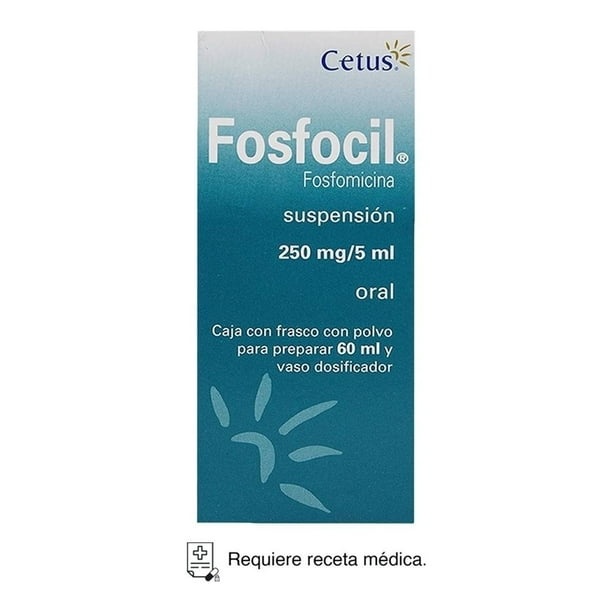
For the treatment of patients with swallowing difficulties (difficulty swallowing food or medicine), the use of Fosfocina 250 mg/5 ml powder for oral suspension is recommended.
Use in patients with renal insufficiency
This medicine should not be used in patients with severe renal insufficiency (creatinine clearance <10 ml min).< p>
Use in children and adolescents
This medicine should not be used in children under 12 years of age.
Method of administration
For oral use.
This medicine should be taken orally, on an empty stomach (approximately 2-3 hours before or 2-3 hours after a meal), with the last dose preferably before bedtime and after urination.
If you take more Fosfocina than you should
In case of overdose or accidental ingestion, consult your doctor or pharmacist immediately or call the Toxicology Information Service, phone: 91 562 04 20, indicating the medicine and the amount used.
If you forget to take Fosfocina
Do not take a double dose to make up for forgotten doses.
If you forget to take a dose, take the next one as soon as possible and continue as before.
If you stop taking Fosfocina
Remember to take your medicine. Your doctor will indicate the duration of your treatment with Fosfocina.
Do not stop treatment, even if you feel better, unless your doctor tells you to.
If you have any further questions on the use of this medicine, ask your doctor or pharmacist.
4. Possible side effects
Like all medicines, this medicine can cause side effects, although not everybody gets them.
Serious side effects
If during treatment with Fosfocina you experience any of the following symptoms, stop taking the medicine and contact your doctor immediately:
- anaphylactic shock, a potentially life-threatening allergic reaction (frequency not known). Symptoms are sudden onset of rash, itching, or hives, and/or shortness of breath, wheezing, or difficulty breathing,
- swelling of the face, lips, tongue, or throat with difficulty breathing (angioedema) (frequency not known),
- moderate to severe diarrhea, abdominal cramps, bloody stools, and/or fever, which may indicate that you have an intestinal infection (antibiotic-associated colitis) (frequency not known). Do not take medicines against diarrhea that stop intestinal movement (antiperistaltics).
Other side effects
Frequent (may affect up to 1 in 10 people):
- headache
- dizziness
- diarrhea
- nausea
- indigestion
- abdominal pain
- infection of the female genital organs with symptoms such as inflammation, irritation, itching (vulvovaginitis).
Uncommon (may affect up to 1 in 100 people):
- vomiting
- rash
- hives
- itching
Rare (may affect up to 1 in 1,000 people):
- anemia
- superinfections by antibiotic-resistant bacteria
Frequency not known (cannot be estimated from the available data):
- allergic reactions
- visual disturbances
- loss of appetite
- inflammation of the veins
- increase in the number of white blood cells and platelets
- appearance of petechiae (small hemorrhages in the skin)
- alteration of liver enzymes
If you experience any of these reactions or other discomfort that you think may be related to the treatment, you should inform your doctor as soon as possible.
Reporting of side effects
If you experience any side effects, talk to your doctor or pharmacist. This includes any possible side effects not listed in this package leaflet. You can also report side effects directly through the Spanish Medicines and Health Products Agency (AEMPS) website: www.notificaram.es. By reporting side effects, you can help provide more information on the safety of this medicine.
5. Storage of Fosfocina
Keep this medicine out of the sight and reach of children.
Store at room temperature.
Do not use this medicine after the expiry date which is stated on the packaging after EXP. The expiry date is the last day of the month shown.
Medicines should not be disposed of via wastewater or household waste. Return any unused medicine to a pharmacy for proper disposal. If you are unsure, ask your pharmacist how to dispose of medicines no longer required. This will help protect the environment.
6. Package contents and further information
Composition of Fosfocina
- The active substance is fosfomycin calcium. Each capsule contains 500 mg of fosfomycin in the form of calcium salt.
- The other ingredients are: macrogol 6000.
Appearance of the product and package contents
Fosfocina is presented in the form of hard gelatin capsules of red color for oral administration. Each package contains 12, 24, or 500 capsules.
Marketing authorization holder
LABORATORIOS ERN, S.A.
Perú, 228 - 08020 Barcelona, Spain.
Manufacturer
LABORATORIOS ERN, S.A.
Gorgs Lladó, 188 – 08210 Barberá del Vallés, Barcelona. Spain.
Date of the last revision of this package leaflet:September 2021.
Detailed and updated information on this medicine is available on the website of the Spanish Agency for Medicines and Health Products (AEMPS) https://www.aemps.gob.es/.
- Country of registration
- Dosage formCAPSULE, 500 mg
- ATC codeJ01XX01
- Average pharmacy price4.73 EUR
- Active substance
- Prescription requiredYes
- Manufacturer
- This information is for reference only and does not constitute medical advice. Always consult a doctor before taking any medication. Oladoctor is not responsible for medical decisions based on this content.
- Alternatives to FOSFOCINA 500 mg HARD CAPSULESDosage form: INJECTABLE, 1,320 gActive substance: fosfomycinManufacturer: Laboratorios Ern S.A.Prescription requiredDosage form: ORAL SOLUTION/SUSPENSION, 250 mgActive substance: fosfomycinManufacturer: Laboratorios Ern S.A.Prescription requiredDosage form: INJECTABLE PERFUSION, 4 g/vialActive substance: fosfomycinManufacturer: Laboratorios Ern S.A.Prescription required

Online doctors for FOSFOCINA 500 mg HARD CAPSULES
Discuss questions about FOSFOCINA 500 mg HARD CAPSULES, including use, safety considerations and prescription review, subject to medical assessment and local regulations.









Get FOSFOCINA 500 mg HARD CAPSULES Prescription Online
Fill in a 2-min form
Tell us your symptoms, history, and what medicine you're requesting.
Pick a doctor or let us assign
Choose a specialist or we'll match you with the next available doctor.
Doctor reviews your case
Usually within 30 minutes. They may ask follow-up questions via chat.
Collect from any pharmacy
Electronic prescription sent to your email — valid across Spain.
Frequently Asked Questions
FOSFOCINA 500 mg HARD CAPSULES requires a prescription in Spain. You can check with a doctor online whether this medicine may be appropriate for your situation.
The active ingredient in FOSFOCINA 500 mg HARD CAPSULES is fosfomycin. This information helps identify medicines with the same composition but different brand names.
The average pharmacy price for FOSFOCINA 500 mg HARD CAPSULES is around 4.73 EUR. Prices may vary depending on the manufacturer and dosage form.
FOSFOCINA 500 mg HARD CAPSULES is manufactured by Laboratorios Ern S.A.. Pharmacy brands and packaging may differ depending on the distributor.
Doctors such as Family doctors, Psychiatrists, Dermatologists, Cardiologists, Endocrinologists, Gastroenterologists, Pulmonologists, Nephrologists, Rheumatologists, Hematologists, Infectious disease physicians, Allergists, Geriatricians, Paediatricians, Oncologists may assess whether FOSFOCINA 500 mg HARD CAPSULES is appropriate, depending on your situation and local regulations. You can book an online consultation to discuss your symptoms and possible next steps.
Spain has a well-developed healthcare infrastructure across major cities such as Madrid, Barcelona, Valencia, and Seville. Pharmacies are widely available and operate under strict regulations, ensuring access to prescribed medications.
You can buy FOSFOCINA 500 mg HARD CAPSULES in Madrid, Barcelona, Seville, or Valencia at any local pharmacy with a valid prescription.
To obtain a prescription, you can use Oladoctor:
Other medicines with the same active substance (fosfomycin) include FOSFOCINA 1 g POWDER AND SOLVENT FOR SOLUTION FOR INFUSION, FOSFOCINA 250 MG/5 ML POWDER FOR ORAL SUSPENSION, FOSFOCINA 4 g POWDER FOR SOLUTION FOR INFUSION. These may have different brand names or formulations but contain the same therapeutic ingredient. Always consult a doctor before switching or starting a new medicine.
