



FLUOXETINA 20 mg Hard Capsules

Prescription review online
A doctor will review your case and decide whether a prescription is medically appropriate.

Talk to a doctor about this medicine
Discuss your symptoms and possible next steps in a quick online consultation.



How to use FLUOXETINE VIATRIS 20 mg HARD CAPSULES
Contents of the leaflet
- Introduction
- What is Fluoxetine Viatris and what is it used for
- What you need to know before you take Fluoxetine Viatris
- How to take Fluoxetina Viatris
- Possible side effects
- Conservation of Fluoxetina Viatris
- Package contents and additional information
Introduction
Package Leaflet: Information for the Patient
Fluoxetine Viatris 20 mg Hard Capsules EFG
Read all of this leaflet carefully before you start taking this medicine because it contains important information for you.
- Keep this leaflet, you may need to read it again.
- If you have any further questions, ask your doctor or pharmacist.
- This medicine has been prescribed for you only. Do not pass it on to others. It may harm them, even if their signs of illness are the same as yours.
- If you get any side effects, talk to your doctor or pharmacist. This includes any possible side effects not listed in this leaflet. See section 4.
Contents of the pack
- What is Fluoxetine Viatris and what is it used for
- What you need to know before you take Fluoxetine Viatris
- How to take Fluoxetine Viatris
- Possible side effects
- Storing Fluoxetine Viatris
- Contents of the pack and other information
1. What is Fluoxetine Viatris and what is it used for
The name of your medicine is Fluoxetine Viatris 20 mg Hard Capsules EFG. It contains the active substance fluoxetine.
Fluoxetine Viatris belongs to a group of medicines called selective serotonin reuptake inhibitors (SSRIs).
Fluoxetine Viatris is used for the treatment of:
Adults:
- Severe depressive episodes.
- Symptoms of a disease called obsessive-compulsive disorder (OCD).
- Bulimia nervosa. This medicine is indicated as a complement to psychotherapy for the reduction of binge-eating and purging.
Children over 8 years and adolescents:
- Moderate to severe depressive episodes, if there is no response to psychological therapy after 4 to 6 sessions. Fluoxetine should be offered to children or young people with moderate to severe depression only in combination with psychological therapy.

Not sure if this medicine is right for you?
Discuss your symptoms and treatment with a doctor online.
2. What you need to know before you take Fluoxetine Viatris
Do not takeFluoxetine Viatrisif:
- You are allergic to fluoxetine or any of the other ingredients of this medicine (listed in section 6). If you develop a rash or other allergic reactions (such as itching, swelling of the face or lips or difficulty breathing), stop taking the capsules immediately and contact your doctor as soon as possible.
- You are taking metoprolol for heart failure treatment.
- You are taking any medicines known as irreversible non-selective monoamine oxidase inhibitors (MAOIs), as a serious, potentially life-threatening reaction may occur. An example is iproniazid, used to treat depression.
Treatment with fluoxetine can only be started after 2 weeks after stopping treatment with an irreversible MAOI (such as tranylcypromine).
Do nottake any MAOI for at least 5 weeks after stopping fluoxetine treatment. If you have been prescribed fluoxetine for a long time and/or at a high dose, your doctor may consider the need for a longer interval.
Warnings and precautions
Consult your doctor or pharmacist before starting fluoxetine:
- If you have epilepsy or convulsions. If you have had convulsions or experience an increase in the frequency of them, contact your doctor immediately: you may need to stop fluoxetine treatment.
- If you have had mania in the past. If you have a manic episode, contact your doctor immediately as you may need to stop fluoxetine treatment.
- If you have liver problems (your doctor may need to adjust your dose).
- If you have heart disease.
- If your resting heart rate is low and/or if you know you may have low salt levels as a result of severe prolonged diarrhea and vomiting or the use of diuretics (water pills).
- If you are recovering from a heart attack.
- If you are receiving electroconvulsive therapy (ECT).
- If you have diabetes, as your doctor may need to adjust your dose of diabetes medication.
- If you have a history of mental illness.
- If you have a history of bleeding disorders, if you develop bruising or unusual bleeding, or if you are pregnant (see "Pregnancy, breastfeeding, and fertility").
- If you have glaucoma (increased eye pressure).
- If you are taking other medicines. See below, "Other medicines and Fluoxetine Viatris".
- If you start to feel restless and cannot sit or stand still (akathisia). Increasing the dose of fluoxetine may worsen this condition.
- If you start to experience fever, muscle stiffness, or tremors, changes in your mental state such as confusion, irritability, and extreme agitation. If so, you may be suffering from what is called "serotonin syndrome" or "neuroleptic malignant syndrome".
Although this syndrome is rare, it can be life-threatening, contact your doctor immediately, as you may need to stop fluoxetine treatment.
Some medicines in the same group as Fluoxetine Viatris (called SSRIs/SNRIs) may cause sexual dysfunction symptoms (see section 4). In some cases, these symptoms persist after stopping treatment.
If you are not sure what medicines you are taking, consult your doctor.
Suicidal thoughts and worsening of depression or anxiety disorders
If you are depressed and/or have anxiety disorders, you may sometimes have thoughts of harming or killing yourself. These thoughts may be more frequent when you start taking antidepressants, as these medicines take time to work, usually around 2 weeks, although sometimes the period is longer.
You are more likely to think this way:
- If you have had thoughts of self-harm or suicide before.
- If you are a young adult. Information from clinical trials has shown an increased risk of suicidal behavior in adults under 25 years with psychiatric disorders, who were being treated with an antidepressant.
If you have thoughts of self-harm or suicide at any time, contact your doctor or go directly to a hospital.
It may be helpful to tell a relative or close friendthat you are depressed or have an anxiety disorder, and ask them to read this leaflet. You can ask them to tell you if they think your depression or anxiety is getting worse, or if they are worried about changes in your behavior.
Children and adolescents from 8 to 18 years
Patients under 18 years have an increased risk of side effects such as suicidal attempts, suicidal thoughts, and hostility (mainly aggression, confrontational behavior, and irritability) when taking this type of medicine. Fluoxetine should only be used in children and adolescents from 8 to 18 years for the treatment of moderate to severe depressive episodes (in combination with psychological therapy) and should not be used to treat other conditions.
Additionally, there is only limited information on the long-term safety of fluoxetine in relation to growth, puberty, and cognitive, emotional, and behavioral development in this age group. However, your doctor may prescribe fluoxetine to patients under 18 years for the treatment of moderate to severe depressive episodes in combination with psychological therapy when they decide it is the most suitable for the patient. If your doctor prescribes fluoxetine to a patient under 18 years and you wish to discuss this decision, please go back to your doctor. You should inform your doctor if any of the above symptoms appear or worsen when patients under 18 years are taking fluoxetine.
Fluoxetine should not be used in the treatment of children under 8 years of age.
Other medicines and Fluoxetine Viatris
Tell your doctor or pharmacist what you are taking, have recently taken (in the last 5 weeks), or might take, any other medicines.
Do not take fluoxetine with:
- Certain irreversible non-selective monoamine oxidase inhibitors (MAOIs), some of which are used to treat depression. Irreversible non-selective MAOIs should not be used with fluoxetine, as they can cause serious or even fatal reactions (serotonin syndrome) (see section "Do not take Fluoxetine Viatris"). Treatment with fluoxetine should only be started at least 2 weeks after stopping an irreversible non-selective MAOI (such as tranylcypromine). Do not take any irreversible non-selective MAOI for at least 5 weeks after stopping fluoxetine treatment. If you have been prescribed fluoxetine for a long time and/or at a high dose, your doctor may consider the need for a longer interval of 5 weeks before taking an MAOI.
- Metoprolol when used for heart failure; as it increases the risk of excessive slowing of heartbeats.
Fluoxetine may affect the action of other medicines (interaction), especially the following:
- Certain medicines known as monoamine oxidase A inhibitors (MAO-A), used for the treatment of depression and Parkinson's disease, including moclobemide, linezolid (an antibiotic), and methylthioninium chloride (also called methylthionine, used for the treatment of a blood disorder known as methemoglobinemia): due to the risk of serious and potentially life-threatening reactions (called serotonin syndrome).
- Lithium, tryptophan, opioids (such as buprenorphine, tramadol), selegiline, St. John's Wort, or other medicines known as triptans (such as sumatriptan, zolmitriptan); these medicines may interact with fluoxetine, and you may experience symptoms such as involuntary muscle contractions, including muscles that control eye movement, agitation, hallucinations, coma, excessive sweating, tremors, exaggerated reflexes, increased muscle tension, body temperature above 38°C. Contact your doctor when you experience these symptoms.
- Phenytoin (for epilepsy), as fluoxetine may change the blood levels of this medicine, your doctor may need to change the dose of phenytoin and should monitor you when taking it with fluoxetine.
- Flecainide, propafenone, or nebivolol (for heart problems), atomoxetine (for attention deficit hyperactivity disorder, ADHD), carbamazepine (for epilepsy), risperidone (for mental illnesses), tricyclic antidepressants (such as imipramine, desipramine, and amitriptyline), as fluoxetine may change the blood levels of these medicines, your doctor may need to reduce the doses of these medicines when administering fluoxetine.
- Tamoxifen (used for breast cancer treatment), as fluoxetine may alter the blood concentration of this medicine, and it cannot be ruled out that the effect of tamoxifen may be reduced. Your doctor should consider other treatment options for depression.
- Medicines that affect heart rhythm (antiarrhythmics), such as procainamide, disopyramide, sotalol, antipsychotics (such as phenothiazines, pimozide, haloperidol), tricyclic antidepressants, certain antibiotics (such as sparfloxacin, moxifloxacin, intravenous erythromycin, and pentamidine), antimalarial treatment (especially halofantrine), certain antihistamines used to treat allergies (astemizole and mizolastine), as taking one or more of these medicines with fluoxetine may increase the risk of changes in heart activity.
- Mequitazine or cyproheptadine, medicines used in the treatment of allergies.
- Warfarin, NSAIDs, or other anticoagulant medicines (including clozapine, used to treat certain mental disorders, and aspirin), as fluoxetine may alter the effects of these medicines in the blood. Your doctor will need to perform certain tests, adjust your dose, and monitor you more frequently if you start or stop fluoxetine treatment while taking warfarin.
- Medicines that decrease sodium levels in the blood, such as oxcarbazepine, used in the treatment of epilepsy; desmopressin, used in certain hormonal disorders; diuretics (medicines that increase urine production).
- Medicines that may increase the risk of seizures, such as other SSRI antidepressants (such as sertraline, citalopram, paroxetine), medicines for nausea and vertigo (such as perphenazine, prochlorperazine, chlorpromazine), certain medicines for the treatment of mental illnesses called butyrophenones (such as benperidol, haloperidol), mefloquine or chloroquine (for malaria), or bupropion (for depression or nicotine dependence).
Taking Fluoxetine Viatris with alcohol
You should avoid alcohol while taking this medicine.
Pregnancy, breastfeeding, and fertility
If you are pregnant or breastfeeding, think you may be pregnant, or are planning to have a baby, ask your doctor or pharmacist for advice before taking this medicine.
Pregnancy
There have been reports of an increased risk of congenital defects in babies whose mothers took fluoxetine during the first months of pregnancy, particularly those affecting the heart. In the general population, approximately 1 in 100 babies is born with a heart defect. This figure increased to 2 in 100 babies in mothers who took fluoxetine.
When fluoxetine is taken during pregnancy, particularly during the last 3 months of pregnancy, medicines like fluoxetine may increase the risk of a serious disease in babies called persistent pulmonary hypertension of the newborn (PPHN), making the baby breathe faster and appear blue. These symptoms usually start during the first 24 hours after the baby is born. If this happens to your baby, you should contact your midwife or doctor immediately.
It is preferable not to use this treatment during pregnancy unless the potential benefit outweighs the potential risk. Therefore, you and your doctor can decide to stop taking fluoxetine gradually during pregnancy or before becoming pregnant. However, depending on your circumstances, your doctor may suggest that it is better for you to continue taking fluoxetine.
Caution should be exercised when using during pregnancy, especially during the last stage of pregnancy or just before delivery, as the following effects have been reported in newborns: irritability, tremor, muscle weakness, persistent crying, difficulty feeding or sleeping.
If you take fluoxetine in the final stage of pregnancy, there may be an increased risk of heavy vaginal bleeding shortly after delivery, especially if you have a history of bleeding disorders. Your doctor or midwife should know that you are taking fluoxetine to advise you.
Breastfeeding
Fluoxetine passes into breast milk and may cause side effects in children. You should continue breastfeeding only if it is absolutely necessary. If you continue breastfeeding, your doctor may prescribe a lower dose of fluoxetine.
Fertility
In animal studies, fluoxetine has been shown to reduce sperm quality. This could theoretically affect fertility, but so far, no impact on human fertility has been observed.
Driving and using machines
Fluoxetine may affect your judgment or coordination. Do not drive or use machinery without your doctor's or pharmacist's advice.
Fluoxetine Viatris contains lactose
This medicine contains lactose. If your doctor has told you that you have an intolerance to some sugars, such as lactose, consult your doctor before taking this medicine.
3. How to take Fluoxetina Viatris
Follow the administration instructions for this medication exactly as indicated by your doctor or pharmacist. In case of doubt, consult your doctor or pharmacist again.
Swallow the capsules with a glass of water. Do not chew the capsule.
Adults:
The recommended dose is:
- Severe depressive episodes: the recommended dose is 1 capsule (20 mg) per day.
If necessary, your doctor may review and adjust your dose at 3 or 4 weeks after starting treatment. When necessary, the dose can be gradually increased up to a maximum of 60 mg per day (3 capsules). The dose should be increased with care to ensure that you receive the lowest effective dose. You may not feel improvement immediately after starting to take the medication for depression. This is usual, as depressive symptoms do not start to improve until after the first few weeks. Patients with depression should be treated for at least 6 months.
- Obsessive-compulsive disorder (OCD): the recommended dose is 1 capsule (20 mg) per day. If after 2 weeks there is no improvement, your doctor may gradually increase the dose up to the maximum recommended dose of 60 mg (3 capsules) per day. If after 10 weeks no improvement is perceived, your doctor should reconsider treatment.
- Bulimia nervosa: the recommended dose is 3 capsules (60 mg) per day.
Elderly patients:
Your doctor will increase the dose with more care, and the daily dose should not exceed 2 capsules (40 mg). The maximum dose is 3 capsules (60 mg) per day.
Patients with liver problems:
If you have a liver problem or are taking any other medication that may interact with fluoxetine, your doctor should decide whether to prescribe a lower dose or indicate that you take fluoxetine on alternate days.
Use in children and adolescents from 8 to 18 years with moderate to severe depression:
Treatment should be initiated and supervised by a specialist.
The initial dose is 10 mg per day. After one or two weeks, your doctor may increase the dose up to 20 mg per day. The dose should be increased carefully to ensure that the patient is maintained with the lowest effective dose. Children with low weight may need lower doses. If there is a satisfactory response to treatment, your doctor should reassess the need to continue treatment after 6 months. If no improvement is observed in 9 weeks, your doctor should reconsider treatment.
If you take more Fluoxetina Viatris than you should
In case of overdose or accidental ingestion, go to the emergency department of the nearest hospital, consult your doctor or pharmacist immediately, or call the Toxicology Information Service, phone: 91 562 04 20, indicating the medication and the amount ingested.
The symptoms of overdose include nausea, vomiting, convulsions, heart problems (such as irregular heartbeat and cardiac arrest), lung problems, and changes in mental state ranging from excitement to coma.
If you forget to take Fluoxetina Viatris
- If you forget a dose, do not worry. Take your next dose the following day at the usual time. Do not take a double dose to make up for forgotten doses.
- Taking your medication at the same time every day can help you remember to take it regularly.
If you stop treatment with Fluoxetina Viatris
- Do notstop treatment with fluoxetine without consulting your doctor first, even if you start to feel better. It is important that you continue taking your medication.
- Make sure you do not run out of capsules.
When finishing your treatment with fluoxetine, you may experience the following symptoms (withdrawal symptoms): dizziness, tingling, sleep disorders (intense dreams, nightmares, insomnia); feeling of restlessness or agitation, unusual fatigue or weakness, anxiety, nausea/vomiting (feeling sick or being sick), tremors (instability), and headaches.
Most people find that the symptoms that appear when stopping treatment with fluoxetine are moderate and disappear in a few weeks. If you experience any symptoms when stopping treatment, inform your doctor.
When stopping treatment with fluoxetine, your doctor will gradually reduce the dose over one or two weeks. This should help reduce the possibility of withdrawal symptoms.
If you have any other questions about the use of this medication, consult your doctor or pharmacist.

Started taking the medicine and have questions?
Discuss your symptoms and treatment with a doctor online.
4. Possible side effects
Like all medications, this medication can cause side effects, although not everyone will experience them.
If you experience any of the following side effects, you should inform your doctor or go to the nearest hospital immediately.
Uncommon(may affect up to 1 in 100 people)
- Thoughts of self-harm or suicide at any time, (see section 2, “Suicidal thoughts and worsening of depression or anxiety disorder”).
Rare(may affect up to 1 in 1,000 people)
- Severe allergic reactions. These reactions can appear in the form of anaphylaxis (a severe form of allergic reaction) with symptoms such as:
- Itching.
- Swelling of the face, lips, mouth, tongue, or throat (angioedema).
- Sudden wheezing, fainting, or difficulty swallowing.
- Fever, rapid swelling of tissues around the neck, face, mouth, and/or throat, skin rash, inflammation of the lymph nodes (serum sickness).
- If you are agitated and unable to remain still, you may have akathisia, so increasing the dose of fluoxetine may make you feel worse.
- Skin rash, blisters that look like small targets (dark central spots surrounded by a paler area, with a dark ring around the edge) (erythema multiforme).
- Widespread rash with blisters and peeling of the skin, particularly around the body surface, mouth, nose, eyes, and genitals (toxic epidermal necrolysis, Stevens-Johnson syndrome).
- Seizures (convulsions).
- Low sodium levels in the blood, which can lead to weakness and muscle wasting. This may be due to an alteration in the secretion of antidiuretic hormone, a hormone that causes the body to retain water, diluting the blood and reducing the amount of sodium.
- Frequent infections with fever, chills, sore throat, or mouth ulcers (decrease in the number of white blood cells).
- Lung problems, scarring, and thickening of the lungs with shortness of breath.
- Liver problems with signs such as feeling sick, loss of appetite, feeling unwell, fever, itching, yellowing of the skin and eyes, pale stools, dark urine.
- Combination of symptoms (known as “serotonin syndrome”) that include unexplained fever with accelerated breathing or pulse, sweating, muscle stiffness or tremors, confusion, irritability, and extreme agitation or drowsiness.
- Prolonged and painful erection.
- Heart problems, such as rapid or irregular heartbeat, fainting, falls, dizziness when standing up, which may indicate abnormal heart function.
Other possible side effects
Very common(may affect more than 1 in 10 people)
- Difficulty sleeping (insomnia).
- Headache.
- Diarrhea, discomfort (nausea).
- Fatigue (fatigue), feeling unusually weak.
Common(may affect up to 1 in 10 people)
- Lack of appetite, weight loss.
- Nervousness, anxiety.
- Restlessness.
- Lack of concentration.
- Tension.
- Decreased sexual desire or sexual problems (difficulty maintaining an erection during sexual activity and ejaculation problems).
- Sleep problems, abnormal dreams (including nightmares).
- Fatigue or drowsiness.
- Dizziness.
- Alteration of the sense of taste.
- Uncontrollable tremors.
- Blurred vision.
- Rapid and irregular heartbeat; other changes in the electrical activity of the heart called QT prolongation, which can be seen on an ECG, a test that records the electrical activity of the heart.
- Hot flashes.
- Indigestion, vomiting.
- Dry mouth.
- Rash, hives, itching.
- Excessive sweating.
- Joint pain.
- Increased frequency of urination.
- Vaginal bleeding of unknown cause.
- Feeling of agitation, chills.
Uncommon(may affect up to 1 in 100 people)
- Feeling detached, distant from oneself.
- Memory problems.
- Strange thoughts.
- Euphoria.
- Ringing in the ears.
- Nosebleeds.
- Problems with orgasm.
- Teeth grinding.
- Muscle fasciculations, involuntary movements, or problems with balance and coordination.
- Dilated pupils.
- Low blood pressure.
- Difficulty breathing.
- Difficulty swallowing.
- Abdominal bleeding.
- Hair loss.
- Increased tendency to bruising.
- Cold sweats.
- Pain when urinating.
- Feeling of cold or heat.
- General or abnormal discomfort.
- Increased liver enzymes in a blood test.
Rare(may affect up to 1 in 1,000 people)
- Atypically reckless behavior.
- Seeing, feeling, or hearing things that do not exist (hallucinations).
- Agitation.
- Panic attacks.
- Aggression.
- Confusion.
- Stuttering or stammering.
- Inflammation of blood vessels (vasculitis).
- Dilation of blood vessels.
- Pain in the esophagus, part of the digestive tube that carries food or water to the stomach.
- Sensitivity to sunlight.
- Milk production in the breast.
- Increased prolactin level (a hormone) in blood.
- Urinary disorders.
- Pain in the throat and discomfort when swallowing.
- Muscle pain.
- Bruises.
- Bruises or bleeding without apparent cause.
- Difficulty urinating.
- Bleeding from the mucous membranes that line areas such as the mouth and nose.
Frequency not known(cannot be estimated from available data)
- Abundant vaginal bleeding shortly after giving birth (postpartum hemorrhage. For more information, see Pregnancy, breastfeeding, and fertilityin section 2.
Bone fractures: an increased risk of bone fractures has been observed in patients taking this type of medication.
If you experience any of the symptoms listed and they cause you discomfort, or persist for some time, inform your doctor or pharmacist.
Most of these side effects tend to disappear with continued treatment.
Side effects in children and adolescents (from 8 to 18 years)
The following side effects were only observed in children and adolescents
- Delayed growth or possible delay in sexual maturation.
The following side effects were frequently observed in children and adolescents
- Changes in behavior such as acting without thinking, anger, and irritation.
- Changes in mood such as aggression and agitation.
- Thoughts of self-harm or suicide or attempted suicide.
- Nosebleeds.
Reporting side effects
If you experience any type of side effect, consult your doctor, pharmacist, or nurse, even if it is a possible side effect that is not listed in this prospectus. You can also report them directly through the Spanish Pharmacovigilance System for Human Use Medicines: https://www.notificaram.es. By reporting side effects, you can contribute to providing more information on the safety of this medication.
5. Conservation of Fluoxetina Viatris
Keep this medication out of sight and reach of children.
Do not use this medication after the expiration date that appears on the packaging, blister, or bottle after CAD or EXP. The expiration date is the last day of the month indicated.
Do not store above 25°C.
Medications should not be thrown down the drain or into the trash. Deposit the packaging and medications you no longer need at the SIGRE point in the pharmacy. If in doubt, ask your pharmacist how to dispose of the packaging and medications you no longer need. This will help protect the environment.
6. Package contents and additional information
Composition of Fluoxetina Viatris
The active ingredient is fluoxetine hydrochloride.
Each capsule contains fluoxetine hydrochloride equivalent to 20 milligrams (mg) of fluoxetine.
The other components are: lactose, (see section 2 “Fluoxetina Viatris contains lactose”), cornstarch, anhydrous colloidal silica, talc, magnesium stearate, gelatin, shellac, sodium lauryl sulfate, propylene glycol, ammonia hydroxide, brilliant blue (E133), quinoline yellow (E104), erythrosine (E127), indigo carmine (E132), titanium dioxide (E171), and black iron oxide (E172).
Appearance of the product and package contents
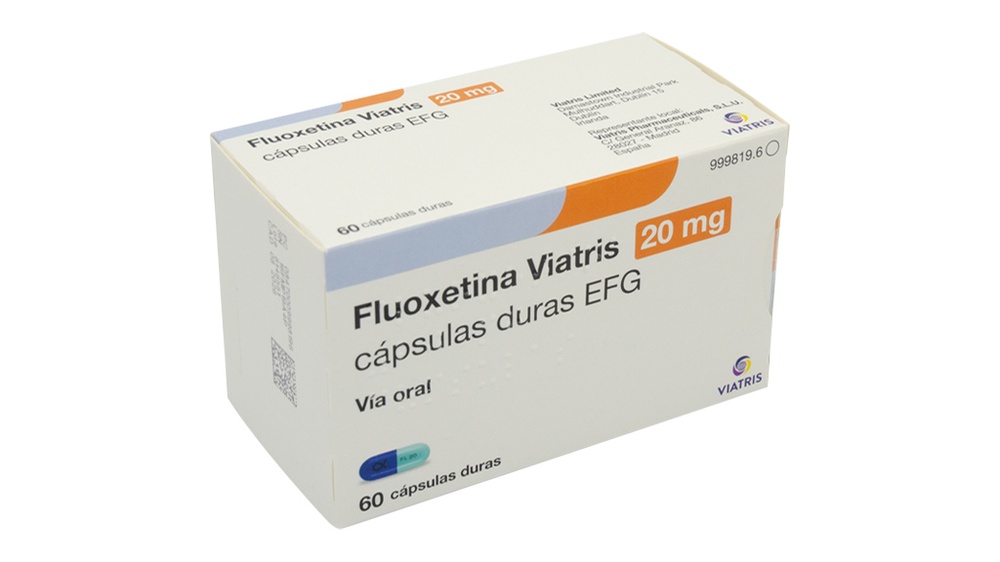
Fluoxetina Viatris is presented in the form of hard gelatin capsules with a light green opaque body and a purple opaque cap, and are printed in black ink with “FL20” on the body and “?” on the cap.
Fluoxetina Viatris is available in high-density polyethylene (HDPE) bottles with a safety screw cap made of polypropylene containing 7, 10, 14, 20, 28, 30, 50, 60, 90, and 100 hard capsules.
Fluoxetina Viatris is also available in PVC/PVDC/Aluminum blisters containing 7, 10, 12, 14, 20, 28, 30, 50, 60, 90, and 100 hard capsules.
Not all pack sizes may be marketed.
Marketing authorization holder and manufacturer
Marketing authorization holder:
Viatris Limited
Damastown Industrial Park
Mulhuddart, Dublin 15
Dublin
Ireland
Manufacturer:
McDermott Laboratories Ltd. t/a Gerard Laboratories
35/36 Baldoyle Industrial Estate, Grange Road, Dublin 13
Ireland
or
Viatris Sante
360 Avenue Henri Schneider
69330 Meyzieu
France
or
Mylan B.V.
Krijgsman 20,
1186 DM Amstelveen
Netherlands
or
EUROPEENNE DE PHARMACOTECHNIE - EUROPHARTECH
Rue Henri Matisse
63370 LEMPDES
France
or
Mylan Hungary Kft/Mylan Hungary Ltd
Mylan utca 1
2900, Komárom
Hungary
You can request more information about this medication by contacting the local representative of the marketing authorization holder:
Viatris Pharmaceuticals, S.L.U.
C/ General Aranaz, 86
28027 - Madrid
Spain
This medication is authorized in the Member States of the European Economic Area with the following names:
Germany Fluoxetin dura 20 mg
Austria Fluoxetin ‘Arcana’ 20 mg – Kapseln
Belgium Fluoxetine Mylan 20 mg harde capsules
Denmark Fluoxetine Mylan
Spain Fluoxetina Viatris 20 mg hard capsules EFG
France Fluoxétine Viatris 20 mg, gélule
Greece Fluoxetine/Mylan CAP 20 mg/CAP
Ireland Gerozac 20 mg Capsules hard
Italy Fluoxetina Mylan Generics
Luxembourg Fluoxetine Mylan 20 mg harde capsules
Netherlands Fluoxetine Mylan 20 mg, capsules
Portugal Fluoxetina Mylan
United Kingdom Fluoxetine Capsules 20 mg
Date of the last revision of this prospectus:July 2021
Detailed information about this medication is available on the website of the Spanish Agency for Medicines and Health Products (AEMPS) https://www.aemps.gob.es/
- Country of registration
- Dosage formCAPSULE, 22.36 mg of fluoxetine hydrochloride
- ATC codeN06AB03
- Average pharmacy price2.5 EUR
- Availability in pharmaciesSupply issue reported
- Active substance
- Prescription requiredYes
- Manufacturer
- CompositionLACTOSA (139,64 mg mg), LAURILSULFATO DE SODIO (0,068 mg mg), PROPILENGLICOL (- - mg), ALCOHOL ETILICO (ETANOL) (- - mg), POTASIO, HIDROXIDO DE (E-525) (- - mg)
- This information is for reference only and does not constitute medical advice. Always consult a doctor before taking any medication. Oladoctor is not responsible for medical decisions based on this content.
- Alternatives to FLUOXETINE VIATRIS 20 mg HARD CAPSULESDosage form: CAPSULE, 20 mgActive substance: fluoxetineManufacturer: Almus Farmaceutica S.A.U.Prescription requiredDosage form: CAPSULE, 20 mgActive substance: fluoxetineManufacturer: Aurovitas Spain, S.A.U.Prescription requiredDosage form: CAPSULE, 20 mg fluoxetineActive substance: fluoxetineManufacturer: Laboratorios Cinfa S.A.Prescription required
Online doctors for FLUOXETINE VIATRIS 20 mg HARD CAPSULES
Discuss questions about FLUOXETINE VIATRIS 20 mg HARD CAPSULES, including use, safety considerations and prescription review, subject to medical assessment and local regulations.







Get FLUOXETINE VIATRIS 20 mg HARD CAPSULES Prescription Online
Fill in a 2-min form
Tell us your symptoms, history, and what medicine you're requesting.
Pick a doctor or let us assign
Choose a specialist or we'll match you with the next available doctor.
Doctor reviews your case
Usually within 30 minutes. They may ask follow-up questions via chat.
Collect from any pharmacy
Electronic prescription sent to your email — valid across Spain.
Frequently Asked Questions
FLUOXETINE VIATRIS 20 mg HARD CAPSULES requires a prescription in Spain. You can check with a doctor online whether this medicine may be appropriate for your situation.
The active ingredient in FLUOXETINE VIATRIS 20 mg HARD CAPSULES is fluoxetine. This information helps identify medicines with the same composition but different brand names.
The average pharmacy price for FLUOXETINE VIATRIS 20 mg HARD CAPSULES is around 2.5 EUR. Prices may vary depending on the manufacturer and dosage form.
FLUOXETINE VIATRIS 20 mg HARD CAPSULES is manufactured by Viatris Limited. Pharmacy brands and packaging may differ depending on the distributor.
Doctors such as Family doctors, Psychiatrists, Dermatologists, Cardiologists, Endocrinologists, Gastroenterologists, Pulmonologists, Nephrologists, Rheumatologists, Hematologists, Infectious disease physicians, Allergists, Geriatricians, Paediatricians, Oncologists may assess whether FLUOXETINE VIATRIS 20 mg HARD CAPSULES is appropriate, depending on your situation and local regulations. You can book an online consultation to discuss your symptoms and possible next steps.
Spain has a well-developed healthcare infrastructure across major cities such as Madrid, Barcelona, Valencia, and Seville. Pharmacies are widely available and operate under strict regulations, ensuring access to prescribed medications.
You can buy FLUOXETINE VIATRIS 20 mg HARD CAPSULES in Madrid, Barcelona, Seville, or Valencia at any local pharmacy with a valid prescription.
To obtain a prescription, you can use Oladoctor:
Other medicines with the same active substance (fluoxetine) include FLUOXETINE ALMUS 20 mg HARD CAPSULES, FLUOXETINE Aurovitas 20 mg Hard Capsules, FLUOXETINE CINFA 20 mg HARD CAPSULES. These may have different brand names or formulations but contain the same therapeutic ingredient. Always consult a doctor before switching or starting a new medicine.
