


FILIOP 40 micrograms/ml + 5 mg/ml EYE DROPS SOLUTION



How to use FILIOP 40 micrograms/ml + 5 mg/ml EYE DROPS SOLUTION
Translated with AI
This page provides general information and does not replace a doctor’s consultation. Always consult a doctor before taking any medication. Seek urgent medical care if symptoms are severe.
Show originalContents of the leaflet
Introduction
Leaflet: information for the user
FILIOP 40 micrograms/ml + 5 mg/ml eye drops solution
travoprost/timolol
Read the entire leaflet carefully before starting to use this medication, as it contains important information for you.
- Keep this leaflet, as you may need to read it again.
- If you have any questions, consult your doctor or pharmacist.
- This medication has been prescribed to you only, and you should not give it to others, even if they have the same symptoms as you, as it may harm them.
- If you experience side effects, consult your doctor or pharmacist, even if they are side effects not listed in this leaflet. See section 4.
Contents of the leaflet
- What is FILIOP and what is it used for
- What you need to know before starting to use FILIOP
- How to use FILIOP
- Possible side effects
- Storage of FILIOP
- Contents of the pack and further information
1. What is FILIOP and what is it used for
FILIOP eye drops solution is an association of two active substances (travoprost and timolol). Travoprost is a prostaglandin analogue that acts by increasing the outflow of fluid from the eye, and thus reduces the pressure in the eye. Timolol is a beta-blocker that acts by reducing the production of fluid inside the eye. The two substances work together to reduce the pressure inside the eye.
FILIOP eye drops are used to treat high pressure in the eyes in adults, including elderly patients. This pressure can lead to a disease called glaucoma.
FILIOP eye drops solution is a sterile solution without preservatives.

2. What you need to know before starting to use FILIOP
Do not use FILIOP:
- if you are allergic to travoprost, timolol, or any of the other components of this medication (listed in section 6)
- if you are allergic to prostaglandins or beta-blockers
- if you currently have or have had in the past respiratory problems such as asthma, severe chronic obstructive pulmonary disease (a serious lung condition that can cause wheezing, difficulty breathing, and/or persistent cough) or other types of respiratory problems
- if you have severe allergic rhinitis
- if you have a slow heart rate, heart failure, or heart rhythm disorders (irregular heartbeats)
- if the surface of your eye is cloudy
Consult your doctor if you are in any of these situations.
Warnings and precautions
Consult your doctor or pharmacist before starting to use FILIOP if you currently have or have had in the past:
- coronary heart disease (symptoms may include chest pain or discomfort, shortness of breath, or choking), heart failure, low blood pressure
- heart rhythm disorders such as slow heartbeat
- respiratory problems, asthma, or chronic obstructive pulmonary disease
- poor circulation (such as Raynaud's disease or Raynaud's syndrome)
- diabetes, as timolol may mask the signs and symptoms of low blood sugar
- hyperthyroidism, as timolol may mask the signs and symptoms of thyroid disease
- myasthenia gravis (a chronic muscle weakness)
- cataract surgery
- eye inflammation (currently or in the past)
Consult your doctor before undergoing surgery, inform your doctor that you are using FILIOP, as timolol may change the effects of some medications used during anesthesia.
FILIOP may change the color of your iris (the colored part of your eye). This change may be permanent.
FILIOP may increase the length, thickness, color, and/or number of your eyelashes and may cause unusual hair growth on your eyelids.
Travoprost may be absorbed through the skin; therefore, pregnant women or those trying to become pregnant should not use it. In case of contact with the skin, the medication should be washed off immediately to remove it.
Children
FILIOP should not be used in children and adolescents under 18 years of age.
Other medications and FILIOP
Tell your doctor or pharmacist if you are taking, have recently taken, or may take any other medication.
FILIOP may affect or be affected by other medications you are using, including other eye drops for the treatment of glaucoma. Consult your doctor if you are using or plan to use:
- medications to lower blood pressure,
- heart medications, including quinidine (used to treat heart conditions and some types of malaria),
- medications to treat diabetes or antidepressants known as fluoxetine and paroxetine.
Pregnancy, breastfeeding, and fertility
If you are pregnant or breastfeeding, think you may be pregnant, or plan to become pregnant, consult your doctor or pharmacist before using this medication.
Do not use FILIOP if you are pregnant unless your doctor considers it necessary. If you can become pregnant, you should use an adequate contraceptive method while using the medication.
Do not use FILIOP if you are breastfeeding. This medication may pass into breast milk.
Driving and using machines
You may notice that your vision becomes blurry immediately after applying FILIOP.
FILIOP may also cause hallucinations, dizziness, nervousness, or fatigue in some patients.
Do not drive or use machines until these effects have disappeared.
FILIOP contains macrogolglycerol hydroxystearate 40 and propylene glycol
This medication contains macrogolglycerol hydroxystearate 40, which may cause skin reactions.
This medication contains 7.5 mg of propylene glycol per ml of solution.
3. How to use FILIOP
Follow exactly the administration instructions of this medication indicated by your doctor or pharmacist. In case of doubt, consult your doctor or pharmacist again.
The recommended doseis
One drop in the affected eye(s), once a day, in the morning or at night. Use it at the same time every day.
FILIOP should only be applied to both eyes if your doctor has recommended it. Follow the treatment for the entire period of time indicated by your doctor.
FILIOP should only be used as eye drops.
Instructions for use
1a
1b |
|
2 |
|
3 |
|
4
5 |
|
|
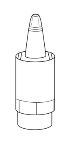
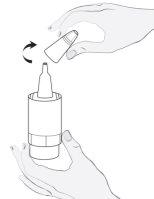
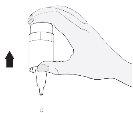
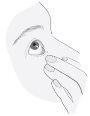
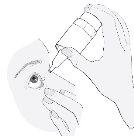
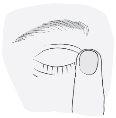
If you use more FILIOP than you should
If you use more FILIOP than you should, rinse your eyes with warm water. Do not apply more drops until the next scheduled dose.
In case of overdose or accidental ingestion, consult your doctor or pharmacist immediately or call the Toxicology Information Service, phone 91 562 04 20, indicating the medication and the amount ingested.
If you forget to use FILIOP
If you forget to use FILIOP, continue with the next scheduled dose. Do not apply a double dose to make up for the missed doses. The dose should not exceed one drop per day in the affected eye(s).
If you stop using FILIOP
If you stop using FILIOP without consulting your doctor, the pressure in your eye will not be controlled and may cause you to lose vision.
If you are using other eye drops, wait at least 5 minutes between applying FILIOP and the other eye drops.
If you wear soft contact lenses, do not apply the drops while wearing them. After applying the drops, wait 15 minutes before putting your contact lenses back in.
If you have any other questions about using this medication, ask your doctor or pharmacist.

4. Possible side effects
Like all medications, this medication can cause side effects, although not everyone will experience them.
Unless the effects are severe, continue with the treatment as usual. If these effects concern you, consult your doctor or pharmacist. Do not stop using FILIOP without consulting your doctor first.
Very common(may affect more than 1 in 10 people)
Eye effects: eye redness.
Common(may affect up to 1 in 10 people)
Eye effects: inflammation with damage to the surface of the eye, eye pain, blurred vision, abnormal vision, dry eye, eye itching, eye discomfort, signs and symptoms of eye irritation (e.g., burning, stinging).
Uncommon(may affect up to 1 in 100 people)
Eye effects: inflammation of the eye surface, eyelid inflammation, conjunctival edema, increased eyelash growth, iris inflammation, eye inflammation, sensitivity to light, decreased vision, tired eyes, eye allergy, eye swelling, increased tear production, eyelid redness, change in eyelid color, skin darkening (around the eye).
Other effects: allergic reaction to the active substance, dizziness, headache, increased or decreased blood pressure, shortness of breath, excessive hair growth, runny nose, skin inflammation with redness and itching, decreased heart rate.
Rare(may affect up to 1 in 1,000 people)
Eye effects: thinning of the eye surface, inflammation of the eyelid glands, broken blood vessel in the eye, crusts on the eyelid, abnormal growth and positioning of the eyelashes.
Other effects: nervousness, irregular heart rate, hair loss, voice disorders, difficulty breathing, cough, throat irritation, hives, abnormal liver blood test values, skin discoloration, thirst, fatigue, strange sensation inside the nose, colored urine, pain in hands and feet.
Frequency not known(frequency cannot be estimated from available data)
Eye effects: drooping eyelid (causing the eye to be half-closed), sunken eyes (the eyes appear more recessed), changes in iris color (the colored part of the eye).
Other effects: skin rash, heart failure, chest pain, stroke, fainting, depression, asthma, increased heart rate, tingling or numbness, palpitations, inflammation in the lower limbs, bad taste.
Additionally:
FILIOP is an association of 2 active substances.
Like other medications administered in the eyes, travoprost and timolol (a beta-blocker) are absorbed into the bloodstream. This can cause side effects similar to those observed with beta-blocker medications administered intravenously and/or orally. The incidence of side effects after eye administration is lower than that of medications administered, for example, by mouth or injection. The listed side effects, including reactions observed within the class of beta-blockers when used to treat eye conditions, are as follows:
Eye effects: eyelid inflammation, corneal inflammation, detachment of the layer under the retina that contains blood vessels, which can cause vision changes after filtration surgery, decreased corneal sensitivity, corneal erosion (damage to the outer layer of the eyeball), double vision, eye discharge, swelling around the eye, eyelid itching, abnormal outward turning of the lower eyelid with redness, irritation, and increased tear production, blurred vision (sign of cataract opacity), swelling of a part of the eye (uvea), eyelid eczema, visual halo, decreased sensitivity in the eye, pigmentation inside the eye, dilated pupils, change in eyelash color, change in eyelash texture.
Other effects:
- Ear and labyrinth disorders: dizziness with a sensation of movement, ringing in the ears.
- Heart and circulation: slow heart rate, palpitations, edema (fluid accumulation), changes in heart rate or rhythm, congestive heart failure (heart disease with difficulty breathing and swelling of the feet and legs due to fluid accumulation), a type of heart rhythm disorder, heart attack, decreased blood pressure, Raynaud's phenomenon, cold hands and feet, reduced blood flow to the brain.
- Respiratory: constriction of airways in the lungs (mainly in patients with pre-existing disease), nasal congestion, sneezing (due to allergy), difficulty breathing, nosebleeds, nasal dryness.
- Nervous system and general disorders: insomnia, nightmares, memory loss, hallucinations, loss of strength and energy, anxiety (excessive emotional distress).
- Gastrointestinal: altered taste, nausea, indigestion, diarrhea, dry mouth, abdominal pain, vomiting, and constipation.
- Allergic reactions: generalized allergic reactions, including swelling under the skin that can occur in areas such as the face and limbs, and can obstruct the airways, causing difficulty swallowing or breathing, localized and generalized rash, itching, sudden and severe allergic reaction that can be life-threatening.
- Skin: skin rash with a white plate-like appearance (psoriasiform rash) or worsening of psoriasis, skin peeling, abnormal hair texture, skin inflammation with redness and itching, change in hair color, loss of eyelashes, itching, abnormal hair growth, skin redness.
- Muscular: increased signs and symptoms of myasthenia gravis (muscle disorder), unusual sensations such as tingling, muscle weakness/fatigue, muscle pain not caused by exercise, joint pain.
- Kidney and urinary disorders: difficulty or pain when urinating, involuntary loss of urine.
- Reproduction: sexual dysfunction, decreased sexual desire.
- Metabolism: low blood sugar levels, increased prostate cancer marker.
Reporting side effects
If you experience any side effects, consult your doctor or pharmacist, even if they are possible side effects not listed in this leaflet. You can also report them directly through the Spanish Pharmacovigilance System for Human Use Medicines: https://www.notificaram.es. By reporting side effects, you can contribute to providing more information on the safety of this medication.
5. Storage of FILIOP
Keep this medication out of sight and reach of children.
Do not use this medication after the expiration date shown on the box and bottle after "EXP". The expiration date is the last day of the month indicated.
Do not use this medication if you notice that the bottle is broken or damaged before opening it for the first time.
Store below 25°C.
You must discard the bottle 28 days after opening it for the first time,to prevent infections, and use a new bottle. Note the opening date in the spaces provided on the label of the bottle and box.
Medicines should not be disposed of via wastewater or household waste. Deposit the packaging and unused medicines at the SIGRE collection point in the pharmacy. If in doubt, ask your pharmacist how to dispose of the packaging and unused medicines. This will help protect the environment.
6. Package contents and additional information
FILIOP composition
- The active ingredients are travoprost and timolol.
Each ml of solution contains 40 micrograms of travoprost and 5 mg of timolol (as timolol maleate).
- The other components are mannitol (E421), boric acid, sodium hydroxide (for pH adjustment), macrogolglyceride hydroxystearate (nominal value: 40), propylene glycol (E1520), sodium chloride, and purified water.
Appearance of the product and package contents
FILIOP eye drops in solution are presented as 2.5 ml of aqueous solution, transparent and colorless, practically free of particles, in a cardboard box containing a 5 ml container (PP), white, multidose, with a pump (PP, HDPE, LDPE) and a pressure cylinder and a cap (HDPE).
The product is available in the following package sizes:
Box with 1 or 3 bottles.
Only some package sizes may be marketed.
Marketing authorization holder and manufacturer
Marketing authorization holder
Horus Pharma
22, Allée Camille MUFFAT
Inedi 5
06200 Nice
France
Manufacturer:
Pharmaten S.A.
6, Dervenakion Str
15351 Pallini Attikis
Greece
Or
Jadran Galenski Laboratorij D.D.
Svilno, 20
51000 Rijeka
Croatia
Local representative
HORUS PHARMA IBÉRICA, S.L.U.
Gran Vía Carlos III, 98, 6º
08028 Barcelona – Spain
This medication is authorized in the member states of the European Economic Area under the following names:
Denmark | FILIOP 40 mikrogram/ml + 5 mg/ml eye drops, solution |
France | FILIOP 40 microgrammes/mL + 5 mg/mL, eye drops in solution |
Spain | FILIOP 40 microgramos/ml + 5 mg/ml eye drops in solution |
Belgium | FILIOP 40 microgrammes/ml + 5 mg/ml eye drops in solution |
FILIOP 40 microgram/ml + 5 mg/ml eye drops, solution | |
FILIOP 40 Mikrogramm/ml + 5 mg/ml eye drops, solution | |
Luxembourg | FILIOP 40 microgrammes/ml + 5 mg/ml eye drops in solution |
Netherlands | FILIOP 40 microgram/ml + 5 mg/ml eye drops, solution |
Date of the last revision of thisleaflet: March 2025
Detailed information on this medication is available on the website of the Spanish Agency for Medicines and Health Products (AEMPS) (http://www.aemps.gob.es/)
- Country of registration
- Dosage formEYE DROP, 40 micrograms/ml + 5 mg/ml
- ATC codeS01ED51
- Average pharmacy price7.09 EUR
- Availability in pharmacies
Supply issue reported
Data from the Spanish Agency of Medicines (AEMPS) indicates a supply issue affecting this medicine.<br><br>Availability may be limited in some pharmacies.<br><br>For updates or alternatives, consult your pharmacist. - Active substance
- Prescription requiredYes
- Manufacturer
- This information is for reference only and does not constitute medical advice. Always consult a doctor before taking any medication. Oladoctor is not responsible for medical decisions based on this content.
- Alternatives to FILIOP 40 micrograms/ml + 5 mg/ml EYE DROPS SOLUTIONDosage form: EYEDROP, 10 mg/ml + 5 mg/mlActive substance: timolol, combinationsManufacturer: Novartis Europharm LimitedPrescription requiredDosage form: EYEDROP, 0.3 mg/ml + 5 mg/mlActive substance: timolol, combinationsManufacturer: Brill Pharma S.L.Prescription requiredDosage form: EYE DROP, 0.3 mg/ml + 5 mg/mlActive substance: timolol, combinationsManufacturer: Laboratorio Stada S.L.Prescription required
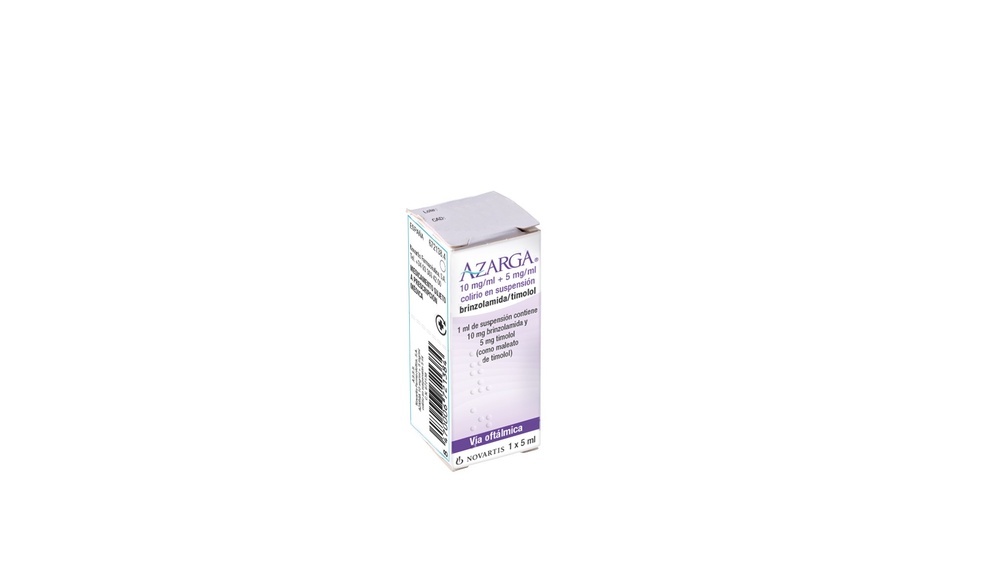

Online doctors for FILIOP 40 micrograms/ml + 5 mg/ml EYE DROPS SOLUTION
Discuss questions about FILIOP 40 micrograms/ml + 5 mg/ml EYE DROPS SOLUTION, including use, safety considerations and prescription review, subject to medical assessment and local regulations.



.jpg)





Frequently Asked Questions
