



FESOTERODINA 4 mg Modified-Release Tablets

Prescription review online
A doctor will review your case and decide whether a prescription is medically appropriate.

Talk to a doctor about this medicine
Discuss your symptoms and possible next steps in a quick online consultation.



How to use FESOTERODINE EDIST 4 mg PROLONGED-RELEASE TABLETS
Contents of the leaflet
- Introduction
- What is Fesoterodina Edest and what is it used for
- What you need to know before you take Fesoterodina Edest
- How to take Fesoterodina Edest
- Possible side effects
- Storage of Fesoterodina Edest
- Contents of the pack and other information
Introduction
Package Leaflet: Information for the Patient
Fesoterodina Edest 4mg prolonged-release tablets EFG
Fesoterodina Edest 8mg prolonged-release tablets EFG
Fesoterodine fumarate
Read all of this leaflet carefully before you start taking this medicine because it contains important information for you.
- Keep this leaflet, you may need to read it again.
- If you have any further questions, ask your doctor or pharmacist.
- This medicine has been prescribed for you only. Do not pass it on to others. It may harm them, even if their signs of illness are the same as yours.
- If you get any side effects, talk to your doctor or pharmacist. This includes any possible side effects not listed in this leaflet. See section 4.
Contents of the pack
- What is Fesoterodina Edest and what is it used for
- What you need to know before you take Fesoterodina Edest
- How to take Fesoterodina Edest
- Possible side effects
- Storage of Fesoterodina Edest
- Contents of the pack and other information
1. What is Fesoterodina Edest and what is it used for
Fesoterodina Edest contains the active substance fesoterodine fumarate and is a treatment called an antimuscarinic, which reduces the activity of the overactive bladder and is used in adults to treat symptoms.
Fesoterodina treats the symptoms of an overactive bladder, such as:
- not being able to control when to urinate (urge incontinence)
- a sudden need to urinate (urgency)
- having to urinate more often than usual (increased urination frequency).

Not sure if this medicine is right for you?
Discuss your symptoms and treatment with a doctor online.
2. What you need to know before you take Fesoterodina Edest
Do not take Fesoterodina Edest if:
- you are allergic to fesoterodine, peanuts, soy, or any of the other ingredients of Fesoterodina Edest (listed in section 6) (see section 2, "Fesoterodina Edest contains lactose and soy lecithin")
- you cannot empty your bladder completely (urinary retention)
- your stomach empties slowly (gastric retention)
- you have a certain eye condition called narrow-angle glaucoma (increased eye pressure) that is not controlled (treated properly)
- you have excessive muscle weakness (myasthenia gravis)
- you have severe ulceration and inflammation of the colon (severe ulcerative colitis)
- you have an abnormally long or dilated colon (toxic megacolon)
- you have severe liver problems
- you have kidney problems or moderate to severe liver problems and are taking medications that contain any of the following active substances: itraconazole or ketoconazole (used to treat fungal infections), ritonavir, atazanavir, indinavir, saquinavir, or nelfinavir (antiviral medications used to treat HIV infection), clarithromycin or telithromycin (used to treat bacterial infections), and nefazodone (used to treat depression)
Warnings and precautions
Consult your doctor or pharmacist before starting to take fesoterodine.
Fesoterodina may not always be suitable for you. Talk to your doctor before taking fesoterodina in any of the following cases:
- if you have difficulty emptying your bladder completely (e.g., due to prostate enlargement)
- if you have ever suffered from decreased intestinal movement or have severe constipation
- if you are being treated for a certain eye condition called narrow-angle glaucoma
- if you have severe kidney or liver problems, as your doctor may need to adjust the dose you receive
- if you have a condition called autonomic neuropathy that causes symptoms such as changes in blood pressure or alterations in intestinal function or sexual function
- if you have a gastrointestinal disease that affects the passage and/or digestion of food
- if you suffer from heartburn or belching
- if you have a urinary tract infection, your doctor may need to prescribe antibiotics
Heart problems: Inform your doctor if you have any of the following conditions:
- you have an abnormal ECG (heart activity record) known as QT interval prolongation or if you are taking any medication that is known to cause this effect
- your heart rate is slow (bradycardia)
- you have a heart condition such as myocardial ischemia (reduced blood flow to the heart), irregular heartbeats, or heart failure
- you have hypokalemia, which is a manifestation of abnormally low potassium levels in the blood
Children and adolescents
Do not give this medicine to children and adolescents under 18 years of age because it has not been established whether it works and is safe for them.
Other medicines and Fesoterodina Edest
Tell your doctor or pharmacist if you are taking or have recently taken or may need to take other medicines. Your doctor will tell you if you can use fesoterodine with other medicines.
Please inform your doctor if you are taking medications from the list below.
Taking these medications at the same time as fesoterodine may cause side effects such as dry mouth, constipation, difficulty emptying the bladder completely, or more severe or frequent drowsiness than usual.
- medicines that contain the active substance amantadine (used to treat Parkinson's disease).
- certain medicines used to increase gastrointestinal motility or to relieve stomach cramps or spasms, such as medicines that contain metoclopramide.
- certain medicines used to treat psychiatric disorders, such as antidepressants and neuroleptics.
Please indicate to your doctor if you are taking any of the following medications:
- medicines that contain any of the following active substances that may increase the metabolism of fesoterodine and, therefore, decrease its effect: St. John's Wort (hypericum), rifampicin (used to treat bacterial infections), carbamazepine, phenytoin, and phenobarbital (used, among others, to treat epilepsy).
- medicines that contain any of the following active substances that may increase fesoterodine levels in the blood: itraconazole or ketoconazole (used to treat fungal infections), ritonavir, atazanavir, indinavir, saquinavir, or nelfinavir (antiviral medications used to treat HIV infection), clarithromycin or telithromycin (used to treat bacterial infections), nefazodone (used to treat depression), fluoxetine or paroxetine (used to treat depression or anxiety), bupropion (used to quit smoking or treat depression), quinidine (used to treat arrhythmias), and cinacalcet (used to treat hyperparathyroidism).
- medicines that contain the active substance methadone (used to treat severe pain and drug dependence).
Pregnancy and breastfeeding
You should not take fesoterodine if you are pregnant, as the effects of fesoterodine on pregnancy and the newborn are unknown.
It is unknown whether fesoterodine is excreted in breast milk; therefore, do not breastfeed during treatment with fesoterodine.
If you are pregnant or breastfeeding, think you may be pregnant, or plan to become pregnant, consult your doctor or pharmacist before using this medicine.
Driving and using machines
Fesoterodine may cause blurred vision, dizziness, and drowsiness. If you experience any of these effects, do not drive or operate tools or machines.
Fesoterodina Edest contains lactose and soy lecithin
This medicine contains lactose. If your doctor has told you that you have an intolerance to certain sugars, consult with them before taking this medicine.
This medicine contains soy lecithin. Do not use this medicine if you are allergic to peanuts or soy.
3. How to take Fesoterodina Edest
Follow exactly the administration instructions of this medicine indicated by your doctor.
In case of doubt, consult your doctor or pharmacist again.
The recommended initial dose of fesoterodine is one 4 mg tablet per day. Depending on how you respond to the medicine, your doctor may prescribe a higher dose; one 8 mg tablet per day.
Swallow the tablet whole with a glass of water. Do not chew the tablet. Fesoterodina can be taken with or without food.
To help you remember to take your medicine, it may be easier to take it at the same time every day.
If you take more Fesoterodina Edest than you should
If you have taken more tablets than you should or if someone else has taken your tablets by mistake, contact your doctor or hospital immediately. Show them the package of the tablets.
In case of overdose or accidental ingestion, consult your doctor or pharmacist immediately or call the Toxicology Information Service, phone: 91 562 04 20, indicating the medicine and the amount ingested.
If you forget to take Fesoterodina Edest
If you have forgotten to take a tablet, take it as soon as you remember, but do not take more than one tablet in a day. Do not take a double dose to make up for forgotten doses.
If you stop taking Fesoterodina Edest
Do not stop taking fesoterodine without talking to your doctor first, as the symptoms of an overactive bladder may return or worsen when you stop taking fesoterodine.
If you have any other questions about the use of this medicine, ask your doctor or pharmacist.

Started taking the medicine and have questions?
Discuss your symptoms and treatment with a doctor online.
4. Possible side effects
Like all medicines, this medicine can cause side effects, although not everybody gets them.
Some side effects can be serious
Rarely, severe allergic reactions may occur, including angioedema. You should stop taking fesoterodine and contact your doctor immediately if you develop swelling in the face, mouth, or throat.
Other side effects
Very common(may affect more than 1 in 10 people):
You may notice dry mouth. This effect is usually mild or moderate. This may increase the risk of tooth decay. Therefore, you should brush your teeth habitually twice a day and visit a dentist if you have any doubts.
Common(may affect up to 1 in 10 people)
- dry eyes
- constipation
- digestive disorders (dyspepsia)
- pain or discomfort when urinating (dysuria)
- dizziness
- headache
- stomach pain
- diarrhea
- nausea
- difficulty sleeping (insomnia)
- dry throat
Uncommon(may affect up to 1 in 100 people)
- urinary tract infection
- drowsiness
- difficulty tasting (dysgeusia)
- vertigo
- rash
- dry skin
- itching
- discomfort in the stomach
- gas (flatulence)
- difficulty emptying the bladder completely (urinary retention)
- delayed urination (urinary retardation)
- severe fatigue (fatigue)
- increased heart rate (tachycardia)
- palpitations
- liver problems
- cough
- dry nose
- sore throat
- acid reflux
- blurred vision
Rare(may affect up to 1 in 1,000 people)
- hives
- confusion
Reporting of side effects
If you experience any side effects, talk to your doctor or pharmacist. This includes any possible side effects not listed in this leaflet. You can also report side effects directly through the Spanish Pharmacovigilance System for Human Use Medicines: www.notificaRAM.es. By reporting side effects, you can help provide more information on the safety of this medicine.
5. Storage of Fesoterodina Edest
Keep this medicine out of the sight and reach of children.
Do not use this medicine after the expiry date which is stated on the carton and blister after EXP. The expiry date is the last day of the month stated.
No special storage conditions are required.
Medicines should not be disposed of via wastewater or household waste. Place the packaging and any unused medicine in the SIGRE collection point at the pharmacy. If you have any doubts, ask your pharmacist how to dispose of the packaging and any unused medicine. This will help protect the environment.
6. Contents of the pack and other information
Composition of Fesoterodina Edest
- The active substance is fesoterodine fumarate.
Fesoterodina Edest 4mg prolonged-release tablets EFG:
Each prolonged-release tablet contains 4 mg of fesoterodine fumarate, equivalent to 3.1 mg of fesoterodine.
Fesoterodina Edest 8mg prolonged-release tablets EFG:
Each prolonged-release tablet contains 8 mg of fesoterodine fumarate, equivalent to 6.2 mg of fesoterodine.
- The other ingredients (excipients) are:
Core of the tablet:silicon dioxide, microcrystalline cellulose, hypromellose, lactose, and magnesium stearate.
Coating of the 4 mg tablet:poly(vinyl alcohol), titanium dioxide (E171), talc, soy lecithin, yellow iron oxide (E172), and xanthan gum.
Coating of the 8 mg tablet:poly(vinyl alcohol), titanium dioxide (E171), talc, soy lecithin, carmine indigo (E132), and xanthan gum.
Appearance of the product and contents of the pack
Fesoterodina Edest 4mg prolonged-release tablets EFG:
The 4 mg tablets are yellow, oval, 13.2 mm long, and 6.65 mm wide, film-coated, and have the letters "FI" engraved on one side and are smooth on the other.
Fesoterodina Edest 8mg prolonged-release tablets EFG:
The 8 mg tablets are blue, oval, 13.2 mm long, and 6.65 mm wide, film-coated, and have the letters "F II" engraved on one side and are smooth on the other.
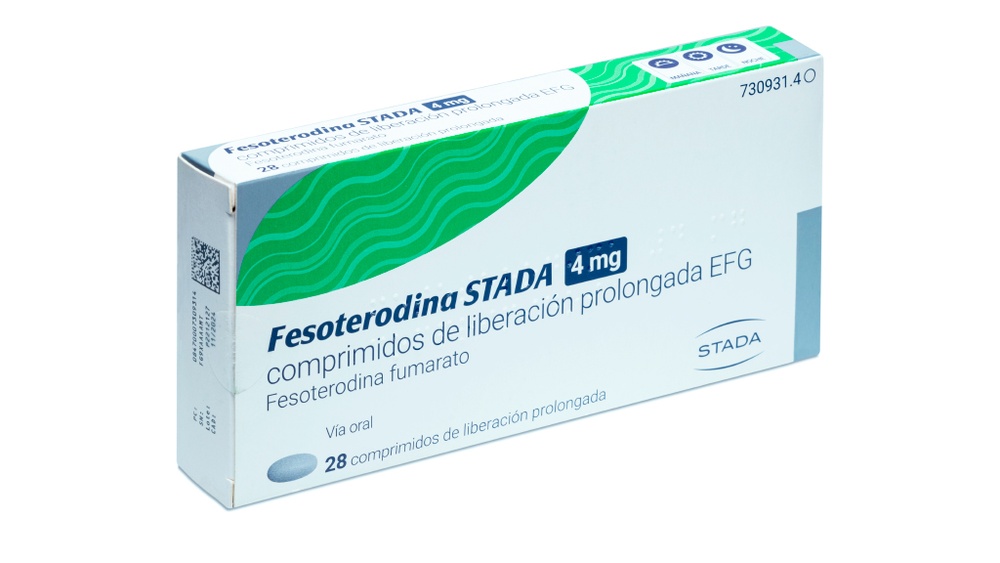
Fesoterodina Edest 4 mg and 8 mg are packaged in aluminum-aluminum blisters in a cardboard box containing 28 tablets.
Marketing authorization holder and manufacturer
Marketing authorization holder
Intas Third Party Sales 2005 S.L.
Calle Moll de Barcelona S/N
Edificio World Trade Center
08039 – Barcelona
Spain
Manufacturer
Laboratori Fundació Dau
C/ C, 12-14 Pol. Industrial Zona Franca
08040, Barcelona,
Spain
Date of the last revision of this leaflet: March 2023
Detailed information on this medicine is available on the website of the Spanish Agency for Medicines and Health Products (AEMPS) http://www.aemps.gob.es.
- Country of registration
- Dosage formMODIFIED-RELEASE TABLET, 4 mg
- ATC codeG04BD11
- Active substance
- Prescription requiredYes
- Manufacturer
- CompositionLACTOSA (70 mg mg), LECITINA DE SOJA (2 Porcentaje peso/peso mg)
- This information is for reference only and does not constitute medical advice. Always consult a doctor before taking any medication. Oladoctor is not responsible for medical decisions based on this content.
- Alternatives to FESOTERODINE EDIST 4 mg PROLONGED-RELEASE TABLETSDosage form: MODIFIED-RELEASE TABLET, 4 mgActive substance: fesoterodineManufacturer: Laboratorios Alter S.A.Prescription requiredDosage form: MODIFIED-RELEASE TABLET, 8 mgActive substance: fesoterodineManufacturer: Laboratorios Alter S.A.Prescription requiredDosage form: MODIFIED-RELEASE TABLET, 8 mgActive substance: fesoterodineManufacturer: Aristo Pharma GmbhPrescription required
Online doctors for FESOTERODINE EDIST 4 mg PROLONGED-RELEASE TABLETS
Discuss questions about FESOTERODINE EDIST 4 mg PROLONGED-RELEASE TABLETS, including use, safety considerations and prescription review, subject to medical assessment and local regulations.

Get FESOTERODINE EDIST 4 mg PROLONGED-RELEASE TABLETS Prescription Online
Fill in a 2-min form
Tell us your symptoms, history, and what medicine you're requesting.
Pick a doctor or let us assign
Choose a specialist or we'll match you with the next available doctor.
Doctor reviews your case
Usually within 30 minutes. They may ask follow-up questions via chat.
Collect from any pharmacy
Electronic prescription sent to your email — valid across Spain.
Frequently Asked Questions
FESOTERODINE EDIST 4 mg PROLONGED-RELEASE TABLETS requires a prescription in Spain. You can check with a doctor online whether this medicine may be appropriate for your situation.
The active ingredient in FESOTERODINE EDIST 4 mg PROLONGED-RELEASE TABLETS is fesoterodine. This information helps identify medicines with the same composition but different brand names.
FESOTERODINE EDIST 4 mg PROLONGED-RELEASE TABLETS is manufactured by Intas Third Party Sales 2005 S.L.. Pharmacy brands and packaging may differ depending on the distributor.
Doctors such as Family doctors, Psychiatrists, Dermatologists, Cardiologists, Endocrinologists, Gastroenterologists, Pulmonologists, Nephrologists, Rheumatologists, Hematologists, Infectious disease physicians, Allergists, Geriatricians, Paediatricians, Oncologists may assess whether FESOTERODINE EDIST 4 mg PROLONGED-RELEASE TABLETS is appropriate, depending on your situation and local regulations. You can book an online consultation to discuss your symptoms and possible next steps.
Spain has a well-developed healthcare infrastructure across major cities such as Madrid, Barcelona, Valencia, and Seville. Pharmacies are widely available and operate under strict regulations, ensuring access to prescribed medications.
You can buy FESOTERODINE EDIST 4 mg PROLONGED-RELEASE TABLETS in Madrid, Barcelona, Seville, or Valencia at any local pharmacy with a valid prescription.
To obtain a prescription, you can use Oladoctor:
Other medicines with the same active substance (fesoterodine) include FESOTERODINE ALTER 4 mg PROLONGED-RELEASE TABLETS, FESOTERODINE ALTER 8 mg PROLONGED-RELEASE TABLETS, FESOTERODINE ARISTO 8 mg PROLONGED-RELEASE TABLETS. These may have different brand names or formulations but contain the same therapeutic ingredient. Always consult a doctor before switching or starting a new medicine.
