


FERIV 20 mg/ml INJECTABLE SOLUTION OR CONCENTRATE FOR INFUSION SOLUTION
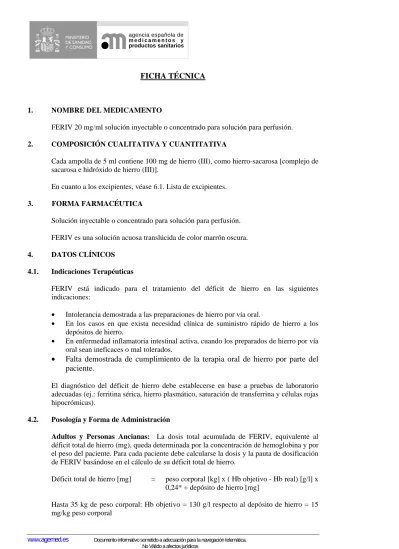



How to use FERIV 20 mg/ml INJECTABLE SOLUTION OR CONCENTRATE FOR INFUSION SOLUTION
Translated with AI
This page provides general information and does not replace a doctor’s consultation. Always consult a doctor before taking any medication. Seek urgent medical care if symptoms are severe.
Show originalContents of the leaflet
- Introduction
- What FERIV is and what it is used for
- BEFORE FERIV IS ADMINISTERED TO YOU
- Consult your doctor or nurse before starting to receive FERIV:
- - If you have a history of allergies to medications.
- - If you suffer from systemic lupus erythematosus.
- - If you suffer from rheumatoid arthritis.
- - If you suffer from severe asthma, eczema, or other allergies.
- HOW TO USE FERIV
- Possible side effects
- Storage of FERIV
- ADDITIONAL INFORMATION
Introduction
PROSPECTUS: INFORMATION FOR THE USER
FERIV 20 mg/ml Injectable solution or concentrate for solution for infusion
(Iron)
Read the entire prospectus carefully before starting to use the medication.
- Keep this prospectus, as you may need to read it again.
- If you have any doubts, consult your doctor or pharmacist.
- If you consider that any of the adverse effects you suffer is serious or if you notice any adverse effect not mentioned in this prospectus, inform your doctor or pharmacist.

Contents of the prospectus:
- What FERIV is and what it is used for
- Before FERIV is administered to you
- Possible side effects
- Storage of FERIV
- Additional information
1. What FERIV is and what it is used for
FERIV belongs to the group of medicines called iron preparations.
FERIV is indicated for the treatment by intravenous route of iron deficiency in the following situations:
- Due to demonstrated intolerance to oral iron preparations.
- In cases where there is a clinical need for rapid iron supply to iron deposits.
- In active inflammatory bowel disease, when oral iron preparations are ineffective or poorly tolerated.
- Demonstrated lack of compliance with oral iron therapy by the patient.
The diagnosis of iron deficiency must be established based on adequate laboratory tests (e.g., serum ferritin, plasma iron, transferrin saturation, and hypochromic red blood cells).

2. BEFORE FERIV IS ADMINISTERED TO YOU
Tell your doctor if you are allergic or have had any allergic reaction to the active ingredient of this medication, to any of its components, or to any other medication, as well as any pain or muscle weakness you suffer.
Do not use FERIV
- If you are allergic (hypersensitive) to the product or to any of the other components of this medication (included in section 6).
- If you have experienced severe allergic reactions (hypersensitivity) to other injectable iron preparations.
- If you have anemia not due to iron deficiency.
- If you have a history of overload or alteration in the use of iron.
- If you have had or currently suffer from any liver disease.
- If you have an acute or chronic infection, because the administration of intravenous iron may reactivate a bacterial or viral infection.
Warnings and precautions
Consult your doctor or nurse before starting to receive FERIV:
- If you have a history of allergies to medications.
- If you suffer from systemic lupus erythematosus.
- If you suffer from rheumatoid arthritis.
- If you suffer from severe asthma, eczema, or other allergies.
- If you suffer from any infection.
- If you suffer from liver problems.
Injectable iron preparations may cause severe allergic reactions that may require the immediate administration of adrenaline along with other resuscitation measures.
In the case of mild allergic reactions, the administration of antihistamines may be sufficient.
Patients who have a low iron-binding capacity and/or folic acid deficiency are more prone to presenting an allergic reaction.
Allergic reactions, including joint pain, have often been described when the recommended dose is exceeded.
It is possible that episodes of low blood pressure may occur if the injection is administered too quickly.
Use of other medications
Tell your doctor or pharmacist if you are using or have recently used other medications, including those purchased without a prescription.
Like other parenteral iron preparations, FERIV should not be administered with oral iron preparations, as its oral absorption is reduced. Therefore, oral iron therapy should only be started at least five days after the last FERIV injection.
Pregnancy and breastfeeding
Consult your doctor or pharmacist before using any medication.
Pregnancy
FERIV has not been evaluated in pregnant women. If you are pregnant or breastfeeding, think you may be pregnant, or plan to become pregnant, consult your doctor before using this medication.
If you become pregnant during treatment, you should ask your doctor for advice; in this way, the doctor can decide whether to administer the medication or not.
Breastfeeding
If you are breastfeeding, ask your doctor for advice before FERIV is administered to you.
Driving and using machines
There are no data on how FERIV administration affects driving or operating machines, so try not to perform tasks that require special attention until you verify how you tolerate the medication.
Important information about some of the components of FERIV
This medication contains less than 23 mg (1 mmol) of sodium per ampoule, so it is considered essentially "sodium-free".
3. HOW TO USE FERIV
Your doctor will indicate the duration of treatment with FERIV. Do not suspend treatment before.
How FERIV is administered
The doctor or nurse will administer FERIV intravenously; FERIV will be administered in a facility where immune-allergic reactions can be treated adequately and quickly.
After each administration, you will remain under observation for at least 30 minutes under the supervision of the doctor or nurse.
If you think the effect of FERIV is too strong or too weak, tell your doctor or pharmacist.
Adults and Elderly:
The total accumulated dose of FERIV, equivalent to the total iron deficit (mg), is determined by the hemoglobin concentration and the patient's weight. For each patient, the dose and dosing schedule of FERIV should be calculated based on the calculation of their total iron deficit (see section 6 Additional information).
Children:
The use of FERIV in children has not been adequately studied, and therefore, its use is not recommended.
The total dose of FERIV should be administered in a single dose of 100 mg of iron (one FERIV ampoule) up to a maximum of three times a week. However, when clinical circumstances require rapid iron supply to the body's deposits, the dosing schedule may be increased to 200 mg of iron up to a maximum of three times a week. For more information, see section 6 of this prospectus.
If you use more FERIV than you should
If you are administered more FERIV than you should, consult your doctor immediately so that they can apply the appropriate treatment.
If you have any other doubts about the use of this product, ask your doctor or pharmacist.
4. Possible side effects
Like all medications, FERIV can cause side effects, although not all people experience them.
After FERIV administration, the following side effects have been reported:
Nervous system disorders
Frequent(affects between 1 and 10 out of 100 people): Temporary changes in taste (particularly metallic taste).
Uncommon(affects between 1 and 10 out of 1,000 people): headache; dizziness.
Rare(affects between 1 and 10 out of 10,000 people): tingling.
Isolated cases: decreased alertness, feeling of dizziness, confusion.
Cardiac disorders
Uncommon: low blood pressure and collapse; increased heart rate, palpitations.
Respiratory, thoracic, and mediastinal disorders
Uncommon: wheezing; difficulty breathing.
Gastrointestinal disorders
Uncommon: nausea; vomiting; stomach pain; diarrhea.
Skin and subcutaneous tissue disorders
Uncommon:itching; skin rash, redness, flushing.
Musculoskeletal and connective tissue disorders
Uncommon:muscle cramps, muscle pain.
Isolated cases: joint inflammation.
General disorders and administration site conditions
Uncommon:fever, chills, rash; pain and oppression in the chest. Burning, swelling, and similar reactions (sometimes affecting veins) around the injection site.
Rare:allergic reactions (rarely include joint pain and very rarely, severe allergic reactions, accompanied by low blood pressure, facial swelling, and difficulty breathing); swelling of the hands and feet; fatigue, weakness; general feeling of discomfort.
Isolated cases:swelling of the face and tongue.
Other side effects with unknown frequency: injection site reactions: vein inflammation that causes the formation of a blood clot; symptoms may include red, swollen, or painful skin, or hardening of the skin at the injection site.
Tell your doctor immediately if you experience chest pain, which may be a sign of a potentially serious allergic reaction called Kounis syndrome.
Pseudogrippal illness may occur a few hours or several days after the injection and is usually characterized by symptoms such as elevated temperature and muscle and joint pain.
You should consult a doctor if you worsen fatigue, muscle or bone pain (pain in the arms or legs, joints, or back). This may be a sign of a decrease in blood phosphate levels, which could cause your bones to soften (osteomalacia). This condition can sometimes cause bone fractures. The doctor may also monitor phosphate levels in the blood, especially if you need several iron treatments over time.
If you consider that any of the side effects you suffer is serious or if you notice any side effect not mentioned in this prospectus, inform your doctor or pharmacist.
Reporting side effects
If you experience any type of side effect, consult your doctor or nurse, even if it is a possible side effect that does not appear in this prospectus. You can also report them directly through the national reporting system, Spanish Pharmacovigilance System for Human Use Medicines: www.notificaRAM.es
By reporting side effects, you can contribute to providing more information on the safety of this medication.
5. Storage of FERIV
Keep out of sight and reach of children.
Do not store above 25°C.
Keep in the original package to protect from light.
Do not freeze.
Do not use FERIV after the expiration date shown on the package. The expiration date is the last day of the month indicated.
After the first opening of the package, the product should be used immediately.
The medication, once diluted in a 0.9% sodium chloride solution, should be used immediately. If it is not used immediately, the solution should not exceed 3 hours at room temperature, unless the dilution has been performed under validated and controlled aseptic conditions.
FERIV is presented as a clear, dark brown aqueous solution. Before use, a visual inspection of the ampoules should be performed for any sediment or damage. Only ampoules without sediment and containing a homogeneous solution should be used.
Medicines should not be disposed of through wastewater or household waste. Ask your pharmacist how to dispose of the package and any unused medication. This will help protect the environment.
6. ADDITIONAL INFORMATION
Composition of FERIV
- The active ingredient is iron. Each 5 ml ampoule contains 100 mg of iron, as iron sucrose [sucrose and iron (III) hydroxide complex].
- The other components are: water for injectable preparations and sodium hydroxide.
Appearance of the product and packaging content
FERIV is presented as an injectable solution or concentrate for solution for infusion. Each package contains 5 ampoules of 5 ml.
Marketing authorization holder
Altan Pharmaceuticals, S.A.
c/ Cólquide nº 6, Portal 2, 1ª planta, oficina F
Edificio Prisma
28230 - Las Rozas. MADRID
Spain
Manufacturer
RAFARM S.A.
12 korinthou St. N.Psyhico
15451 Atenas – Greece
or
Altan Pharmaceuticals, S.A.
Polígono Industrial de Bernedo s/n
01118 Bernedo (Álava)
Spain
This leaflet was approved in November 2021.
Detailed and updated information on this medication is available on the website of the Spanish Agency for Medicines and Health Products (AEMPS) http://www.aemps.gob.es/
--------------------------------------------------------------------------------------------------------------------
This information is intended only for doctors or healthcare professionals:
Monitor patients closely for signs and symptoms of hypersensitivity reactions during and after each administration of FERIV.
FERIV should only be administered when there is immediate availability of trained personnel to evaluate and treat anaphylactic reactions, in an environment where a complete resuscitation device can be guaranteed. The patient should be observed for at least 30 minutes after each injection of FERIV in case adverse effects occur.
DOSAGE AND ADMINISTRATION
Adults and Elderly:
The total accumulated dose of FERIV, equivalent to the total iron deficit (mg), is determined by the hemoglobin concentration and the patient's weight. For each patient, the dose and dosing schedule of FERIV should be calculated based on the calculation of their total iron deficit.
Total iron deficit [mg] = body weight [kg] x (target Hb - actual Hb) [g/l] x 0.24* + iron deposit [mg]
Up to 35 kg body weight: target Hb = 130 g/l regarding iron deposit = 15 mg/kg body weight.
Above 35 kg body weight: target Hb = 150 g/l regarding iron deposit = 500 mg.
- Factor 0.24 = 0.0034 x 0.07 x 1000 (Iron content of hemoglobin ? 0.34 %
/Blood volume ? 7 % of body weight /
Factor 1000 = conversion of g to mg)
The determination of the total amount of FERIV required will be established through the above calculation or according to the following table (based on a target Hb of 130 g/l for a body weight ? 35 kg and 150 g/l for a body weight > 35 kg):
Body Weight | Total number of FERIV ampoulesto be administered: | |||
[kg] | Hb 60 g/l | Hb 75 g/l | Hb 90 g/l | Hb 105 g/l |
30 | 9.5 | 8.5 | 7.5 | 6.5 |
35 | 12.5 | 11.5 | 10 | 9 |
40 | 13.5 | 12 | 11 | 9.5 |
45 | 15 | 13 | 11.5 | 10 |
50 | 16 | 14 | 12 | 10.5 |
55 | 17 | 15 | 13 | 11 |
60 | 18 | 16 | 13.5 | 11.5 |
65 | 19 | 16.5 | 14.5 | 12 |
70 | 20 | 17.5 | 15 | 12.5 |
75 | 21 | 18.5 | 16 | 13 |
80 | 22.5 | 19.5 | 16.5 | 13.5 |
85 | 23.5 | 20.5 | 17 | 14 |
90 | 24.5 | 21.5 | 18 | 14.5 |
To convert Hb (mM) to Hb (g/l), multiply the first by 16.1145.
Dose:
The total dose of FERIV should be administered in a single dose of 100 mg of iron (one ampoule of FERIV) as a maximum of three times a week. However, when clinical circumstances require rapid iron supply to the body's deposits, the dosing schedule may be increased to 200 mg of iron as a maximum of three times a week.
Administration:
FERIV should be administered solely by the intravenous route, either by slow intravenous injection or by intravenous drip infusion. However, the preferred route of administration is intravenous drip infusion, as this can reduce the risk of hypotension and venous extravasation episodes.
FERIV is a strongly alkaline solution and should never be administered subcutaneously or intramuscularly. Venous extravasation should also be avoided, as extravasation of FERIV at the injection site can cause pain, inflammation, tissue necrosis, sterile abscess, and brown discoloration of the skin.
Intravenous drip infusion:FERIV should be diluted only in a 0.9% sodium chloride solution (normal saline solution). One ampoule of 5 ml (100 mg of iron) of FERIV should be diluted in a maximum of 100 ml of 0.9% saline solution. For stability reasons, dilutions of lower concentrations of FERIV are not permitted.
The dilution should be performed immediately before infusion, and the solution should be administered as follows:
- 100 mg of iron (5 ml of FERIV) in 15 minutes as a minimum
- 200 mg of iron (10 ml of FERIV) in 30 minutes as a minimum
Intravenous injection:The administration of FERIV by slow intravenous injection can be carried out at a rate of 1 ml of undiluted solution per minute (i.e., 5 minutes per ampoule), without exceeding 2 ampoules of FERIV (200 mg iron) per injection.
After an intravenous injection, the patient's arm should be extended and elevated, and pressure should be applied to the injection site for at least 5 minutes to reduce the risk of extravasation .
Injection into a dialyzer:FERIV can be administered during half of a hemodialysis session, directly into the venous line of the dialyzer, following the procedures indicated for its intravenous administration.
FERIV should be mixed only with a 0.9% sodium chloride solution. Other intravenous dilution solutions and therapeutic agents should not be used due to the possibility of precipitation and/or interaction. The compatibility of the product with containers other than glass, polyethylene, or polyvinyl chloride is unknown.
- Country of registration
- Dosage formINJECTABLE, 20 mg/ml
- Prescription requiredYes
- Manufacturer
- This information is for reference only and does not constitute medical advice. Always consult a doctor before taking any medication. Oladoctor is not responsible for medical decisions based on this content.
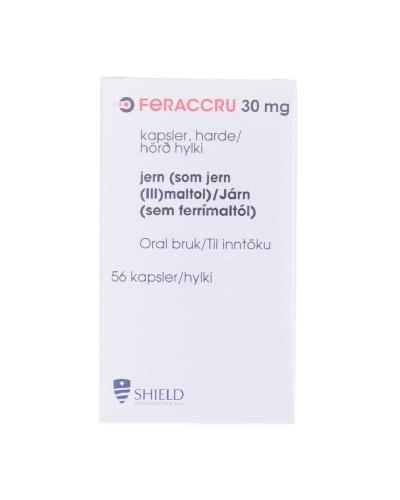
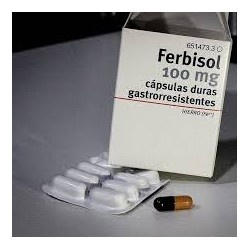
- Alternatives to FERIV 20 mg/ml INJECTABLE SOLUTION OR CONCENTRATE FOR INFUSION SOLUTIONDosage form: INJECTABLE, 50 mg/mlActive substance: Iron, parenteral preparationsManufacturer: Teva B.V.Prescription requiredDosage form: CAPSULE, 30 mgActive substance: ferric maltolManufacturer: Norgine B.V.Prescription requiredDosage form: CAPSULE, 100 mg ferrous glycinate sulfateActive substance: ferrous glycine sulfateManufacturer: Ucb Pharma S.A.Prescription required

Online doctors for FERIV 20 mg/ml INJECTABLE SOLUTION OR CONCENTRATE FOR INFUSION SOLUTION
Discuss questions about FERIV 20 mg/ml INJECTABLE SOLUTION OR CONCENTRATE FOR INFUSION SOLUTION, including use, safety considerations and prescription review, subject to medical assessment and local regulations.











Frequently Asked Questions
