



EZETIMIBA 10 mg Tablets

Prescription review online
A doctor will review your case and decide whether a prescription is medically appropriate.

Talk to a doctor about this medicine
Discuss your symptoms and possible next steps in a quick online consultation.



How to use EZETIMIBE VIATRIS 10 mg TABLETS
Contents of the leaflet
- Introduction
- What Ezetimibe Viatris is and what it is used for
- What you need to know before you take Ezetimibe Viatris
- How to take Ezetimibe Viatris
- Possible side effects
- Storage of Ezetimibe Viatris
- Package Contents and Additional Information
Introduction
Package Leaflet: Information for the Patient
Ezetimibe Viatris 10 mg Tablets EFG
Read all of this leaflet carefully before you start taking this medicine because it contains important information for you.
- Keep this leaflet, you may need to read it again.
- If you have any further questions, ask your doctor or pharmacist.
- This medicine has been prescribed for you only. Do not pass it on to others. It may harm them, even if their signs of illness are the same as yours.
- If you get any side effects, talk to your doctor or pharmacist. This includes any possible side effects not listed in this leaflet. See section 4.
Contents of the pack
- What Ezetimibe Viatris is and what it is used for.
- What you need to know before you take Ezetimibe Viatris.
- How to take Ezetimibe Viatris.
- Possible side effects.
- Storage of Ezetimibe Viatris.
- Contents of the pack and other information
1. What Ezetimibe Viatris is and what it is used for
Ezetimibe Viatris contains the active substance ezetimibe. Ezetimibe Viatris is a medicine to lower high levels of cholesterol. Ezetimibe Viatris reduces the amounts of total cholesterol, "bad" cholesterol (low-density lipoprotein cholesterol or LDL-C), and a type of fat in the blood called triglycerides. It also increases the levels of "good" cholesterol (high-density lipoprotein cholesterol or HDL-C).
LDL-C is often referred to as "bad" cholesterol because it can build up in the walls of your arteries and form plaques. Over time, this can lead to a narrowing of the arteries, which can reduce or block blood flow to vital organs such as the heart and brain. This blockage can cause a heart attack or stroke.
HDL-C is often referred to as "good" cholesterol because it helps prevent the build-up of plaque in the arteries and protects against heart disease.
Triglycerides are another type of fat in your blood that can increase your risk of heart disease.
Ezetimibe Viatris works by reducing the absorption of cholesterol in the intestine. Ezetimibe Viatris does not help you lose weight.
Ezetimibe Viatris adds to the cholesterol-lowering effect of statins, a group of medicines that reduce the cholesterol made by your own body.
Ezetimibe Viatris is used in patients who cannot control their cholesterol levels by diet alone. While taking this medicine, you should also follow a low-cholesterol diet.
Ezetimibe Viatris is used together with a low-cholesterol diet if you have:
- High levels of cholesterol in the blood (primary hypercholesterolaemia [heterozygous familial and non-familial]).
- Together with a statin, when your cholesterol level is not well controlled with a statin alone.
- Alone, when treatment with a statin is not suitable or not tolerated.
A hereditary disease (homozygous familial hypercholesterolaemia) that increases the level of cholesterol in the blood. You will also be prescribed a statin and may receive other treatments.
- A hereditary disease (homozygous sitosterolaemia, also known as phytosterolaemia) that increases the levels of plant sterols in the blood.
If you have heart disease, Ezetimibe Viatris, combined with cholesterol-lowering medicines called statins, reduces the risk of heart attack, stroke, surgery to increase blood flow to the heart, or hospitalization for chest pain.
Ezetimibe does not help you lose weight.

Not sure if this medicine is right for you?
Discuss your symptoms and treatment with a doctor online.
2. What you need to know before you take Ezetimibe Viatris
If you are taking Ezetimibe Viatris with a statin, please read the package leaflet of that medicine.
Do not take Ezetimibe Viatris:
- If you are allergic to ezetimibe or any of the other ingredients of this medicine (listed in section 6).
Do not take Ezetimibe Viatris with a statin if:
- You currently have liver problems.
- You are pregnant or breast-feeding.
Warnings and precautions
Consult your doctor or pharmacist before taking Ezetimibe Viatris.
Tell your doctor about all your medical conditions, including allergies.
Your doctor should do a blood test before you start taking Ezetimibe Viatris with a statin. This is to check if your liver is working properly.
Your doctor may also want to do blood tests to check if your liver is working properly after you start taking Ezetimibe Viatris with a statin.
If you have moderate or severe liver problems, Ezetimibe Viatris is not recommended.
The safety and efficacy of the combined use of ezetimibe and certain cholesterol-lowering medicines, fibrates, have not been studied.
If you experience pain, tenderness, or weakness of the muscles without cause while taking these tablets, especially if accompanied by fever, inform your doctor.
Children and adolescents
Do not give this medicine to children and adolescents (aged 6 to 17 years) unless it has been prescribed by a specialist, as the safety and efficacy are limited.
Do not give this medicine to children under 6 years of age as there is no information in this age group.
Taking Ezetimibe Viatris with other medicines
Tell your doctor or pharmacist if you are taking, have recently taken, or might take any other medicines, including those obtained without a prescription. In particular, tell your doctor or pharmacist if you are taking medicines with any of the following active substances:
- Cyclosporine (often used in patients with organ transplants).
- Medicines with an active substance to prevent blood clots, such as warfarin, phenprocoumon, acenocoumarol, or fluindione (anticoagulants).
- Cholestyramine (also used to lower cholesterol), as it affects how Ezetimibe Viatris works.
- Fibrates (used to lower cholesterol).
Pregnancy and breast-feeding
Do not take Ezetimibe Viatris with a statin if you are pregnant, trying to become pregnant, or think you may be pregnant. If you become pregnant while taking Ezetimibe Viatris with a statin, stop taking both medicines immediately and inform your doctor.
There is no experience of the use of Ezetimibe Viatris with a statin during pregnancy.
Do not take Ezetimibe Viatris with a statin if you are breast-feeding as it is not known if the medicines pass into breast milk. If you are breast-feeding, do not take Ezetimibe Viatris, even without taking a statin.
If you are pregnant or breast-feeding, think you may be pregnant, or are planning to have a baby, ask your doctor or pharmacist for advice before taking this medicine.
Driving and using machines
Ezetimibe Viatris is unlikely to affect your ability to drive or use machines. However, some people may experience dizziness after taking Ezetimibe Viatris; if this happens to you, do not drive or use machines.
Ezetimibe Viatris contains lactose and sodium
If your doctor has told you that you have an intolerance to some sugars, consult your doctor before taking this medicine.
This medicine contains less than 23 mg of sodium (1 mmol) per tablet; this is essentially "sodium-free".
3. How to take Ezetimibe Viatris
Take this medicine exactly as your doctor or pharmacist has told you. Continue taking your other cholesterol-lowering medicines unless your doctor tells you to stop. If you are in doubt, consult your doctor or pharmacist again.
Before starting to take Ezetimibe Viatris, you should be on a low-cholesterol diet. You should continue with this low-cholesterol diet while taking Ezetimibe Viatris.
Adults and adolescents (10 to 17 years of age)
The recommended dose is one Ezetimibe Viatris 10 mg tablet once a day by mouth.
Take Ezetimibe Viatris at any time of day. You can take it with or without food.
Instructions for removing the tablet from the blister pack:
- Do not press the blister to open it.
- For the perforated blister; tear off any side of the perforated area as indicated in the image.
- Hold the blister strips by the edges and separate one blister tablet from the rest of the strip by gently tearing along the perforation surrounding it.
- Carefully remove the paper backing from the unsealed area.
- Remove the tablet from the opened blister pack.
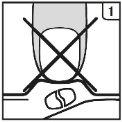
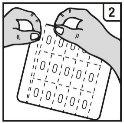
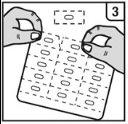
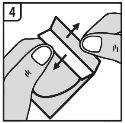
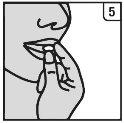
If your doctor has prescribed Ezetimibe Viatris with a statin, you can take both medicines at the same time. In this case, please read the administration instructions in the package leaflet of that specific medicine.
If your doctor has prescribed Ezetimibe Viatris with cholestyramine or any other medicine that contains a bile acid sequestrant (cholesterol-lowering medicines), you should take Ezetimibe Viatris at least 2 hours before or 4 hours after taking the bile acid sequestrant.
If you take more Ezetimibe Viatris than you should
If you take more tablets than you should, consult your doctor or pharmacist immediately.
In case of overdose or accidental ingestion, consult your doctor or pharmacist immediately or call the Toxicology Information Service, telephone: 91 562 04 20, indicating the medicine and the amount taken.
If you forget to take Ezetimibe Viatris
Do not take a double dose to make up for forgotten doses, simply take your normal dose of ezetimibe at the usual time the next day.
If you stop taking Ezetimibe Viatris
Talk to your doctor or pharmacist before stopping this medicine, as your cholesterol levels may increase again.
If you have any further questions on the use of this medicine, ask your doctor or pharmacist.

Started taking the medicine and have questions?
Discuss your symptoms and treatment with a doctor online.
4. Possible side effects
Like all medicines, this medicine can cause side effects, although not everybody gets them.
Contact your doctor immediately if you experience any of the following serious side effects; these effects are rare (frequency cannot be estimated from the available data) but may require medical attention:
- Pain, tenderness, or weakness of the muscles without cause. This is because muscle problems, including muscle breakdown that can cause kidney damage, can be serious and potentially life-threatening.
- Allergic reactions, including swelling of the face, lips, tongue, and/or throat that can cause difficulty breathing or swallowing (which requires immediate treatment).
- Inflammation of the pancreas, often with severe abdominal pain.
- Gallstones or inflammation of the gallbladder (which can cause abdominal pain, nausea, or vomiting).
- Blisters and redness of the skin, sometimes with target-like lesions.
- Inflammation of the liver (which can cause tiredness, fever, nausea, or vomiting, general feeling of being unwell, yellowing of the skin and eyes, pale-colored stools, and dark-colored urine).
When used alone, the following side effects have been reported:
Common (may affect up to 1 in 10 people):
- Abdominal pain.
- Diarrhea.
- Flatulence.
- Feeling tired.
Uncommon (may affect up to 1 in 100 people):
- Elevated liver and muscle enzymes in the blood test.
- Cough.
- Indigestion.
- Heartburn.
- Nausea.
- Joint pain.
- Muscle spasms.
- Neck pain.
- Decreased appetite.
- Pain.
- Chest pain.
- Flushing.
- High blood pressure.
Additionally, when used with a statin, the following side effects have been reported:
Common (may affect up to 1 in 10 people):
- Elevated liver enzymes in the blood test.
- Headache.
- Muscle pain.
Uncommon (may affect up to 1 in 100 people):
- Tingling sensation.
- Dry mouth.
- Stomach pain, nausea, vomiting with blood, blood in the stools, itching.
- Rash.
- Hives.
- Back pain.
- Muscle weakness.
- Pain in arms and legs.
- Unusual tiredness or weakness.
- Swelling, especially in hands and feet.
When used with or without a statin, the following side effects may occur:
Frequency not known (cannot be estimated from the available data):
- Dizziness.
- Allergic reactions, including skin rash and hives.
- Constipation.
- Reduced number of blood cells, which can cause bruising/bleeding (thrombocytopenia).
- Tingling sensation.
- Depression.
- Unusual tiredness or weakness.
- Difficulty breathing.
When used with fenofibrate, the following side effect may occur:
Common (may affect up to 1 in 10 people):
- Abdominal pain.
Reporting of side effects
If you experience any side effects, talk to your doctor or pharmacist. This includes any possible side effects not listed in this leaflet. You can also report side effects directly to the Spanish Medicines Information System at https://www.notificaram.es..
By reporting side effects, you can help provide more information on the safety of this medicine.
5. Storage of Ezetimibe Viatris
Keep out of the sight and reach of children.
Do not use this medicine after the expiry date which is stated on the carton after EXP. The expiry date refers to the last day of that month.
This medicine does not require any special storage conditions.
Bottles: Use within 100 days of opening.
Medicines should not be disposed of via wastewater or household waste. Ask your pharmacist how to dispose of medicines no longer required. These measures will help protect the environment.
6. Package Contents and Additional Information
Composition of Ezetimiba Viatris
- The active ingredient is ezetimibe. Each tablet contains 10 mg of ezetimibe.
- The other components are: lactose monohydrate (see section 2 "Ezetimiba Viatris contains lactose monohydrate"); sodium lauryl sulfate (E-487); sodium croscarmellose; hypromellose (E-464); crospovidone (type B); microcrystalline cellulose; magnesium stearate.
Appearance and Packaging of the Product
Ezetimiba Viatris 10 mg tablets are white to off-white, capsule-shaped tablets with beveled edges, marked with "M" on one side and "EE1" on the other.
Ezetimiba Viatris 10 mg tablets are available in blister packs or peelable blisters of 14, 28, 30, 56, 84, 90, 98, and 100 tablets; perforated unit-dose blisters of 14 x 1, 28 x 1, 30 x 1, 50 x 1, 90 x 1, and 98 x 1 tablets; calendar blisters of 28 and 30 tablets, and plastic bottles of 14, 28, 50, 56, 84, and 100 tablets.
Only some pack sizes may be marketed.
Marketing Authorization Holder
Viatris Limited
Damastown Industrial Park
Mulhuddart, Dublin 15
Dublin
Ireland
Manufacturer
Mylan Hungary Kft
H-2900 Komárom
Mylan utca 1
Hungary
Or
Mylan Germany GmbH
Zweigniederlassung Bad Homburg v. d. Hoehe, Benzstrasse 1
Bad Homburg v. d. Hoehe
Hessen, 61352
Germany
You can request more information about this medication by contacting the local representative of the marketing authorization holder:
Viatris Pharmaceuticals, S.L.U.
C/ General Aranaz, 86
28027 - Madrid
Spain
This medication is authorized in the Member States of the European Economic Area under the following names:
Germany | Ezetimib Mylan 10 mg Tabletten |
Belgium | Ezetimibe Mylan 10 mg tabletten |
Cyprus | Ezetimibe Mylan/10mg Tablets |
Denmark | Ezetimibe Mylan |
Slovakia | Ezetimib Mylan 10 mg, tablets |
Spain | Ezetimiba Viatris 10 mg tablets EFG |
Finland | Ezetimibe Mylan |
France | EZETIMIBE Mylan 10 mg, comprimé |
Greece | Ezetimibe Mylan 10mg Tablets |
Ireland | Ezetimibe 10 mg Tablets |
Italy | Ezetimibe Mylan |
Luxembourg | Ezetimibe Mylan 10 mg comprimés |
Netherlands | Ezetimibe Mylan 10 mg, tabletten |
Poland | Ezetimibe Mylan |
Portugal | Ezetimiba Mylan |
United Kingdom | Ezetimibe 10 mg Tablets |
Czech Republic | Ezetimib Mylan 10 mg, tablets |
Sweden | Ezetimibe Mylan |
Date of the last revision of this prospectus: November 2021.
Detailed information about this medication is available on the website of the Spanish Agency for Medicines and Health Products (AEMPS) http://www.aemps.gob.es/
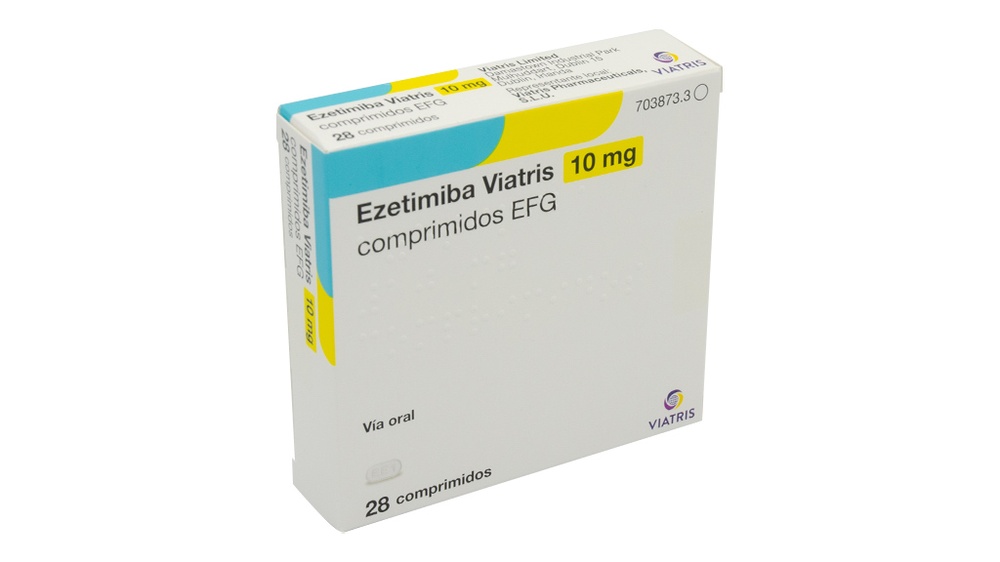
- Country of registration
- Dosage formTABLET, 10 mg
- ATC codeC10AX09
- Average pharmacy price30.85 EUR
- Availability in pharmaciesSupply issue reported
- Active substance
- Prescription requiredYes
- Manufacturer
- CompositionLACTOSA MONOHIDRATO (PHARMATOSE 200M) (62,000 mg mg), LAURILSULFATO DE SODIO (3,000 mg mg), CROSCARMELOSA SODICA (12,000 mg mg)
- This information is for reference only and does not constitute medical advice. Always consult a doctor before taking any medication. Oladoctor is not responsible for medical decisions based on this content.
- Alternatives to EZETIMIBE VIATRIS 10 mg TABLETSDosage form: TABLET, 10 mg ezetimibeActive substance: ezetimibeManufacturer: Organon Salud S.L.Prescription requiredDosage form: TABLET, 10 mgActive substance: ezetimibeManufacturer: Laboratorios Alter S.A.Prescription requiredDosage form: TABLET, 10 mgActive substance: ezetimibeManufacturer: Accord Healthcare S.L.U.Prescription required
Online doctors for EZETIMIBE VIATRIS 10 mg TABLETS
Discuss questions about EZETIMIBE VIATRIS 10 mg TABLETS, including use, safety considerations and prescription review, subject to medical assessment and local regulations.
Get EZETIMIBE VIATRIS 10 mg TABLETS Prescription Online
Fill in a 2-min form
Tell us your symptoms, history, and what medicine you're requesting.
Pick a doctor or let us assign
Choose a specialist or we'll match you with the next available doctor.
Doctor reviews your case
Usually within 30 minutes. They may ask follow-up questions via chat.
Collect from any pharmacy
Electronic prescription sent to your email — valid across Spain.
Frequently Asked Questions
EZETIMIBE VIATRIS 10 mg TABLETS requires a prescription in Spain. You can check with a doctor online whether this medicine may be appropriate for your situation.
The active ingredient in EZETIMIBE VIATRIS 10 mg TABLETS is ezetimibe. This information helps identify medicines with the same composition but different brand names.
The average pharmacy price for EZETIMIBE VIATRIS 10 mg TABLETS is around 30.85 EUR. Prices may vary depending on the manufacturer and dosage form.
EZETIMIBE VIATRIS 10 mg TABLETS is manufactured by Viatris Limited. Pharmacy brands and packaging may differ depending on the distributor.
Doctors such as Family doctors, Psychiatrists, Dermatologists, Cardiologists, Endocrinologists, Gastroenterologists, Pulmonologists, Nephrologists, Rheumatologists, Hematologists, Infectious disease physicians, Allergists, Geriatricians, Paediatricians, Oncologists may assess whether EZETIMIBE VIATRIS 10 mg TABLETS is appropriate, depending on your situation and local regulations. You can book an online consultation to discuss your symptoms and possible next steps.
Spain has a well-developed healthcare infrastructure across major cities such as Madrid, Barcelona, Valencia, and Seville. Pharmacies are widely available and operate under strict regulations, ensuring access to prescribed medications.
You can buy EZETIMIBE VIATRIS 10 mg TABLETS in Madrid, Barcelona, Seville, or Valencia at any local pharmacy with a valid prescription.
To obtain a prescription, you can use Oladoctor:
Other medicines with the same active substance (ezetimibe) include ABSORCOL 10 mg TABLETS, AZIBE 10 mg TABLETS, EZETIMIBE ACCORD 10 mg TABLETS. These may have different brand names or formulations but contain the same therapeutic ingredient. Always consult a doctor before switching or starting a new medicine.
