


ETOMIDATE-LIPURO 2 mg/ml INJECTABLE EMULSION
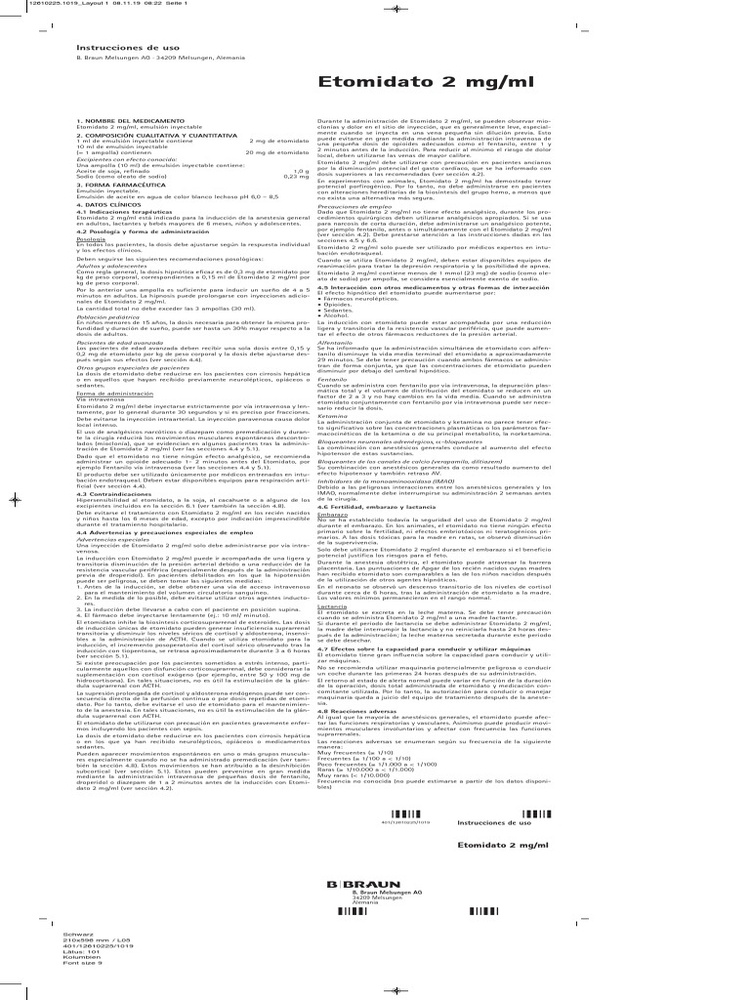



How to use ETOMIDATE-LIPURO 2 mg/ml INJECTABLE EMULSION
Translated with AI
This page provides general information and does not replace a doctor’s consultation. Always consult a doctor before taking any medication. Seek urgent medical care if symptoms are severe.
Show originalContents of the leaflet
Introduction
Package Leaflet: Information for the User
Etomidato-Lipuro 2 mg/ml, Injectable Emulsion
Etomidate
Read all of this leaflet carefully before you start using this medicine because it contains important information for you.
- Keep this leaflet, you may need to read it again.
- If you have any further questions, ask your doctor or pharmacist.
- If you get any side effects, talk to your doctor or pharmacist. This includes any possible side effects not listed in this leaflet. See section 4.
Contents of the pack
- What is Etomidato-Lipuro and what is it used for
- What you need to know before you use Etomidato-Lipuro
- How to use Etomidato-Lipuro
- Possible side effects
- Storage of Etomidato-Lipuro
- Contents of the pack and other information
1. What is Etomidato-Lipuro and what is it used for
Etomidato-Lipuro belongs to a group of medicines called general anesthetics. It is used to induce general anesthesia, i.e., to put patients to sleep before operations and other procedures, so they do not feel anything. It is injected into a vein.
Etomidato-Lipuro is used in adults, adolescents, and children over 6 months.

2. What you need to know before you use Etomidato-Lipuro
Do not use Etomidato-Lipuro:
- If you are allergic to etomidate, soy, peanuts, or any of the other components of this medicine (listed in section 6).
- It should not be used in children under 6 months, unless it is a hospital emergency case.
Warnings and precautions
Consult your doctor or pharmacist before starting to use Etomidato-Lipuro.
Only doctors who have been trained in the placement of tubes in patients' tracheas should use Etomidato-Lipuro. During the use of this product, vital respiratory support equipment should always be available.
Your doctor may give you analgesics initially to avoid pain during the injection of etomidate. To minimize the risk of local pain, your doctor should use the largest veins for the injection.
In most cases, your doctor will give you some medications to help prevent uncontrolled muscle spasms.
Because etomidate does not have an effect on pain, but only makes you sleep, your doctor will administer a potent analgesic along with etomidate during short operations.
Your doctor will administer lower doses of etomidate:
- If you have liver problems.
- If you have received medications for the treatment of mental illnesses (neuroleptics).
- If you have received potent analgesics (called opioids) or sedatives (see also section 3).
In elderly patients, etomidate may reduce cardiac output and therefore should be administered with caution (see also section 3).
The use of etomidate can lead to a decrease in blood pressure. Your doctor will take special precautions if you are very weak (debilitated), as low blood pressure can be dangerous in this case.
Doctors should not administer etomidate to patients with congenital disorders of red blood cell pigment production (hemo) unless a safer anesthetic is not available.
Etomidate should not be used to maintain anesthesia because it can cause a decrease in a hormone called cortisol, especially when administered for a prolonged period. To avoid a drop in cortisol levels below normal values, the doctor may need to administer cortisol to some patients (especially those undergoing intense stress) before administering etomidate.
Single induction doses of etomidate may lead to transient adrenal insufficiency and a decrease in serum cortisol levels.
Etomidate should be used with caution in critically ill patients, including those with sepsis, as it has been associated with an increased risk of mortality in some studies of these patient groups.
Children and adolescents
Etomidato-Lipuro should not be used in children under 6 months unless the doctor considers it necessary (see also "Do not use Etomidato-Lipuro").
Children under 15 years of age may need higher doses of Etomidato-Lipuro to achieve the same depth and duration of sleep as in adults (see also section 3).
Using Etomidato-Lipuro with other medicines
Tell your doctor or pharmacist if you are taking, have recently taken, or might take any other medicines.
Some medicines for the treatment of mental illnesses (neuroleptics), some potent analgesics (called opioids), and sedatives may make the anesthetic effect of etomidate more potent.
Your doctor will take into account that the necessary dose of etomidate may change if potent analgesics fentanyl and alfentanil are administered in combination with etomidate.
Alpha-blockers and other medicines used to lower blood pressure
Etomidato-Lipuro may enhance the effect of alpha-blockers and other medicines that reduce your blood pressure.
Calcium channel blockers (e.g., verapamil, diltiazem; used to treat high blood pressure and heart disease)
When taking verapamil in combination with etomidate, your blood pressure may decrease. Additionally, heart function may be affected.
Monoamine oxidase inhibitors (MAOIs, substances used to treat mental depression or Parkinson's disease)
You should not take MAOIs at least two weeks before treatment with etomidate, otherwise, this could harm your health.
Using Etomidato-Lipuro and alcohol
You should not drink any alcoholic beverages before receiving etomidate as this may increase the effect of etomidate.
Pregnancy and breastfeeding
If you are pregnant or breastfeeding, think you may be pregnant, or plan to become pregnant, consult your doctor before using this medicine.
There are no data to demonstrate that the use of etomidate during pregnancy is safe, so doctors will only use it in exceptional cases if no alternative is available.
Like other anesthetics used during childbirth, etomidate can cross the placental barrier.
Etomidate passes into breast milk. You should not breastfeed your baby for 24 hours after receiving etomidate. Discard the milk you express during this time.
Driving and using machines
Do not drive or use machines for at least 24 hours after receiving etomidate. Your doctor will tell you when you can drive and use machinery again.
Etomidato-Lipuro contains soybean oil and sodium
Etomidato-Lipuro contains soybean oil. If you are allergic to peanuts or soy, do not use this medicine.
This medicine contains less than 1 mmol (23 mg) of sodium per ampoule, i.e., it is essentially "sodium-free".
3. How to use Etomidato-Lipuro
The doctor will decide the appropriate dose of Etomidato-Lipuro depending on how you respond.
Adults and adolescents
Usually, the dose is 0.3 mg per kilogram (kg) of body weight, both for adults and adolescents. This is equivalent to 0.15 ml per kg of body weight. You will not be given more than 3 ampoules (30 ml) of Etomidato-Lipuro.
Use in children
Usually, children receive the same dose as adults. However, there may be cases where children do not achieve a deep enough sleep with this dose. Therefore, a higher amount of etomidate may need to be administered, up to 0.4 mg per kg of body weight, once the doctor ensures that this will not put the patient at a higher risk.
Elderly patients
Elderly patients usually respond to doses between 0.15 and 0.2 mg per kg of body weight.
This dose is lower in patients with a liver disease called cirrhosis and in patients who have received special medications for the treatment of mental illnesses (neuroleptics), potent analgesics (called opioids), or sedatives before receiving etomidate.
Usually, the doctor will administer the injection slowly over about 30 seconds, or as a series of small injections into the vein. Your doctor will avoid injecting the medicine into an artery.
Before administering etomidate, the doctor usually gives the patient a medicine like diazepam, which depresses the central nervous system and reduces uncontrolled muscle spasms.
If you use more Etomidato-Lipuro than you should
In this case, the sleep period may be prolonged, and breathing may stop for a short time. Your blood pressure may also decrease.
Treatment of such events depends on the severity of the symptoms. Usually, all the equipment and medicines required for general anesthesia procedures (especially respiratory support) will be available to treat these events.
Overdose may also affect adrenal gland function. In these cases, your doctor may administer a medicine called hydrocortisone.

4. Possible side effects
Like all medicines, this medicine can cause side effects, although not everybody gets them.
It is most likely that etomidate will affect breathing and circulation. Uncontrolled muscle movements may occur. In addition to this, etomidate may also affect adrenal gland function.
The following side effects may be serious and therefore require immediate treatment:
Common(may affect up to 1 in 10 people):
- Breathing may slow down or stop for a short time. Your anesthetist can easily control these situations.
Uncommon(may affect up to 1 in 100 people):
- Slow or irregular heartbeat.
Rare(may affect up to 1 in 1,000 people):
- Laryngospasm.
Frequency not known(frequency cannot be estimated from the available data):
- Allergic reactions have been observed. A special type of hypersensitivity reaction, called an anaphylactoid reaction, has also been observed.
- Shock.
- Difficulty breathing that can be fatal.
Other side effects include
Very common(may affect more than 1 in 10 people):
- Spasmodic movements.
- Decreased cortisol.
Common(may affect up to 1 in 10 people):
- Muscle spasms.
- Low blood pressure.
- Wheezing.
- Hyperventilation.
- Feeling unwell, vomiting.
- Rash.
Uncommon(may affect up to 1 in 100 people):
- Unusual muscle stiffness and involuntary muscle contractions.
- Involuntary eye movements (nystagmus).
- Chills.
- High blood pressure.
- Hypoventilation.
- Cough.
- Hiccup.
- Excessive saliva production.
- Redness of the skin.
- Pain around the injection site.
- Complications related to general anesthesia (delayed recovery from anesthesia, feeling of pain due to insufficient analgesic effect, feeling unwell).
Frequency not known(frequency cannot be estimated from the available data):
- Problems with your adrenal glands (glands attached to the kidneys).
- Seizures.
- Heart attack.
- Severe heart problems.
- Hives.
- Severe allergic reactions in the skin and mucous membranes accompanied by blisters and redness of the skin (erythema), which could, in very severe cases, affect internal organs and be potentially fatal (Stevens-Johnson syndrome).
- Trismus.
If any of the side effects gets serious or if you notice any side effects not listed in this leaflet, please tell your doctor or pharmacist.
Reporting of side effects
If you experience any side effects, talk to your doctor or pharmacist. This includes any possible side effects not listed in this leaflet. You can also report side effects directly through the Spanish Medicines Vigilance System for Human Use. Website: www.notificaRAM.es. By reporting side effects, you can help provide more information on the safety of this medicine.
5. Storage of Etomidato-Lipuro
Keep this medicine out of the sight and reach of children.
Do not use this medicine after the expiry date which is stated on the ampoule label and carton. The expiry date is the last day of the month stated.
The ampoules should be shaken before use. This medicine should only be used if the emulsion is homogeneous and has a white milky color after shaking. The product should not be used if two separate layers are observed after shaking the ampoule. The doctor or nurse will check that the ampoule is not damaged.
Store the ampoules in the outer packaging to protect them from light. Do not freeze.
Medicines should not be disposed of via wastewater or household waste. Ask your pharmacist how to dispose of medicines no longer required. These measures will help protect the environment.
6. Contents of the pack and other information
Composition of Etomidato-Lipuro
- The active substance is Etomidate
Each milliliter of the emulsion contains 2 mg of etomidate.
Each ampoule (10 milliliters) contains 20 mg of etomidate.
- The other ingredients are:
Soybean oil
Medium-chain triglycerides
Glycerol
Egg phospholipids for injectable preparations
Sodium oleate
Water for injectable preparations
- pH: 6.0-8.5
Appearance and packaging
Etomidato-Lipuro is a white milky oil-in-water emulsion.
It is available in colorless glass ampoules containing 10 ml of sterile emulsion.
It is available in packs of 10 ampoules.
Marketing authorization holder and manufacturer
- Braun Melsungen AG
Carl-Braun-Strasse 1
34212 Melsungen
Germany
Mailing address:
34209 Melsungen
Germany
Tel.: +49-5661-71-0
fax: +49-5661-71-4567
This medicine is authorized in the Member States of the European Economic Area and in the United Kingdom (Northern Ireland) under the following names:
Netherlands: Etomidaat-Lipuro 2 mg/ml, emulsie voor injectie
Portugal: Etomidato-Lipuro 2 mg/ml, emulsão injectável
Spain: Etomidato-Lipuro 2 mg/ml, emulsión inyectable
United Kingdom (Northern Ireland): Etomidate-Lipuro 2 mg/ml, emulsion for injection
Date of last revision of this leaflet:11/2023
- Country of registration
- Dosage formINJECTABLE, 20 mg etomidate
- ATC codeN01AX07
- Active substance
- Prescription requiredYes
- Manufacturer
- This information is for reference only and does not constitute medical advice. Always consult a doctor before taking any medication. Oladoctor is not responsible for medical decisions based on this content.
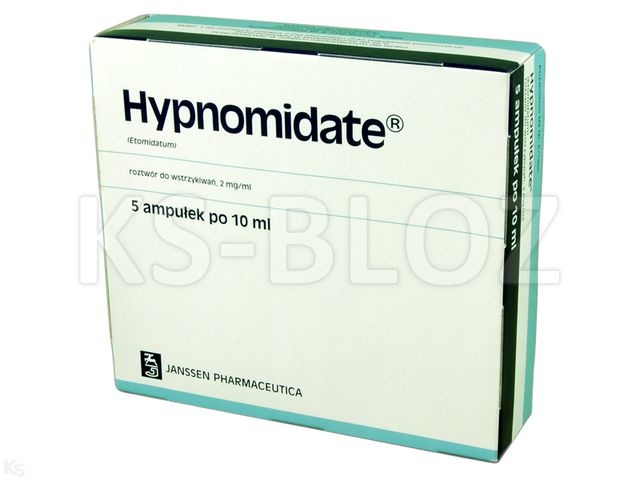
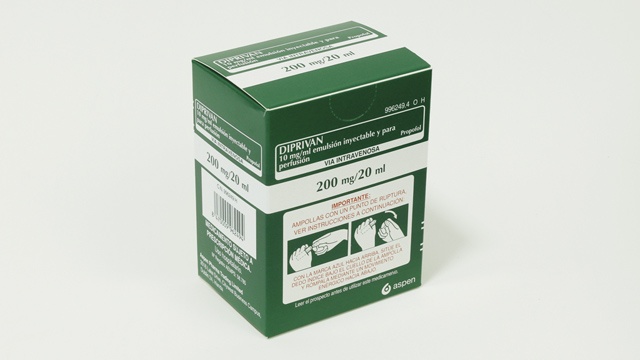
- Alternatives to ETOMIDATE-LIPURO 2 mg/ml INJECTABLE EMULSIONDosage form: INJECTABLE, 20 mgActive substance: etomidateManufacturer: Piramal Critical Care B.V.Prescription requiredDosage form: PULMONARY INHALATION, 50% / 50% v/vActive substance: nitrous oxide, combinationsManufacturer: Sociedad Española De Carburos Metalicos S.A.Prescription requiredDosage form: INJECTABLE, 1% propofolActive substance: propofolManufacturer: Aspen Pharma Trading LimitedPrescription required

Online doctors for ETOMIDATE-LIPURO 2 mg/ml INJECTABLE EMULSION
Discuss questions about ETOMIDATE-LIPURO 2 mg/ml INJECTABLE EMULSION, including use, safety considerations and prescription review, subject to medical assessment and local regulations.









.jpg)

Frequently Asked Questions
