


Estraderm Matrix 50 Micrograms/24 Hours Transdermal Patches

Prescription review online
A doctor will review your case and decide whether a prescription is medically appropriate.

Talk to a doctor about this medicine
Discuss your symptoms and possible next steps in a quick online consultation.



How to use ESTRADERM MATRIX 50 micrograms/24 hours TRANSDERMAL PATCHES
Contents of the leaflet
- Introduction
- Estraderm Matrix 50 micrograms/24 hours transdermal patches
- What is Estraderm Matrix and what is it used for
- What you need to know before you use Estraderm Matrix
- How to use Estraderm Matrix
- HOW TO APPLY ESTRADERM
- Possible side effects
- Storage of Estraderm Matrix
- Package contents and additional information
Introduction
Package Leaflet: Information for the User
Estraderm Matrix 50 micrograms/24 hours transdermal patches
Estradiol
Read all of this leaflet carefully before you start using this medicine because it contains important information for you.
- Keep this leaflet. You may need to read it again.
- If you have any further questions, ask your doctor or pharmacist.
- This medicine has been prescribed for you only. Do not pass it on to others. It may harm them, even if their signs of illness are the same as yours.
- If you get any side effects, talk to your doctor or pharmacist. This includes any possible side effects not listed in this leaflet. See section 4.
Contents of the pack and other information:
- What is Estraderm Matrix and what is it used for
- What you need to know before you use Estraderm Matrix
- How to use Estraderm Matrix
- Possible side effects
- Storing Estraderm Matrix
- Contents of the pack and further information

Not sure if this medicine is right for you?
Discuss your symptoms and treatment with a doctor online.
1. What is Estraderm Matrix and what is it used for
Estraderm Matrix is a Hormone Replacement Therapy (HRT) that contains the female hormone estradiol.
Estraderm Matrix is used in postmenopausal women.
Estraderm Matrix is used for:
- Relief of symptoms occurring after menopause
During menopause, the amount of estrogens produced by the female body decreases. This can cause symptoms such as sudden hot flushes in the face, neck, and chest. Estraderm Matrix relieves these symptoms after menopause. You will only be prescribed Estraderm Matrix if your symptoms seriously disrupt your daily life.
- Prevention of osteoporosis
After menopause, some women may develop fragile bones (osteoporosis). Consult your doctor about all available treatment options. If you have a high risk of fractures due to osteoporosis and other medications are not suitable for you, you may use Estraderm Matrix to prevent osteoporosis after menopause.
2. What you need to know before you use Estraderm Matrix
Medical history and regular check-ups
The use of HRT carries risks that need to be considered when deciding whether to start or continue treatment.
Experience in treating women with premature menopause (due to ovarian failure or surgery) is limited. If you have premature menopause, the risks of using HRT may be different. Please consult your doctor.
Before starting (or resuming) HRT, your doctor will ask about your personal and family medical history. Your doctor may decide to perform a physical examination. This may include a breast examination and/or an internal examination, if necessary.
Once you start treatment with Estraderm Matrix, you should see your doctor for regular check-ups (at least once a year). During these check-ups, discuss the benefits and risks of continuing Estraderm Matrix with your doctor.
Have regular breast examinations, as recommended by your doctor.
Do not use Estraderm Matrix
If any of the following conditions apply to you. If you are not sure about any of the points listed below, consult your doctorbefore using Estraderm Matrix.
Do not use Estraderm Matrix
- if you have or have had breast canceror if you suspect you may have it
- if you have a cancer that is dependent on estrogen, such as cancer of the lining of the uterus (endometrium), or if there is a suspicion that you may have it
- if you have abnormal vaginal bleeding
- if you have excessive thickening of the lining of the uterus(endometrial hyperplasia) for which you are not receiving treatment
- if you have or have had blood clots in a vein(thrombosis), such as in the legs (deep vein thrombosis) or lungs (pulmonary embolism)
- if you have a blood clotting disorder(such as protein C, protein S, or antithrombin deficiency)
- if you have or have recently had a disease caused by blood clots in the arteries, such as a heart attack, stroke, or angina
- if you have or have had liver diseaseand your liver function tests have not returned to normal
- if you have a rare blood disorder called porphyria that is inherited from your parents
- if you are allergic to estradiol or any of the other ingredients of this medicine (listed in section 6)
If you experience any of the conditions mentioned above for the first time while using Estraderm Matrix, stop treatment immediately and consult your doctor immediately.
Warnings and precautions
Tell your doctor if you have or have had any of the following conditions before starting treatment, as they may return or worsen during treatment with Estraderm Matrix. In this case, you should see your doctor more frequently for regular check-ups:
- fibroids in the uterus
- growth of the lining of the uterus outside the uterus (endometriosis) or a history of excessive growth of the lining of the uterus (endometrial hyperplasia)
- increased risk of developing blood clots (see "Blood clots in a vein (thrombosis)")
- increased risk of developing a cancer that depends on the action of estrogen (such as when your mother, sister, or grandmother have had breast cancer)
- high blood pressure
- liver disorder, such as a benign tumor in the liver
- diabetes
- gallstones
- kidney disorders
- migraine or severe headaches
- a disease that affects the immune system and several organs in the body (systemic lupus erythematosus, SLE)
- epilepsy
- asthma
- a disease that affects the eardrum and ear (otosclerosis)
- a very high level of fat in your blood (triglycerides)
- fluid retention due to heart or kidney problems
- hypothyroidism (a condition where the thyroid gland does not produce enough hormone and requires treatment)
- hereditary or acquired angioedema (a disease that can cause rapid swelling of the hands, feet, face, lips, eyes, tongue, throat with airway blockage or digestive tract)
Stop using Estraderm Matrix and see a doctor immediately.
If you experience any of the following while using HRT:
- any of the conditions mentioned in the "Do not use Estraderm Matrix" section
- yellowing of the skin or the whites of the eyes (jaundice). This may be a sign of liver disease
- swelling of the face, tongue, and/or throat and/or difficulty swallowing or hives, along with difficulty breathing that suggest angioedema
- a significant increase in your blood pressure (symptoms may be headache, fatigue, dizziness)
- migraine-like headaches that occur for the first time
- painful swelling and redness of the legs
- sudden chest pain
- difficulty breathing
For signs of a blood clot, see "Stop using Estraderm Matrix and see a doctor immediately."
Note:Estraderm Matrix is not a contraceptive. If it has been less than 12 months since your last menstrual period or you are under 50 years old, you may still need additional contraceptive measures to prevent pregnancy. Talk to your doctor for advice.
HRT and cancer
Thickening of the lining of the uterus (endometrial hyperplasia) and cancer of the lining of the uterus (endometrial cancer)
Taking HRT with estrogen-only products will increase the risk of developing thickening of the lining of the uterus (endometrial hyperplasia) and cancer of the lining of the uterus (endometrial cancer).
The addition of a progestogen to estrogen treatment for at least 12 days of each 28-day cycle will protect you from this additional risk. Therefore, if you still have your uterus, your doctor will prescribe a progestogen for you to take alongside estrogen for at least 12 days of each cycle to reduce the risk of endometrial cancer. If you have had a hysterectomy (removal of the uterus), ask your doctor whether you can safely use this medicine without a progestogen.
In women between the ages of 50 and 65 who still have their uterus and are not taking HRT, about 5 in 1000 will be diagnosed with cancer of the lining of the uterus.
In women between the ages of 50 and 65 who still have their uterus and are taking HRT with estrogen-only products, between 10 and 60 in 1000 will be diagnosed with endometrial cancer (i.e., between 5 and 55 additional cases), depending on the dose and duration of therapy.
Unexpected bleeding
You will experience monthly bleeding (called withdrawal bleeding) while using Estraderm Matrix. However, if you experience unexpected bleeding or spotting that:
- continues for more than the first 6 months
- starts after you have been using Estraderm Matrix for more than 6 months
- continues after you have stopped using Estraderm Matrix
See your doctor as soon as possible.
Breast cancer
Existing data show that the use of hormone replacement therapy (HRT) with combined estrogen-progestogen or estrogen-only products increases the risk of breast cancer. The additional risk depends on how long you use HRT. The additional risk becomes apparent after 3 years of use. After stopping HRT, the additional risk will decrease over time but may persist for 10 years or more if you have used HRT for more than 5 years.
Comparison
In women between the ages of 50 and 54 who are not using HRT, about 13 to 17 in 1000 will be diagnosed with breast cancer over a 5-year period.
In women aged 50 who start hormone replacement therapy with estrogen-only products for 5 years, there will be between 16 and 17 cases per 1000 users (i.e., between 0 and 3 additional cases).
In women aged 50 who start taking combined estrogen-progestogen HRT for 5 years, there will be 21 cases per 1000 users (i.e., between 4 and 8 cases).
In women between the ages of 50 and 59 who are not taking HRT, about 27 cases of breast cancer per 1000 women will be diagnosed over a 10-year period.
In women aged 50 who start hormone replacement therapy with estrogen-only products for more than 10 years, there will be 34 cases per 1000 users (i.e., 7 additional cases).
In women aged 50 who start taking combined estrogen-progestogen HRT for 10 years, there will be 48 cases per 1000 users (i.e., 21 additional cases).
Examine your breasts regularly. See your doctor if you notice any changes, such as:
- grooves or dimples in the skin
- changes in the nipples
- any lump that you can see or feel
In addition, it is recommended that you join breast cancer screening programs when they are offered to you. For breast cancer screening, it is important to inform the healthcare professional performing the X-ray that you are using HRT, as this medicine may increase the density of your breasts, which can affect the outcome of the mammogram. When breast density is increased, the mammogram may not detect all lumps.
Ovarian cancer
Ovarian cancer is less common than breast cancer. The use of HRT with estrogen-only or combined estrogen-progestogen products has been associated with a slightly increased risk of ovarian cancer.
The risk of ovarian cancer varies with age. For example, in women between the ages of 50 and 54 who are not taking HRT, about 2 cases of ovarian cancer per 2000 women will be diagnosed over a 5-year period. In women taking HRT for 5 years, about 3 cases per 2000 users will be diagnosed (i.e., about 1 additional case).
Effect of HRT on the heart and circulation
Blood clots in a vein (thrombosis)
The risk of blood clots in the veins is about 1.3 to 3 times higher for HRT users than for non-users, especially during the first year of treatment.
Blood clots can be serious and, if one travels to the lungs, can cause chest pain, difficulty breathing, fainting, or even death.
You are more likely to develop a blood clot in your veins with age and if you experience any of the following. Tell your doctor if you are in any of the following situations:
- you are unable to walk for a long time due to major surgery, injury, or illness (see also section 3, If you need to have surgery)
- you are seriously overweight (BMI >30 kg/m2)
- you have a blood clotting disorder that requires long-term treatment with a medicine used to prevent blood clots
- any of your close relatives have had a blood clot in a leg, lung, or other organ
- you have systemic lupus erythematosus (SLE)
- you have cancer
For signs of a blood clot, see "Stop using Estraderm Matrix and see a doctor immediately."
Comparison
In women in their 50s who are not taking HRT, about 4 to 7 in 1000 will have a blood clot in a vein over a 5-year period.
In women in their 50s who take combined estrogen-progestogen HRT for 5 years, about 9 to 12 cases per 1000 users will occur (i.e., 5 additional cases).
In women in their 50s who have had a hysterectomy and have been treated with estrogen-only HRT for 5 years, about 5 to 8 cases per 1000 users will occur (i.e., 1 additional case).
Heart disease (heart attack)
There is no evidence that HRT will prevent a heart attack.
Women over 60 years old who use HRT with estrogens and progestogens are slightly more likely to develop heart disease than those who do not take HRT.
In women who have had a hysterectomy and are only taking estrogen therapy, there is no increased risk of heart disease.
Stroke
The risk of having a stroke is about 1.5 times higher in HRT users than in non-users. The number of additional stroke cases due to HRT use increases with age.
Comparison
In women in their 50s who do not take HRT, about 8 in 1000 will have a stroke over a 5-year period.
In women in their 50s who take HRT, about 11 in 1000 will have a stroke over a 5-year period (i.e., 3 additional cases).
Other conditionsHRT does not prevent memory loss. There is some evidence of a higher risk of memory loss in women who start HRT after the age of 65. Talk to your doctor for advice.
Children
Estraderm Matrix should not be used in children.
Other medicines and Estraderm Matrix
Some medicines may interfere with the effect of Estraderm Matrix. This may cause irregular bleeding. This occurs with the following medicines:
- medicines for epilepsy(such as phenobarbital, phenytoin, carbamazepine)
- medicines for tuberculosis(such as rifampicin, rifabutin)
- medicines for HIV infection(such as nevirapine, efavirenz, ritonavir, nelfinavir)
- herbal preparations containing St. John's Wort(Hypericum perforatum)
HRT may affect the way other medicines work:
- medicines for epilepsy (lamotrigine), as the frequency of seizures may increase
- medicines for hepatitis C virus (HCV)(such as the combination regimen of ombitasvir/paritaprevir/ritonavir with or without dasabuvir, as well as a regimen with glecaprevir/pibrentasvir) that may cause increases in liver function test results in the blood (increase in liver enzyme ALT) in women using combined hormonal contraceptives (CHC) that contain ethinylestradiol. Estraderm Matrix contains estradiol instead of ethinylestradiol. It is not known whether an increase in liver enzyme ALT can occur when using Estraderm Matrix with HCV combination regimen medicines.
- other anti-infective medicines (such as ketoconazole, erythromycin)
Please tell your doctor or pharmacist if you are taking or have recently taken any other medicines, including those obtained without a prescription, herbal medicines, or other natural products. Your doctor will advise you.
Lab tests
If you need a blood test, tell your doctor or the laboratory staff that you are using Estraderm Matrix, as this medicine may affect the results of some tests. Some lab tests, such as glucose tolerance or thyroid function tests, may be affected by treatment with Estraderm Matrix.

Started taking the medicine and have questions?
Discuss your symptoms and treatment with a doctor online.
Pregnancy and breastfeeding
Estraderm Matrix is a medicine for postmenopausal women only. If you become pregnant, stop treatment with Estraderm Matrix and contact your doctor.
Estraderm Matrix should not be used during breastfeeding
Driving and using machines
Estraderm Matrix does not affect your ability to drive or use machines.
3. How to use Estraderm Matrix
Follow your doctor's instructions for administering this medication exactly. If you are in doubt, consult your doctor again.
Remember to apply Estraderm Matrix.
Your doctor will try to prescribe the lowest dose to treat your symptom for the shortest possible time. Talk to your doctor if you think this dose is too strong or insufficient.
Estraderm Matrix will be applied twice a week, i.e., the patch should be changed every 3 or 4 days.
Estraderm Matrix can be administered both continuously and cyclically:
- Continuous administration: uninterrupted application, using 2 patches per week.
- Cyclic administration: 3 weeks of treatment (2 patches per week) followed by a week without medication.
Your doctor will indicate which treatment schedule is most suitable for you.
If you have not had your uterus removed (hysterectomy), your doctor will likely prescribe tablets containing another hormone, progesterone, for you to take regularly each month. Your doctor will explain how to take these tablets. After finishing the progesterone tablets each month, you may experience vaginal bleeding.
Follow your doctor's instructions on how to use the patches. If you think the effect of Estraderm Matrix is too strong or weak, inform your doctor or pharmacist.
HOW TO APPLY ESTRADERM
You should wear the patch at all times. Change it every 3 or 4 days.
Each patch is sealed in a protective envelope and contains the active substance in an adhesive layer that is fixed directly to the skin. This adhesive layer is covered by a transparent sheet of larger size than the patch, divided into two parts by a notch. The transparent sheet (peel-off foil) will be removed before applying the patch.
Open the envelope by the notch (do not use scissors to avoid damaging the patch) and remove the patch (Fig. 1).
Make sure you do not have the previous patch before applying the new patch.
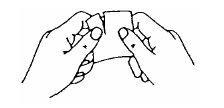
Fig. 1
Remove the patch from the envelope, first remove the smaller part of the peel-off foil, then the larger one, and discard them. Try not to touch the adhesive (Fig. 2,3) and remember that the patch should not be folded so that the adhesive faces do not come into contact. (Figures 2 and 3).
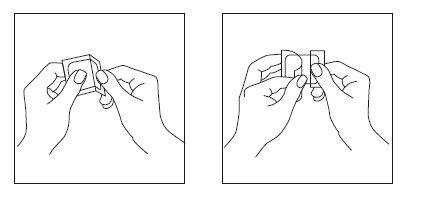
Figs. 2-3
Apply the patch immediately to an area below the waist (abdomen, buttocks, or lower back) and press it for 10-20 seconds (Fig. 4). Make sure it is well stuck, especially at the edges. Do not check the patch's adhesion by pulling on it once applied.
(Figure 4).
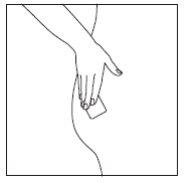
Fig. 4
Choose an area where few wrinkles are formed by movement and with little friction with clothing, otherwise, the patch will come loose. The skin in the selected area should be dry and free of grease (since if not, the patch will not stick), therefore, do not use creams, lotions, or other cosmetics at the point where the patch is applied; also avoid areas with too much hair and where the skin has some alteration or irritation.
Experience indicates that skin irritation is less on the buttocks. Therefore, whenever possible, Estraderm Matrix will be applied to this area. Do not place the Estraderm Matrix patch on the breasts.
Once the patch is properly applied, you can shower, bathe, swim, or exercise. If the patch comes off after bathing or showering, apply a new patch when the skin is cold and dry. Do not apply the patch to skin covered in sweat or after a very hot bath or shower.
The chosen area should be covered by clothing since it should not be exposed to direct sunlight or artificial sun.
You should change the patch every 3 or 4 days to ensure that your body regularly receives the necessary dose of estradiol. To do this, it is simplest to always change it on the same two days of the week, e.g., Monday and Thursday. Choose two days that you can easily remember for some reason. To memorize them, you will find a strip of labels on the box; stick the label with the selected days on the inner flap of the box. Discard the rest of the labels.
Do not place the patch twice in a row in the same place.After a week, you can apply a new patch to a previously used area. As long as you strictly follow these instructions, you will not have problems wearing the patches for 3-4 days.
If the patch comes off, you can place the same patch in a different area of the skin. Make sure it is clean, dry, and free of creams or lotions. If the patch does not stick properly to the skin, use a new one. Regardless of the day it happens, go back to changing the patch on the same days as you initially did.
Once you have used the patch, remove it, fold it with the adhesive side inward, and discard it, making sure it is out of the reach of children.
Your doctor will indicate the duration of your treatment with Estraderm Matrix. Do not stop treatment without consulting your doctor first.
Estraderm Matrix should be used for as long as necessary, usually for several months or longer. This will help control your symptoms and prevent bone loss that occurs after menopause.
If you need surgery
If you are going to undergo surgery, tell your surgeon that you are using Estraderm Matrix. You may need to stop using Estraderm Matrix 4 to 6 weeks before the operation to reduce the risk of blood clot formation (see section 2, Blood clots in a vein). Ask your doctor when you can start treatment with Estraderm Matrix again.
If you use more Estraderm Matrix than you should
If you use more Estraderm Matrix than you should, contact your doctor or pharmacist immediately. Given the form of administration, it is unlikely that an overdose of this medication will occur.
In case of overdose or accidental ingestion, consult your doctor or pharmacist or call the Toxicology Information Service. Phone 915 620 420, indicating the medication and the amount used.
If you forget to use Estraderm Matrix
If you forget to change the patch, apply a new one as soon as you remember. Regardless of the day it happens, go back to changing the patch on the same days as you initially did.
If you have any other doubts about using this product, ask your doctor or pharmacist.
4. Possible side effects
Like all medications, this medication can cause side effects, although not all people experience them. Inform your doctor if you suffer from any of the following side effects.
The following diseases are observed more frequently in women treated with HRT compared to women not treated with HRT:
- Breast cancer
- Abnormal growth of the inner lining of the uterus (endometrial hyperplasia) or cancer of the inner lining of the uterus (endometrial cancer)
- Ovarian cancer
- Blood clots in the veins of the legs or lungs (venous thromboembolism)
- Heart disease
- Stroke
- Memory loss likely if HRT is started from the age of 65
For more information on these side effects, see section 2.
Some side effects can be serious:
- Signs of a severe allergic reaction: rash, itching, hives, difficulty breathing, sneezing or coughing, feeling of dizziness, dizziness, altered consciousness, hypotension with or without generalized itching, redness of the skin, swelling of the face, throat, lips, tongue, skin, and periorbital edema.
- Signs of jaundice: yellowing of the eyes or skin, darkening of urine, and itching of the skin.
- Signs or symptoms of blood clots that may form in your body: pain in the calves, thighs, or chest, sudden shortness of breath, coughing up blood, and dizziness.
- Signs or symptoms of a heart attack: chest pain, dizziness, nausea, shortness of breath, irregular pulse.
- Signs or symptoms of a stroke: collapse, tingling or weakness in the arms and legs, headache, dizziness, and confusion, vision changes, difficulty swallowing, difficulty speaking, and loss of speech.
If you experience any of these effects, stop using this medication and inform your doctor immediately.
Some side effects are very common:
(These side effects may affect at least 1 in 10 patients)
- Breast pain or discomfort
- Sudden bleeding
- Itching under the patch, pain, and redness of the skin after removing the patch (signs of a reaction at the application site include bleeding, bruising, burning, discomfort, dryness, furuncles, edema, erythema, inflammation, irritation, pain, small bumps, rash, skin discoloration, skin pigmentation, swelling, urticaria, and vesicles).
If you experience any of these effects severely, inform your doctor.
Some side effects are common:
(These side effects may affect between 1 and 10 in 100 patients)
- Headache
- Nausea
- Swelling or heaviness in the abdomen
- Abdominal pain
If you experience any of these effects severely, inform your doctor.
Other side effects are uncommon.
(These side effects may affect between 1 and 10 in 1,000 patients)
- Lump or mass in the breast (possible signs of breast cancer)
If you experience any of these effects severely, inform your doctor.
Some side effects are rare:
(These side effects may affect between 1 and 10 in 10,000 patients)
- Dizziness
- Swelling of the lower legs, ankles, fingers, or abdomen due to fluid retention
- Weight changes
- Pain in the legs
If you experience any of these effects severely, inform your doctor.
Some side effects are very rare:
(They may affect less than 1 in 10,000 patients)
- Increased blood pressure
- Itching, generalized rash, and skin inflammation
- Change in skin color
- Blood clots
- Dilated, swollen, and twisted veins (varicose veins that can worsen)
- Severe allergic reaction with symptoms including swelling of the face, tongue, and throat that cause difficulty breathing
- Abnormal liver function test results
- Yellowish discoloration of the skin and the whites of the eyes (cholestatic jaundice)
If you experience any of these effects severely, inform your doctor.
Some side effects have an unknown frequency:
(They cannot be estimated with the available data)
- Rapid mood changes (depression, nervousness)
- Changes in libido
- Migraine
- Diarrhea
- Vomiting
- Problems with the gallbladder (tendency to form stones)
- Hair loss
- Darkening of the skin, particularly on the face or abdomen (chloasma)
- Severe vaginal bleeding or constant spotting (possible signs of endometrial hyperplasia)
- Fibroids (benign growths in the uterus)
- Hives
- Non-cancerous breast lumps
- Discharge from the breasts
- Tension, pain, or inflammation in the breasts
- Increased breast size
- Allergic reactions (including anaphylactic reactions and angioedema)
- Menstrual cramps
- Back pain
If you experience any of these effects severely, inform your doctor.
Other side effects associated with HRT treatments:
- Dry eyes
- Changes in tear composition
- Gallbladder disease
- Various skin disorders:
- Skin discoloration, especially on the face or neck, known as "pregnancy spots" (chloasma)
- Painful and reddened nodules on the skin (erythema nodosum)
- Skin rash with redness in a target-like shape or sores (erythema multiforme)
- Purple spots that do not turn pale when pressure is applied (vascular purpura)
Reporting side effects
If you experience any type of side effect, consult your doctor, pharmacist, or nurse, even if it is a possible side effect not listed in this leaflet. You can also report them directly through the Spanish Medication Surveillance System for Human Use: https://www.notificaram.es. By reporting side effects, you can contribute to providing more information on the safety of this medication.
Breast cancer:The risk of breast cancer in women taking HRT is slightly increased and increases with the number of years of treatment. For more information, see section 2 "What you need to know before using Estraderm Matrix".
Endometrial cancer:The risk of endometrial cancer in women with a uterus who use products containing only estrogen (such as Estraderm Matrix) is increased and increases with the number of years of treatment. When estrogens are administered for long periods, the risk of developing tumors and endometrial abnormalities increases. For more information, see section 2 "What you need to know before using Estraderm Matrix".
If you consider that any of the side effects you are experiencing is serious or if you notice any side effect not mentioned in this leaflet, inform your doctor or pharmacist.
5. Storage of Estraderm Matrix
- Keep this medication out of sight and reach of children.
- Do not store above 25°C.
- Do not use this medication after the expiration date shown on the packaging or envelope. The expiration date is the last day of the month indicated.
- Medications should not be disposed of in wastewater or household waste. Deposit the packaging and medications you no longer need at the SIGRE collection point
 in the pharmacy. If in doubt, ask your pharmacist how to dispose of the packaging and medications you no longer need. This will help protect the environment.
6. Package contents and additional information
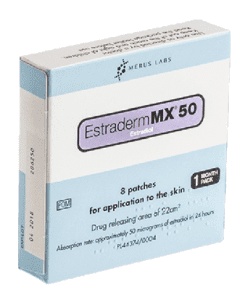
Estraderm Matrix is presented in the form of a transdermal patch (release through the skin into the blood) and is available in packages of 8 patches.
Composition of Estraderm Matrix
- The active ingredient is estradiol. Each patch contains 1.5 mg of estradiol, allowing the controlled release of 50 micrograms per day, per 22 cm2 transdermal patch.
- The other components are: acrylic copolymer solution, isopropyl palmitate, polyethylene terephthalate, and ethylene-vinyl acetate.
Marketing authorization holder and manufacturer
Marketing authorization holder
Merus Labs Luxco II S.à.R.L.
208, Val des Bons Malades
L-2121 Luxembourg
Luxembourg
Manufacturer
LTS Lohmann Therapie-Systeme AG
Lohmannstr. 2
56626 Andernach, Rhineland-Palatinate
Germany
Norgine BV,
Antonio Vivaldistraat 150,
1083 HP Amsterdam,
Netherlands
You can request more information about this medication by contacting the local representative of the marketing authorization holder:
Norgine de España, S.L.U.
Paseo de la Castellana, 91, 2ª Planta
28046 Madrid
Spain
Date of the last revision of the leaflet: 07/2023
Other sources of information
Detailed information about this medication is available on the website of the Spanish Agency for Medicines and Health Products (AEMPS) http://www.aemps.gob.es
- Country of registration
- Dosage formTRANSDERMAL PATCH, 1.5 mg
- ATC codeG03CA03
- Active substance
- Prescription requiredYes
- Manufacturer
- This information is for reference only and does not constitute medical advice. Always consult a doctor before taking any medication. Oladoctor is not responsible for medical decisions based on this content.
- Alternatives to ESTRADERM MATRIX 50 micrograms/24 hours TRANSDERMAL PATCHESDosage form: GEL, 0.5 mgActive substance: estradiolManufacturer: Orion CorporationPrescription requiredDosage form: GEL, 1 mgActive substance: estradiolManufacturer: Orion CorporationPrescription requiredDosage form: TRANSDERMAL PATCH, 3 mgActive substance: estradiolManufacturer: Merus Labs Luxco Ii S.À.R.L.Prescription required
Online doctors for ESTRADERM MATRIX 50 micrograms/24 hours TRANSDERMAL PATCHES
Discuss questions about ESTRADERM MATRIX 50 micrograms/24 hours TRANSDERMAL PATCHES, including use, safety considerations and prescription review, subject to medical assessment and local regulations.

Frequently Asked Questions
ESTRADERM MATRIX 50 micrograms/24 hours TRANSDERMAL PATCHES requires a prescription in Spain. You can check with a doctor online whether this medicine may be appropriate for your situation.
The active ingredient in ESTRADERM MATRIX 50 micrograms/24 hours TRANSDERMAL PATCHES is estradiol. This information helps identify medicines with the same composition but different brand names.
ESTRADERM MATRIX 50 micrograms/24 hours TRANSDERMAL PATCHES is manufactured by Merus Labs Luxco Ii S.À.R.L.. Pharmacy brands and packaging may differ depending on the distributor.
Doctors such as Family doctors, Psychiatrists, Dermatologists, Cardiologists, Endocrinologists, Gastroenterologists, Pulmonologists, Nephrologists, Rheumatologists, Hematologists, Infectious disease physicians, Allergists, Geriatricians, Paediatricians, Oncologists may assess whether ESTRADERM MATRIX 50 micrograms/24 hours TRANSDERMAL PATCHES is appropriate, depending on your situation and local regulations. You can book an online consultation to discuss your symptoms and possible next steps.
The prescription is issued by a doctor after assessing your health. In Spain, ESTRADERM MATRIX 50 micrograms/24 hours TRANSDERMAL PATCHES is then dispensed in pharmacies with that prescription. An online consultation does not guarantee that a prescription will be issued: the decision always rests with the doctor.
To request a review, you can use Oladoctor:
Other medicines with the same active substance (estradiol) include DIVIGEL 0.5 mg TRANSDERMAL GEL in SACHETS, DIVIGEL 1 mg TRANSDERMAL GEL in SACHETS, ESTRADERM MATRIX 100 micrograms/24 hours TRANSDERMAL PATCHES. These may have different brand names or formulations but contain the same therapeutic ingredient. Always consult a doctor before switching or starting a new medicine.
