



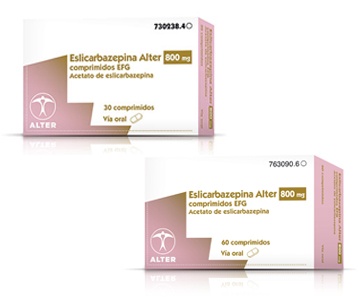
ESLICARBAZEPINA 800 mg Tablets

Prescription review online
A doctor will review your case and decide whether a prescription is medically appropriate.

Talk to a doctor about this medicine
Discuss your symptoms and possible next steps in a quick online consultation.



How to use ESLICARBAZEPINE ALTER 800 mg TABLETS
Contents of the leaflet
- Introduction
- Package Leaflet: Information for the Patient
- Read the entire package leaflet carefully before starting to take this medication, as it contains important information for you.
- Contents of the Package Leaflet
- What is Eslicarbazepine Alter and what is it used for
- What you need to know before taking Eslicarbazepine Alter
- Do not take Eslicarbazepine Alter
- Warnings and Precautions
- Children
- Taking Eslicarbazepine Alter with other medications
- Pregnancy and Breastfeeding
- Eslicarbazepine acetate is not recommended during pregnancy, as its effects on pregnancy and the unborn child are unknown.
- Driving and Using Machines
- How to take Eslicarbazepine Alter
- If you take more Eslicarbazepine Alter than you should
- If you forget to take Eslicarbazepine Alter
- If you stop taking Eslicarbazepine Alter
- Possible Adverse Effects
- Storage of Eslicarbazepine Alter
- Package Contents and Additional Information
- Composition of Eslicarbazepine Alter
- Appearance of the Product and Package Contents
- Marketing Authorization Holder and Manufacturer
- Date of the Last Revision of this Leaflet:
Introduction
Package Leaflet: Information for the Patient
Eslicarbazepine Alter 800 mg tablets EFG
eslicarbazepine acetate

Not sure if this medicine is right for you?
Discuss your symptoms and treatment with a doctor online.
Read the entire package leaflet carefully before starting to take this medication, as it contains important information for you.
- Keep this package leaflet, as you may need to read it again.
- If you have any questions, ask your doctor or pharmacist.
- This medication has been prescribed to you only, and you should not give it to others, even if they have the same symptoms as you, as it may harm them.
- If you experience side effects, consult your doctor or pharmacist, even if they are not listed in this package leaflet. See section 4.
Contents of the Package Leaflet
- What is Eslicarbazepine Alter and what is it used for
- What you need to know before taking Eslicarbazepine Alter
- How to take Eslicarbazepine Alter
- Possible side effects
- Storage of Eslicarbazepine Alter
- Package contents and additional information

Started taking the medicine and have questions?
Discuss your symptoms and treatment with a doctor online.
1. What is Eslicarbazepine Alter and what is it used for
Eslicarbazepine contains the active ingredient eslicarbazepine acetate.
Eslicarbazepine belongs to a group of medications called antiepileptics, used to treat epilepsy, a disease where the affected person has repeated seizures or convulsions.
Eslicarbazepine is used:
- as the only medication (monotherapy) in adult patients with newly diagnosed epilepsy;
- in combination with other antiepileptic medications (adjunctive therapy) in adult, adolescent, and child patients over 6 years of age who suffer from epileptic seizures (convulsions) that affect a part of the brain (partial seizures). These seizures may or may not be followed by a seizure that affects the entire brain (secondary generalization).
Your doctor has prescribed eslicarbazepine to reduce the number of seizures.
2. What you need to know before taking Eslicarbazepine Alter
Do not take Eslicarbazepine Alter
- if you are allergic to eslicarbazepine acetate, other carboxamide derivatives (e.g., carbamazepine or oxcarbazepine, medications used to treat epilepsy), or any of the other components of this medication (listed in section 6);
- if you have a certain type of heart rhythm disorder (second- or third-degree atrioventricular (AV) block).
Warnings and Precautions
Consult your doctor or pharmacist before starting to take eslicarbazepine.
Inform your doctor immediately:
- if you experience blisters or peeling of the skin and/or mucous membranes, rash, swallowing or breathing difficulties, swelling of the lips, face, eyelids, throat, or tongue. These may be signs of an allergic reaction;
- if you experience confusion, worsening of seizures, or decreased consciousness, which may be signs of low blood levels of salts.
Inform your doctor:
- if you have kidney problems. Your doctor may need to adjust the dose. Eslicarbazepine is not recommended in patients with severe kidney disease;
- if you have liver problems. Eslicarbazepine is not recommended in patients with severe liver problems;
- if you are taking any medication that may cause an abnormality in the ECG (electrocardiogram) called a prolonged PR interval. If you are unsure whether the medications you are taking may cause this effect, discuss it with your doctor;
- if you have any heart disease, such as heart failure or heart attack, or have any heart rhythm disorder;
- if you have seizures that start with an extended electrical discharge that affects both sides of the brain.
A small number of people taking antiepileptics have had thoughts of self-harm or suicide. If this happens to you while taking eslicarbazepine, contact your doctor immediately.
Eslicarbazepine may make you feel dizzy and/or drowsy, particularly at the start of treatment. Be careful while taking eslicarbazepine to avoid accidental injuries, such as falls.
Be careful with eslicarbazepine
In post-marketing experience, in patients treated with eslicarbazepine, serious and potentially life-threatening skin reactions have been reported, including Stevens-Johnson syndrome/toxic epidermal necrolysis, drug reaction with eosinophilia and systemic symptoms (DRESS).
If you develop a severe rash or other skin symptom (see section 4), stop taking eslicarbazepine and consult your doctor or seek immediate medical attention.
In patients of Thai and Chinese Han ethnic origin, the risk of serious skin reactions associated with carbamazepine or chemically related compounds can be predicted by a blood test. Your doctor may advise you on the need for this blood test before taking eslicarbazepine.
Children
Eslicarbazepine should not be administered to children under 6 years of age.
Taking Eslicarbazepine Alter with other medications
Inform your doctor or pharmacist if you are taking, have recently taken, or may take any other medication. This is because some medications may interfere with the way eslicarbazepine works, or eslicarbazepine may interfere with the effect of such medications. Inform your doctor if you are taking:
- phenytoin (a medication used to treat epilepsy), as your doctor may need to adjust the dose;
- carbamazepine (a medication used to treat epilepsy), as your doctor may need to adjust the dose, and the following side effects of eslicarbazepine may occur more frequently: double vision, abnormal coordination, and dizziness;
- hormonal contraceptives (such as birth control pills), as eslicarbazepine may reduce their effectiveness;
- simvastatin (a medication used to lower cholesterol levels), as your doctor may need to adjust the dose;
- rosuvastatin, a medication used to lower cholesterol levels;
- the anticoagulant warfarin;
- monoamine oxidase inhibitor (MAOI) antidepressants;
- do not take oxcarbazepine (a medication used to treat epilepsy) with eslicarbazepine, as it is unknown whether it is safe to take these two medications together.
See the section "Pregnancy and Breastfeeding" for recommendations on contraception.
Pregnancy and Breastfeeding
Eslicarbazepine acetate is not recommended during pregnancy, as its effects on pregnancy and the unborn child are unknown.
If you plan to become pregnant, consult your doctor before stopping your contraceptive method and before becoming pregnant. Your doctor may decide to change your treatment.
There is limited data on the use of eslicarbazepine acetate in pregnant women.
Studies have shown an increased risk of congenital defects and neurodevelopmental problems (brain development) in children of women taking antiepileptic medications, particularly when taking more than one antiepileptic medication at the same time.
If you are pregnant or think you may be pregnant, inform your doctor immediately. Do not stop taking your medication until you have discussed it with your doctor. Stopping your medication without consulting your doctor may cause seizures, which can be dangerous for you and your unborn child. Your doctor may decide to change your treatment.
If you are a woman of childbearing age and do not plan to become pregnant, you should use an effective contraceptive method during treatment with eslicarbazepine acetate. Eslicarbazepine acetate may affect the functioning of hormonal contraceptives, such as birth control pills, and make them less effective in preventing pregnancy.
Therefore, you are advised to use other safe and effective contraceptive methods while taking eslicarbazepine acetate.
Discuss with your doctor the type of contraceptive most suitable for you to use while taking eslicarbazepine acetate. If you stop taking eslicarbazepine acetate, you should continue to use an effective contraceptive method until the end of your current menstrual cycle.
If you take eslicarbazepine acetate during pregnancy, your baby is also at risk of bleeding problems immediately after birth. Your doctor may give you and your baby a medication to prevent this.
Do not breastfeed while taking eslicarbazepine acetate. It is unknown whether it passes into breast milk.
Driving and Using Machines
Eslicarbazepine may cause dizziness, drowsiness, and affect your vision, particularly at the start of treatment. If this happens, do not drive or use any tools or machines.
This medication contains sodiumThis medication contains less than 23 mg of sodium (1 mmol) per tablet; this is essentially "sodium-free".
3. How to take Eslicarbazepine Alter
Follow the administration instructions for this medication exactly as indicated by your doctor. If you are unsure, consult your doctor or pharmacist again.
Adults
Initial dose
400 mg once a day for one or two weeks, before increasing to the maintenance dose. Your doctor will decide whether to administer this dose for one or two weeks.
Maintenance dose
The usual maintenance dose is 800 mg once a day.
Depending on how you respond to eslicarbazepine, the dose may be increased to 1,200 mg once a day. If you are taking eslicarbazepine alone (monotherapy), your doctor may consider increasing the dose to 1,600 mg once a day.
Patient with kidney problems
If you have kidney problems, you will usually be given a lower dose of eslicarbazepine. Your doctor will determine the correct dose for you. Eslicarbazepine is not recommended in patients with severe kidney disease.
Elderly patients (over 65 years of age)
If you are an elderly patient and are taking eslicarbazepine in monotherapy, the dose of 1,600 mg is not suitable for you.
Children over 6 years of age
Initial dose
The initial dose is 10 mg per kilogram of body weight once a day for one or two weeks, before increasing to the maintenance dose.
Maintenance dose
Depending on the response to eslicarbazepine, the dose may be increased by 10 mg per kilogram of body weight, at intervals of one or two weeks, up to 30 mg per kilogram of body weight. The maximum dose is 1,200 mg once a day.
Children ≥ 60 kg
Children with a body weight of 60 kg or more should take the same dose as adults.
The oral suspension (another pharmaceutical form not available for this medication) may be more suitable for administration in children. Consult your doctor or pharmacist.
Form and route of administration
Eslicarbazepine is administered orally. Swallow the tablet with a glass of water. Eslicarbazepine can be taken with or without food.
The tablet can be divided into equal doses.
If you take more Eslicarbazepine Alter than you should
If you accidentally take more eslicarbazepine than you should, you are at risk of having more seizures; or you may feel that your heart is beating irregularly or faster. Contact your doctor or go to the hospital immediately if you experience any of these symptoms. Take the medication package with you, so the doctor knows what you have taken.
In case of overdose or accidental ingestion, consult your doctor or pharmacist immediately or call the Toxicology Information Service, phone: 91 562 04 20, indicating the medication and the amount ingested.
If you forget to take Eslicarbazepine Alter
If you forget to take a tablet, take it as soon as you remember and continue as usual. Do not take a double dose to make up for forgotten doses.
If you stop taking Eslicarbazepine Alter
Do not suddenly stop taking the tablets. If you do, you are at risk of having more seizures. Your doctor will decide how long you should take eslicarbazepine. If your doctor decides to stop your treatment with eslicarbazepine, the dose will usually be gradually reduced. It is important that you complete the treatment as instructed by your doctor; otherwise, your symptoms may worsen.
If you have any further questions about the use of this medication, ask your doctor or pharmacist.
4. Possible Adverse Effects
Like all medicines, this medicine can cause adverse effects, although not all people suffer from them.
The following adverse effects may be very serious. If they appear, stop administering eslicarbazepine and inform a doctor or go to a hospital immediately, as you may need urgent medical treatment:
- blisters or peeling of the skin and/or mucous membranes, rash, swallowing or breathing problems, swelling of the lips, face, eyelids, throat, or tongue. These could be signs of an allergic reaction.
The very frequent adverse effects (may affect more than 1 in 10 people) are:
- dizziness or drowsiness
The frequent adverse effects (may affect up to 1 in 10 people) are:
- feeling of instability, or spinning or floating
- nausea or vomiting
- headache
- diarrhea
- double vision or blurred vision
- difficulty concentrating
- feeling of fatigue or decreased energy
- tremor
- skin rash
- blood tests showing low sodium levels
- decreased appetite
- difficulty sleeping
- difficulty in movement coordination (ataxia)
- weight gain.
The infrequent adverse effects (may affect up to 1 in 100 people) are:
- clumsiness
- allergy
- constipation
- seizures
- underactive thyroid gland. Symptoms include decreased thyroid hormone levels (detected in blood tests), intolerance to cold, increased tongue size, fine and brittle nails and hair, and low body temperature
- liver problems (such as increased liver enzymes);
- high blood pressure or intense increase in blood pressure
- low blood pressure, or decreased blood pressure when standing up
- blood tests showing low salt levels (including chloride), or a reduction in the number of red blood cells
- dehydration
- changes in eye movements, blurred vision, or red eyes
- suffering from falls
- thermal burn
- poor memory or forgetfulness
- crying, feeling of depression, nervousness, or confusion, lack of interest or emotions
- inability to speak, write, or understand spoken or written language
- agitation
- attention deficit/hyperactivity
- irritability
- mood changes or hallucinations
- difficulty speaking
- nasal bleeding
- chest pain
- tingling or numbness in any part of the body
- migraine
- burning
- abnormal sensation to touch
- alterations in smell
- ringing in the ears
- difficulty hearing
- swelling of legs and arms
- acidity, stomach discomfort, abdominal pain, bloating, and abdominal discomfort or dry mouth
- black stools
- gum inflammation or tooth pain
- sweating or dry skin
- itching
- skin changes (e.g., skin redness)
- hair loss
- urinary tract infection
- general discomfort, weakness, or chills
- weight loss
- muscle pain, pain in limbs, muscle weakness
- bone metabolism disorder
- increased bone proteins
- flushing (blushing), cold in the extremities
- slower or irregular heartbeats
- extreme drowsiness
- sedation
- motor neurological disorder where muscles contract, causing twisting and repetitive movements or abnormal postures. Symptoms include tremors, pain, and cramps
- drug toxicity
- anxiety.
The adverse effects of unknown frequency (cannot be estimated from the available data) are:
- Decreased platelet count that increases the risk of bleeding or bruising.
- Severe back or stomach pain (caused by pancreas inflammation).
- Decreased white blood cell count that makes infections more likely.
- Reddish spots or circular patches often with central blisters on the trunk, skin peeling, ulcers in the mouth, throat, nose, genitals, and eyes, red and inflamed eyes that may be preceded by fever and/or flu-like symptoms (Stevens-Johnson syndrome/toxic epidermal necrolysis).
- Initially flu-like symptoms, rash on the face, generalized rash, elevated body temperature, elevated liver enzymes, blood abnormalities (eosinophilia), enlarged lymph nodes, and other body conditions (drug reaction with eosinophilia and systemic symptoms, also known as DRESS or drug hypersensitivity syndrome).
- Severe allergic reaction that causes swelling of the face, throat, hands, feet, ankles, or lower legs.
- Urticaria (skin rash with itching).
- Lethargy, confusion, muscle spasms, or significant worsening of seizures (possible symptoms of low sodium levels in the blood due to inadequate secretion of antidiuretic hormone (ADH)).
The use of eslicarbazepine is associated with an ECG (electrocardiogram) anomaly called increased PR interval. Adverse effects associated with this ECG anomaly (e.g., fainting and slowing of heartbeats) may occur.
Bone disorders, including osteopenia and osteoporosis (thinning of the bones), and fractures have been reported with structurally related antiepileptic medications such as carbamazepine and oxcarbazepine. Talk to your doctor or pharmacist if you are undergoing long-term treatment with antiepileptics, have a history of osteoporosis, or are taking steroids.
Adverse Effect Reporting
If you experience any type of adverse effect, consult your doctor or pharmacist, even if it is a possible adverse effect that is not listed in this leaflet. You can also report them directly through the Spanish Medicines and Healthcare Products Agency's (AEMPS) online system: https://www.notificaram.es. By reporting adverse effects, you can contribute to providing more information on the safety of this medicine.
5. Storage of Eslicarbazepine Alter
Keep this medicine out of the sight and reach of children.
Do not use this medicine after the expiration date stated on the blister pack and carton after CAD. The expiration date is the last day of the month indicated.
No special storage conditions are required.
Medicines should not be disposed of via wastewater or household waste. Deposit the packaging and any unused medicines in the pharmacy's SIGRE collection point. If in doubt, ask your pharmacist how to dispose of the packaging and any unused medicines. This will help protect the environment.
6. Package Contents and Additional Information
Composition of Eslicarbazepine Alter
- The active ingredient is eslicarbazepine acetate. Each tablet contains 800 mg of eslicarbazepine acetate.
- The other ingredients are sodium croscarmellose, povidone, and magnesium stearate.
Appearance of the Product and Package Contents
Oblong, biconvex tablets, approximately 21 x 8.5 mm, scored on one side. The tablet can be divided into equal doses.
PVC-Aluminum blisters.
Packaging of 30 or 60 tablets.
Marketing Authorization Holder and Manufacturer
Laboratorios Alter, S.A.
C/ Mateo Inurria 30
28036 Madrid
Spain
Date of the Last Revision of this Leaflet:
Detailed and updated information on this medicine is available on the website of the Spanish Medicines and Healthcare Products Agency (AEMPS) https://www.aemps.gob.es/.
- Country of registration
- Dosage formTABLET, 800 mg
- ATC codeN03AF04
- Average pharmacy price92.06 EUR
- Active substance
- Prescription requiredYes
- Manufacturer
- CompositionCROSCARMELOSA SODICA (62,1 mg mg)
- This information is for reference only and does not constitute medical advice. Always consult a doctor before taking any medication. Oladoctor is not responsible for medical decisions based on this content.
- Alternatives to ESLICARBAZEPINE ALTER 800 mg TABLETSDosage form: TABLET, 200 mgActive substance: eslicarbazepineManufacturer: Accord Healthcare S.L.U.Prescription requiredDosage form: TABLET, 800 mgActive substance: eslicarbazepineManufacturer: Accord Healthcare S.L.U.Prescription requiredDosage form: TABLET, 600 mgActive substance: eslicarbazepineManufacturer: Laboratorios Alter S.A.Prescription required
Online doctors for ESLICARBAZEPINE ALTER 800 mg TABLETS
Discuss questions about ESLICARBAZEPINE ALTER 800 mg TABLETS, including use, safety considerations and prescription review, subject to medical assessment and local regulations.



Get ESLICARBAZEPINE ALTER 800 mg TABLETS Prescription Online
Fill in a 2-min form
Tell us your symptoms, history, and what medicine you're requesting.
Pick a doctor or let us assign
Choose a specialist or we'll match you with the next available doctor.
Doctor reviews your case
Usually within 30 minutes. They may ask follow-up questions via chat.
Collect from any pharmacy
Electronic prescription sent to your email — valid across Spain.
Frequently Asked Questions
ESLICARBAZEPINE ALTER 800 mg TABLETS requires a prescription in Spain. You can check with a doctor online whether this medicine may be appropriate for your situation.
The active ingredient in ESLICARBAZEPINE ALTER 800 mg TABLETS is eslicarbazepine. This information helps identify medicines with the same composition but different brand names.
The average pharmacy price for ESLICARBAZEPINE ALTER 800 mg TABLETS is around 92.06 EUR. Prices may vary depending on the manufacturer and dosage form.
ESLICARBAZEPINE ALTER 800 mg TABLETS is manufactured by Laboratorios Alter S.A.. Pharmacy brands and packaging may differ depending on the distributor.
Doctors such as Family doctors, Psychiatrists, Dermatologists, Cardiologists, Endocrinologists, Gastroenterologists, Pulmonologists, Nephrologists, Rheumatologists, Hematologists, Infectious disease physicians, Allergists, Geriatricians, Paediatricians, Oncologists may assess whether ESLICARBAZEPINE ALTER 800 mg TABLETS is appropriate, depending on your situation and local regulations. You can book an online consultation to discuss your symptoms and possible next steps.
Spain has a well-developed healthcare infrastructure across major cities such as Madrid, Barcelona, Valencia, and Seville. Pharmacies are widely available and operate under strict regulations, ensuring access to prescribed medications.
You can buy ESLICARBAZEPINE ALTER 800 mg TABLETS in Madrid, Barcelona, Seville, or Valencia at any local pharmacy with a valid prescription.
To obtain a prescription, you can use Oladoctor:
Other medicines with the same active substance (eslicarbazepine) include ARUPSAN 200 mg TABLETS, ARUPSAN 800 mg TABLETS, BIXCAR 600 mg TABLETS. These may have different brand names or formulations but contain the same therapeutic ingredient. Always consult a doctor before switching or starting a new medicine.
