






How to use ERTAPENEM AUROVITAS 1 g POWDER FOR CONCENTRATE FOR INFUSION SOLUTION
Translated with AI
This page provides general information and does not replace a doctor’s consultation. Always consult a doctor before taking any medication. Seek urgent medical care if symptoms are severe.
Show originalContents of the leaflet
Introduction
Package Leaflet: Information for the User
Ertapenem Aurovitas 1 g powder for concentrate for solution for infusion EFG
Read all of this leaflet carefully before you start using this medicine because it contains important information for you.
- Keep this leaflet, you may need to read it again.
- If you have any further questions, ask your doctor, pharmacist, or nurse.
- This medicine has been prescribed for you only. Do not pass it on to others. It may harm them, even if their signs of illness are the same as yours.
- If you get any side effects, talk to your doctor, pharmacist, or nurse. This includes any possible side effects not listed in this leaflet. See section 4.
Contents of the pack
- What is Ertapenem Aurovitas and what is it used for
- What you need to know before you use Ertapenem Aurovitas
- How to use Ertapenem Aurovitas
- Possible side effects
- Storage of Ertapenem Aurovitas
- Contents of the pack and other information
1. What is Ertapenem Aurovitas and what is it used for
Ertapenem Aurovitas contains ertapenem, which is an antibiotic belonging to the beta-lactam group. It has the ability to destroy a wide variety of bacteria (microorganisms) that cause infections in different parts of the body.
Antibiotics are used to treat bacterial infections and are not effective against viral infections such as the flu or the common cold.
It is essential that you follow the instructions regarding dosage, administration interval, and treatment duration as indicated by your doctor.
Do not store or reuse this medication. If you have any leftover antibiotic after completing treatment, return it to the pharmacy for proper disposal. Do not throw away medications via wastewater or trash.
Ertapenem can be administered to individuals aged 3 months and older.
Treatment:
Your doctor has prescribed ertapenem because you or your child suffer from one (or more) of the following types of infections:
- Infection in the abdomen
- Infection affecting the lungs (pneumonia)
- Gynecological infections
- Infections of the skin of the foot in diabetic patients
Prevention:
Prevention of surgical wound infections in adults after colon or rectal surgery.

2. What you need to know before you use Ertapenem Aurovitas
Do not use Ertapenem Aurovitas
- If you are allergic to the active substance (ertapenem) or to any of the other components of this medication (listed in section 6).
- If you are allergic to antibiotics such as penicillins, cephalosporins, or carbapenems (used to treat various infections).
Warnings and precautions
Consult your doctor, pharmacist, or nurse before starting to use Ertapenem Aurovitas.
If during treatment you experience an allergic reaction (such as swelling of the face, tongue, or throat, difficulty breathing or swallowing, skin rash), inform your doctor immediately as you may need urgent medical treatment.
Although antibiotics, including ertapenem, destroy certain bacteria, other bacteria and fungi may continue to grow more than usual. This is called bacterial overgrowth. Your doctor will monitor bacterial overgrowth and treat it if necessary.
It is essential that you inform your doctor if you have diarrhea before, during, or after your treatment with ertapenem. This is because you may suffer from a disease known as colitis (inflammation of the intestine). Do not take any medication to treat diarrhea without consulting your doctor first.
Inform your doctor if you are using medications called valproic acid or sodium valproate (see below Other medications and Ertapenem Aurovitas).
Inform your doctor of any other medical condition you have or have had, including:
- Kidney disease. It is especially important that your doctor knows if you have kidney disease and if you are receiving dialysis treatment.
- Allergies to any medication, including antibiotics.
- Central nervous system disorders, such as localized tremors or convulsions.
Children and adolescents (from 3 months to 17 years of age)
Experience with ertapenem in children under two years of age is limited. For this age group, your doctor will decide on the possible benefit of its use. There is no experience in children under 3 months of age.
Other medications and Ertapenem Aurovitas
Inform your doctor if you are taking, have recently taken, or may need to take any other medication.
Inform your doctor, pharmacist, or nurse if you are using medications called valproic acid or sodium valproate (used to treat epilepsy, bipolar disorder, migraines, or schizophrenia). This is because ertapenem may affect how other medications work. Your doctor will decide if you should use ertapenem in combination with these medications.
Pregnancy and breastfeeding
If you are pregnant or breastfeeding, think you may be pregnant, or plan to become pregnant, consult your doctor before using this medication.
Ertapenem has not been studied in pregnant women. Ertapenem should not be used during pregnancy unless your doctor decides that the potential benefit justifies the potential risk to the fetus.
Women who are receiving ertapenem should not breastfeed because ertapenem has been found in breast milk and may affect the infant.
Driving and using machines
Do not drive or use any tools or machines until you know how the medication affects you.
Certain side effects have been reported with ertapenem, such as dizziness and somnolence, which may affect patients' ability to drive or use machines.
Ertapenem Aurovitas contains sodium
This medication contains 137 mg of sodium (main component of table/cooking salt) per vial. This is equivalent to 6.85% of the maximum recommended daily sodium intake for an adult.
3. How to use Ertapenem Aurovitas
Ertapenem will always be prepared and administered intravenously (in a vein) by a doctor or other healthcare professional.
The recommended dose of ertapenem for adults and adolescents 13 years of age and older is 1 gram (g) administered once daily. The recommended dose for children from 3 months to 12 years of age is 15 mg/kg, administered twice daily (not exceeding 1 g/day). Your doctor will decide how many days of treatment you need.
For the prevention of surgical wound infections after colon or rectal surgery, the recommended dose of ertapenem is 1 g administered as a single intravenous dose 1 hour before surgery.
It is very important that you continue to receive ertapenem for the entire duration indicated by your doctor.
If you use more Ertapenem Aurovitas than you should
If you are concerned that you may have been administered too much ertapenem, consult your doctor or other healthcare professional immediately.
In case of overdose or accidental ingestion, consult your doctor or pharmacist immediately or call the Toxicology Information Service, phone 91 562 04 20, indicating the medication and the amount ingested.
If you forget to use Ertapenem Aurovitas
If you are concerned that you may have missed a dose, consult your doctor or other healthcare professional immediately.

4. Possible side effects
Like all medications, this medication can cause side effects, although not everybody gets them.
Adults 18 years of age and older:
Since the medication was marketed, serious allergic reactions (anaphylaxis) and hypersensitivity syndromes (allergic reactions including skin rash, fever, abnormal blood tests) have been reported. The first signs of a severe allergic reaction may include swelling of the face and/or throat. If these symptoms appear, inform your doctor immediately as you may need urgent medical treatment.
Frequent (may affect up to 1 in 10 people):
- Headache.
- Diarrhea, nausea, vomiting.
- Skin rash, itching.
- Problems in the vein where the medication is administered (including inflammation, lump formation, swelling at the injection site, or fluid leakage to the tissue and skin surrounding the injection site).
- Increased platelet count.
- Changes in liver function tests.
Uncommon (may affect up to 1 in 100 people):
- Dizziness, somnolence, insomnia, confusion, convulsions.
- Low blood pressure, slow heart rate.
- Difficulty breathing, throat pain.
- Constipation, oral thrush infection, antibiotic-associated diarrhea, acid reflux, dry mouth, indigestion, loss of appetite.
- Redness of the skin.
- Vaginal discharge and irritation.
- Abdominal pain, fatigue, fungal infection, fever, edema/swelling, chest pain, altered taste.
- Changes in some urine and blood tests.
Rare (may affect up to 1 in 1,000 people):
- Decrease in white blood cells, decrease in platelet count in the blood.
- Low blood sugar levels.
- Irritation, anxiety, depression, tremor.
- Irregular heart rate, increased blood pressure, bleeding, rapid heart rate.
- Nasal congestion, cough, nasal bleeding, pneumonia, unusual breathing sounds and wheezing.
- Gallbladder inflammation, difficulty swallowing, fecal incontinence, yellowing of the skin (jaundice), liver disorder.
- Skin inflammation, fungal skin infection, skin peeling, surgical wound infection.
- Muscle cramps, shoulder pain.
- Urinary tract infection, kidney failure.
- Abortion, genital bleeding.
- Allergy, discomfort, pelvic peritonitis, changes in the white part of the eye, fainting.
- The skin may become hardened at the injection site.
- Swelling of the blood vessels in the skin.
Frequency not known (cannot be estimated from the available data):
- Hallucinations.
- Decreased level of consciousness.
- Altered mental state (including aggression, delirium, disorientation, changes in mental state).
- Abnormal movements.
- Muscle weakness.
- Unstable gait.
- Discolored teeth.
Changes in some parameters measured in blood tests have also been reported.
If you develop skin patches filled with fluid or elevated over a large area of your body, inform your doctor or nurse immediately.
Children and adolescents (from 3 months to 17 years of age):
Frequent (may affect up to 1 in 10 people):
- Diarrhea.
- Diaper rash.
- Pain at the infusion site.
- Changes in white blood cell count.
- Changes in liver function tests.
Uncommon (may affect up to 1 in 100 people):
- Headache.
- Flushing, high blood pressure, small, smooth, red or purple spots under the skin.
- Discolored stools, black tarry stools.
- Redness of the skin, skin rash.
- Itching, burning, redness, and warmth at the infusion site, redness at the injection site.
- Increased platelet count.
- Changes in some blood tests.
Frequency not known (cannot be estimated from the available data):
- Hallucinations.
- Altered mental state (including aggression).
Reporting of side effects:
If you experience any side effects, talk to your doctor, pharmacist, or nurse, even if it is possible side effects not listed in this leaflet. You can also report side effects directly through the Spanish Medicines Agency's website: www.notificaram.es. By reporting side effects, you can help provide more information on the safety of this medication.
5. Storage of Ertapenem Aurovitas
Keep this medication out of the sight and reach of children.
Do not use this medication after the expiration date stated on the carton and vial after EXP. The expiration date is the last day of the month indicated.
Do not store above 30°C.
After reconstitution: the reconstituted solutions should be used immediately.
After dilution:
Chemical and physical stability in use of the diluted solutions has been demonstrated for 6 hours at 15-25°C and 24 hours at 2-8°C (in the refrigerator). The solutions should be used within 4 hours after removal from the refrigerator. Do not freeze ertapenem solutions.
From a microbiological point of view, the product should be used immediately, unless the opening method prevents microbial contamination. If not used immediately, the in-use storage times and conditions are the responsibility of the user.
Do not use this medication if you observe the presence of particles, an inappropriate color, or signs of deterioration in the reconstituted solution.
Medications should not be disposed of via wastewater or trash. Ask your pharmacist how to dispose of the packaging and any unused medication. This will help protect the environment.
6. Container Content and Additional Information
Composition of Ertapenem Aurovitas
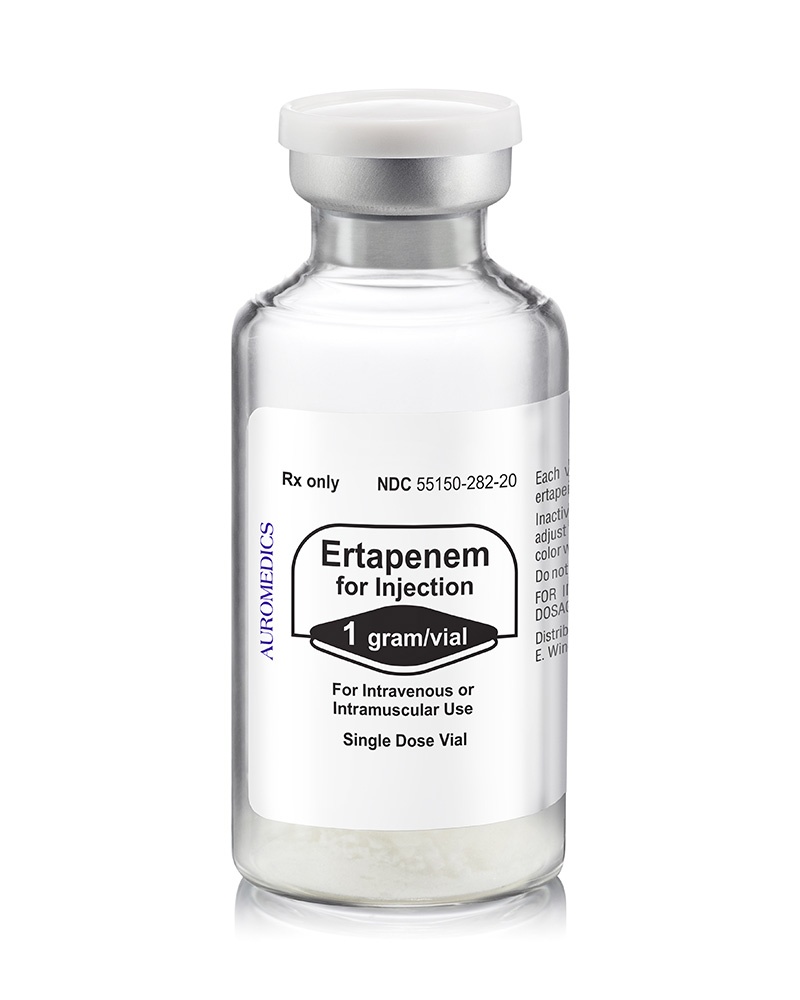
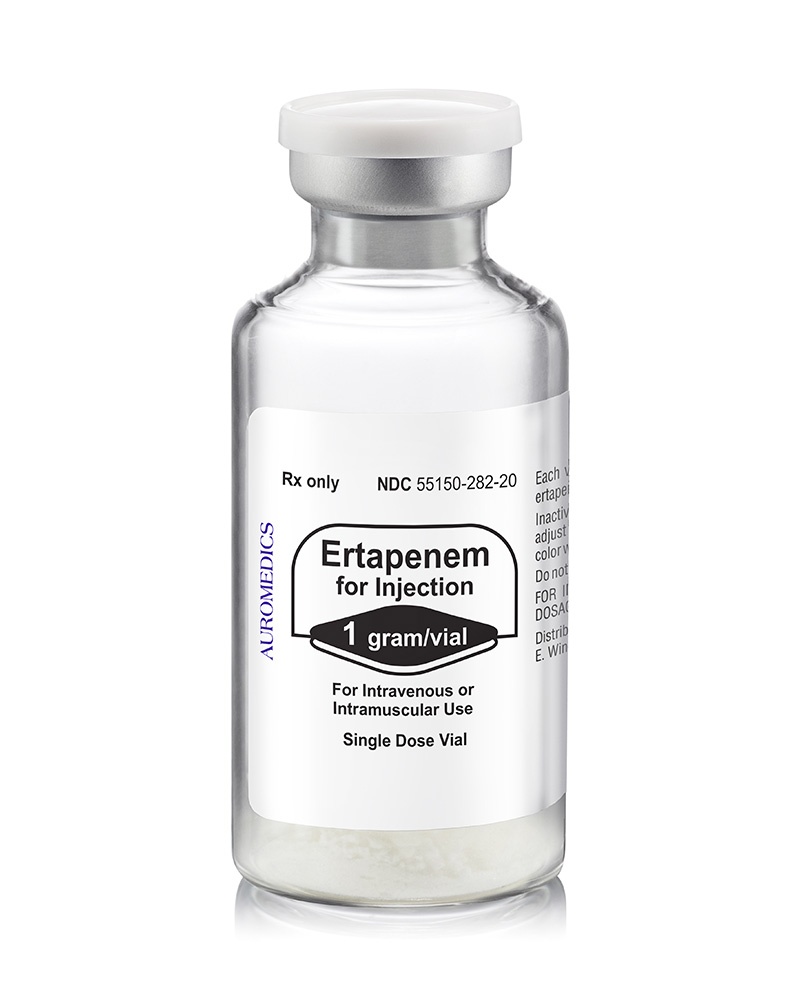
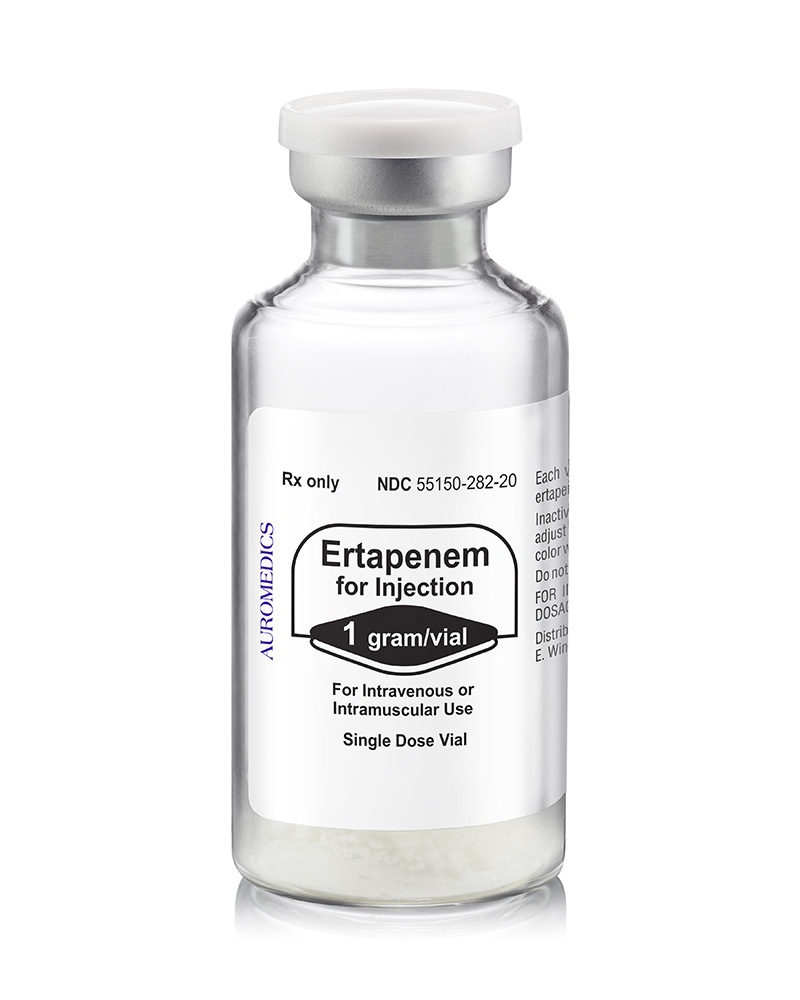
- The active ingredient is ertapenem. Each vial contains 1.0 g of ertapenem.
- The other components are: sodium hydrogencarbonate, sodium hydroxide to adjust the pH to 7.6, and sodium hydroxide used as a buffering agent.
Appearance of the Product and Container Content
Ertapenem Aurovitas is a white to off-white powder for concentrate for solution for infusion. Ertapenem solutions range from colorless to pale yellow. A color variation within this range does not affect efficacy.
Type I glass vial of 20 ml with a gray bromobutyl rubber stopper and an aluminum cap with a polypropylene disk.
Ertapenem Aurovitas is available in packs of 1 vial, 5 vials, and 10 vials.
Only some pack sizes may be marketed.
Marketing Authorization Holder and Manufacturer
Marketing Authorization Holder
Aurovitas Spain, S.A.U.
Avda. de Burgos, 16-D
28036 Madrid
Spain
Manufacturer
APL Swift Services (Malta) Limited
HF26, Hal Far Industrial Estate, Hal Far
Birzebbugia, BBG 3000
Malta
O
Generis Farmacêutica, S.A.
Rua João de Deus, 19
2700-487 Amadora
Portugal
This Medicinal Product is Authorized in the Member States of the European Economic Area under the following Names:
Spain: | Ertapenem Aurovitas 1 g powder for concentrate for solution for infusion EFG |
France: | Ertapenem Arrow 1 g, powder for solution to be diluted for infusion |
Italy: | Ertapenem Aurobindo |
Poland: | Ertapenem Eugia |
Portugal: | Ertapenem Generis |
Czech Republic: | Ertapenem Aurovitas |
Romania: | Ertapenem Aurobindo 1g powder for concentrate for solution for infusion |
Date of the Last Revision of this Leaflet:August 2024
Detailed information on this medicinal product is available on the website of the Spanish Agency for Medicines and Health Products (AEMPS) (http://www.aemps.gob.es/).
This Information is Intended Only for Healthcare Professionals:
Instructions on how to reconstitute and dilute ertapenem:
For single use.
Preparation for intravenous administration:
Ertapenem must be reconstituted and then diluted before administration.
Instructions for Inserting the Needle into the Rubber Stopper
To avoid the rubber stopper from coming off when inserting the needle into the rubber stopper, it is recommended to use a needle with a diameter of 21 gauge or smaller for reconstitution of the medicinal product.
The needle should be inserted only into the center of the rubber stopper, in a vertical direction.
Adults and Adolescents (13 to 17 years of age)
Reconstitution
Reconstitute the contents of the 1 g vial of ertapenem with 10 ml of water for injections or 9 mg/ml (0.9%) sodium chloride solution to obtain a reconstituted solution of approximately 100 mg/ml. Shake well to dissolve (see section 6.4).
Dilution
For a 50 ml diluent bag: For a dose of 1 g, immediately transfer the contents of the reconstituted vial to a 50 ml bag of 9 mg/ml (0.9%) sodium chloride solution; or
For a 50 ml diluent vial: For a dose of 1 g, remove 10 ml from a 50 ml vial of 9 mg/ml (0.9%) sodium chloride solution and discard. Transfer the contents of the reconstituted 1 g vial of ertapenem to the 50 ml vial of 9 mg/ml (0.9%) sodium chloride solution.
Infusion
Infuse over a period of 30 minutes.
Children (3 months to 12 years of age)
Reconstitution
Reconstitute the contents of the 1 g vial of ertapenem with 10 ml of water for injections or 9 mg/ml (0.9%) sodium chloride solution to obtain a reconstituted solution of approximately 100 mg/ml. Shake well to dissolve (see section 6.4).
Dilution
For a diluent bag: transfer a volume equivalent to 15 mg/kg body weight (not exceeding 1 g/day) to a bag of 9 mg/ml (0.9%) sodium chloride solution, for a final concentration of 20 mg/ml or less; or
For a diluent vial: transfer a volume equivalent to 15 mg/kg body weight (not exceeding 1 g/day) to a vial of 9 mg/ml (0.9%) sodium chloride solution, for a final concentration of 20 mg/ml or less.
Infusion
Infuse over a period of 30 minutes.
After reconstitution:
The reconstituted solutions should be used immediately.
After dilution:
Chemical and physical stability in use has been demonstrated for the diluted solutions for 6 hours at 15-25°C and 24 hours at 2-8°C (in a refrigerator). The solutions should be used within 4 hours after removal from the refrigerator. Do not freeze ertapenem solutions.
From a microbiological point of view, the product should be used immediately, unless the opening method prevents the risk of microbiological contamination. If not used immediately, the in-use storage times and conditions are the responsibility of the user.
As long as the container allows, the reconstituted solutions should be inspected visually for particles or discoloration before administration. Ertapenem solutions range from colorless to pale yellow. A color variation within this range does not affect efficacy.
Disposal of unused medicinal product and all materials that have come into contact with it should be done in accordance with local regulations.
-

- Country of registration
- Dosage formINJECTABLE PERFUSION, 1000 mg
- ATC codeJ01DH03
- Active substance
- Prescription requiredYes
- Manufacturer
- This information is for reference only and does not constitute medical advice. Always consult a doctor before taking any medication. Oladoctor is not responsible for medical decisions based on this content.
- Alternatives to ERTAPENEM AUROVITAS 1 g POWDER FOR CONCENTRATE FOR INFUSION SOLUTIONDosage form: INJECTABLE PERFUSION, 1 gActive substance: ertapenemManufacturer: Cipla EuropePrescription requiredDosage form: INJECTABLE PERFUSION, 1000 mgActive substance: ertapenemManufacturer: Hikma Farmaceutica (Portugal) S.A.Prescription requiredDosage form: INJECTABLE PERFUSION, 1 gActive substance: ertapenemManufacturer: Qilu Pharma Spain S.L.Prescription required

Online doctors for ERTAPENEM AUROVITAS 1 g POWDER FOR CONCENTRATE FOR INFUSION SOLUTION
Discuss questions about ERTAPENEM AUROVITAS 1 g POWDER FOR CONCENTRATE FOR INFUSION SOLUTION, including use, safety considerations and prescription review, subject to medical assessment and local regulations.









Get ERTAPENEM AUROVITAS 1 g POWDER FOR CONCENTRATE FOR INFUSION SOLUTION Prescription Online
Fill in a 2-min form
Tell us your symptoms, history, and what medicine you're requesting.
Pick a doctor or let us assign
Choose a specialist or we'll match you with the next available doctor.
Doctor reviews your case
Usually within 30 minutes. They may ask follow-up questions via chat.
Collect from any pharmacy
Electronic prescription sent to your email — valid across Spain.
Frequently Asked Questions
ERTAPENEM AUROVITAS 1 g POWDER FOR CONCENTRATE FOR INFUSION SOLUTION requires a prescription in Spain. You can check with a doctor online whether this medicine may be appropriate for your situation.
The active ingredient in ERTAPENEM AUROVITAS 1 g POWDER FOR CONCENTRATE FOR INFUSION SOLUTION is ertapenem. This information helps identify medicines with the same composition but different brand names.
ERTAPENEM AUROVITAS 1 g POWDER FOR CONCENTRATE FOR INFUSION SOLUTION is manufactured by Aurovitas Spain, S.A.U.. Pharmacy brands and packaging may differ depending on the distributor.
Doctors such as Family doctors, Psychiatrists, Dermatologists, Cardiologists, Endocrinologists, Gastroenterologists, Pulmonologists, Nephrologists, Rheumatologists, Hematologists, Infectious disease physicians, Allergists, Geriatricians, Paediatricians, Oncologists may assess whether ERTAPENEM AUROVITAS 1 g POWDER FOR CONCENTRATE FOR INFUSION SOLUTION is appropriate, depending on your situation and local regulations. You can book an online consultation to discuss your symptoms and possible next steps.
Spain has a well-developed healthcare infrastructure across major cities such as Madrid, Barcelona, Valencia, and Seville. Pharmacies are widely available and operate under strict regulations, ensuring access to prescribed medications.
You can buy ERTAPENEM AUROVITAS 1 g POWDER FOR CONCENTRATE FOR INFUSION SOLUTION in Madrid, Barcelona, Seville, or Valencia at any local pharmacy with a valid prescription.
To obtain a prescription, you can use Oladoctor:
Other medicines with the same active substance (ertapenem) include ERTAPENEM CIPLA 1 g POWDER FOR CONCENTRATE FOR INFUSION SOLUTION, ERTAPENEM HIKMA 1 g POWDER FOR CONCENTRATE FOR INFUSION SOLUTION, ERTAPENEM QILU 1 g POWDER FOR CONCENTRATE FOR INFUSION SOLUTION. These may have different brand names or formulations but contain the same therapeutic ingredient. Always consult a doctor before switching or starting a new medicine.
