



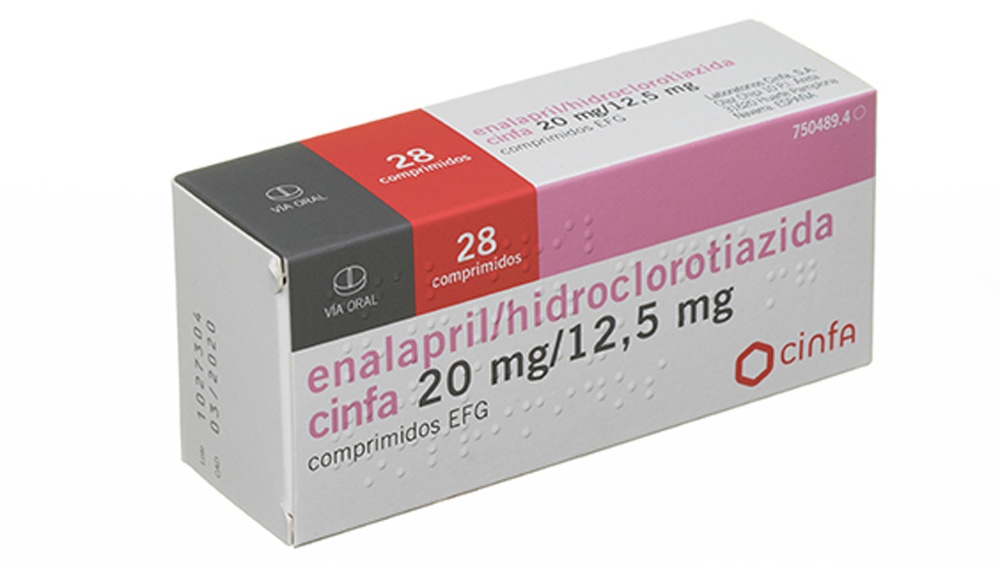
ENALAPRIL 20 mg /12.5 Mg Tablets

Prescription review online
A doctor will review your case and decide whether a prescription is medically appropriate.

Talk to a doctor about this medicine
Discuss your symptoms and possible next steps in a quick online consultation.



How to use ENALAPRIL/HYDROCHLOROTHIAZIDE CINFA 20/12.5 mg TABLETS
Contents of the leaflet
- Introduction
- What is enalapril/hydrochlorothiazide cinfa and what is it used for
- What you need to know before you take enalapril/hydrochlorothiazide cinfa
- How to take enalapril/hydrochlorothiazide cinfa
- Possible Adverse Effects
- Conservation of enalapril/hydrochlorothiazide cinfa
- Package contents and additional information
Introduction
Package Leaflet: Information for the User
enalapril/hydrochlorothiazide cinfa 20 mg/12.5 mg tablets EFG
enalapril maleate/hydrochlorothiazide
Read all of this leaflet carefully before you start taking this medicine, because it contains important information for you.
- Keep this leaflet, as you may need to read it again.
- If you have any further questions, ask your doctor or pharmacist.
- This medicine has been prescribed for you only. Do not pass it on to others. It may harm them, even if their signs of illness are the same as yours.
- If you get any side effects, talk to your doctor or pharmacist. This includes any possible side effects not listed in this leaflet. See section 4.
Contents of the pack
- What is enalapril/hydrochlorothiazide cinfa and what is it used for
- What you need to know before you take enalapril/hydrochlorothiazide cinfa.
- How to take enalapril/hydrochlorothiazide cinfa.
- Possible side effects.
- Storage of enalapril/hydrochlorothiazide cinfa.
- Contents of the pack and other information.
1. What is enalapril/hydrochlorothiazide cinfa and what is it used for
This medicine contains two active substances, enalapril and hydrochlorothiazide, which belong to a group of medicines called antihypertensives and which, through different mechanisms, reduce high blood pressure.
The enalapril component is a medicine that belongs to a group of medicines known as angiotensin-converting enzyme inhibitors (ACE inhibitors), which acts by dilating blood vessels to make the heart pump blood to all parts of the body more easily. The hydrochlorothiazide component belongs to a group of medicines known as thiazide diuretics (medicines that increase urine elimination).
Together, enalapril and hydrochlorothiazide help to decrease high blood pressure.
Your doctor has prescribed enalapril/hydrochlorothiazide to treat high blood pressure (high blood pressure) because it is not adequately controlled with enalapril or an ACE inhibitor alone.

Not sure if this medicine is right for you?
Discuss your symptoms and treatment with a doctor online.
2. What you need to know before you take enalapril/hydrochlorothiazide cinfa
Do not take enalapril/hydrochlorothiazide cinfa
- If you are allergic to enalapril, hydrochlorothiazide, or any of the other ingredients of this medicine (listed in section 6).
- If you are allergic to sulphonamide-derived substances. Ask your doctor if you are not sure what sulphonamide-derived medicines are.
- If you have been previously treated with a medicine from the same group of medicines as enalapril/hydrochlorothiazide (ACE inhibitors), and have had allergic reactions with swelling of the face, lips, tongue, and/or throat with difficulty swallowing or breathing.
- If you have had such allergic reactions without a known cause, or if you have been diagnosed with hereditary or idiopathic angioedema (an immune system disease that causes inflammation in the face and respiratory tract, and abdominal colic).
- If you have severe liver disease.
- If you have severe kidney disease.
- If you have anuria (do not urinate).
- If you have diabetes or kidney failure and are being treated with a blood pressure-lowering medicine that contains aliskiren
- If you are pregnant for more than 3 months (It is also best to avoid enalapril/hydrochlorothiazide at the beginning of pregnancy - see section "Pregnancy and breastfeeding").
- If you are being treated with sacubitril/valsartan, a medicine for heart failure.
- If you are not sure if you should start taking enalapril/hydrochlorothiazide, consult your doctor.
Warnings and precautions
Consult your doctor or pharmacist before starting to take enalapril/hydrochlorothiazide cinfa. In the following situations, your doctor may need to adjust your dose of enalapril/hydrochlorothiazide or monitor your blood potassium levels:
- If you have heart disease that involves narrowing of the heart valves (mitral or aortic stenosis) or other factors that reduce blood flow from the left ventricle of the heart (hypertrophic obstructive cardiomyopathy).
- If you have disorders that reduce fluid volume or sodium levels in the body (e.g., severe vomiting, diarrhea, or if you are being treated with high doses of diuretic medicines).
- If you have any blood disorders.
- If you have diabetes and are taking medicines to treat diabetes, including insulin, as your doctor may need to adjust the dose of your diabetes medicines. Diabetes can cause high potassium levels in the blood, which can be serious.
- If you have liver problems.
- If you have kidney problems (including kidney transplant), as these can cause high potassium levels in the blood, which can be serious.
- If you are undergoing dialysis.
- If you follow a salt-free diet, take potassium supplements, potassium-sparing medicines (medicines that increase potassium levels), salt substitutes that contain potassium, or other medicines that can increase potassium levels in the blood, such as heparin (a medicine used to prevent blood clots), trimethoprim or cotrimoxazole, also known as trimethoprim/sulfamethoxazole (medicines used to treat infections).
- If during treatment an allergic reaction occurs with swelling of the face, lips, tongue, and/or throat with difficulty swallowing or breathing. You should be aware that black patients are more sensitive to this type of medicine.
- If you are about to undergo a treatment called LDL apheresis (a procedure similar to dialysis to remove bad cholesterol from the blood in cases where it is excessively high).
- If you are going to undergo desensitization treatment to reduce the effect of a bee or wasp sting allergy.
- If you have low blood pressure, as the use of enalapril/hydrochlorothiazide, especially in the first doses, can cause a sudden drop in blood pressure (you may notice dizziness or fainting, especially when standing up).
- If you have had skin cancer or if you develop an unexpected skin lesion during treatment. Treatment with hydrochlorothiazide, in particular its long-term use at high doses, may increase the risk of certain types of skin cancer and lip cancer (non-melanoma skin cancer). Protect your skin from sun exposure and UV rays while taking enalapril/hydrochlorothiazide.
- If you are taking a medicine that contains a neprilysin inhibitor, such as sacubitril (available in a fixed-dose combination with valsartan), used in patients with heart failure, and racecadotril, used in patients with acute diarrhea. You may be at increased risk of an allergic reaction called angioedema.
- Tell your doctor if you are taking any of the following medicines used to treat high blood pressure:
- an angiotensin II receptor antagonist (ARA) (also known as "sartans" - e.g., valsartan, telmisartan, irbesartan), especially if you have diabetes-related kidney problems.
- aliskiren
- Inform your doctor if you experience a decrease in vision or eye pain, as these may be symptoms of fluid accumulation in the vascular layer of the eye (choroidal effusion) or increased pressure in the eye, and can occur within a few hours to a week after taking enalapril/hydrochlorothiazide. If left untreated, this can lead to permanent vision loss. You may be at increased risk if you have previously been allergic to penicillin or sulphonamides.
Your doctor may monitor your kidney function, blood pressure, and blood electrolyte levels (e.g., potassium) at regular intervals.
See also "Do not take enalapril/hydrochlorothiazide cinfa".
- Before undergoing surgery or anesthesia (even at the dentist), inform your doctor or dentist that you are taking enalapril/hydrochlorothiazide, as you may experience a sudden drop in blood pressure due to anesthesia.
- You must inform your doctor if you think you are pregnant (or might be). Enalapril/hydrochlorothiazide is not recommended at the beginning of pregnancy and must not be taken if you are pregnant for more than 3 months, as it can cause serious harm to your baby if used during this period - (see section "Pregnancy and breastfeeding").
Children and adolescents
The safety and efficacy of enalapril/hydrochlorothiazide in this population have not been established, so its use is not recommended in children.
Use in elderly patients
In studies where enalapril and hydrochlorothiazide were taken together, the effect of the medicines and tolerability were similar in young adult patients and elderly patients with high blood pressure.
Other medicines and enalapril/hydrochlorothiazide cinfa
Tell your doctor or pharmacist if you are taking, have recently taken, or might take any other medicines. Your doctor may need to change your dose and/or take other precautions.
It is especially important that you inform your doctor if you are using or have recently used any of the following medicines:
- An angiotensin II receptor antagonist (ARA) or aliskiren (see also "Do not take enalapril/hydrochlorothiazide cinfa" and "Warnings and precautions").
- Antihypertensive medicines (which reduce high blood pressure), such as vasodilators, beta blockers, diuretics.
- Potassium-containing medicines (including dietary salt substitutes) or other medicines that can increase potassium levels in the blood, such as heparin (a medicine used to prevent blood clots), trimethoprim or cotrimoxazole, also known as trimethoprim/sulfamethoxazole (medicines used to treat infections).
- Medicines used to treat certain mental disorders, such as lithium, antipsychotics, or tricyclic antidepressants.
- Anesthetics.
- Narcotics (medicines used to treat severe pain).
- Medicines used to treat diabetes, such as insulin or oral antidiabetics (e.g., metformin).
- Medicines used to treat pain or certain inflammations, such as non-steroidal anti-inflammatory drugs (NSAIDs), such as acetylsalicylic acid, including selective cyclooxygenase-2 (COX-2) inhibitors.
- Sympathomimetic medicines (medicines used to treat certain heart and blood vessel disorders and some cold medicines).
- Pressor amines, such as noradrenaline.
- Muscle relaxants, such as tubocurarine.
- Thrombolytic medicines (which prevent blood clot formation).
- Calcium salts and vitamin D.
- Ion exchange resins (medicines used to lower cholesterol levels in the blood), such as cholestyramine and colestipol.
- Antiarrhythmic medicines (used to prevent and control heart rhythm disorders), such as digitalis glycosides, quinidine, amiodarone.
- Anticholinergic medicines (which slow down gastric emptying), such as atropine (used before general anesthesia or to prevent spasms) or biperiden (used in patients with Parkinson's disease).
- Medicines used to treat gout, such as probenecid, sulfinpyrazone, and allopurinol.
- Antiviral medicines (used to treat viral infections), such as amantadine.
- Cytotoxic medicines (used to treat cancer), such as cyclophosphamide and methotrexate.
- Immunosuppressive medicines (used to prevent organ rejection in transplants), such as cyclosporine.
- Antibiotics (medicines used to treat certain infections), such as tetracyclines, amphotericin B.
- Gold salts (used to treat rheumatic diseases such as rheumatoid arthritis).
- The simultaneous administration of mTOR inhibitors (e.g., temsirolimus, sirolimus, everolimus) may increase the risk of an allergic reaction called angioedema.
- A medicine that contains a neprilysin inhibitor, such as sacubitril (available in a fixed-dose combination with valsartan), and racecadotril. It may increase the risk of angioedema (swelling of the face, lips, tongue, or throat with difficulty swallowing or breathing). See also the information in the sections "Do not take enalapril/hydrochlorothiazide cinfa" and "Warnings and precautions".
Taking enalapril/hydrochlorothiazide cinfa with food, drinks, and alcohol
Enalapril/hydrochlorothiazide can be taken with or without food. Most people take enalapril/hydrochlorothiazide with a glass of water.
Alcohol may increase the blood pressure-lowering effect of this medicine.
Pregnancy and breastfeeding
Consult your doctor or pharmacist before using any medicine.
Pregnancy:
If you are pregnant or breastfeeding, think you may be pregnant, or plan to become pregnant, consult your doctor or pharmacist before using this medicine.
Normally, your doctor will advise you to stop taking enalapril/hydrochlorothiazide before becoming pregnant or as soon as you know you are pregnant and advise you to take a different medicine instead of enalapril/hydrochlorothiazide. Enalapril/hydrochlorothiazide is not recommended during pregnancy and must not be taken if you are pregnant for more than 3 months, as it can cause serious harm to your baby if used from the third month of pregnancy.
Breastfeeding:
Tell your doctor if you are breastfeeding or about to start breastfeeding. Enalapril/hydrochlorothiazide is not recommended in breastfeeding mothers.
The two active substances of enalapril/hydrochlorothiazide cinfa, enalapril and hydrochlorothiazide, pass into breast milk. If you are breastfeeding or plan to do so, consult your doctor.
Driving and using machines
It is unlikely that enalapril/hydrochlorothiazide will affect your ability to drive or use machines. However, you may occasionally experience dizziness or fatigue during treatment for high blood pressure, especially at the beginning. If you notice these effects, you should consult your doctor before performing these activities.
enalapril/hydrochlorothiazide cinfa contains lactose
This medicine contains lactose. If your doctor has told you that you have an intolerance to certain sugars, consult them before taking this medicine.
enalapril/hydrochlorothiazide cinfa contains sodium
This medicine contains less than 23 mg of sodium (1 mmol) per tablet; this is essentially "sodium-free".
Use in athletes
Patient should be warned that this medicine contains hydrochlorothiazide, which may produce a positive result in doping tests.
Interference with diagnostic tests
If you are to undergo any diagnostic tests to assess parathyroid gland function, inform your doctor that you are being treated with enalapril/hydrochlorothiazide cinfa, as it may alter the test results.
3. How to take enalapril/hydrochlorothiazide cinfa
Follow exactly the administration instructions of this medicine given by your doctor or pharmacist. In case of doubt, consult your doctor or pharmacist again.
Remember to take your medicine.
Your doctor will decide the suitable dose, depending on your condition and whether you are taking other medicines.
The recommended dose is one or two tablets administered once a day. Take enalapril/hydrochlorothiazide every day, exactly as indicated by your doctor. It is very important that you continue taking this medicine for the time your doctor prescribes it. Do not take more tablets than the prescribed dose.
The initial dose may cause a greater drop in blood pressure than will occur after continued treatment. You may notice dizziness or fainting, and lying down may help. If you are concerned, consult your doctor.
Use in patients with impaired kidney function:
If you have kidney disease, your doctor will indicate the most suitable dose.
Method of administration:
This medicine is administered orally.
Take the enalapril/hydrochlorothiazide tablets with the help of a glass of water.
Enalapril/hydrochlorothiazide can be taken before or after meals.
The tablet can be divided into equal doses.
If you take more enalapril/hydrochlorothiazide cinfa than you should
In case of overdose or accidental ingestion, consult your doctor or pharmacist immediately or call the Toxicology Information Service, telephone 91 562 04 20, indicating the medicine and the amount ingested.
It is recommended to take the medicine package and leaflet to the healthcare personnel.
The most likely symptoms would be dizziness or vertigo due to a sudden or excessive drop in blood pressure and/or excessive thirst, disorientation, decreased urine production, and/or rapid heartbeat.
If you forget to take enalapril/hydrochlorothiazide cinfa
You should take enalapril/hydrochlorothiazide as prescribed. Do not take a double dose to make up for forgotten doses. Just take the next dose as usual.
If you stop taking enalapril/hydrochlorothiazide cinfa
Your doctor will indicate the duration of your treatment with enalapril/hydrochlorothiazide. Do not stop treatment before, even if you feel better.
Do not stop taking your medicine unless your doctor tells you to do so.
If you have any other questions about the use of this medicine, ask your doctor or pharmacist.

Started taking the medicine and have questions?
Discuss your symptoms and treatment with a doctor online.
4. Possible Adverse Effects
Like all medicines, this medicine can cause adverse effects, although not all people suffer from them.
The recorded adverse effects are detailed below according to the following frequencies:
Very frequent (may affect more than 1 in 10 patients).
Frequent (may affect up to 1 in 10 patients).
Infrequent (may affect up to 1 in 100 patients).
Rare (may affect up to 1 in 1,000 patients).
Very rare (may affect up to 1 in 10,000 patients).
Frequency not known (cannot be estimated from the available data).
Benign, malignant, and unspecified neoplasms (including cysts and polyps):
Frequency not known:skin and lip cancer (non-melanoma skin cancer).
Disorders of the blood and lymphatic system:
Infrequent: decrease in red blood cells (cells that carry oxygen in the blood).
Rare: reduction of a type of white blood cell (neutrophils), decrease in hemoglobin (protein in red blood cells that carries oxygen), decrease in platelet count, decrease in hematocrit (proportion of red blood cells in the blood), decrease in white blood cell count, bone marrow depression (decrease in the body's ability to form blood cells), lymph node inflammation, immune system disorders.
Endocrine disorders:
Frequency not known:syndrome of inappropriate antidiuretic hormone secretion (SIADH).
Metabolic and nutritional disorders:
Frequent:low potassium levels in the blood, increased cholesterol, increased triglycerides, increased uric acid in the blood.
Infrequent: low glucose and magnesium levels in the blood, gout*.
Rare:increased glucose in the blood.
Very rare:high calcium levels in the blood.
Nervous system disorders:
Frequent: headache, syncope, taste disturbance.
Infrequent: confusion, insomnia, somnolence, tingling sensation, vertigo.
Rare: paralysis (due to low potassium levels).
Psychiatric disorders:
Frequent: depression.
Infrequent: nervousness, decreased libido*.
Rare: abnormal dreams, sleep disorders.
Eye disorders:
Very frequent:blurred vision.
Frequency not known:decreased vision or eye pain due to high pressure [possible signs of fluid accumulation in the vascular layer of the eye (choroidal effusion) or acute angle-closure glaucoma].
Ear and labyrinth disorders:
Infrequent: ringing in the ears.
Cardiac and vascular disorders:
Very frequent: dizziness.
Frequent: low blood pressure associated with fainting, cardiac rhythm disorders, chest pain, tachycardia (rapid heartbeats).
Infrequent: flushing, palpitations (rapid and irregular sensation of heartbeats), myocardial infarction or stroke, possibly secondary to excessive decrease in blood pressure in high-risk patients (see "Warnings and precautions" section).
Rare: changes in skin color of fingers, hands, and feet, nose, or ears (Raynaud's phenomenon).
Respiratory, thoracic, and mediastinal disorders:
Very frequent: cough.
Frequent: difficulty breathing.
Infrequent: mucus secretion, sore throat and hoarseness, bronchospasm (difficulty breathing) and asthma.
Rare: pulmonary infiltrates, respiratory distress (including pneumonia and pulmonary edema), nasal mucosa inflammation, allergic alveolitis (inflammation of the pulmonary alveolus due to allergy)/eosinophilic pneumonia (disease in which a type of white blood cell, called eosinophils, accumulates in the lungs).
Gastrointestinal disorders:
Very frequent: nausea.
Frequent: abdominal pain, diarrhea.
Infrequent: vomiting, intestinal obstruction with severe pain, pancreatitis, digestive disorders, constipation, loss of appetite, gastric irritation, dry mouth, peptic ulcer, flatulence (gas)*.
Rare: infection or inflammation of the mouth mucosa, tongue inflammation.
Very rare: intestinal angioedema (inflammation of the intestinal wall).
Hepatobiliary disorders:
Rare: liver failure, liver necrosis (which can be fatal), liver inflammation, suppression or cessation of bile secretion, yellowing of the skin or eyes, inflammation of the gallbladder (particularly in patients with pre-existing bile duct stone formation).
Disorders of the skin and subcutaneous tissue:
Frequent: skin rash (exanthema), hypersensitivity/angioneurotic edema: swelling of the face, extremities, lips, tongue, glottis, and/or larynx.
Infrequent: excessive sweating, itching, urticaria, hair loss.
Rare: skin redness, severe blistering or bleeding in the skin (Stevens-Johnson syndrome), redness/severe skin rash with skin and hair loss, skin peeling, appearance of red spots on the skin, skin alteration, skin redness, blistering on the skin.
A symptomatic complex has been reported that may include all or some of the following symptoms: fever, serositis, vasculitis, muscle inflammation/pain, joint inflammation/pain, positive antinuclear antibody test, increased erythrocyte sedimentation rate, eosinophilia, and leukocytosis. Skin rash, sensitivity to sunlight, or other skin manifestations may also occur.
Musculoskeletal and connective tissue disorders:
Frequent: muscle cramps†.
Infrequent: joint pain*.
Renal and urinary disorders:
Infrequent: renal dysfunction (alteration of kidney function), renal failure, presence of proteins in the urine.
Rare: inadequate urine secretion, kidney cell inflammation.
Reproductive system and breast disorders:
Infrequent: impotence.
Rare: breast enlargement in men.
General disorders and administration site conditions:
Very frequent: fatigue.
Frequent: tiredness, chest pain.
Infrequent: general malaise, fever.
Additional tests:
Frequent: high potassium levels in the blood, increased serum creatinine
Infrequent: increased blood urea, low sodium levels in the blood.
Rare: increased liver enzymes, increased serum bilirubin
- Only observed with hydrochlorothiazide doses of 12.5 mg and 25 mg, as found in enalapril/hydrochlorothiazide.
† The frequency of muscle cramps as "frequent" applies to hydrochlorothiazide doses of 12.5 mg and 25 mg, as found in enalapril/hydrochlorothiazide, although the frequency of the event is "infrequent" and applies to the 6 mg hydrochlorothiazide dose.
Reporting of adverse effects
If you experience any type of adverse effect, consult your doctor or pharmacist, even if it is a possible adverse effect that does not appear in this prospectus. You can also report them directly through the Spanish Pharmacovigilance System for Human Use Medicines: https://www.notificaram.es. By reporting adverse effects, you can contribute to providing more information on the safety of this medicine.
5. Conservation of enalapril/hydrochlorothiazide cinfa
Keep this medicine out of sight and reach of children.
Do not use this medicine after the expiration date that appears on the packaging after CAD. The expiration date is the last day of the month indicated.
Do not store above 30°C.
Medicines should not be thrown away through wastewater or household waste. Deposit the packaging and medicines you no longer need at the SIGRE Point in the pharmacy. In case of doubt, ask your pharmacist how to dispose of the packaging and medicines you no longer need. This way, you will help protect the environment.
6. Package contents and additional information
Composition of enalapril/hydrochlorothiazide cinfa
The active ingredients are enalapril (enalapril maleate) and hydrochlorothiazide. Each tablet contains 20 mg of enalapril maleate and 12.5 mg of hydrochlorothiazide.
The other components are: magnesium carbonate (E-504), pregelatinized corn starch, lactose monohydrate, microcrystalline cellulose (E-460), sodium carboxymethyl starch potato (type A), corn starch, glycerol dibehenate, glycerol distearate, hydrogenated ricin oil, magnesium stearate (E-470b), anhydrous colloidal silica, talc (E-553b), and yellow iron oxide (E-172).
Appearance of the product and package contents
Enalapril/hydrochlorothiazide cinfa are yellow, cylindrical, biconvex tablets, scored on one side and marked with the code "I" on the other.
They are presented in aluminum/aluminum blisters. Each package contains 28 or 500 (clinical package) tablets.
Only some package sizes may be marketed.
Marketing authorization holder and manufacturer
Marketing authorization holder
Laboratorios Cinfa, S.A.
Carretera Olaz-Chipi, 10. Polígono Industrial Areta.
31620 Huarte (Navarra) - Spain
Manufacturer
Laboratorios Cinfa, S.A.
Carretera Olaz-Chipi, 10. Polígono Industrial Areta.
31620 Huarte (Navarra) - Spain
or
Rovi Pharma Industrial Services, S.A.
Vía Complutense, 140
28805 Alcalá de Henares (Madrid) - Spain
Date of the last revision of this prospectus:November 2021.
Detailed information about this medicine is available on the website of the Spanish Agency for Medicines and Health Products (AEMPS) http://www.aemps.gob.es/
You can access detailed and updated information about this medicine by scanning the QR code included in the prospectus and packaging with your mobile phone (smartphone). You can also access this information at the following internet address: https://cima.aemps.es/cima/dochtml/p/65699/P_65699.html
QR code to: https://cima.aemps.es/cima/dochtml/p/65699/P_65699.html
- Country of registration
- Dosage formTABLET, 20 mg enalapril maleate/12.5 mg hydrochlorothiazide
- ATC codeC09BA02
- Average pharmacy price1.84 EUR
- Active substance
- Prescription requiredYes
- Manufacturer
- CompositionCARBOXIMETILALMIDON SODICO (2,00 mg mg), LACTOSA HIDRATADA (16,00 mg mg), DIBEHENATO DE GLICEROL (4,00 mg mg)
- This information is for reference only and does not constitute medical advice. Always consult a doctor before taking any medication. Oladoctor is not responsible for medical decisions based on this content.
- Alternatives to ENALAPRIL/HYDROCHLOROTHIAZIDE CINFA 20/12.5 mg TABLETSDosage form: TABLET, 20/12.5 mg/mgActive substance: enalapril and diureticsManufacturer: Alfasigma Espana S.L.Prescription requiredDosage form: TABLET, 20/12.5 mg/mgActive substance: enalapril and diureticsManufacturer: Aristo Pharma Iberia S.L.Prescription requiredDosage form: TABLET, 20/12.5 mg/mgActive substance: enalapril and diureticsManufacturer: Neuraxpharm Spain S.L.Prescription required
Online doctors for ENALAPRIL/HYDROCHLOROTHIAZIDE CINFA 20/12.5 mg TABLETS
Discuss questions about ENALAPRIL/HYDROCHLOROTHIAZIDE CINFA 20/12.5 mg TABLETS, including use, safety considerations and prescription review, subject to medical assessment and local regulations.
Get ENALAPRIL/HYDROCHLOROTHIAZIDE CINFA 20/12.5 mg TABLETS Prescription Online
Fill in a 2-min form
Tell us your symptoms, history, and what medicine you're requesting.
Pick a doctor or let us assign
Choose a specialist or we'll match you with the next available doctor.
Doctor reviews your case
Usually within 30 minutes. They may ask follow-up questions via chat.
Collect from any pharmacy
Electronic prescription sent to your email — valid across Spain.
Frequently Asked Questions
ENALAPRIL/HYDROCHLOROTHIAZIDE CINFA 20/12.5 mg TABLETS requires a prescription in Spain. You can check with a doctor online whether this medicine may be appropriate for your situation.
The active ingredient in ENALAPRIL/HYDROCHLOROTHIAZIDE CINFA 20/12.5 mg TABLETS is enalapril and diuretics. This information helps identify medicines with the same composition but different brand names.
The average pharmacy price for ENALAPRIL/HYDROCHLOROTHIAZIDE CINFA 20/12.5 mg TABLETS is around 1.84 EUR. Prices may vary depending on the manufacturer and dosage form.
ENALAPRIL/HYDROCHLOROTHIAZIDE CINFA 20/12.5 mg TABLETS is manufactured by Laboratorios Cinfa S.A.. Pharmacy brands and packaging may differ depending on the distributor.
Doctors such as Family doctors, Psychiatrists, Dermatologists, Cardiologists, Endocrinologists, Gastroenterologists, Pulmonologists, Nephrologists, Rheumatologists, Hematologists, Infectious disease physicians, Allergists, Geriatricians, Paediatricians, Oncologists may assess whether ENALAPRIL/HYDROCHLOROTHIAZIDE CINFA 20/12.5 mg TABLETS is appropriate, depending on your situation and local regulations. You can book an online consultation to discuss your symptoms and possible next steps.
Spain has a well-developed healthcare infrastructure across major cities such as Madrid, Barcelona, Valencia, and Seville. Pharmacies are widely available and operate under strict regulations, ensuring access to prescribed medications.
You can buy ENALAPRIL/HYDROCHLOROTHIAZIDE CINFA 20/12.5 mg TABLETS in Madrid, Barcelona, Seville, or Valencia at any local pharmacy with a valid prescription.
To obtain a prescription, you can use Oladoctor:
Other medicines with the same active substance (enalapril and diuretics) include ACEDIUR 20 mg/12.5mg tablets, ACETENSIL PLUS 20 mg/12.5 mg TABLETS, BARIPRIL DIU 20 mg/12.5 mg TABLETS. These may have different brand names or formulations but contain the same therapeutic ingredient. Always consult a doctor before switching or starting a new medicine.
