


EDOXABAN TAD 30 mg FILM-COATED TABLETS



How to use EDOXABAN TAD 30 mg FILM-COATED TABLETS
Translated with AI
This page provides general information and does not replace a doctor’s consultation. Always consult a doctor before taking any medication. Seek urgent medical care if symptoms are severe.
Show originalContents of the leaflet
Introduction
Package Leaflet: Information for the User
Edoxaban TAD 15 mg film-coated tablets EFG
Edoxaban TAD 30 mg film-coated tablets EFG
Edoxaban TAD 60 mg film-coated tablets EFG
Read all of this leaflet carefully before you start taking this medicine because it contains important information for you.
- Keep this leaflet, you may need to read it again.
- If you have any further questions, ask your doctor or pharmacist.
- This medicine has been prescribed for you only. Do not pass it on to others. It may harm them, even if their signs of illness are the same as yours.
- If you get any side effects, talk to your doctor or pharmacist. This includes any possible side effects not listed in this leaflet. See section 4.

Contents of the pack
- What is Edoxaban TAD and what is it used for
- What you need to know before you take Edoxaban TAD
- How to take Edoxaban TAD
- Possible side effects
- Storage of Edoxaban TAD
- Contents of the pack and other information
1. What is Edoxaban TAD and what is it used for
Edoxaban TAD contains the active substance edoxaban and belongs to a group of medicines called anticoagulants. This medicine helps to prevent the formation of blood clots. It works by blocking the activity of Factor Xa, an important component of blood clotting.
Edoxaban is used in adults:
- to prevent the formation of a blood clot in the brain(stroke) and in other blood vessels of the bodyif they have a type of irregular heartbeat called non-valvular atrial fibrillation and at least one additional risk factor, such as heart failure, having previously had a stroke or high blood pressure;
- to treat blood clots in the veins of the legs(deep vein thrombosis) and in the blood vessels of the lungs(pulmonary embolism), and to prevent these blood clots from happening againin the blood vessels of the legs and/or lungs.

2. What you need to know before you take Edoxaban TAD
Do not take Edoxaban TAD
- if you are allergic to edoxaban or any of the other ingredients of this medicine (listed in section 6);
- if you are bleeding actively;
- if you have a disease or condition that increases the risk of major bleeding (e.g. stomach ulcer, injury or bleeding in the brain or recent surgery in the brain or eyes);
- if you are taking other medicines to prevent blood clots (e.g. warfarin, dabigatran, rivaroxaban, apixaban or heparin), except when switching treatment or while being administered heparin through a venous or arterial catheter to prevent it from becoming blocked;
- if you have a liver disease that may increase the risk of bleeding;
- if you have uncontrolled high blood pressure;
- if you are pregnant or breastfeeding.
Warnings and precautions
Consult your doctor or pharmacist before starting to take edoxaban,
- if you have an increased risk of bleeding, such as if you have any of the following conditions:
- end-stage kidney disease or if you are on dialysis;
- severe liver disease;
- bleeding disorders;
- problems with the blood vessels in the back of the eyes (retinopathy);
- recent bleeding in the brain (intracranial or intracerebral bleeding);
- problems with the blood vessels in the brain or spine;
- if you have a mechanical heart valve.
Edoxaban 15 mg is only indicated when switching from edoxaban 30 mg to a vitamin K antagonist (e.g. warfarin) (see section 3. How to take Edoxaban TAD).
Be careful with edoxaban,
- if you know you have a disease called antiphospholipid syndrome (an immune system disorder that increases the risk of blood clots), inform your doctor so that they can decide whether treatment needs to be modified.
If you need to have surgery,
- it is very important to take edoxaban before and after the operation, exactly at the times indicated by your doctor. If possible, you should stop taking edoxaban at least 24 hours before an operation. Your doctor will decide when to restart edoxaban.
In emergency situations, your doctor will help determine the necessary actions regarding edoxaban.
Children and adolescents
Edoxaban TAD is not recommended for children and adolescents under 18 years of age.
Other medicines and Edoxaban TAD
Tell your doctor or pharmacist if you are taking, have recently taken or might take any other medicines.
If you are taking any of the following:
- any medicine for a fungal infection (e.g. ketoconazole);
- medicines for treating irregular heartbeat (e.g. dronedarone, quinidine, verapamil);
- other medicines to reduce blood clotting (e.g. heparin, clopidogrel or vitamin K antagonists, such as warfarin, acenocoumarol, phenprocoumon or dabigatran, rivaroxaban, apixaban);
- antibiotics (e.g. erythromycin, clarithromycin);
- medicines to prevent organ rejection after a transplant (e.g. cyclosporin);
- anti-inflammatory and pain-relieving medicines (e.g. naproxen or acetylsalicylic acid);
- antidepressants called selective serotonin reuptake inhibitors or serotonin-noradrenaline reuptake inhibitors.
If any of the above circumstances apply to you, inform your doctorbefore taking edoxaban because these medicines may increase the effects of edoxaban and the risk of unwanted bleeding. Your doctor will decide whether you should be treated with this medicine and whether you should be kept under observation.
If you are taking any of the following:
- any medicine for treating epilepsy (e.g. phenytoin, carbamazepine, phenobarbital);
- St. John's Wort, a herbal medicine used for anxiety and mild depression;
- rifampicin, an antibiotic.
If any of the above circumstances apply to you, inform your doctorbefore taking edoxaban, because the effect of this medicine may be reduced. Your doctor will decide whether you should be treated with edoxaban and whether you should be kept under observation.
Pregnancy and breastfeeding
Do not take edoxaban if you are pregnant or breastfeeding. If there is a possibility that you may become pregnant, use an effective contraceptive while taking edoxaban. If you become pregnant while taking this medicine, inform your doctor immediately, who will decide how you should be treated.
Driving and using machines
Edoxaban has no or negligible influence on the ability to drive and use machines.
Edoxaban TAD contains dextrin (glucose)
If your doctor has told you that you have an intolerance to some sugars, consult them before taking this medicine.
3. How to take Edoxaban TAD
Follow exactly the administration instructions of this medicine given by your doctor or pharmacist. In case of doubt, consult your doctor or pharmacist again.
What dose to take
The recommended dose is one 60 mg tablet once a day.
- if you have kidney disease, your doctor may reduce your dose to one 30 mg tablet once a day.
- if you weigh 60 kg or less, the recommended dose is one 30 mg tablet once a day.
- if your doctor has prescribed you medicines known as P-gp inhibitors:cyclosporin, dronedarone, erythromycin or ketoconazole, the recommended dose is one 30 mg tablet once a day.
How to take the tablet
Swallow the tablet, preferably with water. Edoxaban can be taken with or without food.
If you have difficulty swallowing the tablet whole, talk to your doctor about other ways to take edoxaban. The tablet can be crushed and mixed with water or apple sauce immediately before taking it. If necessary, your doctor may also administer the crushed edoxaban tablet through a tube in the nose (nasogastric tube) or stomach (gastric feeding tube).
Your doctor may change your anticoagulant treatment as follows:
Switching from vitamin K antagonists (e.g. warfarin) to edoxaban
Stop taking the vitamin K antagonist (e.g. warfarin). Your doctor will have to do a blood test and tell you when to start taking edoxaban.
Switching from non-vitamin K antagonist oral anticoagulants (dabigatran, rivaroxaban or apixaban) to edoxaban
Stop taking the previous medicines (e.g. dabigatran, rivaroxaban or apixaban) and start taking edoxaban at the time of the next scheduled dose of the anticoagulant.
Switching from parenteral anticoagulants (e.g. heparin) to edoxaban
Stop taking the anticoagulant (e.g. heparin) and start taking edoxaban at the time of the next scheduled dose of the anticoagulant.
Switching from edoxaban to vitamin K antagonists (e.g. warfarin)
If you are currently taking 60 mg of edoxaban:
Your doctor will tell you to reduce the dose of edoxaban to one 30 mg tablet once a day and take it in combination with a vitamin K antagonist (e.g. warfarin). Your doctor will have to do a blood test and tell you when to stop taking edoxaban.
If you are currently taking 30 mg (reduced dose) of edoxaban:
Your doctor will tell you to reduce the dose of edoxaban to one 15 mg tablet once a day and take it in combination with a vitamin K antagonist (e.g. warfarin). Your doctor will have to do a blood test and tell you when to stop taking edoxaban.
Switching from edoxaban to non-vitamin K antagonist oral anticoagulants (dabigatran, rivaroxaban or apixaban)
Stop taking edoxaban and start the non-vitamin K antagonist anticoagulant (e.g. dabigatran, rivaroxaban or apixaban) at the time of the next scheduled dose of edoxaban.
Switching from edoxaban to parenteral anticoagulants (e.g. heparin)
Stop taking edoxaban and start the parenteral anticoagulant (e.g. heparin) at the time of the next scheduled dose of edoxaban.
Patients undergoing cardioversion:
If you need your irregular heartbeat to be restored to normal through a procedure called cardioversion, take edoxaban at the times indicated by your doctor to prevent the formation of blood clots in the brain and in other blood vessels of your body.
If you take more Edoxaban TAD than you should
Tell your doctor immediately if you have taken too many tablets of Edoxaban TAD. If you take more edoxaban than recommended, you may increase the risk of bleeding.
In case of overdose or accidental ingestion, consult your doctor or call the Toxicology Information Service, telephone 91 562 04 20, indicating the medicine and the amount taken.
If you forget to take Edoxaban TAD
You should take the tablet immediately and continue the next day with the usual once-daily tablet intake. Do not take a double dose on the same day to make up for the forgotten dose.
If you stop taking Edoxaban TAD
Do not stop taking Edoxaban TAD without first talking to your doctor, as this medicine treats and prevents serious diseases.
If you have any further questions on the use of this product, ask your doctor or pharmacist.
4. Possible side effects
Like all medicines, this medicine can cause side effects, although not everybody gets them.
Like other similar medicines (medicines to reduce blood clotting), edoxaban can cause bleeding, which can be life-threatening. In some cases, the bleeding may not be apparent.
If you experience a bleeding episode that does not stop by itself or if you experience signs of excessive bleeding (exceptional weakness, tiredness, paleness, dizziness, headache or unexplained swelling), consult your doctor immediately.
Your doctor will decide whether to keep you under closer observation or change your treatment.
General list of possible side effects:
Common(may affect up to 1 in 10 people)
- stomach pain;
- abnormal liver values in blood tests;
- bleeding from the skin or under the skin;
- anaemia (low red blood cell count);
- nosebleeds;
- vaginal bleeding;
- skin rash;
- intestinal bleeding;
- bleeding from the mouth and/or throat;
- blood in the urine;
- bleeding after injury (puncture);
- stomach bleeding;
- dizziness;
- nausea;
- headache;
- itching.
Uncommon(may affect up to 1 in 100 people)
- bleeding in the eyes;
- bleeding from a surgical wound after an operation;
- blood in the saliva when coughing;
- bleeding in the brain;
- other types of bleeding;
- decrease in the number of platelets in the blood (which may affect blood clotting);
- allergic reaction;
- hives.
Rare(may affect up to 1 in 1,000 people)
- bleeding in the muscles;
- bleeding in the joints;
- bleeding in the abdomen
- bleeding in the heart;
- bleeding inside the skull;
- bleeding after surgery;
- anaphylactic shock;
- swelling of any part of the body due to an allergic reaction.
Frequency not known(cannot be estimated from the available data)
- bleeding in the kidney, sometimes with blood in the urine, which can cause the kidneys to stop working properly (anticoagulant-related nephropathy).
Reporting of side effects
If you experience any side effects, talk to your doctor or pharmacist. This includes any possible side effects not listed in this leaflet. You can also report side effects directly via the Spanish Pharmacovigilance System for Human Use Medicines: https://www.notificaram.es/. By reporting side effects, you can help provide more information on the safety of this medicine.
5. Storage of Edoxaban TAD
Keep this medicine out of the sight and reach of children.
Do not use this medicine after the expiry date which is stated on the carton after EXP. The expiry date refers to the last day of the month shown.
Store in the original package to protect from moisture.
This medicine does not require any special storage temperature.
Medicines should not be disposed of via wastewater or household waste. Ask your pharmacist how to dispose of medicines no longer required. These measures will help protect the environment.
6. Contents of the pack and other information
- The active substance is edoxaban.
Each film-coated tablet contains edoxaban tosilate monohydrate equivalent to 15 mg of edoxaban.
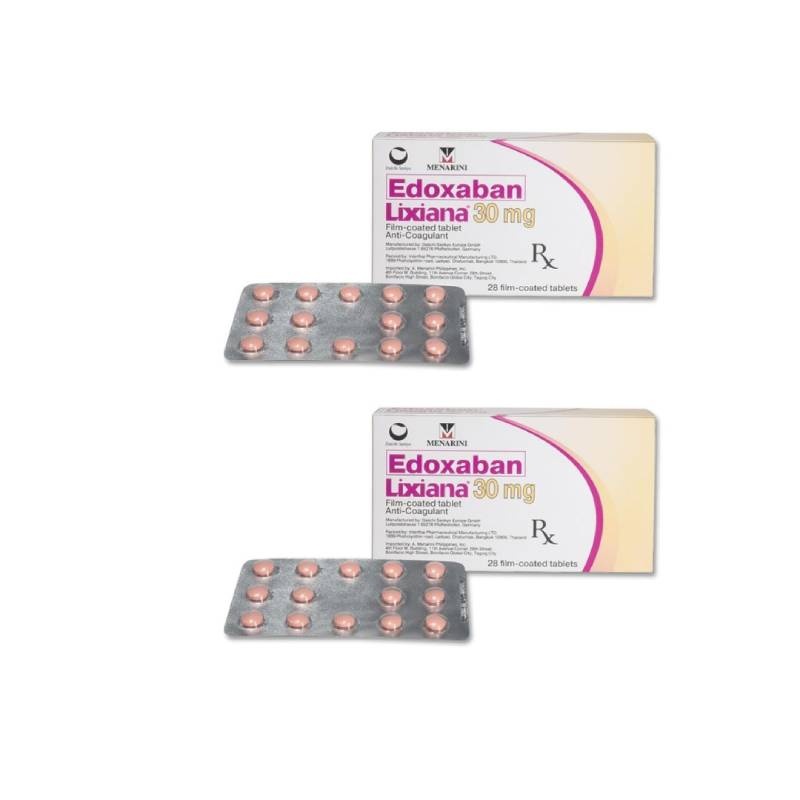
Each film-coated tablet contains edoxaban tosilate monohydrate equivalent to 30 mg of edoxaban.
Each film-coated tablet contains edoxaban tosilate monohydrate equivalent to 60 mg of edoxaban.
- The other ingredients (excipients) are: dextrin (glucose), pregelatinised starch (from maize), crospovidone, hydroxypropylcellulose and magnesium stearate in the tablet core; and hypromellose, talc, macrogol, titanium dioxide (E 171), yellow iron oxide - only for 15 mg and 60 mg, and red iron oxide (E 172) – only for 15 mg and 30 mg in the film coating.
See section 2 “Edoxaban TAD contains dextrin (glucose)”.
Appearance of the product and pack contents
Edoxaban TAD 15 mg film-coated tablets EFG are pale orange-brown, round, biconvex film-coated tablets, engraved with E1 on one side of the tablet. Tablet size: approximate diameter of 6 mm.
Edoxaban TAD 30 mg film-coated tablets EFG are pink, round, biconvex film-coated tablets, engraved with E2 on one side of the tablet. Tablet size: approximate diameter of 8 mm.
Edoxaban TAD 60 mg film-coated tablets EFG are yellow-brown, round, biconvex film-coated tablets, engraved with E3 on one side of the tablet. Tablet size: approximate diameter of 10 mm.
Edoxaban TAD 15 mg film-coated tablets EFG are available in packs containing:
- 10 film-coated tablets, in blisters.
- 10 x 1 film-coated tablets, in perforated unit-dose blisters.
Edoxaban TAD 30 mg and 60 mg film-coated tablets EFG are available in packs containing:
- 10, 14, 28, 30, 56, 60, 84, 90, 98 or 100 film-coated tablets, in blisters.
- 10 x 1, 14 x 1, 28 x 1, 30 x 1, 56 x 1, 60 x 1, 84 x 1, 90 x 1, 98 x 1 or 100 x 1 film-coated tablets, in perforated unit-dose blisters.
- 14, 28, 56, 84 or 98 film-coated tablets, in calendar blisters.
- 14 x 1, 28 x 1, 56 x 1, 84 x 1 or 98 x 1 film-coated tablets, in perforated unit-dose calendar blisters.
Not all pack sizes may be marketed.
Marketing Authorization Holder
TAD Pharma GmbH, Heinz‑Lohmann‑Straße 5, 27472 Cuxhaven, Germany.
Manufacturer
Krka, d.d., Novo mesto Šmarješka cesta 6, 8501 Novo mesto, Slovenia
TAD Pharma GmbH, Heinz‑Lohmann‑Straße 5, 27472 Cuxhaven, Germany.
Further information about this medicinal product can be obtained from the local representative of the marketing authorization holder:
KRKA Pharmaceutical, S.L., C/ Anabel Segura 10, Pta. Baja, Oficina 1, 28108 Alcobendas, Madrid, Spain.
This medicinal product is authorized in the Member States of the European Economic Area under the following names:
Member State | Medicinal Product Name |
Slovenia | Edoxaban Krka 15 mg film-coated tablets, Edoxaban Krka 30 mg film-coated tablets, Edoxaban Krka 60 mg film-coated tablets |
Spain | Edoxaban TAD 15 mg film-coated tablets EFG, Edoxaban TAD 30 mg film-coated tablets EFG, Edoxaban TAD 60 mg film-coated tablets EFG |
Germany | Edoxaban-TAD 15 mg film tablets, Edoxaban-TAD 30 mg film tablets, Edoxaban-TAD 60 mg film tablets |
Finland | Edoxaban Krka 15 mg film-coated tablets, Edoxaban Krka 30 mg film-coated tablets, Edoxaban Krka 60 mg film-coated tablets |
Ireland | Edoxaban Krka 15 mg film-coated tablets, Edoxaban Krka 30 mg film-coated tablets, Edoxaban Krka 60 mg film-coated tablets |
Sweden | Edoxaban Krka 15 mg film-coated tablets, Edoxaban Krka 30 mg film-coated tablets, Edoxaban Krka 60 mg film-coated tablets |
Denmark | Edoxaban Krka |
Norway | Edoxaban Krka |
Iceland | Edoxaban Krka 15 mg film-coated tablets, Edoxaban Krka 30 mg film-coated tablets, Edoxaban Krka 60 mg film-coated tablets |
Portugal | Edoxabano Krka |
Date of the last revision of this leaflet: 07/2024
Detailed information on this medicinal product is available on the website of the Spanish Agency for Medicines and Health Products (AEMPS) http://www.aemps.gob.es/.
- Country of registration
- Dosage formTABLET, 30 mg
- ATC codeB01AF03
- Active substance
- Prescription requiredYes
- Manufacturer
- This information is for reference only and does not constitute medical advice. Always consult a doctor before taking any medication. Oladoctor is not responsible for medical decisions based on this content.
- Alternatives to EDOXABAN TAD 30 mg FILM-COATED TABLETSDosage form: TABLET, 15 mgActive substance: edoxabanManufacturer: Sandoz Farmaceutica S.A.Prescription requiredDosage form: TABLET, 30 mgActive substance: edoxabanManufacturer: Sandoz Farmaceutica S.A.Prescription requiredDosage form: TABLET, 60 mgActive substance: edoxabanManufacturer: Sandoz Farmaceutica S.A.Prescription required

Online doctors for EDOXABAN TAD 30 mg FILM-COATED TABLETS
Discuss questions about EDOXABAN TAD 30 mg FILM-COATED TABLETS, including use, safety considerations and prescription review, subject to medical assessment and local regulations.










Frequently Asked Questions
