



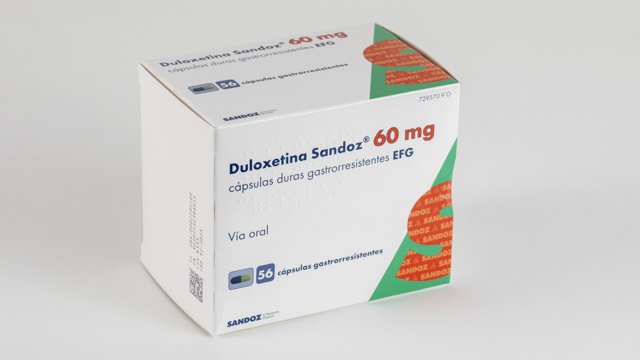
DULOXETINA 60 mg Hard Gastro-Resistant Capsules

Prescription review online
A doctor will review your case and decide whether a prescription is medically appropriate.

Talk to a doctor about this medicine
Discuss your symptoms and possible next steps in a quick online consultation.



How to use DULOXETINE SANDOZ 60 mg HARD GASTRO-RESISTANT CAPSULES
Contents of the leaflet
- Introduction
- What Duloxetine Sandoz is and what it is used for
- What you need to know before you take Duloxetine Sandoz
- How to take Duloxetine Sandoz
- Possible Adverse Effects
- Storage of Duloxetine Sandoz
- Package Contents and Additional Information
- Composition of Duloxetine Sandoz 30 mg Hard Gastro-Resistant Capsules:
- Composition of Duloxetine Sandoz 60 mg Hard Gastro-Resistant Capsules:
Introduction
Package Leaflet: Information for the User
Duloxetine Sandoz 30 mg hard gastro-resistant capsules EFG
Duloxetine Sandoz 60 mg hard gastro-resistant capsules EFG
duloxetine (hydrochloride)
Read all of this leaflet carefully before you start taking this medicine because it contains important information for you.
- Keep this leaflet, you may need to read it again.
- If you have any further questions, ask your doctor or pharmacist.
- This medicine has been prescribed for you only. Do not pass it on to others. It may harm them, even if their signs of illness are the same as yours.
- If you get any side effects, talk to your doctor or pharmacist. This includes any possible side effects not listed in this leaflet. See section 4.
Contents of the pack
- What Duloxetine Sandoz is and what it is used for
- What you need to know before you take Duloxetine Sandoz
- How to take Duloxetine Sandoz
- Possible side effects
- Storage of Duloxetine Sandoz
- Contents of the pack and other information
1. What Duloxetine Sandoz is and what it is used for
Duloxetine Sandoz contains the active substance duloxetine. Duloxetine increases the levels of serotonin and noradrenaline in the nervous system.
Duloxetine is used in adults to treat:
- depression,
- generalized anxiety disorder (a persistent feeling of anxiety or nervousness),
- diabetic neuropathic pain (often described as burning, shooting, stabbing, stinging, or like an electric shock. There may be loss of sensation in the affected area, or it may become sensitive to touch, heat, cold, or pressure).
Duloxetine starts to work in most people with depression or anxiety within 2 weeks of starting treatment, but it may take 2 to 4 weeks before you start to feel better. Tell your doctor if you do not feel better after this time. Your doctor may continue to give you duloxetine when you are feeling better to prevent your depression or anxiety from returning.
In people with diabetic neuropathic pain, it may take some weeks before you feel better. Consult your doctor if you do not feel better after 2 months.

Not sure if this medicine is right for you?
Discuss your symptoms and treatment with a doctor online.
2. What you need to know before you take Duloxetine Sandoz
Do not take Duloxetine Sandoz:
- if you are allergic to duloxetine or any of the other ingredients of this medicine (listed in section 6),
- if you have liver failure,
- if you have severe kidney disease,
- if you are taking or have taken within the last 14 days another medicinal product called a monoamine oxidase inhibitor (MAOI) (see "Other medicines and Duloxetine Sandoz"),
- if you are taking fluvoxamine, which is usually used for depression, ciprofloxacin or enoxacin, which are used for some infections,
- if you are taking other medicines that contain duloxetine (see "Other medicines and Duloxetine Sandoz")
Tell your doctor if you have high blood pressure or heart disease. Your doctor will tell you if you should take duloxetine.
Warnings and precautions
Duloxetine may not be suitable for you due to the following reasons. Tell your doctor before you start taking this medicine if:
- you are taking other medicines for depression (see "Other medicines and Duloxetine Sandoz"),
- you are taking St. John's Wort, a herbal remedy (Hypericum perforatum),
- you have kidney disease,
- you have had seizures (fits),
- you have had mania,
- you have bipolar disorder,
- you have eye problems, such as certain types of glaucoma (increased pressure in the eye),
- you have had bleeding problems (a tendency to develop bruises), especially if you are pregnant (see "Pregnancy and breast-feeding"),
- you are at risk of having low sodium levels (e.g. if you are taking diuretics, especially if you are an elderly person),
- you are taking other medicines that may cause liver damage,
- you are taking other medicines that contain duloxetine (see "Other medicines and Duloxetine Sandoz").
Duloxetine may cause a feeling of restlessness or an inability to sit or stand still. If this happens, you should tell your doctor.
Some medicines of the same class as Duloxetine Sandoz (called SSRIs/SNRIs) may cause sexual dysfunction (see section 4). In some cases, these symptoms have persisted after stopping treatment.
Thoughts of suicide and worsening of your depression or anxiety disorder
If you are depressed and/or have anxiety disorders, you can sometimes have thoughts of harming yourself or suicide. These thoughts may be increased when you first start taking antidepressants, since these medicines all take time to work, usually about two weeks but sometimes longer.
You are more likely to have these thoughts if:
- you have previously had thoughts of self-harm or suicide,
- you are a young adult. Information from clinical trials has shown an increased risk of suicidal behaviour in adults aged less than 25 years with psychiatric conditions who were treated with an antidepressant.
Contact your doctor or go to the hospital immediately if you experience any thoughts of self-harm or suicide.
It may be helpful to tell a relative or close friend that you are depressed or have an anxiety disorder, and ask them to read this leaflet. You might ask them to tell you if they think your depression or anxiety is getting worse, or if they are worried about changes in your behaviour.
You should also contact your doctor
If you experience signs and symptoms of restlessness, hallucinations, loss of coordination, rapid heartbeat, increased body temperature, rapid changes in blood pressure, overactive reflexes, diarrhoea, coma, nausea, vomiting, as you may be experiencing serotonin syndrome.
In its most severe form, serotonin syndrome can resemble Neuroleptic Malignant Syndrome (NMS). The signs and symptoms of NMS may include a combination of fever, rapid heartbeat, sweating, severe muscle stiffness, confusion, increased muscle enzymes (determined by a blood test).
Children and adolescents
Duloxetine should not normally be used in children and adolescents under 18 years. Also, you should know that patients under 18 have an increased risk of side effects such as suicide attempt, suicidal thoughts, and hostility (predominantly aggression, oppositional behaviour, and anger) when they take this class of medicines. Despite this, your doctor may prescribe duloxetine for patients under 18 because he/she decides that it is in the patient's best interest. If your doctor has prescribed duloxetine to a patient under 18 and you want to discuss this, please go back to your doctor. You should tell your doctor if any of the symptoms listed above occur or get worse in patients under 18 who are taking duloxetine. Also, in this age group, the long-term safety of duloxetine regarding growth, maturation, and cognitive and behavioural development has not yet been demonstrated.
Other medicines and Duloxetine Sandoz
Tell your doctor or pharmacist if you are taking, have recently taken or might take any other medicines.
The main component of Duloxetine Sandoz, duloxetine, is used in other medicines for other treatments:
- diabetic neuropathic pain, depression, anxiety, and urinary incontinence.
It should be avoided to use more than one of these medicines at the same time. Check with your doctor if you are already using other medicines that contain duloxetine.
Your doctor will decide if you can take duloxetine with other medicines. Do not start or stop taking any medicine, including those bought without a prescription and herbal remedies, without consulting your doctor first.
You should also tell your doctor if you are taking any of the following medicines:
Monoamine oxidase inhibitors (MAOIs):do not take duloxetine if you are taking, or have taken within the last 14 days, another antidepressant medicine called a monoamine oxidase inhibitor (MAOI). Examples of MAOIs include moclobemide (an antidepressant) and linezolid (an antibiotic). Taking an MAOI with many prescription medicines, including duloxetine, can cause serious side effects, even death. You must wait at least 14 days after stopping an MAOI before you can take duloxetine. Similarly, you must wait at least 5 days after stopping duloxetine before you can take an MAOI.
Medicines that may cause drowsiness:These include medicines prescribed by your doctor, such as benzodiazepines, strong pain killers, antipsychotics, phenobarbital, and antihistamines.
Medicines that increase serotonin levels:Triptans, tramadol, tryptophan, selective serotonin reuptake inhibitors (SSRIs, such as paroxetine and fluoxetine), serotonin-norepinephrine reuptake inhibitors (SNRIs, such as venlafaxine), tricyclic antidepressants (such as clomipramine and amitriptyline), pethidine, buprenorphine, St. John's Wort, and MAOIs (such as moclobemide and linezolid). These medicines increase the risk of side effects; if you experience any unusual symptoms when using any of these medicines with duloxetine, you should tell your doctor.
Oral anticoagulants or antiplatelet agents:Medicines that thin the blood or prevent blood clotting. These medicines may increase the risk of bleeding.
Taking Duloxetine Sandoz with food, drinks, and alcohol
Duloxetine can be taken with or without food. You should be cautious when taking alcohol while being treated with duloxetine.
Pregnancy and breast-feeding
If you are pregnant or breast-feeding, think you may be pregnant, or are planning to have a baby, ask your doctor or pharmacist for advice before taking this medicine.
- Tell your doctor if you become pregnant or if you are planning to become pregnant while taking duloxetine. You should only use duloxetine after discussing the potential benefits and risks with your doctor.
- Make sure your midwife and/or doctor know you are taking duloxetine. Other similar medicines (SSRIs) taken during pregnancy may increase the risk of a serious condition in babies, called persistent pulmonary hypertension of the newborn (PPHN), which makes the baby breathe faster and may turn blue. These symptoms usually start during the first 24 hours after the baby is born. If this happens to your baby, you should contact your midwife and/or doctor immediately.
- If you take duloxetine near the end of your pregnancy, your baby may experience some symptoms when it is born. These usually start on the day the baby is born or within the first few days. These symptoms include weakness, jitteriness, anxiety, difficulty feeding, breathing difficulties, and seizures. If your baby has any of these symptoms, contact your doctor or midwife, who will be able to advise you.
- If you take duloxetine near the end of your pregnancy, there is a greater risk of heavy vaginal bleeding shortly after giving birth, especially if you have had bleeding problems. Your doctor or midwife should know that you are taking duloxetine so that they can advise you.
- Data on the use of duloxetine in the first three months of pregnancy do not show an increased overall risk of birth defects in the baby. If you take duloxetine during the second half of your pregnancy, there is a risk that the baby may be born early (6 additional premature babies per 100 women taking duloxetine in the second half of pregnancy), especially between weeks 35 and 36 of pregnancy.
- Tell your doctor if you are breast-feeding. Duloxetine is not recommended during breast-feeding. Ask your doctor or pharmacist for advice.
Driving and using machines
While taking duloxetine, you may feel drowsy or dizzy. Do not drive or operate tools or machines until you know how duloxetine affects you.
Duloxetine Sandoz contains sucrose and sodium
If your doctor has told you that you have an intolerance to some sugars, contact them before taking this medicine.
This medicine contains less than 1 mmol sodium (23 mg) per hard gastro-resistant capsule; this is essentially "sodium-free".
3. How to take Duloxetine Sandoz
Take this medicine exactly as your doctor or pharmacist has told you. If you are not sure, ask your doctor or pharmacist.
Duloxetine should be taken orally. You should swallow the capsule whole with water.
For depression and diabetic neuropathic pain:
The recommended dose of duloxetine is 60 mg once a day, but your doctor will prescribe the dose that is right for you.
For generalized anxiety disorder:
The recommended starting dose of duloxetine is 30 mg once a day, after which most patients are moved to 60 mg once a day, but your doctor will prescribe the dose that is right for you. The dose can be adjusted up to 120 mg a day depending on your response to duloxetine.
To help you remember to take duloxetine, you may find it helpful to take it at the same times each day.
Discuss with your doctor how long you should take duloxetine. Do not stop taking duloxetine, or change your dose, without talking to your doctor first. It is important to treat your condition effectively to help you feel better. If you do not treat your condition, it may not go away and may become more serious and more difficult to treat.
If you take more Duloxetine Sandoz than you should
If you have taken more Duloxetine Sandoz than you should, contact your doctor or pharmacist immediately, or go to the hospital. Take the medicine pack with you.
Symptoms of overdose include drowsiness, coma, serotonin syndrome (a rare reaction that can cause a feeling of intense happiness, drowsiness, clumsiness, restlessness, feeling drunk, fever, sweating, or stiff muscles), seizures, vomiting, and rapid heartbeat.
If you forget to take Duloxetine Sandoz
If you miss a dose, take it as soon as you remember. However, if it is nearly time for your next dose, skip the missed dose and take your next dose as usual. Do not take a double dose to make up for a forgotten dose. Do not take more duloxetine than you are prescribed in a day.
If you stop taking Duloxetine Sandoz
Do not stop taking your capsules without talking to your doctor first. If your doctor thinks you do not need to take duloxetine anymore, he or she will gradually reduce your dose over at least 2 weeks before you stop treatment.
Some patients who stop taking duloxetine have experienced symptoms such as:
- dizziness, tingling sensations like pins and needles or electric shock-like sensations (especially in the head), sleep disturbances (vivid dreams, nightmares, insomnia), fatigue, sleepiness, restlessness or agitation, anxiety, nausea or vomiting, tremor, headache, muscle pain, irritability, diarrhoea, and excessive sweating or dizziness.
These symptoms are usually not serious and disappear within a few days. However, if you experience symptoms that are troublesome, ask your doctor for advice.
If you have any other questions about the use of this medicine, ask your doctor or pharmacist.

Started taking the medicine and have questions?
Discuss your symptoms and treatment with a doctor online.
4. Possible Adverse Effects
Like all medicines, this medicine can cause adverse effects, although not all people suffer from them.
These effects are usually mild to moderate and disappear, often, within a few weeks.
Very Common Adverse Effects (may affect more than 1 in 10 patients)
- headache, drowsiness,
- discomfort (nausea), dry mouth.
Common Adverse Effects (may affect up to 1 in 10 patients)
- loss of appetite,
- difficulty sleeping, feeling of agitation, decreased sexual desire, anxiety, difficulty or inability to have an orgasm, unusual dreams,
- dizziness, feeling of slowness, tremors, numbness, including numbness, itching or tingling of the skin,
- blurred vision,
- tinnitus (perception of sounds in the ear when there is no external sound),
- feeling palpitations in the chest,
- increased blood pressure, flushing,
- increased yawning,
- constipation, diarrhea, stomach pain, vomiting, heartburn or indigestion, gas,
- increased sweating, rash (itching),
- muscle pain, muscle spasms,
- pain while urinating, frequent urination,
- difficulty getting an erection, changes in ejaculation, including prolonged or painful ejaculation (mostly in elderly people), fatigue,
- weight loss.
Children and adolescents with depression being treated with this medicine experienced a decrease in weight when they started taking this medicine. After 6 months of treatment, the weight increased to similar levels as other children and adolescents of the same age and sex.
Uncommon Adverse Effects (may affect up to 1 in 100 patients)
- inflammation of the throat that causes hoarseness,
- suicidal thoughts, difficulty sleeping, teeth grinding, feeling of disorientation, lack of motivation,
- muscle spasms and involuntary movements, feeling of restlessness or inability to remain seated or still, nervousness, difficulty concentrating, changes in taste, difficulty controlling movements, e.g., lack of coordination or involuntary muscle movements, restless legs syndrome, poor quality sleep,
- pupil dilation (the black dot in the center of the eye), vision problems
- feeling of dizziness or vertigo, ear pain,
- rapid and/or irregular heartbeats,
- fainting, dizziness, feeling of dizziness or fainting when standing up, coldness in the fingers of the hands and/or feet,
- throat spasms, nosebleeds,
- vomiting blood, or black stools, gastroenteritis, belching, difficulty swallowing
- liver inflammation that can cause abdominal pain and yellowing of the skin or the white part of the eyes,
- night sweats, rashes, cold sweats, sensitivity to sunlight, increased tendency to bruise,
- muscle stiffness, muscle spasms,
- difficulty or inability to urinate, difficulty starting urination, need to urinate at night, need to urinate more than usual, decreased urine flow,
- abnormal vaginal bleeding, abnormal menstrual periods, including heavy, painful, irregular, or prolonged menstrual periods, exceptionally light or absent menstrual periods, pain in the testicles or scrotum,
- chest pain, feeling of cold, thirst, chills, feeling of heat, alteration in gait,
- weight gain,
- duloxetine may cause effects that you may not be aware of, such as increased liver enzymes or potassium levels in the blood, creatine phosphokinase, sugar, or cholesterol.
Rare Adverse Effects (may affect up to 1 in 1,000 patients)
- severe allergic reactions that cause difficulty breathing or dizziness with swelling of the tongue or lips, allergic reactions,
- decreased activity of the thyroid gland, which can cause fatigue or weight gain,
- dehydration, low sodium levels in the blood (mostly in elderly people; symptoms may include feeling of dizziness, weakness, confusion, sleepiness, or excessive tiredness, nausea, or vomiting, the most serious symptoms are fainting, convulsions, or falls), syndrome of inappropriate antidiuretic hormone secretion (SIADH),
- suicidal behavior, mania (hyperactivity, accelerated thinking, and decreased need for sleep), hallucinations, aggression, and anger,
- “Serotonin syndrome” (a rare reaction that can cause feelings of intense happiness, drowsiness, clumsiness, restlessness, feeling of being drunk, fever, sweating, or muscle stiffness), convulsions,
- increased pressure in the eye (glaucoma),
- cough, wheezing, and shortness of breath, which may be accompanied by high fever,
- inflammation of the mouth, bright red blood in the stool, bad breath, inflammation of the large intestine (leading to diarrhea),
- liver failure, yellowing of the skin or the white part of the eyes (jaundice)
- Stevens-Johnson syndrome (a serious disease with blistering of the skin, mouth, eyes, and genitals), severe allergic reactions that cause swelling of the face or throat (angioedema),
- jaw muscle contractions,
- unusual urine odor,
- menopausal symptoms, abnormal milk production in men or women,
- excessive postpartum hemorrhage (postpartum hemorrhage).
Very Rare Adverse Effects (may affect up to 1 in 10,000 patients)
- inflammation of the blood vessels in the skin (cutaneous vasculitis).
Frequency Not Known (cannot be estimated from the available data)
- signs and symptoms of a condition called “stress cardiomyopathy”, which may include chest pain, difficulty breathing, dizziness, fainting, and irregular heartbeats.
Reporting of Adverse Effects
If you experience any type of adverse effect, consult your doctor or pharmacist, even if it is a possible adverse effect that is not listed in this prospectus. You can also report them directly through the Spanish Pharmacovigilance System for Human Use Medicines: https://www.notificaram.es. By reporting adverse effects, you can contribute to providing more information on the safety of this medicine.
5. Storage of Duloxetine Sandoz
Keep this medicine out of sight and reach of children.
Do not use this medicine after the expiration date that appears on the packaging after CAD. The expiration date is the last day of the month indicated.
Do not store above 30 ºC.
Medicines should not be thrown down the drain or into the trash. Deposit the packaging and medicines that you no longer need in the SIGRE Point of the pharmacy. In case of doubt, ask your pharmacist how to dispose of the packaging and medicines that you no longer need. This way, you will help protect the environment.
6. Package Contents and Additional Information
Composition of Duloxetine Sandoz 30 mg Hard Gastro-Resistant Capsules:
- The active ingredientis duloxetine. Each capsule contains 30 mg of duloxetine (as hydrochloride).
- The otheringredients are:
Capsule content: hypromellose, sugar spheres (cornstarch and sucrose), talc, sucrose, hypromellose phthalate, and triethyl citrate.
Capsule shell: gelatin, titanium dioxide (E171), and indigo carmine.
Composition of Duloxetine Sandoz 60 mg Hard Gastro-Resistant Capsules:
- The active ingredientis duloxetine. Each capsule contains 60 mg of duloxetine (as hydrochloride).
- The otheringredients are:
Capsule content: hypromellose, sugar spheres (cornstarch and sucrose), talc, sucrose, hypromellose phthalate, and triethyl citrate.
Capsule shell: gelatin, titanium dioxide (E171), yellow iron oxide (E172), and indigo carmine.
Appearance of the Product and Package Contents
Duloxetine Sandoz 30 mg are hard gastro-resistant capsules with a light blue opaque cap and a white opaque body.
Duloxetine Sandoz 30 mg is available in Aluminum/Aluminum blisters containing 7 and 28 hard gastro-resistant capsules.
Duloxetine Sandoz 60 mg are hard gastro-resistant capsules with a light blue opaque cap and a green opaque body.
Duloxetine Sandoz 60 mg is available in Aluminum/Aluminum blisters containing 28 and 56 hard gastro-resistant capsules.
Marketing Authorization Holder and Manufacturer
Marketing Authorization Holder
Sandoz Farmacéutica, s.a.
Centro Empresarial Parque Norte
Edificio Roble
C/ Serrano Galvache, 56
28033 Madrid
Spain
Manufacturer
Neuraxpharm Pharmaceuticals, S.L. Avda. de Barcelona, 69
08970, Sant Joan Despi
Barcelona
Spain
Date of the Last Revision of this Prospectus: August 2024
Detailed and updated information on this medicine is available on the website of the Spanish Agency for Medicines and Health Products (AEMPS)http://www.aemps.gob.es/
- Country of registration
- Dosage formCAPSULE, 60 mg
- ATC codeN06AX21
- Average pharmacy price26.73 EUR
- Active substance
- Prescription requiredYes
- Manufacturer
- CompositionAZUCAR , ESFERAS DE (61,03 mg mg), SACAROSA (47,06 mg mg)
- This information is for reference only and does not constitute medical advice. Always consult a doctor before taking any medication. Oladoctor is not responsible for medical decisions based on this content.
- Alternatives to DULOXETINE SANDOZ 60 mg HARD GASTRO-RESISTANT CAPSULESDosage form: CAPSULE, 30 mgActive substance: duloxetineManufacturer: Eli Lilly Nederland B.V.Prescription requiredDosage form: CAPSULE, 30 mgActive substance: duloxetineManufacturer: Eli Lilly Nederland B.V.Prescription requiredDosage form: CAPSULE, 60 mgActive substance: duloxetineManufacturer: Eli Lilly Nederland B.V.Prescription required
Online doctors for DULOXETINE SANDOZ 60 mg HARD GASTRO-RESISTANT CAPSULES
Discuss questions about DULOXETINE SANDOZ 60 mg HARD GASTRO-RESISTANT CAPSULES, including use, safety considerations and prescription review, subject to medical assessment and local regulations.







Get DULOXETINE SANDOZ 60 mg HARD GASTRO-RESISTANT CAPSULES Prescription Online
Fill in a 2-min form
Tell us your symptoms, history, and what medicine you're requesting.
Pick a doctor or let us assign
Choose a specialist or we'll match you with the next available doctor.
Doctor reviews your case
Usually within 30 minutes. They may ask follow-up questions via chat.
Collect from any pharmacy
Electronic prescription sent to your email — valid across Spain.
Frequently Asked Questions
DULOXETINE SANDOZ 60 mg HARD GASTRO-RESISTANT CAPSULES requires a prescription in Spain. You can check with a doctor online whether this medicine may be appropriate for your situation.
The active ingredient in DULOXETINE SANDOZ 60 mg HARD GASTRO-RESISTANT CAPSULES is duloxetine. This information helps identify medicines with the same composition but different brand names.
The average pharmacy price for DULOXETINE SANDOZ 60 mg HARD GASTRO-RESISTANT CAPSULES is around 26.73 EUR. Prices may vary depending on the manufacturer and dosage form.
DULOXETINE SANDOZ 60 mg HARD GASTRO-RESISTANT CAPSULES is manufactured by Sandoz Farmaceutica S.A.. Pharmacy brands and packaging may differ depending on the distributor.
Doctors such as Family doctors, Psychiatrists, Dermatologists, Cardiologists, Endocrinologists, Gastroenterologists, Pulmonologists, Nephrologists, Rheumatologists, Hematologists, Infectious disease physicians, Allergists, Geriatricians, Paediatricians, Oncologists may assess whether DULOXETINE SANDOZ 60 mg HARD GASTRO-RESISTANT CAPSULES is appropriate, depending on your situation and local regulations. You can book an online consultation to discuss your symptoms and possible next steps.
Spain has a well-developed healthcare infrastructure across major cities such as Madrid, Barcelona, Valencia, and Seville. Pharmacies are widely available and operate under strict regulations, ensuring access to prescribed medications.
You can buy DULOXETINE SANDOZ 60 mg HARD GASTRO-RESISTANT CAPSULES in Madrid, Barcelona, Seville, or Valencia at any local pharmacy with a valid prescription.
To obtain a prescription, you can use Oladoctor:
Other medicines with the same active substance (duloxetine) include CYMBALTA 30 mg GASTRO-RESISTANT HARD CAPSULES, CYMBALTA 30 mg GASTRO-RESISTANT HARD CAPSULES, CYMBALTA 60 mg GASTRO-RESISTANT HARD CAPSULES. These may have different brand names or formulations but contain the same therapeutic ingredient. Always consult a doctor before switching or starting a new medicine.
