



DORZOLAMIDA 20 mg /Ml + 5 Mg/Ml Eye Drops

Prescription review online
A doctor will review your case and decide whether a prescription is medically appropriate.

Talk to a doctor about this medicine
Discuss your symptoms and possible next steps in a quick online consultation.



How to use DORZOLAMIDE/TIMOLOL VIATRIS 20 mg/ml + 5 mg/ml EYE DROPS
Contents of the leaflet
- Introduction
- What is Dorzolamida/Timolol Viatris and what is it used for
- What you need to know before you use Dorzolamida/Timolol Viatris
- How to use Dorzolamida/Timolol Viatris
- Possible Adverse Effects
- Storage of Dorzolamida/Timolol Viatris
- Package Contents and Additional Information
Introduction
Package Leaflet: Information for the Patient
Dorzolamida/Timolol Viatris 20 mg/ml + 5 mg/ml Eye Drops
Read the package leaflet carefully before you start using this medicine because it contains important information for you.
- Keep this package leaflet, you may need to read it again.
- If you have any further questions, ask your doctor or pharmacist.
- This medicine has been prescribed for you only. Do not pass it on to others. It may harm them, even if their signs of illness are the same as yours.
- If you experience any side effects, talk to your doctor or pharmacist. This includes any possible side effects not listed in this package leaflet. See section 4.
Contents of the package leaflet
- What is Dorzolamida/Timolol Viatris and what is it used for
- What you need to know before you use Dorzolamida/Timolol Viatris
- How to use Dorzolamida/Timolol Viatris
- Possible side effects
- Storage of Dorzolamida/Timolol Viatris
- Contents of the pack and further information
1. What is Dorzolamida/Timolol Viatris and what is it used for
Dorzolamida/Timolol Viatris contains two active substances: dorzolamida and timolol.
- Dorzolamida belongs to a group of medicines called "carbonic anhydrase inhibitors".
- Timolol belongs to a group of medicines called "beta-blockers".
This medicine reduces pressure in the eye in several ways.
Dorzolamida/Timolol Viatris is prescribed to reduce high pressure in the eye in the treatment of glaucoma when the use of a beta-blocker eye drop as monotherapy is not appropriate.

Not sure if this medicine is right for you?
Discuss your symptoms and treatment with a doctor online.
2. What you need to know before you use Dorzolamida/Timolol Viatris
Do not use Dorzolamida/Timolol Viatris:
- If you are allergic to dorzolamida, timolol or any of the other ingredients of this medicine (listed in section 6).
- If you currently have or have had severe respiratory problems, such as asthma or severe chronic obstructive pulmonary disease (severe lung disease that may cause wheezing, difficulty breathing and/or prolonged coughing).
- If you have a slow heart rate, heart failure or irregular heart rhythms (irregular heartbeats).
- If you suffer from severe kidney disease or a history of kidney stones.
- If you have excess acidity in the blood as a result of an accumulation of chloride in the blood (hyperchloremic acidosis).
If you are not sure whether you can use this medicine, consult your doctor or pharmacist.
Warnings and precautions
Consult your doctor or pharmacist before starting to use dorzolamida/timolol if you experience:
- Coronary heart disease (symptoms may include chest pain or discomfort, shortness of breath), heart failure or low blood pressure.
- Heart rate disorders such as slow heart rate.
- Respiratory problems, asthma or chronic obstructive pulmonary disease.
- Disease due to insufficient blood circulation, such as Raynaud's disease or syndrome.
- Diabetes or hypoglycemia (low blood sugar levels), as timolol may mask the signs and symptoms of hypoglycemia.
- Hyperthyroidism, as timolol may mask the signs and symptoms.
Before undergoing surgery, inform your doctor that you are using dorzolamida/timolol, as timolol may affect the effects of certain medicines used during anesthesia. Also, inform your doctor about any allergies or allergic reactions, including hives, swelling of the face, lips, tongue and/or throat; as they may cause difficulty breathing or swallowing.
Inform your doctor if you have muscle weakness or if you have been diagnosed with myasthenia gravis (muscle weakness).
Inform your doctor immediately if you experience eye irritation or if any new reaction occurs in the eye, such as redness or eyelid inflammation.
If you suspect that dorzolamida/timolol is causing an allergic reaction or hypersensitivity (e.g., skin rash, severe skin reaction or redness and itching in the eye), stop using this medicine and contact your doctor immediately.
Inform your doctor if you develop an eye infection, suffer an eye injury, undergo eye surgery, experience any other reaction or if symptoms worsen.
Instilling dorzolamida/timolol in the eye may affect the body as a whole.
Children
There is limited experience with the use of dorzolamida/timolol in infants, children, and adolescents.
Elderly patients
In studies with dorzolamida/timolol, the effects of dorzolamida/timolol were similar in both elderly and younger patients.
Patients with hepatic impairment
Inform your doctor about any current or past liver problems.
Athletes
This medicine contains timolol, which may produce a positive result in doping tests.
Other medicines and Dorzolamida/Timolol Viatris
Dorzolamida/timolol may affect or be affected by other medicines you are using, including other eye drops for the treatment of glaucoma. Inform your doctor if you are using or plan to use medicines to lower blood pressure, heart medicines or diabetes medicines. Tell your doctor or pharmacist if you are using, have recently used or might use any other medicine, including those obtained without a prescription. This is especially important if you are:
- Taking medicines to lower blood pressure or treat heart disease (e.g., calcium channel blockers, beta-blockers or digoxin).
- Taking medicines used to treat irregular heartbeats or altered heart rhythms, such as calcium channel blockers, beta-blockers or digoxin.
- Using another eye drop that contains beta-blockers.
- Taking another carbonic anhydrase inhibitor such as acetazolamide.
- Taking monoamine oxidase inhibitors (MAOIs), which are used to treat depression.
- Taking a parasymphathomimetic drug, which may have been prescribed to help eliminate urine. Parasymphathomimetics are also a type of medicine that is sometimes used to help restore normal movement through the intestine.
- Taking opioids, such as morphine, for the treatment of moderate to severe pain.
- Taking medicines to treat diabetes.
- Taking antidepressants, known as fluoxetine or paroxetine.
- Taking a sulfa medicine.
- Taking quinine (used to treat heart disease or certain types of malaria).
Pregnancy and breastfeeding
If you are pregnant or breastfeeding, think you may be pregnant or are planning to have a baby, ask your doctor or pharmacist for advice before using this medicine.
Do not use dorzolamida/timolol if you are pregnant unless your doctor considers it necessary.
Do not use dorzolamida/timolol if you are breastfeeding. Timolol may pass into breast milk. Ask your doctor for advice before taking any medicine while breastfeeding.
Driving and using machines
No studies on the effects on the ability to drive or use machines have been performed. There are side effects associated with dorzolamida/timolol, such as blurred vision, that may affect your ability to drive and/or use machines. Do not drive or operate tools or machines until you feel well or your vision is clear.
Dorzolamida/Timolol Viatris contains benzalkonium chloride
This medicine contains 0.15 mg of benzalkonium chloride per milliliter of eye drop solution.
Benzalkonium chloride may be absorbed by soft contact lenses, altering their color. Remove contact lenses before using this medicine and wait 15 minutes before putting them back.
Benzalkonium chloride may cause eye irritation, especially if you have dry eyes or other corneal diseases (diseases of the transparent layer on the front of the eye). Consult your doctor if you feel any unusual sensation, itching or pain in the eye after using this medicine.
3. How to use Dorzolamida/Timolol Viatris
Follow exactly the administration instructions of this medicine given by your doctor. Ask your doctor or pharmacist if you have any doubts.
The appropriate dosage and duration of treatment will be determined by your doctor.
The recommended dose is one drop in the affected eye(s) twice a day, for example, in the morning and at night.
If you use this medicine with another eye drop, wait at least 10 minutes between the application of dorzolamida/timolol and the other medicine.
Do not change the dose of this medicine without consulting your doctor. If you must interrupt treatment, contact your doctor immediately.
Do not let the tip of the container touch the eye or the area surrounding it. It may become contaminated with bacteria that can cause eye infections leading to serious damage to the eyes, including vision loss. To avoid possible contamination of the container, wash your hands before using this medicine and avoid touching the tip of the container to any surface. If you think your medicine may be contaminated or if you develop an eye infection, consult your doctor immediately to determine if you should continue using this container.
To ensure a correct dose - do not enlarge the hole of the dropper tip.
Instructions for use:
Do not use this eye drop if the plastic safety strip is missing or broken. To open the container for the first time, tear off the plastic safety strip.
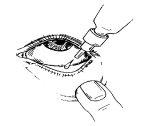
Each time you use this medicine:
- Wash your hands.
- Open the bottle. Be careful not to let the tip of the bottle touch the eye, skin around it, or your fingers.
- Tilt your head back and hold the bottle upside down over the eye.
- Gently pull the lower eyelid down and look up. Hold and gently squeeze the container by the sides, allowing one drop to fall into the space between the lower eyelid and the eye.
- Close your eye and press the inner corner of your eye with your finger for two minutes. This helps the medicine not to go into the rest of the body.
- Repeat steps 3-5 in the other eye if your doctor has told you to do so.
- Replace the cap on the bottle and close the bottle tightly after use.

If you use more Dorzolamida/Timolol Viatris than you should
It is important to maintain the dose that your doctor has prescribed. If you apply too many drops in the eye or swallow some of the contents of the bottle, you may feel unwell, for example, you may experience headache, feel tired or dizzy, feel lightheaded, have difficulty breathing, experience shortness of breath or notice that your heart beats more slowly. If you experience any of these effects, you should seek medical attention immediately.
In case of overdose or accidental ingestion, consult your doctor or pharmacist immediately or call the Toxicology Information Service, phone: 91 562 04 20, indicating the medicine and the amount ingested.
If you forget to use Dorzolamida/Timolol Viatris
It is important to administer this medicine as your doctor has indicated.
If you miss a dose, you should administer it as soon as possible. However, if it is almost time for the next dose, do not administer the missed dose and continue with the scheduled dosing regimen.
Do not use a double dose to make up for missed doses.
If you stop using Dorzolamida/Timolol Viatris
If you want to stop treatment with this medicine, consult your doctor first.
If you have any further questions about the use of this medicine, ask your doctor or pharmacist.

Started taking the medicine and have questions?
Discuss your symptoms and treatment with a doctor online.
4. Possible Adverse Effects
Like all medicines, this medicine can cause adverse effects, although not all people suffer from them.
Severe Adverse Effects
If you experience any of the following adverse effects, discontinue use of this medicine and speak immediately with your doctor, as they could be signs of a reaction to the medicine.
General allergic reactions may occur, including inflammation under the skin in areas such as the face and limbs, and which can obstruct airways, causing difficulty swallowing, shortness of breath, hives or skin rash, localized or generalized rash, itching, severe reactions, sudden and fatal.
Generally, you can continue using the drops, unless the effects are severe. If you are concerned, consult with your doctor or pharmacist. Do not stop using dorzolamida/timolol without speaking with your doctor first.
The following adverse effects have been reported with dorzolamida/timolol or with one of its components in clinical trials or during post-marketing experience.
Very Common(may affect more than 1 in 10 people)
- Burning and stinging in the eyes, alteration of taste.
Common(may affect up to 1 in 10 people)
- Redness in and around the eye(s).
- Tearing and itching of the eye(s).
- Corneal erosion (damage to the front layer of the eyeball).
- Inflammation and/or irritation in and around the eye(s).
- Sensation of having something in the eye.
- Decreased sensitivity of the cornea (not noticing the presence of something in the eye and not feeling pain).
- Eye pain.
- Dry eyes.
- Blurred vision.
- Headache.
- Sinusitis (a feeling of tension or fullness in the nose).
- Feeling of discomfort (nausea).
- Weakness/fatigue.
Uncommon(may affect up to 1 in 100 people)
- Dizziness.
- Depression.
- Iritis (inflammation of the iris).
- Visual disturbances including changes in refraction (in certain cases due to the suspension of medication for treating excessive pupil constriction).
- Slow heart rate.
- Fainting.
- Shortness of breath.
- Feeling of lack of air.
- Indigestion.
- Kidney stones (often characterized by the sudden onset of severe, spasmodic pain in the lumbar and/or lateral area, groin, or abdomen).
Rare(may affect up to 1 in 1,000 people)
- Systemic lupus erythematosus (an immune disease that can cause inflammation of internal organs) with symptoms such as joint pain (similar to rheumatoid arthritis), fever, variations in blood tests, and skin rashes.
- Numbness or tingling of the hands or feet.
- Difficulty sleeping.
- Nightmares.
- Memory loss.
- Increased signs and symptoms of myasthenia gravis (muscle disorder).
- Decreased libido.
- Stroke.
- Myopia that may disappear after treatment is stopped.
- Detachment of the layer under the retina that contains blood vessels after filtration surgery, which can cause visual disturbances.
- Drooping of the eyelids (causing the eyes to be half-closed).
- Double vision.
- Formation of crusts on the eyelids.
- Inflammation of the cornea (with symptoms of visual disturbances).
- Low pressure in the eye.
- Ringing in the ears.
- Low blood pressure.
- Changes in heart rate or speed of beats.
- Congestive heart failure (heart disease with difficulty breathing and swelling of the feet and legs due to fluid accumulation).
- Edema (fluid accumulation).
- Cerebral ischemia (decreased blood flow to the brain).
- Chest pain.
- Faster and/or irregular heart rate (palpitations).
- Heart attack.
- Raynaud's phenomenon, swollen and cold hands and feet, and decreased circulation in the arms and legs.
- Leg cramps and/or leg pain when walking (claudication).
- Nasal secretion or stuffy nose.
- Nosebleeds.
- Constriction of airways in the lungs.
- Cough.
- Irritation of the throat.
- Dry mouth.
- Diarrhea.
- Contact dermatitis.
- Hair loss.
- Skin rash with a white, silvery appearance (psoriasiform rash).
- Peyronie's disease (which can cause curvature of the penis).
- Allergic reactions such as skin rash, hives, itching, and in rare cases, swelling of the lips, eyes, and mouth, wheezing, or severe skin reactions (Stevens-Johnson syndrome, toxic epidermal necrolysis).
Like other eye medicines, timolol is absorbed into the bloodstream. This can cause adverse effects similar to those that appear with oral beta-blockers. The incidence of adverse effects after topical ophthalmic administration is lower than when medicines, for example, are taken by mouth or injected.
The additional adverse effects listed include reactions that occur within the class of beta-blockers when used to treat eye disorders.
Frequency Not Known(cannot be estimated from available data)
- Low blood sugar levels.
- Heart failure.
- A type of heart rhythm disturbance.
- Abdominal pain.
- Vomiting.
- Muscle pain not caused by physical exercise.
- Sexual dysfunction.
- Hallucinations.
- Feeling of a foreign body in the eye (feeling of having something in the eye).
- Increased heart rate.
- Increased blood pressure.
Reporting Adverse Effects
If you experience any type of adverse effect, consult your doctor or pharmacist, even if it is a possible adverse effect that does not appear in this leaflet. You can also report them directly through the Spanish Pharmacovigilance System for Human Use Medicines: https://www.notificaram.es. By reporting adverse effects, you can contribute to providing more information on the safety of this medicine.
5. Storage of Dorzolamida/Timolol Viatris
Keep this medicine out of the sight and reach of children.
Do not use this medicine after the expiration date that appears on the label of the bottle and on the carton after CAD or EXP. The expiration date is the last day of the month indicated.
This medicine does not require any special storage temperature. Store in the original container to protect it from light and moisture.
Dorzolamida/Timolol Viatris should be used within 28 days after the first opening of the bottle. Therefore, it should be discarded 4 weeks after the first opening of the bottle, even if solution remains. To help you remember, write the date you opened it in the space on the container.
Medicines should not be thrown away through wastewater or household waste. Deposit the containers and medicines you no longer need at the SIGRE collection point in the pharmacy. In case of doubt, ask your pharmacist how to dispose of the containers and medicines you no longer need. This will help protect the environment.
6. Package Contents and Additional Information
Composition of Dorzolamida/Timolol Viatris
- The active ingredients are dorzolamida and timolol. Each ml contains 20 mg of dorzolamida (as dorzolamida hydrochloride) and 5 mg of timolol (as timolol maleate).
- The other ingredients are mannitol (E421), hydroxyethyl cellulose, benzalkonium chloride (as a preservative; see section 2 "Dorzolamida/Timolol Viatris contains the preservative benzalkonium chloride"), sodium citrate (E331), sodium hydroxide (E524), and water for injectable preparations.
Appearance of the Product and Package Contents
The medicine is a sterile solution, clear, slightly viscous, colorless eye drops.
Dorzolamida/Timolol Viatris is presented in a white, opaque, medium-density polyethylene bottle with a low-density polyethylene dropper tip and a high-density polyethylene cap with a security strip, containing 5 ml of ophthalmic solution.
Package sizes: 1, 3, or 6 bottles of 5 ml each.
Only some package sizes may be marketed.
Marketing Authorization Holder and Manufacturer
Marketing Authorization Holder:
Viatris Limited
Damastown Industrial Park
Mulhuddart, Dublin 15
Dublin
Ireland
Manufacturer:
Pharmathen S.A.
6 Dervenakion str., 15351 Pallini, Attiki
Greece
or
Famar S.A.
Plant A
63 Agiou Dimitriou Street, 174 56 Alimos
Greece
or
Viatris Sante
1 Rue de Turin
69007 Lyon
France
You can request more information about this medicine by contacting the local representative of the marketing authorization holder:
Viatris Pharmaceuticals, S.L.U.
C/ General Aranaz, 86
28027 - Madrid
Spain
This medicine is authorized in the Member States of the European Economic Area and in the United Kingdom (Northern Ireland) with the following names:
Austria: Dorzolamid + Timolol Viatris 20 mg/ml + 5 mg/ml - Augentropfen
Belgium: TensocViatris 20 mg/ml + 5 mg/ml oogdruppels, oplossing
Denmark: Tirzopt
Spain: Dorzolamida/Timolol Viatris 20 mg/ml + 5 mg/ml colirio en solución
France: Dorzolamide/Timolol Viatris 20 mg/ml + 5 mg/ml, collyre en solution
Italy: Dorzolamide e timololo Mylan Generics
Netherlands: Dorzolamide/Timolol Viatris 20/5 mg/ml, oogdruppels, oplossing
Portugal: Timolol + Dorzolamida Mylan
United Kingdom: Dorzolamide/Timolol 20 mg/ml + 5 mg/ml eye drops, solution
(Northern Ireland)
Czech Republic: Dorzogen Combi
Date of the Last Revision of this Leaflet:January 2023
Detailed information about this medicine is available on the website of the Spanish Agency for Medicines and Health Products (AEMPS) https://www.aemps.gob.es/
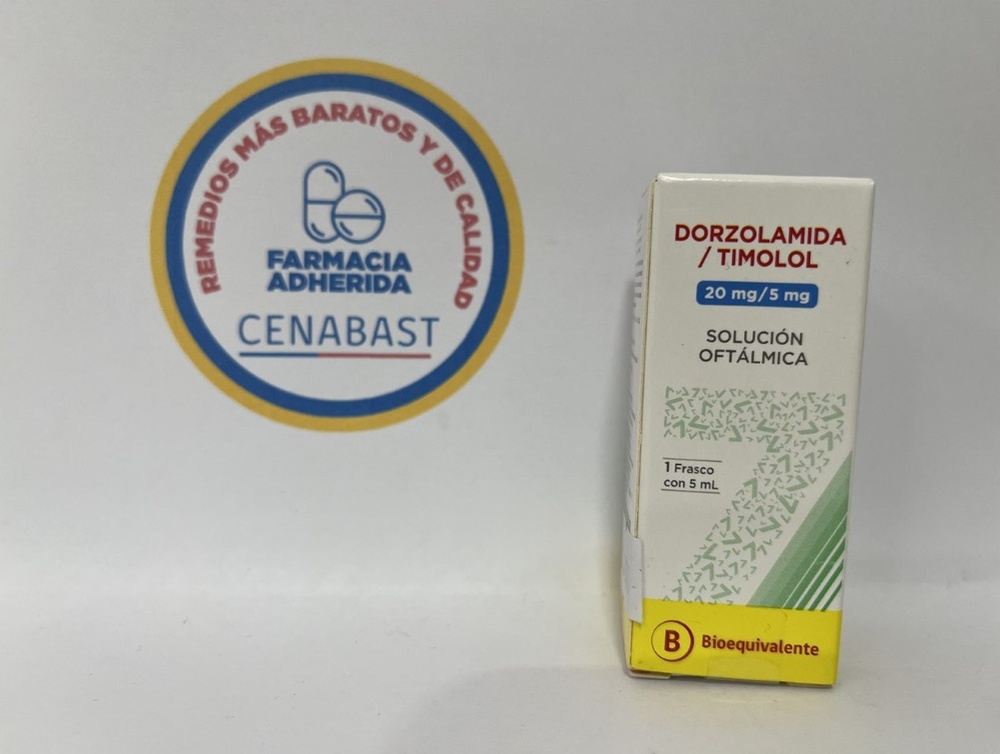
- Country of registration
- Dosage formEYEDROP, 20 mg/ml / 5 mg/ml
- ATC codeS01ED51
- Average pharmacy price12.11 EUR
- Active substance
- Prescription requiredYes
- Manufacturer
- CompositionMANITOL (E-421) (80.00 mg mg), CITRATO DE SODIO (E-331) (14,70 mg mg), HIDROXIDO DE SODIO (E 524) (PARA PH 5,65 C.S mg), BENZALCONIO, CLORURO DE (0,75 mg mg)
- This information is for reference only and does not constitute medical advice. Always consult a doctor before taking any medication. Oladoctor is not responsible for medical decisions based on this content.
- Alternatives to DORZOLAMIDE/TIMOLOL VIATRIS 20 mg/ml + 5 mg/ml EYE DROPSDosage form: EYEDROP, 10 mg/ml + 5 mg/mlActive substance: timolol, combinationsManufacturer: Novartis Europharm LimitedPrescription requiredDosage form: EYEDROP, 0.3 mg/ml + 5 mg/mlActive substance: timolol, combinationsManufacturer: Brill Pharma S.L.Prescription requiredDosage form: EYE DROP, 0.3 mg/ml + 5 mg/mlActive substance: timolol, combinationsManufacturer: Laboratorio Stada S.L.Prescription required
Online doctors for DORZOLAMIDE/TIMOLOL VIATRIS 20 mg/ml + 5 mg/ml EYE DROPS
Discuss questions about DORZOLAMIDE/TIMOLOL VIATRIS 20 mg/ml + 5 mg/ml EYE DROPS, including use, safety considerations and prescription review, subject to medical assessment and local regulations.









Get DORZOLAMIDE/TIMOLOL VIATRIS 20 mg/ml + 5 mg/ml EYE DROPS Prescription Online
Fill in a 2-min form
Tell us your symptoms, history, and what medicine you're requesting.
Pick a doctor or let us assign
Choose a specialist or we'll match you with the next available doctor.
Doctor reviews your case
Usually within 30 minutes. They may ask follow-up questions via chat.
Collect from any pharmacy
Electronic prescription sent to your email — valid across Spain.
Frequently Asked Questions
DORZOLAMIDE/TIMOLOL VIATRIS 20 mg/ml + 5 mg/ml EYE DROPS requires a prescription in Spain. You can check with a doctor online whether this medicine may be appropriate for your situation.
The active ingredient in DORZOLAMIDE/TIMOLOL VIATRIS 20 mg/ml + 5 mg/ml EYE DROPS is timolol, combinations. This information helps identify medicines with the same composition but different brand names.
The average pharmacy price for DORZOLAMIDE/TIMOLOL VIATRIS 20 mg/ml + 5 mg/ml EYE DROPS is around 12.11 EUR. Prices may vary depending on the manufacturer and dosage form.
DORZOLAMIDE/TIMOLOL VIATRIS 20 mg/ml + 5 mg/ml EYE DROPS is manufactured by Viatris Limited. Pharmacy brands and packaging may differ depending on the distributor.
Doctors such as Family doctors, Psychiatrists, Dermatologists, Cardiologists, Endocrinologists, Gastroenterologists, Pulmonologists, Nephrologists, Rheumatologists, Hematologists, Infectious disease physicians, Allergists, Geriatricians, Paediatricians, Oncologists may assess whether DORZOLAMIDE/TIMOLOL VIATRIS 20 mg/ml + 5 mg/ml EYE DROPS is appropriate, depending on your situation and local regulations. You can book an online consultation to discuss your symptoms and possible next steps.
Spain has a well-developed healthcare infrastructure across major cities such as Madrid, Barcelona, Valencia, and Seville. Pharmacies are widely available and operate under strict regulations, ensuring access to prescribed medications.
You can buy DORZOLAMIDE/TIMOLOL VIATRIS 20 mg/ml + 5 mg/ml EYE DROPS in Madrid, Barcelona, Seville, or Valencia at any local pharmacy with a valid prescription.
To obtain a prescription, you can use Oladoctor:
Other medicines with the same active substance (timolol, combinations) include AZARGA 10 mg/mL + 5 mg/mL EYE DROPS, SUSPENSION, BAPIRI 0.3 mg + 5 mg/mL EYE DROPS SOLUTION, BIMATOPROST/TIMOLOL STADA 0.3 mg/mL + 5 mg/mL eye drops, single-dose containers. These may have different brand names or formulations but contain the same therapeutic ingredient. Always consult a doctor before switching or starting a new medicine.
