


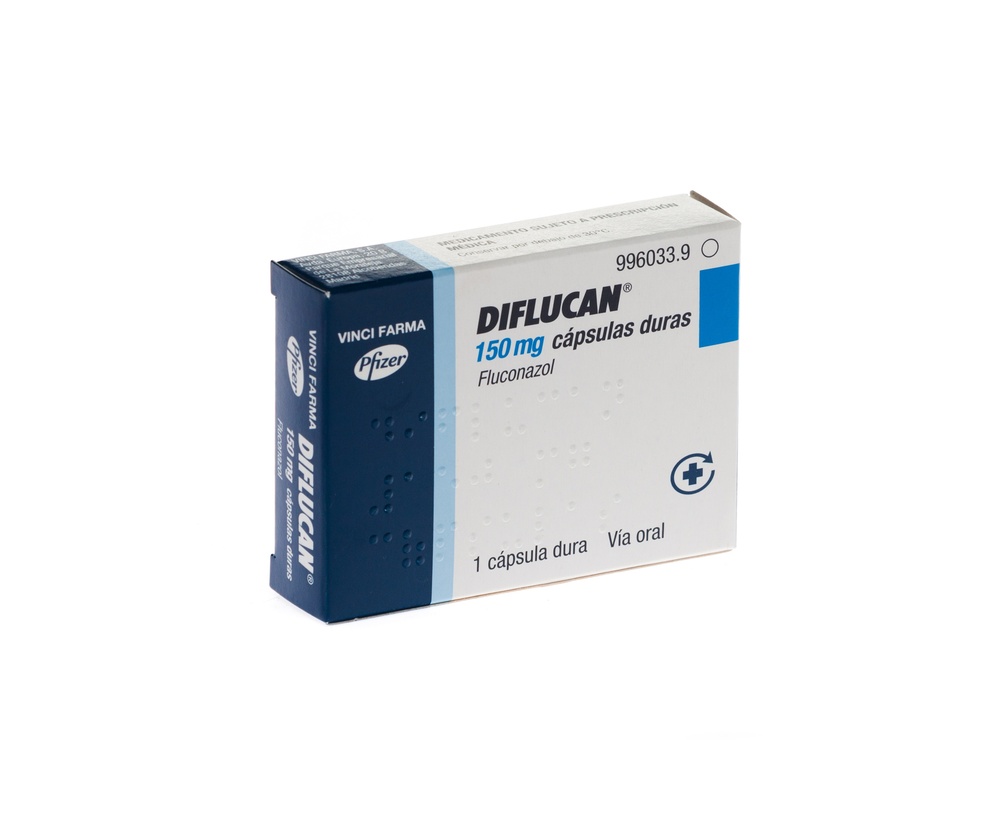
DIFLUCAN 150 mg HARD CAPSULES



How to use DIFLUCAN 150 mg HARD CAPSULES
Translated with AI
This page provides general information and does not replace a doctor’s consultation. Always consult a doctor before taking any medication. Seek urgent medical care if symptoms are severe.
Show originalContents of the leaflet
Introduction
Package Leaflet: Information for the User
Diflucan 50 mg Hard Capsules
Diflucan 100 mg Hard Capsules
Diflucan 150 mg Hard Capsules
Diflucan 200 mg Hard Capsules
fluconazole
Read all of this leaflet carefully before you start taking this medicine because it contains important information for you.
- Keep this leaflet, you may need to read it again.
- If you have any further questions, ask your doctor, pharmacist or nurse.
- This medicine has been prescribed for you only. Do not pass it on to others. It may harm them, even if their signs of illness are the same as yours.
- If you get any side effects, talk to your doctor, pharmacist or nurse. This includes any possible side effects not listed in this leaflet. See section 4.
Contents of the pack and other information:
- What is Diflucan and what is it used for.
- What you need to know before you take Diflucan.
- How to take Diflucan.
- Possible side effects.
- Storing Diflucan.
- Contents of the pack and other information.
1. What is Diflucan and what is it used for
Diflucan is one of a group of medicines called “antifungals”. The active substance is fluconazole.
Diflucan is used to treat infections caused by fungi, and can also be used to prevent fungal infections from occurring.
The most common cause of fungal infections is a yeast called Candida.
Adults
Your doctor may prescribe this medicine for the following types of fungal infections:
- Cryptococcal meningitis – a fungal infection in the brain.
- Coccidioidomycosis – a disease of the bronchopulmonary system.
- Candidainfections of the blood, organs (such as the heart, lungs) or urinary tract.
- Mucosal candidiasis – an infection that affects the lining of the mouth, throat or associated with dental prosthetics.
- Genital candidiasis – an infection of the vagina or penis.
- Skin infections – e.g. athlete's foot, ringworm, jock itch, nail infection.
They may also prescribe Diflucan for:
- preventing the recurrence of cryptococcal meningitis.
- preventing the recurrence of Candidamucosal infections.
- reducing the repeated occurrence of vaginal Candidainfections.
- preventing Candidainfections in people with weakened immune systems (if their immune system is not functioning properly).
Children and adolescents (0 to 17 years)
Your doctor may prescribe this medicine for the following types of fungal infections:
- Mucosal candidiasis – an infection that affects the lining of the mouth or throat.
- Candidainfections of the blood, organs (such as the heart, lungs) or urinary tract.
- Cryptococcal meningitis – a fungal infection in the brain.
They may also prescribe Diflucan for:
- preventing Candidainfections in people with weakened immune systems (if their immune system is not functioning properly).
preventing the recurrence of cryptocococcal meningitis.

2. What you need to know before you take Diflucan
Do not take Diflucan
- if you are allergic (hypersensitive) to fluconazole, to other medicines used to treat fungal infections or to any of the other ingredients of this medicine (listed in section 6). Symptoms may include itching, redness of the skin or difficulty breathing.
- if you are taking astemizole, terfenadine (antihistamine medicines for allergies).
- if you are taking cisapride (used for stomach upset).
- if you are taking pimozide (used for mental health conditions).
- if you are taking quinidine (used for heart rhythm disorders).
- if you are taking erythromycin (an antibiotic for infections).
Warnings and precautions
Tell your doctor or pharmacist before you start taking Diflucan
- if you have liver or kidney problems.
- if you have a heart condition, including problems with heart rhythm.
- if you have abnormal levels of potassium, calcium or magnesium in your blood.
- if severe skin reactions occur (itching, redness of the skin or difficulty breathing).
- if signs of "adrenal insufficiency" occur, in which the adrenal glands do not produce enough of certain hormones, such as cortisol (chronic or prolonged fatigue, muscle weakness, loss of appetite, weight loss, abdominal pain).
- if you have ever had a severe skin rash or peeling of the skin, blisters and/or sores in the mouth after taking Diflucan.
Severe skin reactions, including drug reaction with eosinophilia and systemic symptoms (DRESS), have been reported in relation to treatment with Diflucan. Stop taking Diflucan and seek immediate medical attention if you notice any of the symptoms related to these severe skin reactions described in section 4.
Talk to your doctor or pharmacist if the fungal infection does not improve, you may need an alternative antifungal treatment.
Taking Diflucan with other medicines
Tell your doctor or pharmacist if you are using, have recently used or might use any other medicines.
Tell your doctor immediatelyif you are taking astemizole, terfenadine (an antihistamine for allergies), cisapride (used for stomach upset), pimozide (used for mental health conditions), quinidine (used for heart rhythm disorders) or erythromycin (an antibiotic for infections), as these medicines should not be taken with Diflucan (see section: “Do not take Diflucan”).
There are some medicines that may interact with Diflucan.
Make sure your doctor knows if you are taking any of the following medicines, as a dose adjustment or monitoring may be necessary to ensure the medicines continue to have the desired effect:
- Rifampicin or rifabutin (antibiotics for infections).
- Abrocitinib (used to treat atopic dermatitis, also known as eczema).
- Alfentanil, fentanyl (used as anesthetics).
- Amitriptyline, nortriptyline (used as antidepressants).
- Amphotericin B, voriconazole (antifungals).
- Medicines that make the blood less viscous, to prevent the formation of clots (warfarin or similar medicines).
- Benzodiazepines (midazolam, triazolam or similar medicines) used to help you sleep or for anxiety.
- Carbamazepine, phenytoin (used to treat seizures).
- Nifedipine, isradipine, amlodipine, verapamil, felodipine and losartan (for high blood pressure).
- Olaparib (used to treat ovarian cancer).
- Ciclosporin, everolimus, sirolimus or tacrolimus (to prevent transplant rejection).
- Cyclophosphamide, vinca alkaloids (vincristine, vinblastine or similar medicines) used to treat cancer.
- Halofantrine (used to treat malaria).
- Statins (atorvastatin, simvastatin and fluvastatin or similar medicines) used to reduce high cholesterol levels.
- Methadone (used for pain relief).
- Celecoxib, flurbiprofen, naproxen, ibuprofen, lornoxicam, meloxicam, diclofenac (Non-Steroidal Anti-Inflammatory Drugs - NSAIDs).
- Oral contraceptives.
- Prednisone (steroid).
- Zidovudine, also known as AZT; saquinavir (used in HIV-infected patients).
- Medicines for diabetes, such as chlorpropamide, glibenclamide, glipizide or tolbutamide.
- Theophylline (used to control asthma).
- Tofacitinib (used to treat rheumatoid arthritis).
- Tolvaptan (used to treat hyponatremia [low sodium levels in the blood] or to slow down kidney function deterioration).
- Vitamin A (nutritional supplement).
- Ivacaftor (alone or in combination with medicines used to treat cystic fibrosis).
- Amiodarone (used to treat irregular heartbeats).
- Hydrochlorothiazide (diuretic).
- Ibrutinib (used to treat blood cancer).
- Lurasidone (used to treat schizophrenia).
Taking Diflucan with food and drinks
You can take the medicine with or without food.
Pregnancy, breastfeeding and fertility
If you are pregnant or breastfeeding, think you may be pregnant or are planning to have a baby, ask your doctor or pharmacist for advice before taking any medicine.
If you are planning to become pregnant, it is recommended that you wait one week after a single dose of fluconazole before becoming pregnant.
For longer treatment cycles with fluconazole, consult your doctor about the need to use adequate contraceptive methods during treatment, which should be continued for one week after the last dose.
Do not take Diflucan if you are pregnant, think you may be pregnant or are planning to become pregnant, unless your doctor has told you to do so. If you become pregnant while taking this medicine or within one week of the last dose, consult your doctor.
Fluconazole taken during the first or second trimester of pregnancy may increase the risk of miscarriage. Fluconazole during the first trimester may increase the risk of the baby being born with congenital anomalies affecting the heart, bones and/or muscles.
There have been reports of babies born with congenital anomalies affecting the skull, ears and bones of the thigh and elbow in women treated for three months or more with high doses (400-800 mg daily) of fluconazole for coccidioidomycosis. The relationship between fluconazole and these cases is unclear.
You can continue breastfeeding after taking a single dose of 150 mg of Diflucan. You should not continue breastfeeding if you are taking repeated doses of Diflucan.
Driving and using machines
When driving or using machines, keep in mind that dizziness or seizures may occasionally occur.
Diflucan contains lactose (milk sugar) and sodium (salt)
This medicine contains a small amount of lactose (milk sugar). If your doctor has told you that you have an intolerance to some sugars, consult them before taking this medicine.
Diflucan capsules also contain less than 1 mmol of sodium (23 mg) per capsule; this is, essentially, “sodium-free”.
3. How to take Diflucan
Follow the instructions for administration of this medicine exactly as indicated by your doctor. If in doubt, consult your doctor or pharmacist again.
The capsules should be swallowed whole with the help of a glass of water. It is best to take your medicines at the same time every day.
The following are the recommended doses of this medicine for the different types of infections:
Adults
Condition | Dose |
For the treatment of cryptococcal meningitis | 400 mg on the first day and then 200 mg to 400 mg once a day for 6 to 8 weeks or longer if necessary. Sometimes the dose is increased to 800 mg |
For preventing the recurrence of cryptococcal meningitis | 200 mg once a day until your doctor tells you to stop |
For the treatment of coccidioidomycosis | 200 mg to 400 mg once a day from 11 months to 24 months or longer if necessary. Sometimes the dose is increased to 800 mg |
For the treatment of internal Candidafungal infections | 800 mg on the first day and then 400 mg once a day until your doctor tells you to stop |
For the treatment of mucosal infections affecting the lining of the mouth, throat or associated with dental prosthetics | 200 mg to 400 mg on the first day and then 100 mg to 200 mg once a day until your doctor tells you to stop |
For the treatment of mucosal candidiasis – the dose depends on the location of the infection | 50 mg to 400 mg once a day for 7 to 30 days until your doctor tells you to stop |
For preventing the recurrence of mucosal infections affecting the lining of the mouth and throat | 100 mg to 200 mg once a day, or 200 mg 3 times a week, while the risk of developing an infection continues |
For the treatment of genital candidiasis | 150 mg in a single dose |
For reducing the repeated occurrence of vaginal Candidainfections | 150 mg every 3 days for a total of 3 doses (days 1, 4 and 7) and then once a week while the risk of developing an infection continues |
For the treatment of fungal skin or nail infections | Depending on the location of the infection, 50 mg once a day, 150 mg once a week, 300 to 400 mg once a week for 1 to 4 weeks (for athlete's foot, up to 6 weeks may be necessary, for nail infections, treatment should continue until a healthy nail grows) |
For preventing Candidainfections (if your immune system is weak and not functioning properly) | 200 mg to 400 mg once a day while the risk of developing an infection continues |
Adolescents from 12 to 17 years of age
Follow the dose indicated by your doctor (adult or child posology).
Children up to 11 years
The maximum daily dose for children is 400 mg per day.
The dose will be based on the child's weight in kilograms.
Condition | Daily dose |
Mucosal candidiasis and Candidathroat infections – the dose and duration of treatment depend on the severity of the infection and its location | 3 mg per kg of body weight once a day (on the first day, 6 mg per kg of body weight may be given) |
Cryptococcal meningitis or internal Candidafungal infections | 6 mg to 12 mg per kg of body weight once a day |
For preventing the recurrence of cryptococcal meningitis | 6 mg per kg of body weight once a day |
For preventing Candidainfections in children (if their immune system is not functioning properly) | 3 mg to 12 mg per kg of body weight once a day |
Use in children from 0 to 4 weeks of age
Use in children from 3 to 4 weeks of age:
- The same dose as described in the table, but administered once every 2 days. The maximum dose is 12 mg per kg of body weight every 48 hours.
Use in children under 2 weeks of age:
- The same dose as described in the table, but administered once every 3 days. The maximum dose is 12 mg per kg of body weight every 72 hours.
Elderly patients
The usual adult dose, unless you have kidney problems.
Patients with kidney problems
Your doctor may change your dose, depending on how well your kidneys are working.
If you take more Diflucan than you should
Taking too many capsules at once can make you feel unwell. Contact your doctor or go to the nearest hospital immediately. You can also call the Toxicology Information Service, phone 91 562 04 20, indicating the medicine and the amount taken. The symptoms of a possible overdose may include hearing, seeing, feeling and thinking things that are not real (hallucinations and paranoid behavior). It may be appropriate to initiate symptomatic treatment (with supportive measures and stomach lavage if necessary).
If you forget to take Diflucan
Do not take a double dose to make up for forgotten doses. If you have forgotten to take a dose, take it as soon as you remember. If it is almost time for your next dose, do not take the missed dose.
If you have any doubts about the use of this medicine, ask your doctor or pharmacist.

4. Possible Adverse Effects
Like all medicines, this medicine can cause adverse effects, although not all people suffer from them.
Stop taking Diflucan and seek medical attention immediatelyif you notice any of the following symptoms:
- generalized rash, high body temperature, and enlarged lymph nodes (DRESS syndrome or drug hypersensitivity syndrome).
Some people develop allergic reactions,although severe allergic reactions are rare.If any adverse effect appears, talk to your doctor or pharmacist, this includes any possible adverse effect not mentioned in this prospectus. If you experience any of the following symptoms, inform your doctor immediately.
- sudden wheezing, difficulty breathing, or chest tightness.
- swelling of the eyelids, face, or lips.
- itching all over the body, skin redness, or red spots with itching.
- skin rash.
- severe skin reactions, such as a rash that causes blisters (this can affect the mouth and tongue).
Diflucan may affect your liver. Signs that indicate liver problems include:
- fatigue.
- loss of appetite.
- vomiting.
- yellowing of the skin or the whites of the eyes (jaundice).
If you experience any of these symptoms, stop taking Diflucan and inform your doctor immediately.
Other Adverse Effects:
Additionally, if you consider that any of the adverse effects you suffer from is serious or if you notice any adverse effect not mentioned in this prospectus, inform your doctor or pharmacist.
The frequent adverse effects (may affect up to 1 in 10 patients) are:
- headache.
- stomach upset, diarrhea, discomfort, vomiting.
- high blood test results indicating liver function.
- rash.
The infrequent adverse effects (may affect up to 1 in 100 patients) are:
- reduction of red blood cells, which can make your skin pale and cause weakness or difficulty breathing.
- decreased appetite.
- inability to sleep, feeling of numbness.
- seizures, dizziness, feeling of spinning, tingling, pinching, or numbness, changes in the sense of taste.
- constipation, heavy digestion, gas, dry mouth.
- muscle pain.
- liver damage and yellowing of the skin and eyes (jaundice).
- hives, blisters (hives), itching, increased sweating.
- fatigue, general feeling of discomfort, fever.
The rare adverse effects (may affect up to 1 in 1,000 patients) are:
- white blood cells in the blood that help defend against infections and blood cells that help stop bleeding, lower than normal.
- red or purple skin color, which may be due to a low number of platelets, other changes in blood cells.
- changes in blood tests (high cholesterol, fat levels).
- low potassium levels in the blood.
- tremors.
- abnormal electrocardiogram (ECG), changes in heart rate or rhythm.
- liver function failure.
- allergic reactions (sometimes severe), including extensive rash with blisters and skin peeling, severe allergic reactions, swelling of the lips or face.
- hair loss.
Frequency not known, but may occur (cannot be estimated from available data):
- hypersensitivity reaction with skin rash, fever, inflamed glands, increased eosinophils (a type of white blood cell), and inflammation of internal organs (liver, lungs, heart, kidneys, and large intestine) (drug reaction or rash with eosinophilia and systemic symptoms [DRESS]).
Reporting Adverse Effects:
If you experience any type of adverse effect, consult your doctor, pharmacist, or nurse, even if it is a possible adverse effect that does not appear in this prospectus. You can also report them directly through the Spanish Pharmacovigilance System for Human Use Medicines: www.notificaRAM.es. By reporting adverse effects, you can contribute to providing more information on the safety of this medicine.
5. Storage of Diflucan
Keep this medicine out of sight and reach of children.
Do not use this medicine after the expiration date that appears on the packaging after CAD. The expiration date is the last day of the month indicated.
Store below 30°C.
Medicines should not be thrown away through wastewater or household waste. Deposit the packaging and medicines you no longer need at the SIGRE Point in the pharmacy. In case of doubt, ask your pharmacist how to dispose of the packaging and medicines you no longer need. This way, you will help protect the environment.
6. Package Contents and Additional Information
Composition of Diflucan
- The active ingredient is fluconazole.
- Each hard capsule contains 50 mg, 100 mg, 150 mg, or 200 mg of fluconazole.
- The other components (excipients) are:
Capsule Content:lactose monohydrate, cornstarch, anhydrous colloidal silica, magnesium stearate, and sodium lauryl sulfate (see section 2, Diflucan contains lactose [milk sugar] and sodium [salt]).
Composition of the Gelatin Capsules:
Diflucan 50 mg Hard Capsules:gelatin (E441), titanium dioxide (E171), and patent blue V (E131).
Diflucan 100 mg Hard Capsules:gelatin (E441), titanium dioxide (E171), erythrosine (E127), and patent blue V (E131).
Diflucan 150 mg Hard Capsules:gelatin (E441), titanium dioxide (E171), and patent blue V (E131).
Diflucan 200 mg Hard Capsules:gelatin (E441), titanium dioxide (E171), erythrosine (E127), and carmine indigo (E132).
Printing Ink:shellac (lacquer), black iron oxide (E172), N-Butyl alcohol, dehydrated alcohol, purified water, propylene glycol (E1520), methylated industrial alcohol, isopropyl alcohol, concentrated ammonia solution, potassium hydroxide (E525).
Appearance of Diflucan and Package Contents
- The Diflucan 50 mg capsules have a white body and a turquoise blue cap. They have “FLU-50” and “Pfizer” printed with black ink.
- The Diflucan 100 mg capsules have a white body and a blue cap. They have “FLU-100” and “Pfizer” printed with black ink.
- The Diflucan 150 mg capsules have a turquoise blue body and cap. They have “FLU 150” and “Pfizer” printed with black ink.
- The Diflucan 200 mg capsules have a white body and a purple cap. They have “FLU-200” and “Pfizer” printed with black ink.
They are available in packages of 1, 2, 3, 4, 6, 7, 10, 12, 14, 20, 28, 30, 42, 50, 60, 100, or 500 hard capsules. Not all package sizes may be marketed.
Marketing Authorization Holder and Manufacturer
Marketing Authorization Holder:
Vinci Farma S.A. Avda de Europa, 20B. Parque Empresarial La Moraleja. 28108, Alcobendas. Madrid.
Local Representative:
Pfizer, S.L. Avda de Europa, 20B. Parque Empresarial La Moraleja. 28108, Alcobendas. Madrid. Spain.
Manufacturer:
Fareva Amboise. Zone Industrielle. 29 Route des Industries. 37530, Pocé-sur-Cisse. France.
Date of the Last Revision of this Prospectus:February 2024.
Detailed and updated information on this medicine is available on the website of the Spanish Agency for Medicines and Health Products (AEMPS): http://www.aemps.gob.es.
- Country of registration
- Dosage formCAPSULE, 150 mg
- ATC codeJ02AC01
- Average pharmacy price3.22 EUR
- Active substance
- Prescription requiredYes
- Manufacturer
- This information is for reference only and does not constitute medical advice. Always consult a doctor before taking any medication. Oladoctor is not responsible for medical decisions based on this content.
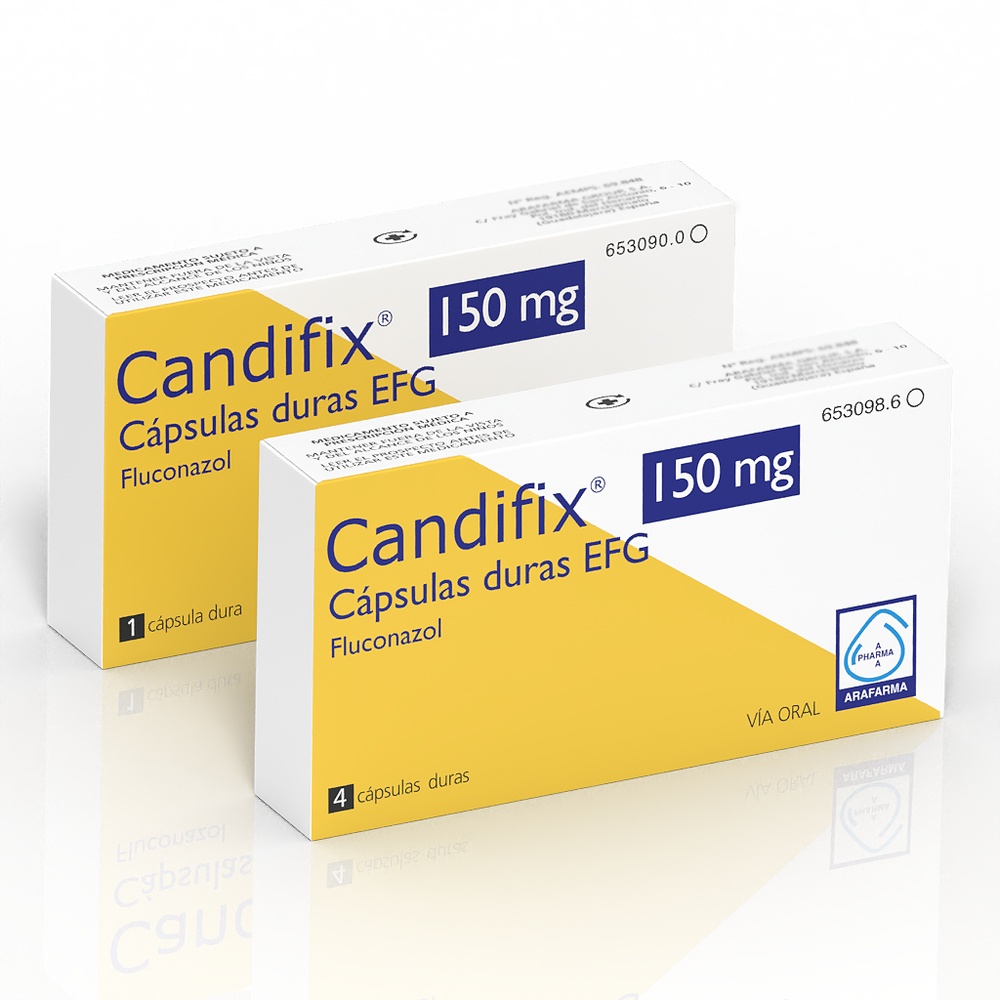
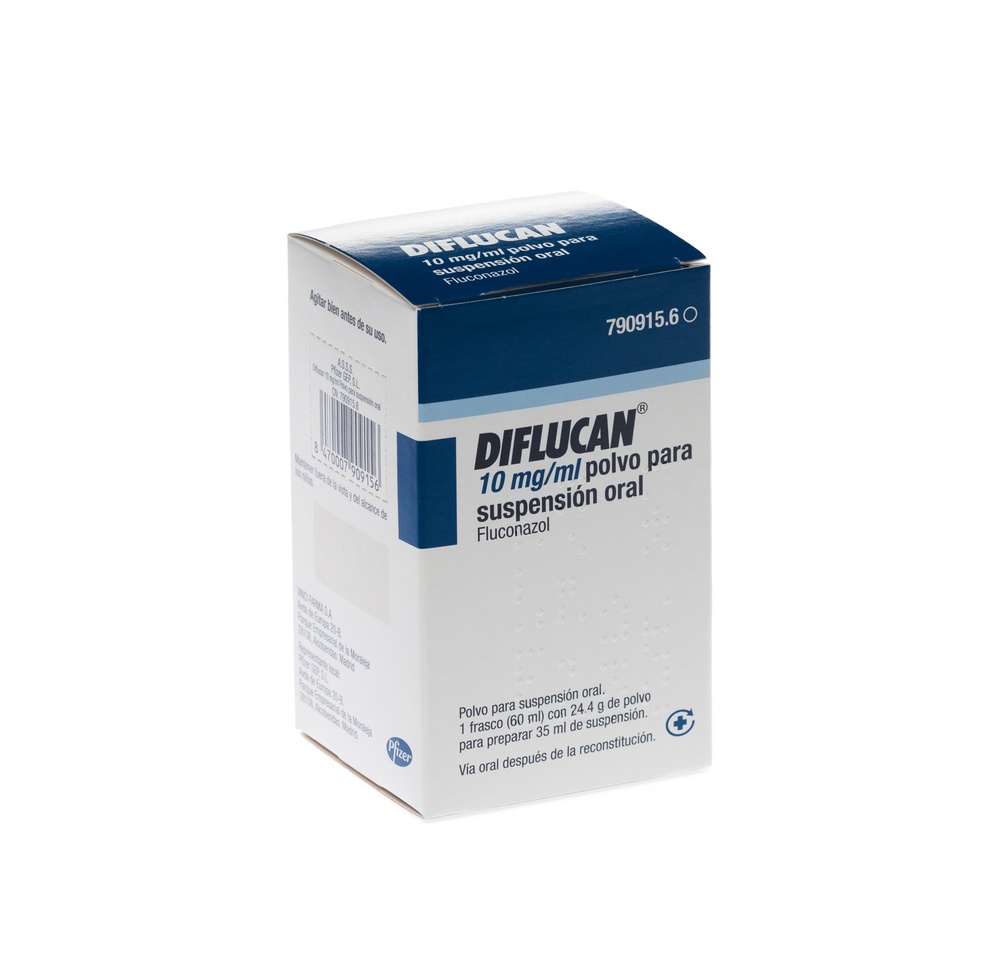
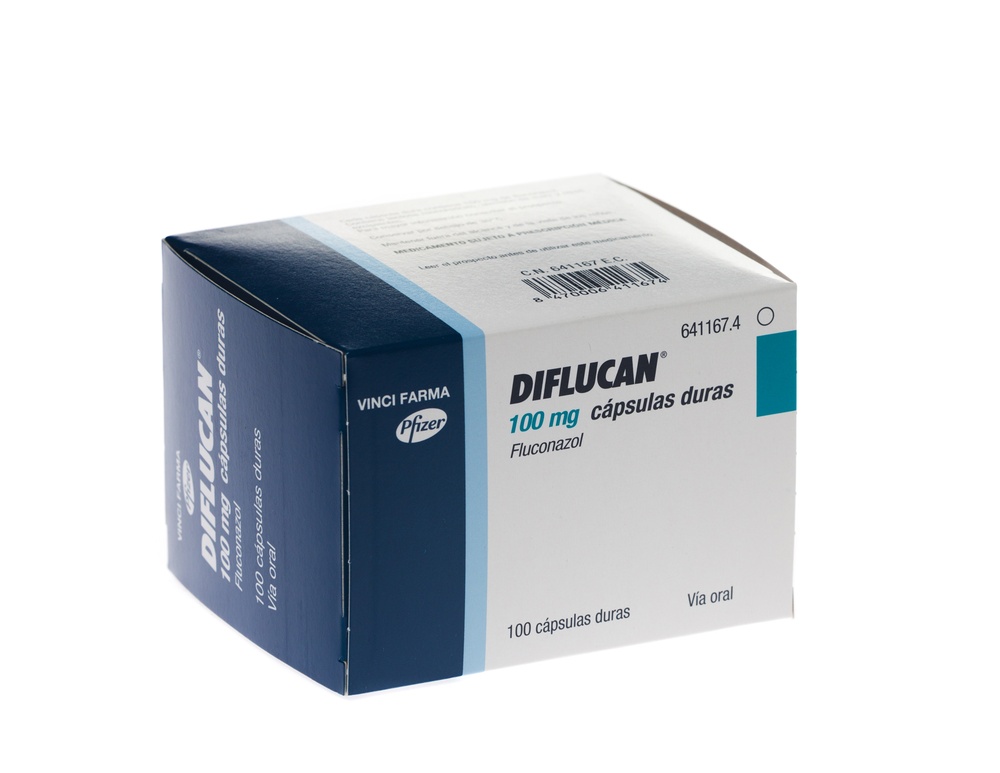
- Alternatives to DIFLUCAN 150 mg HARD CAPSULESDosage form: CAPSULE, 150 mg fluconazoleActive substance: fluconazoleManufacturer: Arafarma Group S.A.Prescription requiredDosage form: ORAL SOLUTION/SUSPENSION, 10 mg/mlActive substance: fluconazoleManufacturer: Vinci Farma, S.A.Prescription requiredDosage form: CAPSULE, 100 mgActive substance: fluconazoleManufacturer: Vinci Farma, S.A.Prescription required
Online doctors for DIFLUCAN 150 mg HARD CAPSULES
Discuss questions about DIFLUCAN 150 mg HARD CAPSULES, including use, safety considerations and prescription review, subject to medical assessment and local regulations.











Frequently Asked Questions
