


DESMOPRESSIN TEVA 120 micrograms SUBLINGUAL TABLETS
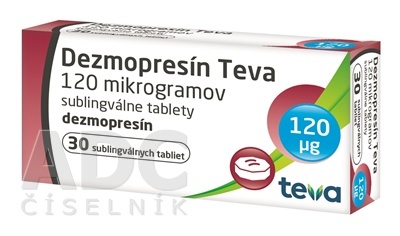



How to use DESMOPRESSIN TEVA 120 micrograms SUBLINGUAL TABLETS
Translated with AI
This page provides general information and does not replace a doctor’s consultation. Always consult a doctor before taking any medication. Seek urgent medical care if symptoms are severe.
Show originalContents of the leaflet
Introduction
Package Leaflet: Information for the Patient
Desmopresina Teva 120 micrograms sublingual tablets EFG
Desmopresina
Read all of this leaflet carefully before you start taking this medicine because it contains important information for you.
- Keep this leaflet, you may need to read it again.
- If you have any further questions, ask your doctor or pharmacist.
- This medicine has been prescribed for you only. Do not pass it on to others. It may harm them, even if their symptoms are the same as yours.
- If you experience any side effects, talk to your doctor or pharmacist. This includes any possible side effects not listed in this leaflet. See section 4.
Contents of the pack and other information
- What is Desmopresina Teva and what is it used for
- What you need to know before you take Desmopresina Teva
- How to take Desmopresina Teva
- Possible side effects
- Storing Desmopresina Teva
- Contents of the pack and further information
1. What is Desmopresina Teva and what is it used for
Desmopressin, the active substance of Desmopresina Teva, is an analogue of the natural hormone vasopressin, which regulates the ability of the kidneys to concentrate urine.
Desmopresina Teva is used for the treatment of:
- Central diabetes insipidus (a disorder of the pituitary gland leading to intense thirst and the production of large amounts of pale, watery urine).
- Nocturnal enuresis in children from 5 years of age with normal ability to concentrate urine (involuntary urination at night during sleep).
- Nocturia (a condition where a person wakes up frequently during the night to urinate) in adults under 65 years of age.

2. What you need to know before you take Desmopresina Teva
Do not take Desmopresina Teva:
- if you are allergic to desmopressin or any of the other ingredients of this medicine (listed in section 6)
- if you have polydipsia (abnormally high fluid intake), heart failure, and other conditions requiring treatment with diuretics
- if you have moderately or severely reduced kidney function
- if you have low sodium levels in the blood
- if you cannot adhere to fluid restriction
- if you have altered hormonal secretion (so-called SIADH)
- if you are over 65 years of age and suffer from nocturia (see section 1)
- if your child is under 5 years of age and suffers from nocturnal enuresis (see section 1)
Warnings and precautions
Treatment of nocturnal enuresis (involuntary urination at night) in children begins with lifestyle measures and a bedwetting alarm (a device that makes a sound or vibrates when it gets wet). If these measures fail or pharmacological therapy is needed, treatment with desmopressin can be initiated.
Consult your doctor before starting to take this medicine.
- if you have coronary artery disease (blood vessels that supply the heart) or high blood pressure
- if you have a thyroid disease (gland in the neck) or adrenal gland disease (gland above the kidney).
- if during treatment you have an illness that causes fever, vomiting, diarrhea.
- if during your treatment you feel headache, lack of appetite, nausea, vomiting, weight gain, confusion (difficulty understanding words, attention difficulties) or convulsions (violent, involuntary contractions of one or more limbs); these symptoms may be signs of a dangerous condition known as hyponatremia (low sodium level in the blood)
- for the treatment of central diabetes insipidus: you should reduce water intake and consult your doctor immediately. Your doctor will reduce the doses or interrupt treatment for a few hours.
- for the treatment of nocturnal enuresis or nocturia: you should stop treatment, reduce fluid intake, and consult your doctor immediately.
- if you are at risk of increased intracranial pressure
When treating nocturnal enuresis and nocturia, fluid intake should be limited to the minimum possible to control thirst during the period between 1 hour before and 8 hours after taking this medicine.
Desmopresina Teva should be used with caution in patients with fluid balance disorders. Talk to your doctor if, in relation to an acute illness, you have a hydroelectrolytic imbalance.
Children
In children, the use of this medicine should be under the supervision of an adult.
Do not give this medicine to children under 5 years of age.
Using other medicines with Desmopresina Teva
Tell your doctor or pharmacist if you are using, have recently used, or might use any other medicines, including those without a prescription.
The effect of this medicine may increase, with a greater risk of abnormal fluid accumulation in the body, if taken at the same time as certain medicines used to treat:
- depression (such as tricyclic antidepressants, selective serotonin reuptake inhibitors)
- psychosis (such as chlorpromazine)
- epilepsy (such as carbamazepine)
- diabetes (sulfonylureas, for example, chlorpropamide)
- diarrhea (such as loperamide)
- pain and inflammation (non-steroidal anti-inflammatory drugs)
The effect of this medicine may decrease if taken at the same time as certain medicines for:
- stomach gas (such as dimethicone)
Using Desmopresina Teva with food and drink
The effect of this medicine may decrease if taken with food.
If you are taking this medicine for enuresis or nocturia, you should limit fluid intake from 1 hour before taking the tablet to 8 hours after taking it.
Pregnancy, breastfeeding, and fertility
If you are pregnant or breastfeeding, think you may be pregnant, or plan to become pregnant, consult your doctor or pharmacist before using this medicine.
Experience with use during pregnancy is limited.
Desmopressin passes into breast milk, but it is unlikely to affect breastfed babies.
Driving and using machines
Desmopresina Teva has a negligible influence on the ability to drive and use machines.
Desmopresina Teva contains lactose and sodium.
If your doctor has told you that you have an intolerance to some sugars, consult them before taking this medicine.
This medicine contains less than 1 mmol of sodium (23 mg) per sublingual tablet; this is essentially “sodium-free”.
3. How to take Desmopresina Teva
Always take this medicine exactly as your doctor has told you. If you are not sure, check with your doctor or pharmacist.
The dose will be determined by your doctor, who will adjust it individually for you.
This medicine should always be taken at the same time in relation to food intake.
The sublingual tablet should be placed under the tongue where it dissolves without water.
Diabetes insipidus in adults and children:
The usual dose is 1 to 2 tablets (60 micrograms) under the tongue 3 times a day.
Nocturnal enuresis in adults and children from 5 years of age:
The usual dose is 1-2 tablets (120 micrograms) under the tongue at night. You should take this medicine at bedtime. Fluid intake should be limited.
Your doctor will check you every three months to see if treatment should be continued. Your doctor may set a treatment-free period of at least one week.
Nocturia in adults
The usual dose is 1 tablet (60 micrograms) under the tongue before bedtime.
Fluid intake should be limited.
Use in children
This medicine is used to treat diabetes insipidus and nocturnal enuresis (see above for the dose for the different treatment conditions). The dose is the same for children and adults only for diabetes insipidus.
If you take more Desmopresina Teva than you should
In case of overdose or accidental ingestion, consult your doctor or pharmacist immediately or call the Toxicology Information Service, telephone (91) 562 04 20, indicating the medicine and the amount taken. It is recommended to take the package and leaflet to the healthcare professional.
If you take more medicine than you should or, for example, a child has accidentally ingested the medicine, contact a doctor, hospital, or pharmacist immediately for a risk assessment and advice.
Taking too much Desmopresina Teva can prolong the effect of this medicine and increase the risk of fluid retention in the body and low sodium levels in the blood. Symptoms of severe fluid retention include convulsions and loss of consciousness.
If you forget to take Desmopresina Teva
Do not take a double dose to make up for forgotten tablets.
If you have any further questions on the use of this product, ask your doctor or pharmacist.
If you stop taking Desmopresina Teva
If you have any further questions on the use of this medicine, ask your doctor or pharmacist.

4. Possible side effects
Like all medicines, this medicine can cause side effects, although not everybody gets them.
If fluid intake is not limited according to the above instructions, abnormal amounts of fluid can accumulate in your body, which can cause headaches, stomach pain, nausea/vomiting, weight gain, dizziness, confusion, general malaise, sensation of spinning, and, in severe cases, convulsions and coma.
These signs may reflect more or less significant water retention. They usually appear with high doses of this medicine and disappear when the dose is reduced.
Adults
Very common(may affect more than 1 in 10 people):
- Headache
Common(may affect up to 1 in 10 people):
- Low sodium levels in the blood
- Dizziness
- Hypertension
- Stomach pain
- Nausea
- Diarrhea
- Constipation
- Vomiting
- Bladder and urethra problems
- Swelling of hands, arms, feet, or legs
- Fatigue
Uncommon(may affect up to 1 in 100 people)
- Sleep disorders
- Somnolence
- Numbness
- Visual disturbances
- General sensation of spinning (vertigo)
- Feeling your heartbeat
- Low blood pressure when standing up from a lying position
- Breathing difficulties
- Stomach problems (indigestion, flatulence, bloating)
- Sweating
- Itching
- Rash
- Hives
- Muscle spasms
- Muscle pain
- Chest pain
- Flu-like symptoms
- Weight gain
- Increased liver enzymes
- Low potassium levels in the blood.
Rare(may affect up to 1 in 1,000 people)
- Confusion
- Allergic skin inflammation.
Frequency not known(frequency cannot be estimated from the available data)
- Anaphylactic reaction (severe allergic reaction)
- Dehydration
- High sodium levels in the blood
- Convulsions
- Weakness
- Coma.
Children
Common(may affect up to 1 in 10 people)
- Headache.
Uncommon(may affect up to 1 in 100 people)
- Rapidly changing emotions.
- Aggression
- Nausea
- Stomach pain
- Vomiting
- Diarrhea
- Bladder and urethra problems
- Swollen hands and feet
- Fatigue.
Rare(may affect up to 1 in 1,000 people)
- Anxiety
- Nightmares
- Mood changes
- Somnolence
- Hypertension
- Irritability.
Frequency not known(frequency cannot be estimated from the available data)
- Anaphylactic reaction (severe allergic reaction)
- Low sodium levels in the blood
- Abnormal behavior
- Emotional disturbances
- Depression
- Hallucinations
- Sleep disorders
- Reduced attention
- Increased muscle movements.
- Cramp
- Nosebleeds
- Rash
- Allergic skin inflammation.
- Sweating
- Hives.
Reporting of side effects:
If you experience any side effects, talk to your doctor or pharmacist. This includes any possible side effects not listed in this leaflet. You can also report side effects directly via the Spanish Pharmacovigilance System for Human Use Medicines: http://www.notificaram.es. By reporting side effects, you can help provide more information on the safety of this medicine.
5. Storing Desmopresina Teva
Keep this medicine out of the sight and reach of children.
Do not use this medicine after the expiry date which is stated on the blister, label, carton, or bottle after EXP. The expiry date is the last day of the month stated.
Blister packs
Store in the original blister pack to protect from moisture. This medicine does not require any special storage temperature.
HDPE bottles
Do not store above 30°C. Store in the original packaging. Keep the bottle tightly closed to protect from moisture.
Medicines should not be disposed of via wastewater or household waste. Return any unused medicine to a pharmacy for proper disposal. If you are unsure, ask your pharmacist how to dispose of unused medicines. This will help protect the environment.
6. Contents of the pack and further information
Composition of Desmopresina Teva
- The active substance is desmopressin
Each sublingual tablet contains 120 micrograms of desmopressin (as desmopressin acetate)
- The other ingredients are: lactose monohydrate, corn starch, citric acid (E330), sodium croscarmellose (E468), magnesium stearate (E470b)
Appearance and packaging
White or almost white, octagonal, biconvex tablet, engraved with "II" on one side and smooth on the other, 6.5 mm long/wide and 2 mm thick.
Desmopresina Teva is supplied in a carton box containing OPA/Al/PVC/PE-Al blister packs with an integrated desiccant in pack sizes of 10, 20, 30, 50, 60, 90, 100 sublingual tablets or perforated unit-dose blister packs of 10, 20, 30, 50, 60, 90, and 100 sublingual tablets, or in HDPE bottles with a PP cap with an integrated desiccant containing 30 or 100 sublingual tablets.
Not all pack sizes may be marketed.
Marketing Authorisation Holder and Manufacturer
Marketing Authorisation Holder
Teva B.V.
Swensweg 5
2031GA Haarlem
Netherlands
Manufacturer
Haupt Pharma Münster GmbH
Schleebrüggenkamp 15,
D-48159 Münster, Germany
Adalvo Ltd.
Malta Life Sciences Park,
Building 1, Level 4, Sir Temi Zammit Buildings,
San Gwann, SGN 3000 Malta
You can obtain further information on this medicine from the representative of the Marketing Authorisation Holder:
Teva Pharma, S.L.U.
C/ Anabel Segura, 11, Edifício Albatros B, 1ª planta,
Alcobendas, 28108, Madrid (Spain)
Date of last revision of this leaflet: June 2023
Detailed and up-to-date information on this medicine is available on the website of the Spanish Agency for Medicines and Health Products (AEMPS) http://www.aemps.gob.es/
- Country of registration
- Dosage formSUBLINGUAL TABLET, 120 micrograms
- ATC codeH01BA02
- Average pharmacy price34.16 EUR
- Active substance
- Prescription requiredYes
- Manufacturer
- This information is for reference only and does not constitute medical advice. Always consult a doctor before taking any medication. Oladoctor is not responsible for medical decisions based on this content.
- Alternatives to DESMOPRESSIN TEVA 120 micrograms SUBLINGUAL TABLETSDosage form: ORAL SOLUTION/SUSPENSION, 360mcg/ml desmopressin (anhydrous base)Active substance: desmopressinManufacturer: Laboratorio Reig Jofre, S.A.Prescription requiredDosage form: SUBLINGUAL TABLET, 120 microgramsActive substance: desmopressinManufacturer: Aristo Pharma GmbhPrescription requiredDosage form: SUBLINGUAL TABLET, 240 microgramsActive substance: desmopressinManufacturer: Aristo Pharma GmbhPrescription required

Online doctors for DESMOPRESSIN TEVA 120 micrograms SUBLINGUAL TABLETS
Discuss questions about DESMOPRESSIN TEVA 120 micrograms SUBLINGUAL TABLETS, including use, safety considerations and prescription review, subject to medical assessment and local regulations.



Frequently Asked Questions
