



DEPRAX 100 mg Film-Coated Tablets

Prescription review online
A doctor will review your case and decide whether a prescription is medically appropriate.

Talk to a doctor about this medicine
Discuss your symptoms and possible next steps in a quick online consultation.



How to use DEPRAX 100 mg FILM-COATED TABLETS
Contents of the leaflet
- Introduction
- What Deprax is and what it is used for
- What you need to know before you take Deprax
- How to take Deprax
- Possible Adverse Effects
- Storage of Deprax
- Package Contents and Additional Information
Introduction
Patient Information: Summary of Product Characteristics
Deprax100 mg film-coated tabletsEFG
Trazodone, hydrochloride
Read this entire leaflet carefully before you start taking this medicine, as it contains important information for you.
- Keep this leaflet, as you may need to read it again.
- If you have any further questions, ask your doctor or pharmacist.
- This medicine has been prescribed for you only. Do not pass it on to others. It may harm them, even if their signs of illness are the same as yours.
- If you experience any side effects, talk to your doctor or pharmacist. This includes any possible side effects not listed in this leaflet. See section 4.
Contents of the pack
- What Deprax is and what it is used for
- What you need to know before you take Deprax
- How to take Deprax
- Possible side effects
- Storing Deprax
- Contents of the pack and other information
1. What Deprax is and what it is used for
Deprax contains the active substance trazodone, which belongs to a group of medicines called antidepressants.
Deprax is used to treat:
- Major depressive episodes.
- Mixed states of depression and anxiety, with or without secondary insomnia.

Not sure if this medicine is right for you?
Discuss your symptoms and treatment with a doctor online.
2. What you need to know before you take Deprax
Do not take Deprax
- if you are allergic to trazodone or any of the other ingredients of this medicine (listed in section 6). Signs of an allergic reaction include: skin rash, difficulties breathing or swallowing, swelling of the lips, face, throat or tongue,
- if you have recently had a heart attack,
- if you are a consumer of alcoholic beverages or are taking sleeping medicines.
Warnings and precautions
Talk to your doctor before taking Deprax:
- if you have had or have fits or seizures,
- if you have severe liver or kidney problems,
- if you have heart disease (such as cardiovascular insufficiency, angina pectoris, conduction disorders or AV block of various degrees, arrhythmia, recent myocardial infarction, congenital long QT syndrome or bradycardia),
- if you have hyperthyroidism,
- if you have problems urinating or need to urinate frequently,
- if you have a known eye disorder called narrow-angle glaucoma,
- if you have low blood pressure or hypotension.
If you are not sure if you have any of these conditions, talk to your doctor or pharmacist before taking Deprax.
If you develop yellowing of the skin or the whites of the eyes, you should stop treatment with trazodone and consult your doctor immediately.
The administration of antidepressants in patients with schizophrenia or other psychotic disorders may worsen psychotic symptoms. Paranoid thoughts can be intensified. During treatment with trazodone, a depressive phase may change from manic-depressive psychosis to a manic phase. In this case, the administration of trazodone should be discontinued.
An increased risk of bone fractures has been observed in patients treated with this type of medication.
If you have a sore throat, fever, or flu-like symptoms while taking trazodone, consult your doctor immediately. In these cases, it is recommended to perform a blood test to detect the presence of agranulocytosis, a blood disorder that can manifest clinically with these symptoms.
Interference with urine tests:
Analysis of your urine using a specific technique (immunoassay) while taking Deprax may result in a false positive for amphetamine.
This is due to an analytical interference between a trazodone metabolite and an amphetamine derivative (ecstasy). In this case, consult your doctor and request a confirmation test using other techniques (mass spectrometry or tandem mass spectrometry coupled to liquid chromatography) that do not produce the mentioned interference.
Elderly patients
Elderly patients are often more sensitive to antidepressants, particularly to a drop in blood pressure when standing up suddenly after sitting or lying down (orthostatic hypotension), sometimes accompanied by dizziness, difficulty staying still, mental excitement, seeing things that are not real (hallucinations), dilated pupils, dry mouth, hot and dry skin, thirst, waves of involuntary muscle contractions in the digestive tract (peristalsis), elevated temperature, rapid heart rate (tachycardia), decreased blood pressure (anticholinergic effects), or hyponatremia (low sodium levels in the blood that can cause fatigue, weakness, confusion, pain, stiffness, and muscle coordination problems).
Children and adolescents
Deprax should not be used in children and adolescents under 18 years of age. Additionally, you should know that patients under 18 years of age have a higher risk of adverse effects, such as suicidal attempts, suicidal thoughts, and hostility (mainly aggression, oppositional behavior, and anger) when taking this type of medication.
Suicidal thoughts and worsening of your depression or anxiety disorder
If you are depressed and/or suffer from an anxiety disorder, you may, on occasion, have thoughts of self-harm or suicide. These can increase when taking antidepressants for the first time, as all these medications require time to start taking effect, usually around two weeks, although in some cases it may take longer.
You would be more likely to have these thoughts:
- If you have previously had thoughts of self-harm or suicide.
- If you are a young adult. Clinical trial information has shown an increased risk of suicidal behavior in young adults (under 25 years of age) with psychiatric disorders who were treated with an antidepressant.
If at any time you have thoughts of self-harm or suicide, contact your doctor or go directly to a hospital.
It may be helpful for you to tell a family member or close friend that you are depressed or have an anxiety disorder and ask them to read this leaflet. You can ask them if they think your depression or anxiety disorder has worsened, or if they are concerned about changes in your behavior.
Taking Deprax with other medicines
Tell your doctor or pharmacist that you are taking, have recently taken, or might take any other medicines.
Deprax may affect the way some other medicines work. Additionally, some medicines may affect the way Deprax works.
Tell your doctor if you are taking any of the following medicines:
- MAOIs (monoamine oxidase inhibitors), such as tranylcypromine, phenelzine, and isocarboxazid (for depression) or selegiline (for Parkinson's disease). Also, inform them if you have taken them in the last two weeks.
- Other antidepressants (such as amitriptyline or fluoxetine).
- Sedatives (such as tranquilizers or sleeping medicines).
- Medicines for treating epilepsy, such as carbamazepine and phenytoin.
- Medicines for treating high blood pressure, such as clonidine.
- Digoxin (used to treat heart problems).
- Medicines for treating fungal infections, such as ketoconazole and itraconazole.
- Some medicines for treating HIV, such as ritonavir and indinavir.
- Erythromycin, an antibiotic used to treat infections.
- Levodopa (used to treat Parkinson's disease).
- St. John's Wort (a herbal remedy used to treat insomnia, mild depression, etc.).
- Anticoagulant and/or antiplatelet agents (used to make blood more fluid): blood coagulation may be altered with a risk of bleeding.
Anesthesia
If you are going to undergo anesthesia (for an operation), inform your doctor or dentist that you are taking Deprax.
Taking Deprax with food, drinks, and alcohol
Food:trazodone should be taken after eating if taken in divided doses, or at bedtime if taken as a single dose.
Alcohol:this medicine increases drowsiness, reduces alertness, and also produces other effects. Do not drink alcohol while taking this medicine.
Pregnancy, breastfeeding, and fertility
If you are pregnant or breastfeeding, think you may be pregnant, or are planning to have a baby, ask your doctor or pharmacist for advice before taking this medicine.
Pregnancy:
Data on the use of trazodone in pregnant women are limited. As a precautionary measure, it is preferable to avoid the use of trazodone during pregnancy. Make sure your midwife and/or doctor know that you are taking Deprax. When taken during pregnancy, particularly in the last three months of pregnancy, medicines like Deprax may increase the risk of a serious condition in newborns called persistent pulmonary hypertension of the newborn (PPHN), which makes the baby breathe faster and turn blue. These symptoms usually start within the first 24 hours after the baby is born. If this happens to your baby, contact your midwife and/or doctor immediately.
Breastfeeding:
Do not take trazodone if you are breastfeeding your child unless you and your doctor have discussed the risks and benefits involved.
Driving and using machines
During treatment with Deprax, you may feel drowsy or dizzy. Do not drive or operate tools or machines until you know how the treatment with Deprax affects you.
Deprax contains orange yellow S (E-110), cochineal red A (Ponceau 4R) (E-124), and sodium
This medicine may cause allergic reactions because it contains orange yellow S (E-110) and cochineal red A (Ponceau 4R) (E-124). It can cause asthma, especially in patients allergic to acetylsalicylic acid.
This medicine contains less than 23 mg of sodium (1 mmol) per tablet; it is essentially "sodium-free".
3. How to take Deprax
Trazodone is a sedative antidepressant and causes drowsiness, especially at the beginning of treatment. Follow exactly the administration instructions of this medicine indicated by your doctor or pharmacist. If in doubt, consult your doctor or pharmacist again. Adults:
- The recommended initial dose is 100-150 mg per day orally, divided into several doses after meals, or as a single dose before bedtime.
- The dose can be gradually increased up to a maximum of 400 mg per day. The dose is administered divided into several doses or as a single dose before bedtime.
- If you are hospitalized, the dose can be gradually increased up to a maximum of 600 mg per day. The dose is administered divided into several doses.
- If you need to take your daily dose divided into several doses, the largest part of the divided dose should be taken before bedtime.
- Generally, the dose increase is 50 mg per day, every three or four days.
- Your doctor will increase the dose until the best effect for you is found.
- You will not feel better immediately. It takes between two and four weeks before finding the right dose.
- Once the right dose is found, you should maintain it for at least four weeks.
- Subsequently, the dose will be gradually reduced, depending on the therapeutic response.
- The treatment will be maintained until you have been feeling well for a period of four to six months.
- Then the dose will be gradually reduced until it is low enough to stop treatment.
- Do not stop taking trazodone suddenly; this can cause nausea, headache, and a feeling of general discomfort.
- To reduce possible side effects, it is recommended that you take trazodone after a meal.
Elderly patients:
In elderly patients, the recommended initial dose is 50-100 mg per day, divided into several doses after meals, or as a single dose before bedtime. In general, the administration of single doses above 100 mg should be avoided. The dose should not exceed 300 mg per day.
Use in children and adolescents:
Trazodone is not recommended in children under 18 years of age due to insufficient data on safety and/or efficacy.
Dosage for patients with kidney problems:
If you have kidney problems, your doctor will decide the appropriate dose for your condition. In this case, your doctor may periodically monitor your renal function.
Patients with liver problems:
If you have liver problems, your doctor will decide the appropriate dose for your condition. In this case, your doctor may periodically monitor your liver function, as trazodone can damage your liver.
The tablets are scored to allow for a gradual increase in dose. If the tablet is split at the central score line, two halves of the tablet are obtained. Each half-tablet contains 50 mg of trazodone.
If you take more Deprax than you should
In case of overdose or accidental ingestion, consult your doctor or pharmacist immediately or call the Toxicology Information Service, phone 91 562 04 20, indicating the medicine and the amount taken. You can also go to the Emergency Department of the nearest hospital. Bring the packaging so that the doctor knows what you have taken.
The most frequent symptoms of overdose are: drowsiness, dizziness, nausea, and vomiting. In more severe cases, coma, seizures, hyponatremia (low sodium levels in the blood), hypotension (low blood pressure), tachycardia (rapid heart rate), and respiratory failure have been reported. Cardiac characteristics may include bradycardia (slow heart rate), QT interval prolongation, and Torsade de Pointes (a type of severe irregular heartbeat). Symptoms may appear 24 hours or more after an overdose. Overdose of trazodone in combination with other antidepressants can cause serotonin syndrome.
If you forget to take Deprax
Do not take a double dose to make up for forgotten doses. If you forget a dose, take it as soon as you remember. However, if it is almost time for the next dose, do not take the forgotten dose.
If you stop taking Deprax
Do not stop taking Deprax until your doctor tells you to. Your doctor will also help you stop treatment gradually. If you have any further questions on the use of this medicine, ask your doctor or pharmacist.

Started taking the medicine and have questions?
Discuss your symptoms and treatment with a doctor online.
4. Possible Adverse Effects
Like all medicines, Deprax can cause adverse effects, although not all people suffer from them.
Stop taking Depraxxand see your doctor or go to the hospital immediately:
- if your hands, feet, ankles, face, lips, or throat swell, which can cause difficulty swallowing or breathing, skin itching, and hives. It could be an allergic reaction to Deprax,
- if you experience a painful erection of the penis, unrelated to sexual activity, that does not disappear (priapism),
- if your skin or eyes turn yellow. It could be a liver problem (e.g., jaundice),
- if you get infections more frequently. This could be due to a blood disorder (agranulocytosis),
- if you bruise more easily than usual. It could be due to a blood disorder (thrombocytopenia),
- if you have abdominal pain and swelling, vomiting, and constipation. These can be signs that the intestine is not functioning correctly (paralytic ileus).
Talk to your doctor immediately if you notice the following adverse effects:
- Suicidal or self-harming thoughts.
- Feeling tired, weak, dizzy, pale skin: these can be symptoms of anemia.
- Seizures or attacks.
- Skin eruptions or strange sensations such as numbness, pinching, burning, or tingling (paresthesia).
- Feeling confused, restless, sweating, trembling, chills, hallucinations (strange visions or sounds), muscle twitches, and rapid heartbeats.
- Difficulty breathing (dyspnea), difficulty walking, tremors, and uncontrollable muscle spasms, accompanied by fever above 38°C.
- Rapid, slow, or irregular heartbeats: different from usual.
Other Adverse Effects:
- Feeling drowsy or sleepy, tired.
- Feeling less active than usual.
- Feeling unwell
- Nausea, vomiting, or indigestion.
- Constipation, diarrhea.
- Dry mouth, altered taste, increased saliva, stuffed nose.
- Sweating more than usual.
- Dizziness, headache, confusion, weakness, tremors (shakes).
- Blurred vision.
- Lack of appetite and weight loss.
- Feeling dizzy or faint when standing up or sitting down quickly (postural hypotension), fainting (syncope).
- Feeling restless and having trouble sleeping.
- Fluid retention, which can cause swelling of the arms or legs.
- Skin rash, itching.
- Chest pain.
- Pain in the limbs, back pain, muscle pain, joint pain.
- Involuntary muscle movements, especially in the arms and legs.
- Frequent infections with high fever, intense chills, sore throat, or mouth ulcers.
- Feeling anxious or more nervous than usual, agitation.
- Hyperactive behavior or thoughts (mania), believing things that are not true (delusions), memory disorders.
- Nightmares.
- Decreased sexual desire.
- Vertigo.
- Increased blood pressure.
- Fever.
- Flu-like symptoms.
- Difficulty speaking.
- Abnormal blood test results that may show a decrease in blood cells (white blood cells, red blood cells, and platelets), an increase in liver enzymes, and a decrease in sodium.
- Urination problems, such as urinary incontinence (loss of urine) or urinary retention (inability to urinate),
Reporting Adverse Effects:
If you experience any type of adverse effect, consult your doctor or pharmacist, even if it is a possible adverse effect that is not listed in this leaflet. You can also report them directly through the Spanish Pharmacovigilance System for Human Use Medicines: https://www.notificaram.es.
By reporting adverse effects, you can contribute to providing more information on the safety of this medicine.
5. Storage of Deprax
Keep this medicine out of the sight and reach of children.
Do not use this medicine after the expiration date stated on the packaging after CAD. The expiration date is the last day of the month indicated.
No special storage conditions are required.
Medicines should not be disposed of via wastewater or household waste. Deposit the packaging and any unused medicines in the SIGRE collection point at the pharmacy. If in doubt, ask your pharmacist how to dispose of the packaging and any unused medicines. This will help protect the environment.
6. Package Contents and Additional Information
Composition of Deprax
The active ingredient is trazodone. Each tablet contains 100 mg of trazodone hydrochloride, equivalent to 91.1 mg of trazodone.
The other components (excipients) are:
- Core: calcium hydrogen phosphate dihydrate, povidone, microcrystalline cellulose (Avicel pH 101 and Avicel pH 102), magnesium stearate, cochineal red A (Ponceau 4R) (E-124), sodium croscarmellose, orange yellow S (E-110).
- Coating: Eudragit E 12.5%, micronized talc.
Appearance of the Product and Package Contents
Deprax tablets are elongated, pink-orange in color, and scored on both sides.
The tablets are presented in aluminum blisters and PVC film, and are available in boxes containing 30, 60, and 1,000 (clinical packaging) film-coated tablets.
Only some package sizes may be marketed.
Marketing Authorization Holder and Manufacturer
Marketing Authorization Holder
ANGELINI PHARMA ESPAÑA, S.L.
c/ Antonio Machado, 78-80
3rd floor, module A-Australia Building
08840 Viladecans, Barcelona (Spain)
Phone: 932 534 500
Manufacturer
Alcalá Farma, S.L.
Avenida de Madrid, 82
28802 Alcalá de Henares (Spain)
Date of the Last Revision of thisLeaflet:November 2023
Detailed and updated information on this medicine is available on the website of the Spanish Agency for Medicines and Health Products (AEMPS) http://www.aemps.gob.es/
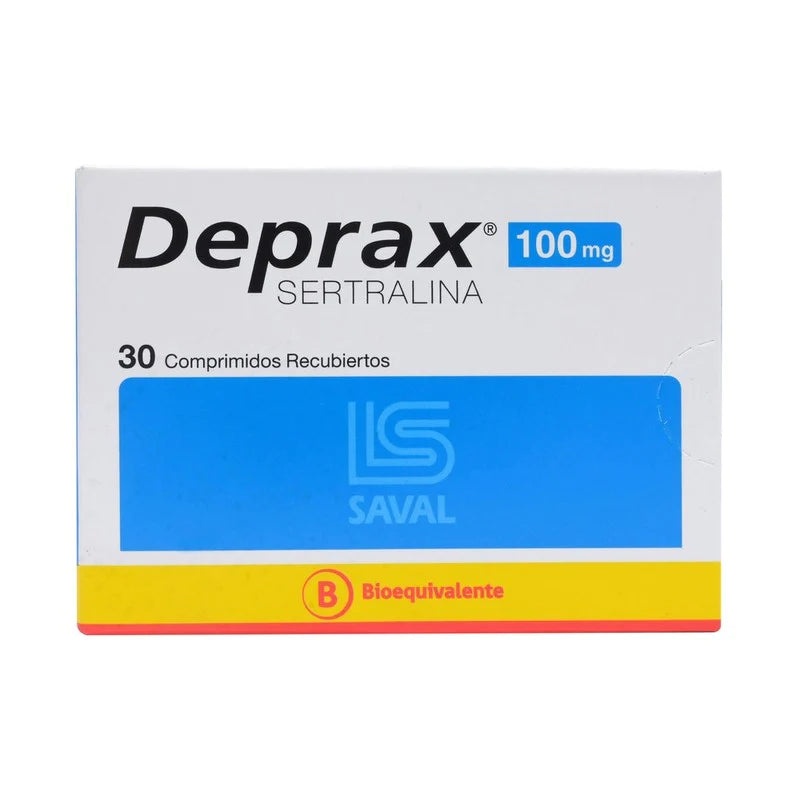
- Country of registration
- Dosage formTABLET, 100 mg
- ATC codeN06AX05
- Active substance
- Prescription requiredYes
- Manufacturer
- CompositionROJO PONCEAU 4R (CI=16255, E-124) (5,00 µg mg), CROSCARMELOSA SODICA (16 mg mg), AMARILLO ANARANJADO S (E 110, CI=15985) (100,00 µg mg)
- This information is for reference only and does not constitute medical advice. Always consult a doctor before taking any medication. Oladoctor is not responsible for medical decisions based on this content.
- Alternatives to DEPRAX 100 mg FILM-COATED TABLETSDosage form: TABLET, 100 mgActive substance: trazodoneManufacturer: Laboratorios Cinfa S.A.Prescription requiredDosage form: TABLET, 100 mgActive substance: trazodoneManufacturer: Laboratorios Normon S.A.Prescription requiredDosage form: TABLET, 100 mgActive substance: trazodoneManufacturer: Sandoz Farmaceutica S.A.Prescription required
Online doctors for DEPRAX 100 mg FILM-COATED TABLETS
Discuss questions about DEPRAX 100 mg FILM-COATED TABLETS, including use, safety considerations and prescription review, subject to medical assessment and local regulations.







Get DEPRAX 100 mg FILM-COATED TABLETS Prescription Online
Fill in a 2-min form
Tell us your symptoms, history, and what medicine you're requesting.
Pick a doctor or let us assign
Choose a specialist or we'll match you with the next available doctor.
Doctor reviews your case
Usually within 30 minutes. They may ask follow-up questions via chat.
Collect from any pharmacy
Electronic prescription sent to your email — valid across Spain.
Frequently Asked Questions
DEPRAX 100 mg FILM-COATED TABLETS requires a prescription in Spain. You can check with a doctor online whether this medicine may be appropriate for your situation.
The active ingredient in DEPRAX 100 mg FILM-COATED TABLETS is trazodone. This information helps identify medicines with the same composition but different brand names.
DEPRAX 100 mg FILM-COATED TABLETS is manufactured by Angelini Pharma Espana S.L.. Pharmacy brands and packaging may differ depending on the distributor.
Doctors such as Family doctors, Psychiatrists, Dermatologists, Cardiologists, Endocrinologists, Gastroenterologists, Pulmonologists, Nephrologists, Rheumatologists, Hematologists, Infectious disease physicians, Allergists, Geriatricians, Paediatricians, Oncologists may assess whether DEPRAX 100 mg FILM-COATED TABLETS is appropriate, depending on your situation and local regulations. You can book an online consultation to discuss your symptoms and possible next steps.
Spain has a well-developed healthcare infrastructure across major cities such as Madrid, Barcelona, Valencia, and Seville. Pharmacies are widely available and operate under strict regulations, ensuring access to prescribed medications.
You can buy DEPRAX 100 mg FILM-COATED TABLETS in Madrid, Barcelona, Seville, or Valencia at any local pharmacy with a valid prescription.
To obtain a prescription, you can use Oladoctor:
Other medicines with the same active substance (trazodone) include TRAZODONE CINFA 100 mg TABLETS, TRAZODONE NORMON 100 mg TABLETS, TRAZODONE SANDOZ 100 mg TABLETS. These may have different brand names or formulations but contain the same therapeutic ingredient. Always consult a doctor before switching or starting a new medicine.
