



DARIANTE 6 mg /24 Hours Transdermal Patches

Prescription review online
A doctor will review your case and decide whether a prescription is medically appropriate.

Talk to a doctor about this medicine
Discuss your symptoms and possible next steps in a quick online consultation.



How to use DARIANTE 6 mg/24 hours TRANSDERMAL PATCHES
Contents of the leaflet
- Introduction
- What is Dariante and what is it used for
- What you need to know before you use Dariante
- How to use Dariante
- Possible Adverse Effects
- Conservation of Dariante
- Package Contents and Additional Information
Introduction
Package Leaflet: Information for the User
Dariante 4 mg/24 h transdermal patches EFG
Dariante 6 mg/24 h transdermal patches EFG
Dariante 8 mg/24 h transdermal patches EFG
rotigotine
Read all of this leaflet carefully before you start using this medicine because it contains important information for you.
- Keep this leaflet, you may need to read it again.
- If you have any further questions, ask your doctor or pharmacist.
- This medicine has been prescribed for you only. Do not pass it on to others. It may harm them, even if their signs of illness are the same as yours.
- If you get any side effects, talk to your doctor or pharmacist. This includes any possible side effects not listed in this leaflet. See section 4.
Contents of the pack
- What is Dariante and what is it used for
- What you need to know before you use Dariante
- How to use Dariante
- Possible side effects
- Storing Dariante
- Contents of the pack and other information
1. What is Dariante and what is it used for
What is Dariante
Dariante contains the active substance rotigotine.
It belongs to a group of medicines known as “dopamine agonists”. Dopamine is an important messenger in the brain for movement.
What is Dariante used for
Dariante is used in adults to treat the signs and symptoms of:
- Parkinson's disease - Rotigotine Exeltis can be used alone or with another medicine called levodopa.

Not sure if this medicine is right for you?
Discuss your symptoms and treatment with a doctor online.
2. What you need to know before you use Dariante
Do not use Dariante if:
- you are allergicto rotigotineor any of the other ingredientsof this medicine (listed in section 6)
- you are going to have a magnetic resonance imaging(MRI) scan (diagnostic images of the inside of the body, created using magnetic energy instead of X-ray energy)
- you need a cardioversion(specific treatment for heart rhythm disturbances).
You must remove the rotigotine patch just before having an MRI scan or cardioversion to avoid skin burns because the patch contains aluminum. You can put on a new patch when these tests are finished.
Do not use rotigotine if any of the above applies to you. If you are not sure, talk to your doctor, pharmacist, or nurse first.
Warnings and precautions
Talk to your doctor, pharmacist, or nurse before you start using rotigotine. Because:
- you should have your blood pressurechecked regularly while you are using rotigotine, especially when you start treatment. Rotigotine may affect your blood pressure.
- you should have your eyeschecked regularly while you are using rotigotine. If you notice any problems with your eyes between checks, tell your doctor immediately.
- if you have severe liver problems, your doctor may need to adjust your dose. If your liver problems get worse while you are using rotigotine, tell your doctor as soon as possible.
- you may have skin reactionscaused by the patch – see ‘Skin problems caused by the patch’ in section 4.
- you may have involuntary muscle contractions that cause abnormal movements or postures, often repetitive (dystonia), abnormal postures or lateral flexion of the spine (also called pleurothotonus or Pisa syndrome). If this happens, your doctor may decide to adjust your medication.
- you may feel very sleepy or suddenly fall asleep– see ‘Driving and using machines’ in section 2.
If you experience these symptoms after starting treatment with rotigotine, contact your doctor.
Medicines used to treat Parkinson's disease should be reduced or stopped gradually. Tell your doctor if, after stopping or reducing your treatment with rotigotine, you experience symptoms such as depression, anxiety, fatigue, sweating, or pain.
You may lose consciousness
Rotigotine may cause loss of consciousness. This can happen especially when you start treatment with rotigotine or when you increase the dose. Tell your doctor if you lose consciousness or feel dizzy.
Changes in behavior and abnormal thoughts
Rotigotine may cause side effects that change your behavior (how you act). If your family or caregiver, or your doctor, are concerned about changes in your behavior, it may be helpful to tell a family member or caregiver that you are using this medicine and to read the leaflet.
This includes:
- an overwhelming urge to consume large amounts of rotigotine or other medicines used to treat Parkinson's disease
- anxiety or an overwhelming urge to behave abnormally, which you cannot control and which may harm you or others
- abnormal thoughts or behaviors.
For more information, see ‘Changes in behavior and abnormal thoughts’ in section 4.
Children and adolescents
This medicine must notbe given to childrenunder 18 years because its safety and efficacy in this age group are unknown.
Other medicines and Dariante
Tell your doctor or pharmacist if you are using, have recently used, or might use any other medicines. This includes medicines without a prescription and herbal medicines.
If you are being treated with rotigotine and levodopa at the same time, some side effects may get worse. This includes seeing or hearing things that are not real (hallucinations), uncontrolled movements related to Parkinson's disease (dyskinesia), swelling in the legs and feet.
Do not take the following medicines while you are using rotigotine - because they may reduce its effect:
- ‘antipsychotic’ medicines - used to treat certain mental illnesses
- metoclopramide - used to treat nausea and vomiting.
Tell your doctor before using rotigotine if you are taking:
- sedative medicines such as benzodiazepines or medicines used to treat mental disorders or depression
- medicines that lower blood pressure. Rotigotine may lower blood pressure when standing up - this effect could get worse when taking medicines to lower blood pressure.
Your doctor will tell you if it is safe to take these medicines while you are using rotigotine.
Using Dariante with food, drinks, and alcohol
Because rotigotine enters the bloodstream through the skin, taking food or drinks does not affect how this medicine is absorbed. You should talk to your doctor if you can drink alcohol while using rotigotine.
Pregnancy and breastfeeding
Do not use rotigotine if you are pregnant. This is because the effects of rotigotine on pregnancy and the fetus are not known.
Do not breastfeed while you are using rotigotine. This is because rotigotine may pass into breast milk and affect your baby. It may also reduce the amount of milk produced.
If you are pregnant or breastfeeding, think you may be pregnant, or plan to become pregnant, ask your doctor or pharmacist for advice before using this medicine.
Driving and using machines
Rotigotine may make you feel very sleepy or suddenly fall asleep. If this happens, do not drive. In rare cases, some people have fallen asleep while driving, which has resulted in accidents.
Also, do not use tools or machines if you feel very sleepy - or perform any activity where you could put yourself or others at risk of serious injury.
3. How to use Dariante
Follow the instructions for administration of this medicine exactly as told by your doctor or pharmacist. If you are not sure, ask your doctor or pharmacist.
Which patch dose to use
Rotigotine is available in patches of different doses that release the medicine over 24 hours. The doses are 1 mg/24 h, 2 mg/24 h, and 3 mg/24 h for the treatment of Restless Legs Syndrome.
- Your starting dose will be a 1 mg/24 h patch per day.
- From the second week onwards, your daily dose will be increased by 1 mg weekly until you reach the right maintenance dose for you. This is when you and your doctor confirm that your symptoms are adequately controlled and that the side effects of the medicine are acceptable.
- Follow carefully the instructions given by your doctor.
- The maximum dose is 3 mg per day.
If you have to stop using this medicine, see “If you stop using Dariante” in section 3.
How to use the Dariante patches:
Rotigotine is a patch that you apply to your skin.
- Check that you have removed the used patch before applying a new one.
- Apply the new patch to a different area of skin each day.
- Leave the patch on your skin for 24 hours, then remove it and apply a new one.
- Change the patchat about the same time every day.
- Do not cutthe rotigotine patches.
Where to apply the patch
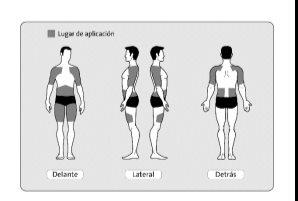 Apply the adhesive side of the patch to clean, dry, and healthy skin on the following areas, as indicated by the gray areas in the drawing:
- Shoulder or upper arm.
- Abdomen.
- Sides (between the ribs and hips).
- Thigh or hip
To avoid skin irritation
|
|
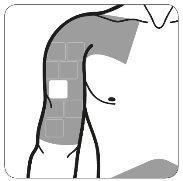
If you continue to have skin problems caused by the patch, see “Skin problems caused by the patch” in section 4 for more information.
To prevent the patch from coming loose or falling off
- Do notapply the patch to an area where it may be rubbed by tight clothing.
- Do notuse creams, oils, lotions, powders, or any other skin productswhere you are going to apply the patch. Nor on top of or near another patch that you are already using.
- If you need to apply a patch to an area of skin where you have hair, you should shave(depilate) the area of skin at least 3 days beforeapplying the patch to that site.
- If the edges of the patch come loose, you can secure the patch with tape.
If the patch falls off, you should apply a new one for the rest of the day and the next day, apply a new patch at the usual time.
- You should avoidheating the patch area- for example, too much sunlight, saunas, hot baths, hot compresses, or hot water bottles. This is because the medicine could be released more quickly. If you think you have overheated, contact your doctor or pharmacist.
- Always check that the patch has not fallen off after activities such as bathing, showering, or exercising.
- If the patch has irritated your skin, you should keepthe irritated area protected from direct sunlight. This is because sun exposure could cause changes in skin color.
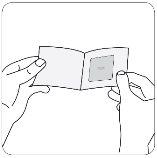
How to use the patch
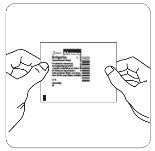
- Each patch is packaged individually in a pouch.
- Before you open the pouch, decide where you are going to apply the new patch and check that you have removed the used patch.
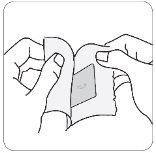
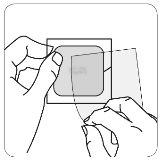
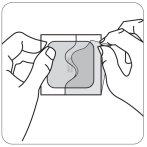
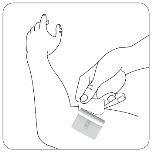
- When you have opened the pouch and removed the disposable layer from the patch, you should apply the patch to your skin immediately.
|
|
|
|
|
|
Remove the protective layer from the top of the patch, which is beige in color, and discard it. A transparent protective liner (release liner) covers the adhesive side of the patch. |
|
|
|
|
|
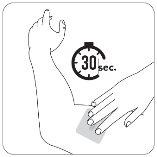
Hold it pressed for about 30 seconds. This ensures that the patch is in contact with your skin and the edges adhere well. Wash your hands with water and soap immediately after handling the patch. |
|
How to remove the used patch
- Remove the used patch slowly and carefully.
- Gently wash the area with lukewarm water and a mild soap. This will remove any remaining adhesive from your skin. You can also use a little baby oil to remove any remaining adhesive.
- Do not use alcohol or other liquid solvents - such as nail varnish remover. This could irritate your skin.
If you use more Dariante than you should
Using higher doses of rotigotine than your doctor has told you may cause side effects such as nausea or vomiting, low blood pressure, seeing or hearing things that are not real (hallucinations), confusion, extreme sleepiness, involuntary movements, and convulsions. If this happens, tell your doctor or go to the hospital as soon as possible. They will tell you what to do.
In case of overdose or accidental ingestion, consult your doctor or pharmacist immediately or call the Toxicology Information Service, telephone 91 562 04 20, stating the medicine and the amount taken.
If you forget to change the patch at the usual time
- If you have forgotten to change the patch at the usual time, change it as soon as you remember. Remove the used patch and apply a new one.
- If you have forgotten to apply a new patch after removing the used patch, apply a new one as soon as you remember.
In both cases, the next day, apply a new patch at the usual time. Do not use a double dose to make up for forgotten doses.
If you stop using Dariante
Do not stop using rotigotine without talking to your doctor first. Stopping treatment suddenly could cause a condition called ‘neuroleptic malignant syndrome’ that can put your life at risk. The signs include: loss of muscle movement (akinesia), muscle stiffness, fever, unstable blood pressure, increased heart rate (tachycardia), confusion, decreased consciousness (e.g., coma).
If your doctor tells you to stop using rotigotine, the daily doseof rotigotine should be gradually reduced:
- 1 mg every 2 days - if you are using rotigotina for Restless Legs Syndrome
If you have any further questions about the use of this medicine, ask your doctor or pharmacist.

Started taking the medicine and have questions?
Discuss your symptoms and treatment with a doctor online.
4. Possible Adverse Effects
Like all medicines, this medicine can cause adverse effects, although not all people suffer from them. Inform your doctor, pharmacist, or nurse if you notice any adverse effect.
Most Likely Adverse Effects at the Start of Treatment
You may experience nauseaand vomitingat the start of treatment. These effects are usually mild or moderate and last for a short time. You should consult your doctorif the effects last for a long time or if you are concerned.
Skin Problems Caused by the Patch
- You may experience redness and itching in the skin area where the patch has been applied – these reactions are usually mild or moderate.
- These reactions usually disappear a few hours after removing the patch.
- Consult your doctorif you have a skin reaction that lasts for more than a few days, if it is severe, or if it spreads beyond the area covered by the patch.
- Avoid exposure to the sun and sunlamps in skin areas that show any type of reaction caused by the patch.
- To help prevent skin reactions, the patch should be placed on a different site each day, and the same area should only be used again after 14 days.
You May Experience Loss of Consciousness
Rotigotine may cause loss of consciousness. This can happen especially when starting treatment with rotigotine or when increasing the dose. Inform your doctor if you lose consciousness or feel dizzy.
Changes in Behavior and Abnormal Thoughts
Inform your doctor if you notice any changes in behavior, thinking, or both, as indicated below.
Your doctor will indicate how to manage or reduce the symptoms.
If your family or caregiver, or your doctor, are concerned about changes in your behavior, it may be helpful to tell a family member or caregiver that you are using this medicine and have them read the leaflet. Rotigotine may cause anxiety or an overwhelming urge to behave in an unusual way and be unable to control the impulse, attack, or temptation to perform certain actions that may harm you or others.
These actions may include:
- strong addiction to gambling – even seriously affecting you or your family
- altered or increased sexual interest and behavior that causes great concern for you and others - for example, increased sexual desire
- uncontrolled shopping or excessive spending
- episodes of binge eating (eating large amounts of food in a short period) or compulsive eating (eating more food than normal or more than needed to satisfy your appetite).
Rotigotine may cause other abnormal behaviors and thoughts, which may include:
- abnormal thoughts about reality
- delusional ideas and hallucinations (seeing or hearing things that are not real)
- confusion
- disorientation
- aggressive behavior
- agitation
- delirium.
Inform your doctor if you notice any changes in your behavior, thinking, or both, as indicated above.
Your doctor will indicate how to manage or reduce the symptoms.
Allergic Reactions
Inform your doctor if you notice signs of an allergic reaction – which may include swelling of the face, tongue, or lips.
Adverse Effects if You Use Rotigotine for Parkinson's Disease
Inform your doctor, pharmacist, or nurse if you experience any of the following adverse effects:
Very Common: may affect more than 1 in 10 patients
- headache
- drowsiness or dizziness
- nausea, vomiting
- skin irritation at the patch application site, such as redness and itching
Common: may affect up to 1 in 10 patients
- falls
- hypo
- weight loss
- swelling in the legs and feet
- feeling of weakness (fatigue), feeling of tiredness
- increased heart rate (palpitations)
- constipation, dry mouth, heartburn
- redness, increased sweating, itching
- vertigo (feeling of spinning)
- seeing or hearing things that are not real (hallucinations)
- low blood pressure when standing up, high blood pressure
- difficulty staying asleep, sleep disorders, difficulty sleeping, nightmares, strange dreams
- involuntary movements related to Parkinson's disease (dyskinesia)
- loss of consciousness, feeling of dizziness when standing up due to a drop in blood pressure
- inability to control the impulse to perform a harmful action, including addiction to gambling, meaningless repetitive actions, compulsive shopping, or excessive spending
- episodes of binge eating (eating large amounts of food in a short period), compulsive eating (eating more food than normal or more than needed to satisfy your appetite)
Uncommon: may affect up to 1 in 100 patients
- blurred vision
- weight gain
- allergic reaction
- decrease in blood pressure
- increase in heart rate
- increase in sexual desire
- abnormal heart rhythm
- stomach discomfort and pain
- generalized itching, skin irritation
- sudden sleepiness without warning
- inability to achieve or maintain an erection
- feeling agitated, disoriented, confused, or paranoid
- abnormal liver test results or elevated levels
- visual disturbances such as seeing colors or lights
- increase in creatine phosphokinase (CPK) levels (CPK is an enzyme found mainly in skeletal muscle).
Rare: may affect up to 1 in 1,000 patients
- delusional ideas
- delirium
- feeling of irritability
- aggressive behavior
- psychotic disorders
- rash on large areas of the body
- involuntary muscle spasms (convulsions)
Unknown: the frequency is not known
- anxiety about taking high doses of medicines like rotigotine – more than necessary for the treatment of the disease. This is known as 'dopaminergic dysregulation syndrome' and may lead to excessive use of rotigotine
- diarrhea
- dropped head syndrome
- rhabdomyolysis (a rare and severe muscle disorder that causes pain, sensitivity, and weakness in the muscles and can lead to kidney problems)
Inform your doctor, pharmacist, or nurse if you experience any of these adverse effects.
Reporting Adverse Effects
If you experience any type of adverse effect, consult your doctor or pharmacist, even if it is a possible adverse effect that is not listed in this leaflet. You can also report them directly through the Spanish Pharmacovigilance System for Human Use Medicines (www.notificaram.es). By reporting adverse effects, you can contribute to providing more information on the safety of this medicine.
5. Conservation of Dariante
Keep this medicine out of the sight and reach of children.
Do not use this medicine after the expiration date that appears on the packaging and on the blister after "EXP". The expiration date is the last day of the month indicated.
This medicine does not require special storage conditions.
What to Do with Used and Unused Patches
- Used patches still contain the active ingredient, 'rotigotine', which can be hazardous to others. Fold the used patch with the adhesive side facing inward. Put the patch in the original envelope and then throw it away in a safe place, out of the reach of children.
- Medicines should not be thrown away through wastewater or household waste. Deposit the packaging and medicines you no longer need at the Sigre collection point. Ask your pharmacist how to dispose of the packaging and medicines you no longer need. This will help protect the environment.
6. Package Contents and Additional Information
Composition of Dariante
The active ingredient is rotigotine.
- 4 mg/24 h:
One patch releases 4 mg of rotigotine every 24 hours. Each 18.4 cm2 patch contains 7.36 mg of rotigotine.
- 6 mg/24 h:
One patch releases 6 mg of rotigotine every 24 hours. Each 27.6 cm2 patch contains 11.04 mg of rotigotine.
- 8 mg/24 h:
One patch releases 8 mg of rotigotine every 24 hours. Each 36.8 cm2 patch contains 14.72 mg of rotigotine.
The other components are:
- Supporting layer: pigmented polyethylene, aluminum vapor-coated polyester, orange printing ink.
- Matrix layer, which contains the active substance: tocopherol, paraffin, povidone K90, silicone adhesive.
- Release layer: fluorosilicone-coated polyester film.
- Covering layer: fluorosilicone-coated polyester film.
Appearance of the Product and Package Contents
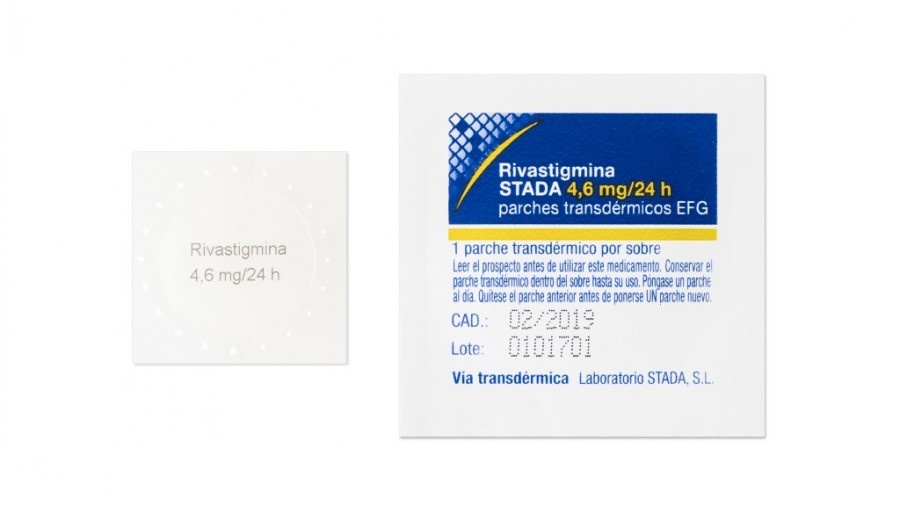
Dariante is a transdermal patch. It is thin, square in shape with rounded corners. The outer part is brown in color and bears the inscription:
4 mg/24h: "Rotigotine 4 mg/24 h"
6 mg/24h: "Rotigotine 6 mg/24 h".
8 mg/24h: "Rotigotine 8 mg/24 h".
Dariante is available in the following formats:
Packages containing 7, 14, 28, 30, or 84 (multiple package containing 3 packages of 28) patches, each patch is included in an individual envelope.
Not all package sizes may be marketed.
Marketing Authorization Holder and Manufacturer
Marketing Authorization Holder
Exeltis Healthcare, S.L
Avenida de Miralcampo, 7
Polígono Industrial Miralcampo
19200 Azuqueca de Henares.
Guadalajara, Spain
Manufacturer
Luye Pharma AG
Am Windfeld 35
83714 Miesbach
Germany
This medicine is authorized in the Member States of the European Economic Area under the following names:
Germany: Rotigotin Luye 4 mg/24 Stunden Transdermales Pflaster
Rotigotin Luye 6 mg/24 Stunden Transdermales Pflaster
Rotigotin Luye 8 mg/24 Stunden Transdermales Pflaster
Spain: Dariante 4 mg/24 h transdermal patches EFG
Dariante 6 mg/24 h transdermal patches EFG
Dariante 8 mg/24 h transdermal patches EFG
Italy: Rotigotina Luye 4 mg/ore cerotto transdermico
Rotigotina Luye 6 mg/ore cerotto transdermico
Rotigotina Luye 8 mg/ore cerotto transdermico
Date of the Last Revision of this Leaflet:March 2024
Other Sources of Information
Detailed information about this medicine is available on the website of the Spanish Agency for Medicines and Health Products (AEMPS) (http://www.aemps.gob.es/).
- Country of registration
- Dosage formTRANSDERMAL PATCH, 6 mg/24 h
- ATC codeN04BC09
- Average pharmacy price77.94 EUR
- Active substance
- Prescription requiredYes
- Manufacturer
- This information is for reference only and does not constitute medical advice. Always consult a doctor before taking any medication. Oladoctor is not responsible for medical decisions based on this content.
- Alternatives to DARIANTE 6 mg/24 hours TRANSDERMAL PATCHESDosage form: TRANSDERMAL PATCH, 1 mg/24 hActive substance: rotigotineManufacturer: Exeltis Healthcare S.L.Prescription requiredDosage form: TRANSDERMAL PATCH, 2 mg/24 hActive substance: rotigotineManufacturer: Exeltis Healthcare S.L.Prescription requiredDosage form: TRANSDERMAL PATCH, 3 mg/24 hActive substance: rotigotineManufacturer: Exeltis Healthcare S.L.Prescription required
Online doctors for DARIANTE 6 mg/24 hours TRANSDERMAL PATCHES
Discuss questions about DARIANTE 6 mg/24 hours TRANSDERMAL PATCHES, including use, safety considerations and prescription review, subject to medical assessment and local regulations.



Get DARIANTE 6 mg/24 hours TRANSDERMAL PATCHES Prescription Online
Fill in a 2-min form
Tell us your symptoms, history, and what medicine you're requesting.
Pick a doctor or let us assign
Choose a specialist or we'll match you with the next available doctor.
Doctor reviews your case
Usually within 30 minutes. They may ask follow-up questions via chat.
Collect from any pharmacy
Electronic prescription sent to your email — valid across Spain.
Frequently Asked Questions
DARIANTE 6 mg/24 hours TRANSDERMAL PATCHES requires a prescription in Spain. You can check with a doctor online whether this medicine may be appropriate for your situation.
The active ingredient in DARIANTE 6 mg/24 hours TRANSDERMAL PATCHES is rotigotine. This information helps identify medicines with the same composition but different brand names.
The average pharmacy price for DARIANTE 6 mg/24 hours TRANSDERMAL PATCHES is around 77.94 EUR. Prices may vary depending on the manufacturer and dosage form.
DARIANTE 6 mg/24 hours TRANSDERMAL PATCHES is manufactured by Exeltis Healthcare S.L.. Pharmacy brands and packaging may differ depending on the distributor.
Doctors such as Family doctors, Psychiatrists, Dermatologists, Cardiologists, Endocrinologists, Gastroenterologists, Pulmonologists, Nephrologists, Rheumatologists, Hematologists, Infectious disease physicians, Allergists, Geriatricians, Paediatricians, Oncologists may assess whether DARIANTE 6 mg/24 hours TRANSDERMAL PATCHES is appropriate, depending on your situation and local regulations. You can book an online consultation to discuss your symptoms and possible next steps.
Spain has a well-developed healthcare infrastructure across major cities such as Madrid, Barcelona, Valencia, and Seville. Pharmacies are widely available and operate under strict regulations, ensuring access to prescribed medications.
You can buy DARIANTE 6 mg/24 hours TRANSDERMAL PATCHES in Madrid, Barcelona, Seville, or Valencia at any local pharmacy with a valid prescription.
To obtain a prescription, you can use Oladoctor:
Other medicines with the same active substance (rotigotine) include DARIANTE 1 mg/24 hours TRANSDERMAL PATCHES, DARIANTE 2 mg/24 hours TRANSDERMAL PATCHES, DARIANTE 3 mg/24 hours TRANSDERMAL PATCHES. These may have different brand names or formulations but contain the same therapeutic ingredient. Always consult a doctor before switching or starting a new medicine.
