



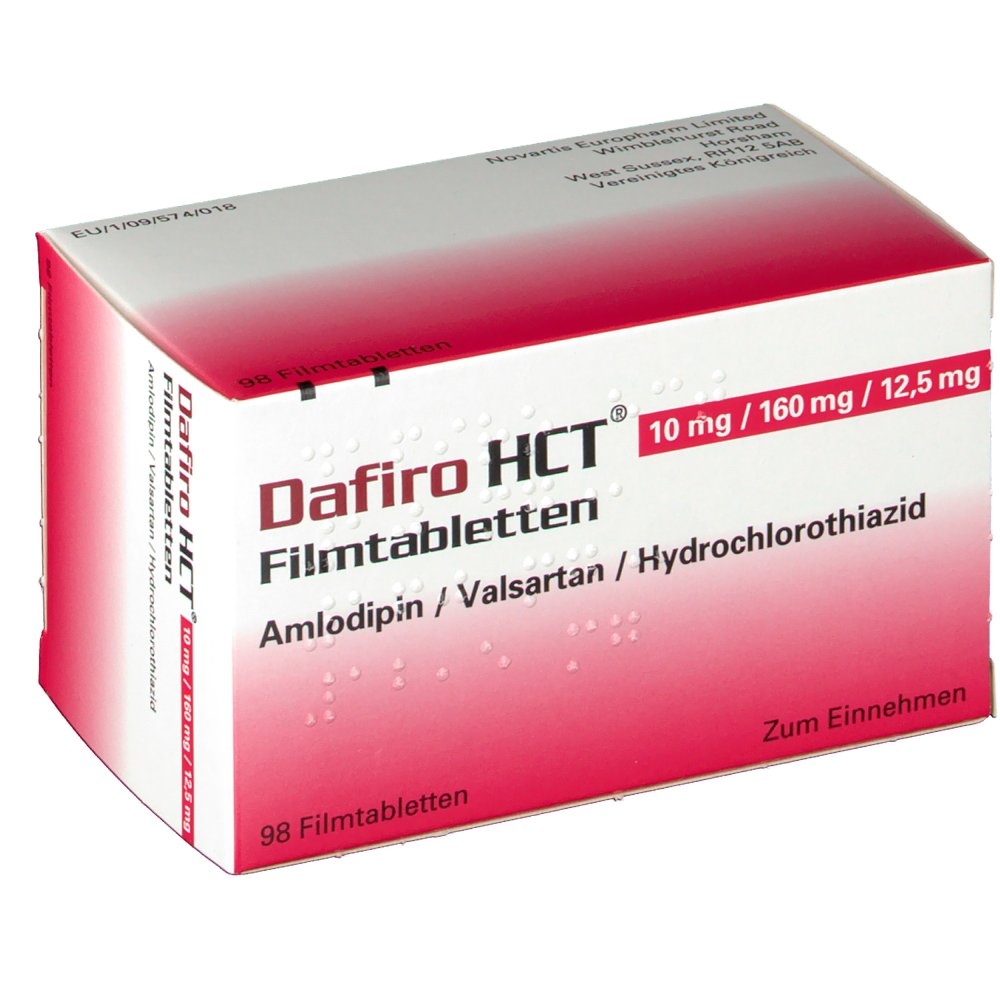
DAFIRO 10 mg/160 mg /12.5 Mg Film-Coated Tablets

Prescription review online
A doctor will review your case and decide whether a prescription is medically appropriate.

Talk to a doctor about this medicine
Discuss your symptoms and possible next steps in a quick online consultation.



How to use DAFIRO HCT 10 mg/160 mg/12.5 mg FILM-COATED TABLETS
Contents of the leaflet
- Introduction
- What is Dafiro HCT and what is it used for
- What you need to know before you take Dafiro HCT
- How to take Dafiro HCT
- Possible Adverse Effects
- Storage of Dafiro HCT
- Packaging Content and Additional Information
Introduction
Package Leaflet: Information for the User
Dafiro HCT 5mg/160mg/12.5mg film-coated tablets
Dafiro HCT 10mg/160mg/12.5mg film-coated tablets
Dafiro HCT 5mg/160mg/25mg film-coated tablets
Dafiro HCT 10mg/160mg/25mg film-coated tablets
Dafiro HCT 10mg/320mg/25mg film-coated tablets
amlodipine/valsartan/hydrochlorothiazide
Read all of this leaflet carefully before you start taking this medicine because it contains important information for you.
- Keep this leaflet, you may need to read it again.
- If you have any further questions, ask your doctor or pharmacist.
- This medicine has been prescribed for you only. Do not pass it on to others. It may harm them, even if their signs of illness are the same as yours.
- If you get any side effects, talk to your doctor or pharmacist. This includes any possible side effects not listed in this leaflet. See section 4.
Contents of the pack and other information
- What is Dafiro HCT and what is it used for
- What you need to know before you take Dafiro HCT
- How to take Dafiro HCT
- Possible side effects
- Storage of Dafiro HCT
- Contents of the pack and other information
1. What is Dafiro HCT and what is it used for
Dafiro HCT tablets contain three active substances called amlodipine, valsartan, and hydrochlorothiazide. All these substances help to control high blood pressure.
- Amlodipine belongs to a group of substances called «calcium channel blockers». Amlodipine prevents calcium from entering the blood vessel wall, which prevents the blood vessels from narrowing.
- Valsartan belongs to a group of substances called «angiotensin II receptor antagonists». Angiotensin II is produced by the body and makes the blood vessels narrow, thereby increasing blood pressure. Valsartan works by blocking the effect of angiotensin II.
- Hydrochlorothiazide belongs to a group of substances known as «thiazide diuretics». Hydrochlorothiazide increases urine production, which also lowers blood pressure.
As a result of the three mechanisms, the blood vessels relax and blood pressure decreases.
Dafiro HCT is used to treat high blood pressure in adult patients whose blood pressure is already controlled while taking amlodipine, valsartan, and hydrochlorothiazide and who can benefit from taking a single tablet containing the three substances.

Not sure if this medicine is right for you?
Discuss your symptoms and treatment with a doctor online.
2. What you need to know before you take Dafiro HCT
Do not take Dafiro HCT
- if you are more than 3 months pregnant. (In any case, it is recommended to avoid taking Dafiro HCT also at the start of your pregnancy - see section Pregnancy).
- if you are allergic to amlodipine or any other calcium channel blocker, valsartan, hydrochlorothiazide, sulfonamide-derived medicines (medicines used to treat chest or urinary tract infections), or to any of the other ingredients of this medicine (listed in section 6).
If you think you may be allergic, do not take Dafiro HCT and inform your doctor.
- if you have liver disease, destruction of the small bile ducts within the liver (biliary cirrhosis) leading to the accumulation of bile in the liver (cholestasis).
- if you have severe kidney problems or if you are on dialysis.
- if you are unable to urinate (anuria).
- if your potassium or sodium levels in the blood are too low despite treatment to increase potassium or sodium levels in the blood.
- if your calcium levels in the blood are too high despite treatment to reduce calcium levels in the blood.
- if you have gout (uric acid crystals in the joints).
- if you have severe low blood pressure (hypotension).
- if you have narrowing of the aortic valve (aortic stenosis) or cardiogenic shock (a situation where your heart cannot supply enough blood to your body).
- if you have heart failure after a heart attack.
- if you have diabetes or kidney problems and are being treated with a blood pressure-lowering medicine that contains aliskiren.
Do not take Dafiro HCT and inform your doctor if any of the above applies to you.
Warnings and precautions
Consult your doctor or pharmacist before starting to take Dafiro HCT
- if you have low potassium or magnesium levels in the blood (with or without symptoms such as muscle weakness, muscle spasms, abnormal heart rhythm).
- if you have low sodium levels in the blood (with or without symptoms such as fatigue, confusion, muscle contractions, convulsions).
- if you have high calcium levels in the blood (with or without symptoms such as nausea, vomiting, constipation, stomach pain, frequent urination, thirst, muscle contractions, and muscle weakness).
- if you have kidney problems, have had a kidney transplant, or have been told you have narrowing of the arteries to the kidneys.
- if you have liver problems.
- if you have or have had heart failure or coronary heart disease, in particular if you have been prescribed the maximum dose of Dafiro HCT (10 mg/320 mg/25 mg).
- if you have had a heart attack. Follow your doctor's instructions to carefully start the dosage. Your doctor may also check your kidney function.
- if your doctor has told you that you have narrowing of the heart valves (so-called «aortic or mitral stenosis») or that the thickness of your heart muscle has increased abnormally (so-called «hypertrophic cardiomyopathy»).
- if you suffer from aldosteronism. A disease in which the adrenal glands produce too much aldosterone hormone. In this case, the use of Dafiro HCT is not recommended.
- if you suffer from a disease called systemic lupus erythematosus (also known as «lupus» or «SLE»).
- if you have diabetes (high blood sugar levels).
- if you have high cholesterol or triglyceride levels in the blood.
- if you experience skin reactions such as rash after sun exposure.
- if you have had an allergic reaction to other blood pressure-lowering medicines or diuretics, especially if you suffer from asthma and allergies.
- if you have been ill (with vomiting or diarrhea).
- if you have experienced swelling, in particular in the face and throat, while taking other medicines (including ACE inhibitors). If you have these symptoms, stop taking Dafiro HCT and contact your doctor immediately. You should never take Dafiro HCT again.
- if you experience abdominal pain, nausea, vomiting, or diarrhea after taking Dafiro HCT. Your doctor will decide whether to continue treatment. Do not stop taking Dafiro HCT on your own.
- if you experience dizziness and/or fainting during treatment with Dafiro HCT, inform your doctor as soon as possible.
- if you experience a decrease in vision or eye pain. These can be symptoms of fluid accumulation in the vascular layer of the eye (choroidal effusion) or increased eye pressure and can occur within hours to a week of administration of Dafiro HCT. If left untreated, this can lead to permanent vision loss.
- if you are taking any of the following medicines used to treat high blood pressure:
- an ACE inhibitor (e.g., enalapril, lisinopril, ramipril), especially if you have kidney problems related to diabetes.
- aliskiren.
- if you have had skin cancer or if you develop an unexpected skin lesion during treatment. Treatment with hydrochlorothiazide, in particular long-term use at high doses, may increase the risk of certain types of skin cancer and lip cancer (non-melanoma skin cancer). Protect your skin from sun and UV exposure while taking Dafiro HCT.
- if you have had respiratory or lung problems (such as inflammation or fluid in the lungs) after taking hydrochlorothiazide in the past. If you experience shortness of breath or severe difficulty breathing after taking Dafiro HCT, seek medical attention immediately.
Your doctor may check your kidney function, blood pressure, and electrolyte levels (e.g., potassium) in the blood at regular intervals.
See also the information under the heading “Do not take Dafiro HCT”.
Tell your doctor if any of the above applies to you.
Children and adolescents
Dafiro HCT is not recommended for use in children and adolescents under 18 years of age.
Elderly (65 years and older)
Dafiro HCT can be used in people 65 years and older at the same dose as used in other adults and in the same way as they have already taken the three substances called amlodipine, valsartan, and hydrochlorothiazide. The blood pressure of elderly patients should be checked periodically, especially those taking the maximum dose of Dafiro HCT (10 mg/320 mg/25 mg).
Other medicines and Dafiro HCT
Tell your doctor or pharmacist if you are using, have recently used, or might use any other medicines. Your doctor may need to change your dose and/or take other precautions. In some cases, you may need to stop taking one of the medicines. This is especially important if you are using any of the following medicines:
Do not take with:
- lithium (a medicine used to treat certain types of depression);
- medicines or substances that may increase potassium levels in the blood. These include potassium supplements or salt substitutes that contain potassium, potassium-sparing medicines, and heparin;
- an ACE inhibitor or aliskiren (see also the information under the headings “Do not take Dafiro HCT” and “Warnings and precautions”.
Should be used with caution with:
- alcohol, sleeping pills, and anesthetics (medicines for patients who are going to have an operation and other procedures);
- amantadine (treatment for Parkinson's disease, also used to treat or prevent certain viral diseases);
- anticholinergic medicines (medicines used to treat various disorders such as gastrointestinal spasms, bladder spasms, asthma, motion sickness, muscle spasms, Parkinson's disease, and as an aid in anesthesia);
- anticonvulsant and mood-stabilizing medicines used to treat epilepsy and bipolar disorder (e.g., carbamazepine, phenobarbital, phenytoin, fosphenytoin, primidone);
- cholestyramine, colestipol, or other resins (substances used mainly to treat high lipid levels in the blood);
- simvastatin (a medicine used to control high cholesterol levels);
- cyclosporine (a medicine used in transplants to prevent organ rejection or for other conditions, e.g., rheumatoid arthritis or atopic dermatitis);
- cytotoxic medicines (used to treat cancer), such as methotrexate or cyclophosphamide;
- digoxin or other digitalis glycosides (medicines used to treat heart problems);
- verapamil, diltiazem (heart medicines);
- iodinated contrast media (agents used in imaging studies);
- medicines for treating diabetes (oral medicines such as metformin or insulins);
- medicines for treating gout, such as allopurinol;
- medicines that can increase blood sugar levels (beta-blockers, diazoxide);
- medicines that can induce «torsades de pointes» (irregular heartbeat), such as antiarrhythmics (medicines used to treat heart problems) and some antipsychotics;
- medicines that can reduce sodium levels in the blood, such as antidepressants, antipsychotics, antiepileptics;
- medicines that can reduce potassium levels in the blood, such as diuretics (medicines for urination), corticosteroids, laxatives, amphotericin, or penicillin G;
- medicines used to increase blood pressure, such as adrenaline or noradrenaline;
- medicines used for HIV/AIDS (e.g., ritonavir, indinavir, nelfinavir);
- medicines used to treat fungal infections (e.g., ketoconazole, itraconazole);
- medicines used to treat inflammation and ulcers of the esophagus (carbenoxolone);
- medicines used to relieve pain or inflammation, especially nonsteroidal anti-inflammatory medicines (NSAIDs), including selective COX-2 inhibitors;
- muscle relaxants (medicines to relax muscles used during operations);
- nitroglycerin and other nitrates, or other substances called «vasodilators»;
- other medicines used to treat high blood pressure, including methyldopa;
- rifampicin (used, for example, to treat tuberculosis), erythromycin, clarithromycin (antibiotics);
- St. John's Wort;
- dantrolene (in infusion for severe body temperature abnormalities);
- tacrolimus (used to control the body's immune response to allow it to accept a transplanted organ);
- vitamin D and calcium salts.
Taking Dafiro HCT with food, drinks, and alcohol
People who have been prescribed Dafiro HCT should not consume grapefruit or grapefruit juice. This is because grapefruit and grapefruit juice can lead to an increase in the levels of the active substance amlodipine in the blood, which can cause an unpredictable increase in the blood pressure-lowering effects of Dafiro HCT. Consult your doctor before drinking alcohol. Alcohol can greatly lower your blood pressure and/or increase the possibility of dizziness or fainting.
Pregnancy and breastfeeding
Pregnancy
You must inform your doctorif you are pregnant, think you may be pregnant, or are planning to become pregnant. Your doctor will normally advise you to stop taking Dafiro HCT before you become pregnant or as soon as you find out you are pregnant, and will recommend that you take another blood pressure-lowering medicine instead. Dafiro HCT is not recommended during the first trimester of pregnancy and must not be used from the second trimester of pregnancy onwards as it may cause harm to your baby.
Breastfeeding
Tell your doctorif you are about to start or are already breastfeeding. Amlodipine has been shown to pass into breast milk in small amounts. Dafiro HCT is not recommended for use in women during breastfeeding. Your doctor may decide to give you a treatment that is more suitable if you want to breastfeed, especially for newborns or premature babies.
Consult your doctor or pharmacist before taking any medicine.
Driving and using machines
As with other medicines used to treat high blood pressure, you may feel dizzy, sleepy, nauseous, or have a headache. If you experience these symptoms, do not drive or use tools or machines.
3. How to take Dafiro HCT
Follow the instructions for administration of this medicine exactly as told by your doctor. If you are unsure, consult your doctor again. This will help you get the best results and reduce the risk of side effects.
The usual dose of Dafiro HCT is one tabletper day.
- It is best to take the tablet at the same time each day. The best time is in the morning.
- Swallow the tablet whole with a glass of water.
- You can take Dafiro HCT with or without food. Do not take Dafiro HCT with grapefruit or grapefruit juice.
Depending on your response to treatment, your doctor may suggest a higher or lower dose.
Do not exceed the prescribed dose.
If you take more Dafiro HCT than you should
If you have accidentally taken too many Dafiro HCT tablets, consult your doctor immediately. You may need medical attention. Excess fluid may accumulate in the lungs (pulmonary edema) causing difficulty breathing that can develop up to 24-48 hours after ingestion.
If you forget to take Dafiro HCT
If you forget to take a dose of this medicine, take it as soon as you remember and then take the next dose at the usual time. If it is almost time for the next dose, only take the next tablet at the usual time. Do nottake a double dose (two tablets at the same time) to make up for missed doses.
If you stop taking Dafiro HCT
Stopping your treatment with Dafiro HCT may cause your condition to worsen. Do not stop taking the medicine unless your doctor tells you to.
Always take this medicine, even if you feel well
Hypertensive patients often do not notice any symptoms of their problem. Many feel well. It is very important that you take this medicine exactly as your doctor has told you to get the best results and reduce the risk of side effects. Keep your appointments with your doctor even if you feel well.
If you have any further questions on the use of this medicine, ask your doctor or pharmacist.

Started taking the medicine and have questions?
Discuss your symptoms and treatment with a doctor online.
4. Possible Adverse Effects
Like all medicines, this medicine can cause adverse effects, although not all people suffer from them.
As with any combination containing three active principles, the adverse effects associated with each individual component cannot be excluded. The adverse effects observed with Dafiro HCT or one of its three active principles (amlodipine, valsartan, and hydrochlorothiazide) are listed below and may occur with the use of Dafiro HCT.
Some adverse effects can be serious and require immediate medical attention.
Consult your doctor immediately if, after taking this medicine, you experience any of the following serious adverse effects:
Frequent(may affect up to 1 in 10patients):
- dizziness
- low blood pressure (feeling of fainting, dizziness, sudden loss of consciousness)
Uncommon(may affect up to 1 in 100patients):
- decreased urine production (reduced kidney function)
Rare(may affect up to 1 in 1,000patients):
- spontaneous bleeding
- irregular heartbeat
- liver disorder
Very Rare(may affect up to 1 in 10,000patients):
- sudden wheezing, chest pain, shortness of breath, or difficulty breathing
- swelling of the eyelids, face, or lips
- swelling of the tongue and throat, causing great difficulty breathing
- intestinal angioedema: swelling in the intestine with symptoms such as abdominal pain, nausea, vomiting, and diarrhea
- severe skin reactions, including intense rash, hives, redness of the skin all over the body, severe itching, blistering, peeling, and inflammation of the skin, inflammation of the mucous membranes (Stevens-Johnson Syndrome, toxic epidermal necrolysis) or other allergic reactions
- acute respiratory distress (signs include severe shortness of breath, fever, weakness, and confusion)
- heart attack
- pancreatitis, which can cause severe abdominal pain and back pain accompanied by a great feeling of discomfort
- weakness, bruising, fever, and frequent infections
- stiffness
Other adverse effects may include:
Very Common (may affect more than 1 in 10patients)
- low potassium levels in the blood
- increased lipids in the blood
Common (may affect up to 1 in 10patients)
- drowsiness
- palpitations (feeling the heartbeat)
- hot flashes
- swelling of the ankles (edema)
- abdominal pain
- stomach discomfort after eating
- fatigue
- headache
- frequent urination
- high uric acid levels in the blood
- low magnesium levels in the blood
- low sodium levels in the blood
- dizziness, dizziness when standing up
- decreased appetite
- nausea and vomiting
- itchy rash and other types of rash
- inability to achieve or maintain an erection
Uncommon(may affect up to 1 in 100patients)
- rapid heartbeat
- feeling of everything spinning around
- vision disorder
- stomach discomfort
- chest pain
- increased urea, creatinine, and uric acid in the blood
- high levels of calcium, lipids, or sodium in the blood
- low potassium levels in the blood
- bad breath
- diarrhea
- dry mouth
- weight gain
- loss of appetite
- altered sense of taste
- back pain
- joint swelling
- cramps/weakness/pain in the muscles
- pain in the limbs
- inability to stand or walk normally
- weakness
- abnormal coordination
- dizziness when standing up or after exercise
- lack of energy
- sleep disturbances
- tingling or numbness
- neuropathy
- sudden and transient loss of consciousness
- low blood pressure when standing up
- cough
- shortness of breath
- throat irritation
- excessive sweating
- itching
- swelling, redness, and pain along a vein
- redness of the skin
- tremor
- mood changes
- anxiety
- depression
- drowsiness
- altered taste
- fainting
- loss of pain sensation
- visual disturbances
- visual impairment
- ringing in the ears
- runny nose/snotty nose caused by inflammation of the nasal mucosa (rhinitis)
- alteration of bowel habits
- indigestion
- hair loss
- itching of the skin
- skin discoloration
- urination disorder
- increased need to urinate at night
- increased frequency of urination
- discomfort or enlargement of the breasts in men
- pain
- feeling of discomfort
- weight loss
Rare(may affect up to 1 in 1,000patients)
- low platelet count in the blood (sometimes with bleeding or bruising under the skin)
- sugar in the urine
- high blood sugar levels
- worsening of diabetic metabolic state
- abdominal discomfort
- constipation
- liver disorders that may present with yellowing of the skin and eyes or dark urine (hemolytic anemia)
- increased sensitivity of the skin to the sun
- purplish spots on the skin
- kidney disorders
- confusion
Very Rare(may affect up to 1 in 10,000patients)
- decrease in the number of white blood cells in the blood
- decrease in blood platelets that can cause unusual bruising or easy bleeding (red blood cell damage)
- gum inflammation
- abdominal swelling (gastritis)
- liver inflammation (hepatitis)
- yellowing of the skin (jaundice)
- increase in liver enzymes that can affect some medical tests
- increase in muscle tension
- inflammation of blood vessels, often with skin rashes
- sensitivity to light
- disorders combining stiffness, tremors, and/or movement disorders
- fever, sore throat, or mouth ulcers, increased frequency of infections (low or very low white blood cell count)
- pale skin, fatigue, shortness of breath, dark urine (hemolytic anemia, abnormal decrease due to rupture of red blood cells in both blood vessels and other parts of the body)
- confusion, fatigue, muscle contractions and spasms, rapid breathing (hypochloremic alkalosis)
- severe pain in the upper abdomen (pancreatitis)
- difficulty breathing with fever, cough, wheezing, shortness of breath (respiratory distress, pulmonary edema, pneumonitis)
- facial rash, joint pain, muscle disorder, fever (lupus erythematosus)
- inflammation of blood vessels with symptoms such as rash, red-purple spots, fever (vasculitis)
- severe skin disease that causes rash, skin redness, blisters on the lips, eyes, or mouth, skin peeling, fever (toxic epidermal necrolysis)
Frequency Not Known (frequency cannot be estimated from available data)
- alteration of kidney function test results in blood, increased potassium in the blood, low red blood cell count
- abnormal red blood cell count
- low levels of a certain type of white blood cell and platelets in the blood
- increased creatinine in the blood
- abnormal liver function test
- significant decrease in urine production
- inflammation of blood vessels
- weakness, bruising, and frequent infections (aplastic anemia)
- decreased vision or eye pain due to high eye pressure (possible signs of fluid accumulation in the vascular layer of the eye (choroidal effusion) or acute angle-closure glaucoma)
- shortness of breath
- severe decrease in urine production (possible signs of kidney disorder or renal failure)
- severe skin disease that causes rash, red skin, blisters on the lips, eyes, or mouth, skin peeling, fever (erythema multiforme)
- muscle spasms
- fever (pyrexia)
- blistering skin disease (sign of a disease called bullous dermatitis)
- skin and lip cancer (non-melanoma skin cancer)
Reporting of Adverse Effects
If you experience any type of adverse effect, consult your doctor or pharmacist, even if it is a possible adverse effect that is not listed in this prospectus. You can also report them directly through the national reporting system included in Annex V. By reporting adverse effects, you can contribute to providing more information on the safety of this medicine.
5. Storage of Dafiro HCT
Keep this medicine out of the sight and reach of children.
Do not use this medicine after the expiration date that appears on the packaging and blister pack (after CAD/EXP). The expiration date is the last day of the month indicated.
Do not store at a temperature above 30°C.
Keep in the original packaging to protect it from moisture.
Do not use Dafiro HCT if you notice that the packaging is damaged or shows signs of tampering.
Medicines should not be disposed of through wastewater or household waste. Ask your pharmacist how to dispose of the packaging and medicines that are no longer needed. This will help protect the environment.
6. Packaging Content and Additional Information
Dafiro HCT Composition
Dafiro HCT 5mg/160mg/12,5mg film-coated tablets
The active substances of Dafiro HCT are amlodipine (as amlodipine besylate), valsartan, and hydrochlorothiazide. Each film-coated tablet contains 5 mg of amlodipine (as amlodipine besylate), 160 mg of valsartan, and 12.5 mg of hydrochlorothiazide.
The other ingredients are microcrystalline cellulose; crospovidone (type A); anhydrous colloidal silica; magnesium stearate; hypromellose (substitution type 2910 (3 mPa·s)), macrogol 4000, talc, titanium dioxide (E171).
Dafiro HCT 10mg/160mg/12,5mg film-coated tablets
The active substances of Dafiro HCT are amlodipine (as amlodipine besylate), valsartan, and hydrochlorothiazide. Each film-coated tablet contains 10 mg of amlodipine (as amlodipine besylate), 160 mg of valsartan, and 12.5 mg of hydrochlorothiazide.
The other ingredients are microcrystalline cellulose; crospovidone (type A); anhydrous colloidal silica; magnesium stearate; hypromellose (substitution type 2910 (3 mPa·s)), macrogol 4000, talc, titanium dioxide (E171), yellow iron oxide (E172), red iron oxide (E172).
Dafiro HCT 5mg/160mg/25mg film-coated tablets
The active substances of Dafiro HCT are amlodipine (as amlodipine besylate), valsartan, and hydrochlorothiazide. Each film-coated tablet contains 5 mg of amlodipine (as amlodipine besylate), 160 mg of valsartan, and 25 mg of hydrochlorothiazide.
The other ingredients are microcrystalline cellulose; crospovidone (type A); anhydrous colloidal silica, magnesium stearate, hypromellose (substitution type 2910 (3 mPa·s)), macrogol 4000, talc, titanium dioxide (E171), yellow iron oxide (E172).
Dafiro HCT 10mg/160mg/25mg film-coated tablets
The active substances of Dafiro HCT are amlodipine (as amlodipine besylate), valsartan, and hydrochlorothiazide. Each film-coated tablet contains 10 mg of amlodipine (as amlodipine besylate), 160 mg of valsartan, and 25 mg of hydrochlorothiazide.
The other ingredients are microcrystalline cellulose; crospovidone (type A); anhydrous colloidal silica, magnesium stearate, hypromellose (substitution type 2910 (3 mPa·s)), macrogol 4000, talc, yellow iron oxide (E172).
Dafiro HCT 10mg/320mg/25mg film-coated tablets
The active substances of Dafiro HCT are amlodipine (as amlodipine besylate), valsartan, and hydrochlorothiazide. Each film-coated tablet contains 10 mg of amlodipine (as amlodipine besylate), 320 mg of valsartan, and 25 mg of hydrochlorothiazide.
The other ingredients are microcrystalline cellulose; crospovidone (type A); anhydrous colloidal silica, magnesium stearate, hypromellose (substitution type 2910 (3 mPa·s)), macrogol 4000, talc, yellow iron oxide (E172).
Product Appearance and Packaging Content
The Dafiro HCT 5 mg/160 mg/12.5 mg film-coated tablets are oval, white, with «NVR» on one side and «VCL» on the other side. Approximate size: 15 mm (length) x 5.9 mm (width).
The Dafiro HCT 10 mg/160 mg/12.5 mg film-coated tablets are oval, pale yellow, with «NVR» on one side and «VDL» on the other side. Approximate size: 15 mm (length) x 5.9 mm (width).
The Dafiro HCT 5 mg/160 mg/25 mg film-coated tablets are oval, yellow, with «NVR» on one side and «VEL» on the other side. Approximate size: 15 mm (length) x 5.9 mm (width).
The Dafiro HCT 10 mg/160 mg/25 mg film-coated tablets are oval, brown-yellow, with «NVR» on one side and «VHL» on the other side. Approximate size: 15 mm (length) x 5.9 mm (width).
The Dafiro HCT 10 mg/320 mg/25 mg film-coated tablets are oval, brown-yellow, with «NVR» on one side and «VFL» on the other side. Approximate size: 19 mm (length) x 7.5 mm (width).
Dafiro HCT is available in packs containing 14, 28, 30, 56, 90, 98, or 280 film-coated tablets, in multipacks with 280 film-coated tablets (with 4 boxes, each with 70 film-coated tablets, or 20 boxes, each with 14 film-coated tablets), and in clinical packs with 56, 98, or 280 film-coated tablets in perforated dose blisters. Not all pack sizes may be marketed in your country.
Marketing Authorisation Holder
Novartis Europharm Limited
Vista Building
Elm Park, Merrion Road
Dublin 4
Ireland
Manufacturer
Novartis Farma S.p.A.
Via Provinciale Schito 131
80058 Torre Annunziata (NA)
Italy
Novartis Farmacéutica S.A.
Gran Via de les Corts Catalanes, 764
08013 Barcelona
Spain
Novartis Pharma GmbH
Roonstraße 25
D-90429 Nuremberg
Germany
Novartis Pharma GmbH
Sophie-Germain-Strasse 10
90443 Nürnberg
Germany
For further information, please contact the local representative of the marketing authorisation holder:
Belgium Novartis Pharma N.V. Phone: +32 2 246 16 11 | Lithuania SIA Novartis Baltics Lieutuvos filialas Phone: +370 5 269 16 50 |
Novartis Bulgaria EOOD Phone: +359 2 489 98 28 | Luxembourg Novartis Pharma N.V. Phone: +32 2 246 16 11 |
Czech Republic Novartis s.r.o. Phone: +420 225 775 111 | Hungary Novartis Hungária Kft. Phone: +36 1 457 65 00 |
Denmark Novartis Healthcare A/S Phone: +45 39 16 84 00 | Malta Novartis Pharma Services Inc. Phone: +356 2122 2872 |
Germany Novartis Pharma GmbH Phone: +49 911 273 0 | Netherlands Novartis Pharma B.V. Phone: +31 88 04 52 111 |
Estonia SIA Novartis Baltics Eesti filiaal Phone: +372 66 30 810 | Norway Novartis Norge AS Phone: +47 23 05 20 00 |
Greece Novartis (Hellas) A.E.B.E. Phone: +30 210 281 17 12 | Austria Novartis Pharma GmbH Phone: +43 1 86 6570 |
Spain Esteve Pharmaceuticals, S.A. Phone: +34 93 446 60 00 | Poland Novartis Poland Sp. z o.o. Phone: +48 22 375 4888 |
France Novartis Pharma S.A.S. Phone: +33 1 55 47 66 00 | Portugal Novartis Farma - Produtos Farmacêuticos, S.A. Phone: +351 21 000 8600 |
Croatia Novartis Hrvatska d.o.o. Phone: +385 1 6274 220 | Romania Novartis Pharma Services Romania SRL Phone: +40 21 31299 01 |
Ireland Novartis Ireland Limited Phone: +353 1 260 12 55 | Slovenia Novartis Pharma Services Inc. Phone: +386 1 300 75 50 |
Iceland Vistor hf. Phone: +354 535 7000 | Slovakia Novartis Slovakia s.r.o. Phone: +421 2 5542 5439 |
Italy Novartis Farma S.p.A. Phone: +39 02 96 54 1 | Finland Novartis Finland Oy Phone: +358 (0)10 6133 200 |
Cyprus Novartis Pharma Services Inc. Phone: +357 22 690 690 | Sweden Novartis Sverige AB Phone: +46 8 732 32 00 |
Latvia SIA Novartis Baltics Phone: +371 67 887 070 |
Date of Last Revision of this Leaflet:
Other Sources of Information
Detailed information on this medicinal product is available on the European Medicines Agency website http://www.ema.europa.eu
- Country of registration
- Dosage formTABLET, 160 mg / 12.5 mg / 10 mg
- ATC codeC09DX01
- Average pharmacy price14.11 EUR
- Active substance
- Prescription requiredYes
- Manufacturer
- This information is for reference only and does not constitute medical advice. Always consult a doctor before taking any medication. Oladoctor is not responsible for medical decisions based on this content.
- Alternatives to DAFIRO HCT 10 mg/160 mg/12.5 mg FILM-COATED TABLETSDosage form: TABLET, 10 mg/160 mg/12.5 mgActive substance: valsartan, amlodipine and hydrochlorothiazideManufacturer: Laboratorios Cinfa S.A.Prescription requiredDosage form: TABLET, 10 mg/ 160 mg/ 25 mgActive substance: valsartan, amlodipine and hydrochlorothiazideManufacturer: Laboratorios Cinfa S.A.Prescription requiredDosage form: TABLET, 10 mg/ 320 mg/ 25 mgActive substance: valsartan, amlodipine and hydrochlorothiazideManufacturer: Laboratorios Cinfa S.A.Prescription required
Online doctors for DAFIRO HCT 10 mg/160 mg/12.5 mg FILM-COATED TABLETS
Discuss questions about DAFIRO HCT 10 mg/160 mg/12.5 mg FILM-COATED TABLETS, including use, safety considerations and prescription review, subject to medical assessment and local regulations.
Get DAFIRO HCT 10 mg/160 mg/12.5 mg FILM-COATED TABLETS Prescription Online
Fill in a 2-min form
Tell us your symptoms, history, and what medicine you're requesting.
Pick a doctor or let us assign
Choose a specialist or we'll match you with the next available doctor.
Doctor reviews your case
Usually within 30 minutes. They may ask follow-up questions via chat.
Collect from any pharmacy
Electronic prescription sent to your email — valid across Spain.
Frequently Asked Questions
DAFIRO HCT 10 mg/160 mg/12.5 mg FILM-COATED TABLETS requires a prescription in Spain. You can check with a doctor online whether this medicine may be appropriate for your situation.
The active ingredient in DAFIRO HCT 10 mg/160 mg/12.5 mg FILM-COATED TABLETS is valsartan, amlodipine and hydrochlorothiazide. This information helps identify medicines with the same composition but different brand names.
The average pharmacy price for DAFIRO HCT 10 mg/160 mg/12.5 mg FILM-COATED TABLETS is around 14.11 EUR. Prices may vary depending on the manufacturer and dosage form.
DAFIRO HCT 10 mg/160 mg/12.5 mg FILM-COATED TABLETS is manufactured by Novartis Europharm Limited. Pharmacy brands and packaging may differ depending on the distributor.
Doctors such as Family doctors, Psychiatrists, Dermatologists, Cardiologists, Endocrinologists, Gastroenterologists, Pulmonologists, Nephrologists, Rheumatologists, Hematologists, Infectious disease physicians, Allergists, Geriatricians, Paediatricians, Oncologists may assess whether DAFIRO HCT 10 mg/160 mg/12.5 mg FILM-COATED TABLETS is appropriate, depending on your situation and local regulations. You can book an online consultation to discuss your symptoms and possible next steps.
Spain has a well-developed healthcare infrastructure across major cities such as Madrid, Barcelona, Valencia, and Seville. Pharmacies are widely available and operate under strict regulations, ensuring access to prescribed medications.
You can buy DAFIRO HCT 10 mg/160 mg/12.5 mg FILM-COATED TABLETS in Madrid, Barcelona, Seville, or Valencia at any local pharmacy with a valid prescription.
To obtain a prescription, you can use Oladoctor:
Other medicines with the same active substance (valsartan, amlodipine and hydrochlorothiazide) include AMLODIPINE/VALSARTAN/HYDROCHLOROTHIAZIDE CINFA 10 mg/160 mg/12.5 mg FILM-COATED TABLETS, AMLODIPINE/VALSARTAN/HYDROCHLOROTHIAZIDE CINFA 10 mg/160 mg/25 mg FILM-COATED TABLETS, AMLODIPINE/VALSARTAN/HYDROCHLOROTHIAZIDE CINFA 10 mg/320 mg/25 mg FILM-COATED TABLETS. These may have different brand names or formulations but contain the same therapeutic ingredient. Always consult a doctor before switching or starting a new medicine.
